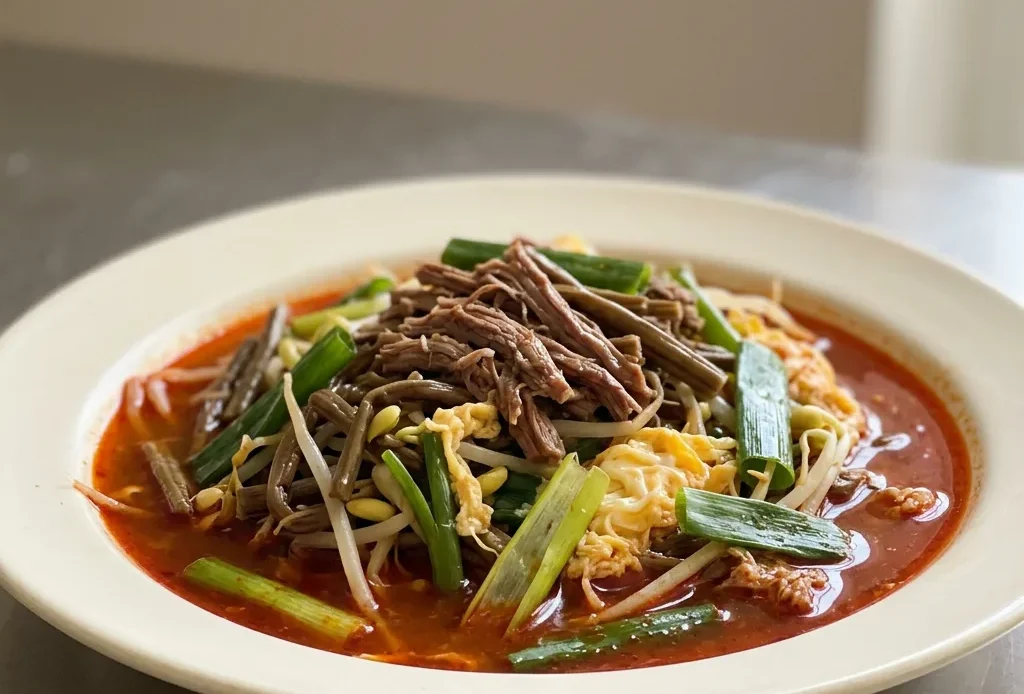
The most common mistake with yukgaejang is rushing the chili oil. People dump gochugaru straight into the broth, then wonder why the stew tastes flat and gritty instead of rich and clean.
That separate pan of sesame oil, anchovies, and red pepper flakes needs a full 15 minutes on low heat to turn into a deep, savory paste that coats every shred of beef and green. Skip that step and you lose the smoky backbone that makes this restorative Korean soup worth the long simmer. It’s a dish that asks for patience, the beef simmers whole, then gets shredded by hand, then goes back into the pot for another couple hours, but that patience pays off in a broth that tastes even better the next day.
That’s the real reason to make yukgaejang (korean spicy beef stew): not just for the heat, but for the depth that only time can build.
Build the chili oil separately
The chili oil gets its own head start. Gently heating gochugaru in sesame oil with anchovies draws out a deep, savory flavor and a rich red color that direct addition to the broth can’t match.
The anchovy dissolves into the oil, leaving umami behind without bits. And the oil coats the shredded beef and greens later, so every bite carries that kick.
If you just dumped gochugaru into the stock, it would turn gritty and bitter over the long simmer. This way, the oil stays smooth and the stew stays clean.
Simmer the beef whole, then shred
A whole brisket simmers for two and a half hours in the stock. That long, gentle bath keeps the meat tender and moist, and the broth gains a beefy depth that pre-cut cubes just don’t give. Once cooled, shredding by hand yields uneven, fibrous strands that grab onto the chili oil and seasoning far better than any knife-cut chunk.
The shreds also mix evenly with the greens and soak up the broth without turning into dry little cubes.
Why the stew needs a second long simmer
After the seasoned beef and vegetables go into the stock, the stew simmers another two hours. That time lets the chili oil, beef, and vegetables come together into a single, cohesive broth, the flavors don’t sit separately. The wild greens like gosari and taro stems soften fully, and the bean sprouts release their own subtle sweetness.
The broth also thickens just slightly from the vegetables, giving the soup body. Without that long meld, the stew tastes like ingredients floating in seasoned water.
Add noodles and egg only to individual servings
Glass noodles and egg are added only to the portion you’re eating right then, not the whole pot. Noodles left in the stew turn mushy as they absorb liquid, and the egg clouds the broth and sets into stringy bits that don’t reheat well. The recipe suggests moving two servings to a separate pot, adding noodles and egg, then serving.
The main pot stays clear and keeps for leftovers without turning into a starchy, murky mess. It’s practical: you get a fresh bowl each time.
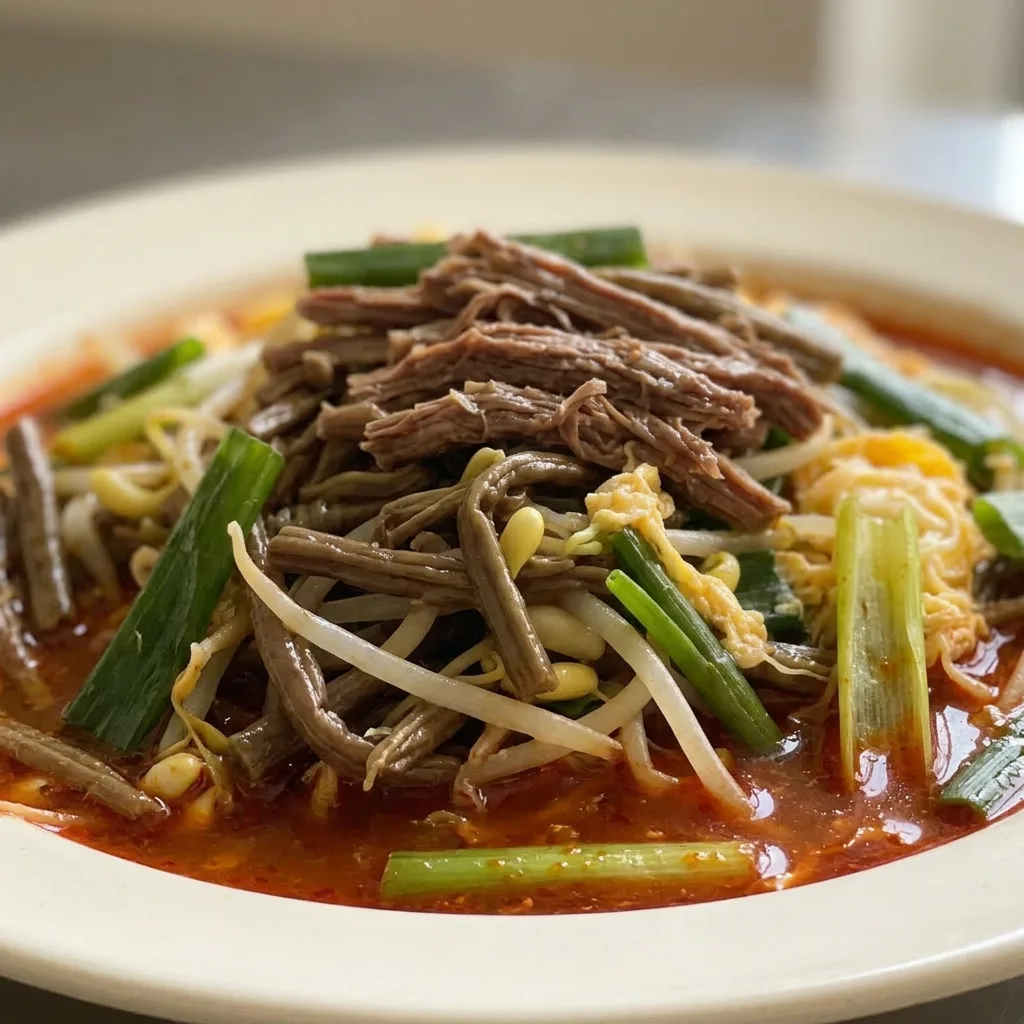
Prep: 2 hr 30 min · Cook: 2 hr · Total: 4 hr 30 min · Servings: 6
What to know about the wild greens and noodles
Gosari, gobi, torandae: If using dried, they need a full soak and parboil before the stew or they’ll stay tough and chewy.
Dangmyeon (Korean glass noodles): Add only to individual servings at the end; they turn bloated and sticky if left in the pot.
Beef brisket: Look for a piece with good marbling; lean brisket dries out during the long simmer.
Gochugaru: Use Korean coarse red pepper flakes, not the fine powder; the texture and color are different.
Step by step: building the stew
Start the stock
Put brisket, kelp, green onions, garlic, and peppercorns in a pot with 15 cups cold water. Cover, bring to a boil, then skim off foam, that foam is impurities, and removing it keeps the broth clear.
Simmer the beef
Fish out the kelp once it boils, then lower heat to medium and simmer gently for 2 hours 30 minutes. The beef should be fork-tender and the broth deeply aromatic.
Make the chili oil
In a small saucepan, combine chopped garlic, chopped green onions, gochugaru, sesame oil, salt, pepper, and anchovies. Heat on low for 15 minutes, the oil will turn deep red and smell toasty, and the anchovy will dissolve.
Finish the chili oil
Turn heat to medium, add soy sauce, and let it boil for 1 minute. You’ll see it bubble up; take it off the heat immediately to avoid burning the garlic.
Shred and mix
Once the beef is cool enough to handle, shred it by hand into a large bowl. Add the prepared wild greens (if using) and the green onions. Pour the chili oil over everything and toss well, each strand should be coated in red.
Second simmer
Transfer the beef-vegetable mixture back into the stock along with bean sprouts. Stir, cover, and bring to a boil, then lower to medium and simmer for 2 hours. The broth will deepen in color and the vegetables will soften completely.
Finish individual bowls (optional)
For two servings, move that amount to a smaller pot and bring to a boil. Soak glass noodles in hot water for 30 minutes, then put them in serving bowls. Gently stream beaten egg into the boiling soup, do not stir, and cook 30 seconds to 1 minute.
Ladle over noodles.
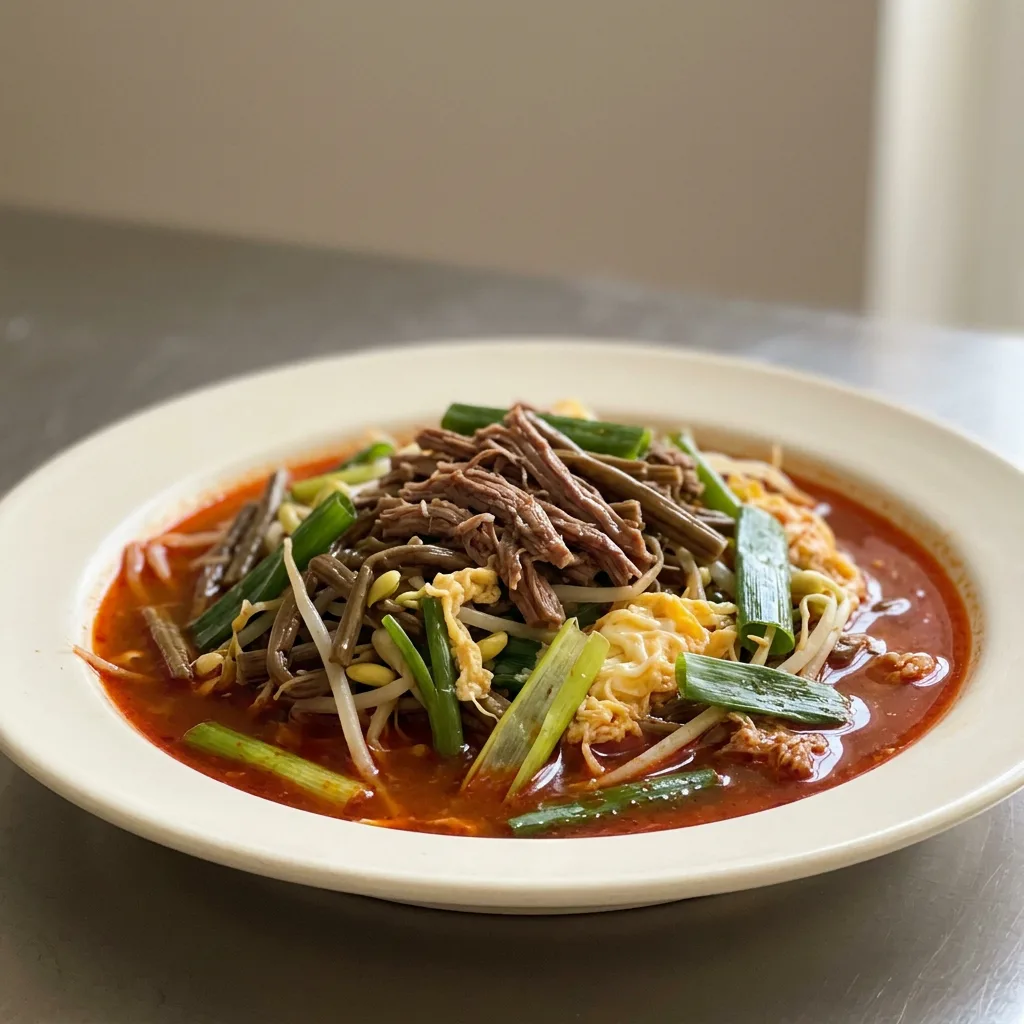
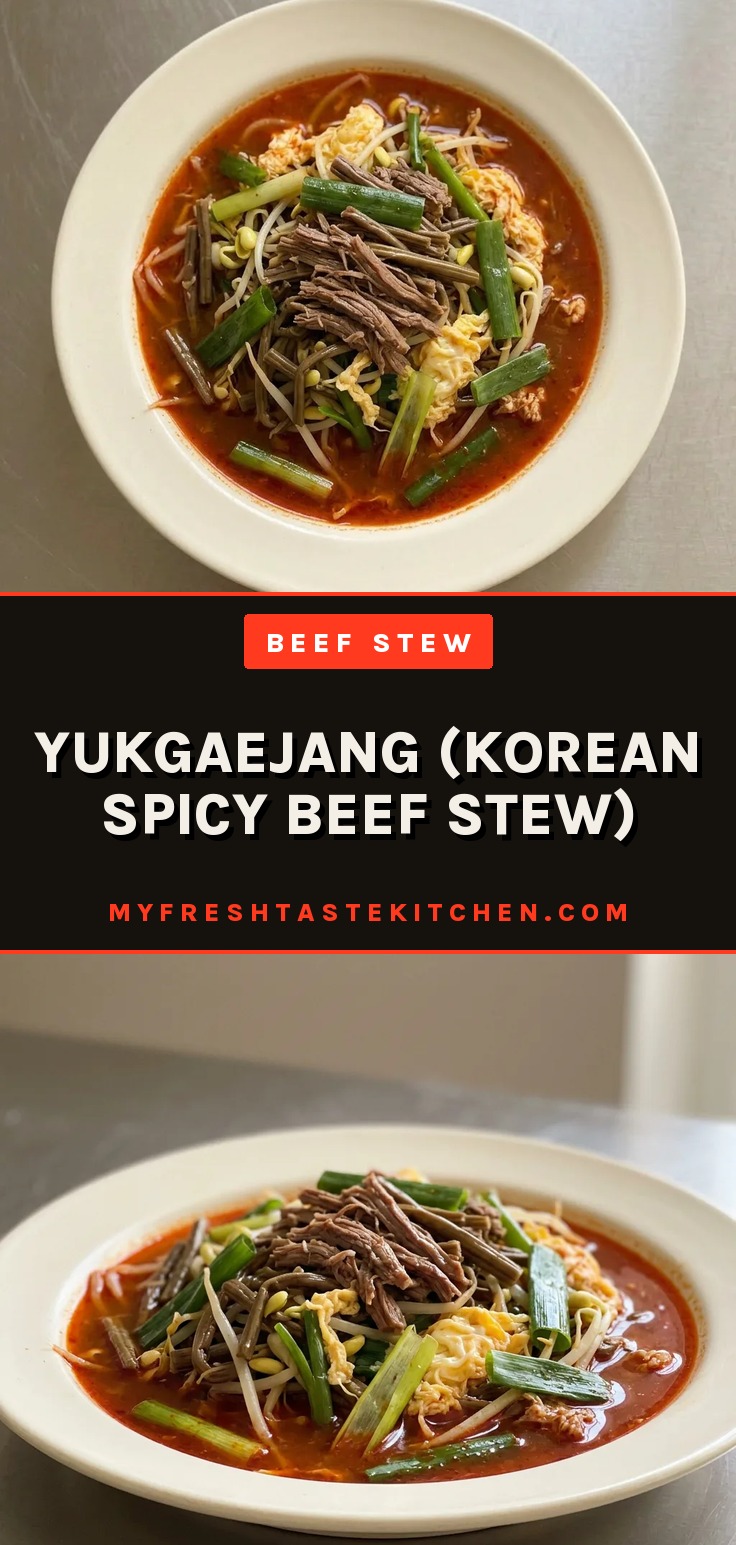
Yukgaejang (Korean Spicy Beef Stew)
Ingredients
Method
Prepare beef stock:
In a large pot, put all beef stock items including 15 cups cold water. If available, use a tea filter bag to contain the garlic cloves and black peppercorns.Boil and skim foam:
Put on the lid and heat on high until boiling. As needed, remove foam and fat with a skimmer (handy for Asian soups).Remove kelp, simmer:
Take out the kelp, turn the heat down to medium, and let it cook gently for 2 hours 30 minutes.Cool and shred beef:
Switch off the heat. Take out the beef and any remaining solids. Throw away the vegetables. Allow the beef to cool until you can shred it by hand.Make chili oil:
As the beef cools, prepare the chili oil. In a small saucepan, combine all chili oil components except soy sauce. Heat on low, letting the flavors and color develop for 15 minutes, stirring now and then; the anchovy will dissolve into the oil.Add soy sauce, boil:
Turn the heat up to medium, pour in soy sauce, and let it boil for 1 minute. Take off the heat.Shred beef with vegetables:
Shred the beef into a large mixing bowl. If using, add the prepared and cut gosari, gobi, and torandae.Cut green onions:
Slice green onions lengthwise in half, then cut into 2-inch segments. For Korean large green onions, cut into 2-inch pieces first, then quarter. Add these to the beef mixture.Toss with chili oil:
Drizzle the chili oil over the beef and vegetable mix, then toss by hand (wear kitchen gloves, or use tongs or a spatula).Combine with stock and sprouts:
Transfer the beef and vegetable mixture into the beef stock along with the bean sprouts. Stir, cover, and heat on high until boiling.Simmer soup, soak noodles:
Lower the heat to medium and let it simmer for 2 hours. At this point (when the soup begins simmering), if using Korean glass noodles, soak them in warm water so they soften during cooking.Finish with noodles and egg:
Remove from heat. Yukgaejang is ready to serve as is with warm rice. If using glass noodles and/or egg, continue: Soak glass noodles in hot water for 30 minutes. Move 2 portions of yukgaejang to a medium pot and bring to a boil. Gently stream beaten eggs into the boiling soup. Return to a boil and cook for 30 seconds to 1 minute. Do not stir to keep the soup clear.Serve yukgaejang:
Put soaked noodles into serving bowls, then ladle boiling yukgaejang over them. Serve with warm rice and any Korean side dishes you like. Enjoy!
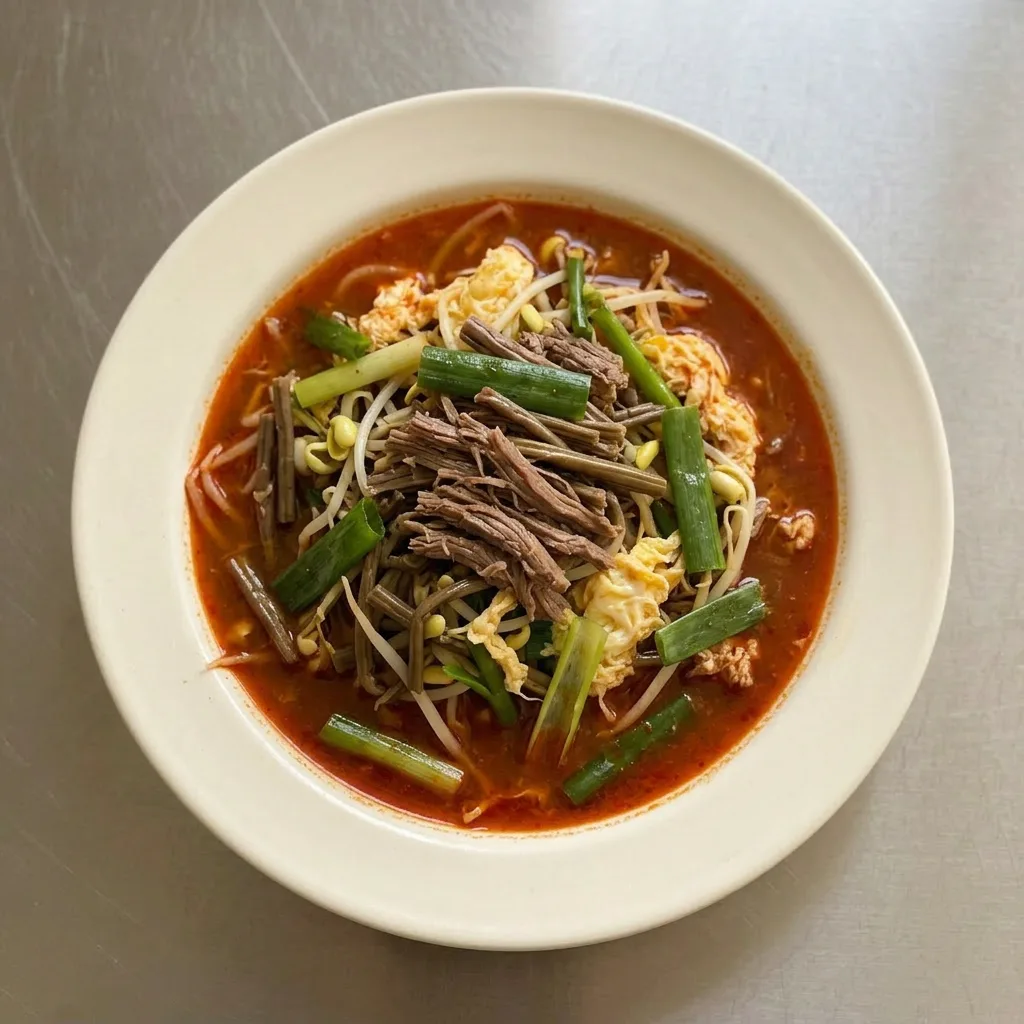
Storage and Serving
The stew thickens overnight as the starches from the vegetables release and the greens soften further, making it even more flavorful the next day. Refrigerate in an airtight container for up to 5 days.
The texture of the greens will continue to soften, but the broth stays rich. For longer storage, freeze for up to 3 months. Thaw overnight in the fridge, then reheat gently on the stovetop.
The chili oil will separate slightly; stir it back in. Add noodles and egg only to the portion you’re serving immediately. If you add them to leftovers, the noodles turn mushy and the egg clouds the broth.
For the best texture, eat the stew within 2 days of making it, when the greens still have some bite and the broth is clear. Leftovers reheat well, but the greens will be very tender.
Swapping brisket, gochugaru, and dangmyeon in yukgaejang
Beef brisket: Beef chuck or boneless short rib. Chuck has more connective tissue that breaks down over the long simmer, giving you shreds that stay moist. Short rib adds deeper flavor but more fat; skim it before the second simmer.
Lean cuts like round turn dry and stringy, avoid them.
Gochugaru: Cayenne pepper with a pinch of sweet paprika. Use half the amount of cayenne (2 Tbsp instead of 4) plus 1 Tbsp paprika. You’ll lose the fruity, smoky depth of gochugaru and the coarse texture won’t release color the same way.
The oil will be hotter and less complex; it works but the stew won’t taste quite Korean.
Dangmyeon (Korean glass noodles): Sweet potato starch noodles or vermicelli. Sweet potato starch noodles are the same thing, just different brands, no change.
Rice vermicelli turns soft and slippery, not chewy like dangmyeon. If swapping, add them dry to the boiling stew (not soaked) and cook just 2 to 3 minutes, then serve immediately, they’ll go mushy otherwise.
Tips
- Toast the gochugaru in sesame oil on low heat until fragrant but not burnt; if the oil smokes, the gochugaru scorches and turns bitter, ruining the stew’s clean heat.
- Use a wide, shallow pot for the second simmer so the liquid reduces and concentrates flavor rather than steaming the ingredients in a deep, narrow pot.
Frequently Asked Questions
Can I make yukgaejang ahead of time? Does it reheat well?
Yes, and it often tastes better the next day. The stew thickens as starches release, and the greens soften further, making the broth more cohesive.
Refrigerate for up to 5 days, or freeze for 3 months. Reheat gently on the stovetop; if frozen, thaw overnight in the fridge first.
Add noodles and egg only to the portion you’re eating right then, they don’t keep.
My yukgaejang turned out bland, what went wrong?
Most likely the chili oil didn’t develop enough. It needs a full 15 minutes on low heat for the anchovy to dissolve and the gochugaru to infuse the sesame oil. Also check that you used the full 4 tablespoons of gochugaru and 5 of sesame oil, skimping on either will leave the broth flat.
If you used fine gochugaru powder instead of coarse flakes, the oil won’t pick up the same depth; coarse flakes are key.
Is yukgaejang traditionally made with brisket or can I use other cuts?
Brisket is traditional here, but chuck or boneless short rib work well too. Chuck has more connective tissue that breaks down over the long simmer, giving you moist shreds.
Short rib adds deeper flavor but more fat, skim it before the second simmer. Avoid lean cuts like round; they’ll turn dry and stringy. The recipe needs at least 2 hours of simmering for the beef to shred, so choose a cut that can handle that.
