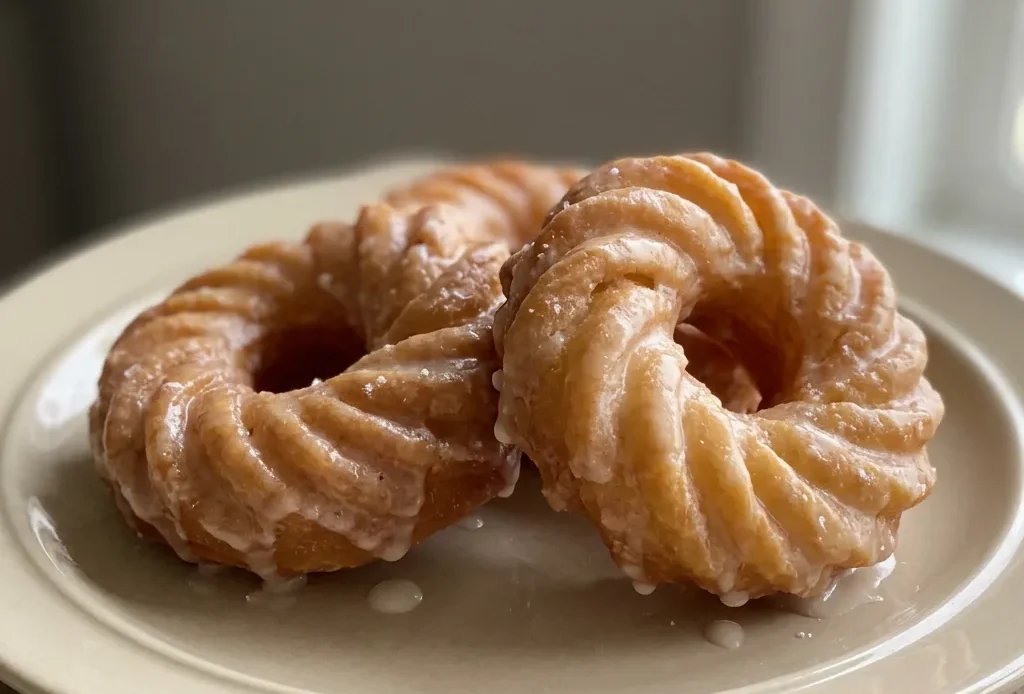
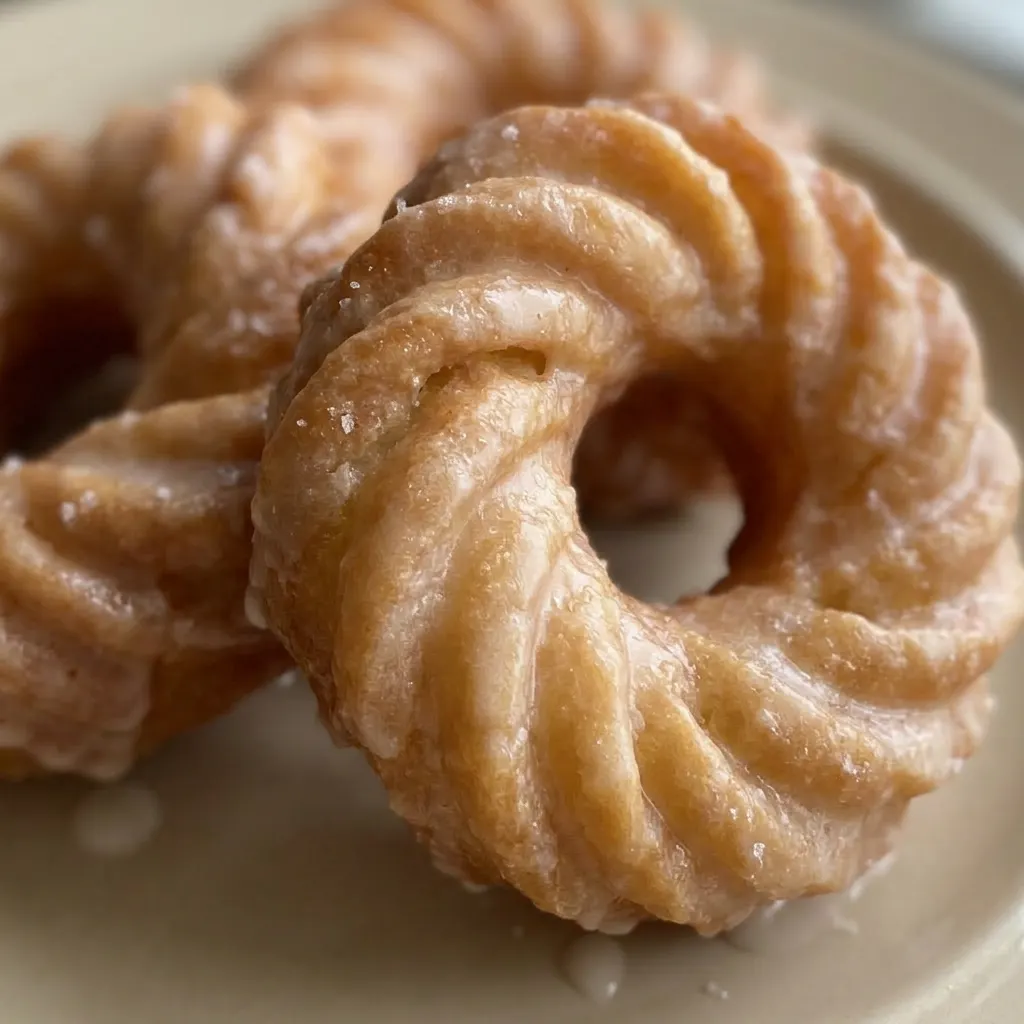
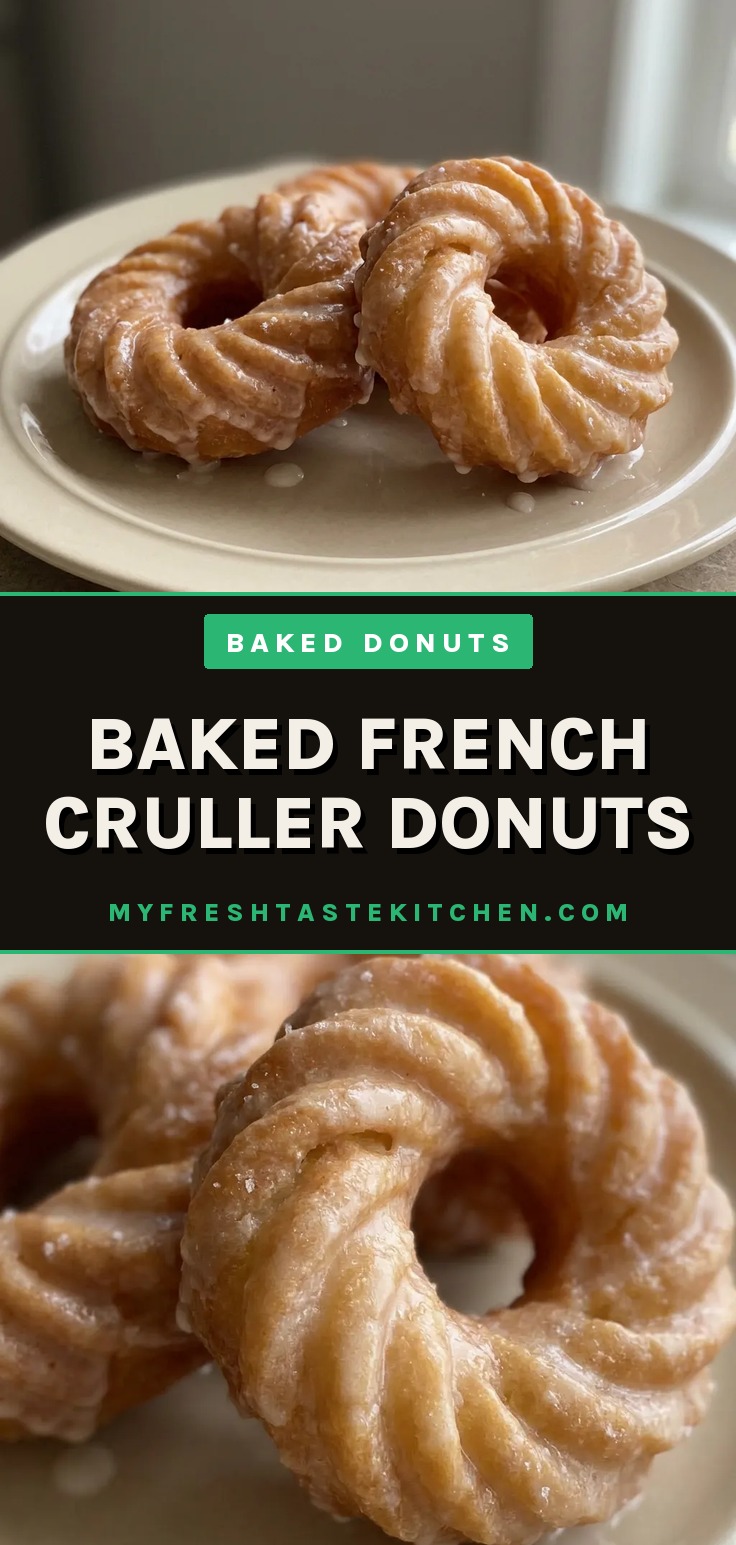
The first thing you’ll notice is the ridged surface, browned in patches, with a glossy glaze settling into every groove. These baked french cruller donuts are lighter than the fried version, and the crumb feels almost bready but tender, not dry.
The shaping takes some patience, the dough has to be rolled thin enough to create those signature ridges without tearing. But once you’ve done a few, the rhythm clicks. What makes these work is the yeast, which builds a structure that baking alone can’t match.
It’s a dough that responds to feel: you’ll know it’s ready when it springs back slowly. The glaze sets just enough to crackle when you bite, and the interior stays soft for hours.
Not bad for something that never touches oil.
I left the shaped crullers to rise for an hour instead of 30 minutes, and they puffed up but then collapsed into flat, dense disks in the oven.
Yeast builds airy structure
Yeast is what gives these donuts their light, airy crumb, baking powder would make them denser, more like a muffin. The two rises aren’t optional. The first hour-long rise develops the gluten network that traps gas.
Then after shaping, the second 30-minute rise relaxes the dough so the crullers puff up in the oven. When they’re proofed right, they’ll feel soft and spring back slowly when poked.
Without enough proofing, they’ll bake up tight and heavy.
Shaping creates signature ridges
After the first rise, you roll each piece of dough into a long rope, about 10 inches. That rope is where the cruller’s ridges come from, they’re not just for looks.
The ridges catch and hold the glaze, and they give the donut a chewy-tender texture that a smooth ring can’t match. Twist the rope into a ring, pinching the ends together. Now I set a timer for exactly 30 minutes for the second rise and keep an eye on the crullers, they should look puffy but not doubled in size.
If the rope breaks as you shape, you’ve rolled it too thin; aim for even thickness.
Baking keeps them light and tender
Baking at 375°F turns the donuts golden without the oil absorption that frying brings. The result is a softer, more cake-like crumb, less greasy, and at 180 calories per donut, it’s a lighter treat.
The exterior sets up firm enough to hold the glaze, but the inside stays moist and tender. You’ll smell them as they near done; the tops should be light brown, not dark. Let them cool on a wire rack for a few minutes, hot donuts will soak up glaze and turn soggy.
Prep: 30 min · Cook: 20 min · Total: 2 hr 20 min · Servings: 12 · Calories: 180 kcal
A few ingredients to watch
Active dry yeast: Check the expiration date: dead yeast won’t foam and your donuts won’t rise.
Warm milk: Use a thermometer. Too hot kills yeast; too cold slows the rise.
All-purpose flour: Weigh for accuracy: 300 grams is about 2 1/2 cups spooned and leveled.
Unsalted butter: Melt and cool slightly before adding, so it doesn’t cook the egg.
Working the dough by feel
Proof the yeast
Stir yeast and sugar into warm milk. After 5 minutes, the surface should be foamy and smell bready. If nothing happens, the yeast is dead, start over with fresh yeast.
Mix the dough
Combine wet ingredients, then add flour gradually. The dough will be shaggy at first, then come together into a ball. Switch to kneading once it’s cohesive enough to handle.
Knead until smooth
Knead for 5 to 7 minutes. The dough should feel smooth and elastic, not sticky. If it sticks, dust your hands lightly with flour, but don’t overdo it, a tacky dough rises better.
First rise
Place dough in a greased bowl, cover, and let rise for 1 hour. It should double in size and spring back slowly when poked. If it doesn’t rise, move to a warmer spot.
Shape the crullers
Divide dough into 12 pieces. Roll each into a 10-inch rope, even thickness.
Twist into a ring and pinch ends. If the rope breaks, it’s too thin, roll a thicker rope.
Second rise
Let shaped crullers rise for 30 minutes. They should puff up but not double.
Poke one gently, it should feel soft and hold a slight indent. Over-proofed dough will collapse in the oven.
Bake until golden
Bake at 375°F for 15 to 20 minutes. The tops should be light golden brown and the kitchen will smell toasty. Undercooked donuts look pale; bake until the color is even.
Glaze while warm
Whisk glaze ingredients until smooth, it should coat the back of a spoon. Dip each donut while still warm, not hot. The glaze will set as they cool on the rack.
Baked French Cruller Donuts
Ingredients
Cruller Donuts
- 1 cup warm milk 105-115°F (45°C)
- 2 1/4 teaspoons active dry yeast
- 1/4 cup granulated sugar
- 1 large egg
- 1/4 cup unsalted butter melted
- 1 teaspoon vanilla extract
- 2 1/2 cups all-purpose flour 300g
- 1/2 teaspoon salt
Glaze
- 1 cup powdered sugar 120g
- 1-2 tablespoons milk
- 1/4 teaspoon vanilla extract
Instructions
Cruller Donuts
Activate Yeast Mixture:
In a small bowl, stir together warm milk, yeast, and sugar. Let sit for 5 minutes until foamy.Beat Wet Ingredients:
In a large bowl, beat the egg, melted butter, and vanilla extract together.Combine Yeast and Egg:
Pour the yeast mixture into the egg mixture and mix until combined.Mix Dry Ingredients:
In another bowl, combine flour and salt. Slowly add the flour mixture to the wet ingredients, stirring until a dough forms.Knead Dough:
Transfer the dough to a lightly floured surface and knead for 5-7 minutes until smooth and elastic.First Rise:
Put the dough in a greased bowl, cover with plastic wrap, and let it rise in a warm spot for 1 hour until doubled.Divide and Shape Ropes:
Deflate the dough and cut it into 12 equal portions. Roll each into a long thin rope.Form Crullers:
Shape each rope into a cruller and arrange on an ungreased baking sheet. Repeat with remaining dough.Second Rise:
Allow the donuts to rise for 30 minutes until doubled.Preheat Oven:
Heat oven to 375°F (190°C).Bake Donuts:
Bake the donuts for 15-20 minutes until golden brown.Cool Donuts:
Let them cool on a wire rack for a few minutes.
Glaze
Make Glaze:
In a small bowl, whisk powdered sugar, milk, and vanilla extract until the glaze is smooth.Glaze Donuts:
Dip the cooled donuts into the glaze and allow to set before serving.
What you can swap and what to leave alone
All-purpose flour: Bread flour. Swap by weight, 300g bread flour for 300g all-purpose. The dough will feel tighter and need a slightly longer knead.
The crullers bake up chewier and more structured, with a sturdier crumb that holds its shape well.
Whole milk: Plant-based milk (unsweetened, plain) and vegan butter. Use the same amount of milk (1 cup) and replace butter with an equal weight of vegan butter (56g).
The dough may feel slightly less tender; the donuts will be a bit more delicate but still rise and bake. The glaze can use the same plant milk.
Active dry yeast: Instant yeast (also called rapid-rise). Use the same weight (7g) but skip the proofing step: mix instant yeast directly with the flour. The first rise may be faster, check at 45 minutes instead of 1 hour.
Over-proofing is easier with instant yeast, so watch the dough closely.
All-purpose flour: Gluten-free 1-to-1 baking flour (with xanthan gum). Use the same weight (300g).
The dough will be stickier and less elastic; don’t over-knead. The crullers will be more tender and less chewy, with a crumb that crumbles more easily.
They’ll still rise but won’t puff as high, expect a denser, more cake-like texture.
Storage and Serving
These glazed donuts are best eaten within a few hours of glazing, while the glaze is set but the crumb is still soft. For leftovers, store them in an airtight container at room temperature for up to 2 days.
The glaze will soften and may become tacky as it absorbs moisture from the donut. To restore some texture, reheat in a 300°F oven for 5 minutes until the glaze firms up and the exterior crisps slightly.
Avoid refrigerating, which dries out the crumb. You can freeze unglazed baked crullers in a freezer bag for up to 1 month.
Thaw at room temperature, then glaze before serving. The glaze itself does not freeze well and should be made fresh.
Tips
- If the yeast doesn’t foam, the milk may be too hot or too cold; use an instant-read thermometer to ensure it’s between 105 to 115°F before adding yeast.
Frequently Asked Questions
Can I prepare the dough the night before and bake in the morning?
Yes, but only for the first rise. After kneading, cover the bowl tightly and refrigerate overnight. The next morning, let the dough come to room temperature for about 30 minutes before shaping, then proceed with the second rise and baking.
The cold dough will rise more slowly during the second proof, so watch for that soft feel rather than the clock.
Why did my cruller donuts turn out dense and not airy?
Most likely they were under-proofed. The dough needs two full rises, the first until doubled (about 1 hour) and the second for 30 minutes until puffy. If the yeast didn’t foam in the milk, it was dead, start over.
Also, over-flouring the dough during kneading can weigh it down; it should be tacky but not sticky.
How do these baked crullers compare to traditional French crullers?
Traditional French crullers are choux pastry piped and fried, giving them a very airy, eggy interior with a crisp shell. These are yeasted dough, rolled and baked, so they’re denser and more bread-like, chewy and tender rather than hollow. The trade-off is a lower calorie count (180 per donut) and no frying mess, with a softer crumb that still holds glaze nicely.