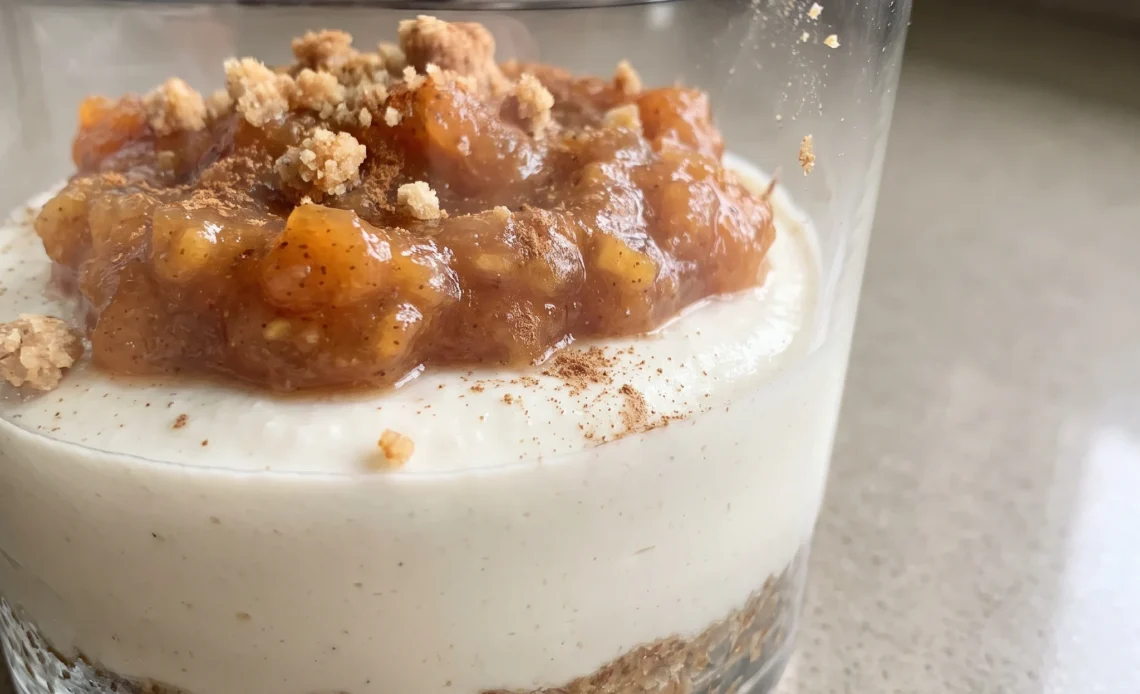
A no-bake cheesecake that never touches cream cheese sounds like a compromise until you spoon into this one. The filling is pureed cashews and yogurt, chilled until it sets into something silky and tangy that holds its own under a spiced persimmon topping. That topping is the sleeper: ripe Hachiya persimmons, pulsed with cinnamon and cardamom, taste like autumn in a glass, their natural sweetness doing the work of any added sugar.
The real surprise is how little effort it takes, as long as you respect the two places where this can go sideways, the soak and the chill. It’s a persimmon cheesecake that feels rich, but the whole thing is plant-based and practically assemble-yourself. You might even forget it’s good for you.
Why soak the cashews in boiling water?
Soaking in boiling water for 15 minutes does two visible things. It plumps the nuts, so they break down faster and more evenly in the blender.
And it softens their cell structure enough that the puree turns silky rather than grainy. You’ll see it in the finished filling: smooth, thick, and pourable, not sandy or separated.
The water you add during blending carries the cashews into a uniform cream. That cream is what firms up when chilled, giving the filling a set that slices like a soft cheesecake but stays spoonable. Without the soak, you’d likely end up with tiny gritty bits no matter how long you blend.
The result is a filling that feels rich and dairy-like, with no heat involved. That’s the whole trick.
Crunch or crumble: what makes this crust work?
Pulsing almonds and dates together until the mix looks like coarse sand gives you a crust that’s both crumbly and cohesive. The dates act as the binder, their sticky sweetness pulling the almond pieces into clumps that hold their shape when pressed.
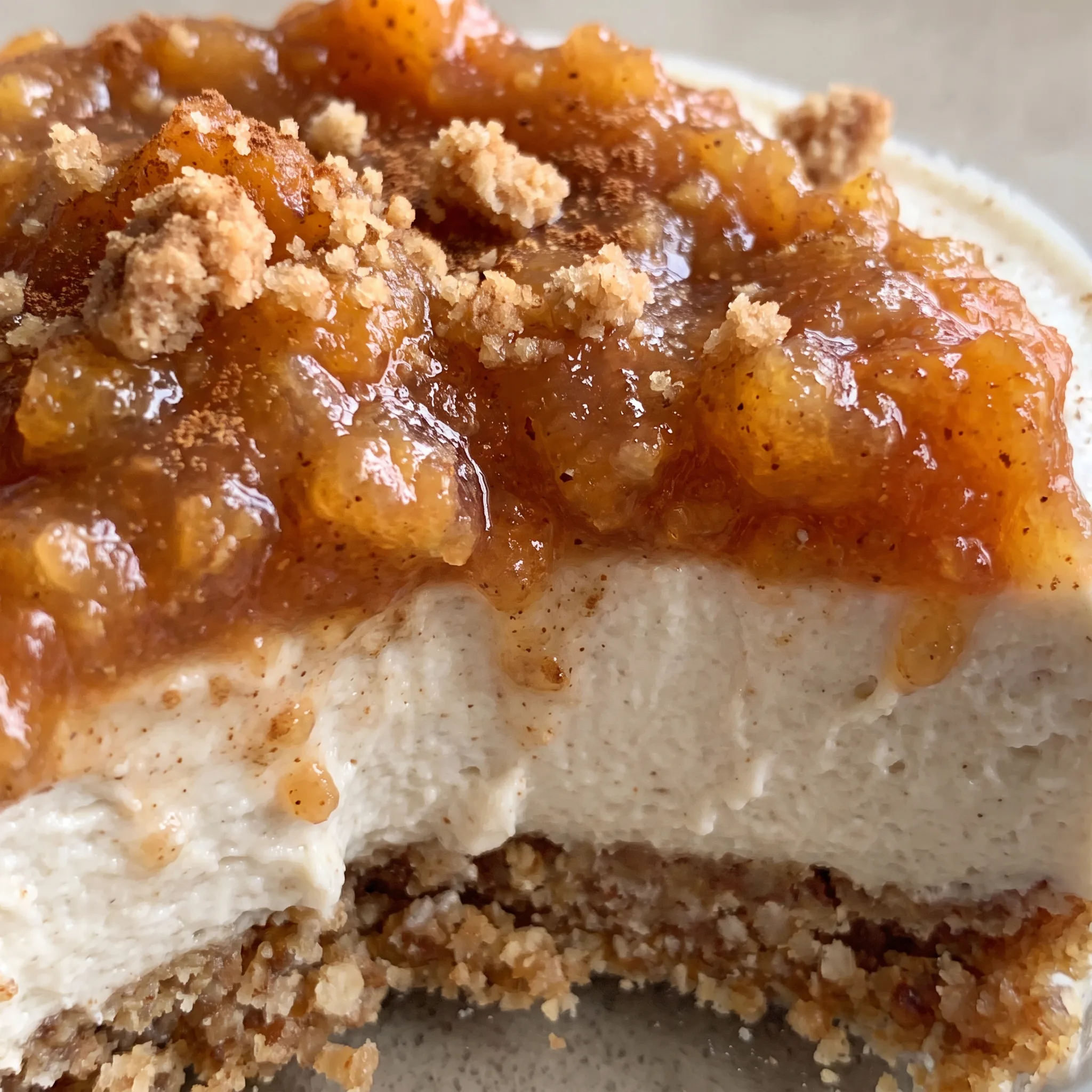
You can see the texture: uneven bits of nut, darker flecks of date, all clinging together. That coarse structure is what gives you a contrast against the smooth filling, a little crunch that doesn’t turn to powder in your mouth. The dates also bring a natural caramel-like sweetness that plays off the tangy filling and the spiced topping.
No extra sugar needed here. The crust stays sturdy enough to support the layers above it, but it’s not hard or dense. It’s the kind of base that yields slightly when you spoon into it, yet keeps its identity.
Why pulse the persimmon topping at the last minute?
Persimmon puree thickens as it sits, especially once you’ve blended it with anything. The pectin in the fruit starts to set, turning a loose chunky mix into a stiff paste. So you want to make this topping right before you assemble the glasses.
When you pulse it, keep it slightly chunky, not smooth. That way you get pieces of persimmon that hold their shape, giving the topping a pleasing texture.
If you pureed it completely, you’d lose that bite. And if you made it ahead, you’d be spooning out a gelled blob instead of a loose spoonful.
The goal is a topping that sits on the filling without sinking in, and that’s only possible when it’s freshly made. You’ll see the difference in how it spreads.
Building the layers in a glass
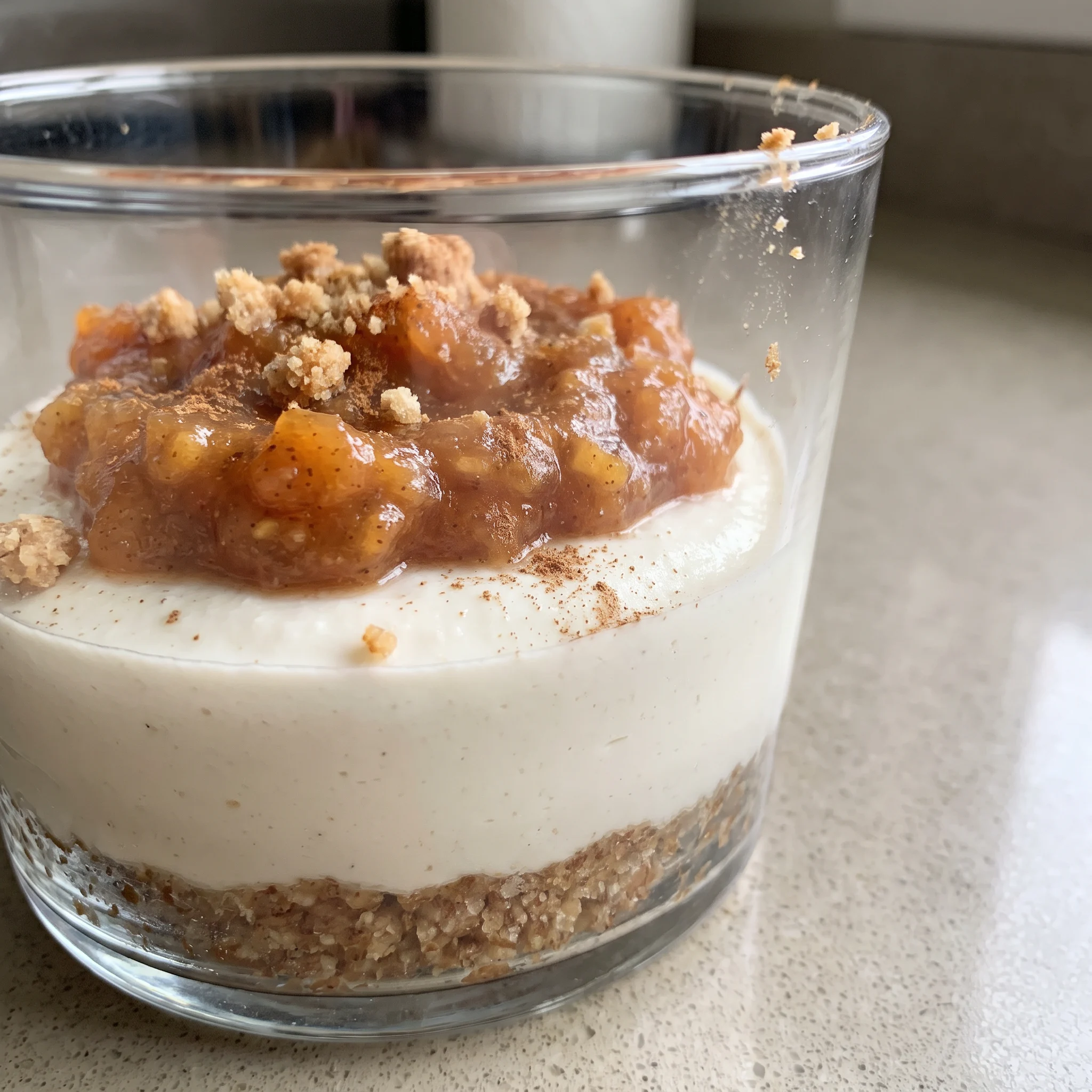
Each glass gets a crust layer, a filling layer, and a topping layer, and the order matters. The crust goes in first, forming a stable base. Tapping the glass after adding the crust settles the crumbs into an even bed.
Then the filling goes on top, and a gentle tap helps it level out without pushing the crust up. The filling is thick enough to hold its place, so it won’t mix with the crust.
Finally, the topping is spooned over. Because the filling has firmed up a bit after chilling, the topping won’t sink.
You end up with distinct stripes of texture: crunchy, creamy, then chunky fruit. The glasses show off the layers, making it a dessert you eat with a spoon, each bite hitting all three.
What to look for before you start
Raw cashews: Buy raw, not roasted or salted, and soak them in boiling water for exactly 15 minutes to get a silky filling.
Hachiya persimmons: Use fully ripe Hachiya, soft to the touch, or the topping will be astringent and harsh.
Raw almonds: Raw almonds, skin on, give the crust a deeper flavor and better texture than blanched.
Vegan yogurt: Vanilla or plain both work, but avoid Greek-style or thick yogurt that might make the filling too stiff.
Reading the layers as they come together
When the filling is smooth enough
Blend until the puree turns silky and no grit scrapes against the spoon. A quick taste test helps: rub a little between your tongue and the roof of your mouth. If it feels sandy, keep blending, scraping down the sides as needed.
The soaked cashews should break down completely, leaving a thick, pourable cream. If it stays grainy after two minutes, add another tablespoon of water, but no more, or the filling won’t set firmly.
The crust texture that holds together
Pulse the almonds and dates until the mixture clumps when pressed to the touch, but still looks like coarse sand. Over-pulsing turns the nuts into a paste that greases out and won’t crumble.
Under-pulsing leaves large almond shards that don’t bind. The dates should be broken down enough to act as glue, visible as darker flecks.
If it’s too dry and falls apart, add a date or a teaspoon of water and pulse again.
The point where the topping stops being chunky
Pulse the persimmon just until the fruit breaks into small pieces, with some larger bits remaining. Stop the moment it looks like a chunky salsa. Over-processing turns it into a smooth puree that sinks into the filling and loses its texture.
Since the topping thickens as it sits, make it right before assembling. If it becomes too stiff while you work, stir in a teaspoon of water to loosen it back to a spoonable consistency.
Firming the filling so the topping floats
After spooning the filling into the glasses, a 10-minute chill firms it enough that the persimmon topping won’t sink. You’ll see the surface turn slightly matte and feel it resist when you press a finger. If you skip this, the topping may slide down through the filling, muddying the layers.
If you’re in a hurry, a longer chill won’t hurt, just make sure the filling doesn’t set so hard that it loses its creamy texture.
Persimmon Cheesecake in a Glass
Ingredients
Method
- Blend every component until silky smooth in a high-speed blender, then refrigerate until assembly time.
- Process all crust ingredients in a food processor until the texture is like coarse sand; transfer to a bowl and reserve.
- Prepare this topping immediately before assembly to avoid thickening. Clean the food processor bowl for this use. Combine all topping ingredients and pulse until slightly chunky.
- Distribute 2 tablespoons (18 g) of crust into each of 4 glasses (5 may be needed). Gently tap to level the crumbs.
- Spoon roughly a heaping 1/3 cup (90 g) of cheesecake filling over the crust in each glass, tapping lightly to even it out.
- Optionally refrigerate the glasses for 10 minutes to firm the filling, though this step is not required; it helps the topping stay on top.
- Finish by spooning 3-4 tablespoons (55 g) of persimmon topping onto each glass, sprinkle with remaining crust and cinnamon, then chill for 30 minutes prior to serving.
Storing and Serving Persimmon Cheesecake in a Glass
Assembled jars keep in the fridge for up to 3 days, but the texture is best within 24 hours. The crust softens as it sits, absorbing moisture from the filling and topping, so it loses its crunch. The persimmon topping may also release liquid over time, pooling around the edges.
For the freshest bite, serve within a day. If you’re making ahead, store the components separately in the fridge: the filling in a sealed container, the crust in a zip-top bag, and the topping in its own bowl.
Assemble just before serving to keep the layers distinct and the crust crisp. A 30-minute chill after assembly firms the filling enough for clean layers, but don’t let it go much longer or the topping can sink. If you have leftovers, spoon off any excess liquid from the topping before eating.
The filling alone freezes well for up to a month; thaw overnight in the fridge and whisk to restore its smoothness. The crust and topping don’t freeze well, so add them fresh.
Swapping the Yogurt and Sweetness Without Losing the Set
Vegan yogurt: Coconut yogurt or other neutral non-dairy yogurt. The yogurt’s tang and acidity help the filling taste bright and set firmly after chilling.
Coconut yogurt works as a direct swap, but choose one without added sweeteners or thickeners. Greek-style or extra-thick yogurts can make the filling too stiff, so stick to a standard consistency. If your yogurt is very thin, you might need to blend a little longer, but the filling will still set.
Maple syrup: Agave nectar or date syrup, same amount. These liquid sweeteners behave similarly to maple syrup, keeping the filling smooth and pourable.
Date syrup adds a deeper, more caramel-like flavor, while agave is milder. Start with the same 2 tablespoons, then taste and add more if you want it sweeter.
The filling relies on the syrup for both sweetness and a bit of body, so avoid swapping in a dry sweetener like coconut sugar, which would make the filling gritty.
Tips
- If using Hachiya persimmons, they must be extremely soft, almost jelly-like, or they will leave a furry, astringent sensation on your tongue. A quick taste test of a small piece before peeling will tell you if they’re ready.
The creaminess of the filling depends entirely on breaking down the cashews’ cell walls and releasing their starches and fats. If the soak is too short or the blend too brief, the mixture will feel sandy on the tongue, a sign that the cashew particles are still too large. At that point, no amount of chilling will smooth it out, the texture is fixed once the filling is poured.
Frequently Asked Questions
Can I make this persimmon cheesecake ahead of time?
You can assemble these glasses up to a day ahead, but the crust will soften and the persimmon topping may release liquid. For the freshest texture, store the filling, crust, and topping separately in the fridge and assemble just before serving.
The filling alone freezes well for up to a month; thaw it overnight and whisk to bring back its smoothness. A 30-minute chill after assembly firms the layers, so plan that in.
Why does my filling not set properly?
Most likely the filling didn’t chill long enough. It needs that full 30 minutes in the fridge to firm up to a spoonable set.
If it’s still loose after that, you may have added too much water during blending, which thins the cashew cream. Stick to the 1/2 cup water and blend until silky smooth, scraping the sides, so the cashews break down completely.
A too-thin yogurt could also be the culprit, so use a standard non-dairy yogurt, not a watery one.
What’s the difference between this and a baked cheesecake?
This one sets in the fridge, not the oven, so it stays softer and spoonable rather than firm enough to slice. The cashew and yogurt base gives a tangy, creamy texture that’s lighter than baked cheesecake, with no eggs or dairy.
You eat it straight from the glass, layers intact, so each spoonful hits crunch, cream, and fruit. It’s a no-bake dessert, but the chill time does the work of the oven.
