
Watery tzatziki sliding over the hummus is the mistake that wrecks this platter, and it usually starts at the store, not the moment you spread. A thin, loose tzatziki creeps past whatever border you leave and drags the pale hummus underneath into the yogurt, so the two dips read as one smeared layer. Anyone who has built a mediterranean hummus dip platter for a crowd has watched that happen twenty minutes in, when the tomatoes start weeping and the surface goes slick.
Two tubs, one wide platter, and a little judgment about what you’re buying gets you a composed centerpiece instead of a bowl of dip with garnish. The layering itself is forgiving. Shop for the tzatziki the way you’d shop for sour cream you plan to spoon, and the rest mostly behaves.
Building the Base and Border
Hummus goes down first because its dense, smooth texture anchors everything else. Spread it across the platter, and you’ve got a sturdy foundation that won’t shift when you add the tzatziki.
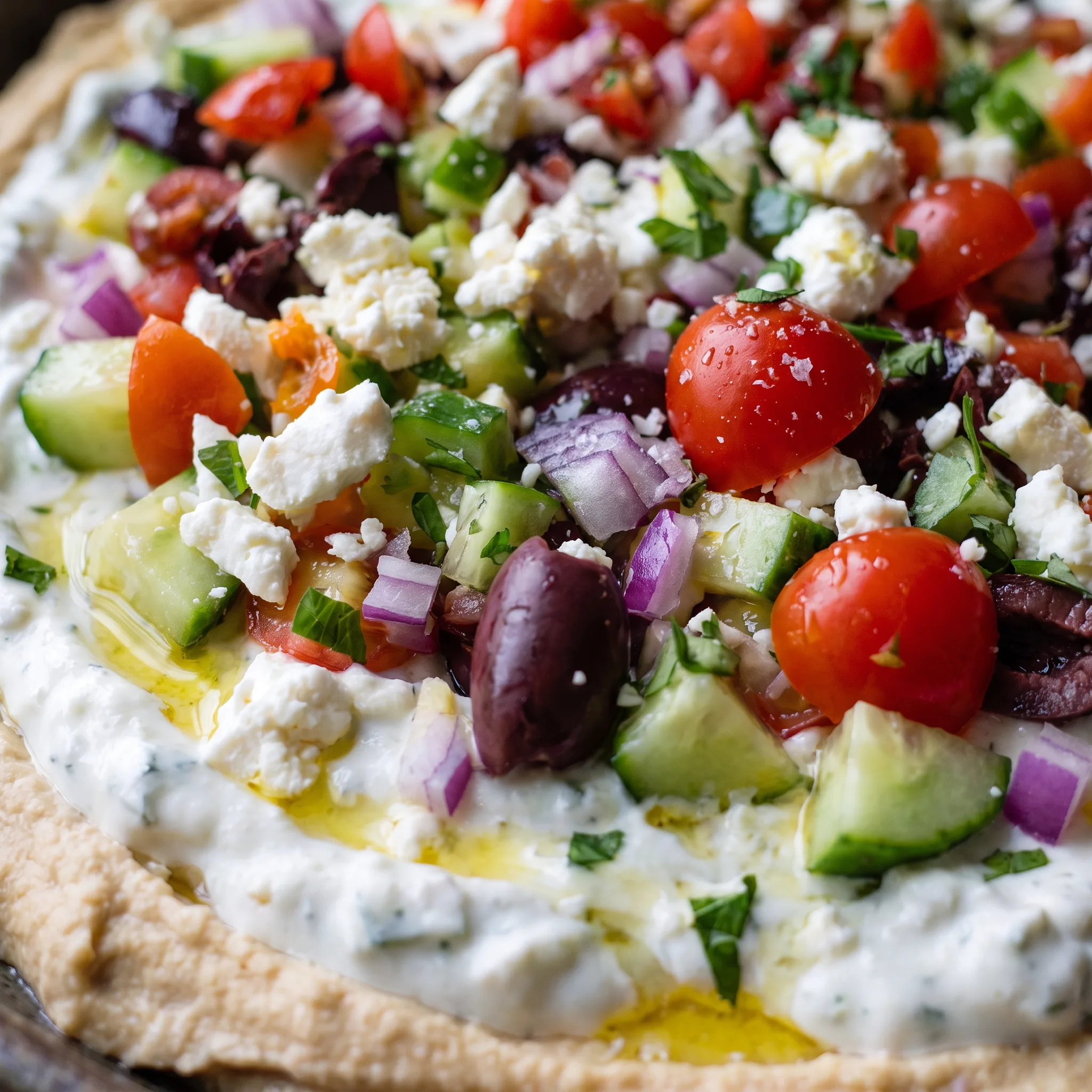
That second layer needs a 1/2-inch border of hummus left visible around the edge. Without that gap, the tzatziki would completely cover the hummus, and you’d lose the visual contrast between the pale, creamy hummus and the cool, cucumber-flecked tzatziki. The border acts like a frame, so each dip reads as its own element.
When you scatter the feta, cucumbers, tomatoes, olives, and red onion, the order matters for even distribution and color contrast. Start with feta and olives for salty punches, then add cucumbers and tomatoes for juiciness, and finish with red onion for sharpness.
That sequence keeps every bite balanced, not just the first one.
Platter Shape and Surface Area
A 12-inch round platter or pie dish isn’t arbitrary; it’s about geometry. The wide, shallow shape lets you spread the hummus and tzatziki into thin, even layers, so the dip-to-topping ratio stays consistent from edge to center. With more surface area, you can fit all the vegetables, feta, and olives in a single layer, which means every scoop gets a bit of everything.
A deeper bowl would force the layers to stack thicker, compressing the tzatziki and making that 1/2-inch border nearly impossible to maintain. Plus, a shallow platter gives six people room to dip without elbowing each other. The round shape also invites a natural rotation, so the platter empties evenly.
When you’re choosing your vessel, pick one that feels generous, not cramped. That space is what keeps the platter looking abundant and staying functional.
Salty, Briny, Pungent Contrast
Feta and Kalamata olives bring a double dose of salt and brine that cuts through the creamy mildness of hummus and tzatziki. Each bite needs that tension: the cool, cucumber yogurt against the sharp, salty cheese and the oily, meaty olives.
Red onion, diced small and used raw, adds a clean pungency that wakes up your palate without overwhelming. If the pieces are too large, they dominate; too small, and they disappear.
The olive oil drizzle and fresh herbs are the final aromatic layer. The oil carries the herb flavors and adds a glossy richness that ties the salty and creamy elements together.
Basil, mint, or dill each bring a different note, but they all lift the heavy dairy and legumes. Together, these toppings turn a simple dip into something with real contrast, where no single flavor flattens the rest.
Timing and Temperature for Freshness
Since nothing here hits the oven, the success of this platter depends on the condition of the components right before serving. Hummus and tzatziki straight from the fridge will be stiff and hard to spread; let them sit out for a few minutes to take the chill off. Room temperature dips spread more easily and taste fuller.
The chopped vegetables and herbs need to be fresh, crisp, and dry. Any moisture on the cucumbers or tomatoes will seep into the dips and make them watery.
That’s why you assemble close to serving time: the vegetables start releasing liquid as soon as they touch the dip. If you build it too early, you’ll end up with a runny, sad platter.
Keep everything prepped and chilled separately until the last moment, then layer and serve. The result is a bright, textured platter that holds up till the last scoop.
What to Buy and How to Prep It Before It Hits the Platter
Hummus: Buy a brand you’d eat straight from the tub, since its salt and lemon level sets the whole platter’s baseline.
Tzatziki: Choose a thick one that holds a spoon’s shape, because a thin, watery tzatziki will slide off the hummus border.
Persian cucumbers: These small, thin-skinned cucumbers have fewer seeds and less water than standard ones, so they won’t weep into the dips.
Kalamata olives: Get them packed in brine, not oil, and pat them dry after chopping so their liquid doesn’t streak the tzatziki.
Hummus and tzatziki are both soft, spreadable dips, so when tzatziki is pushed all the way to the rim it sits directly against the hummus with nothing to separate them. The two will smear together at the edges and the platter reads as one beige mass instead of distinct layers. Leaving a 1/2-inch border of hummus visible around the edge gives the tzatziki a contained footprint and keeps the layers legible.
Judging the Platter: What to Look For as You Build
Knowing When the Hummus Is Spreadable
Cold hummus straight from the fridge will fight you. It tears the bread, skips across the platter, and leaves bare spots. Let it sit out for a few minutes; you want it soft enough to yield under gentle pressure.
Test with the back of your spoon: if it leaves a smooth trail without dragging, it’s ready. If it’s still stiff, give it another minute.
Spread too cold and you’ll get a lumpy base that won’t hold the border.
Keeping the Border Visible
That 1/2-inch ring of hummus around the edge isn’t decoration. It’s a moat that keeps the tzatziki from running off and a visual cue that there are two dips. When you spread the tzatziki, stop short of the edge.
If you accidentally cover the border, use a clean spoon to pull the tzatziki back. The contrast between the pale hummus and the cucumber-flecked tzatziki is what makes the platter read as intentional, not sloppy.
Judging the Dryness of the Vegetables
Wet cucumbers and tomatoes will weep into the dips, turning the surface watery and diluting the flavors. After chopping, pat them dry with a paper towel.
You’re looking for a matte surface, not a glossy one. If you skip this, the tzatziki will thin out and the hummus will get soupy within minutes. Assemble close to serving, and if you see liquid pooling, tilt the platter and blot it with a corner of paper towel.
Balancing the Toppings for Even Scoops
The goal is a single layer where every scoop gets a bit of everything. If you dump the olives in one spot, the first few scoops will be overwhelmingly salty and the rest bland.
Scatter each topping across the whole surface, working from the outside in. Feta and olives first, then cucumbers, tomatoes, and red onion.
Check that no area is bare; if it is, redistribute. The platter should look abundant, not patchy.
Timing the Olive Oil and Herbs
Drizzle the olive oil just before serving. If it sits, it will seep into the dips and make them greasy.
You want a glossy sheen, not a pool. Sprinkle the herbs last so they stay bright and aromatic. If you add them too early, they’ll wilt and darken.
The oil carries the herb flavor, so a light hand is better than a heavy one. Taste a corner: if it needs salt, add a pinch now, not later.
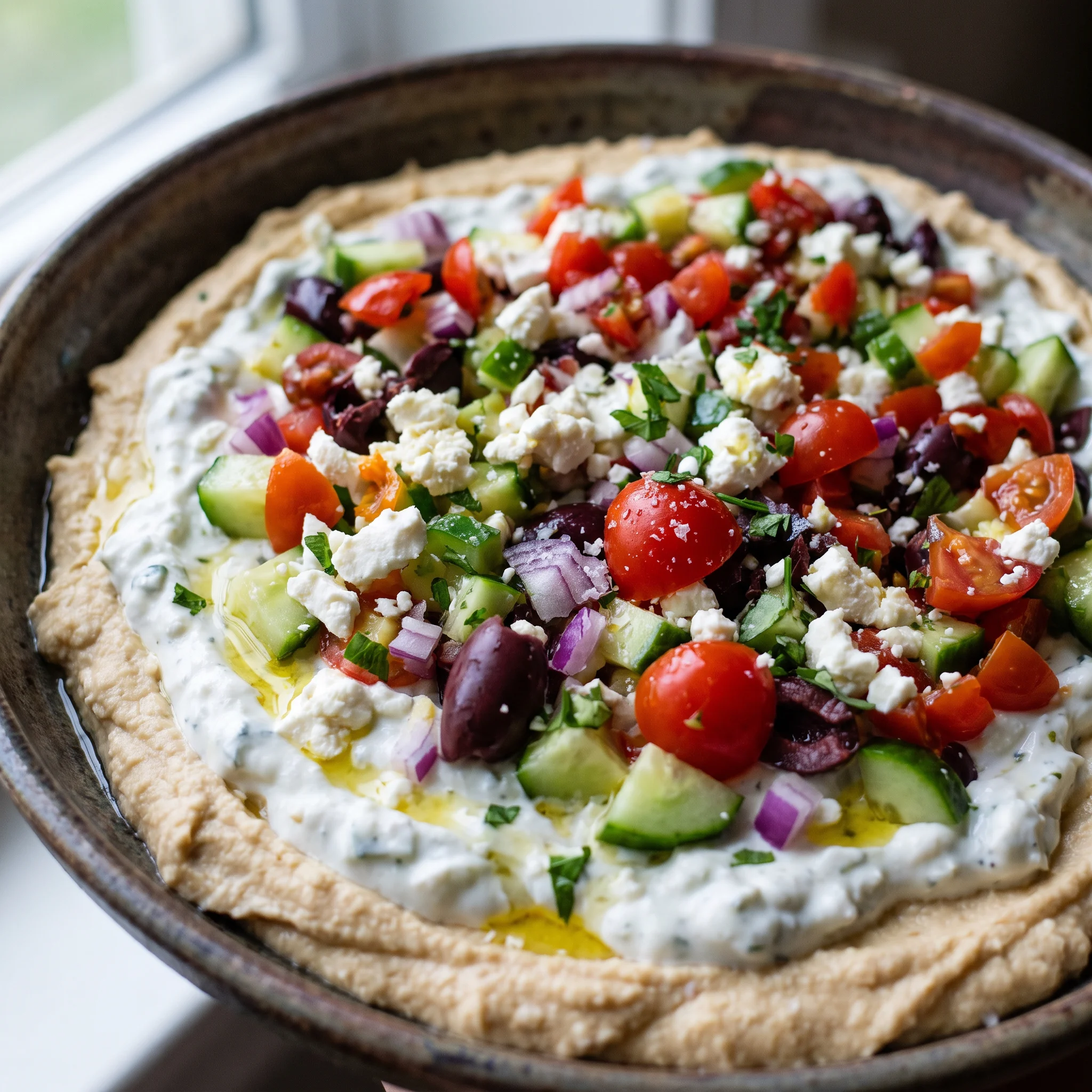
Mediterranean Hummus Dip Platter with Tzatziki and Feta
Ingredients
Method
- Chop all vegetables; set aside.
- Spread the hummus in an even layer across the bottom of a 12-inch round platter or serving dish (a pie dish or similar works too).
- Carefully spread the tzatziki over the hummus, leaving a 1/2-inch border around the edge so the hummus remains visible.
- Scatter the feta, cucumbers, tomatoes, Kalamata olives, and red onion over the top. Drizzle with olive oil and finish with a sprinkle of sea salt.
- Serve with crackers, fresh vegetables, and/or whole-wheat pita for dipping.
Storage and the Serving Window
This platter is at its best within an hour of assembly. The hummus and tzatziki hold fine, but the chopped tomatoes and cucumbers start releasing water the moment they sit on top, so the surface turns wet and the neat border blurs. If you’re not eating within that hour, keep the dips and the chopped toppings in separate containers in the fridge and layer them just before serving.
Once built, cover and refrigerate leftovers. They keep about two days, but the texture drops fast: the tomatoes and cucumbers weep, the dips thin where the vegetables sit, and the feta softens. Day two is edible, not the same platter.
Don’t freeze the assembled dish. Dairy-based dips separate when thawed, and the chopped vegetables collapse. You can freeze plain hummus on its own for longer keeping, but leave the tzatziki and fresh toppings out of it.
To serve a stored portion, scoop off the wet topping, stir the dips together or leave them as they are, and add fresh cucumber, tomato, and herbs. Save the olive oil drizzle and the herb sprinkle for right before it goes out. They sit on the surface, so added earlier they just soak in and dull.
Swaps That Hold the Platter Together, and the Ones That Don’t
Hummus: Store-bought works, and so does homemade. If you want it dairy-free, check the tub, because some brands stir in yogurt or labneh. For a lighter base, a white bean or roasted eggplant dip spreads the same way.
Salt and lemon swing hard from brand to brand, so taste the base before you salt the finished platter. A thin, loose hummus won’t hold the 1/2-inch border under the tzatziki; it slumps and the ring disappears. 5 cups the recipe calls for and adjust after the first taste.
Tzatziki: A dairy-free yogurt, coconut or cashew, makes a passable version. Skip fat-free or watery tzatziki entirely. The cucumber in tzatziki releases water as it sits.
A thin one slides off the hummus and pools at the edge of the platter within minutes, taking the border with it. Thick, spoonable tzatziki stays put. Use 1 cup, same as written, and drain any loose liquid off the top first.
Feta: Leave it as real brined feta. Fat-free crumbles are the one swap worth refusing. Fat-free feta doesn’t crumble; it powders and dries out, so you lose the salty bursts that cut the creamy dips.
A firm block in brine, crumbled by hand, gives irregular chunks that sit on top instead of dissolving. If you need dairy-free, a brined almond-based feta holds up better than the fat-free kind, but taste it first since the salt level varies.
Kalamata olives: Green olives or drained capers both work in the same 1/2 cup. Green olives are firmer and more bitter, so they crunch where Kalamatas are soft and oily.
Capers are smaller and saltier, so scatter them more sparingly than you would olives. Either way, pat them dry after chopping, or their liquid streaks the tzatziki.
Tips
- Salt the chopped tomatoes and cucumbers in a colander for 10 minutes, then spread them on paper towels and blot the olives dry, because the 1/2-inch hummus border only survives if the tzatziki stays thick, and any surface water on the toppings thins it as it drains down the sides.

Frequently Asked Questions
Can I make this hummus dip platter ahead of time?
Prep the parts, not the platter. Keep the hummus, tzatziki, and chopped vegetables in separate containers in the fridge and layer just before serving, since the tomatoes and cucumbers start weeping the moment they touch the dips and the border blurs. The whole thing comes together in 15 minutes, so that last-minute assembly is cheap.
Once built, it’s best within an hour.
Why did my tzatziki and hummus mix together instead of staying layered?
Most likely the tzatziki was too thin. A spoonable tzatziki holds a dollop’s shape on the spoon; a watery one creeps over the hummus and drags the border with it. Check the tub before you spread, and if it’s loose, drain the liquid off the top first.
The second thing to check is the base: hummus that’s still cold and stiff won’t take the weight of the tzatziki, so let it soften enough to spread in a smooth, even layer before the second dip goes on. Keep that 1/2-inch hummus ring uncovered either way, and if tzatziki crosses it, pull it back with a clean spoon.
How is this Mediterranean hummus platter different from a classic hummus dip?
A classic hummus dip is one texture and one flavor: smooth, lemony, tahini-forward, with maybe a swirl of oil and a sprinkle of paprika. Here the hummus is the floor, not the dish.
The tzatziki on top brings cool cucumber and yogurt against the dense base, and the feta, Kalamata olives, tomato, cucumber, and red onion sit in a single layer so every scoop carries salt, brine, and crunch along with the dip. It’s a composed platter meant to be eaten with pita and raw vegetables, not a bowl of hummus with a garnish.
