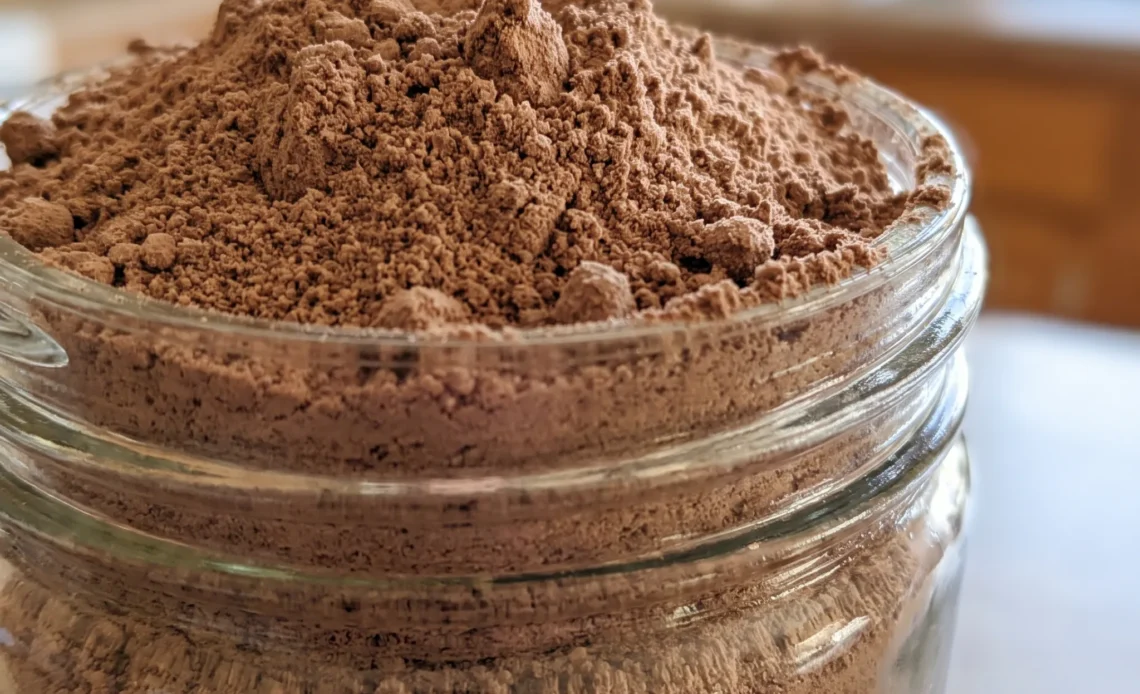
This is not a store-bought packet of cocoa that turns into watery, sweetened milk. This is a hot cocoa mix that drinks like a rich, creamy mug made from scratch, and it comes together in the time it takes to boil water. The secret is a clever pairing of sugars and powdered milk that gives the drink a silky texture without any fuss.
You might think a simple cocoa mix is just about convenience, but this one has a depth that makes it taste like you lingered over a stove, even when you didn’t. It’s the kind of pantry staple you’ll reach for on a cold evening, and it delivers every time.
Why two sugars?
Ultrafine sugar dissolves almost instantly in hot liquid. That means no grit at the bottom of your mug, even if you stir casually. Powdered sugar brings something else: a silky texture that coats your tongue.
It also keeps the dry mix from separating in the jar. The two work together, one for quick sweetness, the other for body.
You might think one sugar would do, but the mix would either feel grainy or turn pasty. This pairing gives you a drink that tastes sweet from the first sip and finishes smooth. When you add hot water or milk, the sugars vanish into the liquid, leaving only flavor behind.
What does powdered milk really do?
Powdered milk is the backbone here. It supplies the dairy solids that turn plain water into something closer to milk. That’s what makes the cocoa taste creamy rather than thin.
It also plays a quieter role: bulking up the mix so the cocoa doesn’t dominate. Without it, you’d have a powder that’s mostly sugar and cocoa, and the drink would lack that rounded mouthfeel.
The milk powder softens the edge. As you stir your mug, you’ll see the powder dissolve into a rich, opaque liquid. That color tells you the creaminess is there.
It’s the difference between sipping hot chocolate and drinking cocoa-flavored water.
Does the cocoa quality show?
Cocoa powder is the only ingredient you taste directly, so its quality sets the whole drink’s character. A good cocoa brings depth, fruity, earthy, or slightly bitter notes that make hot chocolate interesting.
Cheap cocoa can taste flat or harsh. The recipe calls for 3/4 cup, which is enough to make the chocolate presence clear without letting bitterness take over. You’ll notice the difference when you take a sip: a well-made mix tastes like cocoa, not just sweet milk.
The cocoa’s flavor comes forward but stays balanced, letting the sugar and milk do their supportive jobs. It’s the reason the drink feels satisfying rather than one-note.
The Three Ingredients That Do the Heavy Lifting
Powdered milk: Buy full-fat for the creamiest mouthfeel; nonfat turns the drink thin.
Cocoa powder: Dutch-processed gives a deeper, less bitter flavor than natural cocoa.
Ultrafine sugar: Use ultrafine (not regular granulated) so it dissolves without a trace of grittiness.
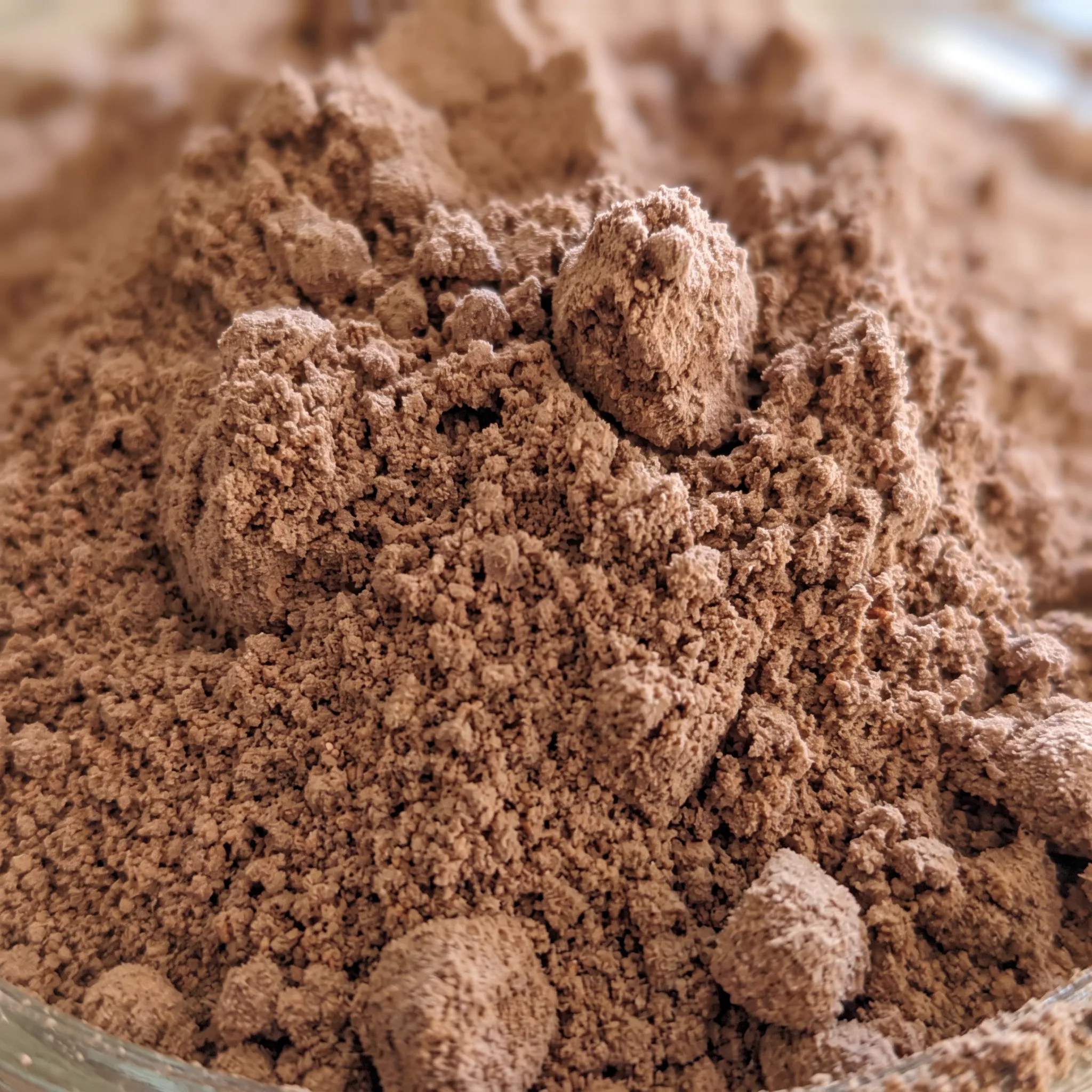
The mix contains both ultrafine sugar and powdered sugar, which dissolve at different rates. If the dry ingredients are not thoroughly combined, the cocoa and milk powders can form lumps when hot water is added.
The sugars help separate the particles, but only if evenly distributed throughout the mix. Look for a uniform color and no visible white or brown streaks in the dry mix before adding liquid.
Reading the mix before it hits the mug
When the powder clumps as you whisk
Cocoa and milk powder want to form lumps. If you see streaks or clumps after a minute of whisking, keep going, that’s not failure, it’s the mix telling you it needs more work.
A smooth, uniform color means every spoonful will dissolve evenly. Clumps left behind will show up as chalky bits in the drink. Whisk until the powder flows like sand, no darker patches.
That’s your cue it’s ready to store.
Spotting separation in the jar
After the mix sits, the finer sugars can drift upward, leaving cocoa settled at the bottom. That’s why the recipe says to stir the mix before each use, not just for show.
If you scoop from the top without stirring, your mug might taste flat and pale. Give the jar a shake or a quick stir with a dry spoon.
You’ll see the color even out, which means each serving carries the full flavor.
Judging the pour from the spoon
When you stir 3 tablespoons into hot water or milk, watch how the powder disappears. Properly mixed, it should vanish into the liquid with just a few turns of the spoon, leaving no grit at the bottom. If you feel a sandy residue, your liquid wasn’t hot enough or you didn’t stir enough.
Fix it by stirring harder or adding a splash of boiling water. The drink should look opaque and rich, not translucent.
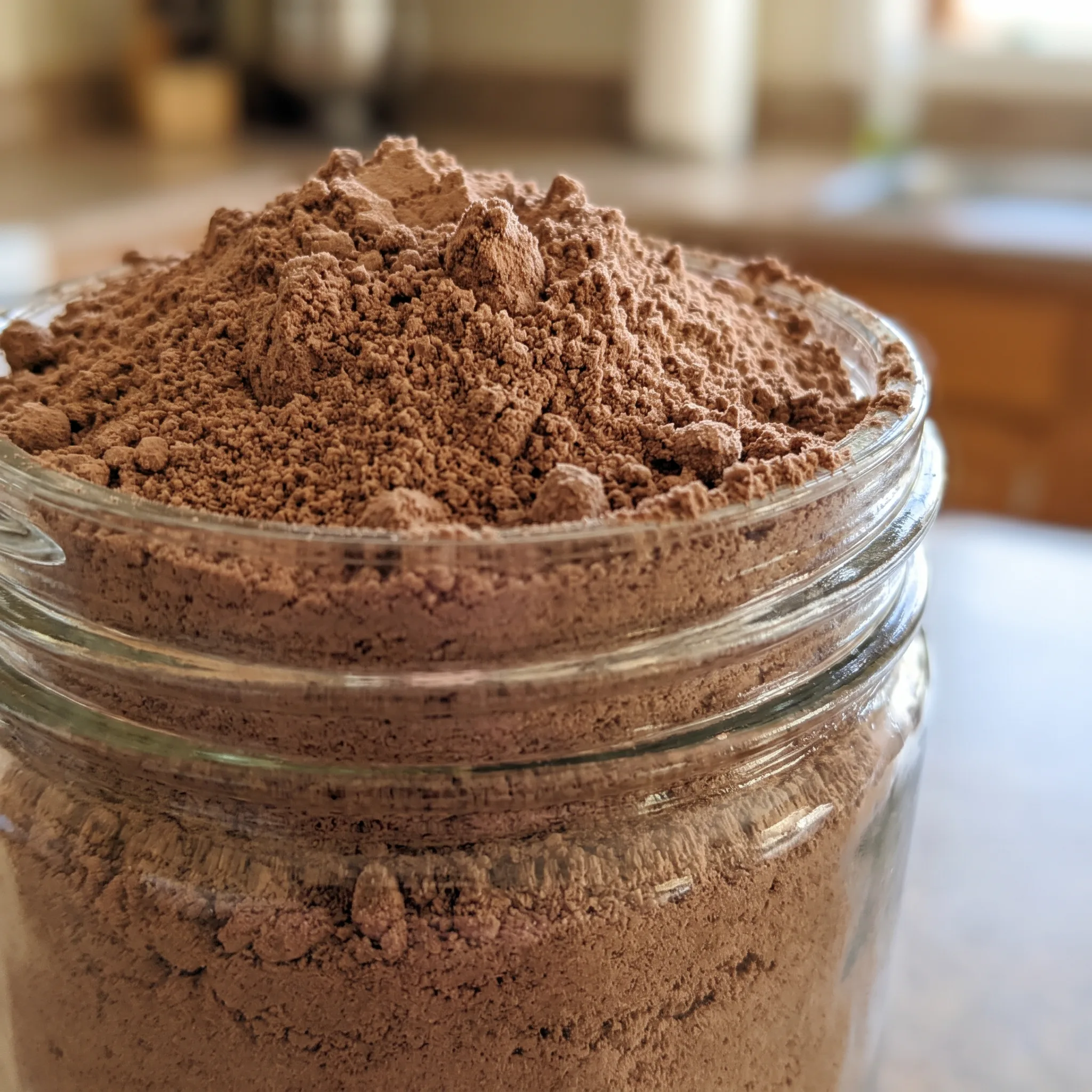
Homemade Hot Cocoa Mix with Powdered Milk
Ingredients
Method
- Combine the powdered milk, cocoa powder, ultrafine granulated sugar, and powdered sugar in a medium bowl, whisking thoroughly until uniform.
- For a cup of hot chocolate, mix 3 tablespoons of the blend into a mug, then pour in 1 cup of hot water or milk. Stir well and savor.
- Keep the mixture in a sealed glass jar or similar container. It stays fresh for 6 to 12 months.
Swap the Milk and Cocoa, Keep the Sugar Team Intact
Powdered milk: Non-dairy milk powder (soy, coconut, or oat) for a dairy-free mix. You can go dairy-free, but expect a trade-off. Soy and oat powders dissolve well and keep the drink creamy, though the flavor shifts slightly.
Coconut milk powder adds a faint tropical note that might clash with the chocolate. Start with the same 2 cups and test; if the drink tastes thin, add an extra tablespoon per serving.
Watch for clumping, non-dairy powders often need a longer whisk.
Cocoa powder: Dutch-processed cocoa for natural cocoa. Dutch-processed gives a darker color and a smoother, less acidic taste. Since this mix uses hot water or milk, not baking soda, you don’t need natural cocoa’s leavening action.
Swap it one-for-one, same 3/4 cup. The drink will taste deeper and more mellow, but if you prefer the brighter, fruitier edge of natural cocoa, stick with the original.
Ultrafine granulated sugar: Regular granulated sugar. You can swap, but you’ll likely find a sandy residue at the bottom of your mug. Ultrafine sugar dissolves nearly instantly; regular granulated needs more heat and stirring.
If you use it, grind regular sugar in a blender for a few pulses to approximate ultrafine, or accept the grit. The powdered sugar stays as is, it gives the drink body and keeps the mix from clumping.
Powdered sugar: Don’t swap it out. Powdered sugar is doing two jobs: it dissolves fast and adds a silky mouthfeel.
If you replace it with more granulated sugar, the mix turns grainy and the drink feels thinner. If you cut it entirely, the cocoa and milk powder may separate in the jar.
Keep both sugars; they’re not interchangeable.
Tips
- Sift the cocoa powder and powdered sugar together into the bowl before adding the other ingredients. This breaks up any lumps that would otherwise dissolve unevenly and leave chalky bits in the drink. A fine-mesh strainer works best; push the powders through with a spoon if needed.
- Use a dry, airtight container and store it in a cool, dark place, not just any pantry spot. Heat and light can accelerate flavor loss in the cocoa and cause the milk powder to go stale faster, even if the jar is sealed. A cupboard away from the stove or oven is ideal.
Storing and Serving Hot Cocoa Mix
This mix is built for the pantry. In an airtight glass jar or container, it keeps its full flavor for 6 to 12 months. The key is keeping moisture out.
Any humidity will make the sugars clump and the milk powder stale. Store it in a cool, dry spot, away from the stove or sink. A tightly sealed jar is important; it also keeps pantry odors from creeping in.
The mix itself doesn’t need refrigeration, and freezing it would introduce condensation when you thaw it, which you don’t want. For quick mornings, portion the mix into small jars or resealable bags, each holding 3 tablespoons.
That way you grab one and go. When you’re ready, stir it into hot water or milk and drink right away.
It’s best within a few minutes, while it’s hot and smooth. If it sits, the cocoa can settle, so give it a stir if you pause mid-mug.
This mix doesn’t spoil quickly, but it’s at its peak in that first year. After that, the cocoa fades and the milk powder may turn slightly stale. You’ll notice a duller taste, which is your sign to make a fresh batch.
Frequently Asked Questions
How long does this hot cocoa mix last?
Kept in an airtight container in a cool, dry spot, it holds its flavor for 6 to 12 months. Humidity is the enemy, so a tight lid is key. You’ll know it’s past its prime when the cocoa tastes dull and the milk powder seems stale.
That’s your cue to make a fresh batch.
Can I use this mix with milk instead of water?
Yes, absolutely. Stir 3 tablespoons into a mug of hot milk for an extra-rich cup.
The powdered milk in the mix still does its job, but fresh milk adds a creamier body that water can’t. Expect a more rich drink that coats the mug a bit more.
Why does my hot cocoa have lumps and how do I prevent them?
Lumps usually come from not whisking the dry mix thoroughly before scooping, or adding powder to liquid that isn’t hot enough. Whisk the mix until it flows like sand, with no darker patches.
When you stir it into the mug, use water that’s just off the boil and stir firmly. If you still see bits, a quick whisk with a fork usually smooths them out.
