
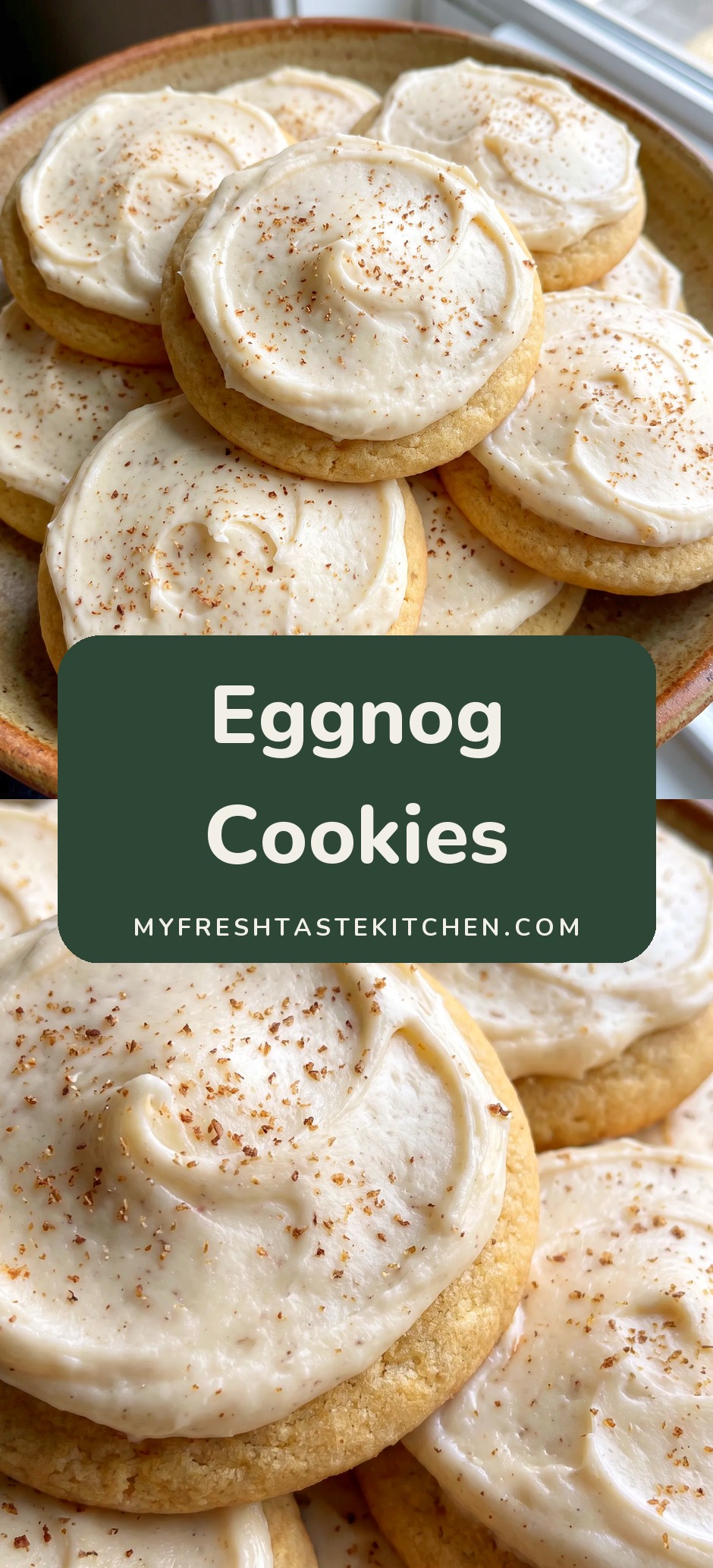
Frosting these takes longer than baking them, mostly because a warm cookie will undo the work in seconds. This is a soft, spiced eggnog cookie that puts the drink’s cozy flavor in two places at once, and the spice has to stay in balance or the frosting reads like a second cookie instead of the finish. The dough itself is forgiving, which is why these eggnog cookies work for anyone who’s ever watched a holiday cookie dry out.
Yolks alone keep the crumb tender, and the frosting is where the real margin for error lives: too loose and it slides, too stiff and it tears the tops. You’ll know by feel.
Layering Spice Without Overpowering
Nutmeg and cinnamon run through both the dough and the frosting, so you’re splitting those amounts on purpose. The dough gets a full teaspoon of nutmeg and half a teaspoon of cinnamon, the frosting just a quarter teaspoon of nutmeg.
That keeps the frosting bright and creamy instead of tasting like a second spice cookie. Rum extract shows up twice too: a half teaspoon in the dough, another half in the frosting. You can push the dough to a full teaspoon if you want the rum to lead, though it’ll compete with the frosting’s milder note.
Grated whole nutmeg smells sharper and more resinous than the pre-ground jar, and that difference shows most in the frosting, where nothing gets baked off. The eggnog itself is only a third of a cup in the dough.
It adds moisture and a faint richness, but the spice and extracts carry the flavor. Taste the dough before baking and adjust the rum if it reads flat.
##

The Ingredients That Carry This Cookie
Nutmeg: Whole nutmeg grated fresh makes the frosting smell resinous and sharp; the pre-ground jar goes flat and dusty.
Rum extract: Real rum extract, not imitation rum flavoring, gives a clean note that survives both the bake and the raw frosting.
Eggnog: Full-fat eggnog, not light or almond-based, brings the richness and acidity the baking soda needs to lift this dough.
Egg yolks: Save the whites for another use; two yolks alone give fat and a soft set without the water that makes cakey cookies.
Unsalted butter: Cool room temperature butter, dentable but not greasy, creams into the light base this dough needs.
Powdered sugar: Sift it if yours is lumpy; clumps never smooth out in buttercream and leave hard specks in the frosting.
Reading the Dough, the Bake, and the Frosting by Eye and Hand
Judging the creamed butter and sugar
Butter at cool room temperature dents when pressed but doesn’t squish. Beat it with both sugars until the mixture lightens and looks like thick frosting, not wet sand. Under-creamed butter leaves sugar crystals that won’t dissolve later, so the cookies bake up flat and speckled.
If the butter was too cold, it’ll clump; let the bowl sit a few minutes and beat again. Too warm, and the whole mass turns greasy and slack.
Stop when it’s pale and holds a soft peak from the beater.
When the dough is mixed enough
The flour disappears into a soft, tacky dough that holds a scoop’s shape but doesn’t feel stiff. Stop the mixer the moment that happens. Another thirty seconds and the gluten tightens; you’ll feel the dough resist when you scoop it, and the baked cookies come out chewier and tougher.
If you’ve already overmixed, there’s no fix, but a gentle hand shaping the balls keeps them from getting worse. This dough should look like soft cookie dough, not bread dough.
Reading the bake: set tops, golden edges
At 8 minutes, check. The tops should look dry and barely set, the edges just starting to color.
The centers will still feel soft if you poke one. That’s the pull-them point, because they firm up on the sheet. Leave them past 11 minutes and the bottoms darken and the crumb dries.
If your oven runs hot, start checking at 7. One sheet at a time on the middle rack keeps the heat even, so you’re not guessing between racks.
Telling when the frosting is the right consistency
After the first two cups of powdered sugar, you’re alternating eggnog and sugar. Stop when the frosting falls off the beater in a slow ribbon that holds its shape for a second before sinking back. Too stiff and it tears the cookie as you spread; too loose and it slides off the edge.
If you’ve gone too far with eggnog, sift in a tablespoon of cornstarch and beat it through. Taste as you go: it should be creamy with a clear rum note, not just sweet.

Eggnog Cookies with Eggnog Frosting
Ingredients
Method
- Set oven to 350°F (175°C) or 325°F (165°C) if using a convection oven (certain models adjust automatically). Prepare cookie sheets by lining with parchment paper or silicone baking mats.
- In a medium bowl, combine flour, nutmeg, cinnamon, baking soda, and salt by whisking. Leave aside.
- Using a large bowl, cream the butter, granulated sugar, and brown sugar together until light and fluffy.
- Incorporate the 2 egg yolks (be careful not to include the whites), vanilla extract, and rum extract into the butter mixture by beating.
- Add the eggnog to the butter mixture, beating on low speed.
- Next, incorporate the flour mixture into the butter and eggnog mixture, beginning at low speed and gradually raising until fully combined.
- Using a medium cookie scoop, portion the dough into balls of about 1 to 1.5 tablespoons each. Shape into balls and arrange about 2 inches apart on the prepared sheets. For a slightly flatter result, gently press down on each ball.
- Place one sheet at a time on the middle rack of the preheated oven and bake for about 8-11 minutes, or until the tops appear set and the edges are just beginning to turn golden.
- Take out of the oven and let cool on the sheet for at least 10 minutes before moving to a wire rack.
- In a large bowl, beat the butter until it is smooth and creamy.
- Stop the mixer and incorporate 2 cups of the powdered sugar, along with the nutmeg, salt, and rum extract. Begin mixing on low speed and gradually increase until fully combined.
- Add the remaining powdered sugar in increments of about 1/2 cup, alternating with 1 tablespoon of eggnog, until the flavor and consistency are as desired. If the frosting is too thin but becoming overly sweet, beat in 1-2 tablespoons of cornstarch (sifting it first is recommended).
- Make sure the cookies are completely cooled, then spread frosting using a flat knife. If desired, dust the tops with a little additional nutmeg.
Storing Frosted Eggnog Cookies and the Best Time to Eat Them
Frost these once the cookies are fully cool, and eat the first one within a few hours, while the buttercream is still soft and the cookie underneath has a little give. That first day is the best texture: crisp edges, tender middle, frosting that spreads under a knife. After that the frosting firms up and the cookies soften as they pull moisture from it.
Layer them in an airtight container with parchment between rows and keep them at room temperature. They hold two to three days there, and the frosting stays spreadable-firm rather than rock hard. The fridge buys you about a week, but cold buttercream goes dense and the cookies turn slack, so let a chilled one sit out twenty minutes before eating.
Freeze the unfrosted cookies only, up to two months; thaw at room temperature and frost fresh. Frozen frosted cookies weep and the buttercream never comes back right.
Dust nutmeg over the tops just before serving, never in advance. The spice goes flat overnight, and the aroma is the first thing you want.
What You Can Change in This Dough and What You Can’t
Eggnog: Dairy-free eggnog (oat, almond, coconut, or soy based) works in the dough at the same 1/3 cup, and in the frosting starting at 3 tablespoons. Homemade eggnog made with cooked custard is thinner than carton eggnog, so hold back a spoonful in the frosting and add it only if the mixture needs loosening.
The dough bakes up nearly the same: it’s only a third of a cup against two and a half cups of flour, so the eggnog is there for moisture and a faint richness rather than flavor. The frosting is where you’ll notice the difference.
Nut-based eggnog can read slightly bitter under the powdered sugar, and coconut eggnog pushes a coconut note that competes with the nutmeg. The baking soda lift depends on the eggnog’s acidity along with the brown sugar, and dairy-free versions vary in how acidic they are, so watch the first tray and pull it when the tops look set. If the cookies spread flatter than you expect, that’s the eggnog, not your technique.
Almond-based eggnog is the thinnest of the bunch, so start the frosting with less and add the rest by the tablespoon.
Rum extract: Real rum can stand in, but it’s mostly water and alcohol where the extract is concentrated. Use 1 to 2 teaspoons of dark or spiced rum in the dough in place of the 1/2 teaspoon of extract, and 1 teaspoon in the frosting in place of its 1/2 teaspoon. Imitation rum flavoring is weaker and tastes like candy rather than liquor, so if that’s what’s in the cabinet, keep it in the dough only and leave the frosting without.
The alcohol in real rum cooks off in the oven, so the baked cookie comes out milder than the dough tasted. The frosting is raw, which means any boozy edge you add there stays boozy, and 1 teaspoon is enough to taste it. Too much liquid in the frosting thins it past the point where a flat knife spreads it cleanly, so if you go with real rum, cut the eggnog by a tablespoon and check the consistency before adding more.
Butter in the frosting: Salted butter works in the frosting at the same 2/3 cup, but skip the 1/4 teaspoon of salt the recipe calls for. If you only have salted butter in the dough, cut the 1/4 teaspoon of salt there too. The sticks vary by brand, so taste the creamed butter before the flour goes in and add a pinch more salt only if it tastes flat.
Salted butter carries somewhere between a quarter and a half teaspoon of salt per stick, which is close to what the recipe adds on its own. Double-dipping gives you a frosting that tastes salty under the sugar rather than seasoned, and salt in the dough tightens the crumb and mutes the nutmeg.
Buttercream made with salted butter also firms up a touch faster in a cold kitchen, so spread it sooner rather than later. If you keep unsalted butter on hand, stick with the recipe as written: the salt amounts are there to make the spice and rum read clearly, not to make the cookies salty.
All-purpose flour: A one-to-one gluten-free blend can replace the flour cup for cup, but the dough will be softer and tackier than the wheat version. Scoop and shape with wet hands if it sticks, and expect the balls to need a gentle press to hold their shape. Almond or coconut flour will not work here; they absorb liquid differently and the cookies bake up greasy and crumbly.
Gluten-free blends vary in how much liquid they pull, so the dough can go from scoopable to loose in a minute. Chilling the scooped balls for 15 to 20 minutes before baking firms them enough to hold their shape in the oven.
The baked cookies come out a little more tender and fragile at the edges, so let them sit the full 10 minutes on the sheet before you move them. The frosting is unaffected, since it never sees flour.
Tips
- Weigh the dough instead of eyeballing the scoop: a level medium scoop runs about 20 g, and 1 to 1.5 tablespoons of this slack dough weighs 18 to 24 g. Roll each portion on the scale and you land 30 cookies from the batch, which is exactly the yield the frosting is built for. Balls that drift to 2 tablespoons give you roughly 22 cookies, so the last few get scraped frosting and bake a minute slower in the center.
Butter-based frosting firms as it cools, so spreading it onto a cookie that is still warm from the oven softens the butter and causes the frosting to slump or slide. The recipe’s 10-minute rest on the baking sheet only begins the cooling process; the cookies must reach room temperature before frosting, or the frosting never sets properly. Conversely, a frosting made too stiff with powdered sugar will tear the tender cookie as it is spread.
Frequently Asked Questions
Can I make the eggnog frosting ahead of time?
Yes, but you’ll need to rewhip it. Cold buttercream sets firm, so let the bowl sit out until it gives when pressed, then beat it for a minute or two until it’s creamy again.
If it still feels stiff, a teaspoon more eggnog loosens it without pushing it past spreadable. Frost the cookies once they’re fully cool, and grate nutmeg over the tops just before serving.
Why did my eggnog cookies spread too much in the oven?
Check your butter first. If it was greasy or warm when you creamed it, the dough goes slack and the balls slump as they bake.
Cool, dentable butter creams into a light, fluffy mixture that holds its shape. Second, look at your eggnog: dairy-free versions vary in acidity, and almond-based eggnog is the thinnest, so if the cookies spread flatter than you expect, that’s the eggnog, not your technique.
If the dough feels tacky, a gentle press on the balls is all you need; don’t overwork it.
How do I keep the frosting from sliding off the cookies?
The cookies have to be completely cool. Even a slightly warm cookie softens the butter in the frosting and it slips off the edges. Once they’re at room temperature, spread a test cookie first and watch it for a minute before you commit the rest.
If the frosting still feels loose, sift in a tablespoon of cornstarch and beat it through; that firms it without making it sweeter.
Can I use store-bought eggnog for this recipe?
Yes, and full-fat carton eggnog is what the recipe is built around. It brings the richness and acidity the baking soda needs to lift the dough.
Light or almond-based eggnog will work in a pinch, but the dough bakes up nearly the same since the eggnog is only a third of a cup against two and a half cups of flour. The frosting is where you’ll notice the difference: nut-based eggnog can read slightly bitter under the powdered sugar, and coconut eggnog pushes a coconut note that competes with the nutmeg.
What’s the difference between these eggnog cookies and traditional sugar cookies?
Sugar cookies lean on vanilla and a simple butter-sugar base; these bring nutmeg, cinnamon, and rum extract into both the dough and the frosting. The dough uses two egg yolks and no whites, so the crumb stays soft rather than cakey.
The frosting is a rum-and-nutmeg buttercream, not a flat royal icing or glaze, so the spice hits twice. And the eggnog itself adds moisture and a faint richness, though the spice and extracts carry the flavor.
