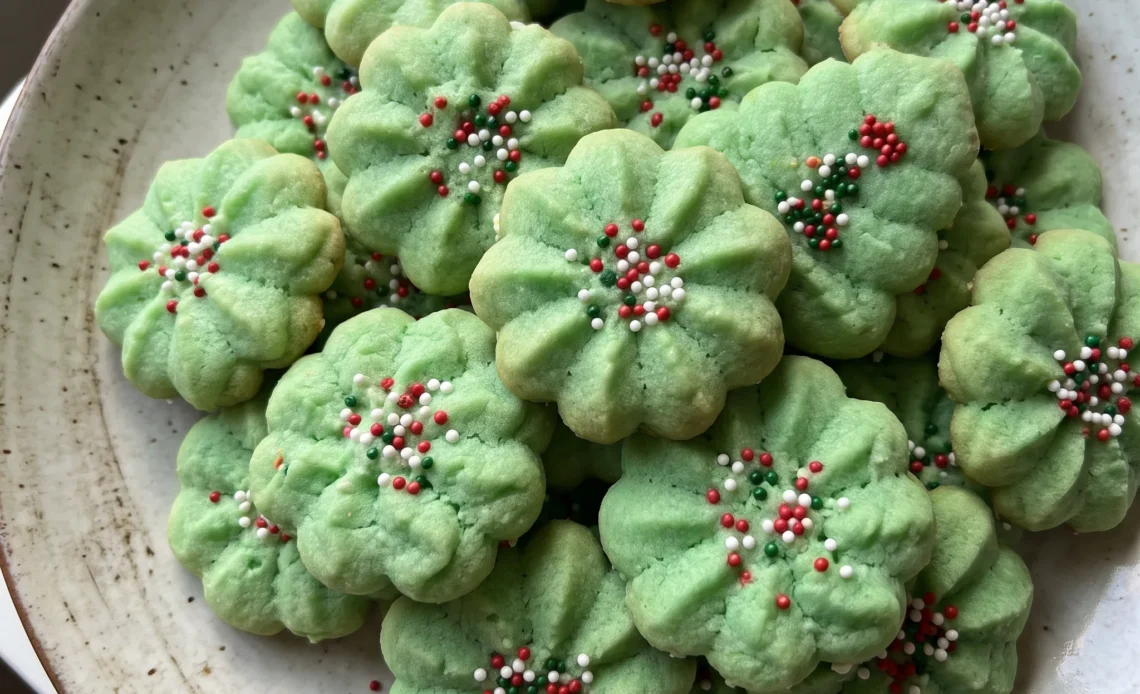
These spritz cookies are a holiday ritual that hinges on one thing: the dough’s texture. Get it right, and the press turns out starched, buttery shapes that shatter softly on the tongue. Get it wrong, and you’ll fight a sticky mess or dry, cracking dough that refuses to release.
The margin for error is slim, but the payoff is worth it. There’s something nostalgic about pressing out a tray of these little cookies, the almond scent filling the kitchen, the promise of a melt-in-your-mouth bite that feels like a small celebration.
Whether you’re carrying on a family tradition or starting one, these spritz cookies reward a steady hand and a watchful eye. They’re the kind of cookie that disappears fast, but they’re also the kind you’ll want to linger over, because the process itself is part of the charm.
Spritz cookies rely on a delicate, tender crumb that comes from minimal gluten development. When the dough is overmixed, the gluten network tightens and, under the heat of the oven, the cookies relax and spread, blurring the fine details from the cookie press. The recipe’s instruction to mix until just combined is the safeguard against this, it keeps the dough soft enough to press yet firm enough to hold its shape.
Switch to powdered sugar for tender spritz
Powdered sugar brings cornstarch to the dough, and cornstarch keeps gluten from overdeveloping. That’s why these cookies come out so tender. Granulated sugar would make a crisper, flatter cookie, and you’d lose the delicate ridges from the press.
The 1 1/4 cups here (140 g) isn’t arbitrary; it’s the amount that gives the fine, crumbly bite spritz are known for. You can see the difference in the texture before baking: the dough feels smooth, almost silky, not grainy. And after, each cookie holds its shape and practically dissolves on the tongue.
Almond extract: the flavor that defines spritz
Almond extract adds a distinct nutty note that plays off the butter and vanilla. It’s what makes a spritz taste like a spritz, not just another butter cookie. But half a teaspoon is all you need.
That stuff is potent; too much and it turns bitter and medicinal, masking everything else. So trust the small amount and let it work quietly in the background.
The aroma alone will tell you it’s right.
Stop mixing the moment the flour disappears
Once flour hits liquid, gluten starts forming. The more you mix, the tougher the dough gets, and tough dough bakes into dense, chewy cookies instead of light, tender ones. The recipe warns to mix only until just combined, and it means it.
You’ll know you’re done when no dry streaks remain, but the dough still looks a little shaggy. That’s the point to stop. With spritz, you’re after that melt-in-the-mouth quality, and overworking kills it.
Why a cookie press is important here
The cookie press gives spritz their signature shapes: stars, trees, wreaths, all uniform and intricate. You can’t pipe those shapes by hand. The dough has to be soft enough to push through the press but firm enough that the details stay sharp.
If it’s too sticky, the patterns blur; too stiff, the dough won’t release. But when it’s right, the cookies come out looking like they were stamped. The recipe has you leave an inch between them because they don’t spread much, but they still need a little room for air to circulate.
That gap keeps them from fusing together.
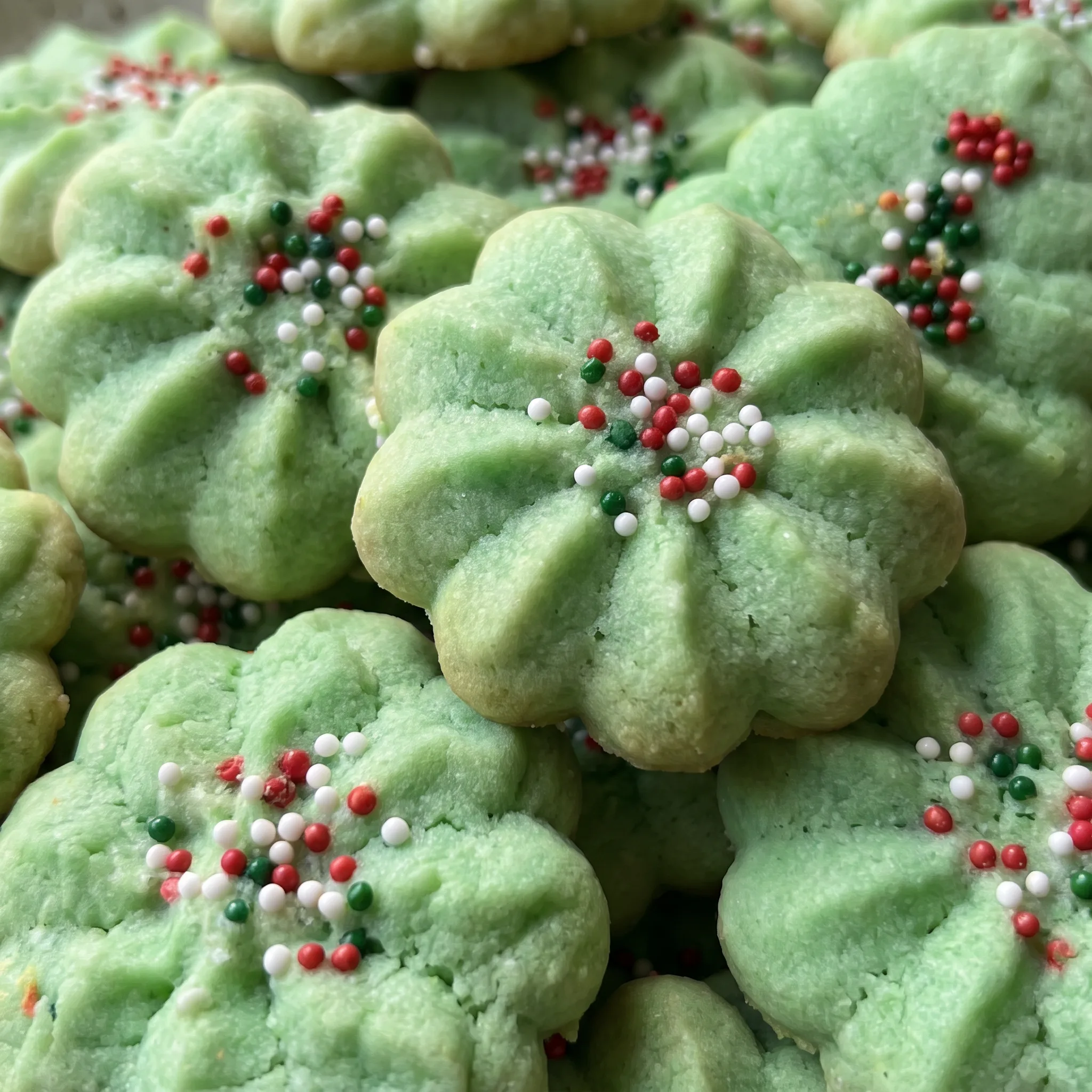
Butter, sugar, and extracts: the three calls that make or break spritz
Butter: Buy unsalted and let it soften to room temperature so it creams properly.
Powdered sugar: The cornstarch in it keeps these cookies tender, so don’t swap in granulated.
Almond extract: Go with pure almond extract, not imitation, which can taste harsh.
All-purpose flour: Weigh it if you can; 300 grams is about 2 1/2 cups, scooped lightly.
Reading the dough before it ever hits the press
The butter-sugar stage that sets the texture
Beat butter, powdered sugar, and salt until light and airy, about 2 minutes. You’re looking for a pale, fluffy mass that holds peaks when you lift the beater. If it looks dense or greasy, keep going.
Underbeating leaves you with cookies that spread and lose their ridges. Overbeating is hard to do here, so err on the side of more air.
The moment the flour disappears
Mix just until no dry streaks remain, but the dough still looks a little shaggy. That’s the signal to stop. If you keep mixing, gluten forms and the cookies turn tough and chewy.
The dough should feel smooth and silky, not sticky or stiff. If it’s too sticky, chill it briefly; if too stiff to press, let it warm up a bit.
How the dough feels when it’s press-ready
Scoop a spoonful and push it through the press onto parchment. The dough should extrude cleanly, holding its shape with sharp edges.
If the pattern blurs or sticks to the press, the dough is too warm; chill it for 5 minutes. If it won’t come out or breaks off, it’s too stiff; let it sit at room temperature.
The right feel is like soft play dough.
Watching the edges for the first sign of color
Bake for 6 minutes, then peek. The cookies are done when the edges are just set and the bottoms are lightly golden, no browning on top. The card says 6 to 8 minutes, but pull them at the first hint of color.
They continue to firm up on the sheet. Overbaked spritz lose their tender crumb and taste dry.
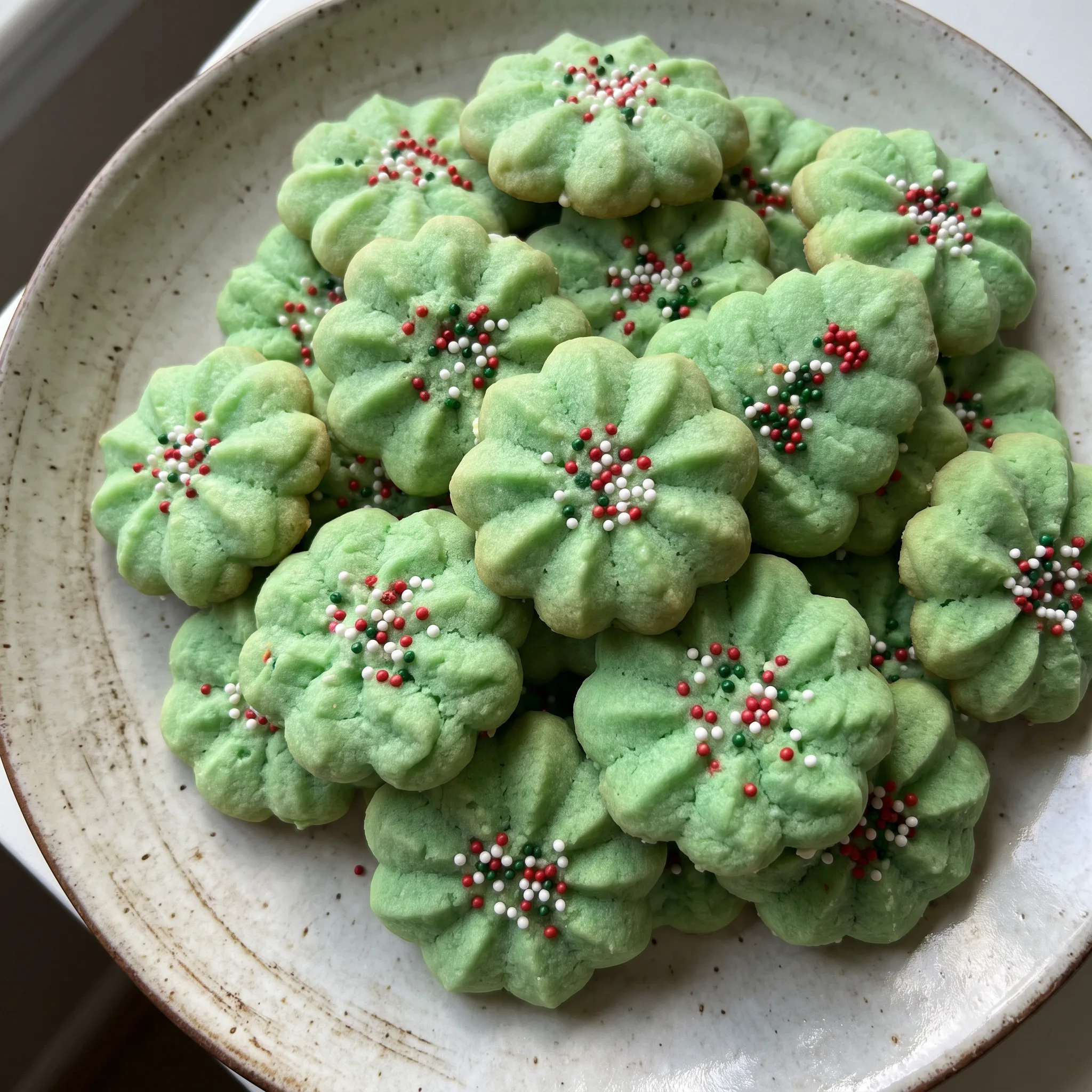
Almond Butter Spritz Cookies
Ingredients
Method
- Heat the oven to 375°F (190°C).
- Using an electric mixer, beat the softened butter, powdered sugar, and salt in a large bowl until the mixture is light and airy.
- Add the egg, vanilla extract, and almond extract, and mix until thoroughly incorporated.
- Slowly add the flour, mixing only until it is just combined; avoid overmixing.
- Put parchment paper on cookie sheets.
- Use a cookie press to form the dough onto the lined sheets, leaving about 1 inch of space between cookies.
- Bake for 6-8 minutes, keeping a close eye on them to prevent any browning.
Swap the almond extract, not the butter, and keep the spritz true
Almond extract: Use 1 teaspoon vanilla extract in place of the almond extract, or simply omit it. The cookies lose that distinct nutty undertone and taste more like a plain vanilla butter cookie. The texture stays the same, but the flavor profile flattens.
If you skip it entirely, the vanilla alone carries the cookie, which is milder and more neutral. Start with the same amount the recipe uses, then adjust after testing.
Butter: Salted butter can replace unsalted, but cut the added salt to 1/4 teaspoon. Salted butter already contains salt, so keeping the full 1/2 teaspoon makes the dough noticeably salty. Reducing the added salt keeps the balance right.
The texture stays identical because the fat content is the same. If you forget to reduce, the cookies will taste savory, not sweet, and the salt can mask the almond.
All-purpose flour: For a gluten-free version, use a 1:1 gluten-free flour blend that contains xanthan gum, measured by weight at 300 g. Gluten-free flour absorbs liquid differently, so the dough may feel drier or more crumbly.
You might need to add a teaspoon of milk or water if it won’t hold together in the press. The cookies will spread less and have a slightly sandier crumb. The press still works, but the shapes may not be as crisp.
If the blend lacks xanthan gum, the cookies can turn brittle and fall apart.
Storage and Serving
Spritz cookies are at their best the day you bake them, when the crumb is tender and the ridges are crisp. Within hours, they’ll soften slightly, but they’ll still be good for up to a week if stored properly. Keep them in an airtight container at room temperature, layered with parchment or wax paper to prevent them from sticking.
Avoid stacking them too deep, as the weight can crush the delicate shapes. If they lose their snap, pop them in a 300°F oven for 3 to 4 minutes, then let them cool.
For longer storage, freeze the baked cookies in a single layer on a baking sheet, then transfer to a freezer-safe bag or container. They’ll keep for up to a month; thaw at room temperature, uncovered, to let any moisture escape. Do not refrigerate, as that dries them out and dulls the flavor.
If you’re making dough ahead, freeze the shaped cookies before baking; add a minute or two to the bake time straight from the freezer.
Tips
- Use room-temperature butter: it creams air into the dough more effectively than cold butter, giving the cookies a lighter texture and helping the dough extrude smoothly through the press. Cold butter will make the dough lumpy and harder to press.
- If the dough gets too soft while pressing, chill it for 5 to 10 minutes. Warm dough sticks to the press and loses its sharp ridges, so a quick chill restores the right consistency without making it too stiff.
Frequently Asked Questions
Why do my spritz cookies spread too much?
Most often the dough was too warm when it hit the press. Warm butter makes the dough slack, so the cookies lose their ridges and flatten out. If your kitchen runs hot, chill the dough for 5 minutes before pressing.
Also check that you beat the butter and sugar until light and airy; underbeating leaves the dough dense, and that spreads too.
Can I make the dough ahead of time and chill it?
You can, but chilling firms the dough, which makes it harder to press. If you do chill it, let it sit at room temperature until it’s soft enough to extrude cleanly, like soft play dough. For longer storage, freeze the shaped cookies before baking and add a minute or two to the bake time straight from the freezer.
How do I know when spritz cookies are done without browning?
Pull them at 6 minutes when the edges are just set and the bottoms are lightly golden. The tops should stay pale, no color at all. They firm up on the sheet as they cool, so don’t wait for any browning on top.
Overbaked spritz lose that tender crumb and taste dry.
What’s the difference between spritz cookies and butter cookies?
Spritz are a type of butter cookie, but the cookie press sets them apart. The press forces the dough through a die, creating intricate shapes with sharp ridges that hold during baking.
Butter cookies are often rolled and cut or piped into simpler forms, and they typically use granulated sugar for a crisper bite. Spritz use powdered sugar, which adds cornstarch and makes them more tender, almost melt-in-the-mouth.
