
An hour in the slow cooker with the lid on and no stirring at all is what makes crockpot christmas crack work, and it’s also where a batch goes wrong. Chocolate that gets poked at before it’s fully soft turns grainy, and once that happens you’re patching, not fixing. The upside is that the whole thing is dump-and-walk-away: layer everything, wait, stir on a schedule, then scoop.
Five ingredients, no tempering, no oven, and a tray of clusters that set firm enough to stack and give away. The one real risk is impatience, either at the pot or at the cooling sheet.
Give it both and the candy is glossy, snappy, and salty-sweet in a way that plain chocolate bark never manages.
Layer the Chocolates in the Right Order
Start with almond bark on the bottom of the slow cooker. It melts slower than the other chocolates, so it sits against the heat source and acts as a buffer, keeping the rest from scorching. Pile semi-sweet chips and chocolate bar or bark on top.
They melt at a lower temperature and need gentler heat. Add peanuts before any melting happens. As the chocolate softens, the nuts warm through and blend easily when you stir.
This order ensures even melting and prevents the chocolate from seizing. Once everything is in, the slow cooker does the work. You’ll see the chips and bar holding their shape on top while the almond bark softens underneath.
That’s exactly what you want.
A Trio of Chocolates Builds the Signature Texture
White almond bark gives the candy its structure. It sets firm at room temperature, so the clusters hold together without refrigeration and have a creamy backdrop.
Semi-sweet chocolate chips bring depth, cutting through the sweetness of the white chocolate so each bite isn’t cloying. The additional chocolate bar or bark doubles down on chocolate flavor and adds snap.
Together, they create a texture that’s both tender and crisp. When you bite into a cluster, you get that clean break, then the chocolate melts on your tongue, and the peanuts crunch.
It’s a balance you can taste. The three chocolates aren’t interchangeable; each plays a role in the final candy.
Balance Peanuts and Chocolate for Ideal Clusters
Five cups of peanuts to 48 ounces of chocolate is the sweet spot. Every peanut gets coated, but the mix isn’t drowning in chocolate.
Scoop a mound and you’ll see peanuts poking through, promising crunch in every bite. Use too few peanuts and the clusters turn into solid chocolate blobs that spread and lack texture.
Too many and the chocolate can’t hold them together; the clusters crumble and taste dry. Salted dry roasted peanuts are key. They bring a savory contrast that keeps the sweetness in check, and they contain no added moisture that could seize the chocolate.
The ratio matters more than you’d think. Stick with it and the clusters hold their shape and deliver that addictive salty-sweet punch.
Trust the Slow Melt, Then Stir on Schedule
The first hour, leave the lid on and don’t stir. The chocolates melt gradually from the gentle heat below, without any interference. Stirring too early can cause the chocolate to seize or turn grainy.
After that hour, remove the lid and stir. The peanuts get coated, and any unmelted pieces get incorporated. From then on, stir every 15 minutes.
This schedule prevents hot spots that could burn the chocolate and encourages everything to melt smoothly. You’ll see the mixture turn glossy and fluid. When it’s ready, the chocolate coats the peanuts evenly and drips off the spoon in a steady stream.
That’s your cue to start scooping.
Let the Clusters Set Slowly for the Best Finish
After scooping, let the clusters cool at room temperature. This slow set gives the chocolate a glossy sheen and a firm bite.
If you rush it in the refrigerator, condensation can form and the chocolate might bloom, developing a dull, streaky surface. The texture suffers too, becoming overly hard.
So give them time. If you’re using sprinkles, add them right after scooping, while the chocolate is still tacky. They’ll stick and add a festive touch.
Once fully cooled and firm, the clusters are ready. They’ll have a satisfying snap when you bite in, and the chocolate will be smooth, not waxy.
Patience pays off here.
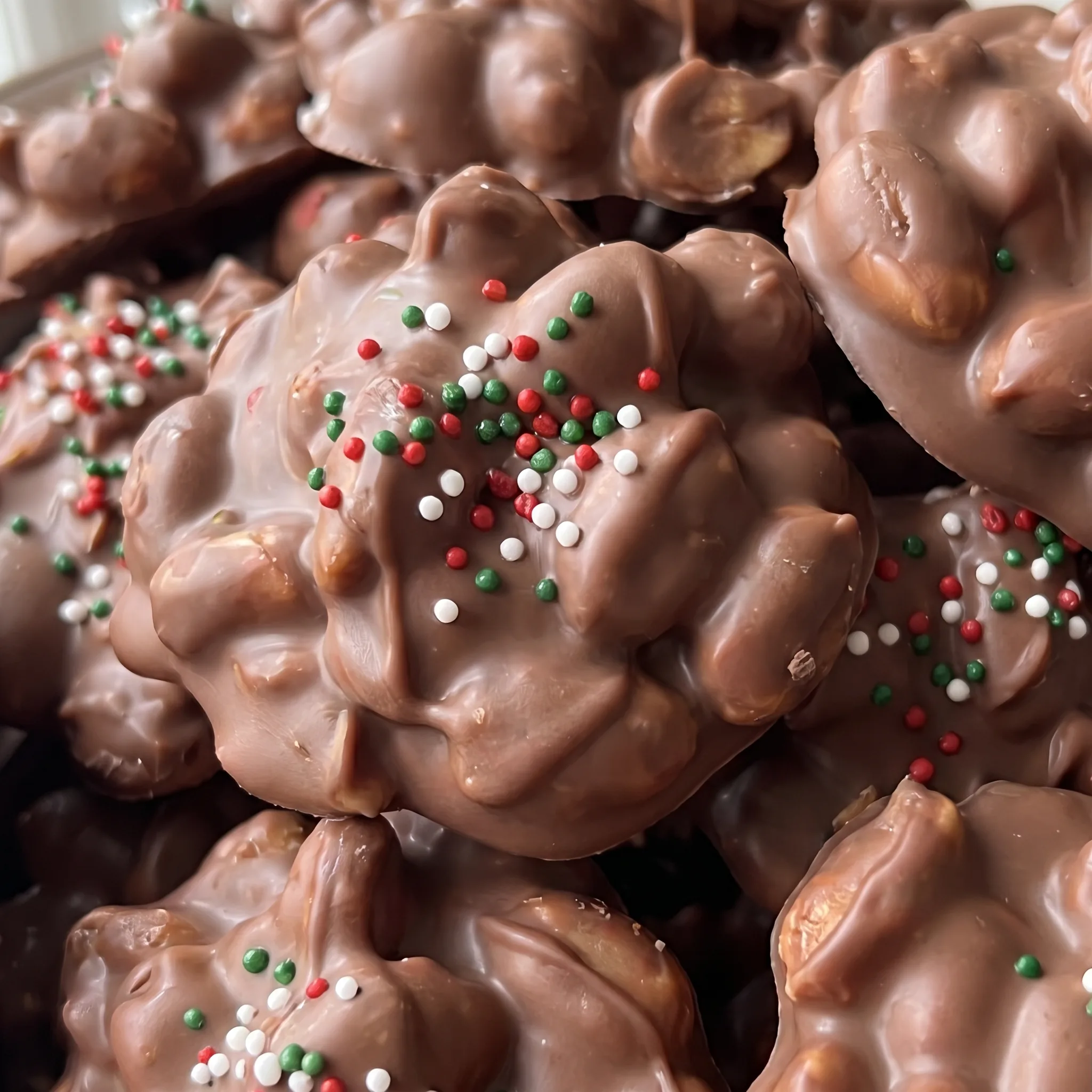
Three Chocolates, One Nut, and What Each One Needs to Be
White chocolate almond bark: Buy the block almond bark, not white chocolate chips, since chips carry stabilizers that keep them from melting into a coating that sets firm.
Semi-sweet chocolate chips: Standard chips are fine here, and their lower cocoa butter content is what keeps the clusters from turning greasy at room temperature.
Chocolate bar or chocolate bark: Use a bar you’d eat on its own or plain chocolate bark, chopped into chunks no bigger than the chips so it melts on the same schedule.
Salted dry roasted peanuts: Dry roasted matters more than the brand, because oil roasted or honey roasted nuts carry surface oil and sugar that thin out the chocolate.
Sprinkles: Nonpareils or jimmies both work, though the flat round sequins sink into warm chocolate instead of sitting on top.
Chocolate is sensitive to both heat and moisture: when it exceeds about 120°F or comes into contact with steam, its cocoa butter separates and the solids clump, producing a seized, grainy texture. In a slow cooker, the heating element is directly under the ceramic insert, so the chocolate touching the bottom can scorch while the top remains solid. The recipe’s layering and initial no-stir period are designed to let the chocolate melt gradually from indirect heat and avoid trapping moisture under the lid, which would otherwise cause seizing.
Judging the Melt, the Stir, and the Set
Reading the chocolate when the lid comes off
After an hour on low, lift the lid. The almond bark should be soft and glossy, but the chips and bar may still hold their shape. That’s normal.
If any chocolate looks chalky or stiff, it’s not ready. Stir gently to blend; if pieces resist, cover and check every 15 minutes. Don’t rush with higher heat, which can scorch.
Knowing when the mixture coats the spoon
When you stir, the chocolate should flow smoothly and coat the peanuts evenly. Lift the spoon: the mixture should drip off in a steady stream, not in thick clumps or a thin trickle.
If it’s too thick, the chocolate hasn’t fully melted; keep stirring every 15 minutes. If it’s thin and oily, you may have overheated it, but a good stir often brings it back.
Spotting the first sign of seize
Watch for a sudden grainy, lumpy texture or a dull sheen. That’s seized chocolate, often from moisture or overstirring early. If you catch it before it fully tightens, stir in a teaspoon of neutral oil to smooth it out.
Prevention is easier: keep the lid on for the first hour and avoid stirring until the chocolates have softened.
Judging the set by touch, not the clock
The clusters are ready when they feel firm and release cleanly from the mat. A gentle press with a finger should leave no indent.
If they’re still tacky, they need more time at room temperature. Moving them to the fridge can cause condensation and a dull, streaky surface.
Patience gives a glossy finish and a clean snap.
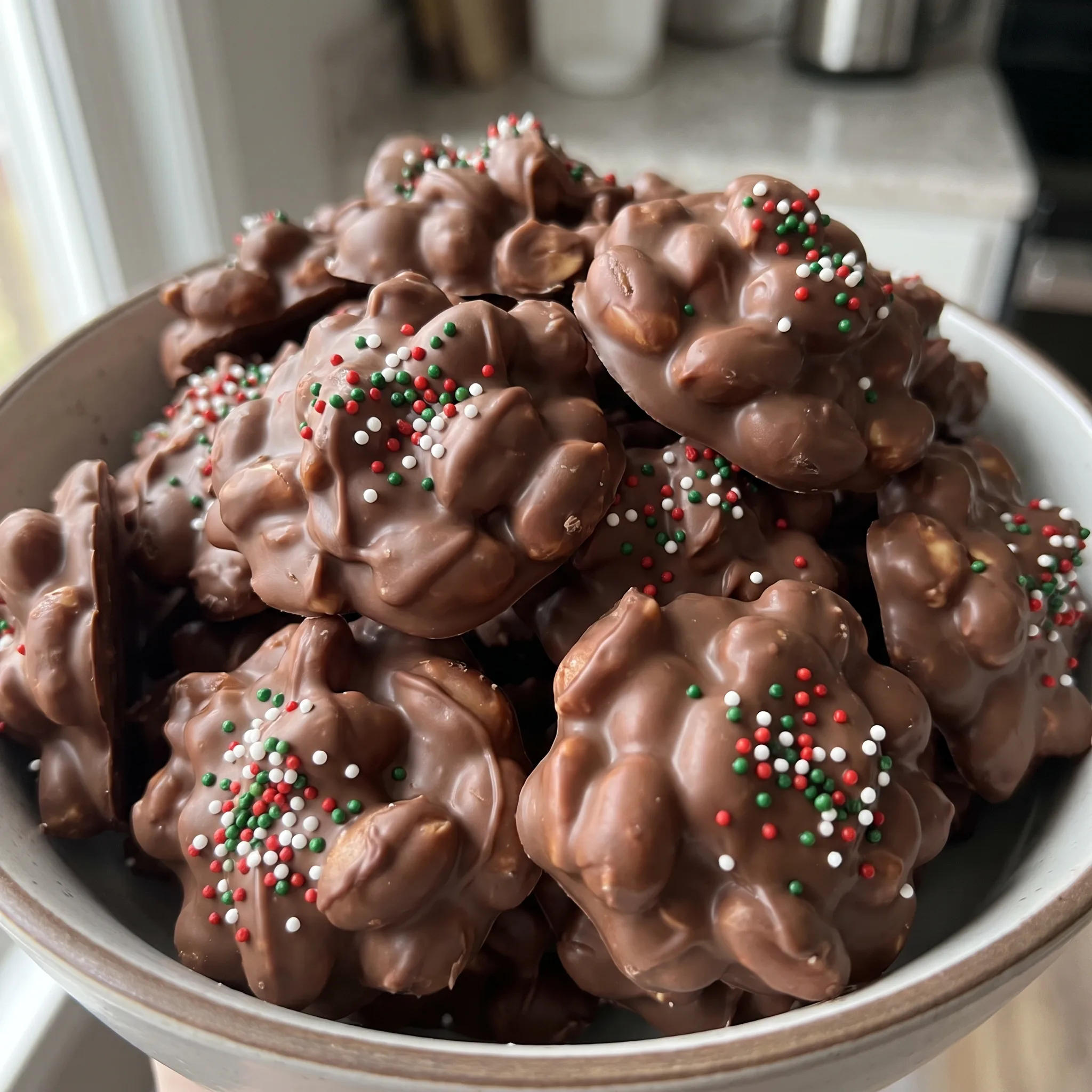
Crockpot Christmas Crack with Peanuts and Chocolate
Ingredients
Method
- Coat the interior of a slow cooker with nonstick spray or use a slow cooker liner to simplify cleanup.
- Prepare 2 baking sheets by lining them with silicone mats or wax paper; set them aside.
- Put the almond bark pieces into the slow cooker’s bottom.
- Introduce the peanuts, white chocolate almond bark, chocolate bar or bark, and semi-sweet chocolate chips.
- Put the lid on the slow cooker and turn it to low for 1 hour.
- Take off the lid and stir the mixture so the peanuts get coated with chocolate. If any chocolate pieces haven’t melted, put the lid back on and keep cooking, stirring every 15 minutes, until all chocolate is melted and can coat the peanuts.
- With a cookie scoop or two tablespoons, place heaping tablespoonfuls of the candy mixture onto the prepared baking sheets.
- If using sprinkles, add them right away, then let the candies set at room temperature until fully cooled and the chocolate is firm.
- Keep in an airtight container.
Storage, Shelf Life, and the Serving Window
Once the clusters are fully firm, move them to an airtight container and keep them at room temperature. Skip the fridge.
Cold air pulls moisture to the surface and dulls the gloss you worked for during the slow set. At room temperature they hold their snap and shine for about two weeks. Past that, the peanuts start pulling in moisture from the air and lose their crunch, and the chocolate may bloom into a pale, streaky film.
Bloom is harmless, just cosmetic, but the texture is the real clock. For a holiday gathering, serve them within three or four days of making them, when the chocolate is still glossy and the peanuts crackle. Sprinkles go on right after scooping, while the surface is tacky; after that they won’t stick.
If a batch softens in a warm room, a short chill firms it back up, but eat those first. These don’t freeze well; the chocolate sweats on thawing and the peanuts go limp.
Tips
- Work the scoop against the side of the slow cooker to level each mound before dropping it on the mat. A level scoop is roughly a tablespoon, so you get about 50 clusters from the batch instead of an uneven count, and the flat top keeps the cluster from spreading into a puddle as it sets.
- Scoop from the edge of the pot inward and give the mixture a quick stir every 8 to 10 scoops. The chocolate at the rim cools first and thickens, so pulling from the edge keeps the last clusters as fluid as the first, and the stir redistributes the peanuts that settle toward the bottom of the slow cooker.
Swap Around the Almond Bark, Not With It
White chocolate almond bark: Leave it alone. No white chocolate chips, candy melts, or chopped white chocolate bar. Almond bark is the only ingredient here that sets firm at room temperature without tempering or refrigeration.
White chocolate chips carry stabilizers that keep them from melting into a coating that hardens properly, so the clusters stay tacky and slump on the sheet. Candy melts set but taste waxy, and real white chocolate bar softens too much in a warm room. If you can’t find almond bark, this isn’t the recipe to improvise on.
Chocolate bar or chocolate bark: Use the same weight of good semisweet or bittersweet bar chocolate, chopped no bigger than a chocolate chip. A bar you’d eat on its own melts on the same schedule as the chips and brings a cleaner chocolate flavor than compound bark.
Bittersweet pushes the whole batch less sweet, which some cooks prefer with the salted peanuts. Chop it fine or it won’t melt evenly in the slow cooker. Start with the 12 ounces the recipe uses.
Semi-sweet chocolate chips: Equal weight of chopped semisweet bar chocolate, or milk chocolate chips if you want a sweeter candy. Chips are formulated to hold their shape in cookies, which is exactly why they work here: they melt slowly and keep the clusters from turning greasy at room temperature.
Chopped bar chocolate melts faster and can make the finished candy a touch softer. Milk chocolate chips push the sweetness up and mute the contrast against the white almond bark.
Use the same 12 ounces either way.
Salted dry roasted peanuts: Same volume of salted dry roasted almonds, cashews, or a mix, or unsalted roasted peanuts plus 1/2 teaspoon fine salt. Any dry roasted nut works because it carries no surface oil to thin the chocolate.
Cashews are softer, so the clusters lose some of the hard crunch. Almonds hold up closest to peanuts. If you only have unsalted nuts, add the salt to the slow cooker with the chocolates so it distributes evenly.
Keep the 5 cups the recipe calls for; fewer nuts and the clusters turn into solid chocolate blobs, more and they crumble.

Frequently Asked Questions
Can I make Crockpot Christmas Crack ahead of time?
Yes, and the candy holds up well for a few days. Once the clusters are firm, keep them in an airtight container at room temperature; they stay glossy and crunchy for about two weeks. For a party, aim to make them no more than three or four days ahead so the peanuts still crackle.
Skip the fridge entirely, since cold air dulls the shine and softens the nuts.
Why did my chocolate seize or become grainy?
The usual culprit is stirring too early, before the chocolates have fully softened. When you stir cold or partially melted chocolate, it can turn lumpy and dull in an instant.
Another cause is a splash of moisture, even a damp spoon or a stray drop of water. If you catch it early, a teaspoon of neutral oil stirred in can smooth it back out, but the real fix is leaving the lid on for the first hour and keeping everything dry.
How do I prevent the clusters from sticking together?
Let them set completely at room temperature before you pile them into a container. If they’re even slightly tacky, they’ll fuse into one blob.
Once they’re fully firm and release cleanly from the mat, you can stack them with a sheet of wax or parchment paper between layers. Just don’t rush the set by chilling them, which causes condensation and a sticky surface.
What’s the difference between this and traditional Christmas crack?
Traditional Christmas crack starts with a layer of saltines or crackers covered in a butter-sugar syrup, baked, then topped with chocolate. This version skips the crackers and the oven entirely: it’s a slow-cooker melt of three chocolates and salted peanuts, scooped into clusters.
The result is a chunkier, nut-forward candy with a clean chocolate snap rather than a thin, brittle toffee base. Both are sweet and salty, but the texture and method are completely different.
How long do these need to set before they’re firm?
The clusters firm up at room temperature in a couple of hours, though the exact time depends on how warm your kitchen is. You’ll know they’re ready when they release cleanly from the mat and a gentle press with your finger leaves no indent. If they’re still tacky, give them more time; moving them to the fridge can cause condensation and a dull, streaky surface.
Patience here gives you that glossy finish and clean snap.
