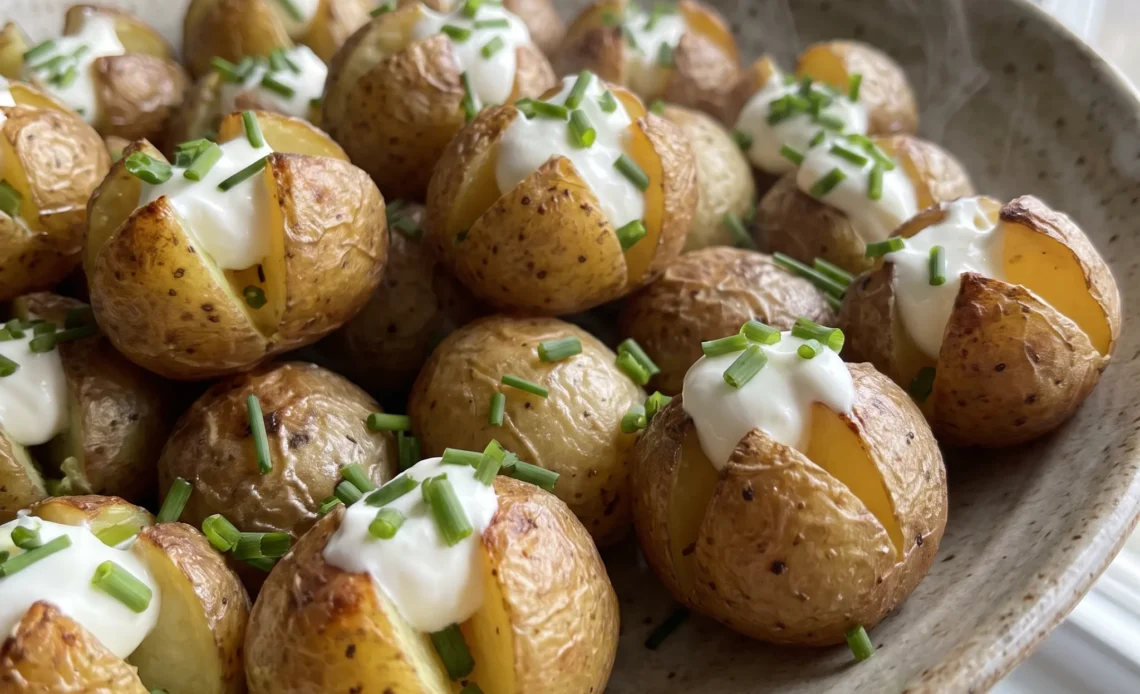
The most common mistake with mini baked potatoes is piling them onto one baking sheet, which traps steam and leaves the skins pale and wrinkled instead of blistered. Give each baby potato its own space in a single layer, even if that means two pans.
They roast into small, rounded cups with thin skins that hold their shape, so a shallow wedge cut leaves a well sturdy enough to cradle a cold dab of sour cream without splitting. The potatoes need to feel light for their size when they come out, a sign the moisture has cooked off. Sour cream and chives go on at the last second, never before.
Cool cream against a hot potato is what keeps each bite tasting sharp rather than flat, and the topping will thin and seep if it sits. Get the pan arrangement right and everything else follows.
Why baby or new potatoes
Small potatoes earn their place here for a physical reason you can see on the plate. Their skin is thin enough to eat, so no peeler comes out and the potato stays whole, which matters once you cut a wedge and stuff it.
That thin skin also acts like a jacket, holding the shape together after the interior is exposed. Cut a large potato down to size and you get flat, starchy faces that dry out and toughen.
A baby potato keeps its rounded form, so when you bite through, you hit a crisp shell and then a creamy center. The ratio of skin to flesh is higher, which means more surface area to brown and a bigger share of the potato that stays tender. You end up with a two-bite item that tastes like a potato through and through, not a carved chunk of one.
Pan arrangement and the mid-roast shake
Crowd the pan and the potatoes steam each other. Moisture rises off them, gets trapped between neighbors, and you end up with pale, wrinkled skins instead of browned ones. So arrange them in a single layer with space around each one.
That’s not fussiness; it’s the difference between roasting and steaming. Halfway through, shake the pan. The potatoes roll, the hot pan touches a new side, and the browning evens out.
It also loosens any that have stuck, so they release without tearing. If your baking sheet can’t hold them all without touching, use two sheets. The oven’s heat needs to reach every surface.
When they come out, the skins should be blistered in spots and feel light for their size, not heavy with water. That’s how you know the pan wasn’t crowded.
The wedge cut
A small wedge removed from the top of each potato turns it into a stable cup. Split a potato open and you get two halves that rock and spill their filling.
Cut a wedge and you create a flat base that sits level on a platter. The cut also leaves walls thick enough to hold a dab of sour cream without collapsing.
Keep the wedge small, maybe a quarter of the potato’s height, so the structure stays intact. If you go too deep, the sides get thin and the whole thing breaks when you pick it up. You want the potato to feel solid in your hand, with a shallow well that cradles the topping.
The removed wedge is the cook’s treat, a little crispy piece to taste before serving. What remains is a neat, open potato that looks intentional, not mangled.
Topping after the oven, not before
Sour cream and chives go on after the potatoes come out of the oven. Heat is the enemy here: baked sour cream splits, releasing liquid and turning grainy, and its clean tang goes flat. Chives lose their snap and their onion-like bite when they’re cooked, fading to a dull green.
So keep both off the heat. The cool cream against the hot potato is the contrast that makes each bite feel fresh. Spoon a small dab into the well of each potato, just enough to fill it without spilling over.
Then scatter the chives. They should be raw, bright, and sharp, cutting through the richness.
If you’re assembling ahead, wait until the last minute to add the topping. The potatoes can sit warm for a few minutes, but the dairy and herbs go on right before they hit the table.
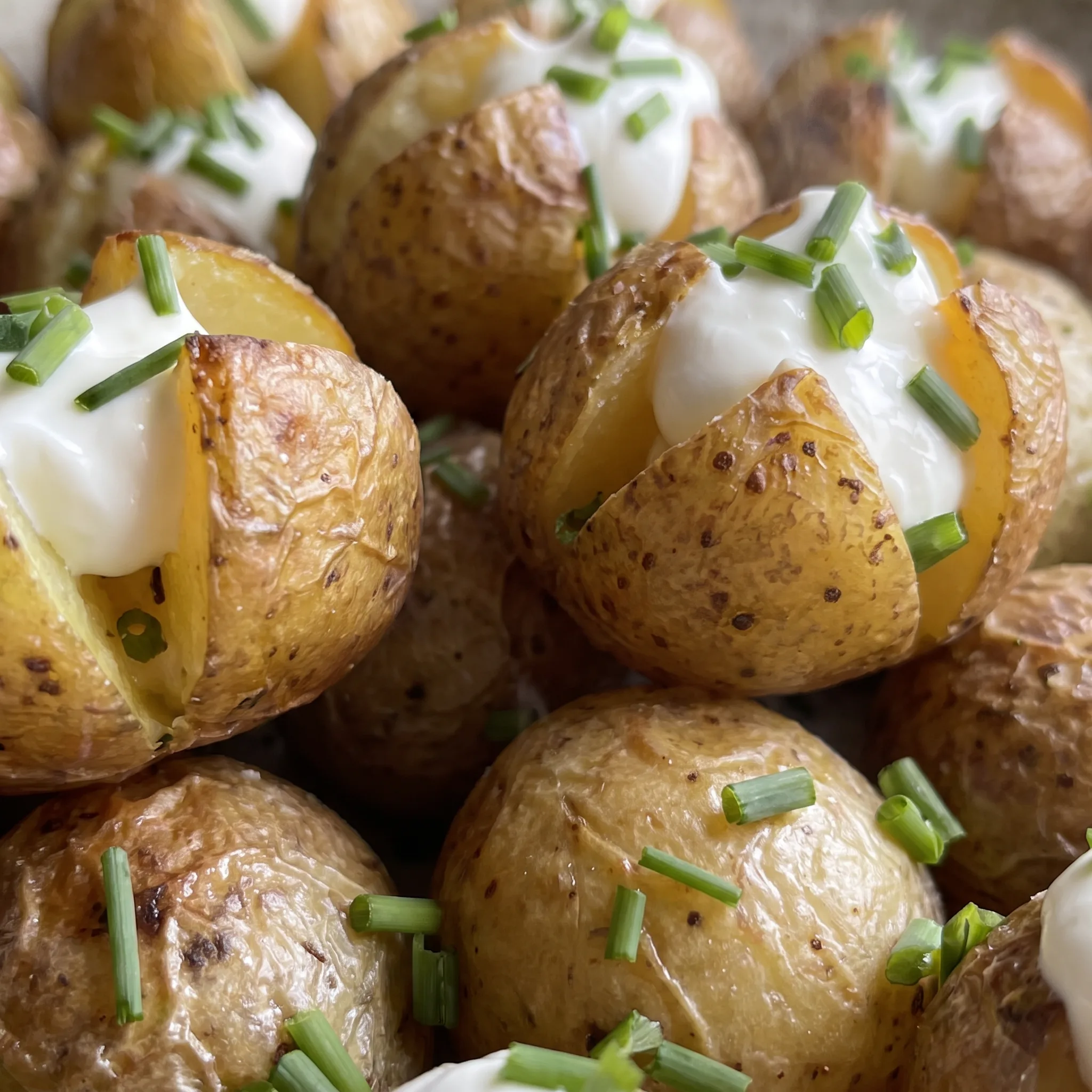
What to look for in the potatoes, the cream, and the chives
Baby potatoes or new potatoes: Pick ones about the size of a golf ball, all roughly the same, so they finish roasting together instead of some going soft early.
Olive oil: A full tablespoon per pound seems like a lot, but every potato needs its own slick coat or the skins stay pale and tight.
Sour cream: Full-fat, thick enough that a spoon stands up in it, because the thin kind weeps liquid into the well the moment it hits the hot potato.
Fresh chives: Snip them fine with scissors just before they go on, since cut chives left sitting go limp and lose that clean onion bite.
How to judge the potatoes as they roast, cut, and get topped
Reading the potatoes at the 30-minute mark
The card says roast for 30 minutes, or until tender, but the shake at halfway is your first clue. When you roll them, they should feel lighter than they did going in. At the end, pierce one with a skewer or the tip of a knife: it should slide through with almost no resistance, like pushing into soft butter.
If there’s any drag, give them 5 more minutes. Underdone potatoes won’t hold the wedge cut cleanly, and the flesh will taste raw and waxy.
Judging the cut: how deep before the walls get too thin
You’re removing a wedge from each potato, but the size matters. Aim for a cut that leaves walls about a quarter-inch thick.
If you go too deep, the sides flex when you pick it up, and the sour cream will split them open. The potato should feel solid in your hand, with a shallow well.
If you accidentally cut through the bottom, set that one aside for tasting; it won’t hold topping.
The look of the skins after roasting
Don’t rely on the timer alone. When they’re done, the skins should be wrinkled in places and blistered in spots, with a few darker brown patches where they touched the pan. Pale, smooth skins mean the oven was too cool or the pan was crowded.
If they’re pale but tender, you can run them under the broiler for a minute, watching closely, to get some color.
Why the sour cream goes on at the last second
A dab of cool sour cream against a hot potato is the contrast that makes these taste fresh. But if you spoon it on too early, the heat will thin it and it’ll seep into the potato, turning the well soggy. Add the cream just before serving, and only as much as the well holds.
Chives go on right after; they stay bright green and sharp. If you’re assembling ahead, keep the potatoes warm and the dairy cold until the moment they hit the table.
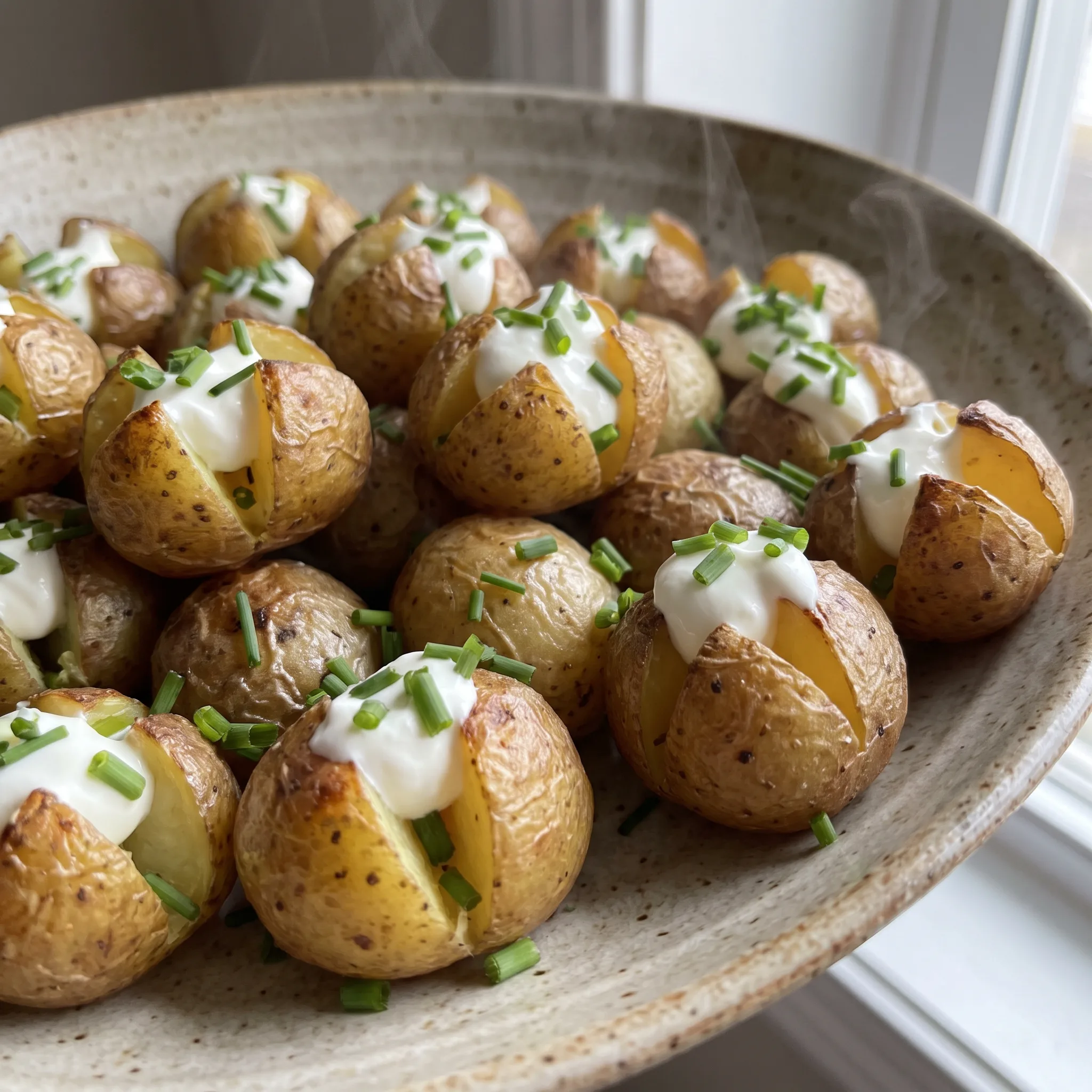
Mini Baked Potatoes with Sour Cream and Chives
Ingredients
Method
- Set oven temperature to 375°F (190°C).
- Place potatoes in a bowl, pour oil over them, and stir until evenly coated.
- Arrange potatoes in a single layer on a baking sheet and season with salt.
- Roast for 30 minutes, or until tender, shaking the pan halfway through to promote even browning.
- Remove a small wedge from each potato, stuff with a dab of sour cream, and garnish with chives.
Storage and Serving: The 20-Minute Window and What to Do with Leftovers
These potatoes are at their best within 20 minutes of coming out of the oven. That’s the window when the skins are still crisp, the insides hot and fluffy, and the sour cream and chives go on cold and sharp. Wait longer and the potato steams itself from the inside, the skin softens, and the sour cream thins and seeps into the well.
So assemble and serve promptly. The topping always goes on last, right before eating. If you’re not serving immediately, hold the potatoes warm and the dairy cold.
Leftover potatoes, without topping, keep in the fridge for up to 3 days in a covered container. They won’t be crisp again, but you can reheat them in a 375°F oven for 5 to 7 minutes to bring back some texture.
Skip the microwave, which makes them rubbery. The sour cream and chive topping doesn’t keep once it’s on a potato; if you have extra, store it separately for up to 2 days. For serving, add a fresh dab of sour cream and new chives after reheating.
Freezing isn’t recommended for the assembled dish; the potatoes turn grainy and the dairy splits.
Swaps that keep the skin crisp and the topping from weeping
Baby potatoes or new potatoes: Fingerlings, small Yukon Golds, or any waxy potato about the size of a golf ball. Fingerlings bring a buttery, firm texture and roast up much the same. Yukon Golds work, but they’re starchier, so the flesh inside turns a bit more crumbly once you cut the wedge.
Keep the size uniform so they finish together. If all you have are larger potatoes, cut them down, but you lose the thin-skin jacket and the flat faces dry out in the oven. Start with the same 1 lb the recipe uses.
Sour cream: Full-fat Greek yogurt, or a dairy-free sour cream made from coconut or cashews. Greek yogurt brings a sharper tang and a thicker body, and it holds up against the hot potato without turning soupy. Low-fat or whipped versions are a trap: they weep liquid into the well and the potato goes soggy where the cream sits.
Dairy-free sour cream can work if it’s the thick, spoonable kind, but many have a faint coconut or starch aftertaste that fights the chives. Start with the same ½ cup and taste before you commit to the whole batch.
Fresh chives: Thinly sliced scallion greens, or fresh dill. Scallion greens give a similar allium bite but are coarser, so slice them paper-thin or they’ll drag the cream out of the well. Dill shifts the flavor toward something more Scandinavian and pairs well with the sour cream, though it lacks chives’ onion edge.
Dried chives are the one swap to skip: they lose the raw bite and turn dusty in the cream, and the texture goes flat. Use the same 2 tbsp, chopped just before they go on.
Tips
- Buy potatoes that are all within a narrow size range, about 1 to 1.5 inches across, and squeeze a few: they should feel dense and firm, not spongy or hollow. A bag with mixed sizes means the small ones finish roasting before the larger ones are tender, so half the batch collapses when you cut the wedge. Reject any with a green cast or pale sprouts at the eyes; those spots carry solanine, which tastes bitter even after roasting, and the green doesn’t cook out.
Sour cream is an emulsion of butterfat droplets suspended in a water-based serum, stabilized by proteins. When it is baked or spooned onto a hot potato and returned to the oven, the fat melts and the proteins coagulate, causing the emulsion to break into greasy pools and watery liquid. Chives contain volatile sulfur compounds that give them their fresh onion bite; heat drives these off and turns them limp and bitter.
Frequently Asked Questions
Can I make these mini baked potatoes ahead of time?
You can roast the potatoes earlier in the day, but hold off on cutting and topping. The storage guidance above is clear: the assembled dish is best within 20 minutes, and the sour cream and chives go on at the last second.
If you roast ahead, keep the potatoes in a covered container in the fridge for up to 3 days. Reheat them in a 375°F oven for 5 to 7 minutes, then cut the wedges and add the cold topping just before serving.
Why did my baby potatoes come out wrinkly instead of crispy?
Wrinkled skins usually mean the potatoes steamed instead of roasted, which happens when they’re crowded on the pan. Give each one space in a single layer, and if they don’t fit, use two sheets.
Another possibility: the oven was too cool, so the skins never got hot enough to blister. Check that your oven is at 375°F. When done right, the skins should be blistered in spots and feel light for their size, not heavy with water.
How do I keep the sour cream from sliding off the potatoes?
The wedge cut is what creates a well to hold the cream, so make sure you remove a small wedge from the top of each potato, leaving walls about a quarter-inch thick. A dab of thick, full-fat sour cream will sit in that well without running.
If your sour cream is thin or watery, it’ll seep into the potato and make the well soggy. Also, add the cream only right before serving; if it sits on a hot potato too long, it thins and slides.
What’s the difference between these mini baked potatoes and regular loaded baked potatoes?
These are two-bite potatoes, each about the size of a golf ball, so you get a higher ratio of crisp skin to creamy flesh. A regular loaded baked potato is a full-size potato split open and piled with toppings like cheese, bacon, and green onion. Here, the topping is just sour cream and chives, and the small wedge cut turns each potato into a neat cup.
The result is a passed appetizer rather than a side dish.
