
The most common mistake with a fennel apple salad is dressing it too early; salt and lemon pull water out of the fennel and apple within minutes, and the bowl turns wet. Toasting the walnuts is the other place cooks slip. Raw walnuts taste flat and faintly bitter, and the pan gives you almost no window between fragrant and burnt, so they need your full attention for a very short stretch.
Everything else here is forgiving. Fennel slices that bend instead of snap, an apple cut off its core in four clean pieces, a dressing sharp enough to taste slightly overseasoned on its own: all of it is workable. What carries the dish is restraint, letting lemon and good olive oil do the work while the cheese and nuts stay crisp on top.
Why dress the base before adding walnuts and pecorino?
In the bowl, get the arugula, fennel, and apple coated with dressing first. This way, the leaves and slices get an even sheen without sitting in excess liquid.
If you were to add everything at once, the walnuts and cheese would start to soften before you serve it. After tossing, take a taste.
You can add more salt or pepper now, while the cheese isn’t there to hide behind. Then, and only then, scatter the walnuts over the top, followed by the shaved pecorino.
The walnuts stay crunchy, the cheese remains in delicate shards, and each forkful gets a bit of everything. The salad holds up for a few minutes without wilting, which is all the time you need to get it to the table.
The right thickness for fennel and apple
Texture is what makes this salad work: fennel brings a crisp, slightly fibrous crunch, apple adds a juicy snap, and pecorino shavings contribute a creamy, salty note that softens as you chew. To keep that contrast, slice the fennel and apple as thin as you can manage.
Paper-thin slices ensure that the fennel doesn’t turn tough and the apple doesn’t feel like a chunk. The walnuts, toasted until fragrant, offer a brittle crunch that plays off the softer cheese.
When you build each bite, you want all these elements together. A mandoline helps, but a sharp knife and a steady hand work too.
The goal is a salad where no single texture dominates, and every component gets its moment. Serve it right after tossing, while the walnuts are still crisp and the cheese hasn’t fully surrendered to the dressing.
What makes the dressing work with fennel and apple?
Olive oil, lemon juice, salt, and pepper. That’s it.
This dressing isn’t meant to shout; it’s there to lift the natural sweetness of fennel and apple without burying it. Lemon juice brings a bright acidity that cuts through the oil and the richness of the cheese. A generous pinch of salt is important: it tames the bitterness of arugula and makes the apple taste more like itself.
Whisk it in a small bowl or shake it in a jar, then taste. If it feels flat, add another squeeze of lemon or a touch more salt. You want it well-seasoned before it hits the salad, because once the cheese goes on, adjusting becomes trickier.
The dressing should taste lively on its own. When you toss it with the greens and fruit, it should coat everything lightly, leaving no pool at the bottom of the bowl. That’s how you know the balance is right.
Toasting walnuts for deeper flavor
Raw walnuts taste a bit flat and slightly bitter. A few minutes in a dry pan coaxes out their oils and turns them deeply nutty and aromatic. No oil needed; the pan should be hot but not smoking.
Keep them moving, because they can go from fragrant to burnt in seconds. You’ll know they’re ready when they smell warm and toasty and have darkened a shade or two.
Slide them onto a plate to cool. If you add them hot, they’ll steam the salad and lose their crunch.
Once cooled, they stay crisp and provide a brittle contrast to the creamy cheese and tender greens. That toasted flavor is a quiet backbone of the salad, so don’t skip this step.
When you bite into a walnut, it should taste rich and rounded, not raw. That’s what makes the final dish feel complete.
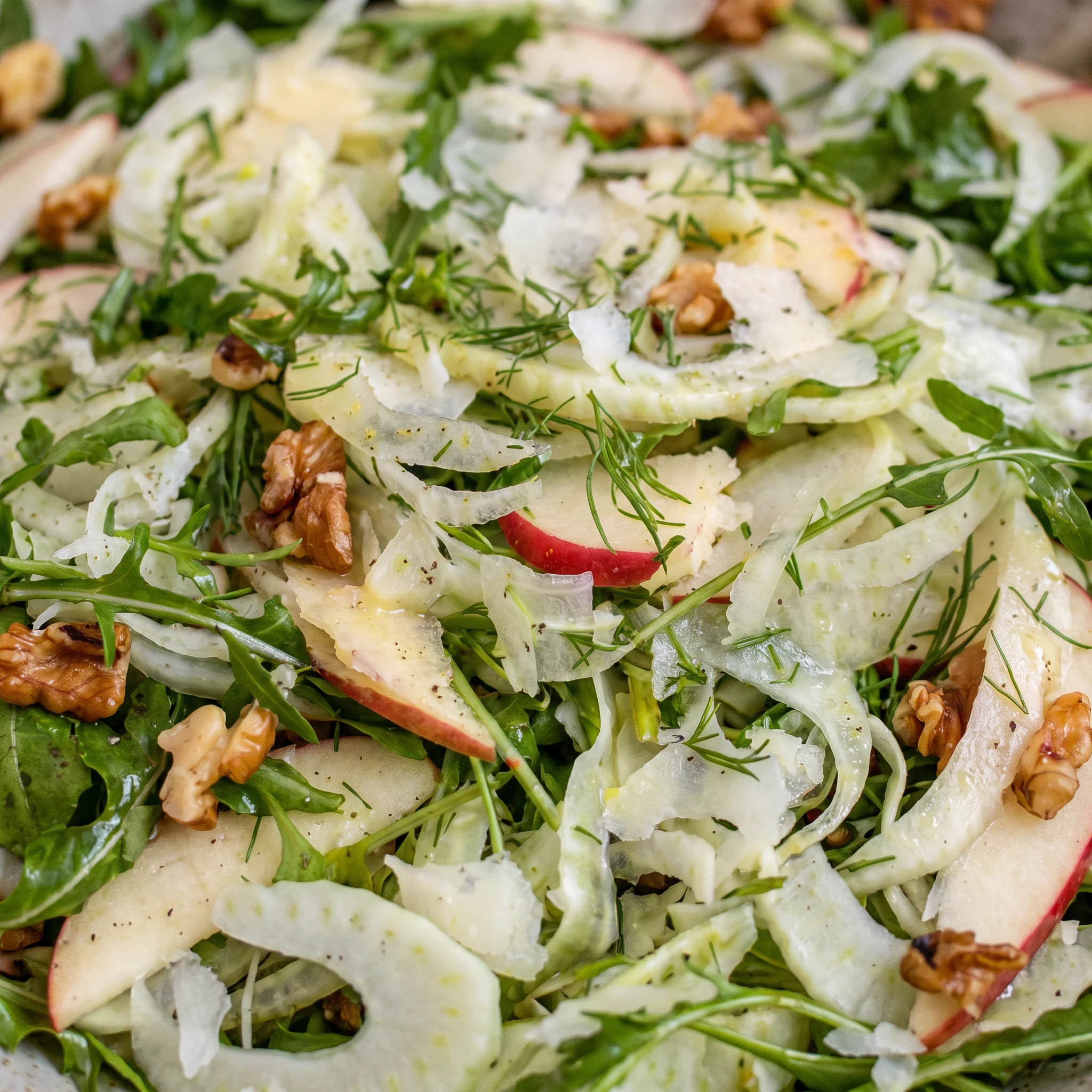
What to look for in fennel, apple, walnuts, and pecorino
Fennel: Choose bulbs that feel heavy and are tight and pale, with no splitting or brown spots, since old fennel turns woody and dull.
Red apple: Pick a firm, crisp red apple like Fuji or Gala, because soft or mealy apples slice into sad, spongy pieces.
Walnuts: Buy walnut halves or pieces that smell fresh and nutty, not dusty or bitter, since rancid walnuts taste like old oil.
Pecorino or parmesan: Get a wedge of real pecorino Romano or Parmigiano-Reggiano, not the pre-shredded stuff, so it shaves into delicate curls.
Arugula: Look for arugula with crisp, dark green leaves and no yellowing or slime, because wilted arugula drags the whole salad down.
Lemon: Use a lemon that gives slightly under pressure and feels heavy for its size, since a dry lemon yields little juice.
Salt and lemon juice in the dressing create a hypertonic environment around the sliced apple and fennel, so water moves out of their cells and pools at the bottom of the bowl. At the same time, the acid and salt break down the arugula’s cell walls, turning the leaves limp and releasing more liquid. If the walnuts and pecorino are already in the bowl, they absorb that moisture and lose their crunch.
Judging the salad by texture, taste, and timing
Knowing when the fennel is thin enough
Fennel slices should be thin enough to bend, not snap, when you press one to the touch. If they resist, keep slicing. Thick pieces taste fibrous and won’t soften in the dressing.
A mandoline on the thinnest setting does it, but a sharp knife works if you take your time. The goal is a pile of translucent ribbons.
Tasting the dressing before it hits the salad
The dressing should taste bright and a little too salty on its own. That’s right, because the arugula and apple will soak up the seasoning.
If it tastes flat, add another squeeze of lemon or a pinch more salt. If it’s harsh, a drizzle more oil. Fix it now; once the salad is tossed, adjusting is harder.
Toasting walnuts without crossing into burnt
They’re ready when they smell warm and nutty and have darkened a shade or two. That happens fast, often under two minutes.
Keep them moving. If they start to smoke or turn black, dump them out immediately; burnt nuts taste bitter and will ruin the salad.
Cool them on a plate before adding.
Judging the final toss for even coating
After adding the dressing, toss until every leaf and slice shines. There should be no pool at the bottom of the bowl. If there is, you’ve added too much dressing; lift the salad out and leave the excess behind.
Taste a leaf: it should be seasoned but not soggy. That’s your cue to stop tossing.
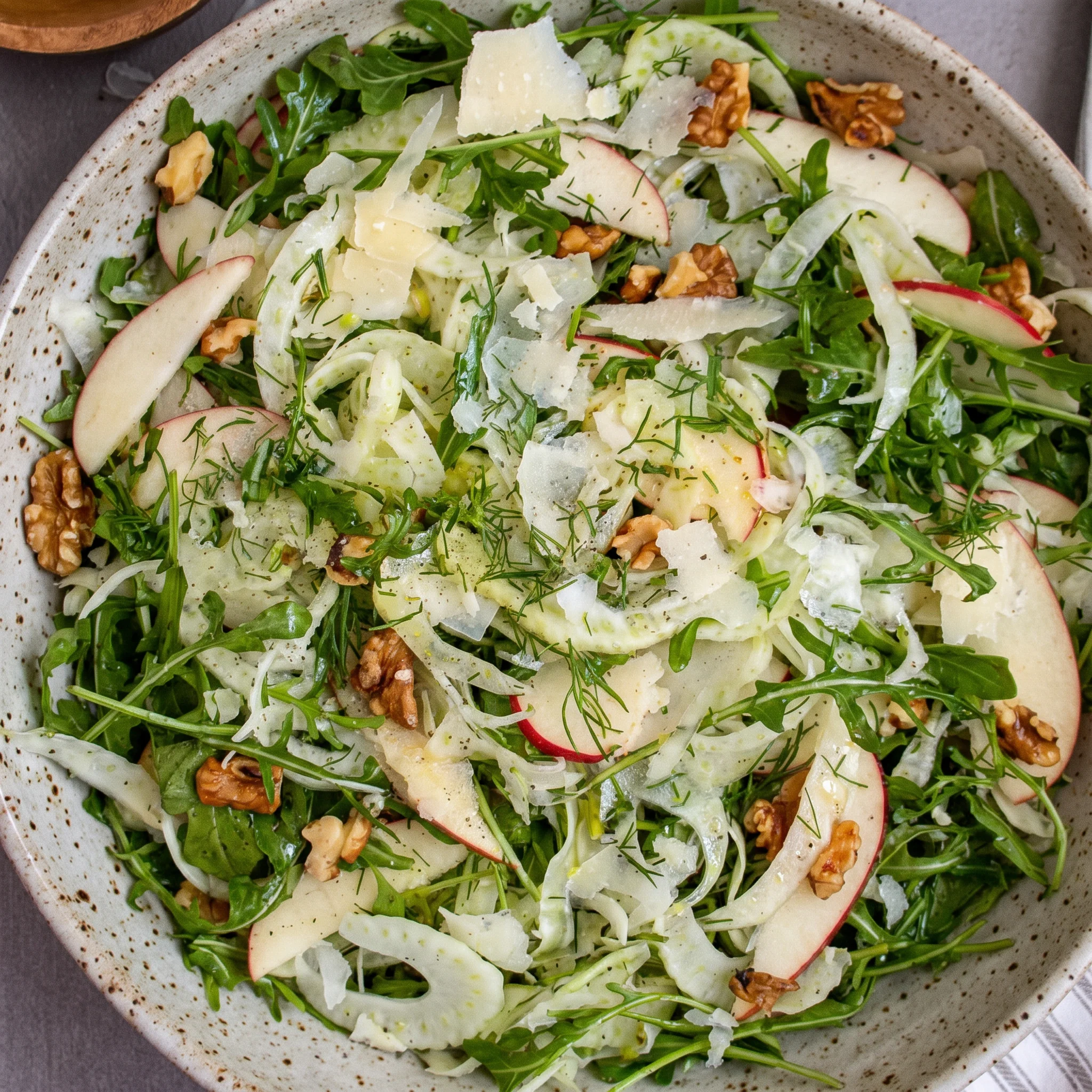
Fennel Apple Salad with Arugula and Pecorino
Ingredients
Method
- Whisk together olive oil, lemon juice, a generous pinch of salt, and a pinch of pepper in a small bowl or jar. Taste and adjust seasoning as needed, then set aside.
- Place a small pan over medium-high heat. Add the chopped walnuts to the hot, dry pan and cook, stirring frequently, until lightly browned and toasted. Remove from heat and set aside.
- With a sharp knife, cut the root off the fennel bulbs and remove the fronds, setting them aside. Using a mandoline or knife, slice the fennel bulbs as thinly as possible, then roughly chop the fronds with a knife.
- Using a sharp knife, cut the apple 1/4 to 1/2 inch away from the center stem, then turn 90 degrees until you have cut a total of 4 pieces and only the core remains. Discard the apple core and, using a mandoline or knife, slice the apple pieces into thin slices.
- In a large bowl, combine arugula, fennel, apple, and fennel fronds, and toss to combine. Drizzle with the dressing and toss again until everything is well coated. Taste and adjust salt and pepper seasoning as needed.
- Top the salad with toasted walnuts and, using a vegetable peeler, shave the pecorino or parmesan cheese over the salad.
Storage and Serving: What to Do With Leftovers
Eat this salad within an hour of tossing it. Past that, the arugula softens, the fennel loses its snap, and the walnuts go from crisp to chewy. If you know you won’t finish it, dress only what you’ll eat and store the rest undressed.
Keep the salad base, walnuts, and pecorino in separate containers in the fridge for up to a day. The undressed base holds longer than the dressed version because the lemon and salt in the dressing pull water from the fennel and apple, and that liquid pools at the bottom and wilts the greens. Before serving a stored portion, toast the walnuts again for a minute in a dry pan to bring back their crunch, then toss the base with dressing and top with the cheese.
The cheese shavings clump and absorb moisture after a few hours, so shave fresh if you can. Don’t freeze any part of this salad.
The fennel and apple turn limp and watery after thawing, and the arugula collapses completely. If you have more than you can eat, pick out the walnuts and cheese and keep those for another use, but let the dressed greens go.
Tips
- For the 2 bulbs this recipe calls for, trim only the very bottom of the core and leave it intact while you slice. The core holds the layers together, so each bulb stays in one piece on the mandoline and you avoid chasing loose pieces of fennel around the blade. Once sliced, the core end is the one part you can discard.
- Shave the pecorino over the salad while it is still cold from the fridge. Cold cheese is firmer, so the vegetable peeler takes off clean 2-ounce portions in thin curls instead of tearing them into ragged clumps. Let the shavings sit at room temperature for a minute or two before serving so they soften slightly against the dressed greens.
What You Can Swap in This Fennel Apple Salad, and What You Can’t
Pecorino or parmesan: Use parmesan if you don’t have pecorino. A vegetable peeler works on either; the recipe calls for 2 ounces, so shave the same amount. Pecorino brings a sharper, saltier bite that cuts through the apple’s sweetness.
Parmesan is milder and a bit nuttier, so the salad will taste softer and less punchy. If you go with parmesan, you might want an extra squeeze of lemon to keep that bright edge.
Walnuts: Toasted almonds or pistachios can stand in. Use the same 1/4 cup, and toast them the same way: dry pan, medium-high heat, stirring until fragrant.
Walnuts have a slightly bitter skin and a soft crunch that contrasts with the crisp fennel. Almonds are harder and more neutral, so they’ll add a sharper snap. Pistachios are softer and a bit sweeter, giving a more delicate crunch.
Either way, you’ll lose some of that earthy depth the walnuts bring.
Arugula: If arugula’s peppery bite isn’t for you, try baby spinach or a mild lettuce like butterhead. Use the same 4 cups.
Arugula’s pepperiness is a big part of this salad’s character. Spinach will make it taste greener and milder, almost sweet. Butter lettuce will turn it into something softer and more delicate.
You’ll still get a good salad, but it won’t have that same sharp contrast with the apple and fennel.
Fennel: There’s no good substitute for fennel here. Its crunch, subtle licorice note, and ability to hold up to dressing are what make this salad work. If you must, celery is the closest, but it’s a different beast.
Celery will give you crunch, but it lacks fennel’s sweetness and anise aroma. The salad will taste more vegetal and less complex.
The apple and lemon will still shine, but the overall balance shifts. If you try it, slice the celery just as thin and use the same amount: 2 bulbs’ worth, which is about 4 cups sliced.
Lemon juice: Bottled lemon juice works in a pinch. Use the same 1 lemon’s worth, about 3 tablespoons.
Fresh lemon juice has a liveliness that bottled lacks. Bottled can taste flat or slightly metallic, so the dressing won’t pop as much.
You might need a little more salt to compensate. If you have a lime, it’ll work, but the dressing will taste more floral and less classic.
Olive oil: Any neutral oil, like grapeseed or avocado, can replace olive oil. Use the same 1/4 cup. Olive oil adds its own fruity, peppery flavor that’s part of the dressing’s character.
A neutral oil will make the dressing taste cleaner and more purely lemony. That’s fine, but you’ll miss the olive oil’s richness. If you use a strong extra-virgin, it might overpower; a lighter olive oil is safer.

Frequently Asked Questions
Can I make fennel apple salad ahead of time?
You can prep the parts ahead, but don’t toss the whole thing until you’re ready to eat. Keep the fennel, apple, and arugula undressed in one container, the walnuts in another, and the cheese wrapped separately. The dressing will pull water out of the fennel and apple, so if you dress it early you’ll end up with a pool at the bottom and limp greens.
If you’re serving within the hour, you can toss it right before you sit down.
Why is my fennel apple salad watery?
The most likely cause is that the salad sat after dressing. Salt and lemon juice draw moisture out of the fennel and apple, and that liquid collects at the bottom of the bowl.
If you’re not eating right away, dress only what you’ll serve and leave the rest dry. Also check your arugula: if it was still wet from washing, that water will thin the dressing. Spin or pat it dry before it goes in the bowl.
How is this fennel apple salad different from a classic Italian one?
A classic Italian version usually keeps it to fennel, apple, lemon, olive oil, and maybe some shaved parmesan. This one adds arugula for a peppery backbone, toasted walnuts for crunch, and pecorino for a sharper, saltier bite. The result is a heartier salad with more contrast, not just a clean, simple side.
It also means you get a mix of textures in every forkful rather than mostly fennel and apple.
