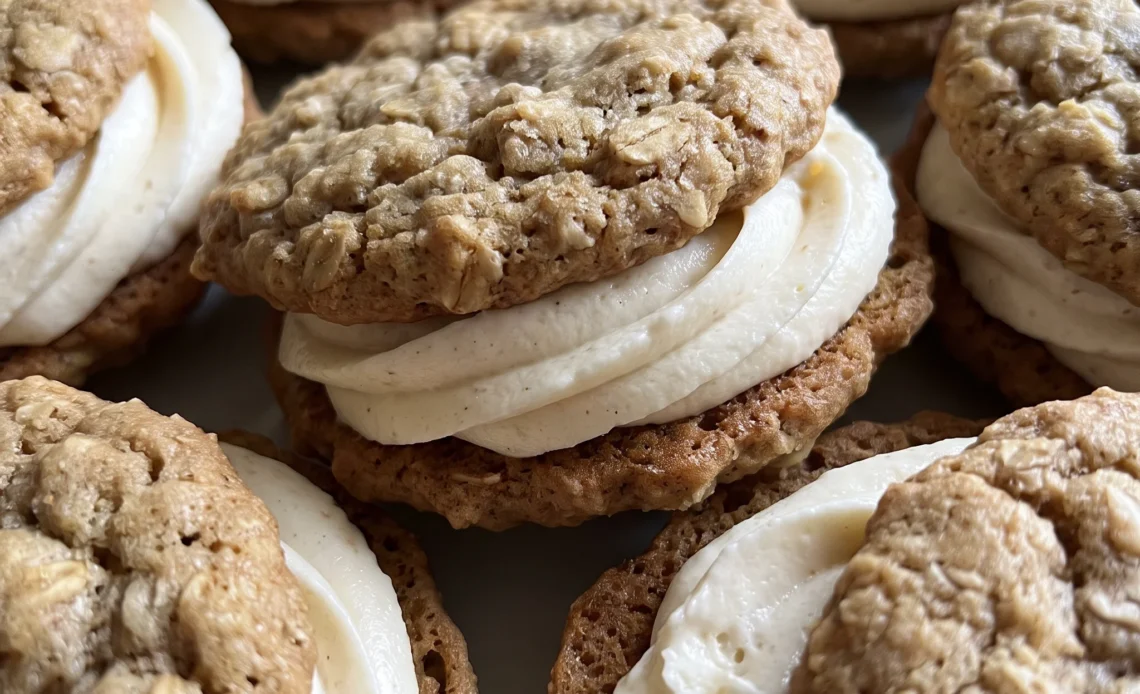
An oatmeal cream pie is not a sandwich cookie with a fancy name. Get the chew right and it earns the label. The danger here is a cookie that goes soft and cakey under a heavy smear of spiced eggnog buttercream, and that comes down to cold dough, whole rolled oats, and butter that’s firmed back up before it sees the oven.
Brown sugar does the rest, keeping these eggnog oatmeal cream pies tender enough to bite clean through instead of cracking at the edges. You’re building something closer to a holiday oatmeal cookie than a plastic-wrapped lunchbox treat, and the spiced filling is what pushes it there.
Worth the wait, but plan for it: this is a dough that wants its time in the fridge.
Why does this dough have to chill before baking?
This dough is sticky. Not tacky, not slightly tacky, but the kind that clings to your hands and refuses to release. The culprits are the butter, the egg, and that two tablespoons of eggnog, all of which keep the mixture loose.
Roll it now and you’ll be scraping dough off your knuckles and forming sad, lopsided lumps.
More importantly, the butter needs to firm up again. Soft butter that goes into the oven warm melts fast, and fast-melting butter means the cookies slump into thin, greasy discs with crisp edges and no chew. Let the dough sit in the fridge and the butter re-solidifies, so when the cookies hit the heat they hold their shape and bake up thick with a soft, tender center.
You’re after a dough that’s cold and firm enough to scoop cleanly. That’s when you know it’s ready for the oven.
The filling is spiced on purpose
The buttercream isn’t just sweet. It carries pinches of cinnamon, nutmeg, and salt, plus a generous pour of eggnog. Those spices aren’t an afterthought.
They echo the same warm notes in the cookie, so each bite reinforces the eggnog theme instead of fighting it. Taste the filling on its own and you’ll catch a faint rum-like warmth, a little savory edge from the salt, and a soft spice that lingers.
That eggnog also loosens the buttercream just enough to pipe or spread without being heavy. You want a filling that’s thick but not stiff, so it yields under gentle pressure. When you sandwich the cookies, the cream should contrast the chew of the oats and the caramel depth of the brown sugar, not get lost in it.
A thin scrape won’t do; you need a generous layer to balance the cookie’s texture. The result is a cohesive bite where neither the cookie nor the filling dominates.
Whole rolled oats make the difference
Old-fashioned rolled oats are flat and sturdy. They keep their shape through baking, so the cookies end up with a hearty chew that stands up to a thick smear of buttercream. Quick oats, which are cut finer, would break down and disappear, leaving you with a soft, almost cakey cookie that can’t support a filling.
Those oats also soak up some of the eggnog and butter. That absorption keeps the cookies from turning greasy, and it helps them stay moist without becoming mushy. You’ll notice the oats in the baked cookie: little flecks of texture that interrupt the sweetness and give each bite some resistance.
That character is what separates these from plain sandwich cookies. The oats bring a rustic, almost nutty quality that pairs naturally with the spiced filling. Without them, you’d just have two soft cookies glued together.
With them, you get a cream pie that tastes like a bowl of oatmeal dressed up for the holidays.
All brown sugar, no granulated
Brown sugar is the only sweetener in these cookies, and that’s deliberate. It contains molasses, which pulls moisture into the dough and keeps the baked cookies soft and chewy for days.
A cookie made with all white sugar would crisp up and dry out, and a dry cookie cracks when you bite into a sandwich. These stay tender, so the filling doesn’t squish out the sides.
Molasses also brings a deeper, slightly caramelized flavor that plays well with the eggnog and spices. You’ll taste it as a faint bitterness against the sweet cream, a little complexity that keeps things from being one-note.
And because molasses encourages browning, the cookies come out a rich golden brown, not pale and anemic. That color hints at the flavor inside. Stack them with the buttercream and you get a cookie that tastes like the holidays, soft and spiced and ready for a glass of cold eggnog.
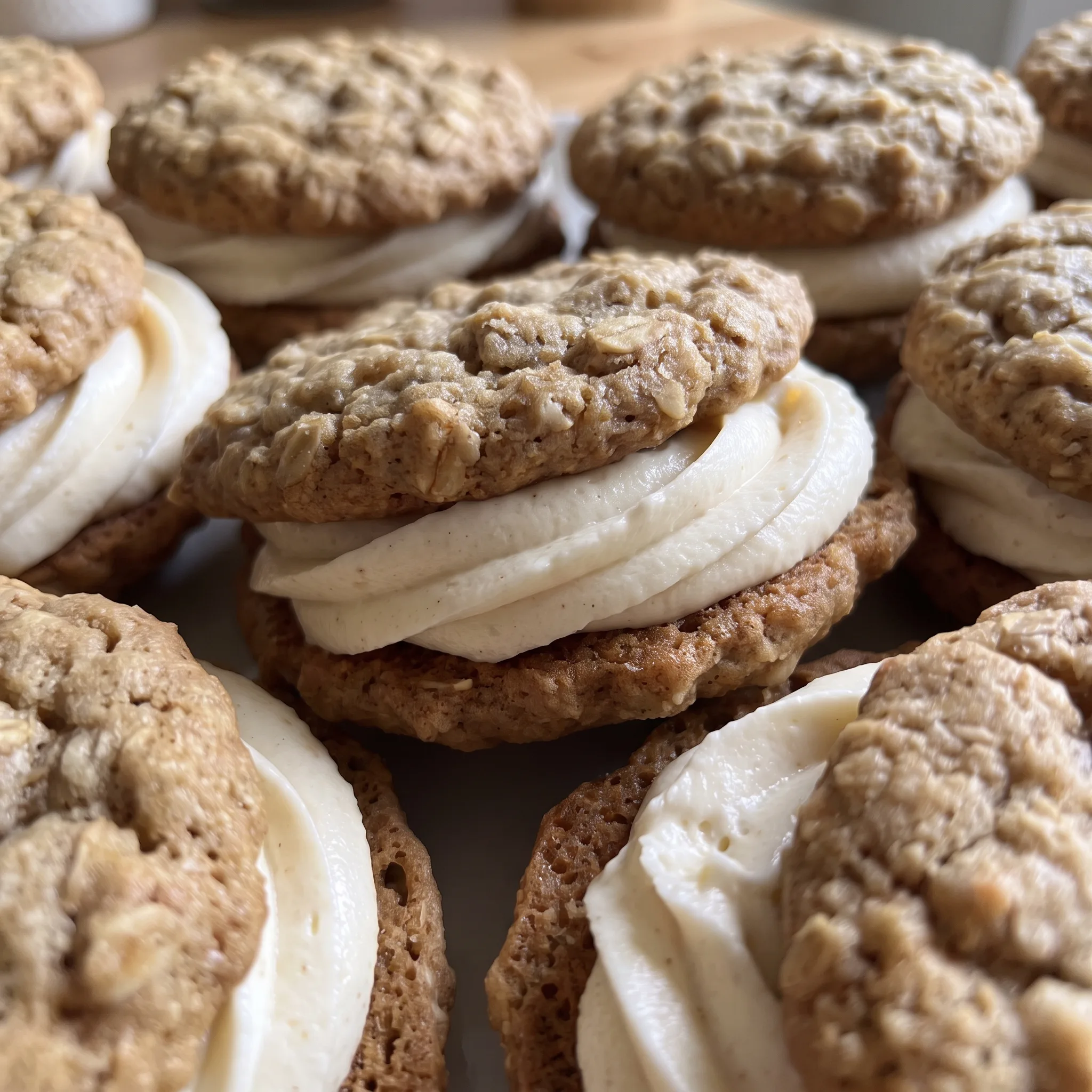
The ingredients that carry the eggnog flavor
Ground nutmeg: Freshly ground nutmeg tastes warmer and more pungent than the pre-ground jar, which can smell like dust.
Old-fashioned whole rolled oats: Buy whole rolled oats, not quick or instant, because they stay intact and give the cookies a hearty chew.
Light or dark brown sugar: Dark brown sugar has more molasses, so it makes the cookies softer and gives a deeper caramel note.
Eggnog: Use a good-quality eggnog you enjoy drinking, since its spice and richness define both the dough and filling.
What to watch for as the dough, cookies, and filling come together
When the creamed butter and sugar are ready
Beat softened butter and brown sugar on medium-high. After about 3 minutes, the mixture should look lighter in color, feel less gritty when you rub a bit to the touch, and hold soft peaks from the beaters. If it still feels grainy or looks separated, keep going.
Under-creamed butter won’t trap air, so the cookies bake flat and tough. Over-beating past this point can make the dough greasy.
Stop when it’s pale, fluffy, and cohesive.
Judging the dough’s stickiness after mixing
Once the flour goes in, the dough will be very sticky. That’s expected.
But if it’s so wet that it won’t hold any shape on a spoon, you may have undermeasured flour or overadded eggnog. A quick fix: chill it longer. The real test is after chilling.
Cold dough should be firm enough to scoop with a spoon and roll into balls without coating your palms. If it’s still tacky after 2 hours, give it another 30 minutes.
Don’t add more flour unless it’s unworkable.
Deciding when the cookies are done
At 11 to 12 minutes, the edges should be very lightly browned and the centers will look soft, almost underbaked. That’s correct.
They’ll set as they cool on the sheet. If you wait until the centers look firm, you’ve baked them too long and they’ll turn crisp, making the sandwiches crack when you bite.
Pull them at the first sign of color around the edges. For uneven shapes, use a spoon to nudge hot edges inward right after baking, then again a minute later.
Getting the buttercream to the right consistency
After beating the butter, sugar, eggnog, vanilla, and spices on high for 2 to 3 minutes, the filling should look fluffy and hold a soft peak. If it’s stiff and dry, add eggnog a teaspoon at a time. If it’s too loose to pipe, chill it for 10 minutes.
You want a cream that yields under gentle pressure but doesn’t run. Taste it: the spice and salt should be noticeable but not sharp. Adjust with a pinch more if needed.
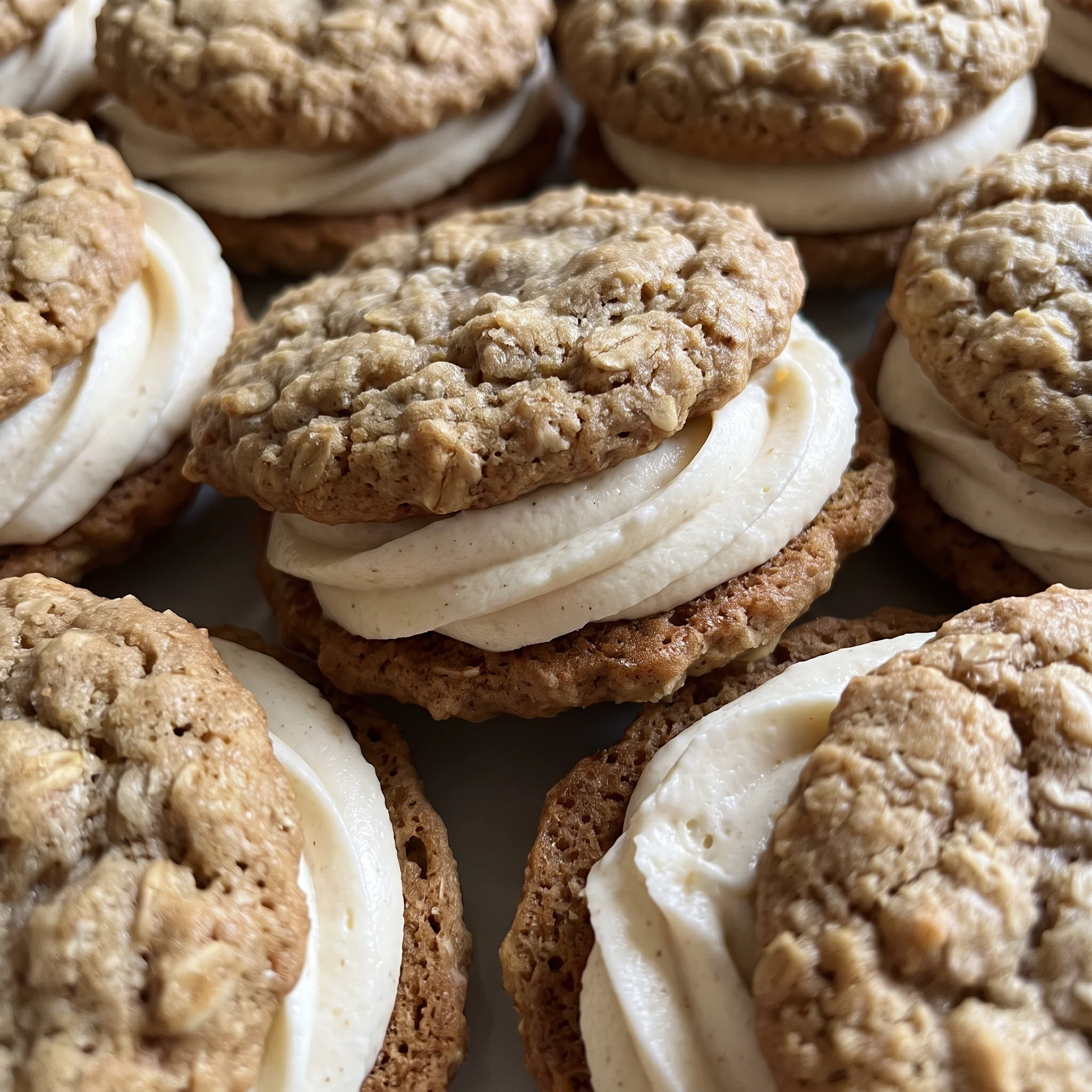
Eggnog Oatmeal Cream Pies with Cinnamon Nutmeg
Ingredients
Method
- In a medium bowl, whisk together the flour, cinnamon, nutmeg, oats, baking soda, and salt. Set aside.
- In a large bowl using a hand mixer or a stand mixer fitted with a paddle attachment, beat the butter and brown sugar together on medium-high speed until creamed, about 3 minutes. Add the egg, eggnog, and vanilla extract and beat on high speed until combined, about 1 minute. Scrape down the sides and up the bottom of the bowl and beat again as needed to combine.
- Add the flour mixture to the wet ingredients and mix on low until combined. Dough will be very sticky.
- Cover dough tightly and chill in the refrigerator for at least 2 hours and up to 3 days. Chilling is imperative for this sticky cookie dough.
- Preheat oven to 350°F (175°C). Line large baking sheets with parchment paper or silicone baking mats. Set aside.
- Roll chilled cookie dough into balls, about 1 heaping Tablespoon (24-25g) of dough each, and place 3 inches apart on the baking sheets. (You should get 24 cookie dough balls.)
- Bake for 11–12 minutes, or until very lightly browned around the edges. The centers will look very soft. Remove from the oven and allow cookies to cool on the baking sheet for 10 minutes before transferring to a wire rack to cool completely. (Success Tip: If your cookies are spreading too much or unevenly, remove them from the oven and use a spoon to lightly push any wonky edges back in towards the center, to reshape into circles. You can repeat this trick again as soon as you take them out of the oven after baking.)
- Using a handheld or stand mixer fitted with a paddle or whisk attachment, beat softened butter on high speed until creamy, about 1 minute. Add the confectioners’ sugar and beat on medium speed for 1–2 minutes. Pour in eggnog and vanilla extract, and add a pinch each of cinnamon, nutmeg, and salt. Beat on high for 2–3 minutes until fluffy. Pipe or spread some of the cream filling on the bottom side of half of the cookies; top with remaining cookies, right side up. I used Wilton 199 tip to pipe.
- Cover and store leftover cookies at room temperature for up to 1 day. After that, store in the refrigerator for up to 1 week to keep the creamy filling fresh.
Storage and Serving: When to Eat It and How to Keep It
These cookies are best the day they’re assembled. Once you sandwich them, the buttercream starts migrating into the oatmeal cookies, softening the structure.
Within a few hours, the cookies turn tender and cakey, and that’s the texture to aim for. If you want the firmer chew of a freshly baked cookie, eat them within an hour or two of filling. After that, they’re a different but still enjoyable treat.
The recipe card gives clear storage instructions: cover and store leftovers at room temperature for up to 1 day. After that, move them to the refrigerator for up to 1 week. The fridge slows the migration and keeps the creamy filling fresh.
For serving from the fridge, let them sit at room temperature for about 15 minutes to take the chill off. The filling will soften and the cookie will feel less dense.
Freezing isn’t recommended for the assembled cookies. The buttercream doesn’t thaw well, and the texture suffers.
If you must, freeze the unfilled cookies and the filling separately, then assemble after thawing. But for the best experience, plan to eat them within the week.
Tips
- Grease your hands, not the bowl. A thin film of neutral oil or a light dusting of flour on your palms keeps 24-25g portions of this sticky dough from gluing to your skin, and it adds nothing measurable to the dough the way greasing the bowl would. Reapply every few balls as the film wears off.
- Roll in two batches of 12 and put the second half back in the fridge while the first bakes. The dough warms in your hands as you work, and warm dough spreads thin in a 350°F oven. Keeping half chilled means every ball hits the parchment cold, so all 24 bake to the same thickness.
What You Can Swap Without Ruining the Eggnog Oatmeal Cream Pies
Eggnog: For an alcohol-free version, replace the eggnog in both the dough and filling with the same amount of heavy cream plus a pinch of rum extract. Start with 1/4 teaspoon rum extract for the whole recipe, taste the filling, and add more if you want a stronger rum note. You’ll lose some of the spiced complexity that eggnog brings, but the cream adds richness and the rum extract gives a similar warmth.
The dough and filling will have the same texture.
All-purpose flour: For gluten-free, use a 1:1 gluten-free flour blend that contains xanthan gum. Measure it the same way: spoon and level. Don’t substitute with almond flour or coconut flour; they absorb liquid differently and will make the dough spread too much.
The cookies will be slightly more delicate and may spread a bit more. Let them cool completely on the baking sheet before moving them, as they’re more fragile when warm.
Unsalted butter: For dairy-free, replace the butter in both the cookies and filling with a vegan butter stick that’s meant for baking, like Earth Balance or Miyoko’s. Use the same amount by weight. Don’t use margarine or spreadable tub butter; they have too much water and will make the cookies flat and greasy.
The cookies will be a touch softer and the filling might be slightly less stable, so chill the filled cookies for 20 minutes before serving to help them set.
Old-fashioned whole rolled oats: Don’t swap these for quick oats or instant oats. Quick oats are cut finer and will break down during baking, leaving you with a soft, cakey cookie that can’t hold up to the filling. You’ll lose the hearty chew and the cookies may become too tender, causing the sandwiches to fall apart when you bite into them.
Light or dark brown sugar: Stick with brown sugar. Using granulated sugar instead will dry out the cookies and make them crisp rather than chewy. The cookies will lack the moisture and caramel depth that brown sugar provides, and they’ll harden as they cool, making the sandwiches crack.
This dough carries a high proportion of softened butter plus liquid eggnog, so at room temperature the fat is fluid and the dough cannot hold a shape. Chilling firms the butter back into solid crystals, which means the dough can be rolled and, in the oven, the fat melts slowly enough for the flour and oats to set the structure first. Without that cold, firm fat, the cookies slump and spread into thin, greasy discs instead of baking up thick and chewy.
Frequently Asked Questions
Can I make the dough ahead of time and bake later?
Yes, and the dough actually improves. The recipe card allows a chill of up to 3 days, so you can mix it today and bake on a whim later in the week. Keep it tightly covered so the surface doesn’t dry into a skin, and expect it to firm up considerably by day two or three.
Cold dough scoops cleanly and the balls hold their round shape on the sheet, which is exactly what you want going into the oven. If the dough has been chilled for days, let the scooped balls sit on the counter while the oven preheats so they lose a little of that deep chill.
Why did my cookies spread too much in the oven?
The most likely cause is dough that went into the oven too warm or too soft. If the butter crept back toward room temperature before baking, it melts before the structure sets, and you get flat, greasy discs with crisp edges.
Chill the dough longer and work quickly once it’s scooped. A second thing to check is your flour measurement: scooping straight from the bag packs in extra flour and throws off the ratio, so spoon and level it next time. You can also nudge hot cookies back into round with a spoon right after they come out, while the edges are still soft and pliable.
How do these eggnog oatmeal cream pies differ from classic oatmeal cream pies?
The cookie itself is spiced rather than plain, with cinnamon and nutmeg worked into the dough alongside the oats. Eggnog shows up twice, once in the cookie and again in the buttercream, so the flavor runs through the whole sandwich instead of sitting only in the filling. The filling carries its own pinches of cinnamon, nutmeg, and salt, which gives it a faint rum-like warmth rather than straight vanilla sweetness.
And the cookie stays soft and chewy from an all brown sugar base, so the sandwich holds together when you bite instead of cracking at the edges.
