
Cold dough is what undoes most batches. Roll a weenie in a crescent triangle straight from the fridge and the sheet cracks at the seam, or the dough snaps back and the whole thing unwinds in the oven.
Give it a few minutes on the counter and it behaves. That small pause is the difference between a wrap that stays shut and one that opens up and lets the butter run out. These pigs in a blanket are a 25-minute appetizer for a crowd, and the honey mustard is built to cut the buttery dough with tang, sweet, and a slow warmth at the back of your throat.
The baking itself is forgiving. The dough is the part that isn’t, at least until it warms up.
Why Crescent Roll Dough Works
Refrigerated crescent roll dough comes in sheets with distinct layers. When baked, those layers separate and puff, giving a flaky, buttery texture that contrasts nicely with the savory weenies. The dough also brings its own buttery flavor, which plays off the salty, smoky cocktail weenies.
Using this dough saves time compared to making pastry from scratch, and it’s pliable enough to wrap around small weenies without tearing. So you get a quick appetizer that tastes like you fussed, even on a busy day.
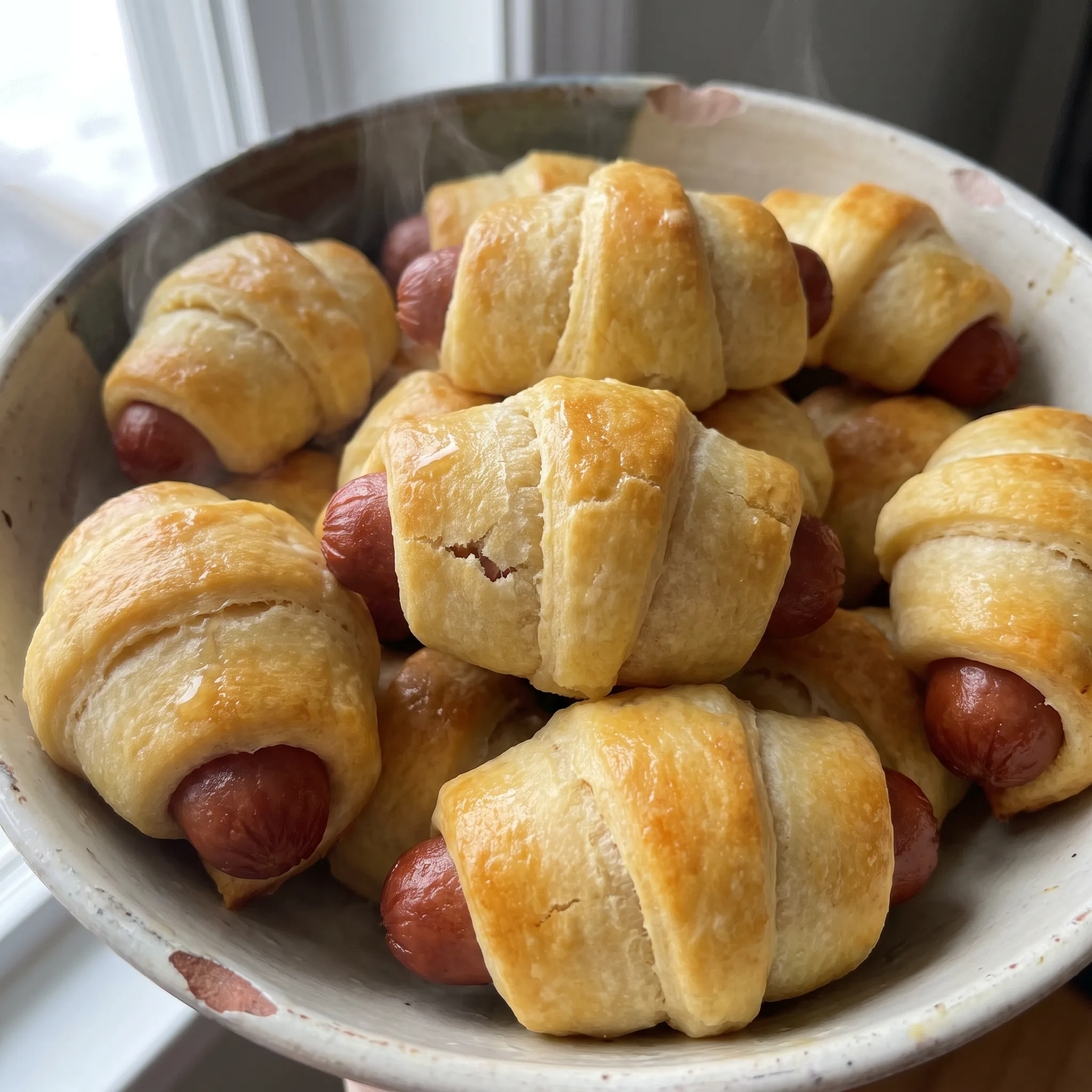
The result is a golden, crisp blanket that shatters slightly when you bite in, then gives way to the juicy meat. That contrast of textures is what makes these so snackable. If you’ve ever had a tough, bready wrapper, you know the difference.
This dough avoids that. It’s reliable straight from the can, and the shaping is forgiving.
So even if your rolling isn’t neat, the bake evens out. The dough does the heavy lifting, and you just assemble and bake.
The Sauce That Cuts Through
Honey mustard sauce here isn’t just a dip; it’s a balance of sweet, tangy, and spicy that cuts through the richness of the buttery dough and savory weenies. Dijon mustard brings tang and depth, while honey adds sweetness to balance the saltiness. Mayonnaise contributes creaminess and helps the sauce cling to each bite.
A pinch of cayenne adds a subtle heat that lingers without overpowering. The consistency is thick enough for dipping but thin enough to coat. When you drag a pig in a blanket through it, the sauce should stick, not drip off.
That even coating means every bite gets the full effect. You can mix it in a bowl with a whisk until it’s smooth. It takes just a minute.
The sauce keeps in the fridge for a few days, so you can make it ahead. Serve it chilled or at room temperature; either way, it wakes up the palate.
So the sauce isn’t an afterthought; it’s what makes the appetizer feel complete.
Cutting Triangles Evenly Matters
When you cut the dough into triangles, aim for consistent size. Uniform triangles promote even baking so some pieces don’t dry out or undercook. A consistent dough-to-meat ratio in each bite is key to the eating experience.
You want a good balance of flaky dough to savory weenie, not a mouthful of one or the other. Slightly uneven triangles are fine because the dough puffs and browns similarly. The number of triangles, about 7 to 8 per section, yields a balanced appetizer size.
Each one is a two-bite treat. If some are a bit larger, they might need an extra minute, but that’s easy to manage.
Just keep an eye on the oven. The goal is golden brown all over.
So don’t stress over geometry; focus on roughly equal pieces. The dough is forgiving, and the result will still be tasty. Even a haphazard cut yields a satisfying snack.
So go ahead and cut; it’s not rocket science.
Brushing with Butter for Shine
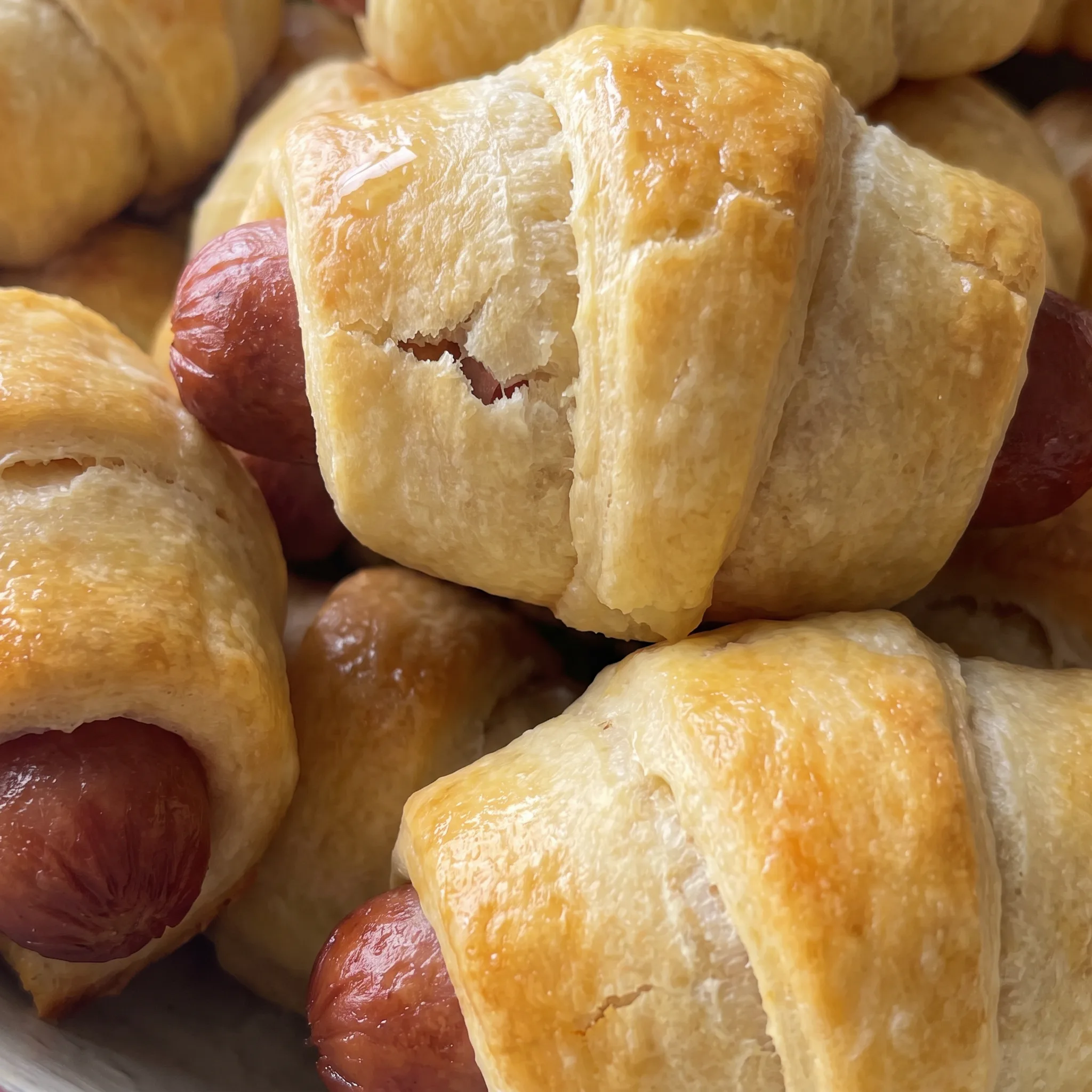
Brushing the tops with melted butter before baking does more than just add flavor. It encourages a golden-brown color as the dough bakes, giving each pig in a blanket an inviting sheen. That buttery coating also adds a subtle richness that complements the dough.
The butter helps the dough develop a slight gloss, making them look professionally made. It’s a small step that makes a big difference in appearance. You can use a pastry brush or even the back of a spoon.
Just a light coat is enough. If you skip it, they’ll still taste good, but the butter takes them up a notch.
The tops will be evenly browned and slightly shiny. That visual cue also tells you they’re done.
So take the extra minute to brush; it’s worth it. The result is a batch that looks as good as it tastes. And who doesn’t want that?
What to Look For in a Can of Dough and a Jar of Mustard
Refrigerated crescent roll dough: Buy a can that feels cold and heavy, not one that’s been sitting out; if the dough looks gray or has dark spots, skip it.
Cocktail weenies: Look for ones that are plump and firm in the package, not shriveled or sitting in a lot of watery liquid.
Dijon mustard: Choose a smooth Dijon, not a grainy or whole-grain style, so the sauce stays creamy and clings to the dough.
Honey: Use a runny honey that pours easily; thick crystallized honey won’t blend smoothly into the cold mustard and mayo.
Cayenne pepper: A little goes a long way, so start with the 1/8 teaspoon and taste; older cayenne loses its punch, so buy a fresh jar if yours is pale.
Cutting crescent roll dough into triangles of different sizes creates pieces that bake at different rates: smaller triangles have more exposed surface area per unit of dough and brown faster, while larger ones may remain pale or doughy. This recipe manages the trade-off by cutting the dough into four equal portions first, then slicing triangles from each portion, which yields about 7, 8 triangles per section and keeps sizes close enough that they puff and brown similarly. Slight irregularities are acceptable because the dough’s laminated layers expand and brown at roughly the same rate once the pieces are within a similar size range.
How to Read the Dough, the Color, and the Sauce While You Work
Judging the dough’s readiness to wrap
Cold dough from the fridge cracks when you try to stretch it around a weenie. Let it sit on the counter for a few minutes, just until it bends without tearing.
If it’s too warm, it turns greasy and limp, and the layers glue together. You want it pliable but still cool. Test a corner: it should give like a thin rubber band, not snap.
Reading the color on the dough, not the timer
At 375°F, fifteen minutes is a guide. The real signal is the color: deep gold on the peaks, pale on the undersides.
If the tops brown before the bottoms set, the dough will be raw where it touches the weenie. Rotate the sheet if your oven runs hot on one side. Pull them when the edges look dry and flaky, not wet.
Balancing the sauce by taste, not by the recipe
The honey mustard should hit three notes: tang first, then sweet, then a slow warmth from the cayenne. If it tastes flat, add a pinch more salt. If it’s too sharp, a little more honey.
If it’s too thick to cling, a teaspoon of water loosens it. You’re after a sauce that coats the back of a spoon but still drips slowly.
Pigs in a Blanket with Honey Mustard Sauce
Ingredients
Method
- Set oven to 375°F (190°C) and prepare a baking sheet by lining it with parchment paper.
- Unroll the crescent roll dough and press the seams together; if you prefer, you can leave the middle seam as is.
- With a pizza cutter or knife, make three cuts into the dough to separate it into four equal portions, then slice triangles from each portion, getting about 7–8 triangles per section; uneven triangles are acceptable.
- Put a cocktail weenie at the wider end of each triangle and roll it up; continue until all triangles are used.
- Place the pigs in blankets onto the lined baking sheet, spacing them slightly apart.
- Use melted butter to brush the tops of each.
- Bake for 15 minutes, until they turn golden brown.
- In a mixing bowl, put all honey mustard sauce ingredients and whisk until thoroughly blended.
- Allow the pigs in blankets to cool a bit and serve alongside the honey mustard sauce or another sauce you like.
Swaps That Keep the Wrap and the Dip in Balance
Cocktail weenies: Lil smokies or small hot dogs cut to fit. Lil smokies bring a smokier, sometimes cheesier flavor and a slightly denser bite than standard cocktail weenies.
Small hot dogs work if you cut them into pieces about the same length as the dough triangle is wide, otherwise they’ll poke out and burn. Full-size hot dogs won’t fit the triangles without tearing the dough or leaving a gap that leaks butter and grease onto the pan.
Dijon mustard: Yellow mustard, same amount. Yellow mustard is sharper and thinner, so the sauce loses the rounded depth that Dijon gives. The dip will still taste like honey mustard, just brighter and with less of a savory backbone.
Start with the 1/4 cup the recipe calls for, then taste and add a little more honey if it feels too harsh.
Honey: Maple syrup, same amount. Maple syrup thins the sauce slightly and brings a woody, less floral sweetness. The honey mustard character shifts toward something more like a maple Dijon, which is fine on these but not the same dip.
Whisk it in the same 2 tablespoons, then check the consistency; if it’s too loose to cling, give it a few minutes in the fridge.
Refrigerated crescent roll dough: Gluten-free crescent roll dough or puff pastry. Gluten-free crescent dough often tears when you stretch it around a weenie and bakes up more crumbly, so handle it cold and patch any cracks with your fingers.
Puff pastry gives a richer, flakier blanket but contains gluten and takes longer to bake, so you’ll need to adjust the time by a few minutes. Either way, brush with butter as written and watch the color rather than the clock.
Storage and Serving: Eat Them Hot, Reheat Them Right
These peak within 30 minutes of coming out of the oven. The dough’s flaky layers are crisp at that point, and the weenie stays juicy. Past that, the crust softens as steam escapes from the meat, so eat them while the tops still look dry and glossy.
Leftovers keep in the fridge up to 3 days in an airtight container. The dough will lose its snap overnight; that’s unavoidable.
Reheat in a 350°F oven or air fryer for 5 to 7 minutes. The dry heat re-crisps the pastry. The microwave steams the dough and leaves it soft and chewy, so skip it.
The honey mustard sauce goes on at the table, not before. Keep it in a separate container in the fridge; it holds several days.
Stir before serving. A stored pig in a blanket never gets sauce poured over it ahead of time, or the bread soaks through. Serve the sauce cold or at room temperature alongside the reheated batch.
Tips
- Pat the cocktail weenies dry with a paper towel right after you take them out of the package, before they touch the dough. Cocktail weenies sit in a wet brine, and that surface moisture keeps the dough from gripping the meat, so the triangle unwinds in the oven and the pastry steams against the weenie instead of browning. Drying all 14 ounces takes about a minute and you will see the paper towel come away pink and damp.
- If you are working with a can of dough that has been in the fridge overnight, the 8-ounce sheet will fight you at the first triangle. Let it sit at room temperature only until the first corner pulls without cracking, then cut and roll the rest immediately. Waiting longer than that makes the dough tacky, and tacky dough seals to itself in the pan, so the layers cannot separate and puff the way they should at 375°F.

Frequently Asked Questions
Can I make pigs in a blanket ahead of time and bake them later?
You can assemble them on the baking sheet, cover, and refrigerate for up to a few hours. But the dough will absorb moisture from the weenies and lose some of its flaky snap, so they won’t be quite as crisp as when baked right away. The article’s storage section already covers leftovers and reheating.
If you do assemble ahead, brush with butter just before baking. A better route is to bake them fresh, then reheat as directed.
Why did my pigs in a blanket turn out soggy on the bottom?
The usual culprit is excess moisture from the weenies or underbaking. Cocktail weenies release liquid as they heat, and if the dough underneath doesn’t get hot enough to set and dry, that liquid pools and steams the bottom. Make sure your oven is fully preheated to 375°F and that the weenies aren’t wet from the package.
Also, don’t crowd them on the sheet; space them so air can circulate. If you brushed with butter, go light, since too much can also make the bottoms greasy. A parchment-lined sheet helps, but if yours is thin, the bottoms may brown unevenly.
The color cue from the article is your best guide.
How are these different from the classic pigs in a blanket made with biscuit dough?
Crescent roll dough bakes up flaky and layered, while biscuit dough gives a thicker, more bready wrap. The crescent version is lighter and shatters a bit when you bite, so the weenie stands out more.
Biscuit dough tends to be denser and can overwhelm the small cocktail weenie. Also, crescent dough comes in triangles that are ready to roll, so you skip the step of flattening and cutting biscuits. The result here is a more delicate, buttery blanket that contrasts with the savory meat.
That’s why the recipe uses crescent dough and not biscuits.
