
Not a last-minute scramble at the stove. This overnight breakfast casserole gets built the night before, sits in the fridge while you sleep, and goes into the oven while the coffee’s still dripping.
Eight servings, no stovetop work at dawn. The margin for error lives in the potatoes: shreds that go in wet or cold leave the custard slack, and no amount of baking fixes it. Sausage and bacon both need thorough draining before they hit the eggs.
Get those two things right and the dish rewards you with clean squares, a golden cheese top, and cold bacon scattered over the whole thing at the end for crunch.
When the hash browns and egg mixture are combined and baked immediately, the potatoes have no time to absorb the custard, so the egg proteins set before they can bind the water. The result is a casserole that releases liquid and separates into a soggy bottom and rubbery top. An overnight chill allows the starch in the potatoes to hydrate and the proteins to disperse evenly, creating a cohesive set.
Let It Sit Overnight for a Cohesive Set
A long chill does more than get the dish ready for the oven. As the eggs, milk, and mustard sit with the potatoes, the liquid gets drawn into the shreds. They drink up the custard and soften, so the casserole bakes into one even mass instead of a puddle of egg around a layer of potatoes.
The meat and cheese also get a chance to settle, and their salt and fat spread through the mix. When you pull it from the fridge the next morning, the liquid should be mostly absorbed and the surface looks damp but not swimming.
That’s what you want. If it still looks soupy, the potatoes were likely still cold or wet, and the bake will separate. Give it the full rest and you’ll cut squares that hold together on the plate.
Layer for Even Cooking and a Golden Top
Tossing everything into the dish at once seems easier, but you end up with pockets of raw egg and clumps of potato. Instead, spread the potato and meat mixture evenly across the bottom first.
That base gives the custard something to sink into, so it doesn’t pool at the edges. Pour the egg mixture over the top and let it seep down. The cheese you scatter on top forms the crust.
Save some bacon and green onions for after baking; they stay crisp and add a fresh bite. With this order, the interior bakes up creamy and the top turns golden brown. You can see the edges pull away slightly from the pan when it’s done.
Balance the Fat and Salt in the Meats
Sausage and bacon bring a lot of flavor, but they also bring a lot of fat. If you don’t cook them properly and drain the grease, that fat ends up in the custard. Too much fat and the eggs won’t set firmly; they’ll stay loose and greasy.
So fry the sausage until it’s no longer pink, then scoop it out and pour off the fat. Do the same with the bacon, cooking it until crisp. That renders out the excess and leaves you with meat that’s dry enough to mix into the custard without weighing it down.
A tablespoon of Dijon mustard might seem small, but its tang cuts through the richness. Without it, the casserole can taste heavy.
With it, each bite stays bright.
The Custard Sets Because of the Right Ratio
Ten eggs and a cup and a half of milk might look like a lot of liquid, but that ratio is what gives you a custard that slices cleanly. Too many eggs and you get a rubbery texture; too much milk and it won’t set. The mustard does more than add flavor.
It helps the eggs and milk blend into a smooth mixture that bakes evenly. When you beat the eggs, go until the yolks and whites are completely combined and the mixture is uniform in color. Any streaks of white mean uneven cooking.
Once baked, the custard should be firm but still creamy. A knife inserted in the center comes out clean. That’s your cue.
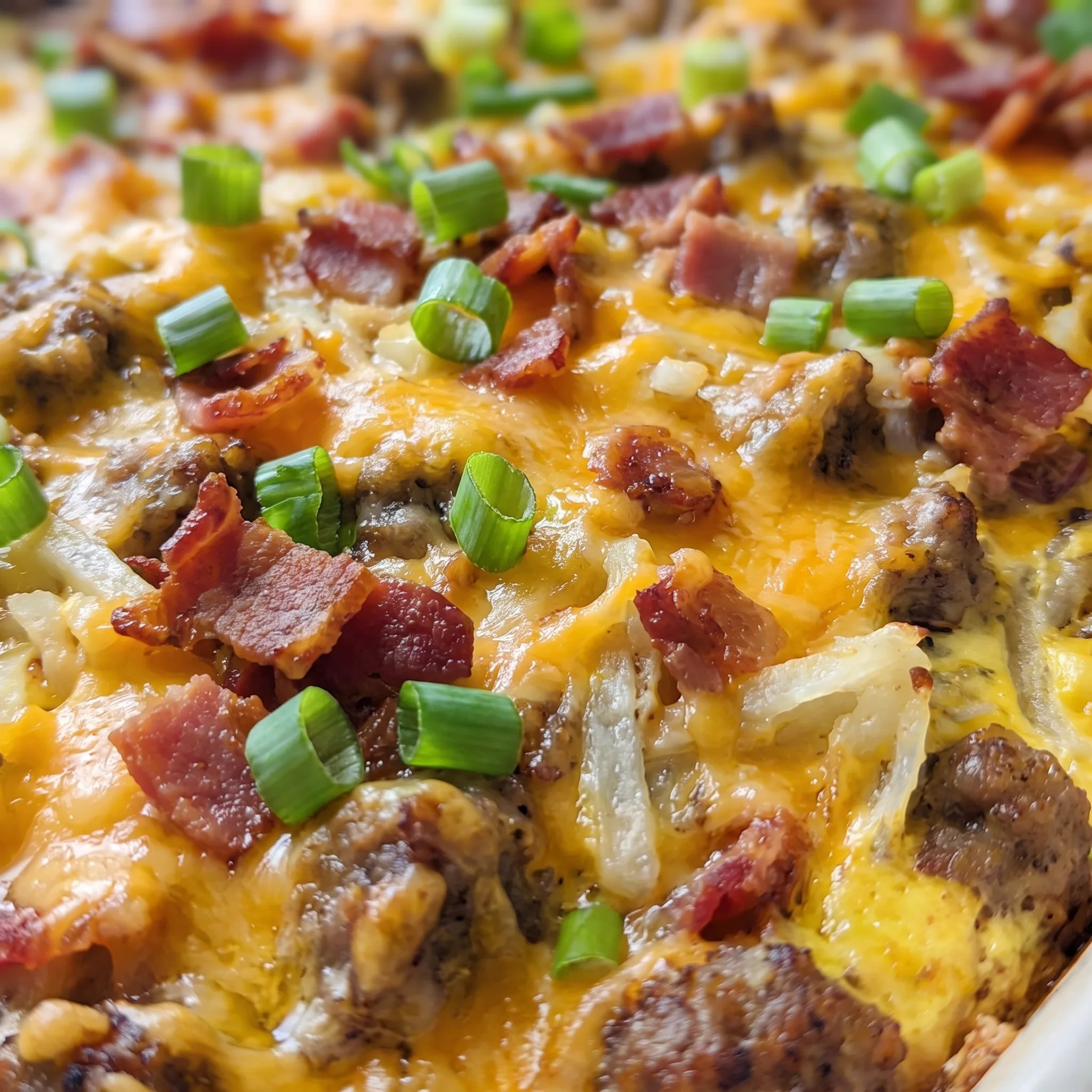
What to Grab Before You Start
Shredded potatoes: Thaw them fully, then squeeze dry in a towel so the custard doesn’t turn watery.
Breakfast sausage: Buy bulk, not links or patties, so you can crumble it into small bits as it fries.
Bacon: Dice it before frying so the pieces crisp evenly and scatter easily over the top.
Cheddar cheese: Grate it yourself from a block; pre-shredded bagged cheese is coated and melts into greasy clumps.
Dijon mustard: Use smooth Dijon, not grainy or yellow, so it blends invisibly into the custard.
How to Tell When It’s Set, Browned, and Ready to Eat
Reading the Raw Mix Before It Goes to Bed
After you’ve combined the potatoes, meat, and custard, look at the mixture in the dish. It should look moist but not soupy, with the liquid mostly clinging to the shreds rather than pooling.
If you see a lot of free liquid, the potatoes were probably still wet or cold, and the bake will separate. Fix it by pressing the mixture down with a spatula to help it absorb, or add a handful more shredded potatoes.
Judging Doneness by the Jiggle, Not the Clock
At 45 minutes, open the oven and gently shake the dish. The center should be set but still have a slight wobble, like firm gelatin. If it ripples like liquid, give it more time, checking every 5 minutes.
The full 60 minutes is a maximum; past that, the eggs turn rubbery and the edges dry out. A knife inserted in the center should come out clean. If it’s still wet, keep baking.
When the Top Is Golden and the Edges Pull Away
The cheese on top should melt and turn golden brown, and the casserole will pull slightly away from the sides of the pan. That’s your visual cue that the custard has set and the bottom is firm. If the top browns too fast, tent it with foil.
If the edges are set but the center still jiggles, lower the heat to 325°F and continue baking until done.
The Rest Before Cutting: Why Patience Matters
Once out of the oven, let the casserole sit for 10 to 15 minutes. This allows the custard to finish setting and the layers to firm up, so your squares hold together.
If you cut immediately, the filling will run and the pieces will slump. The wait also makes it easier to serve clean slices. After resting, top with the reserved bacon and green onions, then cut into squares.
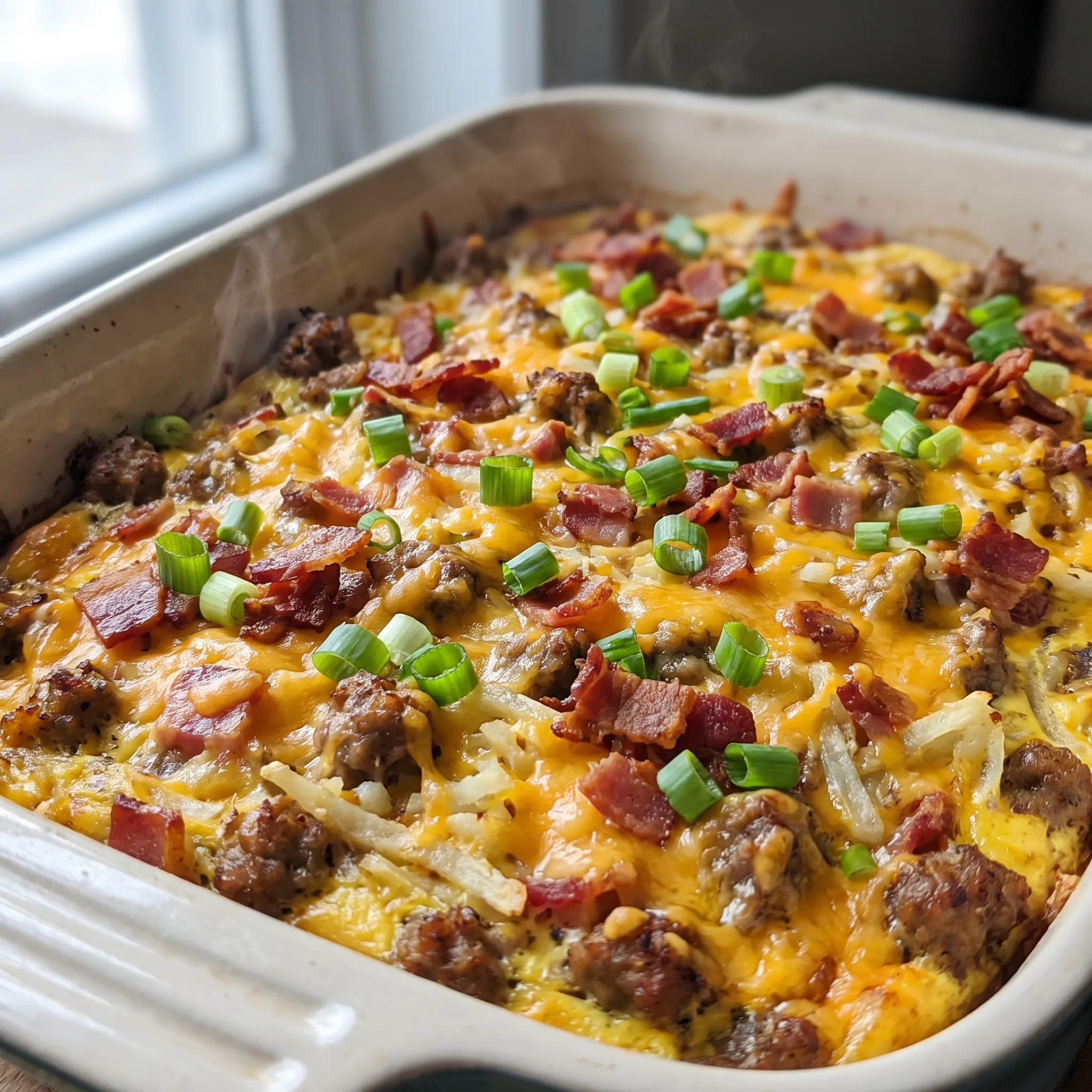
Overnight Breakfast Casserole with Sausage and Bacon
Ingredients
Method
- Coat a 9×13-inch baking dish with butter, oil, or cooking spray, and warm a skillet over medium heat.
- Fry the sausage until no longer pink, crumbling it into small bits as it cooks.
- Take out the sausage and pour off the fat, then fry the bacon until it becomes crisp.
- In a large bowl, beat the eggs, milk, mustard, salt, and pepper until thoroughly blended.
- Using a wooden spoon, mix the thawed shredded potatoes, half of the cheese, the cooked sausage, and half of the bacon (set aside the other half for later).
- Move the mixture into the greased baking dish.
- Wrap with foil or plastic wrap and chill in the refrigerator overnight.
- Set the oven to 350°F (175°C).
- Uncover the dish and scatter the remaining cheese over the top.
- Bake for 45–60 minutes, until the middle is firm and no longer wobbly.
- Take the casserole out of the oven and let it cool a bit before serving.
- Top with the reserved bacon pieces and green onions, then serve.
Swap the Meats and Cheese, But Respect the Custard
Breakfast sausage: Use mild Italian sausage or diced ham, same amount (1 lb). Italian sausage brings fennel and garlic instead of sage and pepper, so the casserole tastes more like a pizza topping.
Ham is leaner and saltier; it won’t render fat, so the custard stays lighter but you lose some of that porky richness. Both work without upsetting the set.
Bacon: Leave it out or replace with more sausage. If you skip it, add a tablespoon of oil to the pan when frying the sausage to make up for the lost fat.
Bacon gives smoky crunch and a salty hit. Without it, the casserole is milder and softer; the reserved topping loses its crisp contrast.
Extra sausage keeps the meaty flavor but won’t have that same snap.
Cheddar cheese: Try Monterey Jack, Colby, or a mild Gruyère. Use the same 8 ounces, divided the same way.
Monterey Jack melts even more smoothly and tastes milder, so the meat and eggs come forward. Gruyère adds a nutty note that pairs well with ham or Italian sausage. Avoid pre-shredded bags; they’re coated and turn greasy.
Milk: For dairy-free, use unsweetened oat milk or canned coconut milk (full-fat) in the same 1 ½ cups. For lactose-free, use lactose-free milk. Oat milk keeps the custard creamy with a neutral taste.
Coconut milk adds a faint sweetness and makes the texture richer, almost like a savory bread pudding. Both set fine, but coconut milk may brown faster on top, so tent with foil if needed.
Storage, Reheating, and the Best Window to Eat It
Eat this casserole within 30 minutes of its 10 to 15 minute rest. That’s when the custard is fully set, the cheese is still soft, and the potato shreds hold their bite.
Covered in the fridge, leftovers keep 3 to 4 days. Past that, the eggs start weeping water, and the top goes slick. The hash browns are what change first.
Cold, they firm up and tighten, which is fine. The trouble starts when you reheat the whole dish at once, because the custard releases liquid faster than the potatoes can take it back, and the bottom turns wet.
Portion out what you’re eating and reheat single squares, covered, at 325°F for 12 to 15 minutes, or in the microwave at 50 percent power until the center is hot. The microwave is faster but leaves the edges rubbery, so the oven wins on texture.
Freeze only the baked, cooled squares, wrapped tight, for up to 1 month. Thaw overnight in the fridge, then reheat covered. Add the reserved bacon and green onions after reheating, never before, or they steam and go limp.
Tips
- Squeeze the thawed potatoes in a clean kitchen towel or a few layers of paper towel over the sink, wringing hard until no more water drips out. A 20-ounce bag can shed close to a cup of liquid, and that water is what pools at the bottom of the dish and keeps the center from setting. If you skip this, the custard gets diluted and bakes up wet even after the overnight chill.
- Do the squeezing right after you take the potatoes out of the freezer, before they warm up on the counter. Cold shreds hold their shape and release water more easily; once they sit out and soften, they clump and tear when you wring them. Thaw in the fridge overnight, then squeeze while still cold and mix them straight into the egg mixture.

Frequently Asked Questions
Can I assemble this casserole the morning of and bake it right away?
You can, but the texture won’t be the same. The potatoes need that long chill to soak up the custard, so baking right away means the shreds stay firm and the eggs set around them instead of into them. You’ll still get a baked casserole, just one where the layers read separately.
If you’re short on time, give it at least a couple of hours in the fridge, though overnight is what the recipe calls for.
Why did my overnight breakfast casserole turn out watery?
The potatoes were likely still wet or cold when they went into the dish. Thawed hash browns hold a lot of surface water, and if you don’t squeeze them dry in a towel, that water ends up in the custard and separates during baking. Next time, wring them out over the sink until they feel damp but not dripping.
A secondary check: make sure the sausage and bacon are well drained, since excess fat can also make the custard loose.
How does this Pioneer Woman version differ from a classic breakfast casserole?
This one leans on Dijon mustard and a higher egg-to-milk ratio than most diner-style versions. The mustard cuts the richness of the sausage and bacon, and the custard sets firm enough to cut clean squares.
Classic recipes often use bread cubes instead of shredded potatoes, which gives a softer, more spongy texture. Here, the hash browns create a distinct base that stays slightly crisp at the edges.
