
Most people overwork shortbread, and the dough turns tough before it ever sees the oven. These cookies carry a lot of butter and very little else, so there isn’t much room to hide a mistake.
What separates a good batch from a forgettable one is knowing when to stop mixing and when the butter and sugar have actually taken on air, not just gotten smooth. Chopped cranberries and fresh orange zest make the dough look busier than it is, and that can push you to keep fiddling when you should walk away.
The margin here is narrow but readable once you know what to look for. These cranberry orange shortbread cookies reward a light hand and a little patience more than any trick.
Creaming softened butter with confectioners’ sugar incorporates air pockets that expand during baking, giving shortbread its tender, sandy crumb. If the mixture is under-creamed, the dough lacks these air pockets and the baked cookies turn out dense and dry. Confectioners’ sugar dissolves more readily than granulated, so it promotes a smooth, well-aerated emulsion without grittiness.
Cream the Butter and Confectioners Sugar
Butter and confectioners sugar go into the bowl alone, before any flour, because that beating step is the only chance to work air into the dough. The sugar crystals aren’t just sweetener; they cut into the butter and drag air along with them, so the mixture turns pale and gains volume.
Skip it or rush it, and you’re left with dense butter that bakes into a tight, tough cookie instead of a tender one. Confectioners sugar, not granulated, makes a finer crumb because it dissolves quickly and leaves almost no grit. That’s what gives shortbread its sandy texture.
You won’t see large air pockets in the finished cookie, but the lift from creaming keeps the shortbread from compacting under its own weight. If the butter and sugar never lighten, the cookies will still taste fine, but they’ll feel heavy on the tongue.
So the creaming stage isn’t a formality; it’s what makes these cookies worth the effort.
Chill the Logs Before You Slice
This dough carries a lot of butter and very little liquid, so it stays soft and greasy at room temperature. Rolling it into logs and chilling them firms the butter back up, which keeps the cookies from spreading into flat puddles in the oven.
It also suspends the cranberries and zest evenly; without that cold set, the fruit would sink and clump. The logs go to a specific diameter because that sets the size of each slice.
Too fat, and the rounds bake unevenly; too thin, and they’re fragile. When the dough is properly chilled, a knife cuts cleanly and the rounds hold their shape on the sheet. If you skip the chill, the logs squish as you slice and the cookies bake up lopsided and greasy.
After an hour in the fridge, the dough feels firm but still sliceable, and that’s your cue to start cutting.
Chop the Cranberries, Zest the Orange
Whole dried cranberries are tough and leathery. Chopped, they become small enough to distribute through the dough so every bite gets a bit of tart fruit, not a single chewy lump. The pieces also release more flavor because more surface area meets the butter.
Orange zest, not extract or juice, brings the citrus. Zest holds the oil that gives that bright, floral hit you can smell on your fingers. Juice would add water and dilute the shortbread’s crumb; extract tastes flat and artificial next to fresh zest.
When you rub the zest into the dough, the oil spreads and perfumes the whole batch, and it cuts through the sweetness of the cranberries. Together they taste like a winter kitchen, and the texture stays tender because neither addition weighs the dough down.
You want the cranberry bits small, about the size of a peppercorn, so they don’t tear the slices.
Bake Low and Pull Early
Shortbread isn’t a browning project. A low oven dries the cookies gently and sets the crumb without coloring the surface, which is what keeps the texture tender and sandy. High heat would toughen the outside before the middle cooks through.
Pull them when the edges are just barely golden, because they keep firming up on the hot baking sheet after they come out. That carryover is part of the bake; if you wait for an even golden brown in the oven, the cookies will end up dry and hard once they cool. The pale, almost underbaked look is exactly right.
Let them sit on the sheet for a while; they’ll firm enough to lift without bending. Then move them to a rack to cool completely. The first bite should be crisp at the edge and dissolve into buttery crumbs, with the orange and cranberry coming through clean.

What to Reach For Before You Start
Unsalted butter: You want it softened to room temperature, because cold butter won’t cream with the sugar and you’ll end up with dense cookies.
Confectioners sugar: The ¾ cup here is powdered, not granulated, and its fine texture is what gives shortbread that sandy crumb instead of a gritty one.
Dried sweetened cranberries: Buy the soft, sweetened kind and chop them to about the size of a peppercorn so they don’t tear the dough when you slice.
Fresh orange zest: One tablespoon of zest from a real orange carries the oil that flavors the dough; bottled zest or juice won’t give you that bright hit.
Judging Your Way to Crisp, Buttery Shortbread
When the butter and sugar are truly creamed
You’re looking for a color change first. The mixture should go from yellow to a pale, almost white cream, and you should see it thicken and climb the sides of the bowl. That takes 3 to 5 minutes at medium speed, but the clock is a guide, not a rule.
If it still looks greasy or you can feel grit to the touch, keep going. Stop too soon and the cookies bake up dense and tight instead of tender.
How to tell the dough is chilled enough to slice
After an hour in the fridge, press the log with a finger. It should feel firm but give slightly, like cold clay. If it’s rock-hard, let it sit on the counter for a few minutes until a knife slides through without crushing the round.
If it’s still soft or greasy, it needs more time. Slicing too soon smears the layers and the cookies spread into flat puddles in the oven.
Reading the color of the baked cookies
Pull them when the edges are just barely golden, maybe a shade darker than the rest of the cookie. The centers will still look pale and soft, and that’s correct. They firm up on the hot sheet, so if you wait for an even brown in the oven, they’ll turn hard and dry as they cool.
The window between barely golden and too dark is narrow, so watch them from the 10-minute mark.
Knowing when they’re firm enough to move
Right out of the oven, the cookies are fragile and will bend if you try to lift them. Leave them on the baking sheet for the full 30 minutes.
They’ll set up as they cool, and then a spatula slides under without any resistance. Moving them too early cracks the edges or leaves half the cookie behind. Once they’re firm, transfer to a rack to cool completely; that’s when they crisp through.
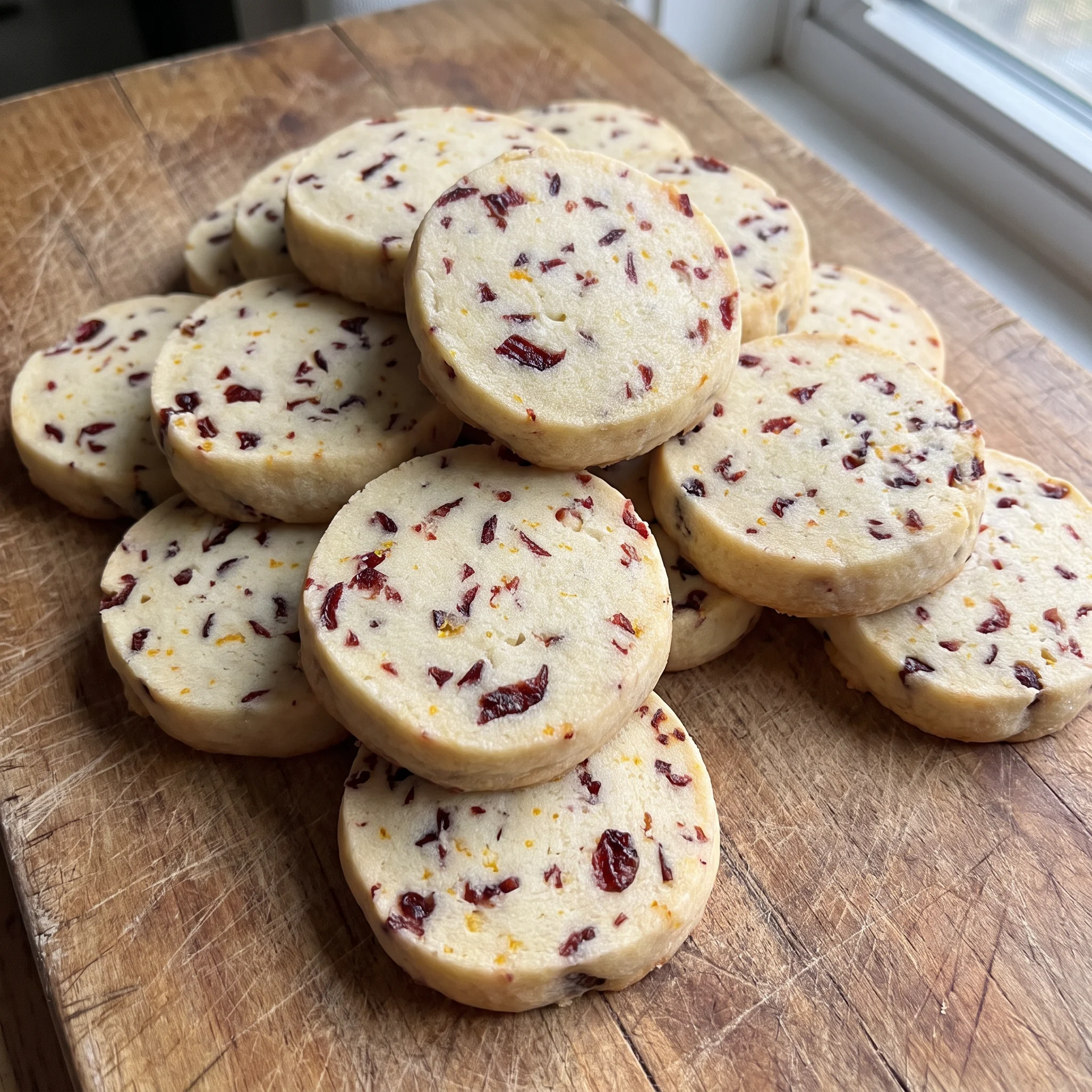
Cranberry Orange Shortbread Cookies
Ingredients
Method
- Place the butter and confectioners sugar in the bowl of a stand mixer. Beat at medium speed until the mixture becomes light and fluffy, 3–5 minutes.
- Incorporate the vanilla extract and salt; continue beating for 1 minute more.
- Gradually add the flour in batches, mixing on low speed until just combined.
- Using a spatula, fold in the chopped cranberries and orange zest.
- Split the dough into two equal portions. Roll each portion into a log approximately 7 inches long and 2 inches in diameter. Individually wrap each log in plastic wrap.
- Chill the logs in the refrigerator for at least 1 hour, or overnight.
- Set the oven to 325°F (165°C). Prepare a baking sheet by lining it with parchment paper and set aside.
- Unwrap the chilled dough and cut into rounds about ⅓ inch thick.
- Arrange the slices on the prepared baking sheet and bake for 10–12 minutes, until the edges are just barely golden.
- Allow the cookies to cool on the baking sheet for 30 minutes, then move them to a wire rack to cool completely.
- Serve right away or keep in an airtight container.
Storage, Make-Ahead, and the Serving Window
These cookies are at their best within the first two days, when they’re crisp through and the orange zest still smells bright. An airtight container at room temperature holds them well for up to a week, and they don’t soften into anything cakey, they just lose a little of that snap as the butter absorbs ambient moisture.
Day three is noticeably more tender than day one, still good, but a slower crumble. The dough logs freeze cleanly for up to two months, wrapped tight and sliced from frozen with a few extra minutes in the oven; baked cookies freeze too, but they come back a touch softer, so save the freezer for raw logs if texture matters. No finishing touch goes on these, so serve them as they cool, and if you’re baking ahead, do it the morning you plan to serve for the firmest bite.
Swapping What Carries the Flavor and Texture
Unsalted butter: For a dairy-free version, use a vegan butter block that lists at least 80% fat, not a tub spread or margarine. The dough will feel softer and may need an extra 15 to 20 minutes in the fridge before slicing, because vegan butter warms faster. The baked cookie crisps up fine but tastes a little less rich, and the orange and cranberry come through sharper without the butter backdrop.
Dried sweetened cranberries: Chopped dried cherries, raisins, or dried blueberries work in the same ½ cup measure. Cherries bring a deeper, almost winey tartness; raisins turn sweeter and softer, so the cookie loses some of its bright edge.
Dried blueberries are milder and the color bleeds gray into the dough. Chop any of them to peppercorn size so they don’t tear the slices.
Fresh orange zest: Lemon, lime, or grapefruit zest, or a mix of orange and lemon, in the same 1 tablespoon. Lemon and lime read sharper and more acidic, which can overpower the cranberry.
Grapefruit is softer and slightly bitter. Orange stays the most balanced here.
Avoid dried zest or extract; they taste dusty or flat next to the real oil.
All-purpose flour: For gluten-free, use a 1-to-1 gluten-free blend that contains xanthan gum, measured the same 2 ½ cups. The dough will be softer and stickier, so chill it at least 2 hours and handle the logs gently.
The baked cookies are more fragile and sandy, with a slightly chalky finish. They still slice and bake, but expect a shorter shelf life.
Tips
- When you roll each log, press the dough down with your palms every few inches as you go, rather than just pushing it outward. Rolling alone stretches the surface tight around pockets of air and leaves the chopped cranberries sitting loose near the edge. Those gaps are where the log cracks when the knife comes down, and where a slice breaks in half on the sheet. Pressing compacts the dough around each cranberry piece so the cross-section stays solid.
- If the ends of a log look ragged or hollow after rolling, pinch them closed and press them flat against the counter, then square the log by rolling it a quarter turn at a time. The trimmed ends are the first slices to fall apart, and a hollow center shows up as a ring-shaped crack in the baked round. Squaring the log also keeps the slices the same thickness from one end to the other, so the batch browns evenly across the sheet.

Frequently Asked Questions
Can I make the dough ahead of time and bake the cookies later?
Yes, the dough logs hold in the fridge overnight and freeze cleanly for up to two months. Wrap them tight and slice from frozen, adding a few extra minutes in the oven.
The orange zest stays brightest if you bake within a week, and the cookies themselves are best within the first two days. If you want the firmest bite, bake them the morning you plan to serve.
Why did my shortbread cookies spread in the oven?
The dough was probably too warm when it hit the sheet. These cookies are mostly butter, so if the logs feel soft or greasy rather than firm like cold clay, the fat melts before the flour sets and the rounds slump. Chill the logs longer, or if you’re already slicing, pop the cut rounds in the fridge for a few minutes.
A second check: if you swapped in a vegan butter block, the dough warms faster and needs more fridge time before slicing.
How do these cranberry orange shortbread cookies differ from classic shortbread?
Classic shortbread is butter, sugar, and flour, nothing else, so the flavor is pure and the texture is the whole story. Here the chopped cranberries add tart pockets and a bit of chew, while the orange zest perfumes the dough with oil that hits you before you even bite. The confectioners sugar keeps the crumb sandy rather than gritty, and the fruit doesn’t weigh it down.
You still get that crisp edge and buttery dissolve, just with a brighter, more layered taste.
