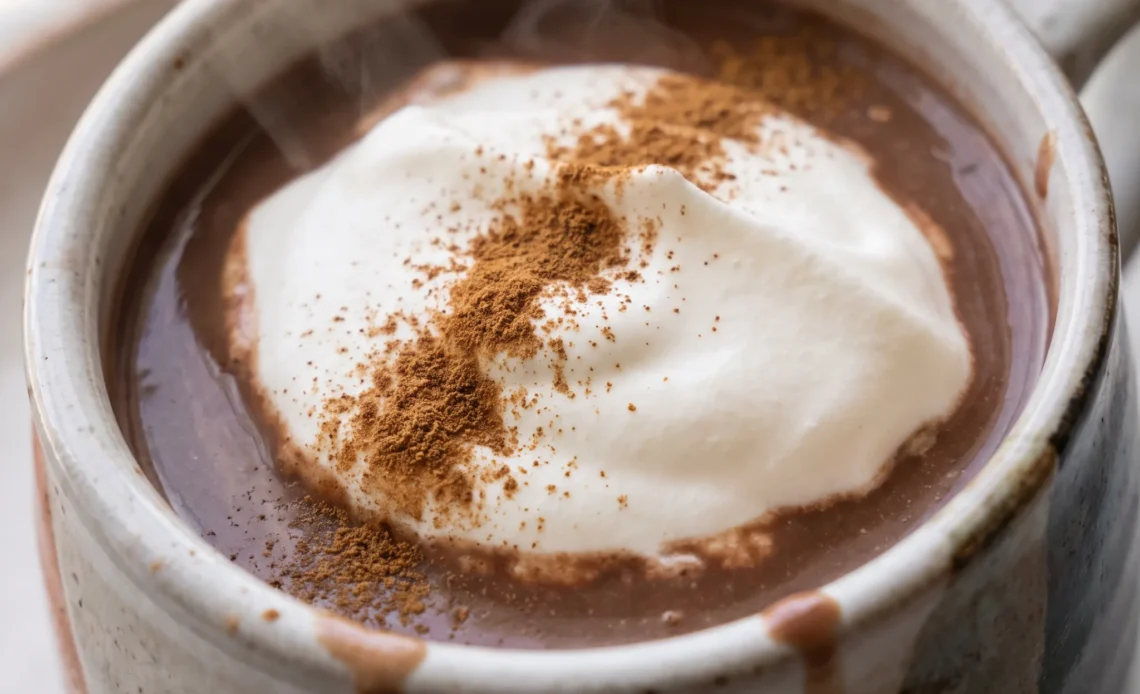
Thick creamy hot chocolate lives or dies on patience, not ingredients. The pot looks done long before it is, and the gap between ready and ruined is narrow.
Heat climbs faster than the chips melt, and once milk catches on the bottom, the burnt note rides through every ladle no matter how much chocolate you add after. Stir, watch the surface, and you’ll feel the moment the body turns silky instead of thin. What separates this from a powder-based mug is texture you can see: it pours slow off the spoon, coats the sides, and tastes closer to melted chocolate than a drink.
The topping needs a light hand too. Cream stirred past glossy collapses into liquid, and cinnamon loses its punch if it sits in the pot rather than landing on the mug at the end. Start to finish, this is a drink built on attention.
What Makes It So Rich
Sweetened condensed milk is the engine here. It brings sugar and milk solids that thicken the drink without any starch, and it makes the whole pot feel richer on the tongue. Chocolate chips do their part too: as they melt, they release cocoa butter and cocoa solids that add body and depth.
Together they create a silky texture you can feel coating the back of your spoon. You won’t find cornstarch or gelatin in this recipe, because those ingredients would give a slick, artificial feel. Instead, the thickness comes from real dairy and real chocolate.
That’s why a cup of this sits heavy in the mug and tastes like a dessert, not a watery drink. The result is a hot chocolate that pours slowly and clings to the sides of the cup.
Why Low Heat Matters (And You Can’t Rush It)
Milk and chocolate are delicate. Over high heat, the milk proteins can scorch on the bottom of the pot, and that burnt taste will haunt the entire batch.
Chocolate can seize or turn grainy if it gets too hot too fast. Low heat lets the chips melt gradually, blending smoothly into the milk.
You’ll see the mixture turn an even, dark brown with no flecks of unmelted chocolate. Stirring constantly is necessary to keep the milk moving and prevent sticking, but the real reason for the low flame is to avoid any burnt flavor. A gentle warmth coaxes out the sweetness and lets the chocolate integrate fully.
When it’s done, the surface should look glossy and uniform, with a gentle steam rising. If you see any bubbles or a skin forming, that’s a sign the heat was too high.
Smoothing the Topping for a Glossy Finish
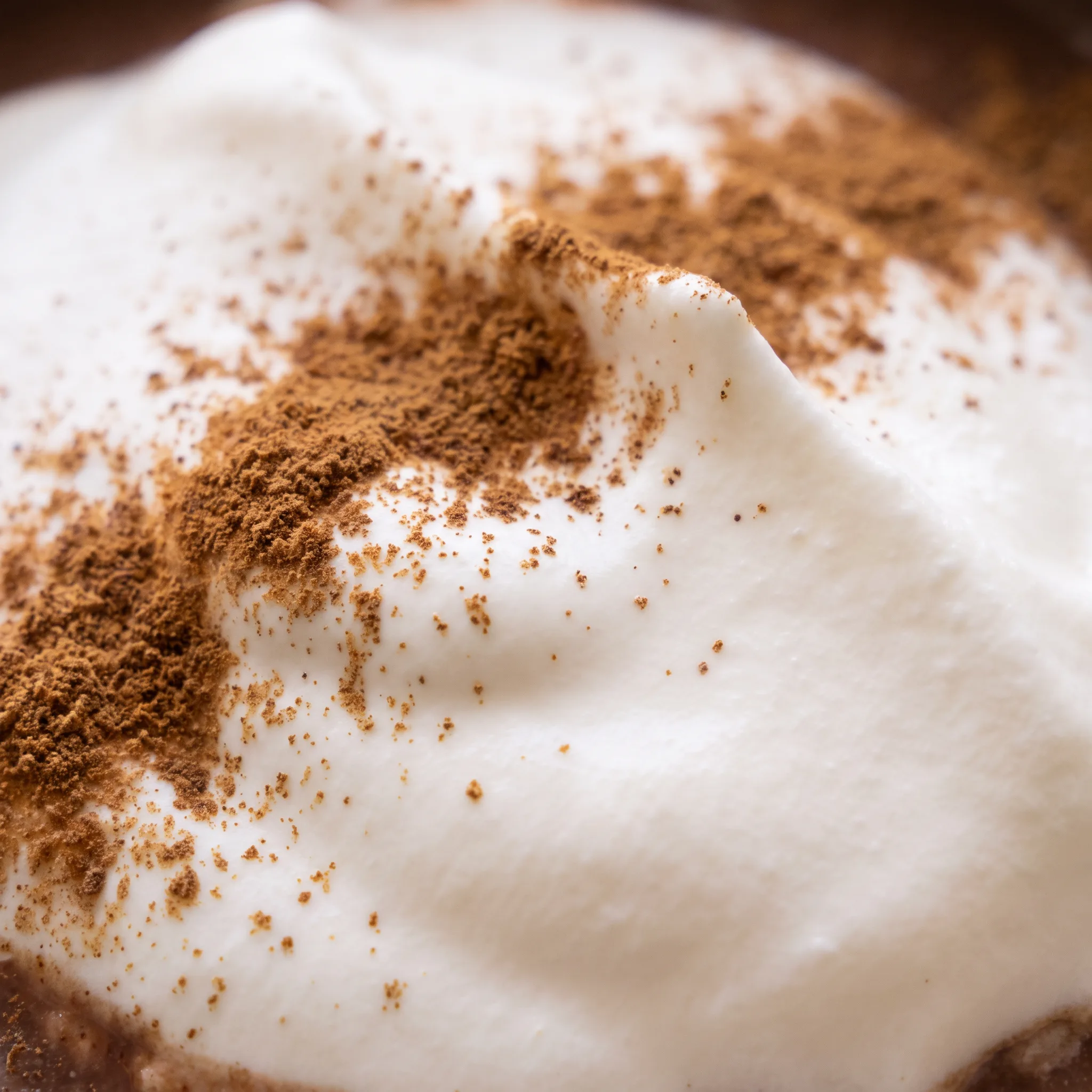
Canned whipped cream is convenient, but straight from the can it’s full of air pockets that can look foamy on top of your drink. Moving it to a bowl and giving it a quick stir with a spoon knocks out those excess bubbles. The cream relaxes into a smooth, glossy consistency that drapes over the hot chocolate instead of sitting in stiff peaks.
That smoothness matters for two reasons: it looks more appetizing, and it melts evenly into the drink, creating a creamy swirl in every sip. You’re not whipping anything, just taming the texture.
A few stirs will do; you’ll see it go from stiff to silky. Then spoon it over the mug, and it will settle into a sleek layer that contrasts with the dark chocolate below.
The Finishing Touch of Cinnamon
A line of ground cinnamon across the top does more than look pretty. Its warm, spicy aroma rises with the steam, so the first thing you notice is a cozy, inviting scent. That aroma primes your palate for the rich chocolate below.
Each sip picks up a faint hint of cinnamon, which cuts through the sweetness and adds a subtle warmth. The spice doesn’t overpower; it complements the deep cocoa and the milky base.
You can sprinkle it in a straight line or a light dusting, but the line gives a professional look and ensures you get a bit of cinnamon in every taste. It’s a small gesture that makes the drink feel complete, like a barista’s final flourish.
The flavor lingers gently, tying the whole cup together.
What to Grab and What to Watch
Whole milk: Skim or low-fat milk thins the body and can taste watery against the condensed milk and chocolate.
Sweetened condensed milk: Buy the full-fat canned version, not evaporated milk, which lacks the sugar and thickness this drink needs.
Semi-sweet chocolate chips: Chips labeled semi-sweet hold their shape until stirred and melt evenly without turning bitter.
Vanilla extract: Real vanilla, not imitation, gives a rounder aroma that stands up to the dark chocolate.
Ground cinnamon: Freshly ground cinnamon smells sweet and woody; old jars taste dusty and fade into the chocolate.
Reading the Pot at the Moments That Decide the Cup
Judging the Melt Before Any Bubbles Show
Chocolate chips go grainy if the milk gets too warm before they finish melting. Keep the heat low and stir. The chips should collapse into a smooth, even brown.
If you see specks or feel a sandy texture on the spoon, pull the pot off the heat for a minute and stir harder. Those specks will not dissolve once they set.
Catching the First Wisp of Scorch
Scorched milk smells faintly burnt and leaves a brown film on the pot bottom. With 30 minutes of low heat, that film can start without a single bubble.
Drag your spoon along the bottom every few minutes. If it comes up with brown streaks or grit, lower the heat further and keep stirring.
Once the burnt taste is in, no amount of chocolate hides it.
Feeling When the Body Turns Silky
The drink is ready when it coats the back of a spoon and a finger drawn through leaves a clean line. At that point it has thickened from the condensed milk and melted chocolate. If it still runs off thin, keep going.
If it gets too thick, a splash of milk loosens it without thinning the flavor.
Taming the Topping Without Whipping It
Canned whipped cream straight from the can holds stiff peaks that sit on top instead of melting in. Stir it in a bowl just until it slumps and turns glossy.
Overstir and it deflates to liquid. A few turns with a spoon is enough.
You want it to drape, not stand up.
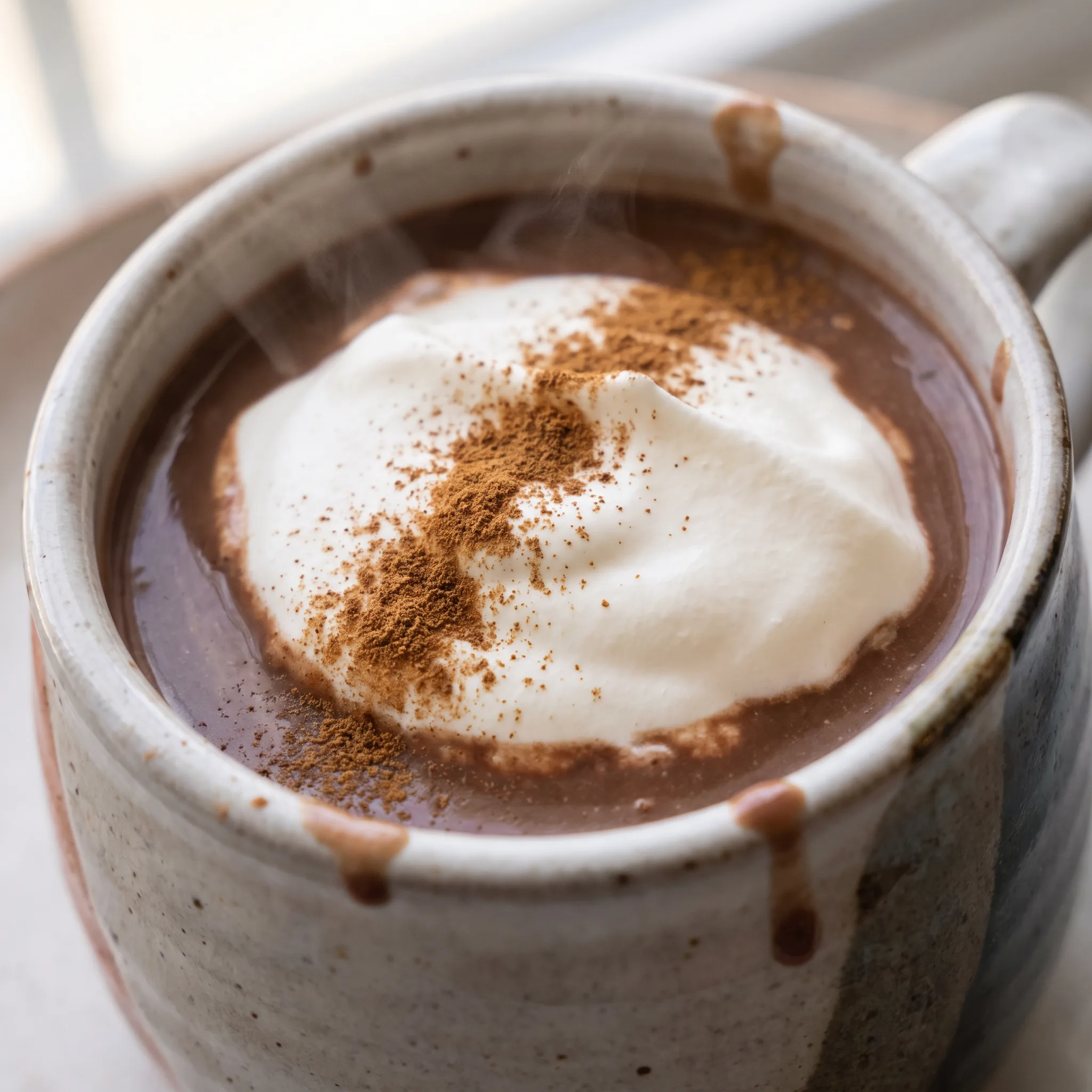
Thick Creamy Hot Chocolate with Sweetened Condensed Milk
Ingredients
Method
- Transfer the milk into a pot and place it over low heat; keep the heat low the entire time to avoid scorching.
- Introduce the sweetened condensed milk, chocolate chips, and vanilla extract into the pot.
- Stir frequently for at least 30 minutes, making sure the chocolate and milk do not burn on the pot’s bottom.
- When the mixture is hot, move the whipped cream to a mixing bowl and stir it with a spoon to eliminate excess bubbles, achieving a smooth, glossy consistency.
- Ladle the thick, creamy hot chocolate into a mug.
- Spoon the smoothed whipped cream on top.
- Sprinkle a line of ground cinnamon across the mug.
Storage, Reheating, and When to Serve It
This hot chocolate is at its best within 20 minutes of coming off the heat, when the body is still fluid and the surface is glossy. That’s your serving window. Past that, the condensed milk and cocoa butter set as the drink cools, and a skin forms on top.
That skin isn’t spoilage; it’s fat and milk solids rising. Stir it back in before you reheat.
Leftovers keep in a sealed container in the fridge for up to 3 days. Don’t freeze it: dairy and melted chocolate separate on thawing, and you’ll never stir it smooth again. To reheat, pour a portion into a pot over low heat with a splash of whole milk, stirring until it loosens.
The microwave works but heats unevenly and can scorch the edges. Add the whipped cream and cinnamon only after reheating, right before serving.
Stirred into a stored batch, the cream deflates and the cinnamon sinks. Both go on fresh, over a hot mug, every time.
Swapping Chocolate or Milk Without Losing the Thick Pour
Sweetened condensed milk: Leave it alone. There is no substitute that thickens the same way. Evaporated milk lacks the sugar and body, and any low-sugar or dairy-free condensed milk will turn the drink thin and less sweet.
The drink will not coat the spoon or cling to the mug. You’ll lose the rich, silky texture that makes this hot chocolate special.
Whole milk: For a lower-fat version, use 2% or skim milk. For dairy-free, try oat, soy, or almond milk. Start with the same 5 cups the recipe calls for, then adjust after tasting.
Low-fat milks make the drink thinner and less creamy. Oat milk adds a slight sweetness and body, while soy milk comes closest to dairy in richness.
Almond milk is the thinnest and may taste watery against the condensed milk and chocolate. The sweetened condensed milk still provides thickness, so the drink won’t be ruined, but expect a lighter mouthfeel.
Semi-sweet chocolate chips: You can swap in milk chocolate, dark chocolate, or bittersweet chocolate chips. Use the same 1 cup (170 g) as the recipe states. For a less sweet drink, go darker; for a sweeter one, use milk chocolate.
Milk chocolate melts into a sweeter, milder cup with less cocoa bite. Dark or bittersweet chocolate deepens the flavor and cuts some of the overall sweetness. The texture stays thick because cocoa butter is still present, but the balance of sweet and bitter shifts.
If you use chocolate bars instead of chips, chop them fine so they melt evenly.
Vanilla extract: No common substitute needed. If you must, use the same 1 teaspoon of vanilla bean paste or half a scraped vanilla bean. Imitation vanilla will work but tastes flatter.
Real vanilla rounds out the chocolate and adds a warm aroma. Skipping it leaves the drink tasting a bit flat, though still rich. Adjust to taste after stirring in.
Tips
- Taste a spoonful right before you ladle it out, once the chocolate has fully melted and the drink has thickened. Sweetened condensed milk varies by brand in both sugar level and cooked flavor, and a batch that simmered longer than usual can taste flat and one-note even though the texture is right. If that happens, stir in another 1/2 teaspoon of vanilla, off the heat, and taste again. Vanilla is the only dial you can turn at this stage: adding more condensed milk would push the sweetness and thickness past where they should be, and more chocolate would take 5 minutes or more to melt and shift the balance toward bitter. A second half teaspoon of vanilla rounds out the milky sweetness without changing the body of the drink.
The recipe’s hard step is heating milk, condensed milk, and chocolate chips together without scorching. Over high heat, the milk proteins and chocolate solids that settle on the pot bottom quickly exceed the temperature at which they burn, and once scorched they release burnt flavors and coagulate into grainy particles. This recipe uses low heat with frequent stirring instead of a higher, faster simmer, because low heat keeps the pot bottom below the scorching threshold while the stirring keeps solids suspended long enough for the chocolate to melt smoothly into the milk.
Frequently Asked Questions
Can I make this hot chocolate ahead of time and reheat it?
Yes, you can make it up to 3 days ahead and reheat it. The Storage section covers the details: keep it in a sealed container in the fridge, then reheat a portion on the stovetop with a splash of whole milk, stirring until it loosens.
The microwave works but heats unevenly and can scorch the edges. Hold the whipped cream and cinnamon until after reheating, right before serving.
Why did my hot chocolate turn out grainy?
The most likely cause is that the milk got too warm before the chocolate chips finished melting. Keep the heat low and stir constantly; the chips should collapse into a smooth, even brown.
If you see specks or feel a sandy texture on the spoon, pull the pot off the heat for a minute and stir harder. Those specks won’t dissolve once they set, so catching them early matters. A secondary check: make sure you’re using semi-sweet chips, not chopped bars, which can melt unevenly if not finely chopped.
How is this different from regular hot chocolate?
This one skips the usual cocoa powder and water or milk base. Instead, it builds body from sweetened condensed milk and semi-sweet chocolate chips, which give it a thick, silky texture that coats the spoon. Regular hot chocolate often relies on cocoa powder and sugar, which can taste thinner and less rich.
Here, the dairy and cocoa butter do the thickening, so you get a drink that pours slowly and clings to the mug. It’s closer to a dessert than a beverage.
Can I use a different type of chocolate instead of semi-sweet chips?
Yes, you can swap in milk chocolate, dark chocolate, or bittersweet chips. Use the same amount the recipe calls for.
Milk chocolate will make a sweeter, milder cup with less cocoa bite; dark or bittersweet deepens the flavor and cuts some sweetness. The texture stays thick because cocoa butter is still present, but the balance of sweet and bitter shifts. If you use chocolate bars instead of chips, chop them fine so they melt evenly.
