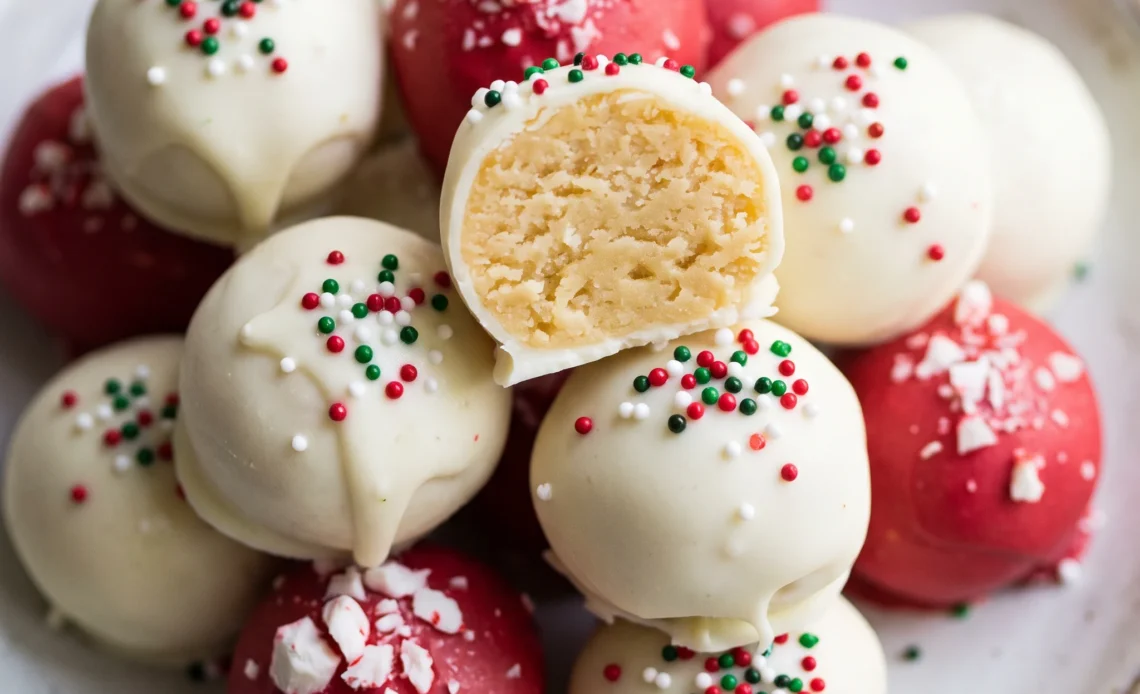
Most people wreck sugar cookie truffles before the chocolate ever hits the bowl, and it happens in the food processor. Crumbs from a crisp cookie are dry and sandy, and they need just enough cream cheese to clump into a rollable dough.
Push past that and the mixture turns slack, sticks to your palms, and won’t hold a round shape no matter how long it chills. The finished sugar cookie truffles lean on that balance more than anything else, since the centers carry the cookie flavor straight through the coating. Get the dough right and the rest is forgiving.
Get it wrong and you’ll fight every ball from the sheet to the fork, chasing cracks and bare patches under the chocolate.
Why Cream Cheese Makes or Breaks the Dough
Crumbs from a sugar cookie are dry and sandy on their own. They need fat and moisture to clump into something you can actually roll. Cream cheese supplies both, and the amount you use decides whether the mixture comes together or fights you.
Too little and the dough stays crumbly, refusing to hold a ball no matter how hard you press. Too much and it turns sticky and slack, spreading on the sheet and losing shape.
The recipe gives you a range for a reason. Crumbs from a drier cookie, or one that has sat open in the fridge, soak up more cream cheese than fresh crumbs from a soft cookie.
Start with the low end. If the mixture still crumbles after a good pulse, add the extra ounce. You want a dough that presses into a smooth ball without cracking at the edges.
That’s your signal you’ve got the ratio right.
What Freezing Does for the Dip
A truffle ball at room temperature is soft and tacky. Drop one into melted chocolate and it slumps, smears, and leaves half its coating behind on the fork.
The fix is time in the freezer. When the centers go in cold and firm, they hit the chocolate, take the coating, and come out clean. The shell sets fast because the cold center pulls heat out of the chocolate almost on contact.
If the balls are still soft, they’ll stick to the fork, tear when you slide them off, and leave streaks of bare cookie showing through. Feel the surface before they go in.
Cold and dry, not damp or yielding. That firmness is what lets you tap the fork and get a thin, even layer rather than a thick, lumpy coat that tears as it sets.
Melting Wafers or Chocolate Chips for Coating?
Melting wafers are built for dipping. They contain added fats that make them flow into a thin, fluid pool when warm and harden into a glossy shell as they cool. That fluidity matters when you’re dragging a cold ball through the bowl.
The coating slides on evenly and drips off clean, leaving a shell thin enough to bite through without cracking. Chocolate chips behave differently.
They’re made to hold their shape in a hot oven, so when you melt them they stay thick and gloppy, sometimes seizing into a grainy paste. You end up with a heavy coat that clumps, tastes waxy, and cracks when the truffle sets. Wafers give you the snap and shine you want on the outside of a truffle, and they do it without any tempering fuss.
Pick a wafer you’d eat on its own, because the coating is the first thing anyone tastes.
How Fine Should the Cookie Crumbs Be?
The inside of a good truffle feels like soft, uniform dough, not a mouthful of sand. That starts with the crumbs. When the cookies break down to an even, powdery texture, the cream cheese coats every particle and the finished center tastes smooth.
Leave bigger shards in the mix and you’ll feel them against your tongue, gritty pockets that never soften. Watch the food processor as it runs. You want the crumbs to look like damp sand with no visible chunks.
Once the cream cheese goes in, stop sooner than you think. Pulse just until the mixture pulls together. Run it longer and the dough turns dense and greasy, the fat warming and separating.
Press a piece to the touch: it should hold a shape without feeling pasty or slick. If it’s oily, you’ve gone too far.
When to Add Sprinkles So They Stick
Sprinkles pressed onto a set truffle just bounce off. They need wet chocolate to grab onto, which means your window is right after the ball comes off the fork, before the shell starts to dull and firm.
That’s maybe a minute, sometimes less on a cold day. Scatter them then, while the coating still looks shiny.
A light pinch is enough. Roll the truffle in your palm and you’ll smear the shell and knock half the sprinkles loose. Let them sit where they land.
Beyond looks, they add a little crunch against the soft center and the thin chocolate shell, a contrast you notice on the first bite. They also tell you the truffle is fresh, since a coated ball with sprinkles still clinging looks like it just came off the sheet. Load them on too thick and they overwhelm the cookie flavor underneath.
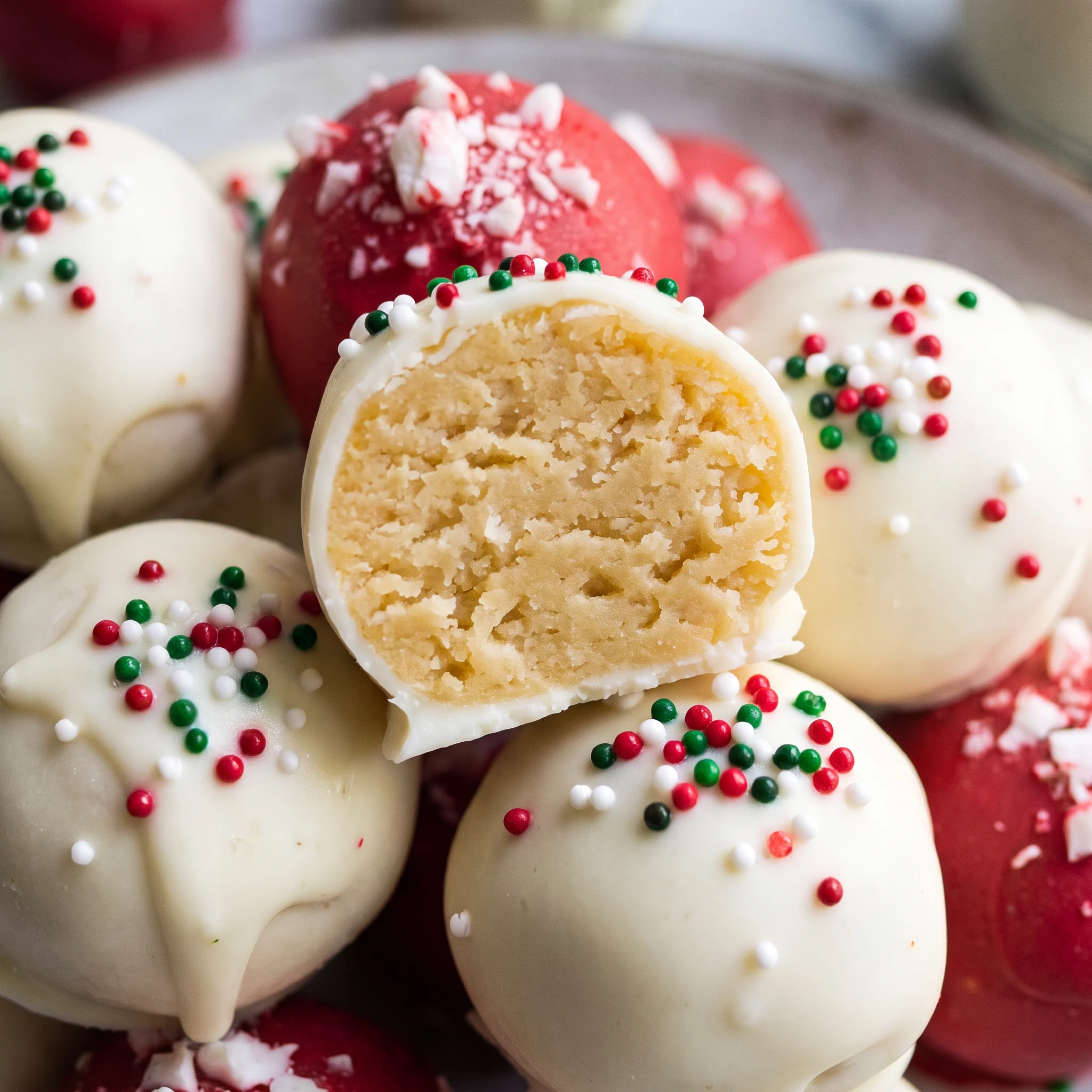
The Four Things That Decide How These Truffles Turn Out
Sugar cookies: Buy a crisp, buttery brand like Pepperidge Farms; soft-baked cookies turn the crumbs gummy and the centers heavy.
Cream cheese: Full-fat block cream cheese, softened, not the whipped tub kind, which carries too much air and water to bind the crumbs.
Vanilla extract: Real vanilla, not imitation, since half a teaspoon is all that stands between the cookie and plain sweet cream cheese.
Chocolate melting wafers: Wafers, not chips; they melt thin and fluid for dipping, where chips stay thick and clump into a waxy shell.
Judging the Moments That Make or Break Sugar Cookie Truffles
When the crumbs are fine enough
Stop the machine when the cookies look like damp sand, with no visible chunks. Rub a pinch to the touch: if you feel grit, keep processing. Coarse crumbs leave a sandy center that never softens.
Once the cream cheese goes in, pulse only until the mixture pulls together. Press a piece: it should hold without feeling pasty or slick.
If it’s oily, you’ve overmixed and the fat has warmed.
How the dough should feel before rolling
The dough is right when it presses into a smooth ball without cracking at the edges. Too dry and it crumbles; add the extra ounce of cream cheese.
Too sticky and it won’t hold shape; you’ve added too much. A quick chill can firm it, but the ratio is the real fix. Roll a test ball: if it stays round and doesn’t stick to your palm, you’re good.
The firmness of the balls before dipping
After 20 minutes in the freezer, the balls should feel cold and dry, not damp or yielding. Touch one: if your finger leaves an indent, they need more time.
Soft centers will slump in the chocolate, stick to the fork, and tear when you slide them off. Cold and firm is what gives you a clean, thin coat that sets fast and glossy.
The consistency of the melted chocolate
Melt in 1-minute bursts, stirring until fluid and glossy. If it’s thick or grainy, it’s too hot or the chocolate is wrong.
Melting wafers flow thin; chips stay gloppy. For dipping, you want a pool that drips off the fork in a steady stream, not a paste that clumps.
If it seizes, start over with fresh wafers and shorter bursts.
The window for sprinkles
Sprinkles only stick to wet chocolate. As soon as a ball comes off the fork, while the coating still looks shiny, scatter them.
That window is short, maybe a minute. Wait until the shell dulls and they bounce off. Don’t roll the truffle in your palm; you’ll smear the shell.
A light pinch is enough for crunch without overwhelming the cookie.
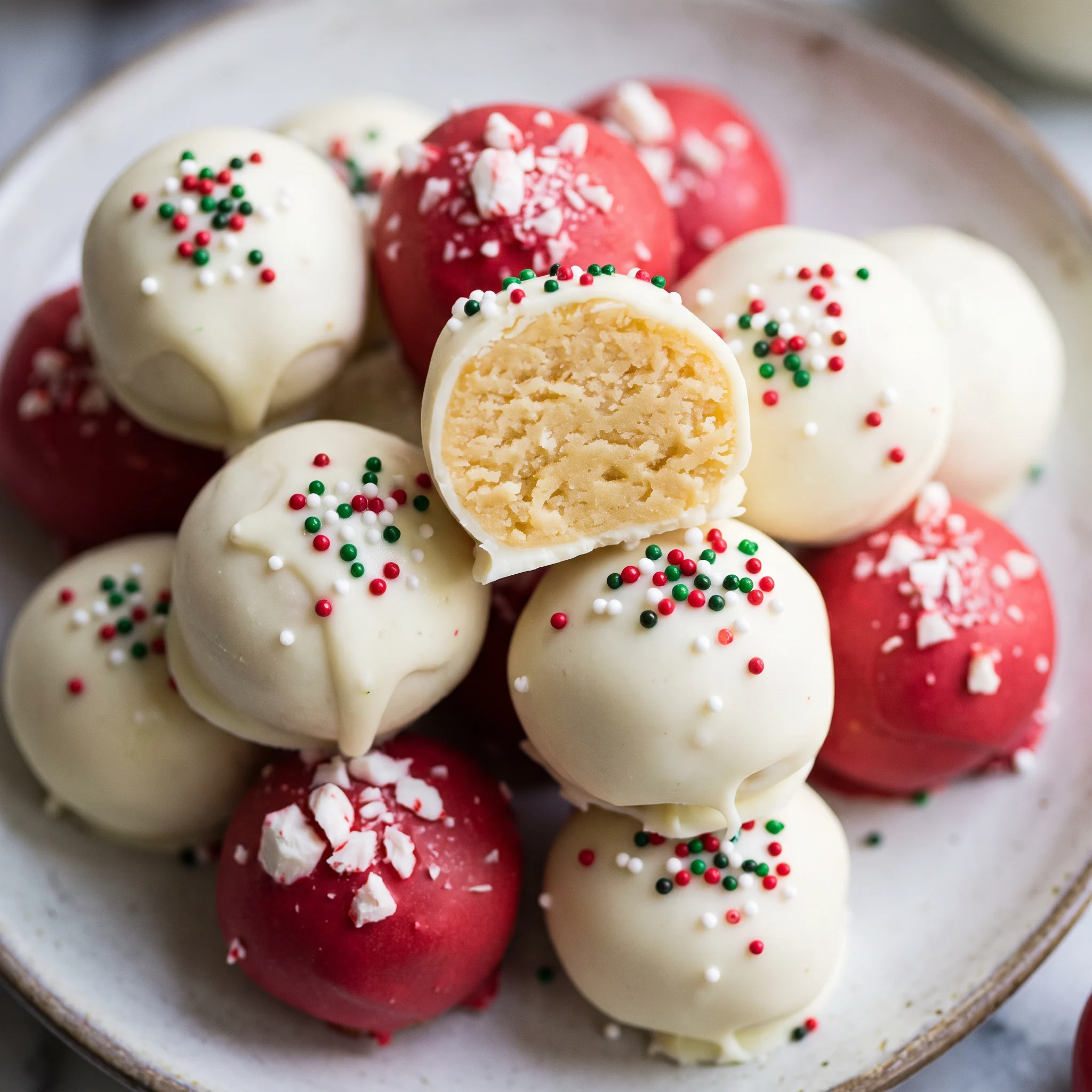
Sugar Cookie Truffles with Chocolate Coating
Ingredients
Method
- Put the cookies into a blender or food processor and process until they turn into fine crumbs.
- Introduce the cream cheese and vanilla, then pulse until the mixture is uniform. Should the mixture be overly stiff, incorporate an additional ounce (28 g) of cream cheese.
- Cover a baking sheet with parchment or freezer paper. With a small cookie scoop or tablespoon, portion out the dough and shape into balls, then arrange them on the prepared baking sheet. Freeze for about 20 minutes, or until solid.
- In a microwave-safe bowl, melt the chocolate for 1 minute. Stir until velvety; if necessary, microwave in further 15–30 second intervals until completely melted.
- Using a fork, submerge the truffle balls in the chocolate. Tap the fork against the bowl’s rim to shed excess chocolate, then return them to the lined baking sheet. A toothpick can assist in sliding the ball off the fork onto the pan.
- Scatter sprinkles right after coating each ball. Keep refrigerated until serving.
Which Ingredients You Can Swap Without Wrecking the Batch
Sugar cookies: Use an equal weight of another dry, crisp cookie like shortbread or gingersnaps. The cookie is the body of the truffle, so its texture and fat content set how much cream cheese you need. Shortbread brings more butter, which can make the dough feel slack sooner, so start with 2 ounces of cream cheese and add more only if the crumbs won’t clump.
Gingersnaps are drier and more assertive; their spice will push through the chocolate, and you may need the full 3 ounces to get a rollable dough. Either way, keep the cookie crisp.
A soft-baked cookie turns gummy in the food processor and the centers come out heavy.
Chocolate melting wafers: Swap in white chocolate or dark chocolate melting wafers, same 1 1/2 cups (255 g). Wafers are built to melt thin and set glossy, so any wafer you like eating will work.
White chocolate runs sweeter, which throws the cookie flavor forward and makes the truffle taste more like vanilla and sugar. Dark chocolate cuts the sweetness and lets the cookie come through as the main note. Both set with the same snap.
Skip chocolate chips here. They stay thick when melted, coat in a lumpy shell, and crack when the truffle sets.
Cream cheese: For a dairy-free batch, use a block-style vegan cream cheese, not a whipped or spreadable tub. Cream cheese is the only thing holding the crumbs together, so the swap has to match its fat and firmness. A block-style vegan cream cheese binds almost the same.
The whipped tub kind carries too much air and water, and the dough turns slack and sticky no matter how long you chill it. Start with 2 ounces and add more only if the mixture still crumbles after pulsing.
Sugar cookies: For a gluten-free version, use a crisp gluten-free shortbread or a gluten-free vanilla cookie, same weight. Gluten-free cookies often run drier and more brittle, so they grind into a finer, thirstier crumb. Start with 2 ounces of cream cheese, pulse, and add the third ounce only if the dough won’t hold a ball.
The finished center will be a touch softer, but the freeze time and the dip stay exactly as written. Don’t use a gluten-free cookie that’s soft or cakey; it clumps in the processor and the truffle loses its snap.
Tips
- Chill the fork you dip with in the freezer for five minutes before you start coating. Cold metal pulls heat out of the melted wafers the moment they touch, so the shell firms just enough to release the ball with a light tap instead of dragging and leaving a bare patch. Warm a fork under hot water and the coating stays fluid where it contacts the tines, which makes the truffle cling and tear as you slide it off.
Storage and Serving: Keep Them Cold, Eat Them Soon
These truffles hold up best in the refrigerator in a sealed container, and that’s where they should live between servings. The cream cheese in the centers is the limiting factor. It’s a fresh dairy ingredient, so the clock runs shorter than a plain baked cookie would allow.
In a sealed container in the fridge, expect them to keep about 3 to 4 days. Past that, the cookie interior starts to pull moisture from the cheese, and the centers go damp and heavy rather than soft.
Cold dulls the chocolate shell and tightens the cookie crumb, so pull only what you’re serving and let them sit at room temperature for 10 to 15 minutes. That’s the window: long enough for the shell to soften under a bite, short enough that the centers don’t sweat and the coating doesn’t bloom. Any longer and the chocolate smears on your fingers.
Freezing the finished truffles isn’t advised. The shell cracks in the cold and the filling weeps on thaw. If you need to work ahead, freeze the uncoated balls, then dip them the day you serve.
Add sprinkles right after each dip, while the coating is wet, and refrigerate from there. Eat within the 3 to 4 day window.
The truffle dough is held together by cream cheese, a fat that softens dramatically as it warms. When a room-temperature ball meets melted chocolate, heat transfers into the center, the fat loses its firmness, and the ball can slump or stick to the dipping fork. A solidly frozen center stays rigid long enough for the chocolate to set, preventing the truffle from deforming or leaving its coating behind.

Frequently Asked Questions
Can I make these sugar cookie truffles ahead of time?
Work ahead with the uncoated balls, not the finished truffles. Roll and freeze them solid, then keep them frozen until the day you serve, and dip them fresh. That way the shell goes on glossy and the centers never weep, which is what happens when a coated truffle sits through a thaw.
If you’d rather have the whole batch done in advance, they hold in the fridge for 3 to 4 days, sealed.
Why did my truffles fall apart when I dipped them in chocolate?
Most often the centers weren’t cold enough. A ball that still gives under a fingertip will slump the moment it hits warm chocolate, and the coating tears as you slide it off the fork. Check that the surface feels cold and dry before each dip, and work in small batches so the rest stay firm while you go.
If the centers were properly firm, look at the dough: a mixture that crumbled at the rolling stage was already short on cream cheese, and those balls crack apart under the weight of the coat.
How do I fix a dry or crumbly truffle mixture?
Add cream cheese a little at a time, pulsing between additions, until the crumbs clump when you squeeze a handful. The dough is ready when a pressed ball holds a smooth edge without cracking.
Go slow past the first extra ounce, because once the mixture turns sticky and slack it won’t roll into a clean ball and no amount of chilling fully rescues the ratio. If the crumbs themselves are the problem, they may be too coarse; sandy pockets read as dry even when the fat level is right.
How long do sugar cookie truffles last in the fridge?
About 3 to 4 days in a sealed container. The cream cheese in the centers sets that clock, since it’s a fresh dairy ingredient and the cookie crumb starts pulling moisture from it past that point, leaving the middles damp and heavy.
Pull only what you’re serving and give them 10 to 15 minutes at room temperature so the shell softens under a bite. Longer than that and the chocolate smears on your fingers.
What’s the difference between these and classic cake truffles?
Cake truffles start with baked sponge, and that crumb is soft and moist to begin with, so a small amount of frosting or binder turns it into dough. Sugar cookie crumbs are dry and sandy, which is why these lean on cream cheese to bring them together, and why the amount matters so much. The payoff is texture: a sugar cookie center stays tender and slightly dense rather than spongy, and the buttery cookie flavor reads clearly against the chocolate instead of getting lost in cake.
You also skip the baking step entirely, which is the whole draw for a 32-minute batch.
