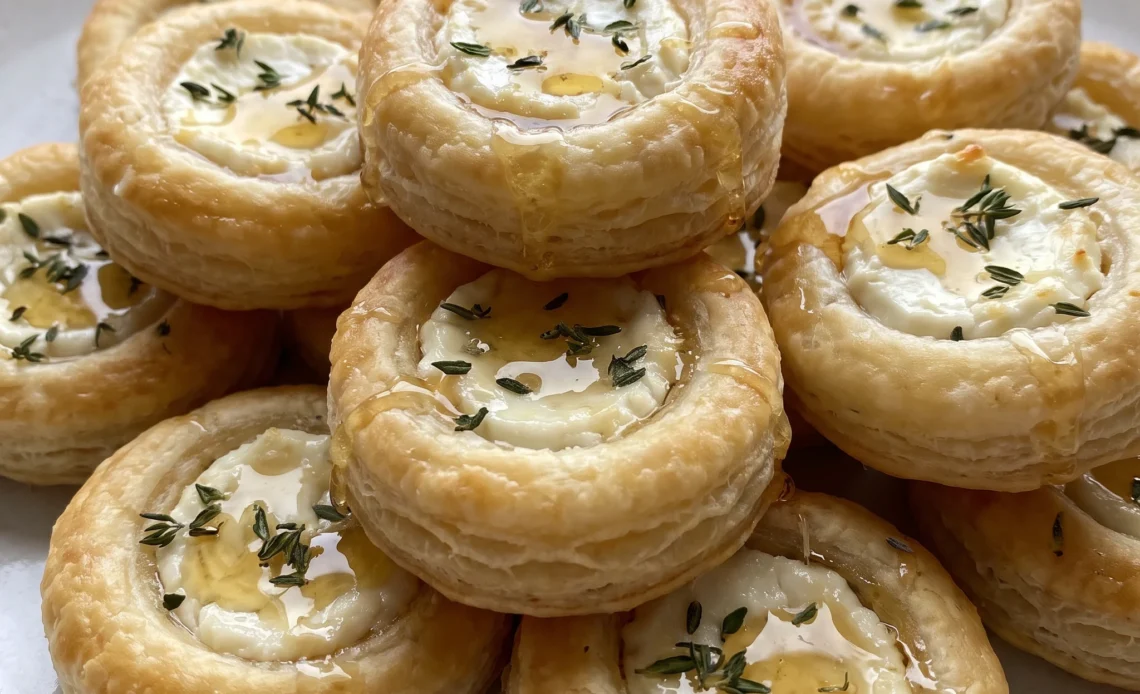
The most common letdown with puff pastry bites is a soggy bottom or a flat, doughy round, and it usually comes down to rushing the dough’s temperature or pulling them from the oven a minute early. These goat cheese and honey puff pastry bites sidestep that trap: the tangy cheese cuts the honey’s sweetness, and the crisp, flaky shell holds it all together. It’s a deceptively simple appetizer, but the margin for error is real.
You want the pastry deeply bronzed, the cheese just warmed through, and the honey added only at the end so it stays glossy. That sequence is what makes each bite shatter, then melt, then brighten.
For anyone who’s been burned by limp, underbaked pastry, this one rewards a little patience at the oven.
The puff pastry’s rise depends on intact layers that trap steam during baking. Pressing too firmly with your thumb fuses the layers, blocking steam from expanding and causing uneven puffing. Look for gentle indentation that does not compress the dough’s structure; if the well is too deep or the dough is flattened excessively, the pastry may not rise properly.
Flaky, Creamy, Sweet
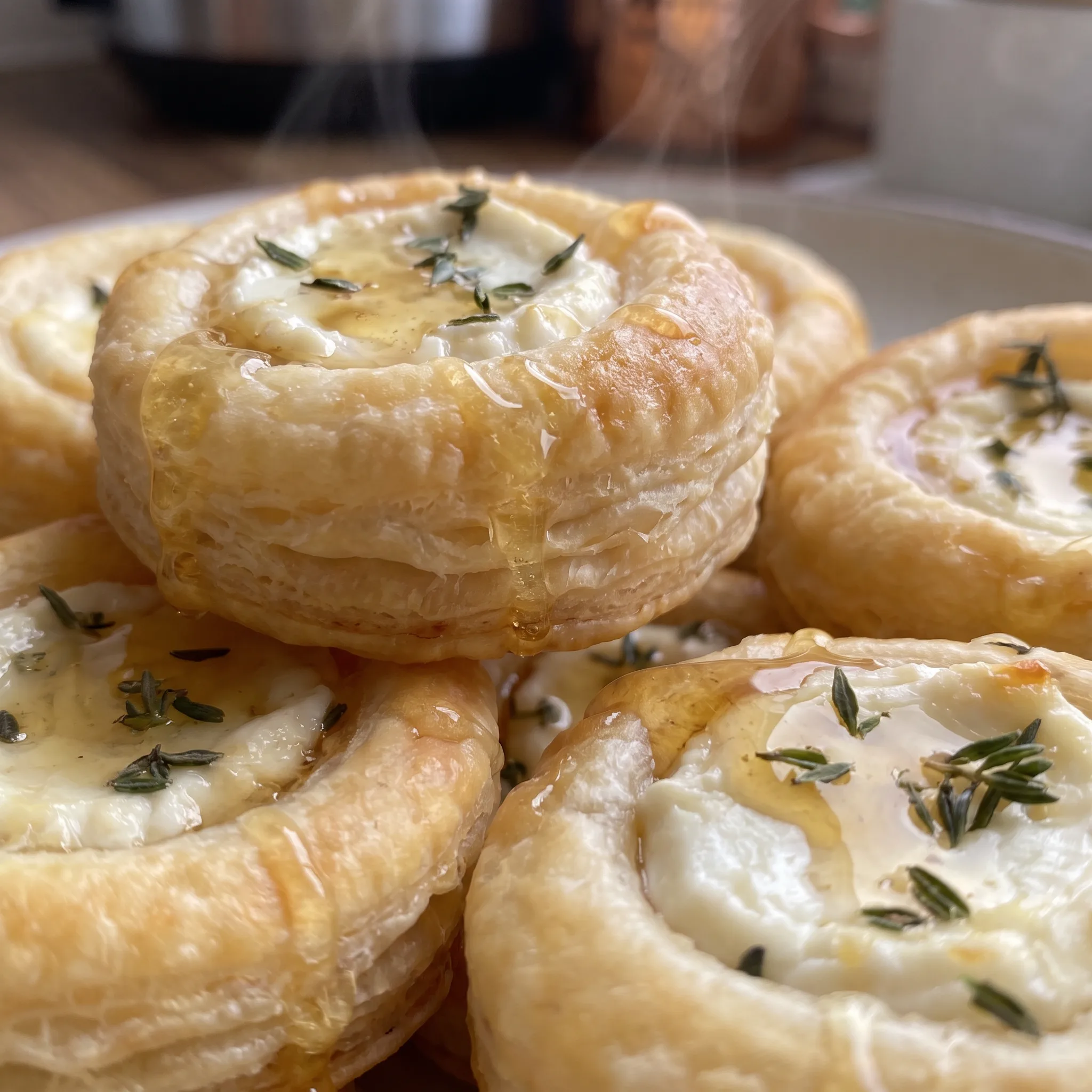
Puff pastry’s shattering layers are the crisp counterpoint to goat cheese’s cream. Because the pastry itself is mild, it lets the tangy cheese and honey come through clearly.
The thumbprint well does double duty: it corrals the filling so it doesn’t spill over the edges, and it gives each round a slight cup shape that holds the cheese in place while the pastry rises around it. That keeps the ratio even bite after bite. You get a contrast of textures and flavors in one small round.
The Tang That Balances
Goat cheese brings a sharp, earthy tang that cuts straight through honey’s sweetness. Without it, the honey would sit heavy and cloying on the pastry.
Its creamy, spreadable texture adds richness that offsets the crisp, buttery layers. A teaspoon per bite hits the right mark: enough cheese to feel present, not so much that it overpowers the honey or turns the pastry soggy.
The result is a bite that tastes bright and full, with each element pulling its weight.
Honey Goes On Last
Drizzling honey after the pastry comes out of the oven keeps it liquid and floral. If it went in before baking, the heat would caramelize it into something sticky and darker, losing the delicate aroma and turning the top tacky. Added at the end, it stays glossy and fresh, coating each bite with a clean sweetness that doesn’t compete with the cheese or the pastry’s crispness.
The final touch lands as intended: a bright, honeyed finish on a warm, savory base.
A Sprig of Thyme
Thyme’s earthy, slightly peppery notes are the savory thread that ties the tangy cheese and sweet honey together. Chopped fresh leaves scattered over the top add a whisper of green and a burst of aroma that lifts the whole bite.
Fresh thyme works here because it keeps its texture and bright flavor, unlike dried, which turns dusty and muted. The herb doesn’t hide behind the other ingredients; it sits right on top, making itself known in every mouthful.
Pick Your Goat Cheese Wisely
Goat cheese: Use a soft, spreadable log, not crumbled or aged, so it stays creamy in the well.
Honey: Choose a mild honey so its floral notes don’t overpower the tangy cheese.
Thyme: Fresh thyme only; dried won’t give the same bright, peppery lift on top.
Puff pastry: A package of puff pastry yields about 24 rounds when cut with a 2-inch cutter.
Judging the Bite as You Go
Reading the Dough’s Ready State
Puff pastry straight from the fridge is stiff and cracks when bent. Let it sit until it yields softly to a rolling pin but still feels cool to the touch.
If it warms too much, the layers blur and the rise goes flat. Pressing the rounds slightly thinner evens out the bake, so each one puffs the same.
Deciding How Deep the Well Should Be
A well that’s too shallow lets the cheese slide off as the pastry puffs, leaving bare edges. One too deep pinches the dough and stops it rising.
Aim for a gentle indentation that holds a teaspoon of cheese without spilling. The pastry should rise around the filling, not be smothered by it.
Watching for the Golden Moment
At 400°F, the pastry turns from pale to golden between 8 and 10 minutes. Peek early, because ovens vary.
The edges should look dry, crisp, and deeply bronzed, not blond. If they’re still pale, give them another minute; if they’re browning unevenly, rotate the pan.
Pulling too soon gives a soggy center that flattens as it cools.
Checking the Cheese’s Set
The goat cheese should be warm and soft, but not melted into a pool. It will look slightly rounded on top, not flat and runny.
If it’s still cool in the middle, the pastry may look done while the filling lags. Give it a few extra minutes, keeping an eye on the pastry to avoid over-browning.
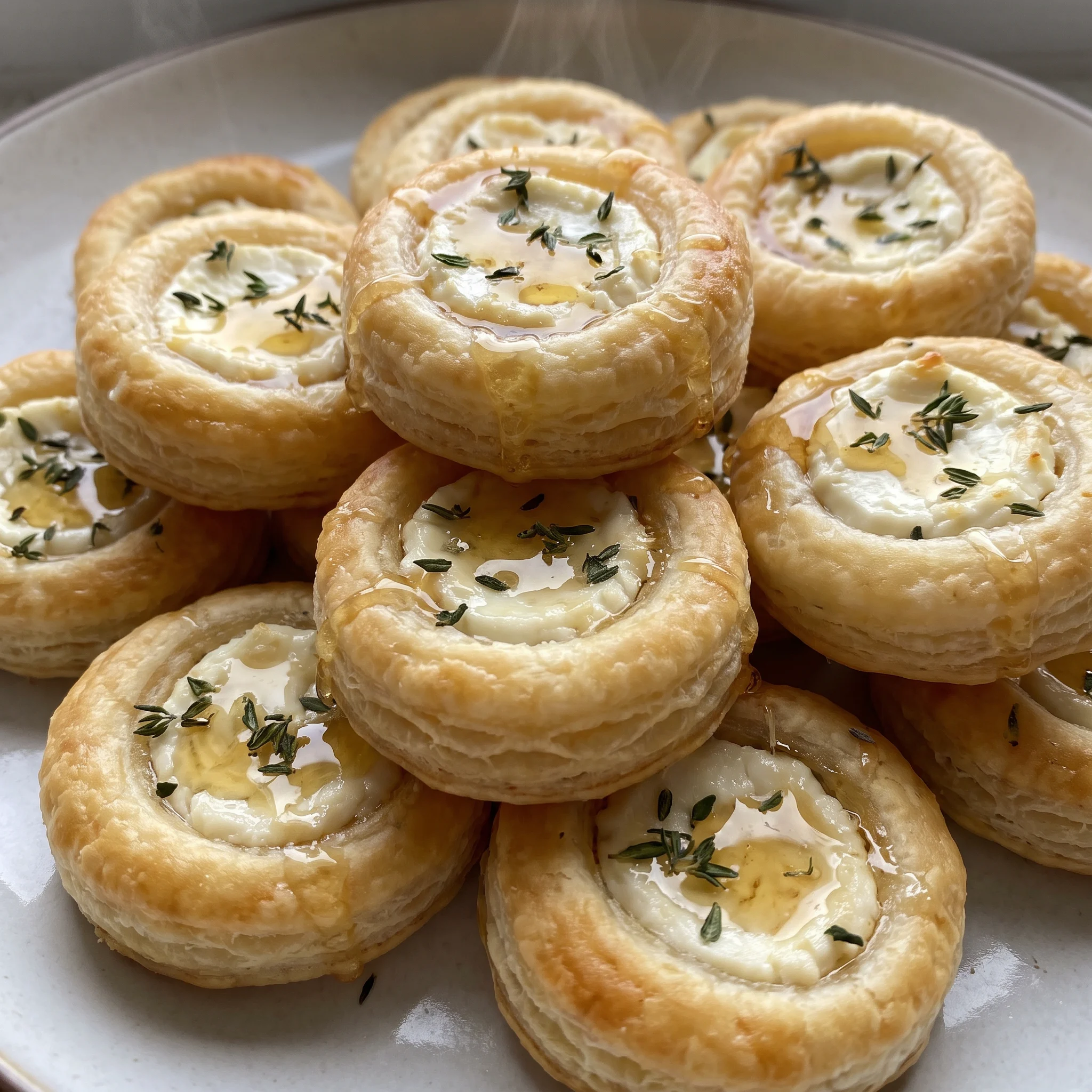
Goat Cheese and Honey Puff Pastry Bites
Ingredients
Method
- Defrost the puff pastry as directed on the package. Flatten the dough by rolling it out a bit. Cut rounds with a 2-inch cookie or biscuit cutter (or the rim of a small glass).
- Arrange the pastry rounds on baking sheets lined with parchment. Press your thumb into the center of each round to form a small well.
- Spoon 1 teaspoon of goat cheese into each well. Bake at 400°F (205°C) until the pastry is puffed and golden, 8 to 10 minutes.
- After taking them out of the oven, allow to cool for 2 minutes. Top each piece with a drizzle of honey and a sprinkle of chopped fresh thyme.
Swapping Without Losing the Bite
Goat cheese: Cream cheese or brie. Cream cheese turns the filling mild and silky, losing the tang that cuts the honey. Brie brings a buttery, earthy note that’s closer in richness but softer; it may melt more, so chill it before spooning.
Start with the same 6 to 8 ounces and adjust after a test bite.
Honey: Maple syrup or agave. Maple syrup adds a woodsy, smoky sweetness that changes the flavor profile, while agave is lighter and less floral.
Both are thinner than honey, so they’ll soak into the pastry more; drizzle just before serving to keep the crispness. Use the same 1/4 cup, but taste first and go lighter if you want the cheese to stay prominent.
Puff pastry: Gluten-free puff pastry. Gluten-free versions rise less and can turn crumbly, so the wells may not hold their shape. Roll them slightly thicker and don’t press as deep.
Bake time may stretch past 10 minutes; watch for a pale, doughy center and give it extra time if needed.
Goat cheese: Dairy-free cream cheese. Most vegan cream cheeses lack the tang and spread differently; they can turn watery when heated.
Look for one with a firm, spreadable texture and add a pinch of salt or lemon zest to mimic goat cheese’s bite. Use the same amount, but expect a flatter, less creamy center.
Tips
- Chill the cut pastry rounds in the freezer for 5 minutes before pressing the wells. This firms the dough so the thumbprint holds its shape without warming the layers, which helps the pastry puff evenly.
- Use a 1-teaspoon measure to scoop the goat cheese. It keeps the amount consistent, so each bite has the right cheese-to-pastry ratio and the wells don’t overflow.
Storage and Serving
These bites are best within an hour of the honey and thyme going on. The pastry stays crisp, the cheese is warm and creamy, and the honey is still glossy.
If you’re making them ahead, hold off on the honey and thyme until just before serving. Store leftover bites in an airtight container at room temperature for up to 2 days.
The pastry will soften as it sits, losing that shattering crunch. To bring some back, reheat in a toaster oven at 350°F for a few minutes until warmed through and the edges crisp again.
The cheese will re-soften, and the honey will loosen. Don’t microwave them, that turns the pastry soggy and chewy. If you have extra baked bites without honey, you can freeze them in a single layer, then thaw overnight in the fridge and reheat as above.
The honey will make them sticky and messy if frozen with it.
Frequently Asked Questions
Can I make these puff pastry bites ahead of time?
You can, but hold off on the honey and thyme until just before serving. Bake the bites, cool them, and keep them at room temperature in an airtight container for up to 2 days. When you’re ready, reheat in a toaster oven at 350°F for a few minutes until the edges crisp again, then add the honey and thyme.
Skip the microwave, it will turn the pastry soggy.
Why did my puff pastry not puff up?
The most likely culprit is that the dough was too warm when it went into the oven. If it sits out too long, the butter softens and the layers merge, so you get a flat, dense round instead of a tall, shattery one.
Make sure the pastry is still cool to the touch when you cut and shape it, and if your kitchen is hot, pop the shaped rounds in the fridge for a few minutes before baking. Also check that your oven is actually at 400°F, because a cooler oven won’t give that initial blast of steam that lifts the layers.
What if I don’t have a cookie cutter?
Use the rim of a small glass or a shot glass. Just press down firmly and give it a slight twist to cut through the dough cleanly.
You want rounds about 2 inches across, and the rim should be thin enough to cut without squashing the dough flat. If the glass sticks, dip it in a little flour first.
How do I keep the bites from getting soggy?
Don’t add the honey until you’re ready to serve, because it will soak into the pastry and soften it over time. Also, make sure the bites are fully baked until deeply golden, not just pale, because underbaked centers will turn soft as they cool. If you’re storing them, keep them in an airtight container at room temperature and reheat in a toaster oven to bring back the crunch.
