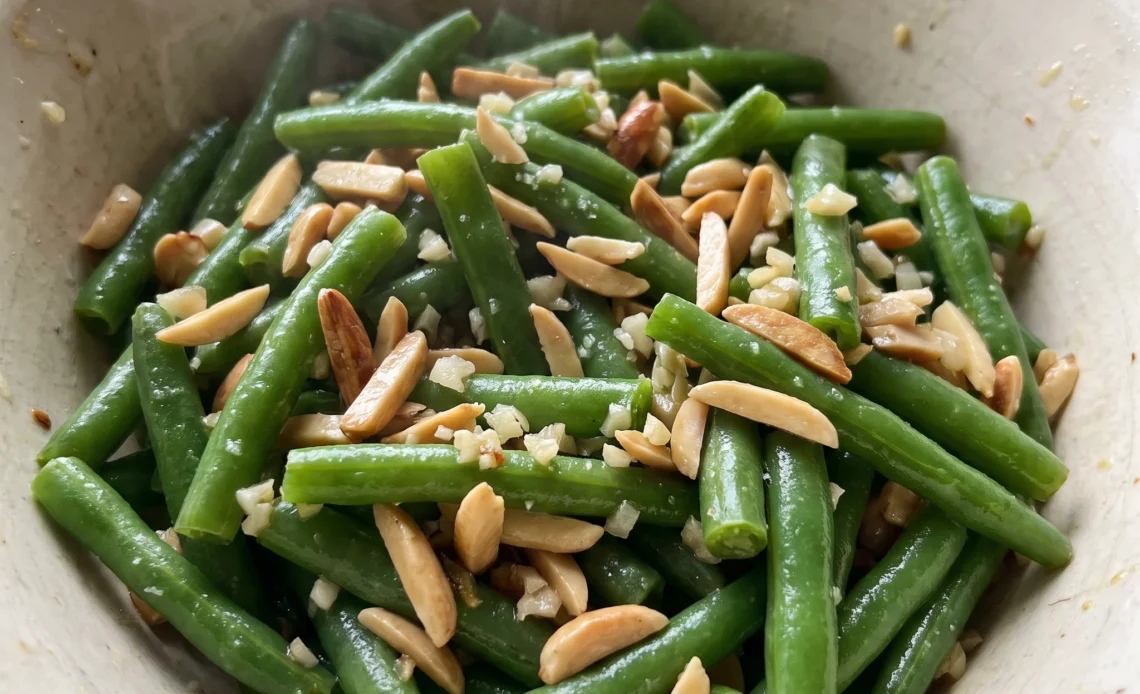
Most green bean almondine turns out oily or limp because the beans go into the pan wet and the almonds burn before the garlic even wakes up. This version sidesteps both traps with a quick blanch and a careful eye on the butter.
It’s an elegant side that dresses up a weeknight plate, but it’s the technique that keeps the beans snappy and the nuts sweet, not burnt. If you’ve ever ended up with a sad, soggy pile, the fix is simpler than you think.
The butter does the heavy lifting here, carrying toasted almond and garlic into every nook of the bean. A classic green beans almondine is all about balance, crisp, rich, nutty, and bright, and getting there just takes a little attention at the stove.
After blanching and shocking, the beans trap water in their crevices and on their surfaces. If this moisture is not removed, it turns the butter sauce into a watery liquid, preventing the almonds and garlic from coating the beans and causing the beans to steam rather than sauté, resulting in a soggy texture.
Why blanch the beans before anything touches a pan?
Boiling green beans in salted water for three minutes does two jobs at once. The salt seasons the beans all the way through, so the final taste isn’t just on the surface.
The boiling water also sets that bright green color, locking in the just-picked look. Then the ice bath halts the cooking instantly.
That’s what keeps the beans crisp-tender, with a little snap left in the center. Skip the shock and they’ll keep cooking from residual heat, turning dull and soft. Once they’re chilled, you drain and blot them dry.
Any water left clinging to the beans will end up in the butter, thinning it out and making the sauce slide off instead of cling. Dry beans mean the butter coats every piece.
What does the butter, almond, and garlic sauté actually do?
Those two minutes in the butter are where the flavor gets built. The almonds turn golden, which brings out their nutty, toasty side.
The garlic goes fragrant, but it’s short enough that it never turns bitter. The butter does more than just cook them.
It picks up all that toasted aroma and becomes the carrier that spreads it over every bean. When the almonds and garlic hit the hot butter, they release their flavors into it, and that seasoned butter is what coats the beans evenly. You end up with each piece carrying a bit of almond, a hint of garlic, and a rich, buttery finish that ties the whole dish together.
Why finish with a quick toss and a final pinch of salt?
The last two minutes in the skillet are about bringing everything together without wrecking the texture. The beans are already cooked from the blanch, so they just need to heat through and pick up the buttery coating. That short toss lets them absorb some of the flavor while staying tender, not soft.
The remaining salt goes in at this stage for a reason. It lands right on the beans, seasoning them directly, so the taste is balanced against the rich butter and nuts.
And you taste before you adjust. Beans vary. A fresh, young batch might need just that pinch, while older ones could want a little more.
A final sample tells you what’s right.
What to Look For in the Pantry
green beans: Fresh, firm beans that snap when bent. Avoid limp or brown-spotted ones.
slivered almonds: Buy raw, not pre-toasted. You want them to toast in the butter, not burn.
garlic: Use fresh cloves, not pre-minced. Pre-minced has less flavor and can turn bitter.
Reading the Beans at Every Stage
The Boil: Seeing the Color Set
Drop the beans into the boiling water and watch the color change. Within seconds, they should turn a vivid, almost electric green, that’s the chlorophyll setting. If the water takes too long to return to a boil, the beans lose color and crunch.
After 3 minutes, lift one out, cool it briefly, and bite. It should be tender but still firm, with no raw squeak. If it’s still hard, the boil was weak; next time use a wider pot and keep it at a rolling boil.
The Ice Bath: Checking the Snap
When the beans hit the ice water, the hiss is your cue. After 1 minute, fish one out and snap it. The bean should bend slightly, then break with a clear snap, that’s the crisp-tender point.
If it bends and tears rather than snaps, it’s overcooked; the ice bath came too late or was too warm. If it’s hard to break, it’s undercooked and needs more time in the boil. Either way, the dish still works, but texture tells you where to adjust next time.
The Butter Sauté: Watching the Almonds Toast
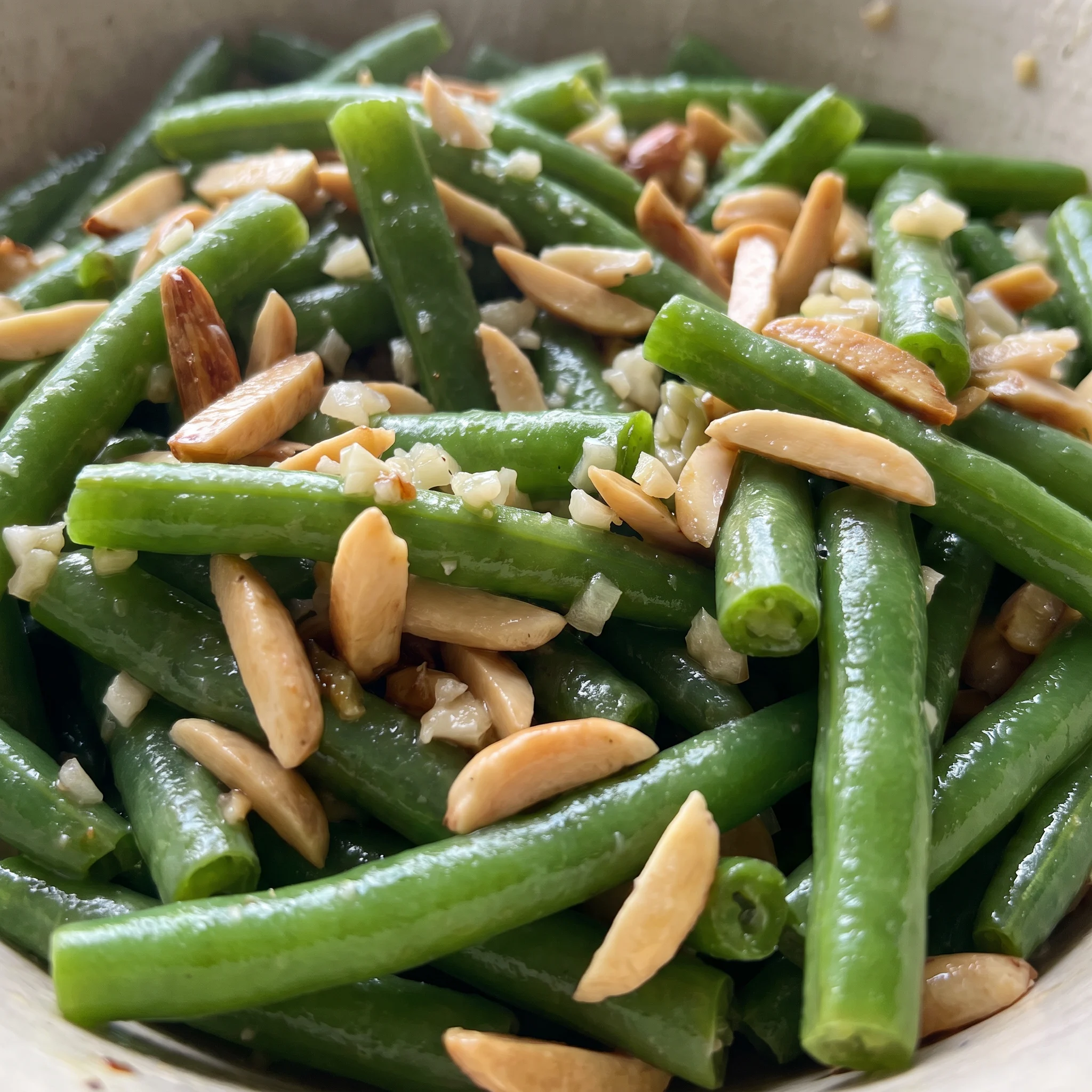
The moment the almonds start to color, the clock starts. They go from pale to golden in about 2 minutes, but the transition is quick, watch for a warm tan with darker speckles, and a nutty smell that shifts from raw to toasted.
The garlic should turn fragrant but not brown; if it darkens, lower the heat. Once the almonds are golden, they’re ready. Take them too far and they’ll taste bitter, and that bitterness will season the whole dish.
The Final Toss: Feeling the Coating
When the beans go into the pan, toss them until every piece glistens with butter. You should hear a gentle sizzle, that’s the butter clinging, not steaming. If the pan seems dry, the beans were too wet; blot them better next time.
Taste a bean at the 2-minute mark. It should be warm, seasoned, and coated, with the almonds and garlic clinging to the ridges. If it tastes flat, add salt in small pinches, tossing after each, until the flavor brightens.
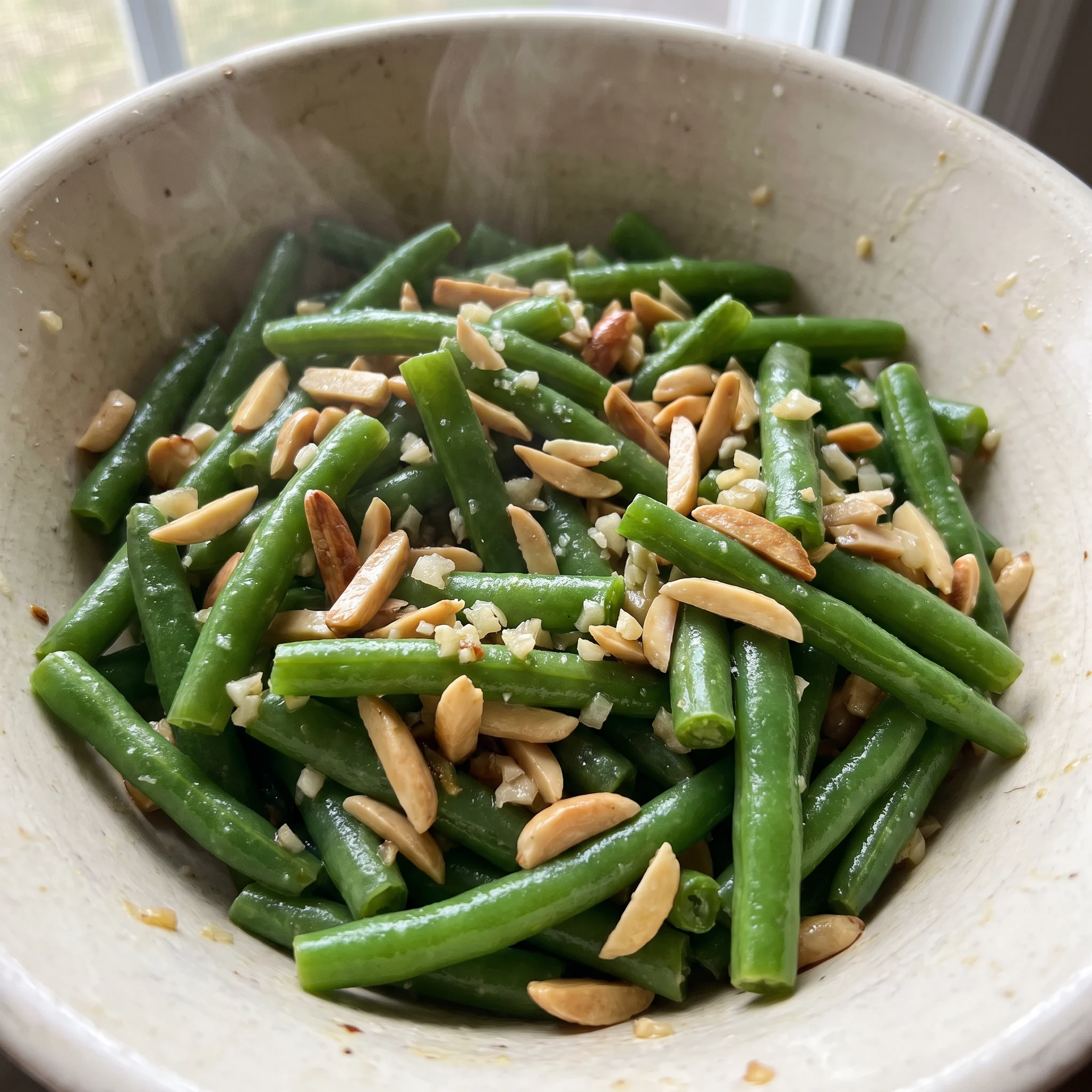
Green Beans Almondine with Garlic Butter
Ingredients
Method
- Prepare an ice bath by filling a large bowl with ice and water; reserve.
- Heat a large pot of water until boiling. Stir in 1/2 teaspoon of the kosher salt. Drop in the green beans and boil for 3 minutes. Using a mesh strainer, lift out the beans promptly and plunge them into the ice bath for 1 minute. Drain thoroughly and blot dry.
- In a large skillet, heat the butter over medium heat until melted. Add the almonds and garlic; sauté for 2 minutes until the almonds turn golden.
- Put the green beans into the skillet. Sprinkle with the remaining 1/4 teaspoon kosher salt. Toss everything together and cook until the beans are tender, roughly 2 minutes. Sample and adjust seasoning with extra salt if needed.
Storing and Serving Green Beans Almondine
Green beans almondine is best eaten right after cooking, while the beans still snap and the almonds stay crunchy. Let it sit and the texture fades: the beans soften and the almonds lose their bite. For leftovers, store them in an airtight container in the fridge for up to 3 days.
The beans will continue to soften and the garlic may mellow, but the dish remains pleasant. To revive some texture, reheat gently in a skillet over medium heat, tossing until warmed through. Avoid the microwave, which will make the beans limp.
The almonds will never regain their crunch, so if you plan for leftovers, consider adding a fresh sprinkle of toasted almonds when serving. Freezing is not recommended for the whole dish; the beans will become mushy and the butter sauce may separate. Instead, freeze only the blanched beans (step 2) for up to 3 months, then thaw and proceed with the sauté when ready.
For make-ahead, blanch the beans a day ahead, keep them dry in the fridge, and finish the dish just before serving.
What You Can Swap Without Losing the Point
green beans: haricots verts or wax beans. Haricots verts are thinner and cook faster, so cut the boil to 2 minutes. Wax beans hold up the same as green beans, but they won’t turn that bright green; the color stays pale yellow, which changes the look more than the taste.
slivered almonds: pine nuts or walnuts. Pine nuts toast quicker and give a softer crunch with a resinous note. Walnuts need a coarser chop and a minute longer in the butter to lose their raw edge; they bring a deeper, earthier flavor.
Either way, the nuts are the textural anchor, so don’t skip them.
butter: olive oil or a dairy-free butter. Butter is what carries the toasted almond and garlic flavors and gives the sauce body. Olive oil will work, but it stays thinner and adds its own fruity note; use a mild one.
Dairy-free butter substitutes behave like butter, but check the salt level and adjust the final pinch.
garlic: leave it in. Garlic is the savory backbone here. Swapping it for shallot or onion changes the whole character, and the short sauté won’t soften a larger allium properly.
If you can’t have garlic, you’re better off choosing a different dish.
Tips
- If your green beans are thicker than average, extend the blanching time to 4 minutes. Thicker beans need a bit more time to become tender while still keeping their snap, and the extra minute in the boiling water ensures they are cooked through without becoming mushy in the final sauté.
- Blot the blanched beans very thoroughly, then let them sit on a clean kitchen towel for a few minutes before adding them to the skillet. Any residual water will not only thin the butter but also cause the butter to splatter when the beans hit the hot pan, which can be messy and unevenly distribute the sauce.
Frequently Asked Questions
Can I make green beans almondine ahead of time?
You can blanch the beans a day ahead, keep them dry in the fridge, and finish the dish just before serving. The full dish doesn’t hold up well, the beans soften and the almonds lose their crunch. If you do have leftovers, they’ll keep for up to 3 days in the fridge, but the texture won’t be the same.
Reheat gently in a skillet, and add a fresh sprinkle of toasted almonds if you have them.
Why do my green beans turn out soggy?
Soggy beans usually mean they were overcooked in the boil or not shocked properly. The recipe calls for exactly 3 minutes in boiling water, then a 1-minute ice bath to stop the cooking. If you skip the ice bath or let them sit in hot water longer, they’ll keep cooking and turn soft.
Also, make sure they’re thoroughly dried after the ice bath, excess water will steam them in the skillet, making them limp.
How do I keep the almonds from burning?
Watch the almonds closely as they sauté in the butter; they go from pale to golden in about 2 minutes, and that transition is quick. The moment you see a warm tan color with darker speckles and smell a nutty aroma, they’re done. If the garlic is browning too fast, lower the heat, because burnt almonds will taste bitter and ruin the dish.
What is the difference between green beans almondine and amandine?
Almondine and amandine refer to the same preparation, green beans with almonds. Amandine is the French term, while almondine is the Americanized spelling. Both mean the beans are cooked with butter and topped with toasted almonds, as in this recipe.
There’s no difference in technique or ingredients.
