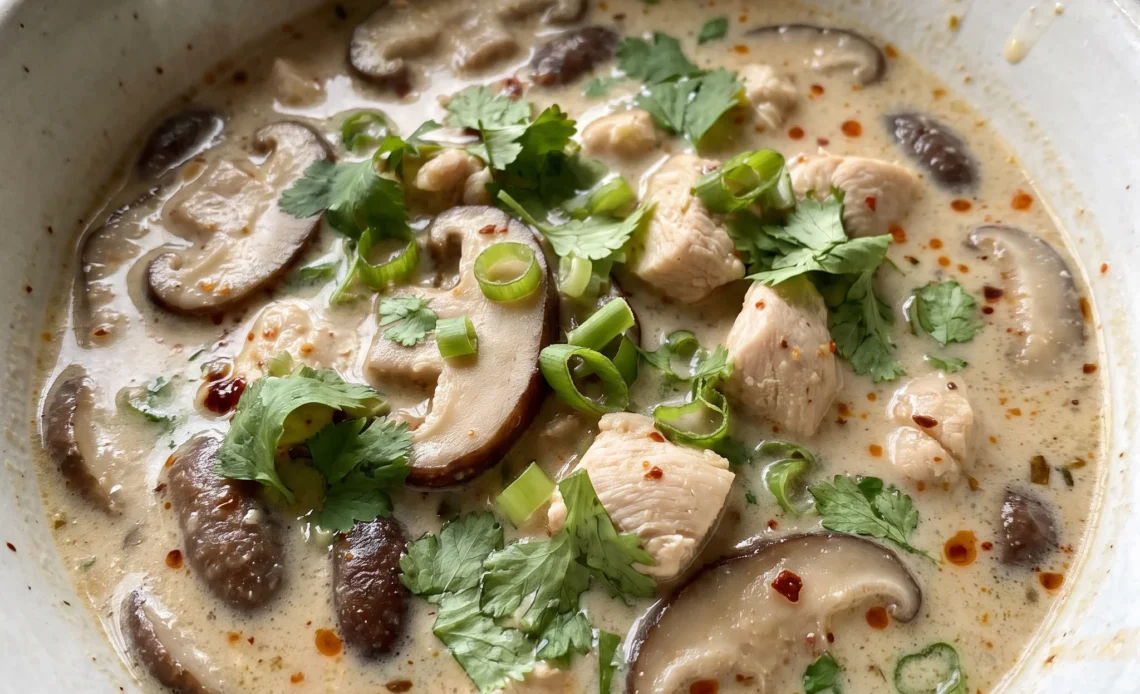
A slow cooker seems like the wrong tool for a soup that lives on bright, sharp flavors, but here’s the catch: you’re not simmering everything together. The aromatics steep alone for hours, building a broth that tastes deep and layered, and only then does the coconut milk and chicken go in, keeping the finish creamy and the meat tender. That two-stage approach is what lets this tom kha soup taste like it came from a Thai kitchen, not a crockpot.
You get the set-and-forget convenience without the muddled, heavy result most slow-cooker curries fall into. The real work isn’t the cooking, it’s the balancing act at the end, getting the sweet, salty, and sour to sing together.
That’s where you earn the bowl.
Why the Slow Cooker Works Here
Letting the aromatics and curry paste steep in hot broth for hours draws out their flavors gradually. You get a broth that tastes of lemongrass, galangal, and chile without any one element shouting. That long infusion builds the soup’s backbone.
When the coconut milk and chicken go in later, they don’t have to carry the flavor; they just add richness and tenderness. The two-stage approach also keeps the coconut milk from separating.
Adding it at the start would turn it grainy under prolonged heat. And the chicken, added near the end, poaches gently instead of simmering to shreds.
The result is a broth with depth, a creamy finish, and chicken that stays juicy. That’s what makes the slow cooker the right tool for this soup.
Adding Coconut Milk and Chicken at the End
Room-temperature coconut milk poured into strained hot broth blends smoothly without forming streaks or curds. That’s why you wait until the broth has already steeped. The chicken pieces go in next, and they cook gently in that hot liquid, staying tender and moist.
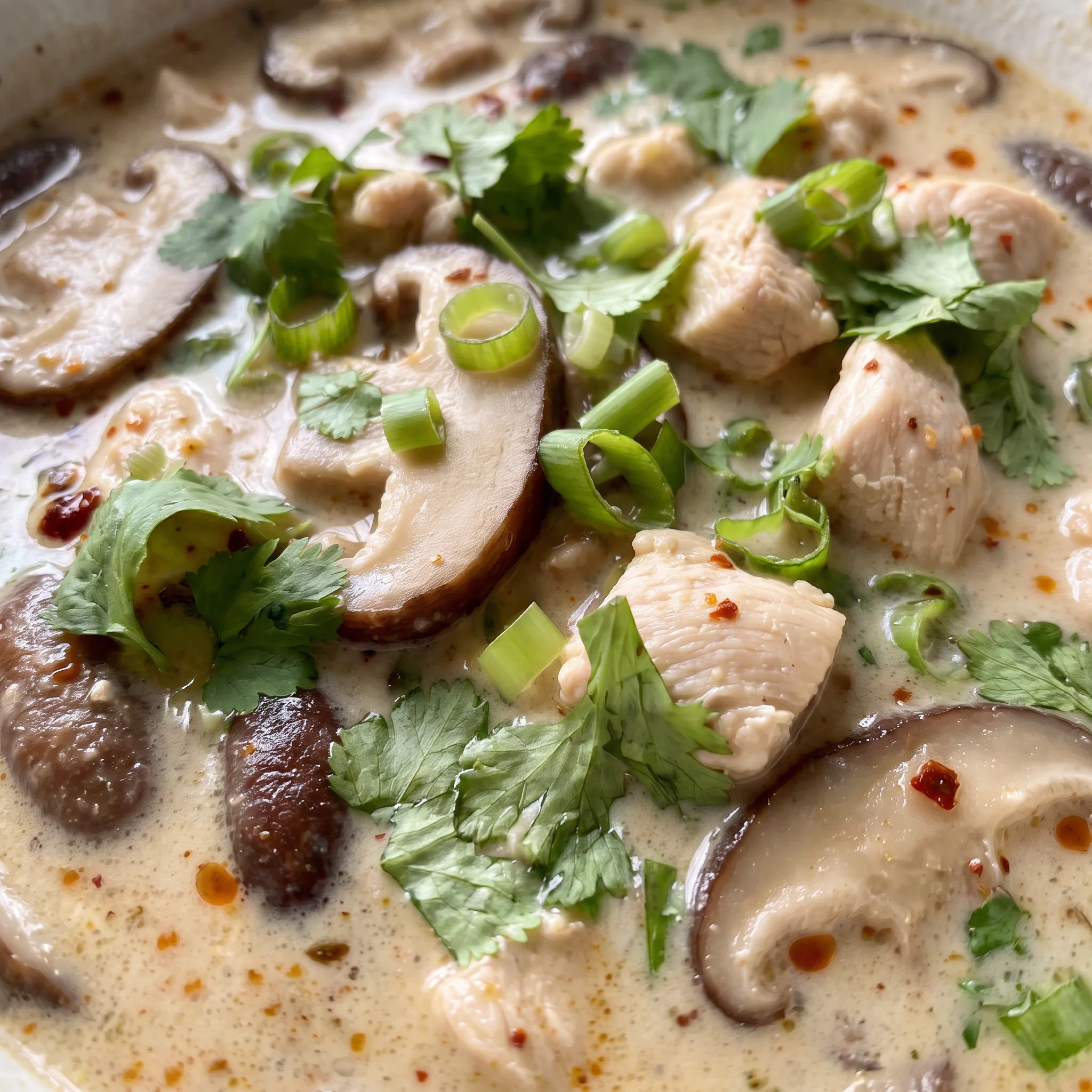
Mushrooms join them, soaking up the seasoned broth while keeping their shape. Because they’re not simmered for hours, they don’t turn soft or slimy. Each bite gives you a clean, rich mouthfeel, with the aromatics still present underneath.
It’s a delicate balance: the coconut milk rounds out the sharp edges, but it doesn’t mute the lemongrass or lime leaves. The soup tastes creamy, yet bright.
Balancing Sweet, Salty, and Sour
Tom kha hits three notes at once: sweetness, saltiness, and acidity. Brown sugar tames the chile’s heat and gives the broth a round, mellow taste. Fish sauce brings a savory depth that plain salt can’t match.
Lime juice cuts through the coconut milk’s richness and makes the other flavors pop. You stir them in at the very end, then taste.
Each spoonful tells you what’s off: maybe it needs more salt, a touch more sugar, or another squeeze of lime. That final adjustment is where the soup comes together. You’re looking for a broth where no single flavor dominates, just a balanced balance that keeps you going back for another bite.
Choosing What Goes In the Pot
fresh galangal or fresh ginger: Galangal is firmer and more floral than ginger; slice it thin so it releases flavor.
lemongrass: Pounding the stalk with the side of a knife before cutting releases its oils; look for firm stalks.
lime leaves: Tear them right before adding to wake up their perfume; frozen ones work fine.
full-fat coconut milk: Room temperature coconut milk blends into the hot broth without curdling or separating.
red jalapeño or Thai chiles: Thai chiles bring more heat; red jalapeño is milder and fruity. Both work here.
Reading the Broth Before It Becomes Soup
Deciding if the aromatics have given enough
After the long steep on HIGH for 3 hours or LOW for 6, the broth should smell deeply of lemongrass and galangal, with a slight heat from the chiles. If it still tastes thin or watery, give it another 30 minutes, the slow cooker holds temperature, so you won’t overcook anything. The liquid should be lightly golden and fragrant, not cloudy or bland.
That’s your sign the base is ready for the coconut milk.
Checking that the chicken is just cooked through
After the final hour on HIGH or two on LOW, fish out the largest piece of chicken. It should be opaque all the way through, with no pink at the center, and should shred easily when pressed with a spoon. If it still looks translucent, return it for 15 minutes and check again.
Overcooking here makes the chicken stringy and dry, so pull it the moment it’s done.
Balancing the three tastes before you serve
The soup needs sweetness, salt, and acid in equal measure. Taste a spoonful after adding the sugar, fish sauce, and lime juice.
If it tastes flat, add a pinch more salt or a splash of fish sauce. If it’s too sharp, a little sugar rounds it out.
If it’s too rich, a squeeze of lime cuts through. Aim for a broth where no single flavor stands out, just a smooth, savory, slightly tangy finish.
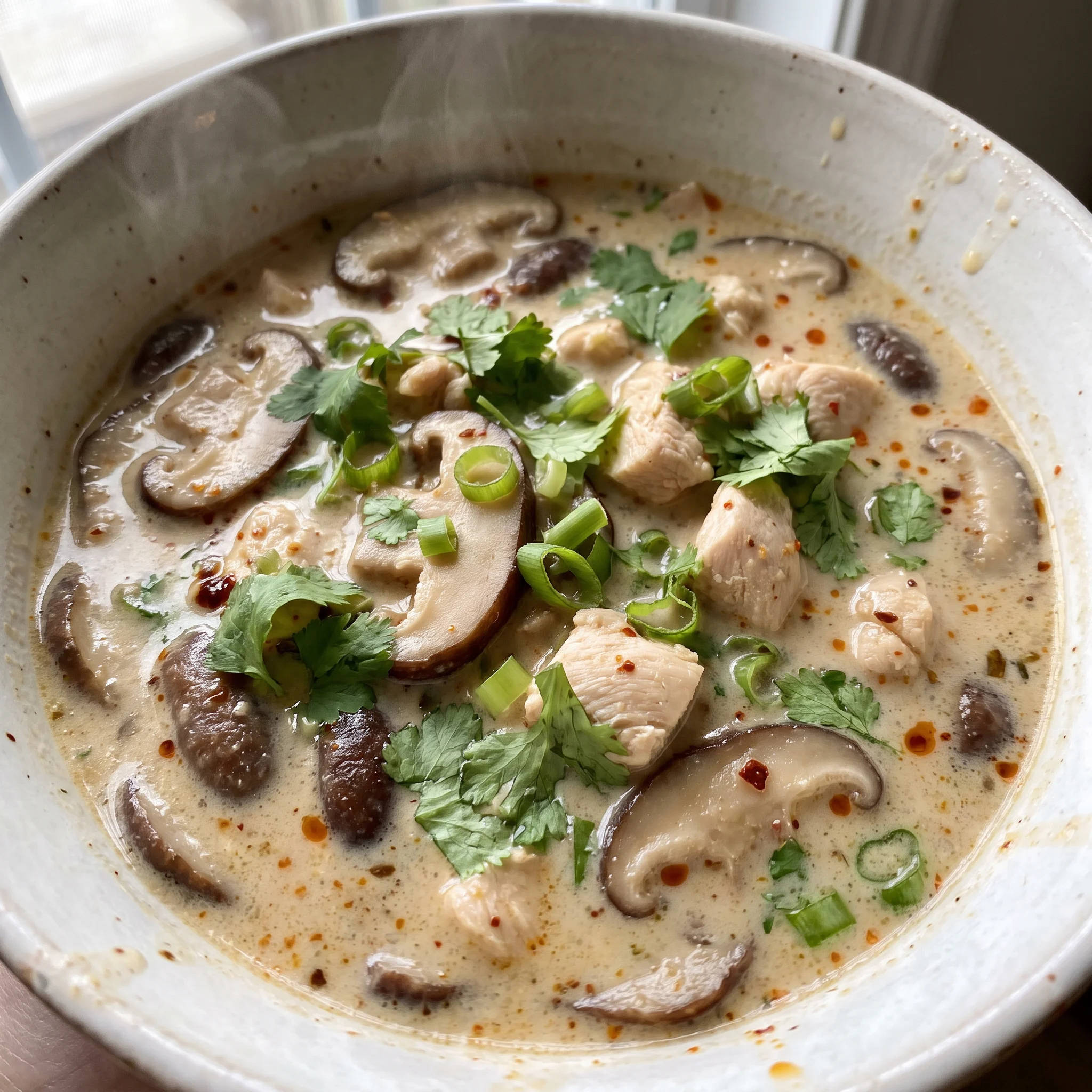
Slow Cooker Thai Chicken Coconut Soup
Ingredients
Method
- In a slow cooker, mix together 1 cup white onion slices, 1 tablespoon chopped fresh garlic, ½ red jalapeño pepper (sliced; or 1-2 Thai chiles, halved), 3 slices fresh galangal (or fresh ginger, each slice ¼-inch long), 1 stalk lemongrass (pounded with side of knife, cut into 2-inch-long pieces), 10 lime leaves (torn, optional), 1 tablespoon red Thai curry paste, and 4 cups chicken broth. Stir well to blend all elements.
- Cover the slow cooker with its lid. Set it to cook on HIGH for 3 hours or on LOW for 6 hours, stirring from time to time.
- After the cooking time is done, take out the solid pieces with a slotted spoon, leaving only the liquid in the cooker.
- Pour in 2 13.5-ounce cans full-fat coconut milk (or coconut cream, at room temperature), add 1 pound chicken breasts (cut into bite-sized pieces), and 8 ounces white mushroom caps (sliced). Stir to combine everything.
- Replace the lid on the slow cooker. Continue cooking on HIGH for 1 hour or on LOW for 2 hours, until the chicken breast pieces are fully cooked through.
- Once the chicken is done, stir in 2 tablespoons brown sugar (or coconut sugar), 2 tablespoons fish sauce, and 2 tablespoons fresh lime juice. Mix well, then taste and adjust the amounts of brown sugar, fish sauce, and lime juice to your preference.
- When you are happy with the soup’s flavor, spoon it into serving bowls. Top each bowl with thinly sliced green onions and chopped fresh cilantro, and serve right away.
Swapping the Aromatics Without Losing the Soup
fresh galangal: fresh ginger. Ginger is spicier and less floral than galangal. Use the same amount the recipe calls for, but slice it thinner so it releases flavor without overwhelming the broth.
The soup will taste a bit brighter and more peppery, but still very much like tom kha.
Thai chiles: red jalapeño. Thai chiles bring a sharper, more direct heat. Red jalapeño is milder and fruitier.
Start with the amount the recipe uses, then taste the broth after the first steep and add more if you want more kick. The slow cooker mellows heat, so you may need a whole chile or a second one.
full-fat coconut milk: coconut cream. Coconut cream makes a thicker, richer broth.
If you use it, you might want to thin the soup with a splash of water or extra broth. Room temperature still matters; cold cream can cause the same separation.
The flavor stays clean, but the mouthfeel gets heavier.
fish sauce: keep as-is. Fish sauce is the salt backbone here.
Soy sauce or tamari won’t give the same funk, and the soup will taste flat. If you’re gluten-free, check the label; most fish sauce is already gluten-free. This is one to keep in its original form unless you’re out of options.
Storing and Reheating Tom Kha Soup
This soup tastes even better the next day, but the coconut milk can curdle if you mishandle it. For the best texture, eat it within 24 hours.
Keep leftovers in a sealed container in the fridge for up to 3 days; the broth may thicken and the chicken can dry out slightly, but it’s still good. To reheat, warm it gently on the stovetop over low heat, stirring often until just hot, and never let it boil. A rolling boil makes the coconut milk separate into curds.
You can also microwave individual portions in 30-second bursts, stirring between each. The soup doesn’t freeze well because the coconut milk splits and the chicken turns rubbery. If you have leftover broth without chicken or mushrooms, that part freezes fine for up to 2 months.
Add fresh lime juice and fish sauce after reheating to brighten the flavors. The green onions and cilantro go on right before serving, not before storing, so they stay crisp and colorful.
Tips
- Before pounding the lemongrass, peel off the tough outer layers until you reach the pale, tender core. The outer leaves are fibrous and won’t soften during the long steep, leaving you with woody bits in the broth. Pounding the core with the side of your knife, as the recipe says, releases the aromatic oils, but only if you’ve removed the tough exterior first.
Coconut milk is an emulsion of fat and water, stabilized by proteins. When heated too aggressively or for too long, especially in the presence of acidic ingredients, the emulsion can break, causing the fat to separate and form curds. In this recipe, the broth is simmered first to extract flavors from aromatics, and only then is coconut milk added, which prevents prolonged high-heat exposure and keeps the soup smooth.
Frequently Asked Questions
Can I make this soup ahead of time and reheat it?
Yes, but eat it within 24 hours for the best texture. The broth thickens and the chicken may dry out slightly after a day in the fridge, but it’s still good for up to 3 days.
Reheat gently on the stovetop over low heat, stirring often, and never let it boil, that will make the coconut milk separate into curds. You can also microwave individual portions in 30-second bursts, stirring between each. Add fresh lime juice and fish sauce after reheating to brighten the flavors.
Why did my coconut milk curdle in the slow cooker?
Most likely you added the coconut milk at the start or let the soup boil after adding it. Prolonged heat at a rolling simmer makes the fat separate from the liquid, turning it grainy. The recipe’s two-stage approach, adding room-temperature coconut milk only after the broth has steeped and then keeping the heat gentle, prevents that.
If you see curds forming, pull the pot off the heat and stir in a splash of cold coconut milk; that can sometimes bring it back together, but it won’t be as smooth.
How do I get the soup spicy without making it too hot?
Start with the half red jalapeño the recipe calls for, then taste the broth after the first steep. The slow cooker mellows heat, so you may need another quarter chile or a whole one if you want more kick.
Adding the chiles early infuses the broth with a gentle warmth; adding a sliced fresh chile at the end gives a sharper, more immediate heat. Remember, you can always add more, but you can’t take it out.
What’s the difference between using galangal and ginger in tom kha?
Galangal is firmer and more floral, with a piney, citrusy note that’s quintessential tom kha. Ginger is spicier and more peppery, so it will make the broth taste brighter and more pungent.
The recipe accepts either, but if you use ginger, slice it thinner so it releases flavor without dominating. Use the same amount, and the soup will still be, just a little different in character.
Can I use chicken thighs instead of breasts for this soup?
Yes, thighs work well here. They have more fat, so they stay moist even if they cook a bit longer. Cut them into bite-sized pieces and add them at the same point as the breasts.
Check for doneness after the final hour on HIGH or two on LOW, thighs are done when they’re opaque and no longer pink at the center. They’ll be more forgiving than breasts if you go a few minutes over.
