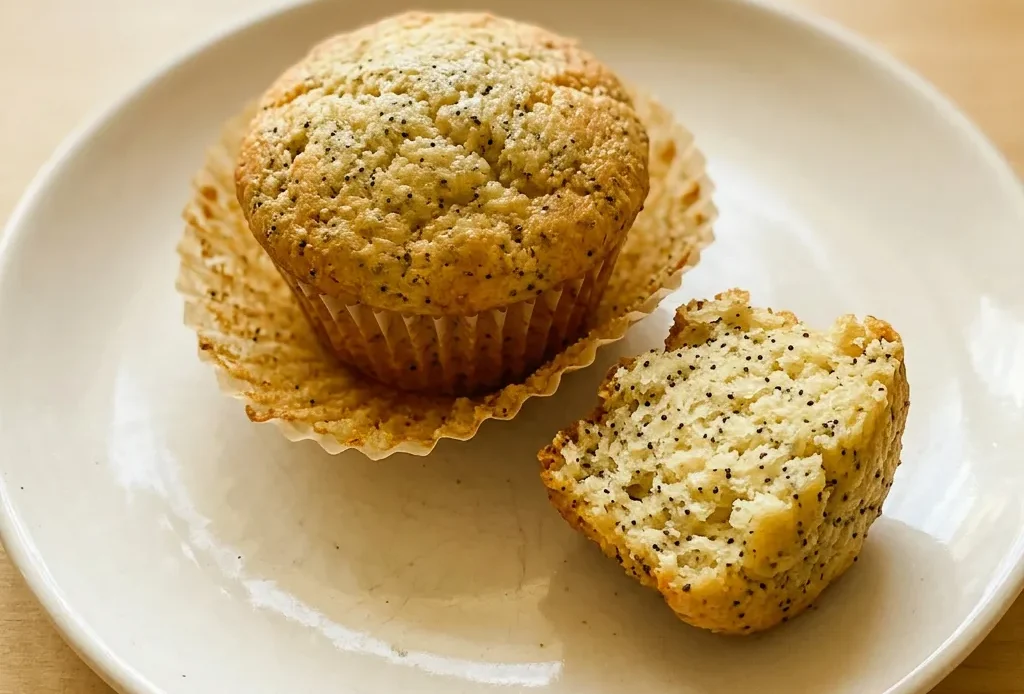
The trick to these lemon poppy seed muffins is getting the batter mixed just enough and no more. Overworking it turns the crumb tough and kills the rise from the baking soda reacting with the lemon juice.
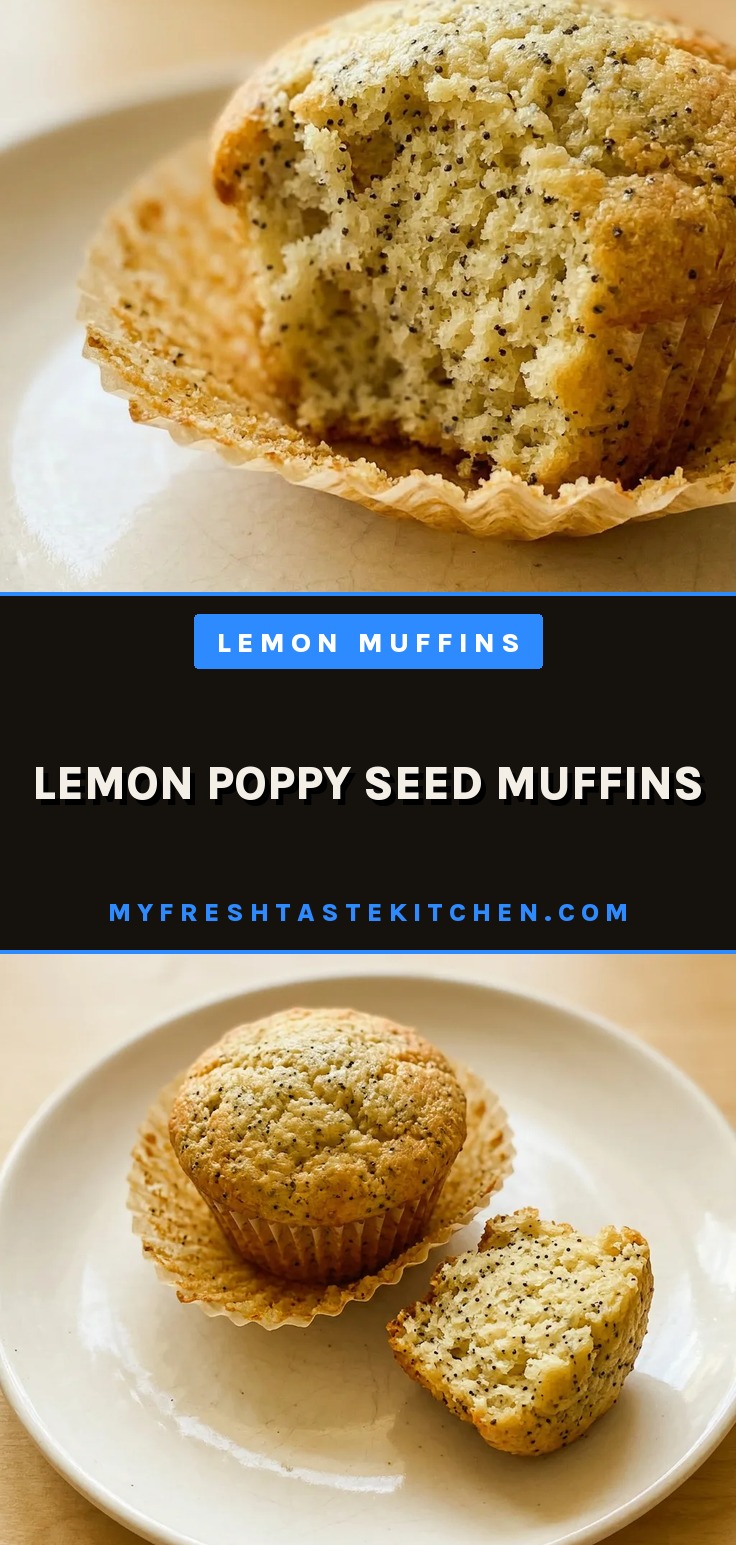
Greek yogurt keeps things tender, but you have to trust the lumps and fold gently. That’s what gives you a tall, domed top and a soft inside, not a dense hockey puck. These aren’t fussy, but they demand a light hand.
Everything else is straightforward: bright lemon from fresh zest and juice, a subtle crunch from poppy seeds, and the option of a glossy glaze that’s purely extra. If you’ve had lemon poppy seed muffins that came out squat or rubbery, the fix is in how you stir, not what you add.
I once mixed the batter vigorously for a full minute, thinking I needed to make sure everything was combined. The muffins came out tough and dense, not light and tender like when I gently folded just until the flour disappeared.
Use Greek yogurt and lemon juice for a tender crumb
Greek yogurt brings moisture and acidity to the batter, which helps create a soft, fine crumb. The lemon juice reacts with the baking soda to produce bubbles that lift the muffins without relying solely on baking powder.
That’s why the batter should be mixed until just combined, overmixing deflates those bubbles and develops gluten, turning the muffins tough. A few streaks of flour left in the bowl are fine; they’ll disappear during folding.
The result is a muffin that’s light and tender, not dense or rubbery.
Fold in poppy seeds at the end to keep them suspended
Poppy seeds have a neutral, nutty flavor that lets lemon shine while adding a subtle crunch. Two tablespoons distribute evenly without overwhelming the crumb. Folding them in last prevents sinking to the bottom, since the batter is thick enough to suspend them but gentle handling keeps the structure intact.
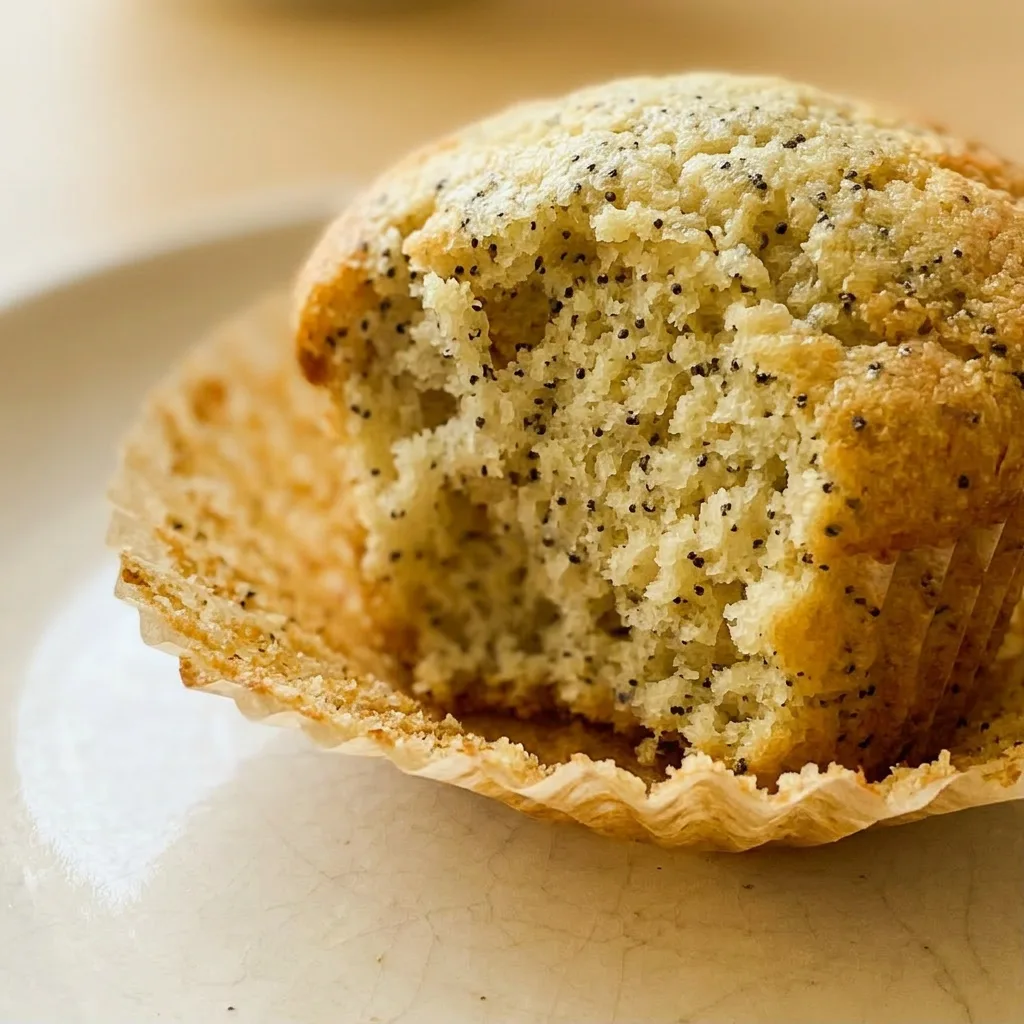
Each bite gets a scattering of seeds, creating visual contrast against the pale crumb.
Why the lemon glaze is optional
The glaze adds a sweet-tart finish that contrasts with the muffin’s mild sweetness and tender texture. Applied after the muffins cool completely, it sits on top rather than soaking in, so the crumb stays light and the glaze stays glossy.
It’s not essential, the muffins are flavorful enough alone, thanks to the lemon zest and juice in the batter. The glaze just gives an extra pop of citrus for those who want it.
Prep: 15 min · Cook: 20 min · Total: 35 min · Servings: 12
A few things about these ingredients
Whole milk Greek yogurt: Full fat gives a tender crumb; nonfat can work but the texture will be drier.
Fresh lemon juice and zest: Bottled juice lacks the bright oil from zest, so use fresh for real lemon flavor.
Poppy seeds: Buy them from a store with high turnover; old seeds can taste musty or rancid.
Unsalted butter: Melt and cool slightly before adding so it doesn’t cook the eggs.
Mix the batter gently for light, tender muffins
Whisk the dry ingredients
Whisk flour, baking powder, baking soda, and salt together in a medium bowl. This aerates the flour and distributes leaveners evenly.
Combine the wet ingredients
In a large bowl, whisk yogurt, eggs, sugar, melted butter, milk, lemon juice, zest, and vanilla until smooth. The mixture should look uniform and slightly thickened.
Fold wet and dry together
Pour dry ingredients into wet and stir with a spatula just until no streaks of flour remain, a few lumps are fine. Overmixing develops gluten, making muffins tough.
Fold in poppy seeds
Gently fold poppy seeds into the batter with 2, 3 strokes. The batter should be thick enough to suspend seeds; if they sink, you’ve overmixed.
Portion into muffin cups
Use a ⅓-cup measure to fill each lined cup nearly to the top. Batter should mound slightly, this gives domed tops.
Bake until golden and springy
Bake at 400°F for 17 to 22 minutes. The tops should be golden and spring back when pressed; a toothpick inserted in center should come out clean.
Cool and glaze if desired
Cool muffins in the pan for 10 minutes, then transfer to a wire rack. Drizzle with lemon glaze only after fully cooled, so it sets on top without soaking in.
Lemon Poppy Seed Muffins
Ingredients
- 2¼ cups all-purpose flour 280g, spooned and leveled
- 2 teaspoons baking powder
- ½ teaspoon baking soda
- ½ teaspoon sea salt
- 1 cup whole milk Greek yogurt
- 2 large eggs
- ⅔ cup granulated sugar 133g
- ½ cup unsalted butter 1 stick, 113g, melted
- ½ cup milk
- ¼ cup fresh lemon juice
- 2 tablespoons lemon zest
- 1 teaspoon vanilla extract
- 2 tablespoons poppy seeds
- Lemon Glaze optional
Instructions
Preheat oven and prepare pan:
Set oven to 400°F (205°C). Grease or line a 12-cup muffin tin with paper liners.Whisk dry ingredients together:
In a medium bowl, combine flour, baking powder, baking soda, and salt with a whisk.Mix wet ingredients until uniform:
In a large bowl, whisk yogurt, eggs, sugar, melted butter, milk, lemon juice, lemon zest, and vanilla until uniform.Combine mixtures and fold poppy seeds:
Pour dry mixture into wet mixture and stir until just incorporated; avoid overmixing. Gently fold in poppy seeds.Fill muffin cups with batter:
Use a ⅓-cup measure to portion batter into the prepared muffin cups.Bake and cool muffins:
Bake 17–22 minutes, until tops bounce back when pressed and a toothpick inserted in center exits clean. Let cool in pan 10 minutes, then move to a wire rack to cool fully.Drizzle with lemon glaze:
Optionally, drizzle cooled muffins with lemon glaze.
Swap based on what each ingredient does here
Whole milk Greek yogurt: Sour cream or buttermilk. Use full-fat sour cream in the same amount for similar tang and moisture.
For buttermilk, reduce to ¾ cup and increase milk to ¾ cup to keep batter consistency. Both will produce a slightly less tender crumb than yogurt but still moist.
Unsalted butter: Melted coconut oil or neutral oil (dairy-free). Replace melted butter with the same amount (½ cup) of melted coconut oil or a neutral oil like avocado. Muffins will be a touch less rich and may have a slightly different mouthfeel, coconut oil adds a faint coconut note if not refined.
All-purpose flour: Gluten-free 1:1 baking blend. Use a cup-for-cup blend containing xanthan gum.
The crumb will be more delicate and may sink slightly; check doneness a couple minutes earlier. Do not substitute with single flours like almond or coconut, they lack structure and will turn gummy or dry.
Tips
- Use an instant-read thermometer to check the batter temperature before baking; it should be around 70°F (21°C) for even rising.
- Let the melted butter cool to just warm (not hot) before whisking into the wet ingredients to avoid cooking the eggs, which would create lumps.
Storage and Serving
These muffins are best eaten the day they’re baked, when the tops are crisp and the crumb is tender. Store leftovers in an airtight container at room temperature for up to 3 days. The crumb will soften slightly over time, but the flavor remains bright.
If you’ve glazed them, eat within 24 hours; the glaze can become sticky or weep if stored longer. For longer storage, freeze unglazed muffins in a zip-top bag for up to 3 months. Thaw at room temperature for about an hour, then reheat in a 300°F oven for 5 minutes to restore some crispness.
Glaze only after thawing. Do not refrigerate; the fridge dries them out.
Frequently Asked Questions
Can I make the batter ahead of time and bake later?
No, bake immediately after mixing. The leavening reaction from the baking soda and lemon juice starts right away, delaying baking means you lose lift, and the muffins turn out flat and dense. If you need to prep ahead, measure dry and wet ingredients separately, then combine and bake right away.
Why did my muffins turn out dense or rubbery?
Overmixing is the most likely culprit. Stirring too much develops gluten and deflates the air bubbles from the baking soda, lemon juice reaction, giving a tough texture. Next time, stop mixing when a few streaks of flour remain, lumps are fine.
Also check your baking powder is fresh; old leavener won’t provide enough rise.
Can I freeze these muffins?
Yes, freeze unglazed muffins in a zip-top bag for up to 3 months. Thaw at room temperature about an hour, then reheat in a 300°F oven for 5 minutes to crisp the tops. Glaze only after thawing, the glaze can weep if frozen.
Don’t refrigerate; it dries them out.
How is this different from a classic lemon poppy seed muffin?
Whole milk Greek yogurt replaces some of the butter and milk, giving a tangier flavor and a more tender, fine crumb. The higher acid from yogurt plus lemon juice also boosts the chemical leavening, so the muffins dome nicely without being dense. Plus, the optional glaze adds a glossy sweet-tart layer that classic versions often skip.