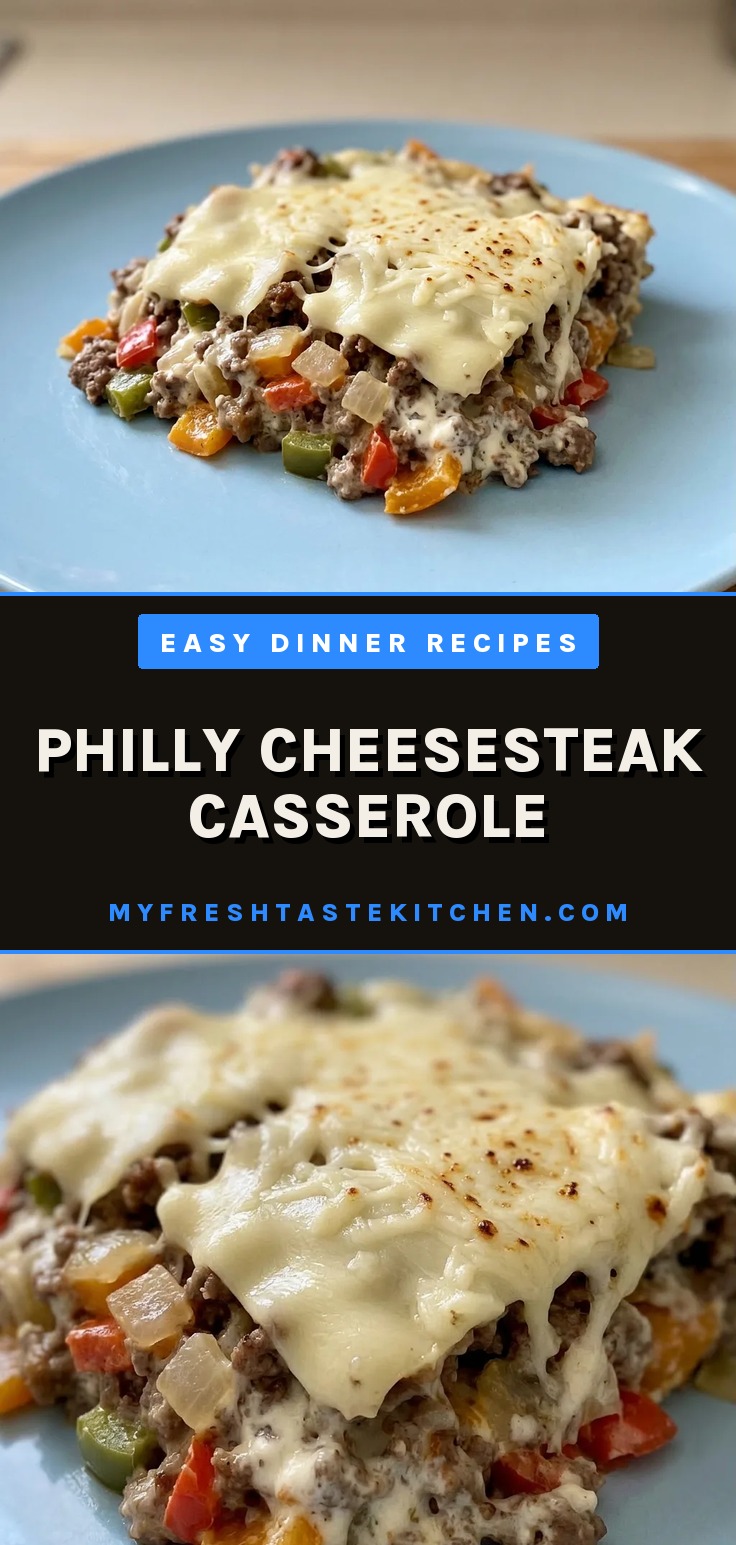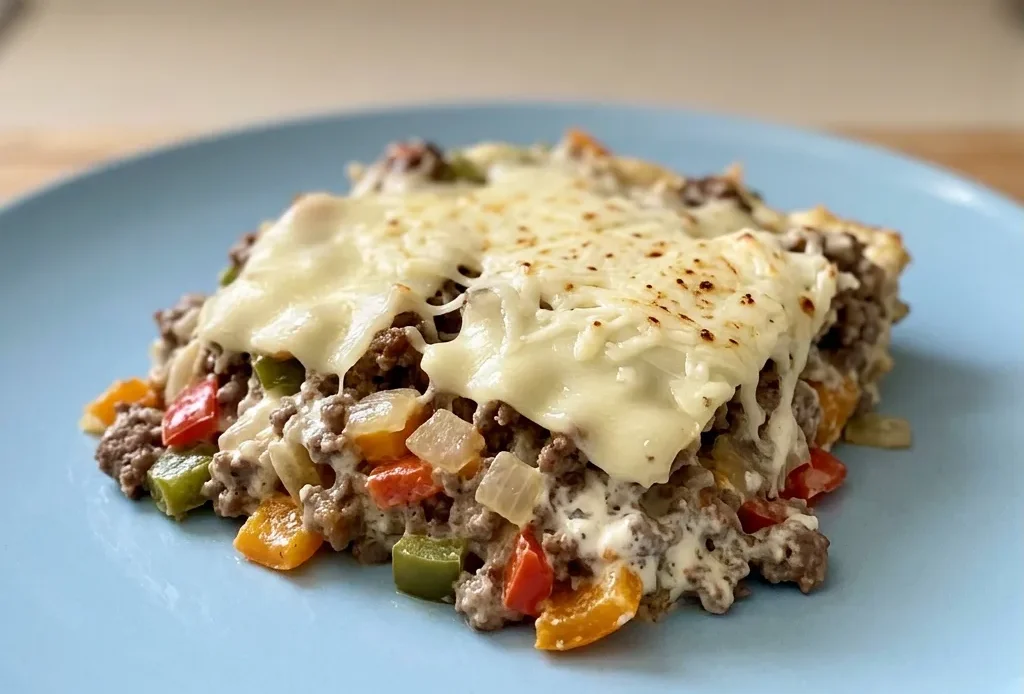
The hardest part of a Philly cheesesteak casserole isn’t the cooking, it’s keeping the meat from turning into a dry, crumbly mess. Cream cheese is the fix, but only if you handle it right. This philly cheesesteak casserole hinges on one moment: when you stir softened cream cheese into the hot beef.
Do it right, and the whole dish coheres into something rich and sliceable. Do it wrong, cold cream cheese or too much heat, and you’ll get lumps or a greasy split. The rest is straightforward: sauté the moisture out of the peppers and onions, layer two cheeses for contrasting textures, and bake just until bubbly.
But that creamy binder is important. Don’t try to swap it; the entire structure depends on it.
Cream Cheese as the Binder
Ground-beef casseroles often turn crumbly or dry. Here, softened cream cheese melts into the meat mixture, creating a rich, smooth binder that holds everything together. It replaces the need for a traditional roux or gravy, keeping the dish simple.
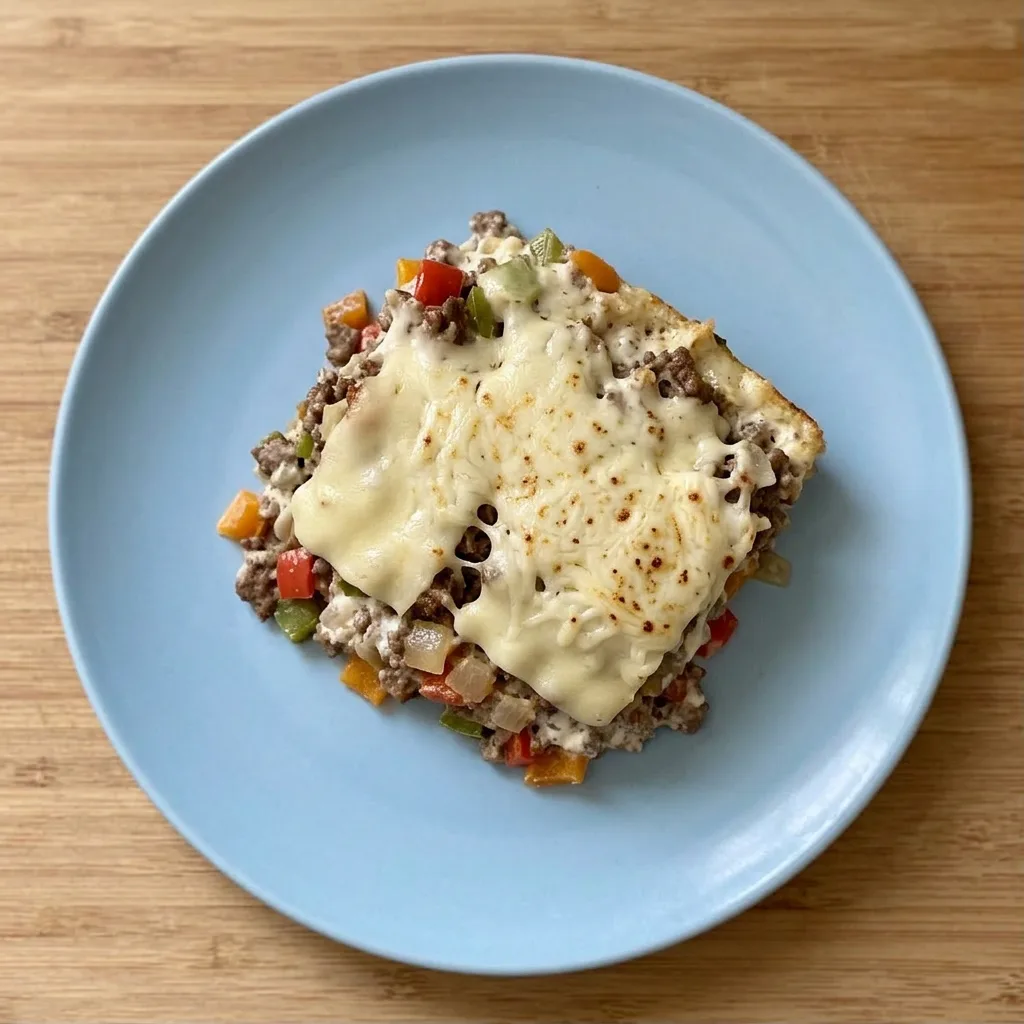
What you get is a cohesive, creamy texture throughout, not a loose or greasy one. When you cut into the casserole, it holds its shape but still feels rich.
A Dual-Texture Cheese Topping
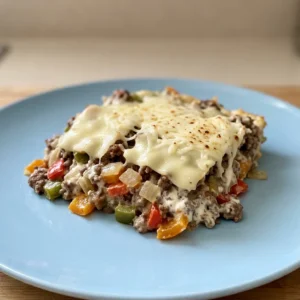
The topping uses two cheeses in two forms. Provolone slices laid directly on the beef form a cohesive, slightly chewy base layer, they melt into a unified sheet that doesn’t slide off.
Shredded mozzarella scattered on top melts into a bubbly, golden crust with little browned spots. The contrast between the supple provolone and the airy, crisp-tipped mozzarella gives each bite a varied mouthfeel.
Sautéing Veggies First Prevents Sogginess
Raw peppers and onions release a lot of water as they cook. If you added them straight to the casserole, that moisture would seep out during baking, making the dish watery and diluting the beef flavor.
Sautéing them beforehand drives off that excess liquid and concentrates their natural sweetness. The result is tender, flavorful vegetables that don’t make the casserole weep.
Prep: 15 min · Cook: 25 min · Total: 45 min · Servings: 6 · Calories: 350 kcal
What to Look For in Each Ingredient
Ground beef: Lean (85/15) works best; anything fattier can leave a greasy layer on top.
Cream cheese: Must be softened to room temperature so it blends smoothly without lumps.
Provolone cheese: Buy slices, not a block; you want thin, even slices that melt into a cohesive layer.
Bell peppers: Use a mix of colors for visual contrast; green ones are more bitter, red sweeter.
Worcestershire sauce: It adds depth; soy sauce is a fine substitute if you’re out.
How to Assemble the Casserole for the Best Texture
Sauté the veggies
Cook diced onion and bell peppers in olive oil over medium heat until they soften and start to brown at the edges, about 5 to 6 minutes. You’ll see steam rise initially and then fade as the moisture evaporates.
Add garlic and beef
Stir in minced garlic for 30 seconds until fragrant, then add ground beef. Break it up and cook until no longer pink, about 7 to 8 minutes. The pan should look dry, not watery.
Incorporate cream cheese
Reduce heat to low and add softened cream cheese. Stir until it melts completely into the meat, creating a creamy, cohesive mixture. There should be no visible white streaks.
Layer the cheeses
Spread the beef mixture in a greased 9×13 dish. Lay provolone slices in a single layer covering the surface, then scatter shredded mozzarella evenly. Don’t overlap the slices, they should touch but not stack.
Bake until bubbly
Bake at 350°F for 20 to 25 minutes. The cheese should be fully melted and bubbling, with browned spots on the mozzarella. The edges will pull away slightly from the dish.
Rest before cutting
Let the casserole sit for 5 minutes after baking. This allows the cream cheese binder to set so the casserole holds its shape when sliced. It will be piping hot, so the rest also prevents burns.
Philly Cheesesteak Casserole
Ingredients
- 1 lb ground beef lean is good for lower fat
- 1 large onion provides sweet richness
- 2 large bell peppers use assorted colors for visual interest
- 2 cloves garlic finely chopped
- 8 oz cream cheese softened; reduced-fat cuts calories
- 2 tbsp Worcestershire sauce soy sauce can replace it
- salt and pepper, season as desired
- 8 slices provolone cheese mozzarella works too
- 1 cup shredded mozzarella substitute cheddar if you like
- 2 tbsp olive oil for sautéing
Instructions
Preheat Oven and Dish:
Heat oven to 350°F (175°C). Coat a 9×13-inch baking dish with non-stick spray.Sauté Onion and Peppers:
Warm olive oil in a large skillet over medium heat. Cook diced onion and bell peppers for 5-6 minutes until tender. Add minced garlic and sauté for 30 seconds.Cook Ground Beef:
Add ground beef to the skillet. Sprinkle with salt and pepper; cook 7-8 minutes until no longer pink. Stir in Worcestershire sauce.Incorporate Cream Cheese:
Lower heat to low. Fold in softened cream cheese until fully incorporated and smooth.Assemble Casserole Layers:
Transfer the beef mixture to the prepared dish. Arrange provolone slices over the top, then scatter shredded mozzarella evenly.Bake Until Golden:
Bake for 20-25 minutes until the cheese is bubbling and golden.Rest Before Serving:
Allow the casserole to sit for 5 minutes before cutting.
Don’t Swap the Cream Cheese, But You Can Swap Nearly Everything Else
Ground beef: Ground turkey or chicken (93/7 lean). Use the same weight (1 lb). Turkey and chicken are leaner, so the casserole will be less rich and the texture a bit drier.
To compensate, don’t drain the pan after browning, leave the small amount of rendered fat to keep the mixture moist.
Provolone and mozzarella: Use all mozzarella or all provolone. Using only mozzarella: the top will be uniformly bubbly and browned, missing the supple, cohesive base layer from provolone.
Using only provolone: you’ll get a smooth, slightly chewy cheese blanket without the browned, crispy bits from mozzarella. Either works, but you lose the dual-texture contrast.
Worcestershire sauce: Soy sauce (or tamari for gluten-free). Swap 1:1. Soy sauce adds saltiness and umami but lacks the tangy, slightly sweet depth of Worcestershire.
The dish will taste more straightforwardly savory. If using tamari, also check that other ingredients are gluten-free.
Cream cheese: Do not swap. Cream cheese is the binder that gives the casserole its creamy, cohesive texture.
Substituting Neufchâtel (reduced-fat cream cheese) is fine, use the same amount, but don’t try Greek yogurt, cottage cheese, or a roux. They will either curdle, make the mixture watery, or fail to bind the meat, resulting in a loose, crumbly casserole that doesn’t hold together when sliced.
Storage and Serving
This casserole is best served within 15 minutes after the 5 minute rest. The cheese topping stays crisp and the cream cheese binder holds a firm slice.
Leftovers keep in the fridge for up to 3 days in a covered container. The texture shifts: the cheese softens and the meat mixture may release some moisture.
To restore the best texture, reheat in a 350°F oven for 10 to 15 minutes, uncovered, until the cheese bubbles again. Avoid microwaving, which makes the topping rubbery and the base watery. Freezing is not recommended; the cream cheese binder breaks upon thawing, turning grainy.
If you must freeze, freeze the cooked beef mixture alone before adding cheese, then thaw, reheat, top with fresh cheese, and bake as directed. Serve hot directly from the oven or reheated; cold leftovers lack the creamy cohesion.
Tips
- If your cream cheese is still cold when you add it, it will clump and take longer to melt. Let it sit on the counter for 30 minutes before starting; it should yield to gentle pressure but not be greasy.
- Cut the softened cream cheese into 1-inch cubes before adding to the skillet. Cubes melt faster and more evenly than a single block, reducing the risk of overheating and breaking the emulsion.
I tried skipping the veggie pre-cook once to save time, and the casserole came out swimming in liquid. The other time I let them sweat properly, and it was cohesive.