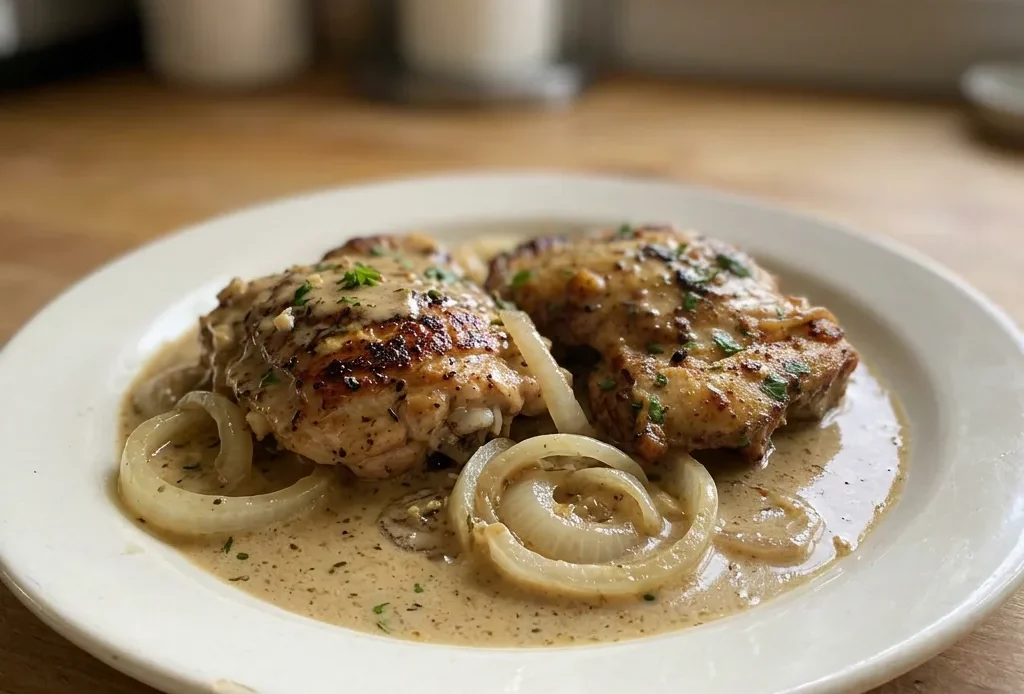
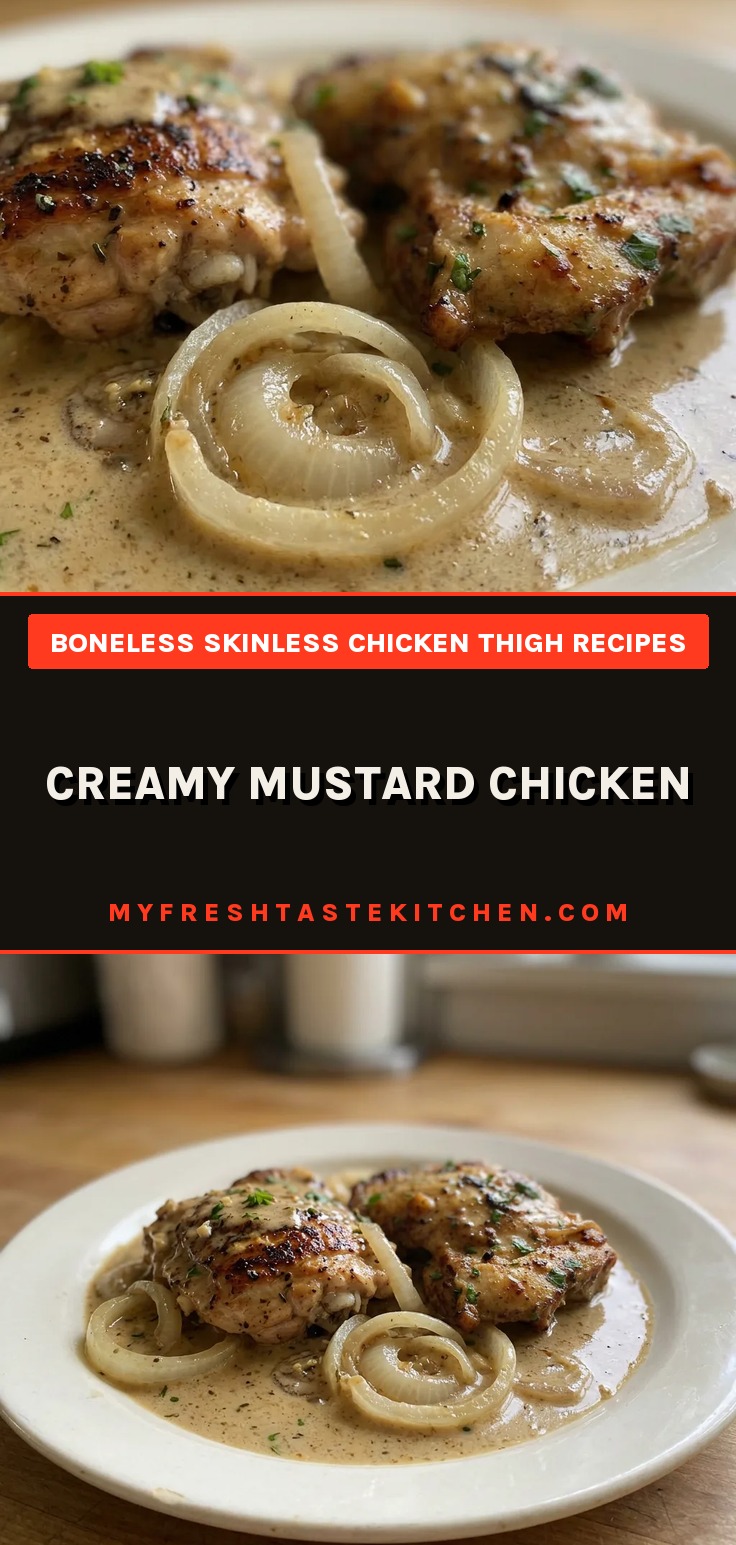
The single thing that makes this creamy mustard chicken work, and that can break it if you rush, is the sear. Not just for color: the browned bits left in the pan are what give the sauce its savory backbone. Skip that step and you’ll have a pale, flat sauce no amount of mustard can fix.
This version uses coconut cream for body, which stays stable with the acidic mustard and lemon where dairy might curdle, so you get a rich, tangy sauce that coats each thigh evenly. It comes together fast enough for a weeknight, but the technique matters more than the speed.
A solid, unfussy creamy mustard chicken that delivers on flavor without fuss.
Sear the chicken first for a deeper sauce
Browning the chicken thighs before building the sauce isn’t just about cooking the meat. That golden-brown crust comes from the Maillard reaction, which creates savory, almost nutty flavors that simmering alone never produces. The browned bits left in the pan, called fond, are the foundation of the sauce.
When you add the chicken broth and scrape them up, they dissolve into the liquid, giving it a rich, meaty backbone. If you dropped raw chicken straight into the sauce, you’d lose all that depth and end up with a pale, one-note dish.
The sear also makes the chicken visually appealing, with a crisp surface that stays distinct even after a quick reheat in the sauce. After you taste the difference, plain poached chicken will feel like a missed opportunity.
Coconut cream keeps the sauce rich and stable
Coconut cream delivers the same silky body as heavy cream but without the dairy. That matters for paleo or dairy-free cooking, but there’s a practical advantage: coconut cream doesn’t curdle when you simmer it with mustard and lemon juice. Dairy cream can split under acidic conditions, leaving you with a grainy sauce.
Coconut cream stays smooth, and its subtle sweetness plays well with the sharp mustard and earthy thyme. You won’t taste coconut strongly, it just rounds out the sauce. The fat content also helps the sauce cling to the chicken, so each bite feels rich.
This is one case where a swap actually works better for the technique, not just the diet.
Dijon mustard cuts richness and thickens the sauce
Dijon mustard does double duty here. Its sharp, tangy bite cuts through the fat from the chicken thighs and the richness of the coconut cream, keeping the sauce from feeling heavy. Taste the sauce before you add the chicken, it should be noticeably tangy.
When you whisk it into the simmering broth, the mustard acts as an emulsifier, helping the fat and liquid stay combined into a smooth, cohesive sauce. If you use whole grain mustard, you get little bursts of texture and mild heat, but Dijon’s smooth consistency is what makes the sauce silky. The lemon juice brightens it further, so the final dish tastes balanced, not cloying.
Any leftover sauce is a bonus for spooning over vegetables.
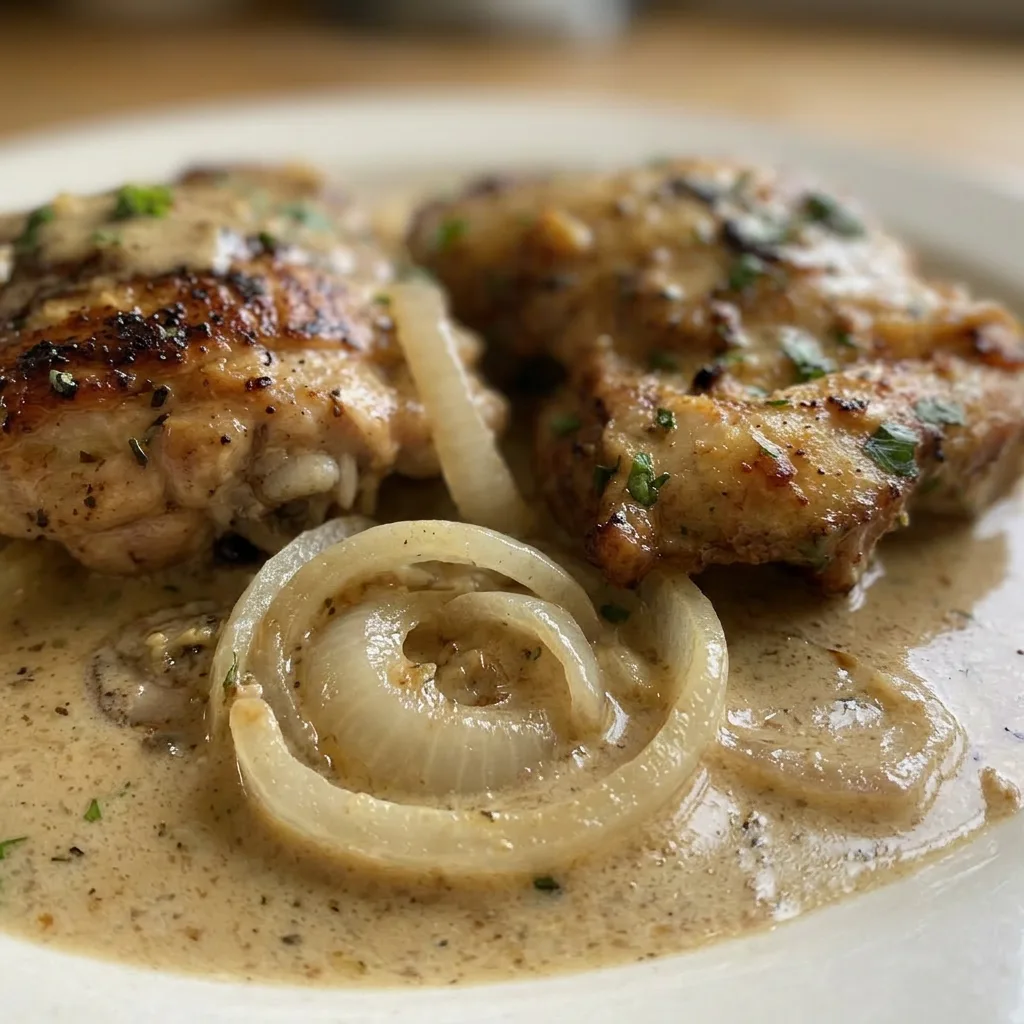
Prep: 10 min · Cook: 18 min · Total: 28 min · Servings: 6 · Calories: 280 kcal
A few ingredients make or break this sauce
Boneless skinless chicken thighs: Thighs stay juicy under the quick simmer; breasts dry out, so stick with thighs here.
Dijon mustard: Use smooth Dijon for a silky sauce; whole grain works but gives a different texture.
Unsweetened coconut cream: Buy the thick cream from a can, not the thin coconut milk, or the sauce won’t coat.
Chicken stock or broth: Use a good quality stock; the sauce’s backbone comes from what you deglaze with.
Build the sauce in the same pan for maximum flavor
Season and sear
Pat chicken dry, season with salt, pepper, and garlic powder. Heat oil over medium-high until shimmering.
Lay thighs in without crowding; they should sizzle on contact. Cook until deep golden underneath, about 5 to 6 minutes. Flip; cook until golden and cooked through.
Transfer to a plate.
Sweat the onion
Reduce heat to medium. Add ghee; it should melt and foam slightly.
Add sliced onion; stir to coat. Cook, stirring occasionally, until softened and translucent, about 5 to 6 minutes. Add garlic the last minute; stir until fragrant, about 30 seconds.
Deglaze and build sauce
Pour in chicken broth; immediately scrape the browned bits from the pan bottom with a wooden spoon. They should dissolve easily. Let simmer until slightly reduced, about 3 minutes.
Whisk in mustard, coconut cream, lemon juice, and thyme until smooth.
Finish and adjust
Return chicken and any juices to the skillet; spoon sauce over tops. Simmer gently for 1 minute to reheat. Taste the sauce: it should be tangy and rich, not flat.
Adjust salt and pepper if needed. Garnish with parsley.
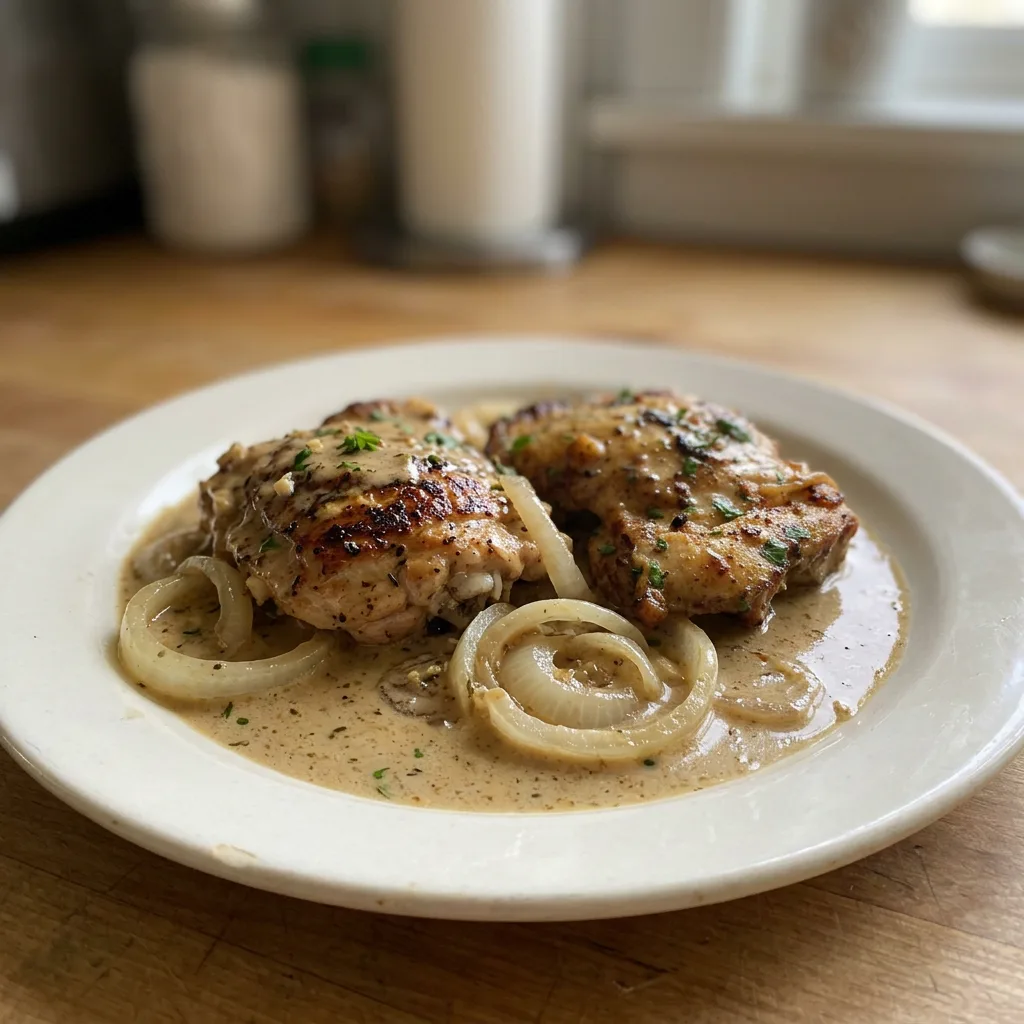
Creamy Mustard Chicken {Paleo, Whole30, Keto}
Ingredients
Method
Season Chicken Thighs:
Season the chicken thighs evenly with sea salt, black pepper, and garlic powder. In a large skillet over medium-high heat, warm the olive oil. Cook the chicken for 5-6 minutes per side until golden and cooked through; transfer to a plate and set aside.Sauté Onion and Garlic:
Reduce heat to medium and add ghee to the skillet. Sauté the sliced onion for 5-6 minutes until softened and aromatic, adding minced garlic in the final minute.Make Mustard Cream Sauce:
Pour in the chicken broth and stir, scraping up browned bits from the pan. Let simmer for about 3 minutes to reduce slightly. Whisk in mustard, coconut cream, lemon juice, and dried thyme or poultry seasoning.Return Chicken and Garnish:
Return the chicken to the skillet and cook for roughly 1 minute. Taste the sauce and adjust seasoning with salt and pepper if needed. Garnish with fresh parsley before serving. This pairs nicely with cauliflower rice or roasted vegetables and potatoes.
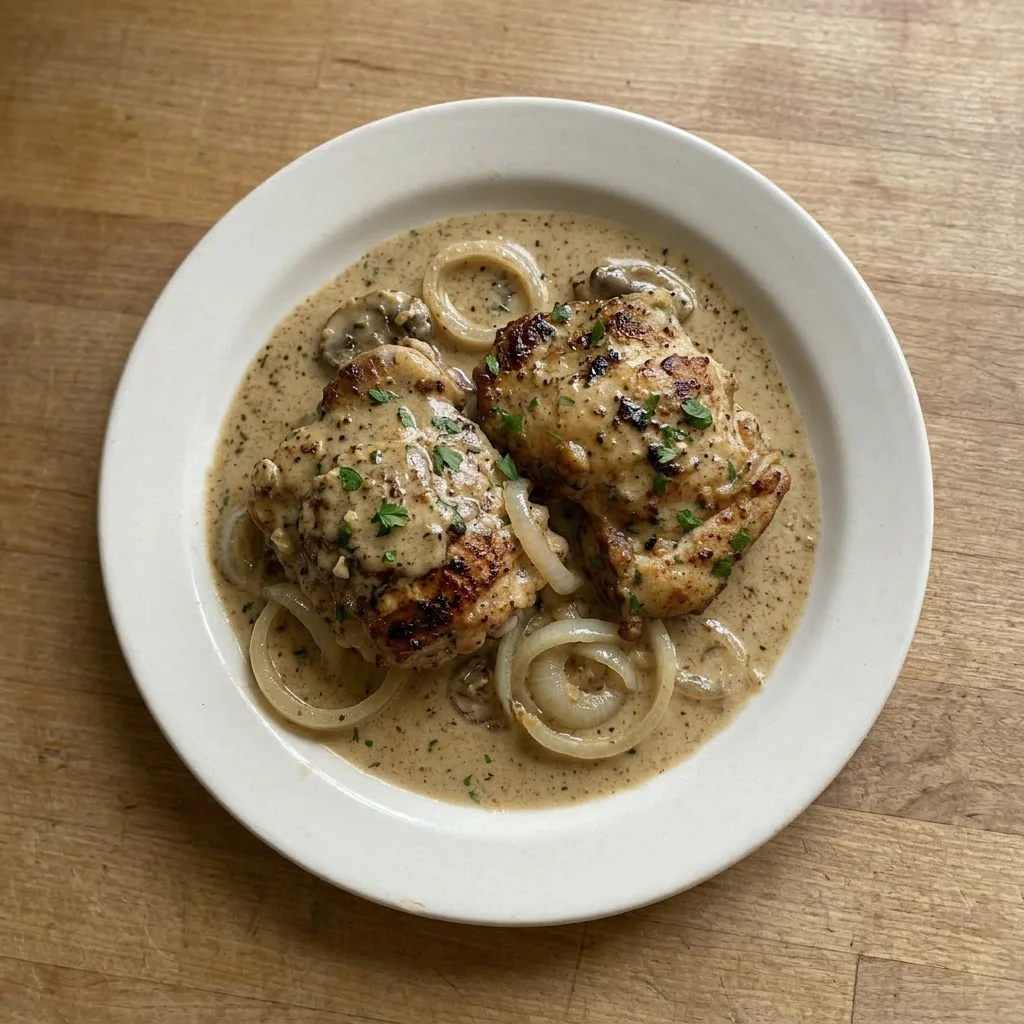
What to swap in creamy mustard chicken (and what to leave alone)
Boneless skinless chicken thighs: Boneless skinless chicken breasts. Reduce the searing time by a minute or two per side to avoid drying. Breasts will be less forgiving if the sauce simmers long, so return them just to rewarm, not cook through.
Unsweetened coconut cream: Full-fat canned coconut milk. The sauce will be thinner and less clingy. To mimic the original body, shake the can well and use the thick part only, discarding or saving the watery layer.
Or simmer the sauce a few minutes longer to reduce.
Ghee: Butter or a high-heat oil like avocado oil. Butter adds similar richness but splashes more when searing; watch the heat. Avocado oil works fine but the sauce loses a bit of buttery aroma.
The ghee’s primary job here is to sauté the onion without burning, so any fat with a smoke point above 350°F does the job.
Tips
- Pat the chicken thighs dry with paper towels before seasoning. Excess moisture steams the surface, preventing deep browning and the formation of fond that enriches the sauce.
- Let the seared chicken rest on a plate while you build the sauce. The accumulated juices can be stirred back in with the chicken at the end, adding extra flavor without thinning the sauce prematurely.
Storage and Serving
Serve this dish within 15 minutes of adding the parsley garnish. The sauce is at its silkiest right off the stove; as it sits, the coconut cream and mustard continue to thicken slightly.
For leftovers, cool the chicken and sauce completely before transferring to an airtight container. Refrigerate for up to 3 days.
The sauce will thicken considerably when cold, but that’s not a flaw. Reheat gently in a skillet over low heat, stirring in a splash of chicken broth to loosen it back to a pourable consistency.
Don’t microwave on high or the sauce may separate. The chicken stays tender through reheating because thighs have enough fat to resist drying out.
Freezing is not recommended; the sauce’s texture becomes grainy when thawed, and the chicken loses its seared character. Make ahead by searing the chicken and building the sauce up to step 3, then cool, cover, and refrigerate separately. When ready to serve, reheat the sauce, add the chicken, and finish with parsley.
Frequently Asked Questions
Can I make this creamy mustard chicken ahead of time?
Yes, up to 3 days in the fridge. Sear the chicken and build the sauce through step 3, then cool, cover, and refrigerate separately.
When ready to serve, reheat the sauce gently, add the chicken, and finish with parsley. The sauce thickens as it sits, so stir in a splash of broth when reheating to loosen it.
How do I prevent the sauce from separating or becoming too thin?
Use canned coconut cream, not coconut milk, the higher fat content keeps the sauce emulsified. If it does thin, simmer a few minutes longer to reduce. Don’t microwave leftovers on high; reheat gently on the stove to avoid separation.
What sides go best with this dish?
Cauliflower rice or roasted vegetables and potatoes are ideal, they soak up the sauce without competing. The sauce is rich and tangy, so keep sides simple: steamed green beans, a crisp salad, or sautéed spinach work well too.
Can I use chicken breasts instead of thighs?
Yes, but reduce searing time by a minute or two per side to avoid drying. Return breasts to the sauce just to rewarm, not simmer. Thighs stay juicier because they have more fat; breasts are less forgiving if the sauce simmers long.
How is this different from classic French mustard chicken?
Classic French versions use heavy cream and white wine, which can curdle with the mustard’s acidity. This recipe uses coconut cream for stability and a dairy-free result, and skips the wine for a sharper, clean mustard tang. The technique, searing, deglazing, and emulsifying, is similar, but the ingredients suit paleo and dairy-free diets.