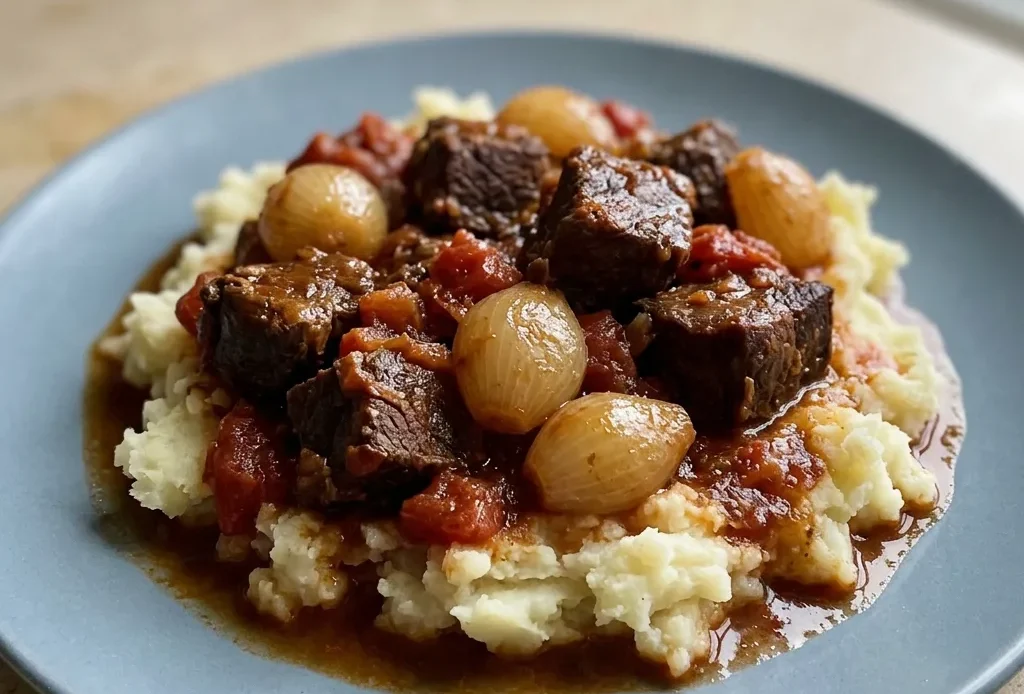
The biggest mistake with stifado (greek beef stew) is treating the pearl onions like any other onion, chopping them up or throwing them in raw. They’re the whole point, and they need their own head start to stay intact, not dissolve into the sauce.
Pearl onions hold their shape
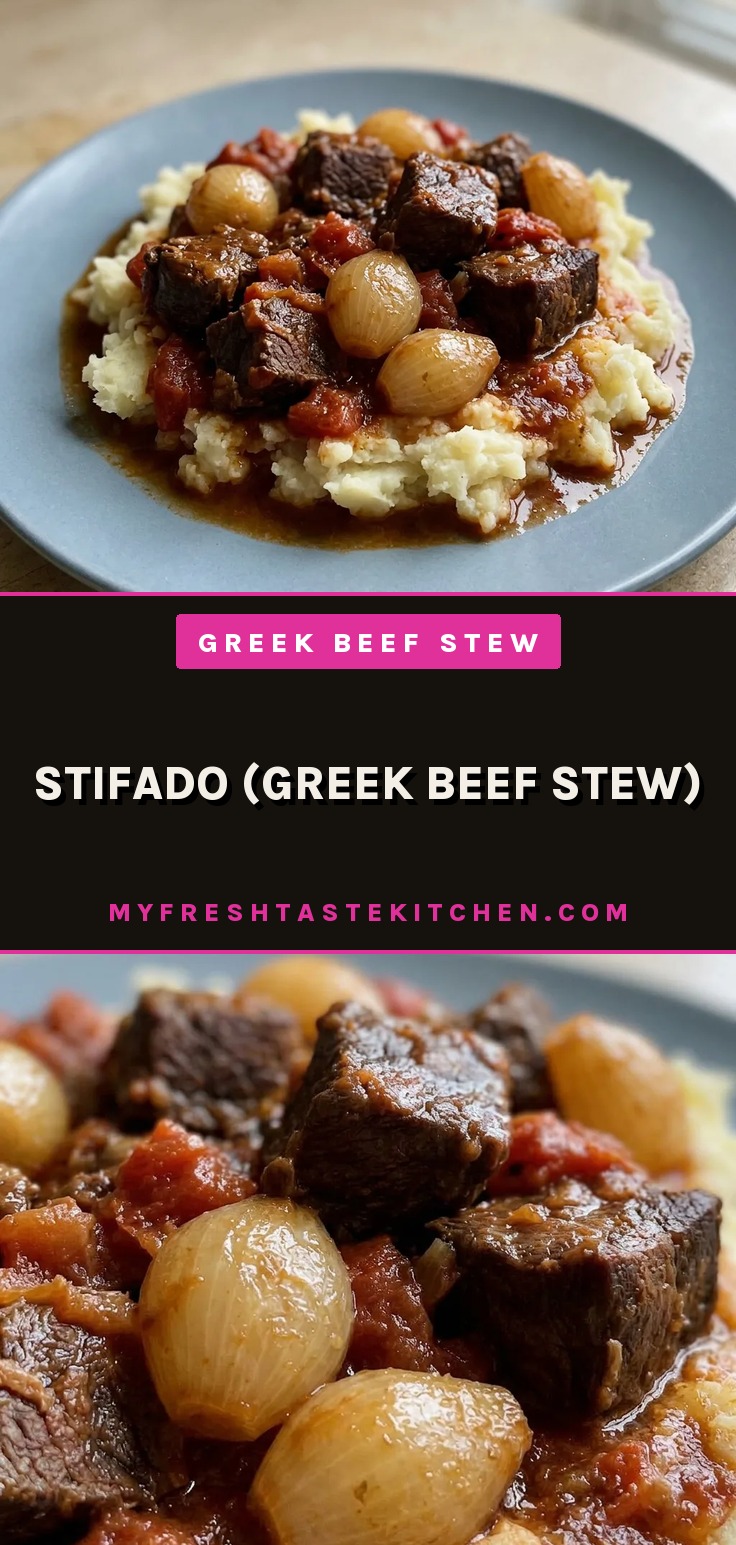
Pearl onions aren’t a garnish in stifado; they’re a textural counterpoint to the tender beef. During long stewing, larger onion pieces collapse into mush, but pearl onions keep their shape, offering a little pop of sweetness in each spoonful.
Cook them separately first, tossing frozen ones straight into the pot with a bit of oil, stirring until tender but not browned, before adding them back. Now I always cook the onions separately first, as the recipe says, until they’re tender but hold their shape before adding them back. That step avoids the raw edge and bitterness they’d contribute if simmered straight with the meat.
The result: a stew where every bite includes a soft, sweet pearl onion that hasn’t disintegrated into the sauce.
Sweet spices define Greek flavor
Cinnamon, cloves, and allspice aren’t typical in most beef stews, but in stifado they’re the backbone. They cut through the richness of the wine and tomatoes, making the sauce taste aromatic and complex, not just acidic.
Whole spices are key here: a cinnamon stick and allspice berries release their oils slowly, infusing the stew without overpowering it. Ground cloves are fine in small amounts. By the end, the whole spices are easy to fish out before serving, no one wants a bite of whole allspice.
This is a beef stew recipe that relies on those sweet notes for its identity; leave them out, and you’d just have a generic braised beef. Taste the sauce after simmering and notice how the spices linger.
Browning in batches builds depth
That deep brown crust on the beef isn’t just for looks, it’s where the stew’s flavor comes from. When meat hits a hot pan, browning creates fond, the browned bits stuck to the bottom that later dissolve into the braising liquid, enriching every spoonful. Crowding the pan drops the temperature, and the meat steams instead of browns.
You lose that savory depth, and no amount of simmering brings it back. For the best beef stew recipe, take the time to brown in a single layer, working in batches.
Each batch takes only a couple minutes per side. The payoff is a sauce that tastes layered and meaty, not flat.
The fond is your flavor base, scrape it up with the wine and brandy.
Low heat turns chuck fork-tender
Chuck roast is tough because it’s full of connective tissue, collagen that needs time and gentle heat to break down into gelatin. A rapid boil would toughen the meat instead, squeezing it dry. Covered simmering on medium-low keeps the temperature steady, letting the collagen melt slowly.
After about two hours, the beef yields to a fork without falling apart into shreds. The resting step uncovered for fifteen minutes does two things: allows steam to escape so the sauce thickens slightly, and lets the meat relax, absorbing more liquid back. This hearty beef stew relies on that patience; rush the heat, and you get chewy meat.
The result is a spoon-tender bite that’s still intact.
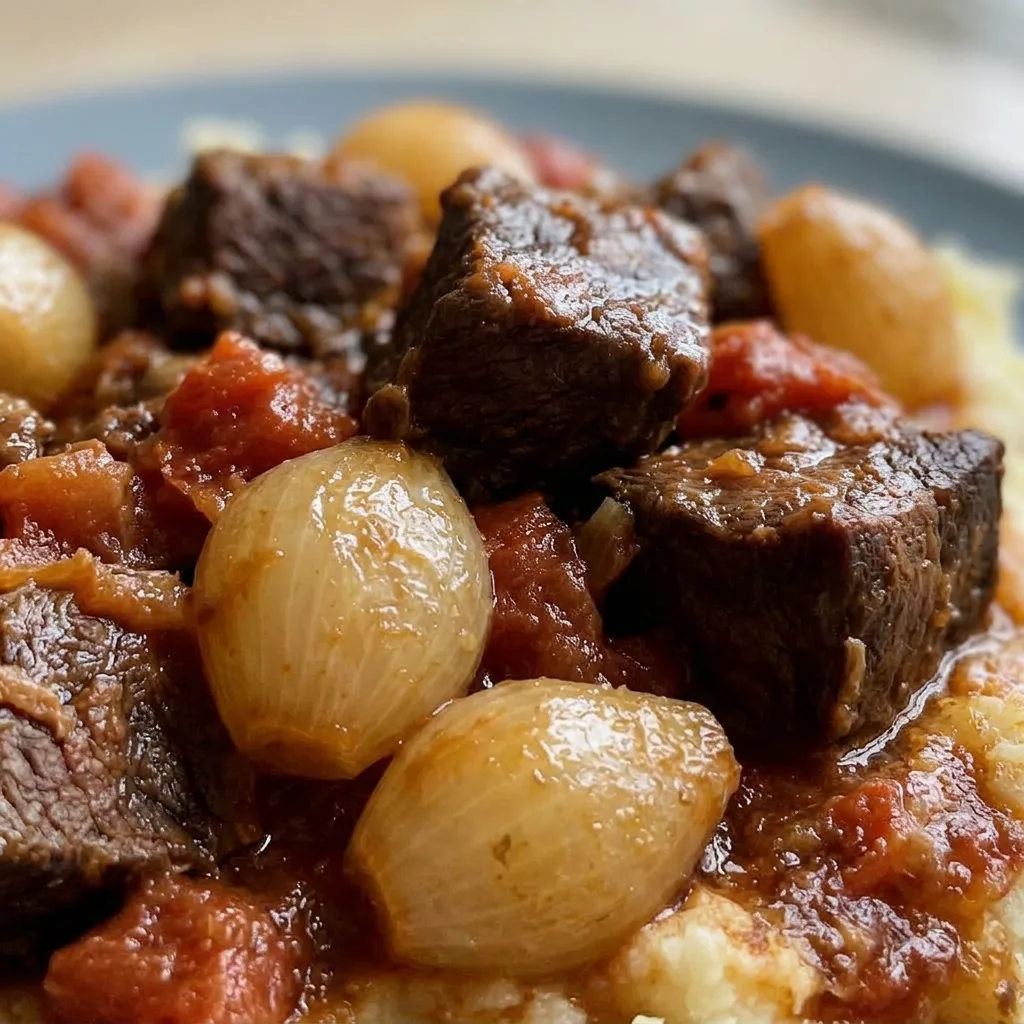
Prep: 20 min · Cook: 2 hr 45 min · Total: 3 hr 20 min · Servings: 6 · Calories: 470 kcal
A few key ingredients to get right
Chuck roast: Look for well-marbled chuck; the fat keeps the meat moist during the long simmer.
Pearl onions: Frozen pearl onions work; no need to thaw before cooking.
Cinnamon stick, allspice berries: Whole spices release flavor slowly and are easy to fish out before serving.
Red wine and Cognac: Use a full bodied red you’d drink, and any brandy works fine here.
Canned tomatoes: Good quality whole or diced tomatoes; avoid crushed, which can turn the sauce muddy.
Building stifado, step by step
Brown the beef in batches
Dry the meat well, moisture steams, not brown. Heat oil until it shimmers, then add beef in a single layer. Listen for a steady sizzle; if it fades, the pan’s too crowded.
Flip when a deep brown crust forms, about 2 minutes per side.
Cook the pearl onions
After browning, lower heat to medium. Add frozen onions directly; they need no thawing. Stir to coat, then cook until tender but not browned, about 10 minutes.
You should be able to pierce one easily with a fork, but they still hold their shape.
Bloom the spices
Stir in tomato paste, bay leaves, cinnamon stick, ground cloves, and allspice. Cook for 1 minute until the paste darkens and smells fragrant. This step deepens their flavor; skip it and they’ll taste raw.
Deglaze with wine and brandy
Pour in the red wine and Cognac, scraping up the browned bits from the bottom. Let it simmer for 5 minutes. The alcohol smell should fade, leaving a rich, fruity aroma.
If it smells harsh, cook another minute.
Simmer until fork-tender
Add tomatoes and enough warm water to just submerge the meat. Cover and simmer on medium-low, adjusting heat to maintain a gentle bubble. After about 2 hours, test a piece: a fork should slide in with little resistance, but the meat still holds together.
Rest before serving
Remove bay leaves, cinnamon stick, and allspice berries. Taste the sauce; adjust salt and pepper.
Let the stew rest uncovered for 15 minutes. The sauce will thicken slightly as steam escapes, and the beef will relax, absorbing more flavor.
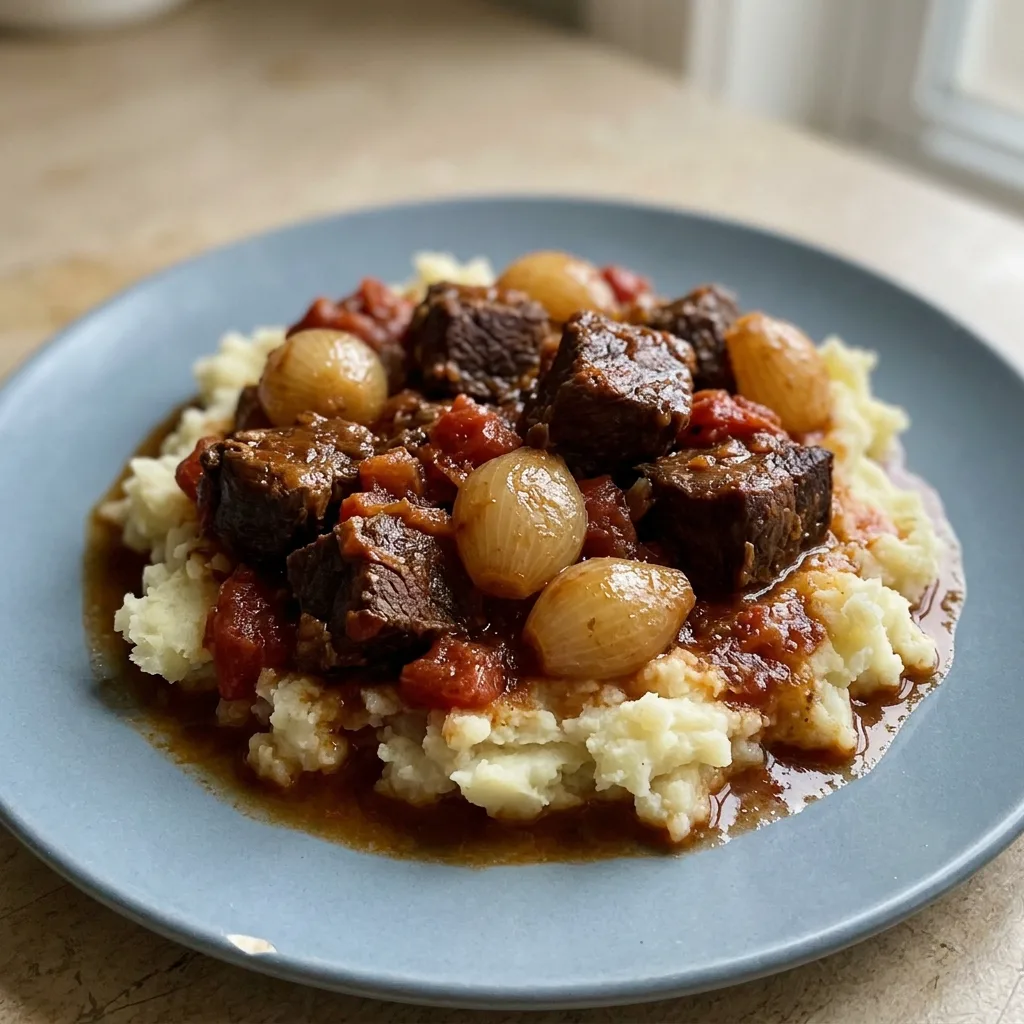
Stifado (Greek Beef Stew)
Ingredients
Method
Brown the Meat:
Dry the meat with paper towels, arrange on a tray, and sprinkle with salt and pepper. In a Dutch oven or heavy non-reactive pot, heat olive oil on high until it shimmers. Place meat in a single layer (batch if needed to avoid crowding) and brown, flipping, until all sides are lightly browned, roughly 1-2 minutes per side. Remove browned pieces using a slotted spoon to a large bowl; cover and set aside.Cook Onions and Garlic:
Lower heat to medium. Add pearl onions (frozen ones need no thawing) to the pot; toss to coat with oil, adding a little more if required. Cook until tender but not caramelized, around 10 minutes. Add garlic and cook for another 1 minute.Toast Spices and Return Meat:
Mix in tomato paste, bay leaves, cinnamon stick, ground cloves, and allspice berries using a wooden spoon. Let it caramelize for 1 minute. Return meat and any collected juices to the pot; stir to coat with the spice mixture.Deglaze with Wine and Cognac:
Add red wine and Cognac, scraping the pot bottom to loosen browned bits. Simmer for 5 minutes to allow some alcohol to cook off.Simmer Stew Until Tender:
Pour in canned tomatoes and enough warm water to submerge the meat. Lower heat to medium-low to keep a gentle simmer. Cover and cook until meat is fork-tender and sauce has thickened slightly, about 1 hour 40 minutes to 2 hours, depending on meat piece size. Halfway through, stir and check liquid; add more hot water if needed.Adjust Seasoning and Rest:
Once meat is tender, taste and adjust seasoning. Remove bay leaves, cinnamon stick, and allspice berries. Let the stew rest uncovered for 15 minutes. Serve warm over orzo, rice, mashed potatoes, or Greek French fries.
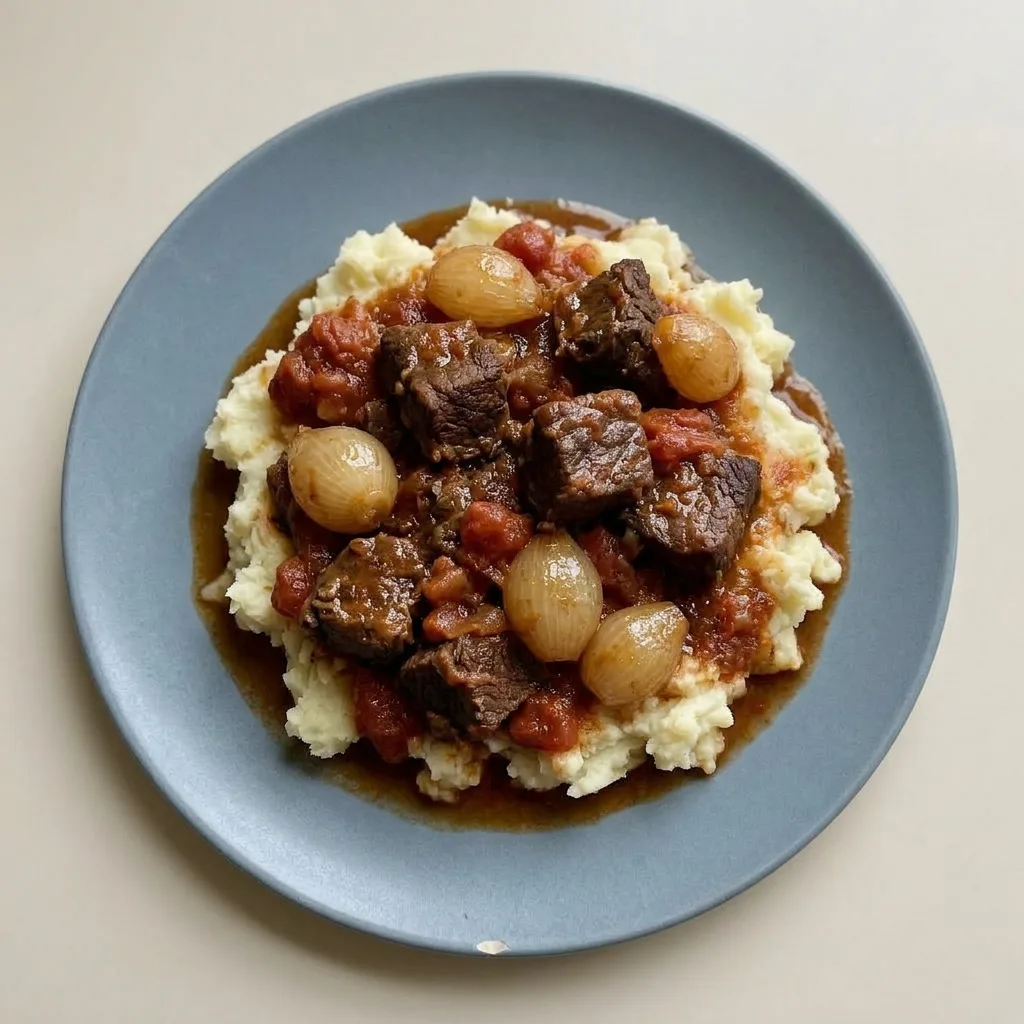
Stifado’s backbone: swap the wine or brandy, don’t skip the spices
Red wine: Use beef broth plus 1 tablespoon red wine vinegar for acidity. The sauce loses fruity depth and a bit of complexity, but the vinegar keeps the tang. Still tasty, but not as rich.
Cognac or brandy: Substitute dry sherry or an equal amount of additional red wine. Dry sherry adds a similar nutty note.
Extra wine works too, but you lose the brandy’s subtle warmth. Both are fine; don’t skip the alcohol entirely, it builds the layered flavor.
Pearl onions: Use frozen pearl onions directly (no thawing) as instructed. For fresh, blanch and peel first.
Do not substitute chopped yellow or white onions. Larger onions break down during the long simmer and turn the sauce muddy, not sweet.
You lose the distinct texture that makes stifado special.
Gluten-free: The recipe is naturally gluten-free as written. Serve over rice or potatoes instead of orzo. No changes to the stew itself.
Just pick a gluten-free side.
Storing and serving stifado
Stifado tastes even better the next day, so plan to make it ahead. Cool the stew completely, then refrigerate in a covered container for up to 4 days.
The flavors deepen as the spices mellow into the sauce. Reheat gently on the stovetop over low heat, stirring occasionally, until the stew is hot throughout. Avoid boiling, which can toughen the beef.
For longer storage, freeze the stew for up to 3 months. Thaw overnight in the fridge before reheating. The pearl onions will soften further but still hold their shape.
Serve warm over orzo, rice, or mashed potatoes. If you prefer a thicker sauce, simmer uncovered for a few minutes after reheating.
The resting time after cooking is built into the recipe, so no additional resting is needed before serving.
Tips
- To test doneness, use a second piece from the same batch rather than the one you’ll serve, so you don’t break up the meat on the plate.
Frequently Asked Questions
Can I make stifado ahead of time?
Yes, it’s even better the next day. Cool completely, refrigerate for up to 4 days, or freeze for 3 months. Reheat gently on low, boiling toughens the beef.
Why did my onions fall apart or turn mushy?
You likely cooked them too long or at too high heat after adding back. The recipe cooks them separately until just tender, then they only simmer with the meat. If they still mush, check your heat, a gentle simmer keeps them intact.
How do I know when the beef is done?
A fork should slide in with little resistance, but the meat still holds its shape. This happens after about 2 hours of covered simmering on medium-low. If it shreds easily, it’s overdone; if tough, give it more time.
What’s the difference between stifado and a regular beef stew?
Stifado uses sweet spices, cinnamon, cloves, allspice, that regular stew skips, and pearl onions that keep their shape instead of dissolving. The sauce is aromatic and wine-forward, not just savory. It’s a distinct Greek flavor profile.