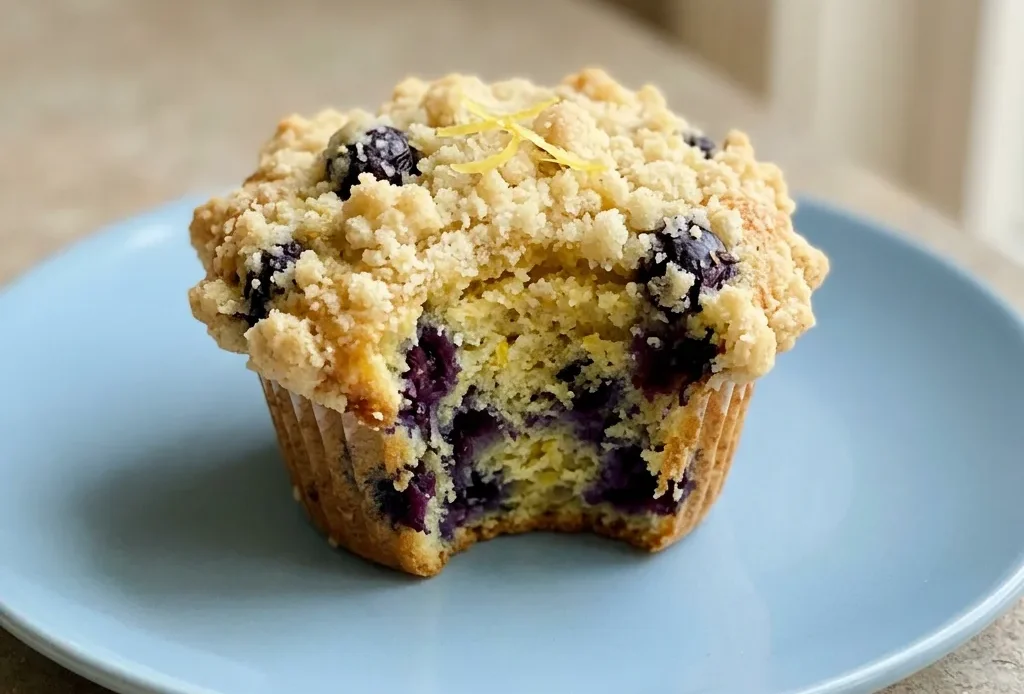
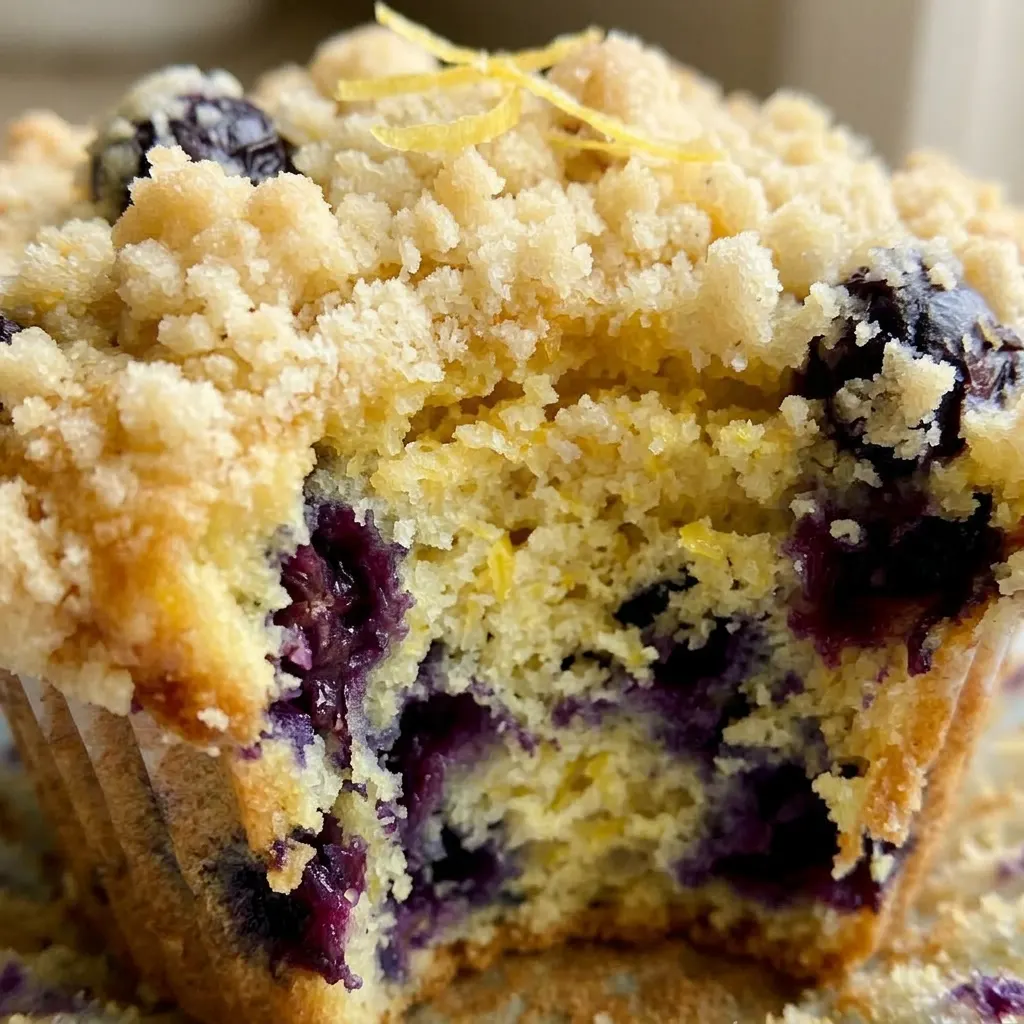
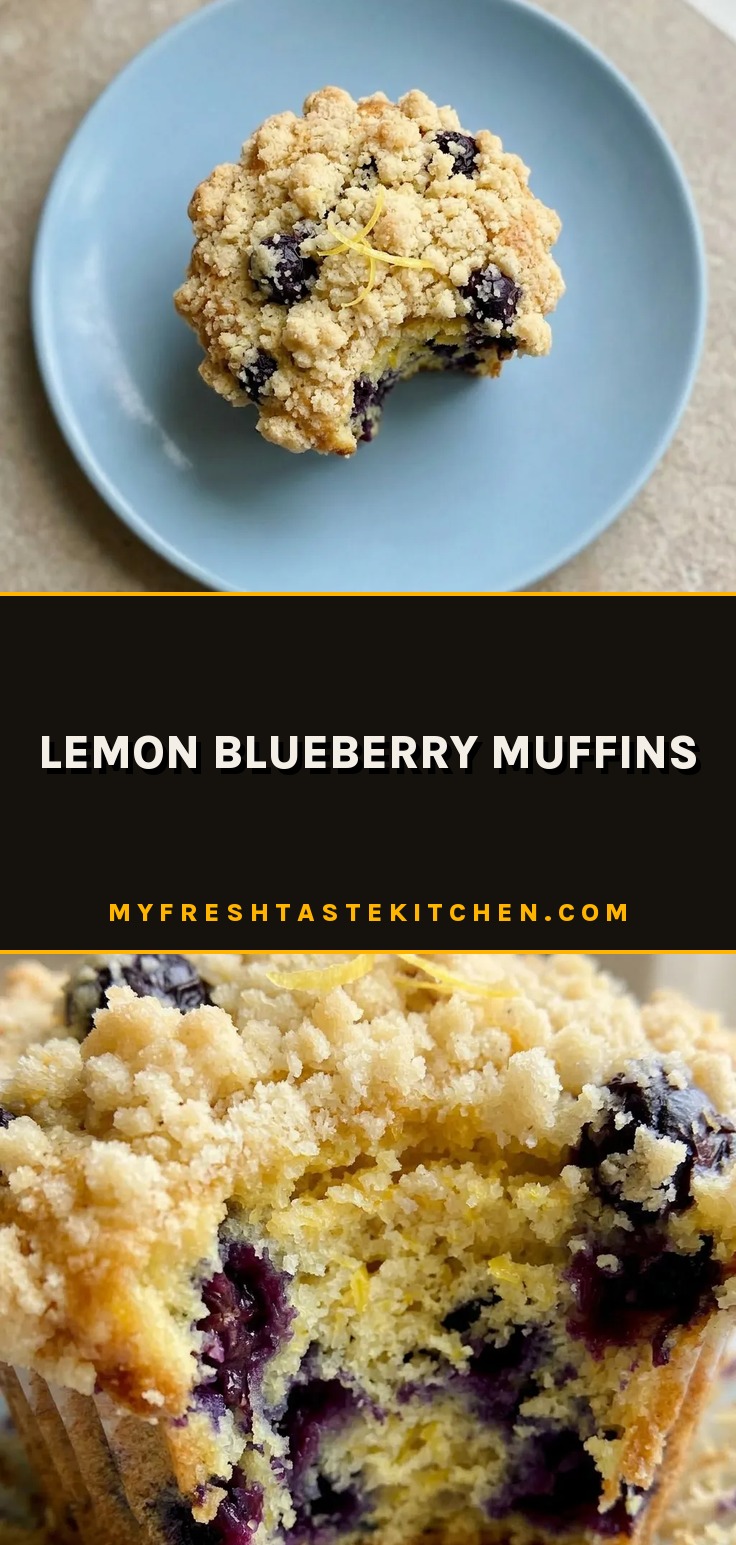
The crumb topping shatters against your teeth, then melts into a buttery crumble. Beneath it, the muffin is so tender you barely feel resistance, just a burst of lemon and a pop of blueberry. That texture isn’t an accident.
It comes from rubbing zest into sugar until the sugar feels damp and smells like citrus, then working the batter fast, stopping as soon as the flour disappears. It’s the kind of margin-for-error technique that separates a good lemon blueberry muffins from one that’s tough and dry. And it works without fuss.
Rubbing zest with sugar unlocks lemon aroma
You might wonder why the instructions have you rub lemon zest into sugar before adding anything else. The friction abrades the zest’s surface, releasing volatile citrus oils into the sugar.
Those oils carry the lemon’s bright, floral notes. If you just tossed zest into the batter whole, the oils would stay trapped, and the flavor would be muted.
Rubbing ensures that lemon scent gets carried into every bite, not just where a piece of zest lands. The sugar turns slightly damp and fragrant, that’s the signal you’ve done it right.
This technique does more than lemon juice alone could; juice adds acidity but not the aromatic punch. The result is a muffin that tastes distinctly of lemon, not just sour.
A flour coating keeps blueberries suspended
Blueberries sink to the bottom of muffins when their weight overcomes the batter’s support. Coating them with a dusting of flour creates a thin dry barrier that grips the batter.
The flour absorbs surface moisture, preventing the berries from sliding. This matters especially if you’re using frozen berries, which release extra liquid as they thaw.
Without the coating, that moisture creates a slick film that lets the fruit fall. You want blueberries scattered through the crumb, not a soggy layer at the base. The flour also helps thicken any juice that escapes during baking, so you don’t get purple streaks in the muffin.
The method is simple but essential for even distribution.
Why the oven temperature starts high then drops
The recipe calls for a blast of 400°F for the first five minutes, then a reduction to 375°F. That initial high heat pushes the batter’s edges to set quickly, trapping steam that forces the center upward. The result: a domed top instead of a flat cap.
If you baked the whole time at 375°F, the muffins would still rise but the top would be more rounded, less pronounced. The high start also firms the crumb topping, so it stays crunchy rather than melting into the batter. Once the dome is set, lowering the heat lets the inside bake through evenly without burning the top or edges.
You’ll see the muffins puff up noticeably in those first five minutes.
Prep: 10 min · Cook: 15 min · Total: 25 min · Servings: 12 · Calories: 360 kcal
Choose your blueberries and yogurt carefully
Fresh or frozen blueberries: If using frozen, don’t thaw them; toss them frozen into the flour to avoid bleeding purple into the batter.
Greek yogurt: Use plain full fat Greek yogurt; nonfat makes muffins drier and less tender.
Lemon zest: Only the yellow part, no white pith; pith adds bitterness, not lemon flavor.
Work through the batter fast to keep muffins tender
Make the crumb topping
Stir melted butter into the flour-sugar-cinnamon mix with a fork until it forms clumps. You want pea-sized crumbs; if it’s sandy, you’ve overmixed. Pop it in the fridge to firm while you prep the batter.
Rub zest into sugar
Use your fingertips to rub the lemon zest into the sugar until the sugar feels damp and smells intensely lemony. Stop once it’s fragrant, you’ve released the oils. If you skip this, the lemon flavor stays faint.
Whisk wet ingredients
Whisk eggs into the lemon-sugar, then add yogurt, oil, vanilla, and lemon juice. The mixture should turn a pale, uniform yellow. If it looks separated, whisk more, full emulsion means a tender crumb.
Combine wet and dry
Pour the wet mix into the dry and stir with a spatula just until no flour streaks remain. A few small lumps are fine; overmixing makes tough muffins. Stop as soon as the batter comes together.
Toss blueberries with flour
Toss the berries (minus the reserved ½ cup) with a tablespoon of flour until each berry is lightly dusted. You’ll see the flour cling; this prevents sinking. Skipping this step leaves blueberries at the bottom.
Fold in berries
Fold the floured berries into the batter with just a few strokes. The batter should be thick and studded with berries. If it turns purple, you’ve overfolded, stop earlier next time.
Fill and top muffins
Divide batter among 12 lined cups, filling each about two-thirds full. Tap the pan on the counter to settle the batter. Top each with reserved blueberries and a generous pile of crumb topping.
Bake with temperature drop
Bake at 400°F for 5 minutes, you’ll see the muffins puff up. Then reduce to 375°F and bake 13 to 15 minutes more until a toothpick comes out clean. The high start creates a dome; lowering prevents burning.
Cool in pan then on rack
Let muffins cool in the pan for 5 minutes; they’ll firm up enough to handle. Then transfer to a wire rack to cool completely. If you leave them in the pan too long, the bottoms get soggy.
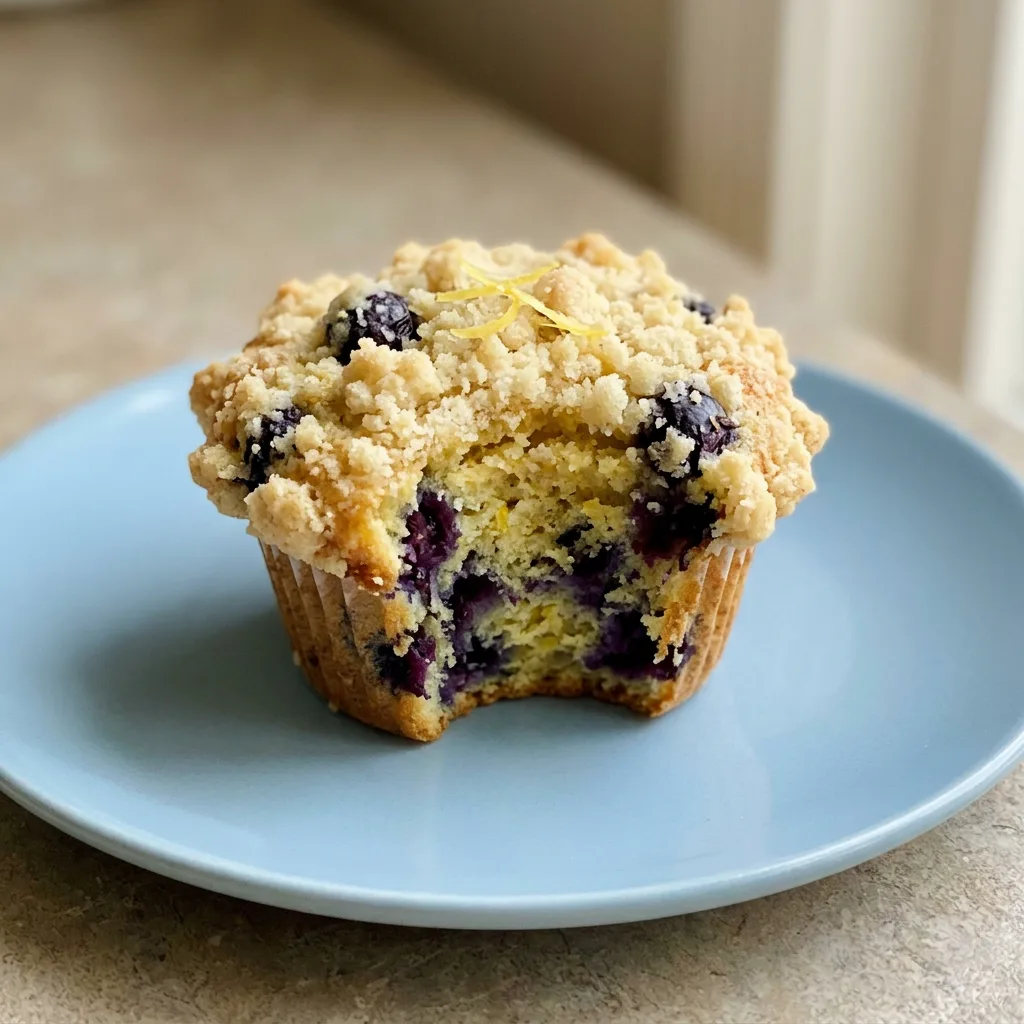
Lemon Blueberry Muffins – Easy & Bakery Style
Ingredients
Method
Preheat Oven and Line Pan:
Heat the oven to 400°F (205°C). Insert paper liners into a standard 12-cup muffin tin.
Make Crumb Topping:
Prepare the crumb topping: Combine 1 cup (125g) flour, 1/2 cup (100g) sugar, and 1/2 teaspoon cinnamon in a small bowl. Pour in 6.5 tablespoons (92g) melted butter and mix with a fork until crumbs form. Chill until needed.Whisk Dry Ingredients:
Make the muffin batter: Whisk together 1 1/2 cups (188g) flour, 2 teaspoons baking powder, and 1/4 teaspoon salt in a large bowl. Set aside.Mix Wet Ingredients:
In a medium bowl, rub 2/3 cup (133g) sugar with 1 tablespoon lemon zest for 1 minute. Add 2 eggs and whisk until blended. Whisk in 2/3 cup (160g) Greek yogurt, 1/3 cup (80ml) vegetable oil, 2 tablespoons (30ml) lemon juice, and 1 teaspoon vanilla extract until the mixture is pale yellow.Combine Wet and Dry:
Pour the wet mixture into the dry ingredients and stir gently until just combined.Toss and Fold Berries:
Set aside 1/2 cup blueberries for topping. Toss the remaining blueberries with 1 tablespoon (8g) flour in a small bowl. Fold the coated berries into the batter carefully.Fill Muffin Cups and Top:
Divide the batter among the muffin cups, filling each about two-thirds full. Tap the pan lightly on the counter. Top each muffin with reserved blueberries, then sprinkle generously with crumb topping.Bake Muffins:
Bake at 400°F (205°C) for 5 minutes. Lower the oven temperature to 375°F (190°C) and bake for 13-15 minutes, until a toothpick inserted in the center comes out clean.Cool Muffins:
Let the muffins cool in the pan for 5 minutes, then transfer to a wire rack to cool completely.
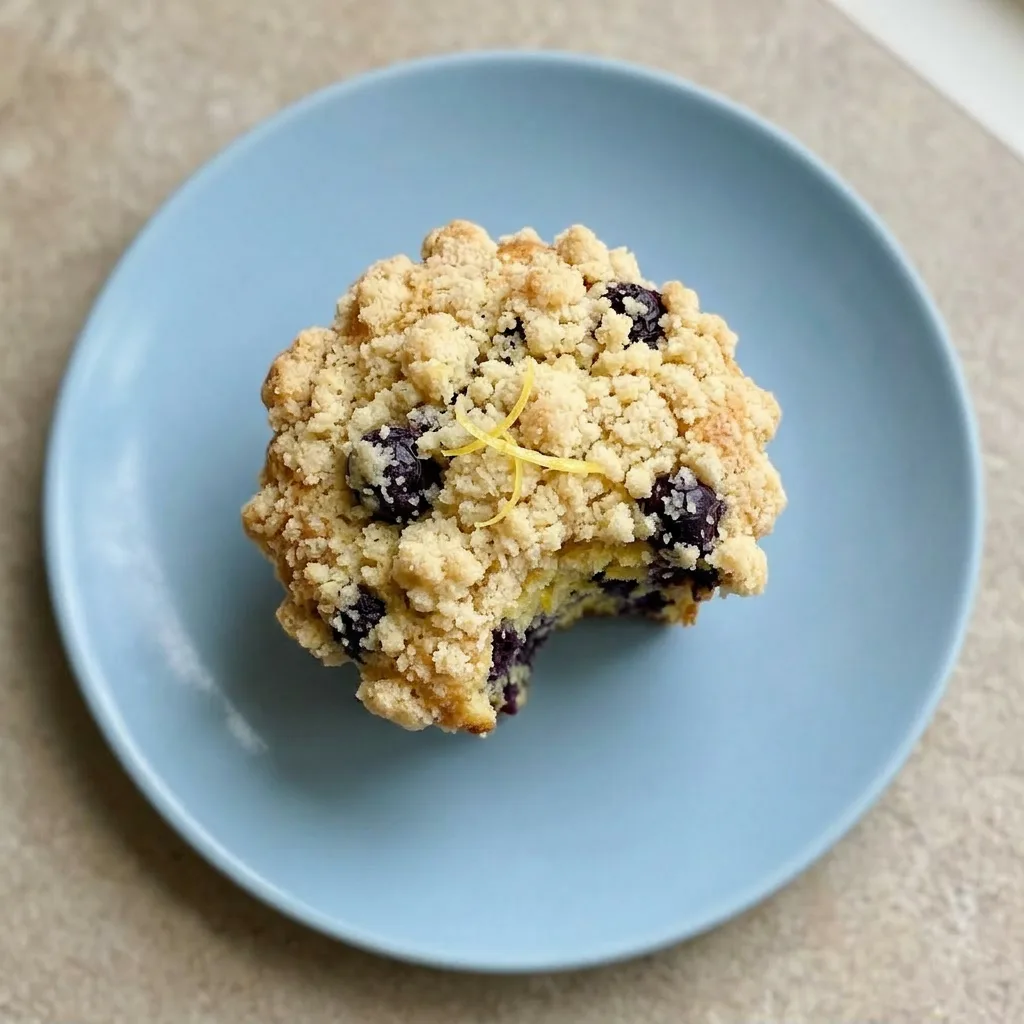
Storage and Serving
These muffins are best the day they’re baked, when the crumb topping is crisp and the interior is tender. For peak texture, serve within 4 hours of baking. Store leftovers in an airtight container at room temperature for up to 3 days.
The topping will soften over time; revive it by reheating muffins in a 300°F oven for 5 minutes. Avoid refrigerating, which accelerates staling.
To freeze, place cooled muffins in a freezer bag for up to 2 months. Thaw at room temperature, then reheat as above.
The crumb topping stays crunchy only on day one; after that, expect a softer texture.
Tips
- Use a light hand when folding the flour-coated blueberries; overfolding deflates the batter and activates gluten, yielding dense muffins instead of tender ones.
- Reserve the largest, prettiest blueberries for the top of each muffin; they will stay visible and bake into a juicy burst on the surface, contrasting with the crumb topping.
How swapping yogurt or oil changes the crumb
Greek yogurt: Sour cream or buttermilk in equal volume. Sour cream gives the same tang and moisture but a slightly richer crumb. Buttermilk makes the batter looser, reduce the milk by 2 tablespoons to keep the batter thick enough to support blueberries.
Vegetable oil: Melted coconut oil or melted butter. Coconut oil works measure-for-measure; the muffins will be a touch denser. Butter adds flavor but makes the crumb less tender, swap only if you want a more cake-like texture.
Don’t use olive oil; its flavor overwhelms the lemon.
All-purpose flour: Gluten-free 1-to-1 baking blend. Use a blend with xanthan gum (like King Arthur Measure for Measure). The crumb will be more delicate and might dome less, expect a flatter top.
No other structural changes needed.
Frequently Asked Questions
Can I use frozen blueberries without thawing them first?
Yes, add them straight from the freezer. Thawing releases extra juice that can bleed into the batter, turning it purple and making the muffins soggy. Toss frozen berries with flour just like fresh, the coating still prevents sinking.
The bake time doesn’t change.
Why did my muffins turn out dense and not fluffy?
The most likely culprit is overmixing the batter. Once you combine wet and dry, stir only until no flour streaks remain, a few lumps are fine. Overmixing develops gluten, which makes the crumb tough and heavy.
Another possible cause: oven temperature too low. The initial 400°F blast is crucial for the rise; if your oven runs cool, the muffins won’t dome properly.
Can I make the crumb topping ahead of time?
Yes, you can prepare it up to 3 days in advance and keep it refrigerated in an airtight container. The butter firms up, so the crumbs stay distinct when you sprinkle them onto the batter. Let it sit at room temperature for 10 minutes before using if it seems too hard.