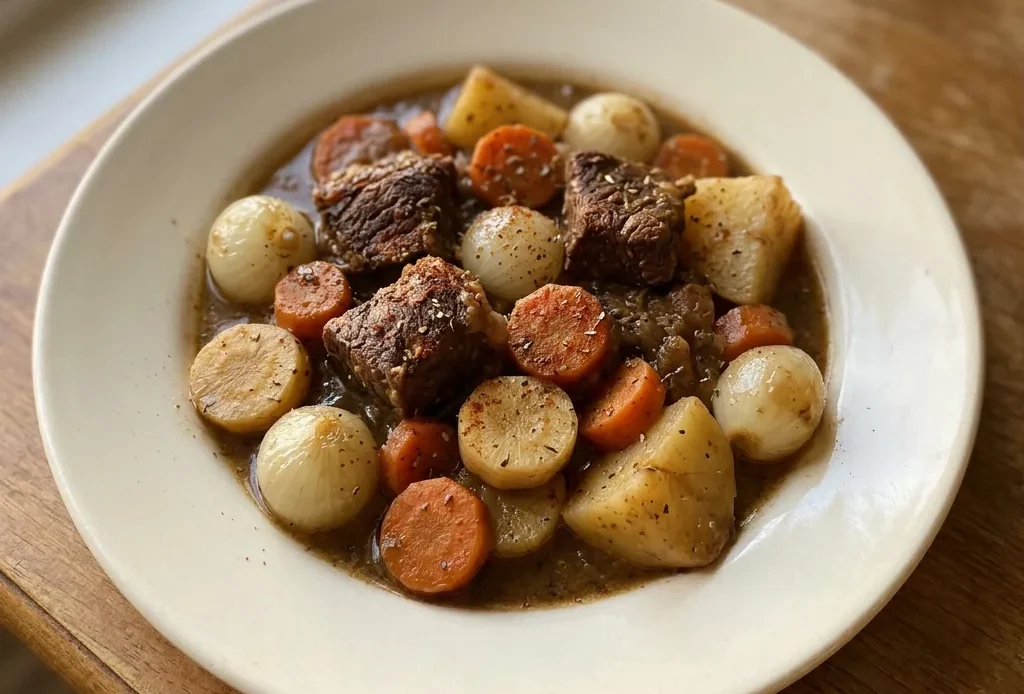
Most beef stew recipes skimp on the browning step. That caramelized crust on the meat isn’t just appearance, it’s the difference between a broth that tastes deeply savory and one that’s just salty liquid. This cast iron skillet beef stew builds that sear evenly, then deglazes the pan so nothing goes to waste.
The rest is a matter of timing: pearl onions go in early to soften, roots added later so they keep their bite. It’s a straightforward process with one real risk, underbrowning, and the payoff is a brothy stew that tastes like it simmered all day.
Why Browning First Matters
That deep brown crust on the beef isn’t just color, it’s concentrated flavor. When meat hits hot cast iron, the surface sugars and proteins react, creating savory compounds that water alone can’t produce.
Cast iron’s steady heat gives you an even sear without hot spots. After the beef comes out, deglazing with water lifts those browned bits into the broth. What’s left in the pan is pure flavor you’d otherwise lose.
Skimp on browning and the stew tastes flat, no matter how long it simmers.
Building a Layered Broth
Each spice in this blend has a job. Thyme brings an earthy backbone, paprika adds sweetness, and the Black Urfa Chili gives subtle heat and a wine-like tang. Before you simmer the meat, taste the broth, it should hit you with strong seasoning.
As the stew cooks, the flavors spread and mellow, so starting bold is key. Adjust salt or spice now, not later.
A flat broth means a flat stew, so trust your palate.
Vegetables Added at the Right Time
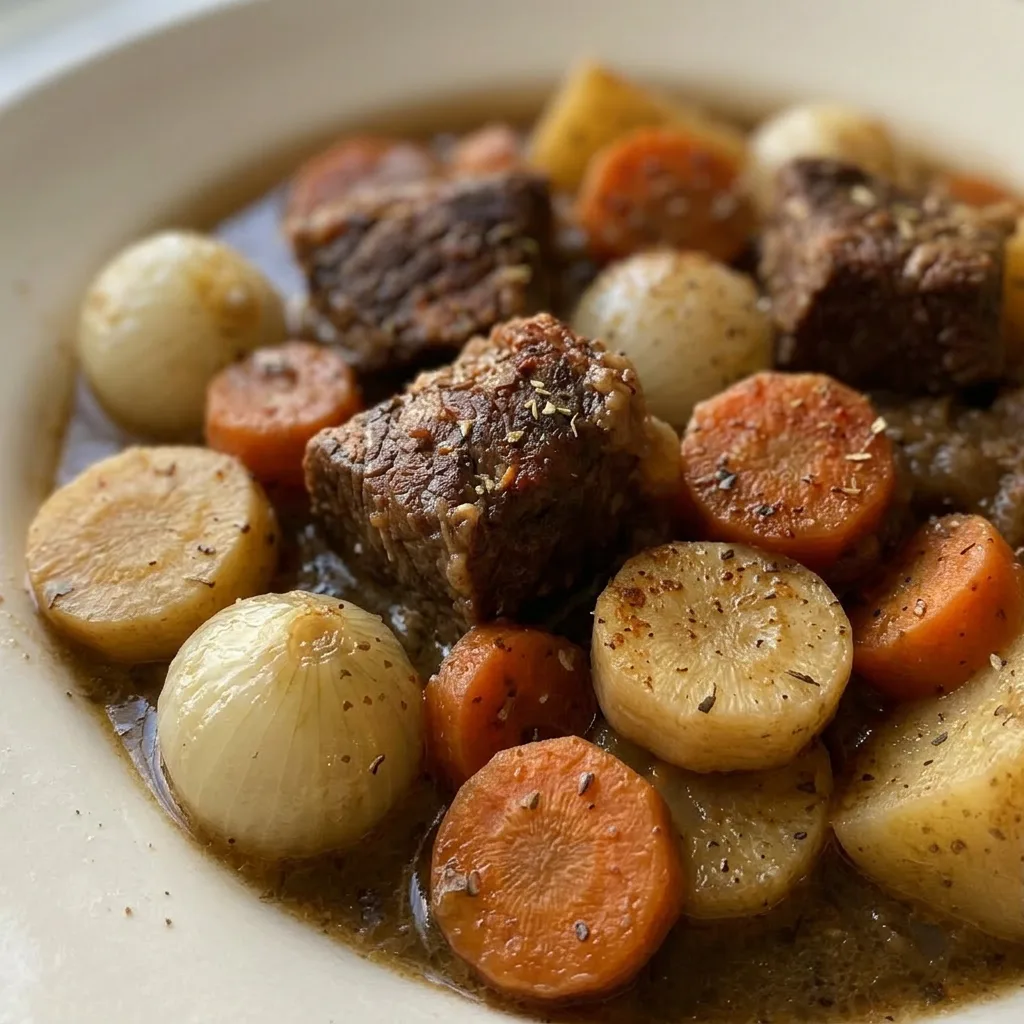
Pearl onions go in with the beef from the start. They need that long simmer to soften fully and release sweetness into the broth. Carrots, parsnips, and potatoes arrive later, only after the meat has already cooked for 90 minutes.
That way they turn tender but keep their shape, not going soggy. Staggering the additions means each vegetable ends up exactly where it should be: the onions melting, the roots firm but yielding.
Prep: 15 min · Cook: 2 hr 30 min · Total: 2 hr 45 min
Choosing the Right Beef and Spices
beef for stew: Look for well-marbled chuck, it stays tender through the long simmer without drying out.
pearl onions: Frozen pearl onions work fine, just add them straight from the bag without thawing.
Taurus Mountain Thyme: Use a mild, floral thyme; harsh or old thyme will turn bitter during the long cook.
Black Urfa Chili: This chili brings a raisiny, wine-like tang; substitute with ancho if you can’t find it.
Sun-Dried Tomato Powder: It adds umami without extra liquid; grind your own from dried tomatoes for best flavor.
A Stew That Builds Flavor in Stages
Sear the Beef
Pat the beef dry so it browns, not steams. Drop it into hot oil, you want a steady sizzle. Flip when a deep brown crust releases easily from the pan, about 5 to 10 minutes.
Deglaze and Season
Pour in 1/2 cup water and scrape up all the browned bits with a metal spatula. Add remaining water and spices. Taste the broth, it should taste aggressively seasoned; it will mellow as it cooks.
Simmer the Meat and Onions
Return the beef and add pearl onions. Bring to a boil, then cover and simmer gently, bubbles should just break the surface. Cook 90 minutes; the meat should be fork-tender but not falling apart.
Add Root Vegetables
Add parsnips, carrots, and potatoes. Return to a boil, then cover and simmer until a knife slides into the largest potato chunk with slight resistance, 30 to 45 minutes. Stop before they turn mushy.

Cast Iron Skillet Beef Stew
Ingredients
Method
Warm oil in skillet:
In a cast iron skillet, warm 3 tsp oil over medium-high heat.Brown salted beef:
Salt the beef, then place it in the skillet. Brown each side, roughly 5-10 minutes depending on chunk size.Deglaze with water:
Take the skillet off the heat. Remove the beef. Pour in about 1/2 cup water and use a metal spatula to deglaze the pan, loosening any browned bits.Season the broth:
Pour in the remaining 2 1/2 cups water, all the spices, and salt to taste. Sample the broth; it should be strongly seasoned. Modify spices or salt if needed.Simmer beef and onions:
Put the beef back into the skillet. Add the pearl onions. Bring to a boil, then lower to a simmer, cover, and cook for 90 minutes.Add vegetables and cook:
Add the parsnips, carrots, potatoes (or other vegetables). Return to a boil, then reduce to a simmer, cover, and cook for 30-45 minutes until the vegetables are soft.Serve stew hot:
Serve the stew while hot.
Storing and Serving Beef Stew
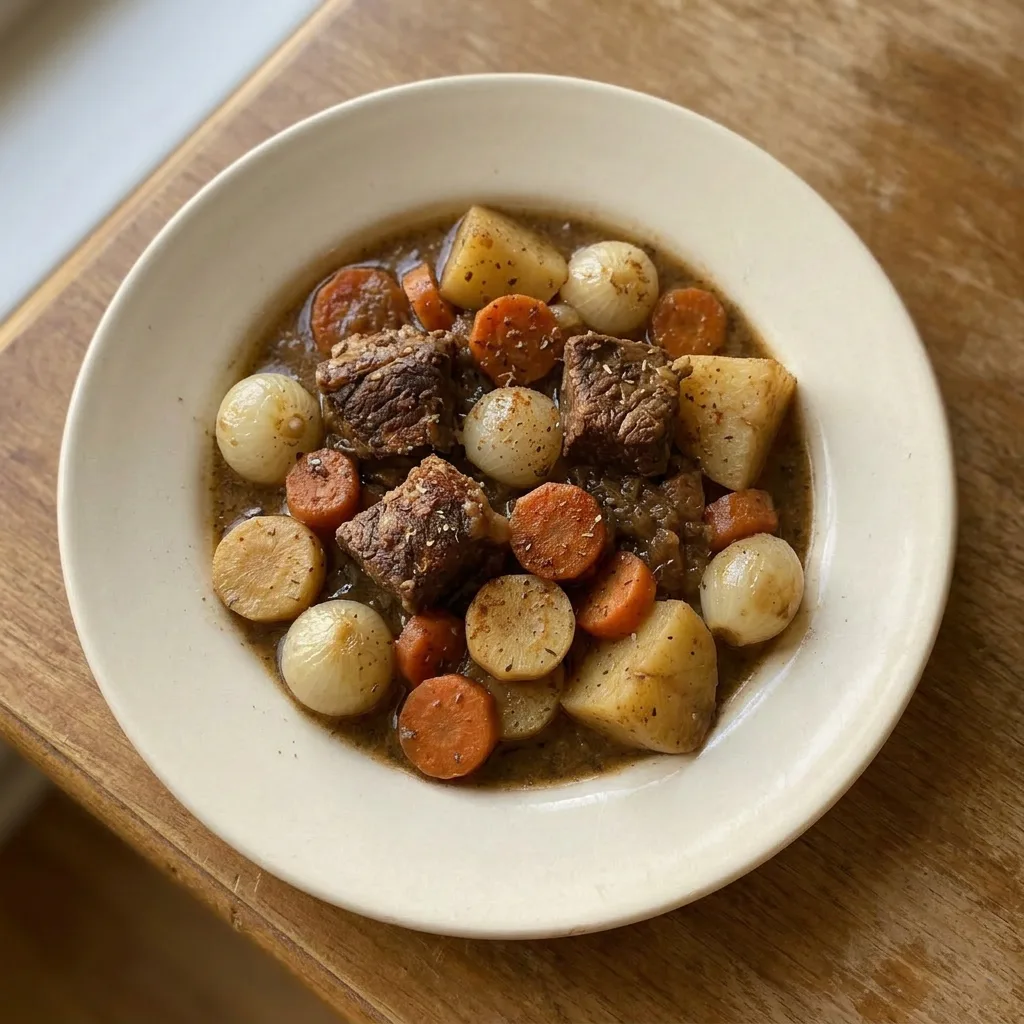
Let the stew cool completely before refrigerating. Store in an airtight container for up to 4 days. The flavors deepen overnight as the spices settle, but the vegetables continue to soften.
Reheat gently on the stovetop over medium low, stirring occasionally, until just warmed through. Avoid boiling, which turns the potatoes and carrots mushy. For longer storage, freeze the stew without the vegetables, they turn grainy on thawing.
Freeze the meat and broth in a freezer safe container for up to 3 months. When ready to eat, thaw overnight in the fridge, then reheat and add fresh parsnips, carrots, and potatoes, simmering until tender. Serve the stew hot, ideally within 30 minutes of reheating.
The texture is best the day it’s made, but leftovers hold well if handled gently.
Tips
- Check beef tenderness at 90 minutes by piercing with a fork; if not tender, simmer 15 more minutes before adding vegetables. The exact cooking time depends on the size of your beef chunks and the cut, so rely on fork tenderness rather than the clock.
- Cut potatoes into 1-inch chunks so they cook through in the final 30 to 45 minutes without turning mushy. Larger chunks may require extra time, and smaller ones can dissolve into the broth.
Swap Roots, Not the Spice Blend
parsnips: turnips or celery root. Both hold up to the long simmer and keep their shape.
Turnips add a peppery bite; celery root brings a mild, nutty flavor. Use the same weight.
carrots: sweet potatoes. Sweet potatoes soften faster and can break down if overdone. Add them with the other roots, but check for doneness 10 minutes early.
They’ll make the broth slightly sweeter and thicker.
pearl onions: shallots (peeled and halved) or frozen pearl onions. Shallots give a milder, sweeter finish than bulb onions. Use the same number of shallot halves.
Frozen pearl onions skip the peeling step, add them straight from the bag.
beef for stew: lamb stew meat or bison stew meat. Lamb adds a distinct richness that pairs well with the thyme and chili.
Bison is leaner and may dry out if cooked too long; check tenderness at 75 minutes. Both work with the same cooking time.
Frequently Asked Questions
Can I make this stew ahead of time? Does it reheat well?
Yes. Let the stew cool completely, then refrigerate for up to 4 days.
Reheat gently on the stovetop over medium-low, stirring occasionally, until just warmed through, avoid boiling or the vegetables go mushy. The flavors settle overnight, but the texture is best the day it’s made. For longer storage, freeze the meat and broth without the vegetables, then add fresh roots when reheating.
Why is my stew broth thin or watery? How can I thicken it?
Most likely the stew didn’t simmer long enough uncovered to reduce. If the broth is thin after the full cook time, let it bubble uncovered for 5 to 10 minutes, watching until it thickens slightly.
Another cause: too much water added at the start, stick to 3 cups total. If you added extra liquid, you can mash a few potato chunks against the pot side to release starch and stir in.
What’s the difference between this stovetop cast iron stew and a classic oven-braised stew?
Stovetop simmering gives you direct control, you can see the bubble activity and adjust heat instantly. The cast iron skillet holds steady heat, so the stew cooks evenly without the temperature swings of some ovens.
Oven braising uses ambient heat that surrounds the pot, which can be gentler but takes longer to respond to adjustments. This stovetop method finishes 30 minutes faster than most oven recipes and lets you taste and tweak the broth step by step.
