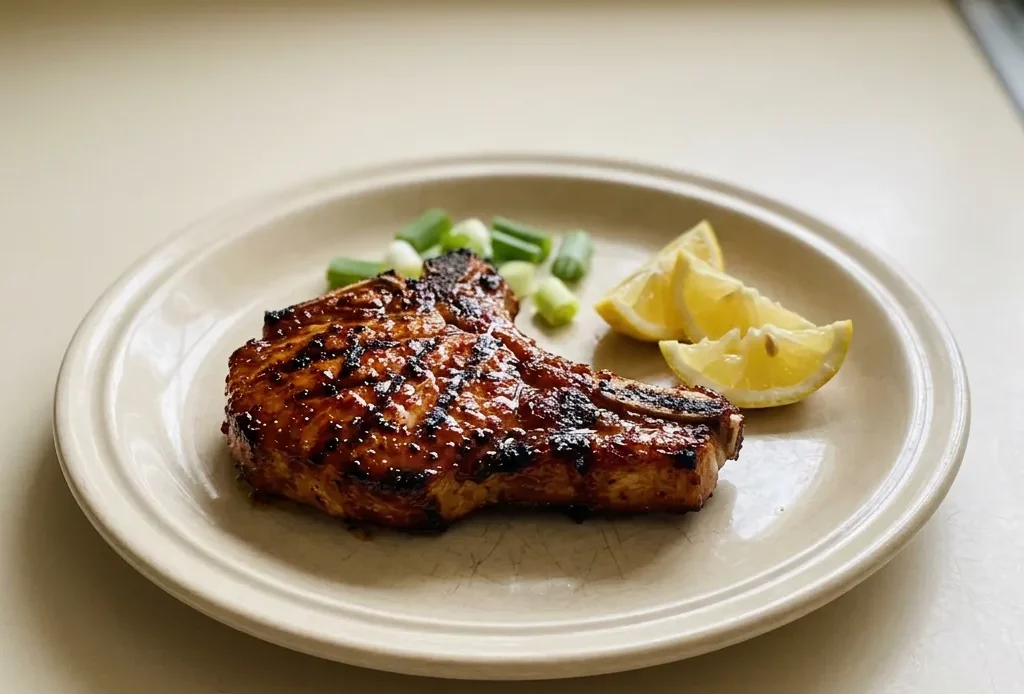
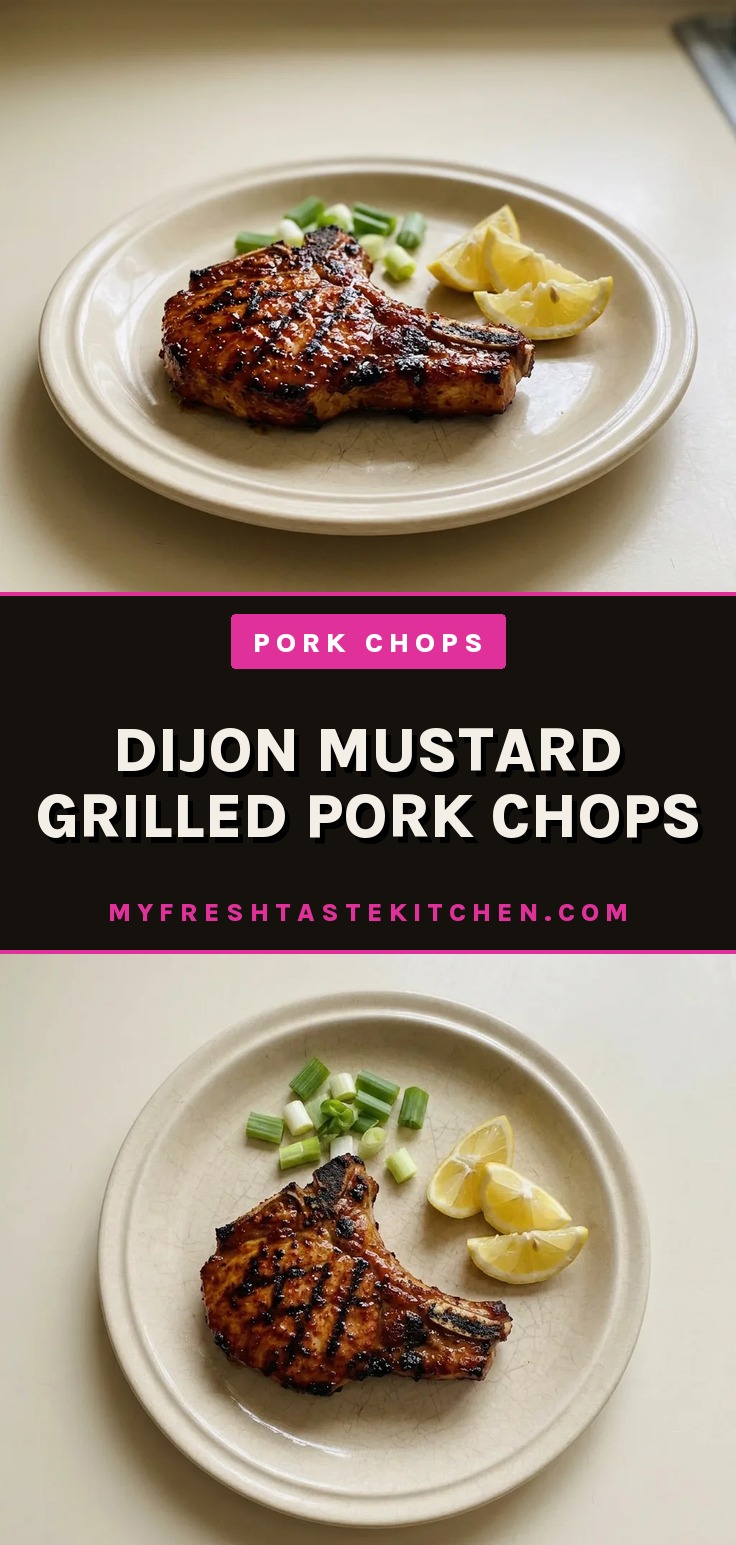
The trick to a glossy, caramelized crust without a charred mess is timing the sugar hits. This marinade leans on Dijon’s acidity to slow browning, but you still have to baste in stages, add fresh sugar only after the first sear sets a base. These dijon mustard grilled pork chops walk the line between sticky and burnt, and they come out deeply savory, not just sweet.
The bone helps, too, buying you time before the meat dries. It’s a hands-on grill session, but the result is a chop that looks candied and tastes tangy.
Sugar’s double role on the grill
Brown sugar in this marinade does two jobs. It caramelizes quickly at 400°F, giving those dark, appetizing grill marks. But sugar burns before pork is cooked through if left alone.
The mustard and vinegar in the mix keep the sugar from singeing too fast. That tangy, acidic base slows caramelization just enough for the meat to catch up.
Reserve some marinade for basting. Brushing it on mid-grill adds fresh sugar to the surface, reinforcing browning without scorching. Watch the grill: if you see black spots forming before the pork feels firm, your fire’s too hot.
Adjust the vents or move the chops to a cooler zone. You want mahogany, not charcoal.
Balancing tang, sweetness, and savor
Sharp Dijon mustard cuts the brown sugar’s sweetness, while apple cider vinegar brightens the whole mix. Worcestershire sauce brings fermented depth, think anchovy and tamarind, that rounds out the pork’s richness. Together, they create a sauce that tastes complex, not just sweet.
The mustard also helps the marinade cling to the meat. On the tongue, you get a hit of acid first, then sweet, then savory that lingers. This is a glaze that stays balanced even after the sugar caramelizes.
Taste the reserved marinade before basting; it should be punchy, not cloying. If it tastes flat, add a splash of vinegar.
Why the bone stays in
Bone-in pork chops handle high heat and multiple flips better than boneless cuts. The bone conducts heat slowly, so the meat around it stays cooler, giving you a wider window between done and dry.
Boneless chops dry out faster because they lack that internal insulation. With the bone, you also get more flavor from the marrow and the meat attached near the bone. These chops are thick enough to develop a crust without turning to leather.
When you flip them, the bone helps the chop hold its shape. You can feel the bone’s resistance when you press the chop; that’s a sign the interior is still moist.
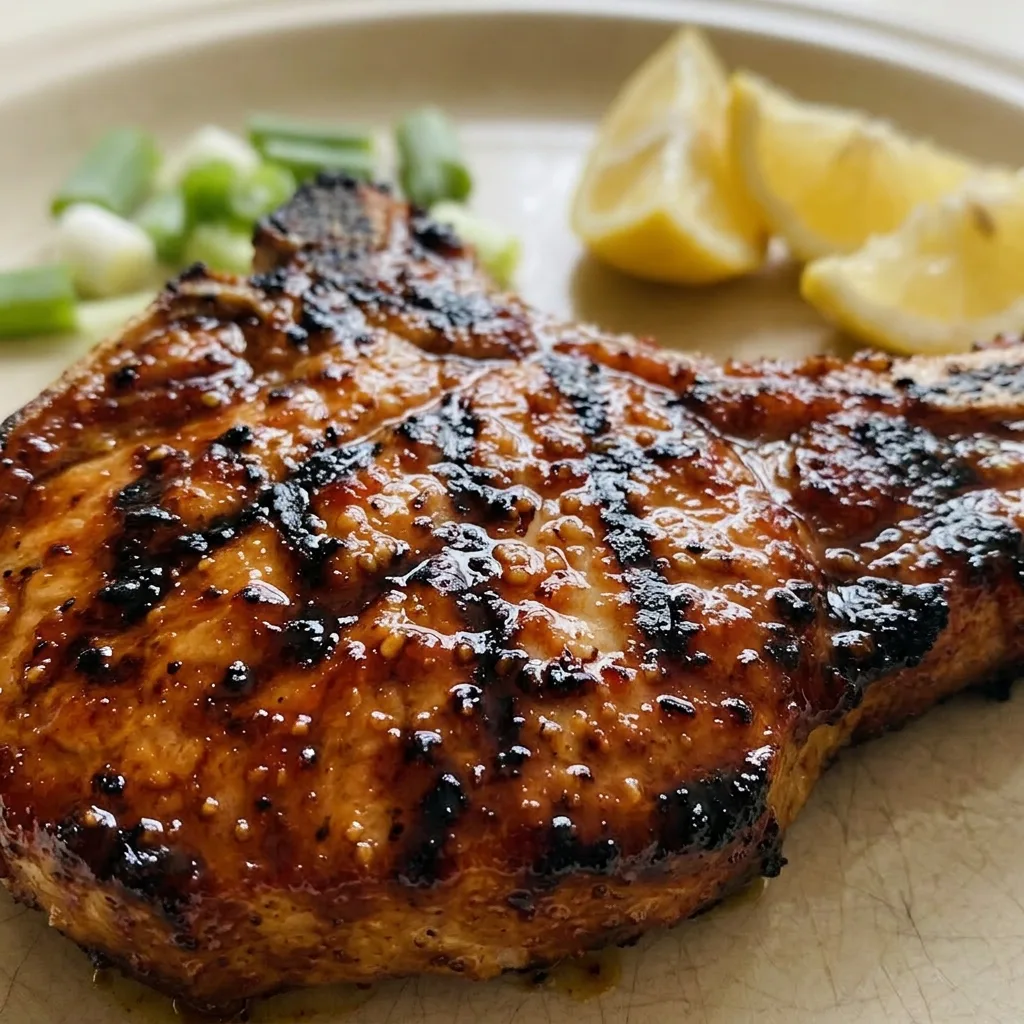
Prep: 1 hr · Cook: 12 min · Total: 1 hr 17 min · Servings: 4 · Calories: 380 kcal
Ingredients that build the glaze
Dijon mustard: Use a smooth Dijon, not whole grain, so the glaze clings evenly to the chops.
Dark brown sugar: Pack it firmly when measuring; dark gives more molasses flavor than light.
Apple cider vinegar: Unfiltered is fine, but any cider vinegar works; it brightens without being harsh.
Worcestershire sauce: Lea & Perrins is the standard, but any brand with anchovy and tamarind works.
Bone-in pork chops: Get chops at least 1 inch thick so they stay juicy through the basting process.
Build and manage the glaze for a balanced finish
Mix the marinade
Stir the Dijon, brown sugar, vinegar, Worcestershire, and spices until the sugar dissolves. Set aside 4 to 6 tablespoons for basting. The reserved portion should taste tangy and sweet, not flat.
Marinate the chops
Coat each pork chop with the remaining marinade, making sure every surface is covered. Refrigerate for 1 to 2 hours. Longer than 2 hours and the acid may start to soften the meat’s surface too much.
Preheat the grill
Fire up the grill to 400°F (205°C). If using charcoal, let the coals burn until they’re covered with gray ash. You want a steady heat, not flare-ups that char the sugar before the pork is cooked.
First sear
Place the chops over direct heat, close the lid, and cook for 4 minutes. You should hear a steady sizzle. If it’s popping aggressively, the fire’s too hot; move the chops to a cooler zone.
Flip and baste
Flip the chops and brush the cooked side with reserved marinade. Close the lid and cook another 4 minutes. The basted side should look glossy, not burned.
If it darkens too quickly, reduce heat.
Second baste and short cook
Flip again, baste the fresh side, close the lid, and cook for 1 minute. The glaze should be tacky and browning but not black. You’re adding more sugar for extra caramelization without overdoing it.
Final sear and rest
Flip once more to sear the just-basted side for 1 minute. Remove from grill when the internal temperature reaches 140°F (60°C) and let rest for at least 5 minutes, tented if you like. The meat will climb to 145°F (63°C) as it rests.
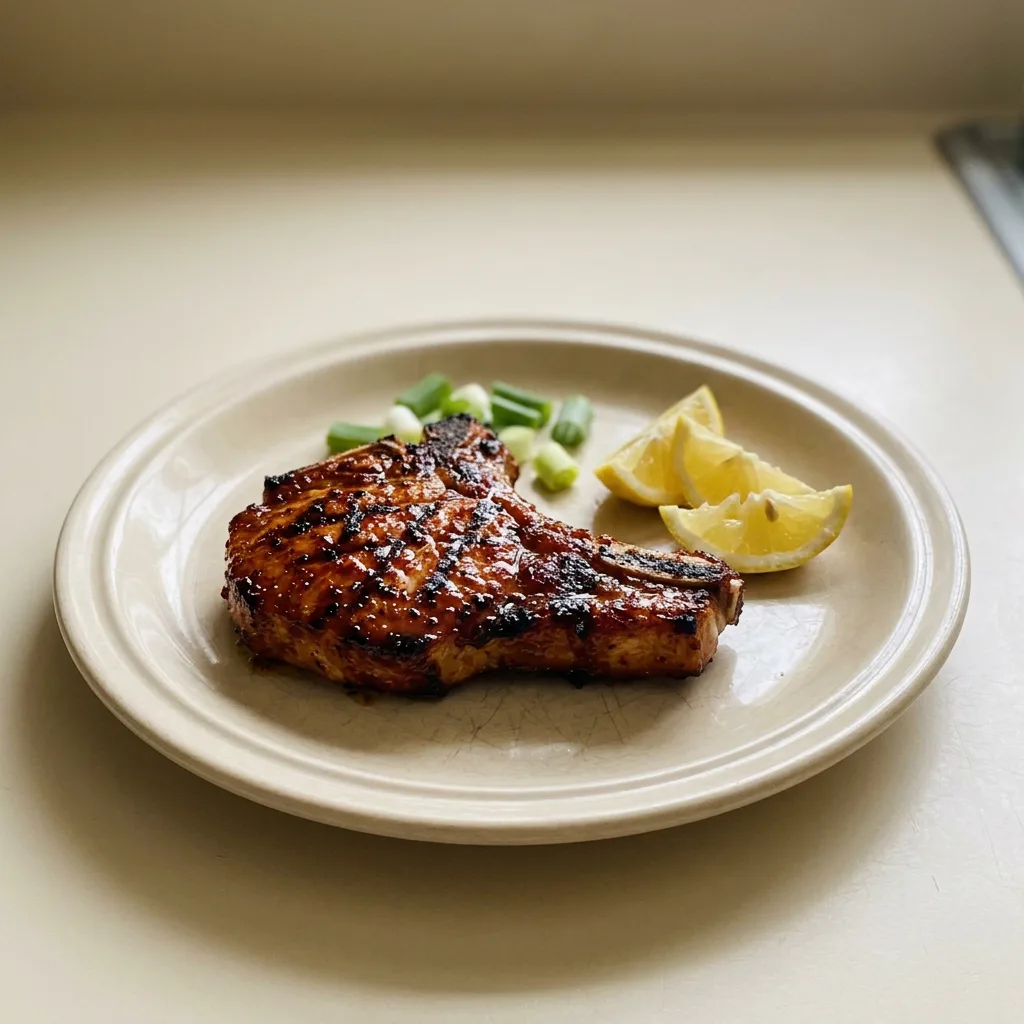
Dijon Mustard Grilled Pork Chops
Ingredients
Method
Mix the marinade:
Combine Dijon mustard, brown sugar, apple cider vinegar, Worcestershire sauce, garlic powder, onion powder, and salt in a small bowl, stirring until fully blended. Reserve 4 to 6 tablespoons of this mixture for later basting.Marinate pork chops:
Apply the remaining marinade to the pork chops, ensuring even coverage. Refrigerate for 1 to 2 hours to marinate.Preheat grill to 400°F:
Preheat the grill to 400°F (205°C).Grill first side:
Place pork chops on the grill over direct heat, close the lid, and cook for 4 minutes.Flip and baste:
Flip the chops, baste with reserved marinade, close the lid, and cook another 4 minutes.Baste and cook:
Flip again, baste with more reserved marinade, close the lid, and cook for 1 minute.Sear and rest:
Flip once more to sear the freshly basted side for 1 minute. Remove from grill and let rest for at least 5 minutes, tented with foil if desired.
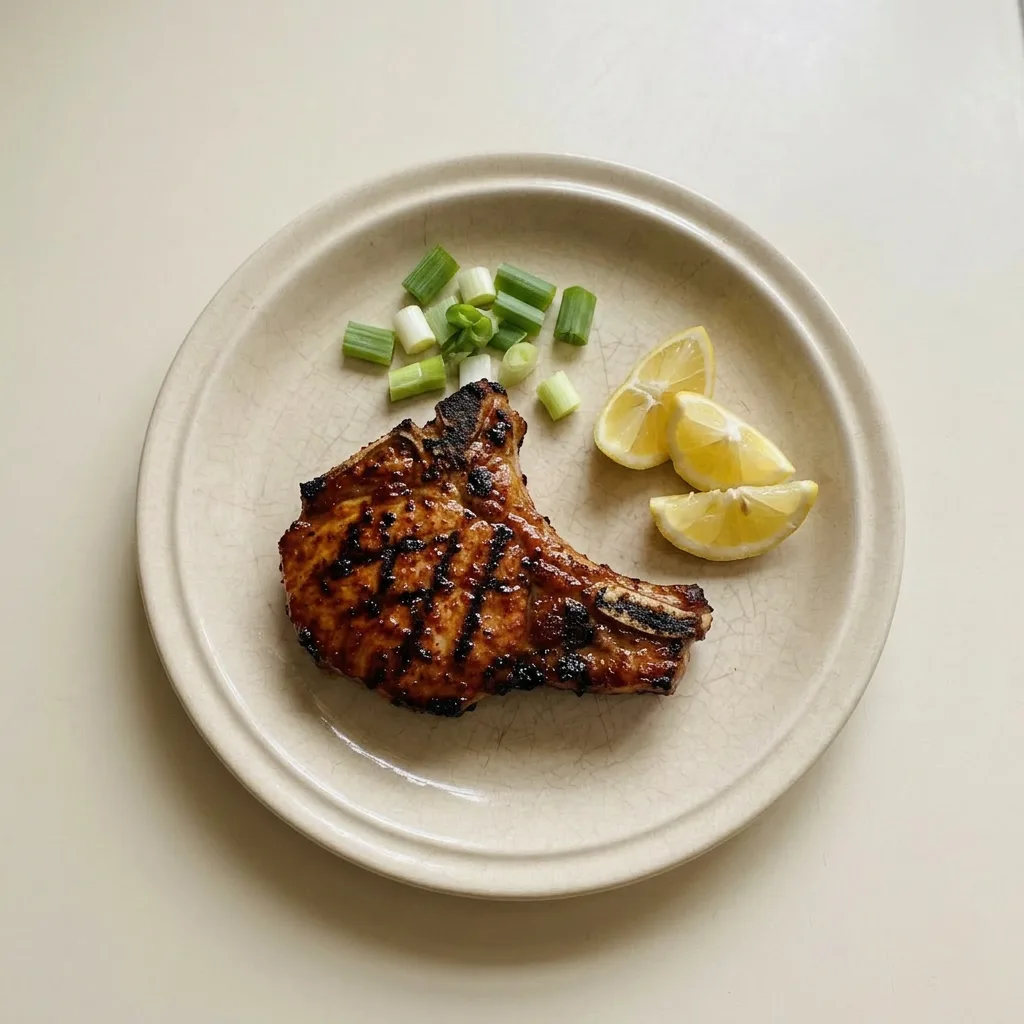
Storing and reheating grilled pork chops
Leftover pork chops dry out fast because the sugar glaze continues to draw moisture from the meat. Refrigerate them in an airtight container within two hours of cooking.
They’ll hold for up to three days, but the texture gets firmer each day as the meat loses juice. For best texture, eat leftovers within 24 hours. To reheat, wrap each chop loosely in foil with a teaspoon of water or leftover marinade, then warm in a 300°F oven for 8 to 10 minutes.
The foil traps steam and rehydrates the surface without burning the sugar. Avoid the microwave; it toughens the meat and makes the glaze sticky. If you must, microwave on low power in 20-second bursts, covered with a damp paper towel.
These chops freeze poorly; the glaze turns weepy and the meat becomes cottony when thawed. If you freeze leftovers, use them within one month and only in shredded form for tacos or salads.
Three swaps that work, one that doesn’t
Apple cider vinegar: White wine vinegar or lemon juice. Use the same amount. White wine vinegar is milder, so the glaze will taste less sharp.
Lemon juice brings a brighter, fruitier tang that cuts sweetness similarly.
Worcestershire sauce: Soy sauce or fish sauce. Replace with the same volume. Soy sauce adds salt and umami but loses the fermented funk.
Fish sauce goes deeper savory but smells stronger; the mustard and sugar mask it. Either works, but the final glaze will be less complex.
Bone-in pork chops: Boneless pork chops. Boneless chops cook faster and dry out more easily. Reduce grill time: aim for a 1-inch thick chop, sear 3 minutes per side, then baste and cook 1 minute per side.
Watch the temp closely, pull at 140°F.
Tips
- If the marinade seems thin after mixing, whisk in an extra tablespoon of Dijon mustard to thicken it so it clings to the chops better and doesn’t drip off on the grill.
- Before applying the marinade to the chops, brush a thin layer of mustard on the meat first; this helps the marinade adhere more evenly and prevents pooling in the ridges of the bone-in chops.
Frequently Asked Questions
Can I marinate the pork chops overnight, or is 1 to 2 hours enough?
1 to 2 hours is enough. Overnight marinating with this much acid (vinegar, mustard, Worcestershire) can soften the meat’s surface too much, making it mushy. The recipe’s 1 to 2 hours gives the flavor time to penetrate without breaking down the texture.
How do I know when the pork chops are done without a thermometer?
Use the touch test: press the center of a chop with your tongs, it should feel firm with a little give, like the base of your thumb when you make a fist. Cut into one to check: the juices should run clear, and the meat should be white throughout with just a hint of pink near the bone.
Can I make this recipe on a stovetop grill pan instead of an outdoor grill?
Yes, a stovetop grill pan works. Preheat it over medium-high heat until it smokes lightly, then follow the same timing. You may need to work in batches to avoid overcrowding, which drops the pan’s temperature and steams the chops instead of searing them.
