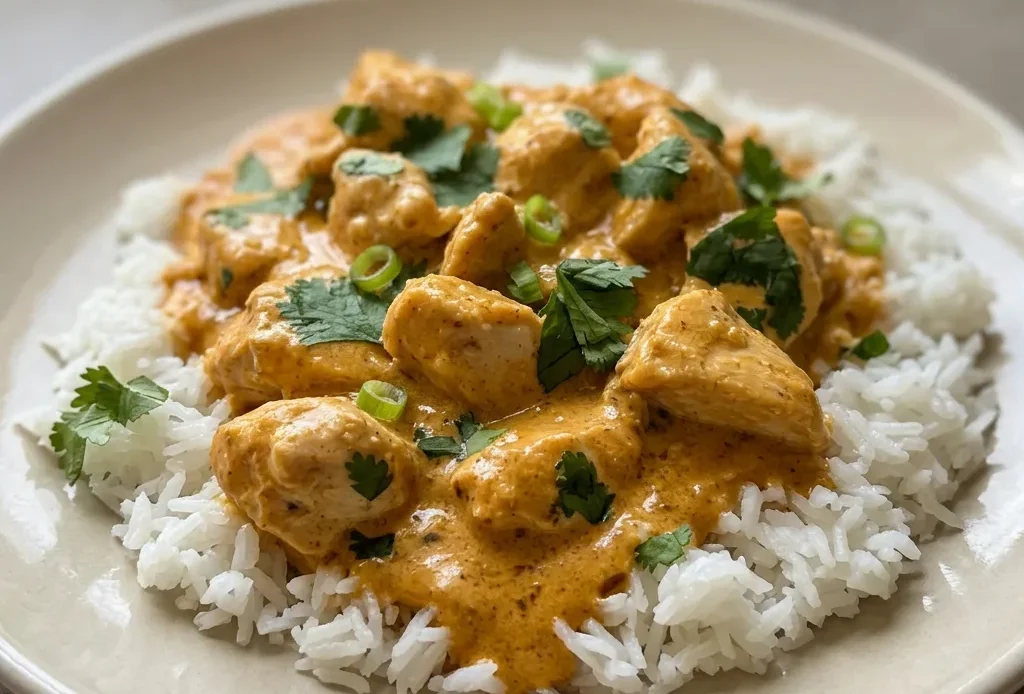
The most common mistake with a coconut chicken rice bowl is skipping the sear. Drop raw chicken straight into coconut milk and you get pale, poached meat that tastes like nothing.
That golden crust from a hot pan is where the savory depth lives, no amount of simmering can create it. This dish turns a handful of pantry staples into something that tastes like it took twice the time, but only if you let the chicken brown first.
Why sear the chicken before simmering in coconut milk?
When you drop raw chicken straight into the coconut milk, you get poached meat, pale, soft, one-note. Searing first changes everything. The high heat browns the surface, triggering the Maillard reaction that creates savory, nutty compounds that no amount of simmering can produce.
That golden crust carries flavor into the sauce as it cooks. To get a good sear, the chicken needs room in the pan.
Crowding it traps steam, which lowers the temperature and turns browning into gray. Cook in a single layer, and if the skillet is small, do it in two batches.
The target is 165°F inside, but you don’t need a thermometer if you cut into a piece: clear juices and no pink mean it’s done. A properly seared chicken stays juicy because you haven’t boiled it dry.
Coconut milk recipes dinner: what does the fat and acidity do?
Full-fat coconut milk gives this dish its body and richness. It coats the chicken and rice in a silky sauce that feels satisfying without being greasy.
The fat carries the flavors of garlic, ginger, and soy sauce, making them linger on your tongue. But creaminess alone can turn cloying. That’s where the lime juice comes in.
A squeeze of acidity cuts through the fat, brightening every bite and keeping the dish from feeling heavy. It works the same way a splash of vinegar balances a stew.
The soy sauce adds its own savory depth, umami, that fills in the middle of the flavor spectrum. Taste the sauce before serving; if it tastes flat, another drop of lime wakes it up.
If it’s too tart, a pinch of salt rounds it out.
Why fresh garlic and ginger matter for chicken with coconut milk recipes
Dried garlic powder and ground ginger are convenient, but they don’t deliver the same punch. Fresh garlic has a sharp, pungent bite that softens into sweetness when sautéed. Fresh ginger brings a warm, citrusy heat with a slight peppery finish.
Together, they create the aromatic backbone of the sauce, the same foundation used in many Thai and Vietnamese curries. The key is to sauté them briefly after the chicken has browned.
The pan is hot, so they cook in about a minute, just until fragrant. Any longer and they burn, turning bitter.
You’ll smell when they’re ready: that sharp, spicy aroma that fills the kitchen. That moment is your cue to add the coconut milk. If you use jarred ginger or garlic, the flavor will be muted and slightly stale.
Fresh is worth the peel.
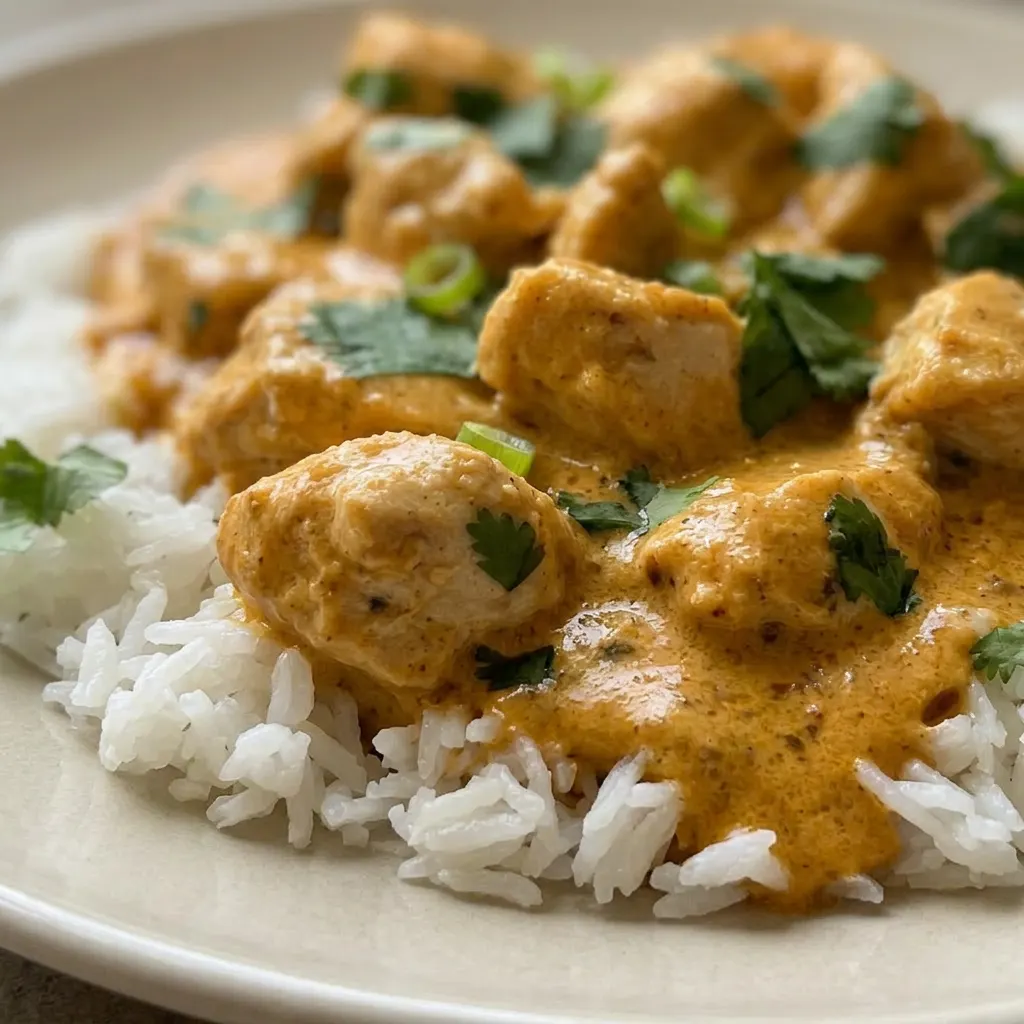
Prep: 10 min · Cook: 20 min · Total: 30 min · Servings: 4 · Calories: 450 kcal
What to grab at the store for this bowl
coconut milk: Full fat gives the sauce body; light coconut milk makes it watery and thin.
chicken breasts: Boneless, skinless breasts cook fast; thighs stay juicier if you prefer dark meat.
garlic and ginger: Fresh cloves and a knob of ginger beat jarred or powdered for bright, punchy flavor.
lime juice: Bottled juice lacks the zing; roll a fresh lime on the counter before cutting to get more juice.
I once scraped half the chicken off the bottom of the pan before I figured out the oil needs to shimmer first.
How to build the coconut chicken rice bowl step by step
Sear the chicken
Heat oil in a large skillet over medium heat. Add diced chicken in a single layer, crowding turns the sear into steam.
Cook 5 to 7 minutes, flipping once. Look for deep golden patches; pale meat means you pulled it too soon.
Aromatics go in
Add minced garlic and grated ginger to the pan. Stir constantly for about 1 minute. The moment you smell that sharp, spicy fragrance, stop, any longer and they burn, turning bitter.
Build the sauce
Pour in coconut milk, soy sauce, and lime juice. Stir to combine, scraping up any browned bits from the pan. Let it simmer 5 to 7 minutes.
The sauce should thicken slightly; if it looks thin, cook another minute.
Check the doneness
Cut into a piece of chicken: clear juices and no pink mean it’s done. Taste the sauce. If it tastes flat, add another drop of lime.
If too tart, a pinch of salt rounds it out.
Assemble the bowl
Spoon cooked rice into bowls. Ladle the coconut chicken and sauce over the top.
Garnish with chopped cilantro or sliced green onions. The fresh herbs cut through the richness.
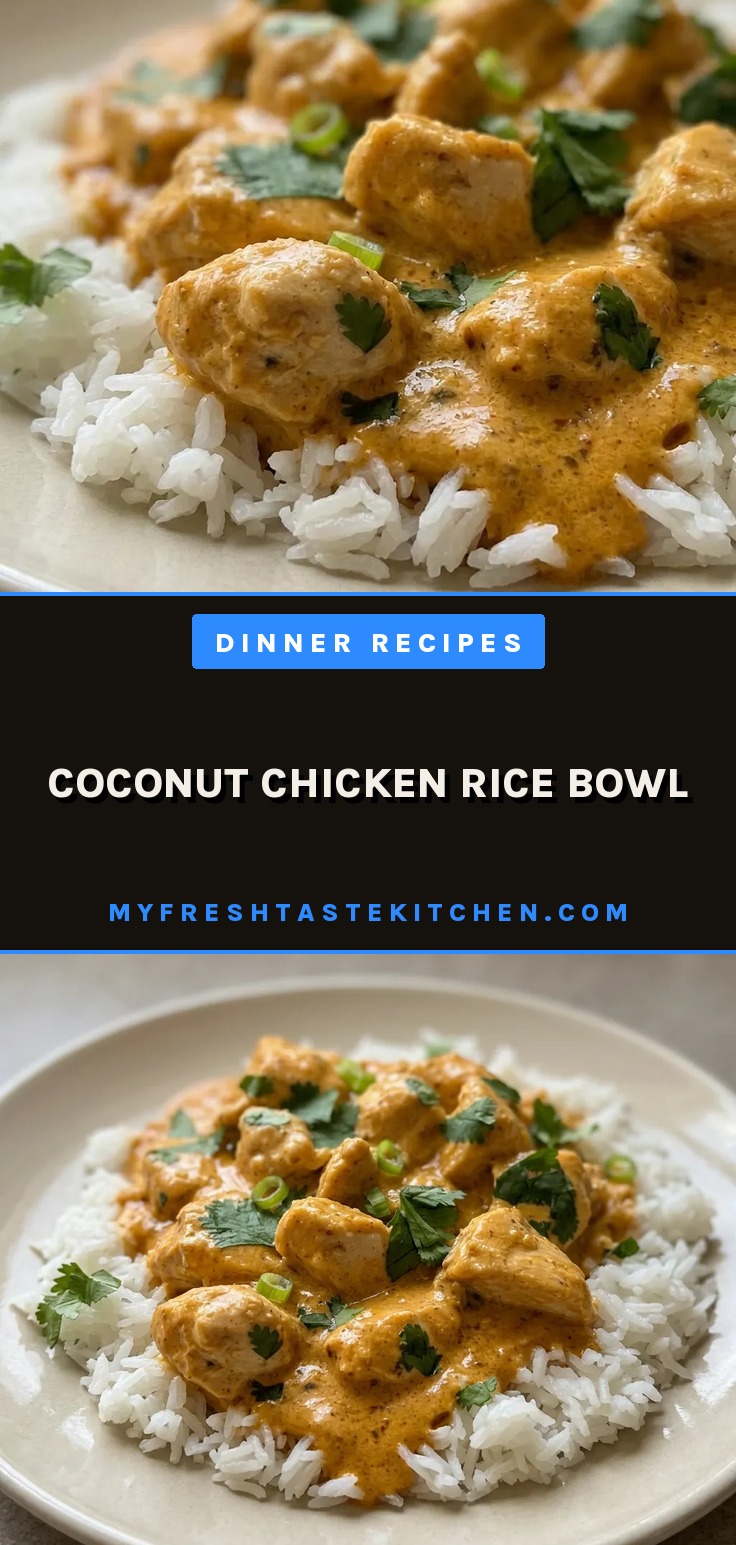
Coconut Chicken Rice Bowl
Ingredients
Coconut Chicken
- 1 lb boneless, skinless chicken breasts Main protein; swap for shrimp, tofu, or chickpeas.
- 1 can coconut milk Provides creaminess and healthy fats; light coconut milk lowers fat.
- 1 tbsp soy sauce (or tamari) Adds savory depth; use coconut aminos for soy-free.
- 1 tsp lime juice Brightens acidity; fresh lime recommended.
- 2 cloves garlic Fresh preferred; jarred works in a pinch.
- 1 tsp ginger Fresh yields better flavor.
- 1 tbsp vegetable oil (or coconut oil) For sautéing; adds flavor.
- salt and pepper to taste (Basic seasoning.)
- fresh cilantro or green onions Adds freshness; parsley can substitute.
Rice
- 2 cups cooked rice Jasmine, basmati, or brown; cauliflower rice for low-carb.
Instructions
Coconut Chicken
Heat oil in skillet:
Warm 1 tablespoon of vegetable or coconut oil in a large skillet set over medium heat.Cook seasoned chicken:
Add 1 lb of diced boneless, skinless chicken; season with salt and pepper. Cook 5-7 minutes until golden and internal temp hits 165°F (75°C).Sauté garlic and ginger:
Stir in 2 minced garlic cloves and 1 teaspoon grated ginger; cook about 1 minute until aromatic.Simmer coconut sauce:
Pour in 1 can of coconut milk, 1 tablespoon soy sauce, and 1 teaspoon lime juice. Stir, then simmer 5-7 minutes.Cook rice:
Cook 2 cups of rice per package directions.
Rice
Serve and garnish:
Ladle coconut chicken over rice; garnish with chopped cilantro or sliced green onions.
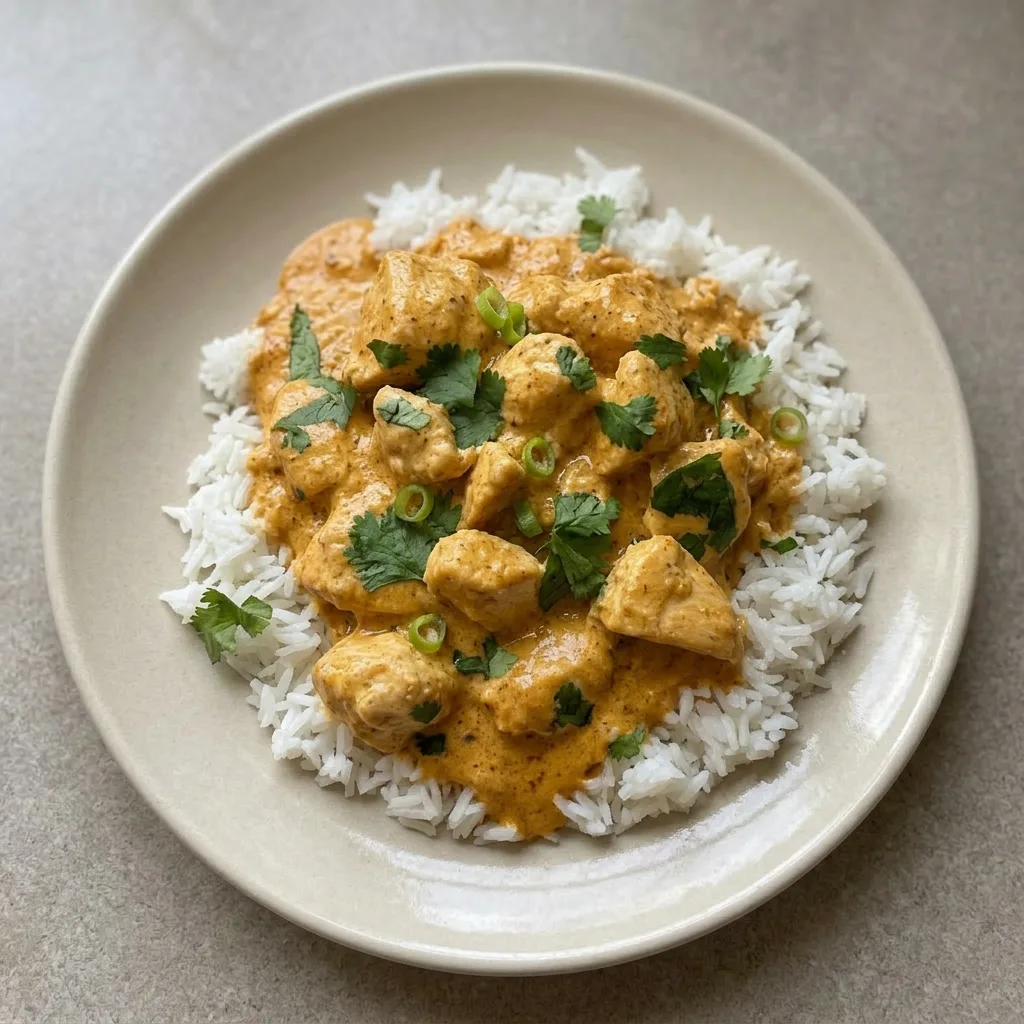
Swapping the protein without losing the sauce
chicken breasts: shrimp, tofu, or chickpeas. Shrimp cooks in about 3 minutes, so add it after the aromatics and simmer just until pink. Firm tofu (patted dry and cubed) sears like chicken; use the same timing.
Canned chickpeas (rinsed) need no sear, stir them in with the coconut milk and simmer 5 minutes to warm through. All three work, but chicken gives the meatiest chew.
coconut milk: light coconut milk. Light coconut milk makes the sauce noticeably thinner and less creamy. The richness that coats the chicken and rice is cut in half.
If you use it, the sauce won’t thicken as much and may taste watery. You can simmer it a few extra minutes to reduce, but the body won’t match full-fat.
soy sauce: tamari or coconut aminos. Tamari is a straight 1-for-1 swap with very similar savory depth.
Coconut aminos are sweeter and less salty, you might want a pinch of extra salt to balance. Both keep the dish gluten-free.
cilantro: parsley. Parsley (flat-leaf) adds freshness without the soapy notes some people taste in cilantro.
Chop it the same way and use the same amount. The herb is a garnish, so the swap barely changes the dish.
Storage and Serving
This bowl is best eaten right after assembly, while the rice is fluffy and the sauce is hot and creamy. For leftovers, store the chicken and rice separately in airtight containers.
The coconut chicken keeps in the fridge for up to 3 days. As it chills, the sauce thickens significantly, becoming almost jelly-like. To reheat, warm it gently in a skillet over medium low heat with a splash of water or broth, stirring often.
High heat will cause the coconut milk to separate into a grainy, oily mess. The rice dries out faster; it stays good for about 2 days. Store it on its own and reheat in a microwave with a damp paper towel or in a covered skillet with a tablespoon of water.
Do not freeze the assembled bowl. The rice turns mushy, and the sauce separates upon thawing. You can freeze just the cooked chicken in its sauce for up to 1 month.
Thaw overnight in the fridge, then reheat gently. Garnish with fresh cilantro or green onions only at serving time, never before storing, as they wilt and discolor quickly.
Tips
- Use a nonstick skillet so the coconut milk sauce doesn’t stick and scorch as it reduces. The high fat content can burn on stainless steel if you’re not careful.
- Cook the chicken in a single layer even if using a nonstick pan. Crowding lowers the pan temperature and causes the chicken to steam rather than brown, which is essential for flavor.
Frequently Asked Questions
Can I make this coconut chicken ahead of time and reheat it?
Yes, but store the chicken and rice separately. The coconut chicken keeps in the fridge for up to 3 days; the sauce thickens to a jelly-like consistency when cold. Reheat gently in a skillet over medium-low heat with a splash of water or broth, stirring often, high heat makes the coconut milk separate into a grainy, oily mess.
The rice dries out faster, staying good about 2 days; reheat it with a damp paper towel in the microwave or a covered skillet with a tablespoon of water. Garnish with fresh herbs only at serving time, as they wilt quickly in storage.
How do I prevent the coconut milk from curdling or separating?
Low and slow is the key. Simmer the sauce at a gentle bubble, not a rolling boil, and reheat leftovers over medium-low heat with a splash of liquid, stirring often. High heat breaks the emulsion, causing the fat to separate into oily pools and the solids to turn grainy.
If you’re reheating and see separation, whisking in a teaspoon of lime juice or a splash of cold coconut milk can sometimes bring it back together.
What type of rice works best for this bowl?
Jasmine or basmati rice are the top picks, their fluffy, separate grains soak up the sauce without turning mushy. Brown rice works too, but its chewier texture and longer cook time change the bowl’s balance. Cauliflower rice is a low-carb option; just pat it dry before cooking to avoid a watery base.
Is this dish supposed to be saucy or dry?
It’s meant to be saucy, not soupy. The coconut milk simmers for 5 to 7 minutes, which thickens it enough to coat the chicken and rice without pooling on the plate.
You’ll see it cling to the back of a spoon. If it looks thin, simmer another minute; if too thick, add a splash of water or broth to loosen it.