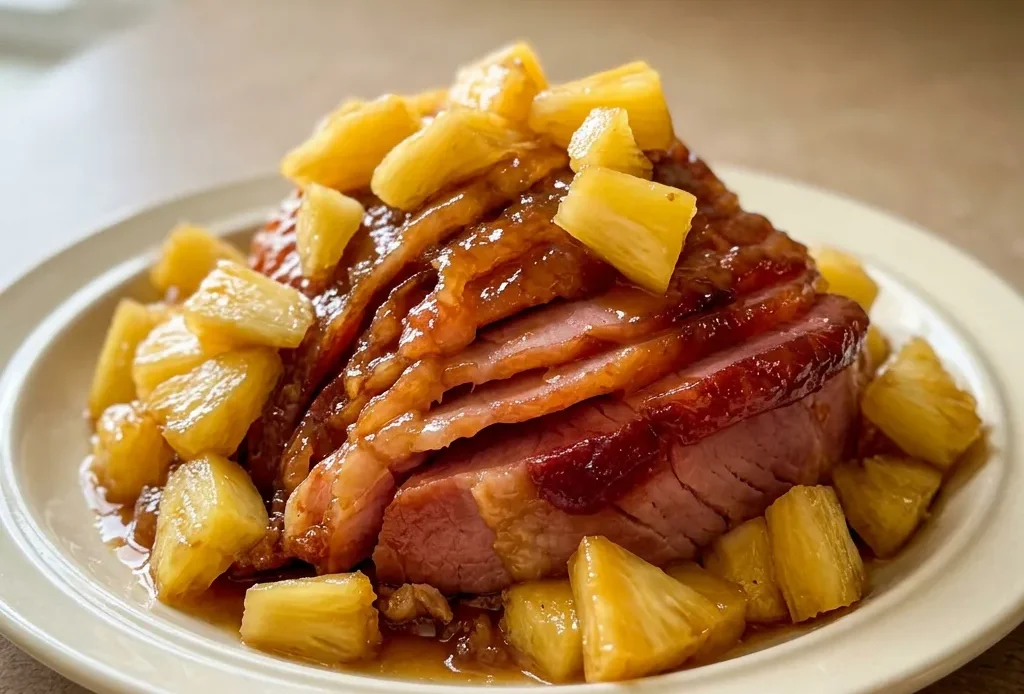
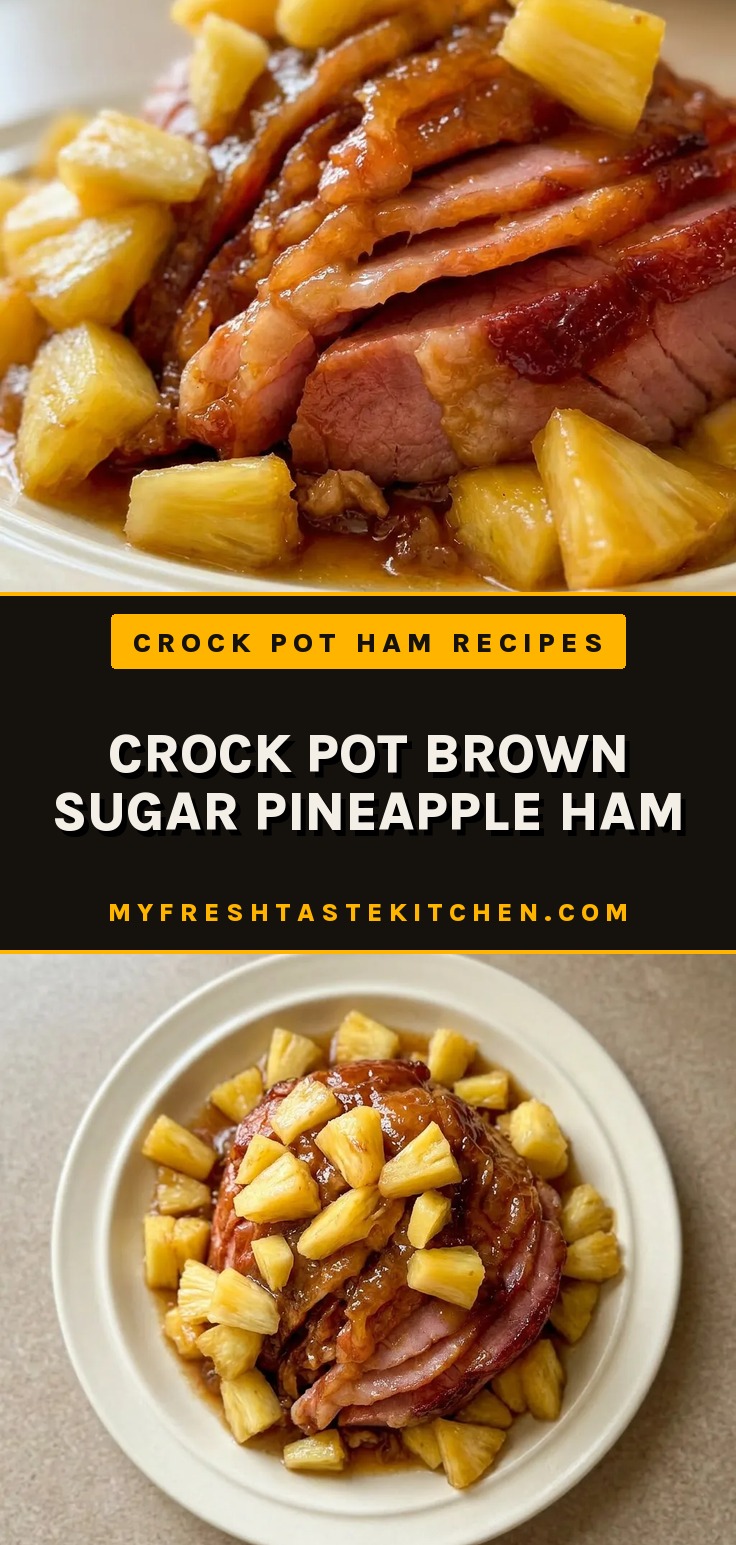
The glaze on this ham sets up sticky and glossy, almost like candy, with a faint tang from the pineapple that keeps it from being just another sugar bomb. A layer of brown sugar under the ham caramelizes against the crock pot bottom while the meat braises above, so you get a crust that clings to the slices without any burning or basting. That’s the trick that makes this crock pot brown sugar pineapple ham work: build the sweetness from the bottom up, and let the slow heat do the rest.
Layer brown sugar under the ham for a caramelized crust
When you spread brown sugar on the bottom of the crock pot, it melts and caramelizes as the ham cooks. The ham sits on top, so the sugar doesn’t scorch directly against the pot’s hot surface.
Juices from the ham and pineapple liquid keep the sugar from burning, letting it change into a sticky, glossy glaze. By the end, you’ll have a sweet coating on the ham’s underside without any basting. That bottom layer of sugar is the key to a crust that sticks to the meat, not the pot.
Use undrained pineapple for moisture and acidity
Pineapple chunks and their juice do two things at once. The juice keeps the ham moist through the long slow cook, and its acidity cuts through the heavy sweetness of brown sugar and honey.
Without that tartness, the sauce would taste flat and cloying. The pineapple softens as it cooks, releasing fruity flavor that infuses the ham. You end up with a balanced sauce that’s sweet but bright, and the ham stays tender enough to pull apart with a fork.
Choose a pre-cooked spiral-cut ham here
5 to 4 hours on low is plenty. Spiral cuts let the sugary glaze seep between each slice, so every piece is evenly flavored, not just the outer surface.
If you use a bone-in ham, the bone adds a deeper, meatier note to the cooking liquid. The result is a ham that’s ready to serve straight from the crock pot with minimal effort.
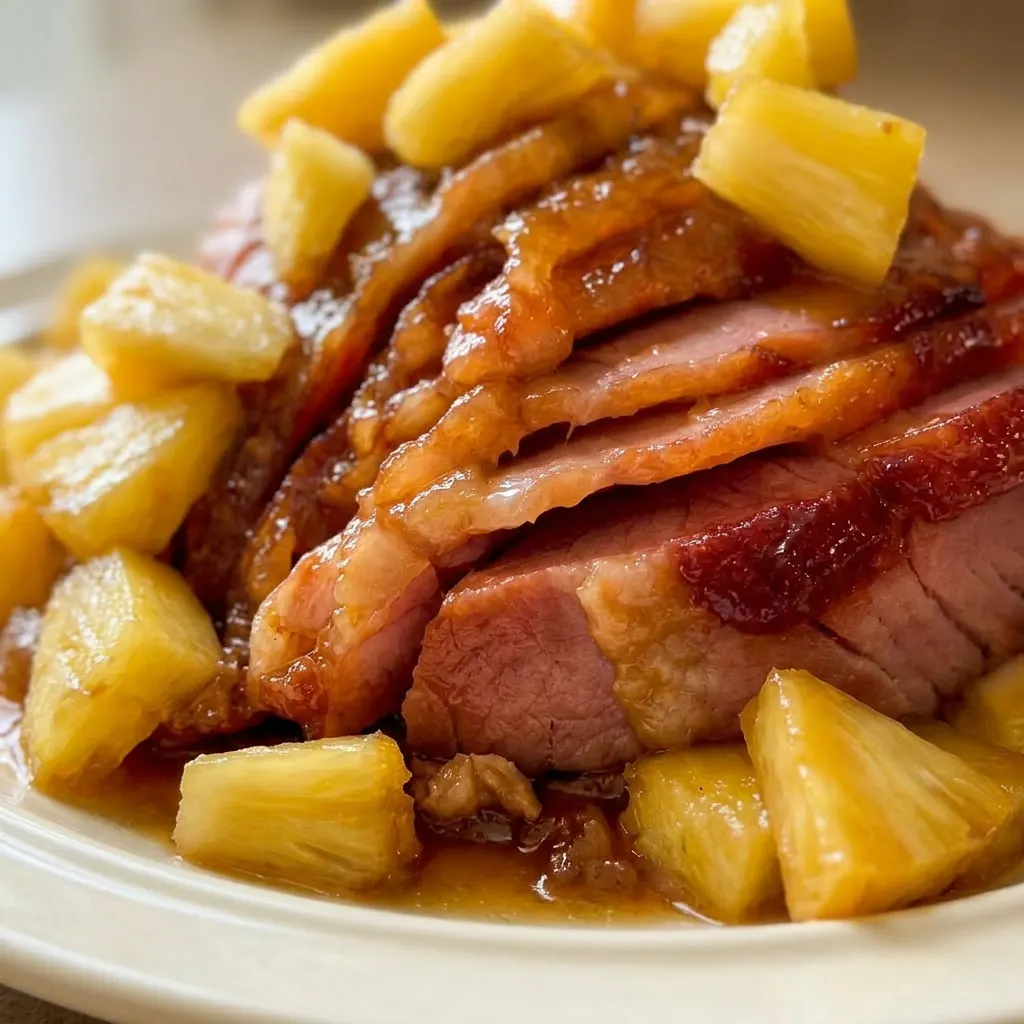
Prep: 15 min · Cook: 3 hr 30 min · Total: 4 hr · Servings: 10 · Calories: 350 kcal
A few things about the ingredients
Brown Sugar: 3.5 cups is a lot, but you can dial it back if you prefer less sweetness.
Ham: Pre-cooked spiral cut saves time and lets glaze seep into every slice.
Pineapple: Use canned chunks with juice; it adds moisture and acidity to balance the sweet.
Honey: Raw natural honey works best, but maple syrup is a fine stand in.
Build the glaze from the bottom up
Layer brown sugar on the bottom
Spread 2 cups of brown sugar evenly across the crock pot bottom. It should form a thick, sandy layer. This will melt into a caramelized crust under the ham, not burn against the pot.
Set the ham on the sugar
Place the spiral-cut ham flat side down on the sugar layer. The ham should sit snugly, not floating. As it heats, juices will seep into the sugar, starting the glaze without you lifting a lid.
Drizzle honey and add pineapple with juice
Drizzle honey over the ham, then pour the undrained pineapple chunks around and on top. The juice should come about halfway up the ham sides. The acidity keeps the sauce from tasting cloying.
Sprinkle remaining sugar on top
Sprinkle the last 1.5 cups of brown sugar over the ham, coating the cut surfaces. Don’t pack it. This top layer melts into the spiral cuts, glazing each slice as the ham reheats.
Cook on low 3.5 to 4 hours
Cover and cook on low, no peeking. After 3.5 hours, test by inserting a fork into the thickest part, it should slide in easily with little resistance. If not, cook another 30 minutes, but stop before the ham shreds.
Let the ham rest before slicing
Turn off the crock pot and let the ham rest, lid on, for 15 minutes. This lets the glaze set slightly so it clings to the meat instead of pooling on the plate. The internal temp should drop a bit.
Crock Pot Brown Sugar Pineapple Ham
Ingredients
- 1 piece Pre-cooked spiral cut ham (bone-in or boneless)
- 3.5 cups Brown Sugar reduce for less sweetness
- 0.5 cups Raw Natural Honey can swap with maple syrup
- 1 can (20 oz) Pineapple Tidbits or Chunks undrained
Instructions
Layer brown sugar:
Cover the crock pot’s bottom with 2 cups of brown sugar.Place ham on sugar:
Set the pre-cooked, spiral-cut ham on top of the sugar layer.Drizzle honey, add pineapple:
Drizzle the honey over the ham, then arrange the undrained pineapple around and over the ham.Sprinkle remaining sugar:
Sprinkle the remaining brown sugar on top of the ham.Cook on low:
Close the lid and cook on low for 3.5 to 4 hours, until the ham is fork-tender.Rest ham before slicing:
Allow the ham to rest for 10-15 minutes before slicing and serving.
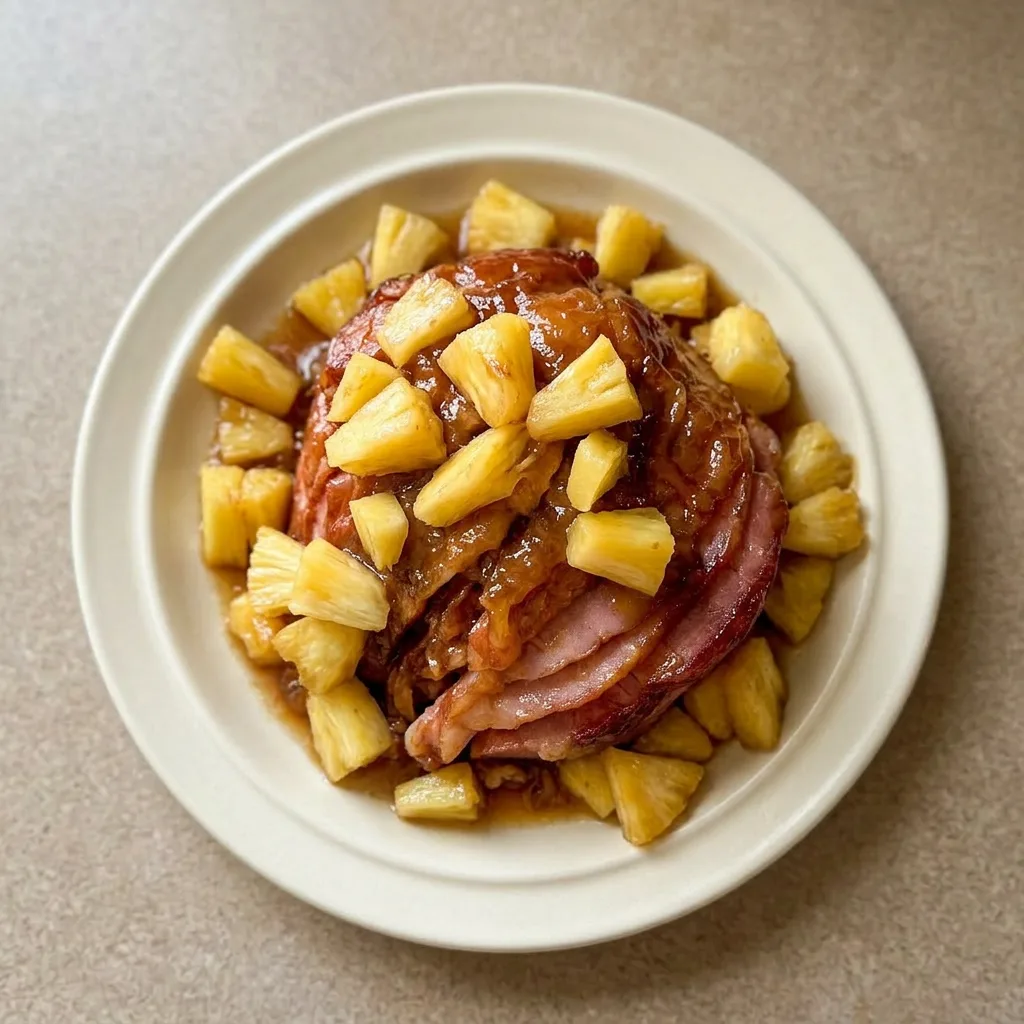
Storage and Serving
For the best texture, serve the ham within 15 minutes of the rest time, while the glaze is still glossy and the meat is hot. Leftover ham keeps in an airtight container with its juices in the fridge for up to 5 days.
The glaze thickens and intensifies over time, making it even better for sandwiches. To reheat, warm slices in a covered skillet over low heat with a splash of pineapple juice or water, or microwave in 30-second bursts. The ham can be frozen for up to 2 months, but the glaze may separate upon thawing, so use frozen leftovers in soups or casseroles rather than serving as is.
The pineapple softens further in storage, so texture changes are minimal; it stays moist and tender.
What to swap in this ham glaze
Brown Sugar: Coconut sugar or maple sugar. Both swap cup-for-cup. Coconut sugar gives a deeper, less sweet caramel note; maple sugar adds a faint woodsy taste.
The glaze won’t be quite as sticky because these sugars have less molasses, but the crust still forms.
Honey: Maple syrup or agave nectar. Use the same amount. Maple syrup adds a distinct smoky-sweet flavor that plays well with ham; agave is neutral and slightly thinner, so the glaze may be a tad runnier but still sets.
Avoid corn syrup, it makes the sauce cloying without the fruity notes.
Pineapple: Canned mango chunks in juice or canned peach halves in juice. Substitute the same volume and liquid.
Mango gives a tropical, less acidic sweetness; peach is milder and rounder. Both will still keep the ham moist.
Do not use fresh fruit, it lacks the canning syrup’s sugar and acidity balance, and the enzymes in fresh pineapple can turn the ham mushy over 4 hours.
Ham: Boneless ham in crockpot. Works fine with the same cooking time, but the glaze won’t seep into as many surfaces since there are no spiral cuts.
Score the surface in a diamond pattern about 1/4 inch deep to help the sugar penetrate. Bone-in ham adds a richer broth; boneless is leaner and slices more uniformly.
Tips
- Before placing the ham in the crock pot, trim the flat side so it sits level on the sugar layer, ensuring maximum contact for even caramelization.
I tried cooking on high once to save time, and the ham came out dry and tough. Low and slow is the only way to keep it juicy.
Frequently Asked Questions
Can I cook this ham on high instead of low?
Not really. Low heat for 3.5 to 4 hours is what gives the ham that fork-tender texture without drying it out. High would rush the glaze caramelization and likely make the outer slices tough before the center warms through.
How do I prevent the ham from drying out?
The undrained pineapple juice and the layer of brown sugar under the ham keep moisture locked in the whole cook. Don’t lift the lid during cooking, steam escapes each time. If you’re worried, check the internal temp with an instant-read; it should hit 140°F after resting.
Can I make this ham ahead of time and reheat it?
Yes, but the glaze will thicken and intensify in the fridge. Store the ham in its juices for up to 5 days, then reheat slices gently in a covered skillet with a splash of pineapple juice or water. The texture stays moist; just don’t nuke it on high or the glaze seizes.
What’s the best way to slice the ham for serving?
Since it’s already spiral-cut, follow the existing cuts, no need to carve against the grain. After the 15-minute rest, the glaze is tacky enough to cling to each slice. Use a sharp knife to separate the slices cleanly, then spoon some of the pan juices over the top.
How is this different from a baked ham with pineapple rings?
This ham braises in its own juices and pineapple liquid, so it comes out moister than a baked ham, which dries out more in the oven’s dry heat. The brown sugar layer under the ham creates a caramelized crust on the bottom that you don’t get with rings on top. The whole thing is hands-off, no basting required.