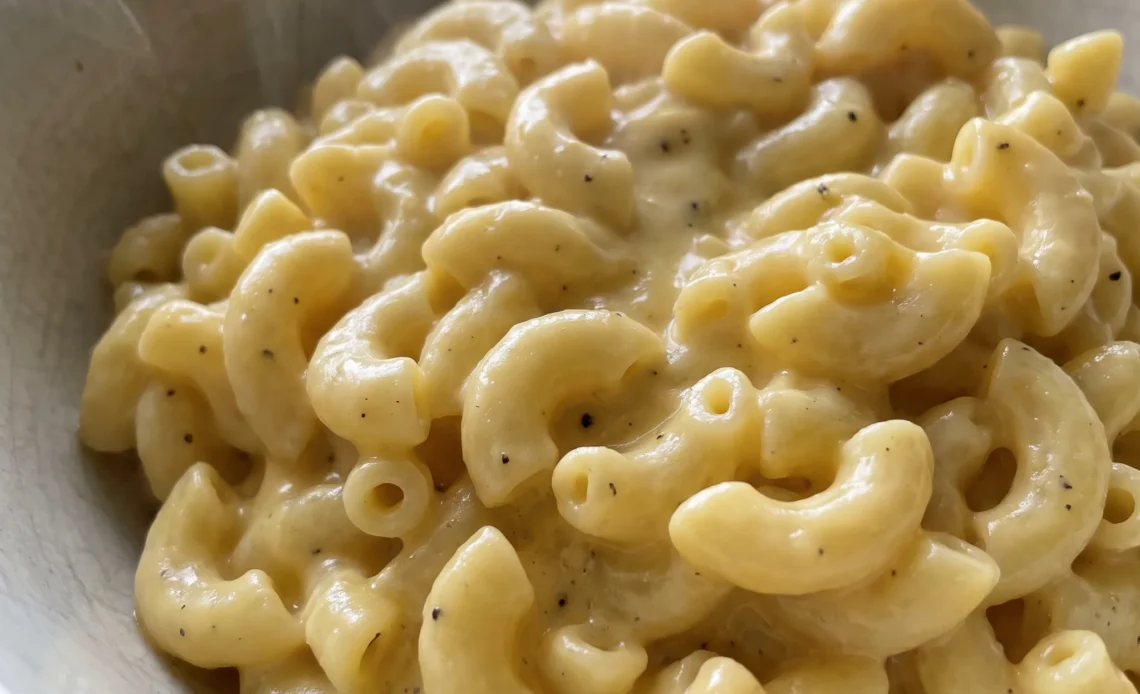
Most stovetop mac and cheese recipes hide a roux or a baking dish behind the scenes, but this one skips both entirely. The whole sauce comes together in the same pot you boiled the pasta in, and the cheese itself does the thickening.
That’s the trick that gets you a glossy, creamy result in the time it takes to boil water and melt a few handfuls of shreds. There’s a narrow window where the sauce is at its best, right off the heat, and catching that moment is what separates a silky bowl from a gluey one. It’s a technique that rewards attention, but not fussing.
If you’ve ever watched a cheese sauce turn greasy or grainy, this method gives you a clear way to read the pot and steer it back. That’s the quiet skill behind a truly rich stovetop mac and cheese.
When cheese is added to hot liquid too rapidly or at too high a temperature, the casein proteins tighten and squeeze out the fat, creating a grainy, curdled texture. The emulsifying salts in the cheese need time and moderate heat to disperse evenly, so gradual addition while stirring allows the sauce to stay smooth and glossy.
A Sauce Built in the Pot
This stovetop method skips the roux entirely and leans on the cheese itself to thicken and stabilize the sauce. Because the cheese is added gradually, each handful melts into the milk before the next goes in. That slow incorporation keeps the fat and liquid from separating, so you end up with a glossy emulsion rather than a grainy puddle.
The payoff is immediate: no time in the oven to dry out or turn the sauce gluey. You fold the pasta in and serve at once, when the sauce is at its most fluid and coats every elbow like a thin, smooth blanket.
By the time it hits the bowl, it’s already starting to tighten slightly, but the texture stays silky because nothing sat around waiting.
Cheddar and Gruyere, Working Together
Sharp cheddar brings the tang, that upfront bite that reads unmistakably as mac and cheese. It’s the flavor anchor, but on its own it can turn greasy or seize when melted. Gruyere steps in with a different temperament.
It melts into a rich, fluid state and adds a subtle nuttiness that rounds out the cheddar’s edge. Together they create a sauce that’s rich but not heavy, and it clings to the pasta without pooling at the bottom of the pot. You notice it in the first bite: the cheddar hits your tongue, then the Gruyere smooths it out, leaving a balanced finish that doesn’t taste one-note.
Powders for Depth, Not Thickness
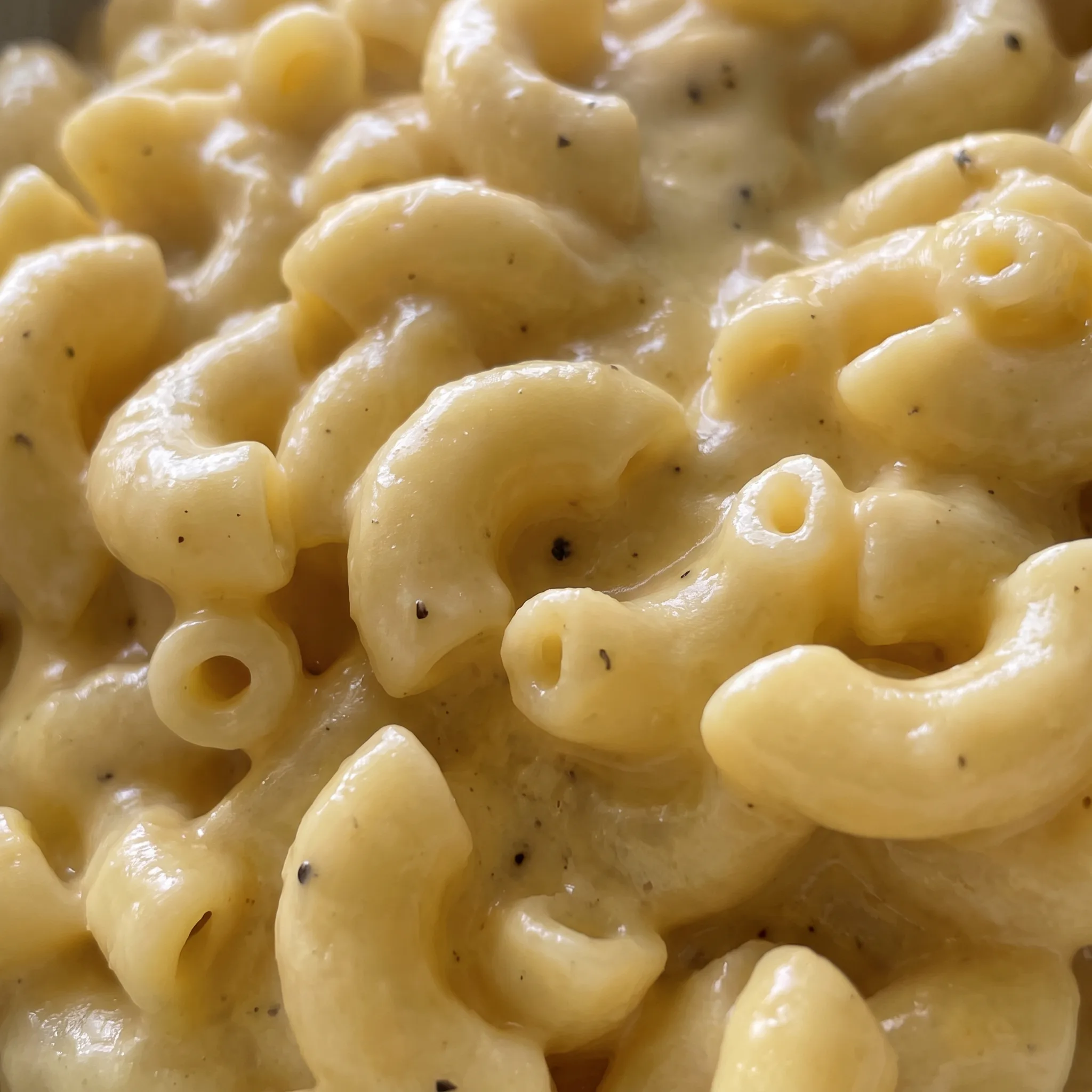
A white sauce made with flour would need butter and a roux to carry the seasonings, but this milk-based sauce gets its flavor from two pantry powders. Garlic powder adds a savory undertone, while mustard powder contributes a faint warmth and, more importantly, helps the cheese stay emulsified. Because they’re whisked into the warm milk before any cheese goes in, the spices disperse evenly, so every spoonful tastes the same.
You don’t notice them as distinct flavors; they just make the cheese taste more like itself, deeper and a little sharper, without adding fat or flour to muddle the texture. That’s the kind of seasoning that works quietly, letting the cheese be the star.
What to Look For at the Store
Sharp cheddar: Buy a block and shred it yourself; pre-shredded has anti-caking agents that can turn the sauce grainy.
Gruyere: Skip the pre-shredded bag here too; freshly shredded Gruyere melts smoother and won’t clump.
Whole milk: Don’t reach for skim or 2%; the fat in whole milk keeps the sauce stable and silky.
Elbow macaroni: Any short pasta works, but elbows have the right shape to catch the sauce in every bite.
Reading the Sauce as It Comes Together
The Point Where the Milk Must Stay Shy of a Simmer
Over medium-low heat, the milk should feel hot to the touch but never show bubbles at the edges. If it simmers, the sauce risks breaking later, turning greasy instead of glossy. You can rescue it by pulling the pot off the heat for a minute to let it settle, then proceeding more gently.
Watch for that first wisp of steam and back off.
When Each Handful of Cheese Is Truly Absorbed
Drop cheese in small handfuls and stir until the sauce turns smooth before adding more. If you rush, you’ll see tiny specks of unmelted cheese and a slick surface, signs the emulsion is struggling. Stop adding, keep stirring over low heat, and it often recovers.
The sauce should look like thick, glossy custard, not oily or grainy.
How Thick Is Thick Enough Before the Pasta Goes In
The sauce will look looser than you want, it should coat the back of a spoon and leave a clear trail when you run a finger through it. That’s the target, because the pasta will absorb some liquid and tighten it further.
If it’s too thin, it won’t cling; if it’s too thick, the final dish turns heavy. Adjust by adding a splash of milk if needed.
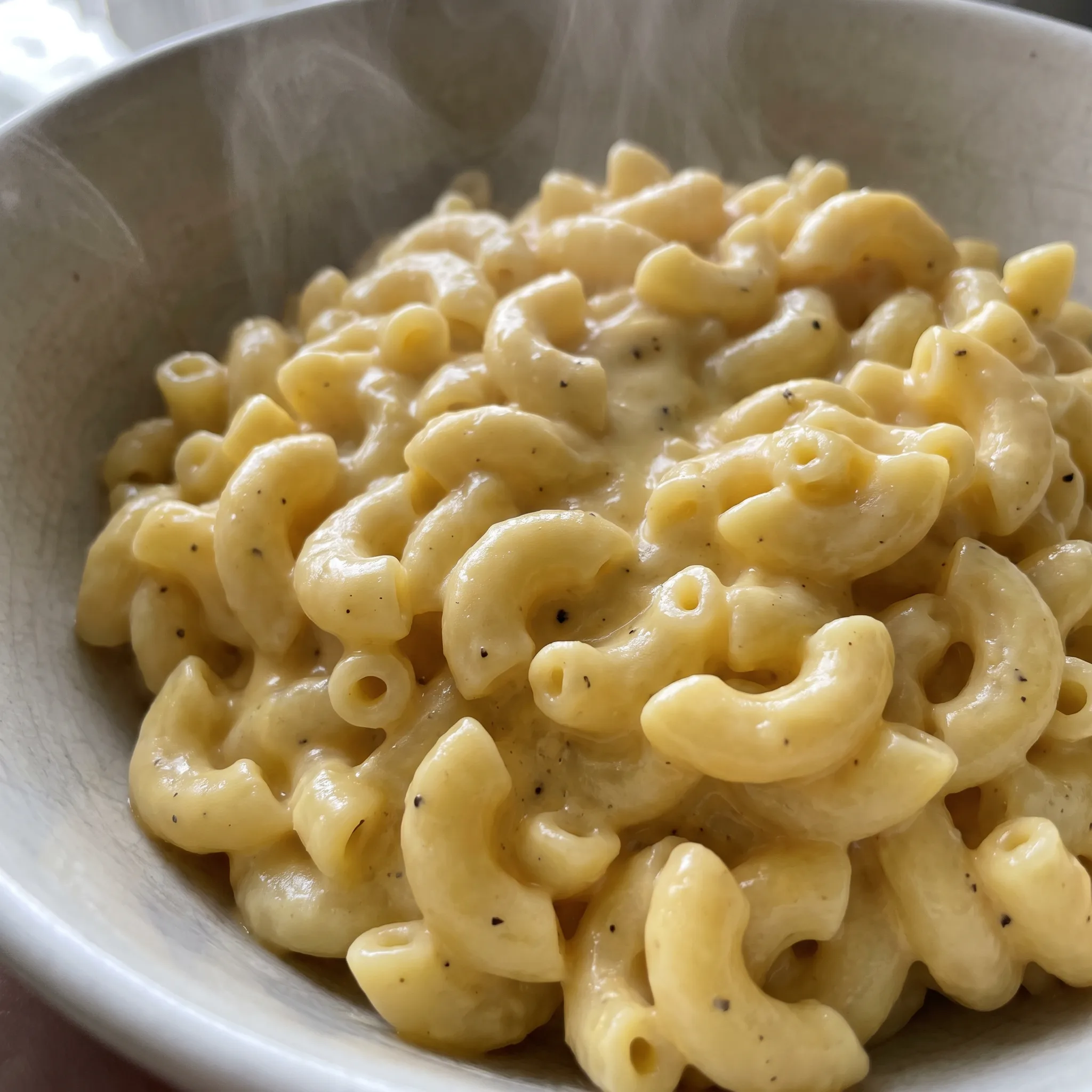
Creamy Stovetop Mac and Cheese with Cheddar and Gruyere
Ingredients
Method
- Boil the macaroni as directed on the package until al dente, then drain and reserve.
- In the same pot over medium-low heat, melt the butter and add the milk, whisking until heated through but not simmering.
- Whisk in the garlic powder, mustard powder, salt, and pepper until well combined.
- Gradually add the shredded cheeses in small handfuls, stirring continuously until each addition is completely melted and the sauce is smooth.
- Return the cooked pasta to the pot, fold it into the sauce until every piece is coated, and serve right away.
Swap the Cheese, Change the Sauce
Sharp cheddar: Aged Gouda or extra-sharp white cheddar, same amount. Aged Gouda keeps the tang but adds a smoky, caramel edge.
Extra-sharp white cheddar stays closest to the original, though the color shifts paler. Either melts fine if you shred it yourself.
Gruyere: Fontina, young Gouda, or Emmental, same amount. Fontina melts just as smoothly and brings a buttery richness. Young Gouda is nutty and mild.
Emmental is the most neutral, letting the cheddar dominate. The sauce stays glossy as long as you use a cheese that melts well.
Whole milk: 2% milk, only if you must, or half-and-half diluted with water. Whole milk’s fat is what keeps the sauce from turning grainy. Skim or 2% will still make a sauce, but it’s more likely to separate and feel thinner.
Half-and-half works; dilute it with a splash of water so the sauce doesn’t get too heavy.
Elbow macaroni: Cavatappi, shells, or fusilli, same amount by weight. Any short pasta with ridges or curves will catch the sauce just as well. Avoid long strands or very small shapes, they won’t hold the sauce the same way.
Storing and Reheating Leftovers
This mac and cheese is at its peak right off the stove, when the sauce is fluid and coats each elbow. As it sits, the sauce thickens because the starch from the pasta continues to absorb liquid.
For the best texture, serve within 20 minutes of folding the pasta in. Leftovers will keep in a sealed container in the fridge for about 3 days. The sauce will tighten further as it chills, turning almost pasty.
To reheat, scoop out what you’ll eat, add a splash of milk per serving, and warm gently on the stove or in the microwave, stirring often. The milk loosens the sauce back to a creamy state.
Freezing is not ideal: the emulsion can separate and the pasta turns mushy. If you must freeze, undercook the pasta slightly and freeze only the sauce, then add fresh cooked pasta when reheating.
Tips
- Grate the cheese on the large holes of a box grater, not the fine side. Larger shreds melt more evenly and are less likely to clump when added to the warm milk, keeping the sauce smooth.
- If the sauce starts to look grainy or oily, stop adding cheese and whisk in a teaspoon of lemon juice. The acid helps re-stabilize the emulsion, rescuing the sauce without altering the flavor noticeably.
Frequently Asked Questions
Can I make this mac and cheese ahead of time and reheat it?
Yes, but it’s best within the first 20 minutes off the stove. For leftovers, refrigerate in a sealed container for up to 3 days; when reheating, add a splash of milk per serving and warm gently, stirring often.
Freezing is not recommended, the sauce can separate and the pasta turns mushy. If you must freeze, undercook the pasta slightly and freeze only the sauce, then add fresh cooked pasta when reheating.
Why is my sauce grainy or separated?
Most likely the milk got too hot, if it simmered, the fat can separate. Keep the heat medium-low and pull the pot off if you see bubbles. Another culprit: adding cheese too fast.
Each handful must melt fully before the next goes in; if you see specks, stop adding and stir over low heat to recover. Pre-shredded cheese also causes graininess, so shred from a block.
How do I keep the mac and cheese creamy if it thickens as it sits?
The sauce thickens as pasta absorbs liquid, so serve right away for the creamiest texture. For leftovers, add a splash of milk when reheating, that loosens the sauce back to a silky state.
If it’s too thick straight after folding, a splash of milk in the pot can adjust it. Don’t over-stir; that can make it gluey.
