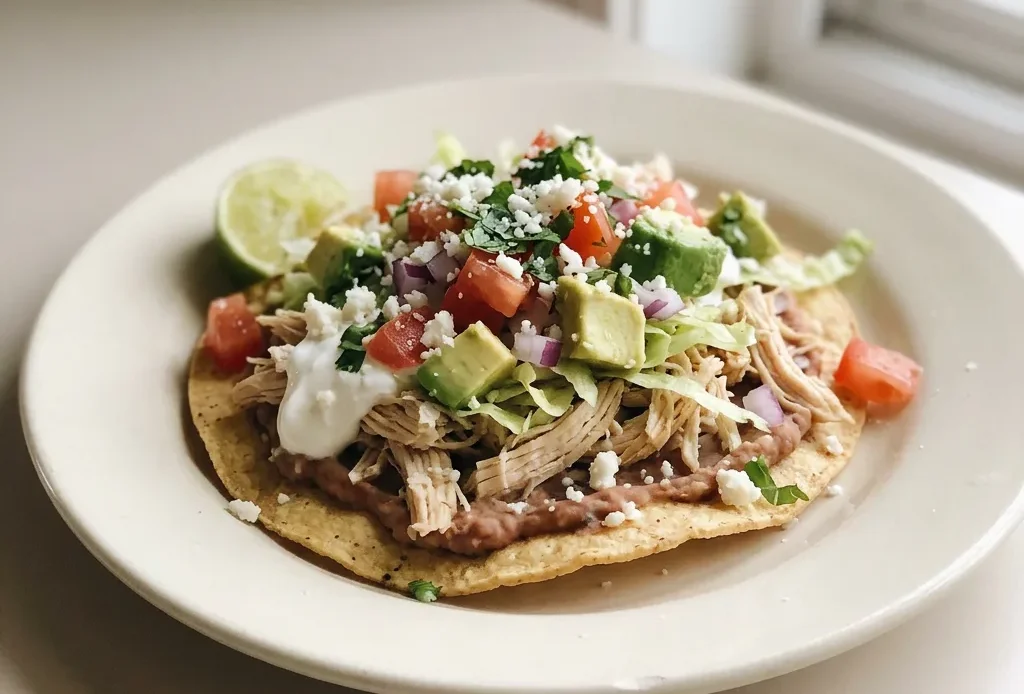
Most people pile cold fillings onto tostada shells, then wonder why the crunch vanishes before they take a bite. The fix is dead simple: warm the beans and chicken before they ever touch the shell. That single move keeps the base crackling while every other ingredient stays cool and distinct.
These chicken tostadas are about getting the temperature and order right, hot stuff hits the shell first, cold stuff goes on top, and nothing gets a chance to steam or weep. Done that way, you get a weeknight dinner that actually delivers on the promise of a crisp, layered bite.
Warm the beans and chicken before layering
You want the beans and chicken hot when they go on the shell, but you don’t want to bake or broil the assembled tostada. That extra heat turns the shell soft. Now I always warm the beans and chicken separately before layering, so the tostada stays crisp.
Cold fillings would need reheating, which steams the shell. By warming first, you get a hot bite on a crunchy base, and nothing changes texture after assembly.
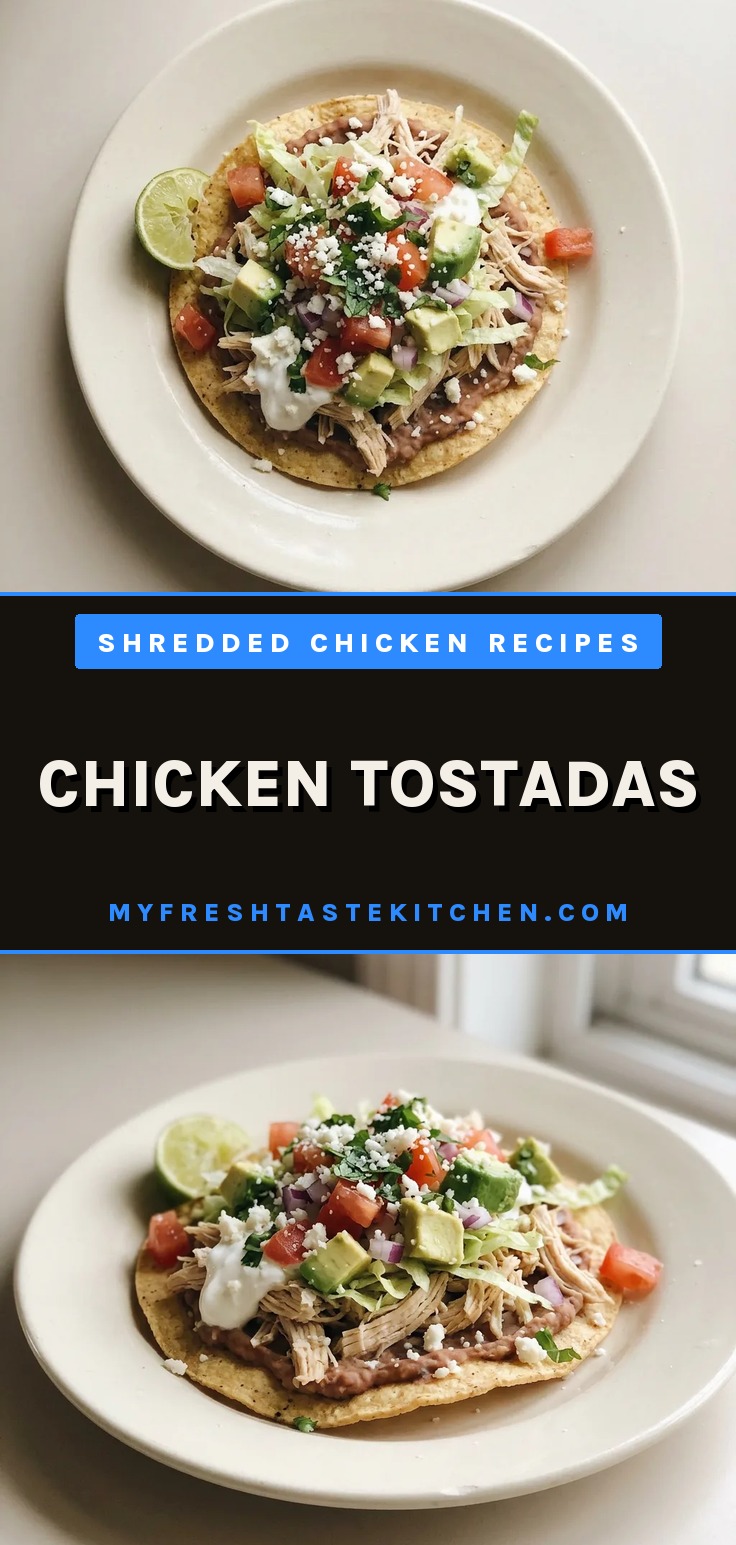
Layer ingredients in the right order for crunch
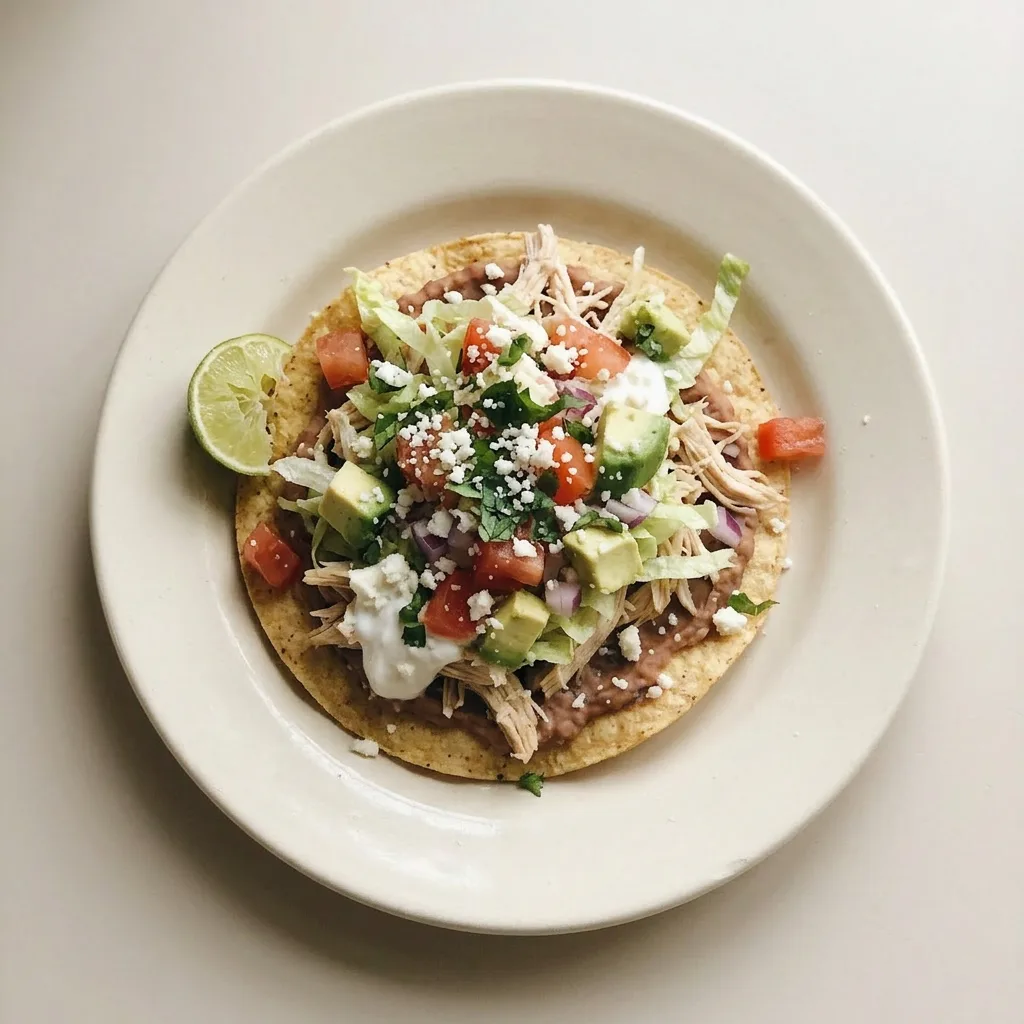
Start with beans spread over the tostada. That thin smear acts like glue, keeping chicken from sliding off.
Chicken goes next, then cotija cheese. Lettuce and tomatoes come after the cheese, so the cheese buffers them from the chicken’s warmth.
That way lettuce stays crisp, not wilted. Avocado and sour cream finish the stack, added last to stay fresh and cool.
Each layer has a job: beans anchor, cheese protects, toppings stay intact. The result is a tostada you can pick up without it falling apart.
Why cotija fits chicken tostadas better than other cheeses
Cotija is dry and crumbly, so it doesn’t melt into the toppings. It keeps its shape, adding salty nuggets that contrast creamy beans and avocado. Because it doesn’t melt, it also doesn’t release moisture that could soften the shell.
Queso fresco works the same way, similar texture and tang. The point is a cheese that stays separate, not one that goes gooey.
On a crisp tostada, that saltiness and crumble land right where you need them.
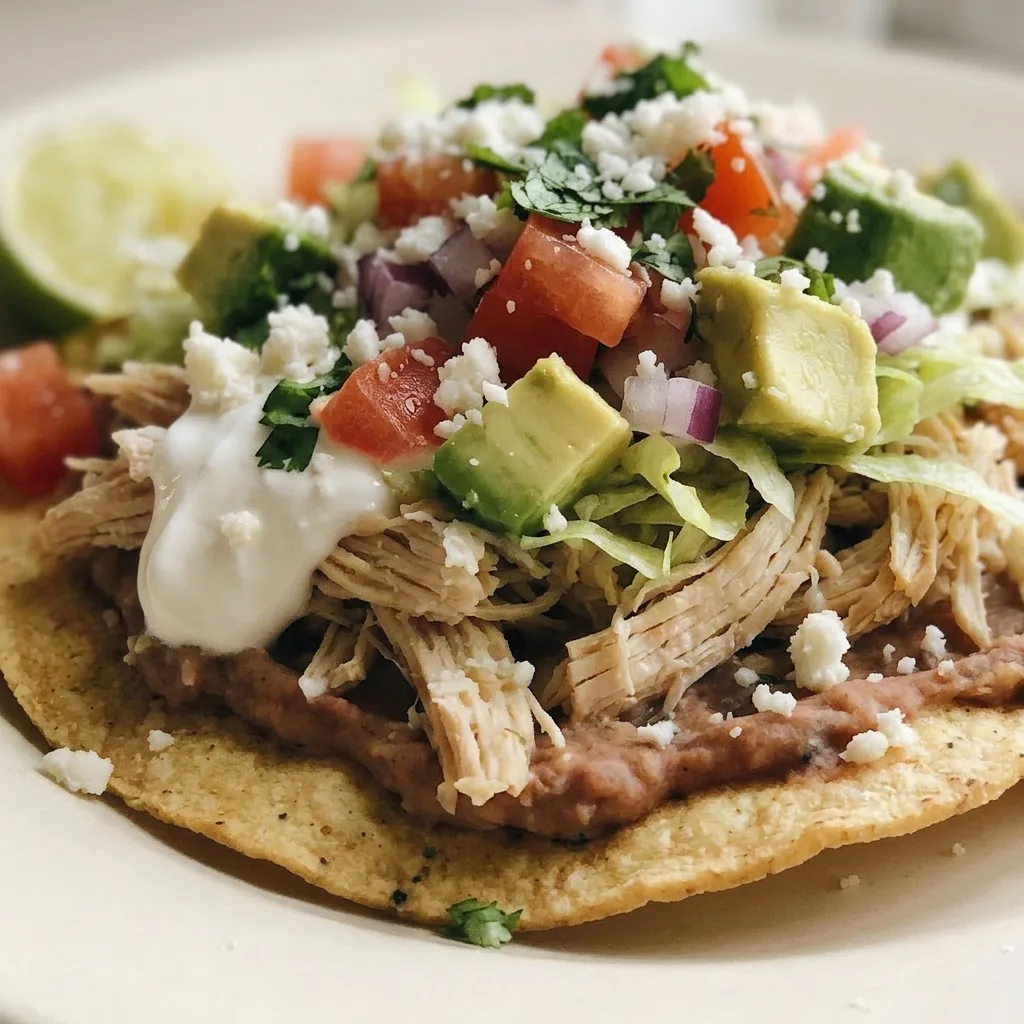
Prep: 20 min · Cook: 5 min · Total: 25 min · Servings: 6 · Calories: 460 kcal
The ingredients that matter for chicken tostadas
tostada shells: Buy large, sturdy ones; thin ones break under the toppings.
refried beans: Canned is fine; warm them until bubbling so they spread easily.
shredded chicken: Use leftover roasted or poached chicken, shredded while still warm.
cotija cheese: Look for dry, crumbly cotija, not the soft wet kind that melts.
avocados: Choose firm-ripe avocados that yield slightly when pressed, no soft spots.
sour cream: Full fat sour cream or Mexican crema; low fat breaks and waters down.
Assemble tostadas in two minutes flat
Warm beans and chicken
Heat refried beans and shredded chicken separately until steaming, about 2 to 3 minutes. If the beans bubble at the edges and the chicken releases visible steam, they’re ready. Cold fillings soften the shell; hot ones keep it crisp.
Spread beans on shells
Spoon a thin, even layer of warm beans onto each tostada shell. You want a coating that sticks to the shell, not a thick slab. Too much beans, and the shell gets soggy underneath.
Add chicken and cheese
Pile hot shredded chicken onto the beans, then scatter cotija cheese over the chicken. The cheese buffers the chicken’s heat from the lettuce above. If cheese clumps, it’s fine, just break it up with your fingers.
Top with lettuce, tomatoes, onion
Add shredded lettuce, diced tomatoes, and red onion. Lettuce should feel cool and crisp to the touch. If it’s warm, the chicken heat has softened it, next time let chicken rest a minute before layering.
Finish with avocado, sour cream, lime
Dot with diced avocado and a dollop of sour cream. Squeeze lime over everything and add flaky salt. Avocado should be just barely yielding when pressed, overripe ones turn mushy.
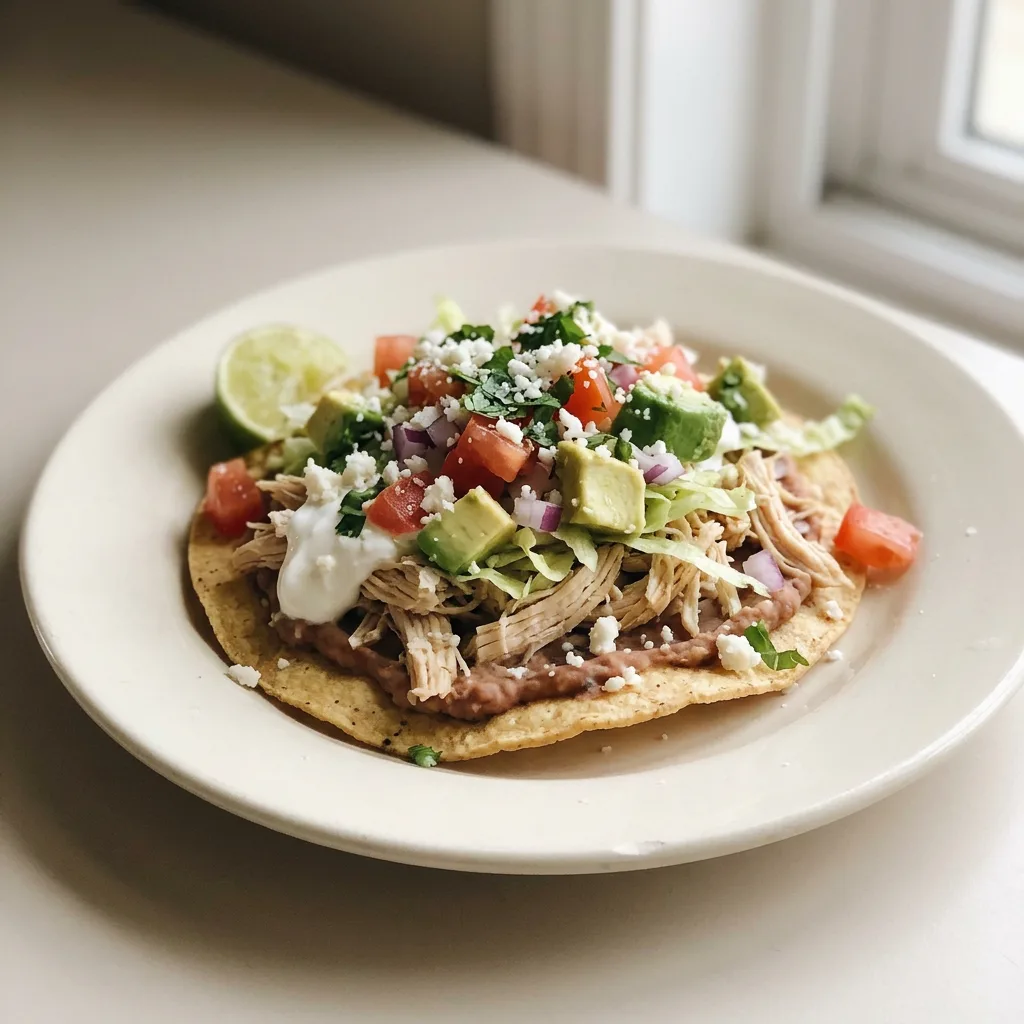
Chicken Tostadas
Ingredients
Method
Warm beans and chicken:
Warm refried beans and shredded chicken in a microwave or on a stovetop for 2-3 minutes until completely hot.Assemble tostada layers:
Layer each tostada shell with a thin spread of refried beans. Add shredded chicken, cotija cheese, lettuce, tomatoes, red onion, cilantro, avocados, and a dollop of sour cream.Add garnishes and serve:
Accompany each tostada with a lime wedge, a pinch of flaky sea salt, and optional hot sauce.Eat immediately:
Consume right away.
Swap cotija and sour cream, leave the shells alone
cotija cheese: queso fresco or feta. Queso fresco is nearly identical, crumbly, salty, stays intact.
Feta is brinier and softer; it crumbles less neatly and can turn a bit creamy on warm chicken. Either works, but the salt level shifts.
sour cream: plain Greek yogurt (full-fat). Full-fat Greek yogurt has the same tang and thickness.
Nonfat yogurt breaks and waters down, same as low-fat sour cream. Start with 1/2 cup, adjust for tang.
tostada shells: baked corn tortillas. Brush corn tortillas with oil and bake at 375°F until crisp and golden, about 8 to 10 minutes per side. They’re thinner than tostada shells, so layer beans generously to buffer moisture.
They break easier when bitten.
chicken: shredded jackfruit (canned, drained). Jackfruit mimics shredded meat texture but lacks chicken’s savory depth.
Season it well with cumin, chili powder, and salt before warming. It stays moist, so don’t pile it thick or the shell softens underneath.
Tips
- Test avocado ripeness by pressing the stem end; if it yields slightly, it’s ready. Avoid squeezing the body, which bruises the flesh.
- If your avocados are too firm, speed ripening by placing them in a paper bag with a banana for 24 hours before serving.
Storage and Serving
Assembled tostadas lose their crunch within minutes, so build them only when you’re ready to eat. The serving window is immediate: every component is at its best right after assembly, with hot chicken and beans on a crisp shell.
For leftovers, store each part separately. Refrigerate shredded chicken and refried beans in airtight containers for up to 3 days; the beans will thicken, so stir in a splash of water when reheating. Dice avocado and tomato just before serving to keep them from browning.
Keep tostada shells in a sealed bag at room temperature; they stay crisp for a week. Sour cream, cotija, and lettuce hold in the fridge for a few days, but lettuce will wilt. To reclaim some crunch, toast leftover shells in a dry skillet, then reassemble.
Freezing is not recommended for this dish, as dairy and fresh vegetables break down.
Frequently Asked Questions
Can I make chicken tostadas ahead of time?
Not assembled. The serving window is immediate, crunch fades within minutes.
Store each component separately: chicken and beans in the fridge for up to 3 days, shells in a sealed bag at room temp. Dice avocado and tomato just before serving.
How do I keep the tostada shells from breaking?
Use large, sturdy bought shells; thin ones snap under toppings. Spread beans thinly, too thick weighs the shell down. Let the warm chicken rest a minute before piling on so the shell doesn’t steam-soften.
What’s the difference between a tostada and a taco?
A tostada uses a flat, crisp corn shell that’s open-faced, not folded. The layering order matters: beans on the shell act as glue, keeping toppings from sliding off. You eat it like an open sandwich, not a folded taco.
How do I prevent the tostada from getting soggy?
Warm the beans and chicken separately before layering, cold fillings would need reheating that steams the shell. Add lettuce after the cheese, which buffers the chicken’s heat. Assemble only when ready to eat; leftovers lose crunch.