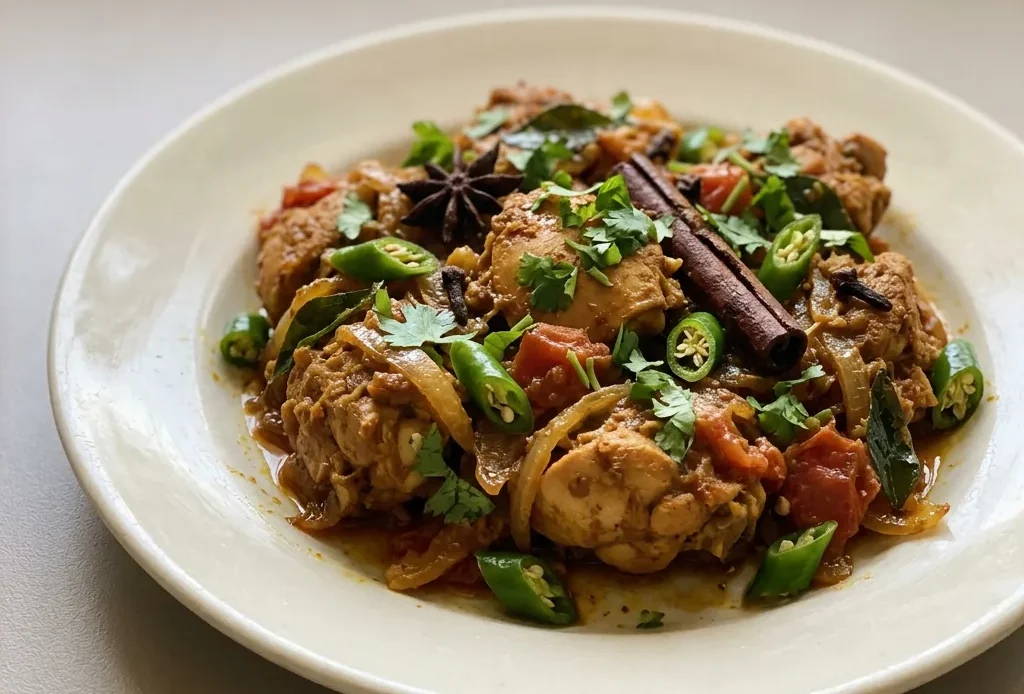
The trick to chicken peratal is treating fennel like two different spices, not one. Whole seeds bloom in hot oil for a sweet-licorice base, then ground powder goes in later with the curry powders so it stays fresh and persistent. Miss that split, and the dish loses its signature balance, too much bitterness from burnt seeds, or a flat, one-note sweetness.
The double browning of chicken and onions separately is just as critical: it builds a thick, clingy gravy without cornstarch or cream, just caramelized fond and natural pectin from the tomatoes. This is a dish that rewards patience with technique, not complexity of ingredients.
I once ended up with a soupy chicken curry that looked more like broth than gravy, and the flavors were all washed out.
Whole fennel seeds and fennel powder
Fennel seeds go into the hot oil first, whole. You can smell their sweet, licorice-like essential oils release almost immediately.
That aroma is the base for the whole dish. The seeds themselves soften a little and add a subtle chew. Fennel powder comes later, stirred into the spice mix.
It doesn’t get the same direct heat, so its flavor stays fresher and more persistent. If you added both at the same time, the seeds would taste burnt and the powder would lose its nuance.
This dual approach gives you a rounded sweetness that balances the chili and curry powders without turning bitter.
Separate browning for layered flavor
You brown the chicken first. Those browned bits stuck to the pan, that’s concentrated flavor that will dissolve into the gravy. Then you brown the onions separately until they’re golden.
If you did everything in one pot, the onions would steam instead of caramelize, and the chicken would give off too much moisture, steaming itself rather than browning. The separate browning means you control the fond, the sweetness of the onions, and the chicken’s texture. The chicken stays juicy because it’s only seared, not stewed from raw.
The final gravy picks up all those caramelized notes you otherwise wouldn’t get.
Blooming whole spices in oil
Cinnamon, star anise, cloves, cardamom, these go into the oil after you’ve poured off the excess. The heat extracts their volatile oils fast. Two minutes is enough: you’ll smell them becoming fragrant, but before they darken.
If you added them later in the cooking, they’d taste raw or musty. These spices are strong; you want them to perfume the oil, not dominate the dish. A brief bloom gives a warm, aromatic background that supports the curry powders without shouting over them.
Overdo it, and you get bitterness. Underdo it, and the dish lacks depth.
Gravy thickened by tomatoes and onions alone
Diced tomatoes release their juices as they cook down. That liquid contains natural pectin, which thickens. The sliced onions break down too, adding starch and body.
No cornstarch or cream needed. You simmer until the gravy clings to the spoon, now I let the tomatoes break down completely and simmer uncovered until the gravy clings to the spoon, trusting the natural pectin and onion starch instead of adding extra water.
The sugar isn’t for sweetness alone; it balances the tomatoes’ acidity and helps the onions caramelize further. The result is a coating, not a soup, with a clean tomato-onion flavor that carries the spices.
For indian chicken recipes, this method gives a satisfyingly rich gravy without heaviness.
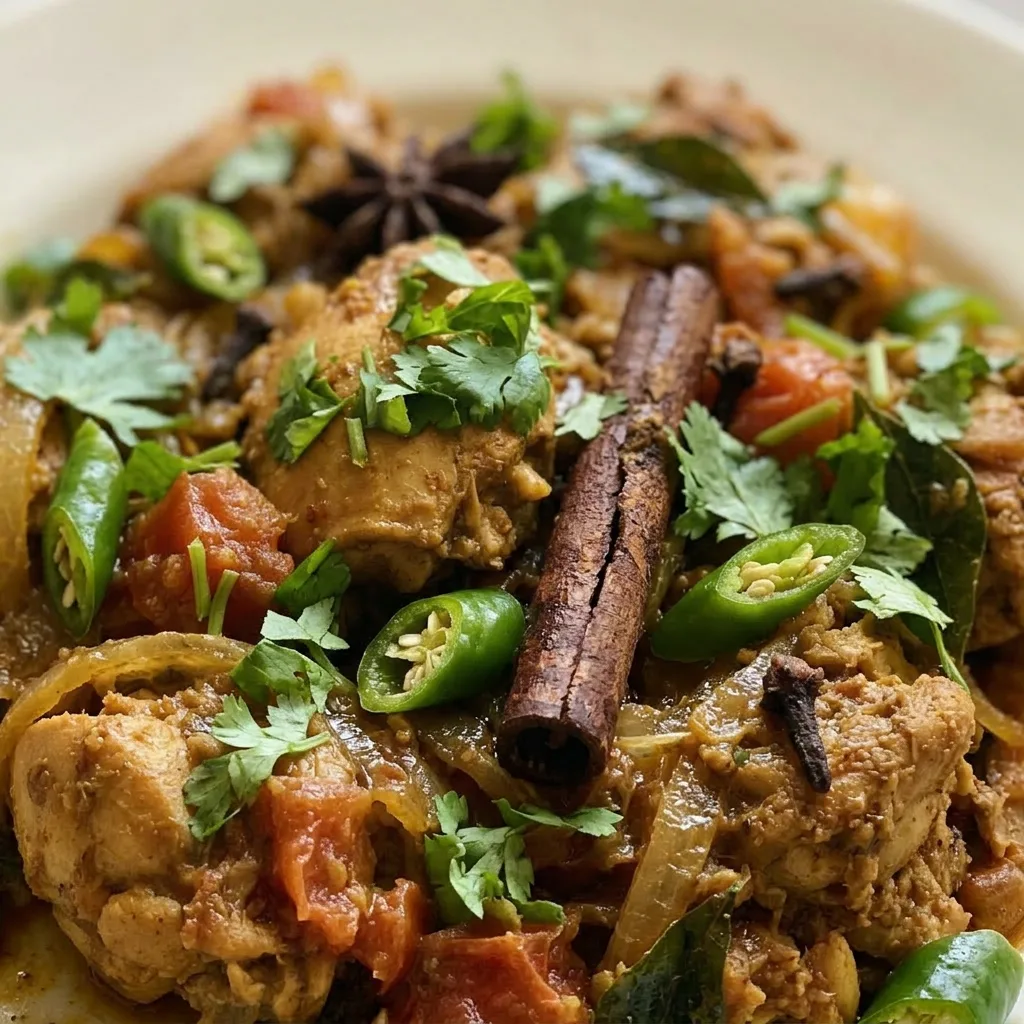
Prep: 20 min · Cook: 30 min · Total: 50 min · Servings: 4 · Calories: 670 kcal
What to look for in this spice list
Chicken: Use bone-in pieces for more flavor; the bones keep the meat moist during simmering.
Star anise and cinnamon stick: Buy whole, not ground. Whole spices bloom in oil without burning and are easy to fish out later.
Curry leaves: Fresh leaves have a distinct citrusy aroma. If using dried, double the quantity and crush them slightly.
Fennel seeds and fennel powder: Buy whole seeds for blooming and ground powder separately. Pre-ground blends lose potency fast.
Green chilies: Thai or serrano chilies work. Slice them on the bias so they cook quickly but stay crunchy.
Build the gravy in stages for layered flavor
Marinate the chicken
Rub chicken with turmeric and salt. Let it sit at least 30 minutes, the meat will look pale yellow and feel tacky. That’s the salt drawing out moisture, which helps browning later.
Brown the chicken
Sear the chicken in hot oil until lightly browned, about 3 minutes per side. You should see brown bits forming on the pan bottom, that’s flavor for the gravy. Remove chicken and set aside.
Brown the onions
In the same oil, cook sliced onions until deep golden, about 10 minutes. Stir often; they should smell sweet, not burnt. Brown onions add sweetness and color to the final gravy.
Remove and set aside.
Bloom the whole spices
Pour off excess oil, leaving about 1/4 cup. Add cinnamon, star anise, cloves, cardamom, fennel seeds, and curry leaves.
Sauté on low for 2 minutes, you’ll smell the spices becoming fragrant. Stop before they darken, or they’ll turn bitter.
Cook the aromatics and tomatoes
Add ginger, garlic, and diced tomatoes. Sauté for 5 minutes until tomatoes soften and release juice.
The mixture should look pulpy and smell sharp-sweet. This base will carry the powders.
Return chicken and spices
Add back the chicken and onions. Stir in turmeric, chili, curry, coriander, fennel powders, sugar, and 1/4 cup water.
Mix until everything is coated, the paste should be thick and fragrant. No raw spice smell should remain.
Simmer until gravy thickens
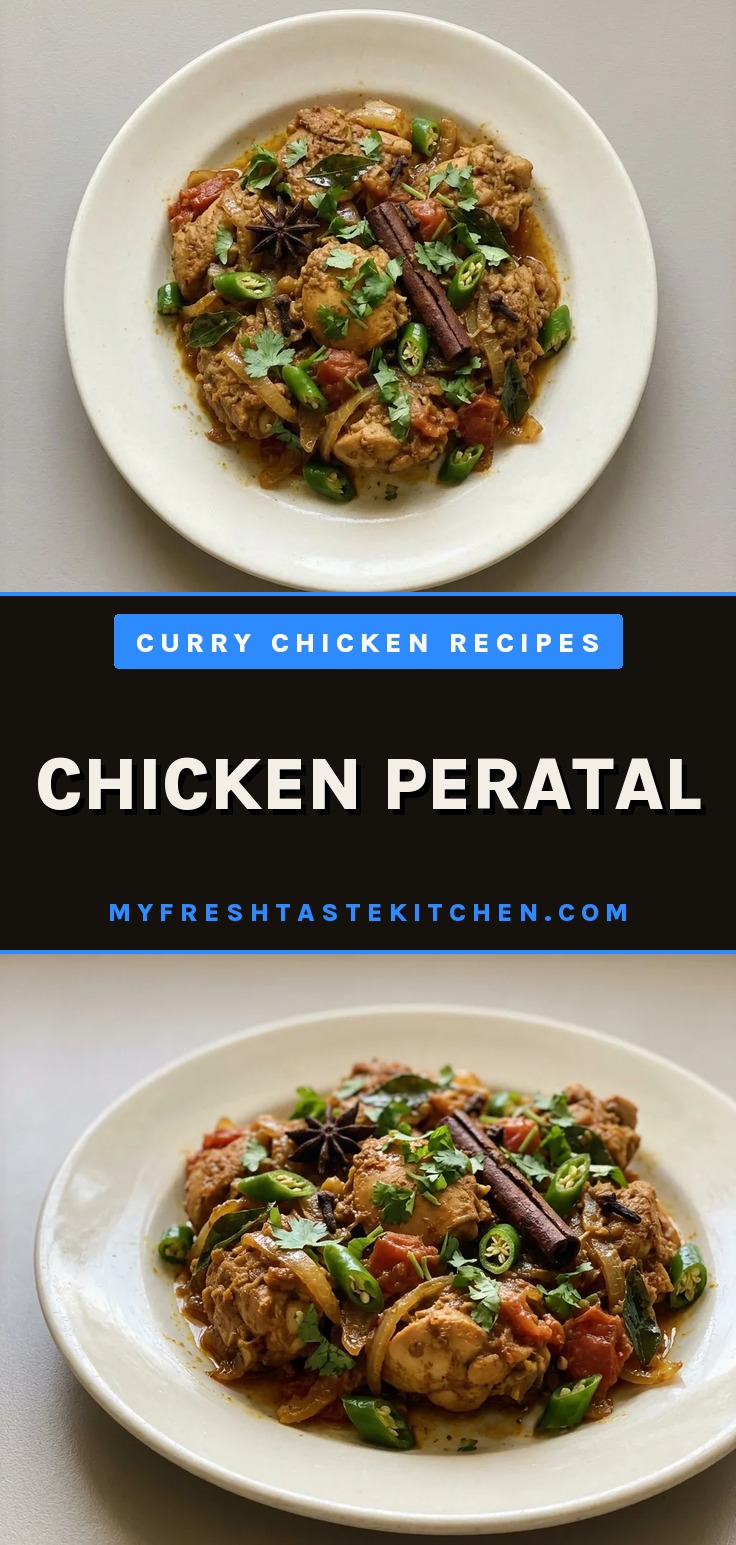
Cook on low heat for 20 minutes, stirring occasionally. The gravy will reduce and cling to the chicken, it should coat the back of a spoon, not run off. If it looks too watery, uncover and cook a few minutes more.
Finish with green chilies and cilantro
Add sliced green chilies and half the cilantro. Stir for 1 minute, the chilies should still be bright green and crunchy. The fresh heat and herb brightness contrast the rich gravy.
Chicken Peratal – Indian Dry Curry
Ingredients
- 2.2 lbs (1 kg) chicken, cut into medium pieces
- 1 tsp turmeric powder
- 2 tsp salt
- 1 cinnamon stick
- 2 star anise
- 4 cloves
- 4 cardamom pods
- 2 tsp fennel seeds
- 1 stalk curry leaves
- 1 inch ginger, minced
- 6 cloves garlic, minced
- 2 onions, sliced
- 2 medium tomatoes, diced
- 1 tsp turmeric powder
- 1 tbsp chili powder
- 2 tbsp curry powder
- 1 tbsp coriander powder
- 1 tbsp fennel powder
- 2 tsp sugar
- 1/4 cup water
- 2 green chilies, sliced on the bias into short sections
- 2 stalks cilantro, chopped
Instructions
Marinate Chicken:
Combine chicken with 1 tsp turmeric powder and 2 tsp salt; marinate for at least 30 minutes or up to half a day.Fry Chicken:
Heat oil in a pan; fry the marinated chicken until lightly browned. Remove and set aside.Fry Onions:
In the same oil, fry the sliced onions until golden brown. Remove and set aside.Remove Excess Oil:
Pour off excess oil, leaving about 1/4 cup in the pan.Sauté Spices:
Add cinnamon stick, star anise, cloves, cardamom pods, fennel seeds, and curry leaves. Sauté over low heat for 2 minutes.Sauté Aromatics:
Add ginger, garlic, and diced tomatoes. Sauté for 5 minutes.Combine Ingredients:
Return the chicken and onions to the pan. Add 1 tsp turmeric powder, chili powder, curry powder, coriander powder, fennel powder, sugar, and water. Mix well.Simmer Gravy:
Simmer over low heat for 20 minutes or until the gravy thickens.Add Chilies and Cilantro:
Add green chilies and half the cilantro. Stir.Garnish and Serve:
Dish out and garnish with remaining cilantro. Serve.
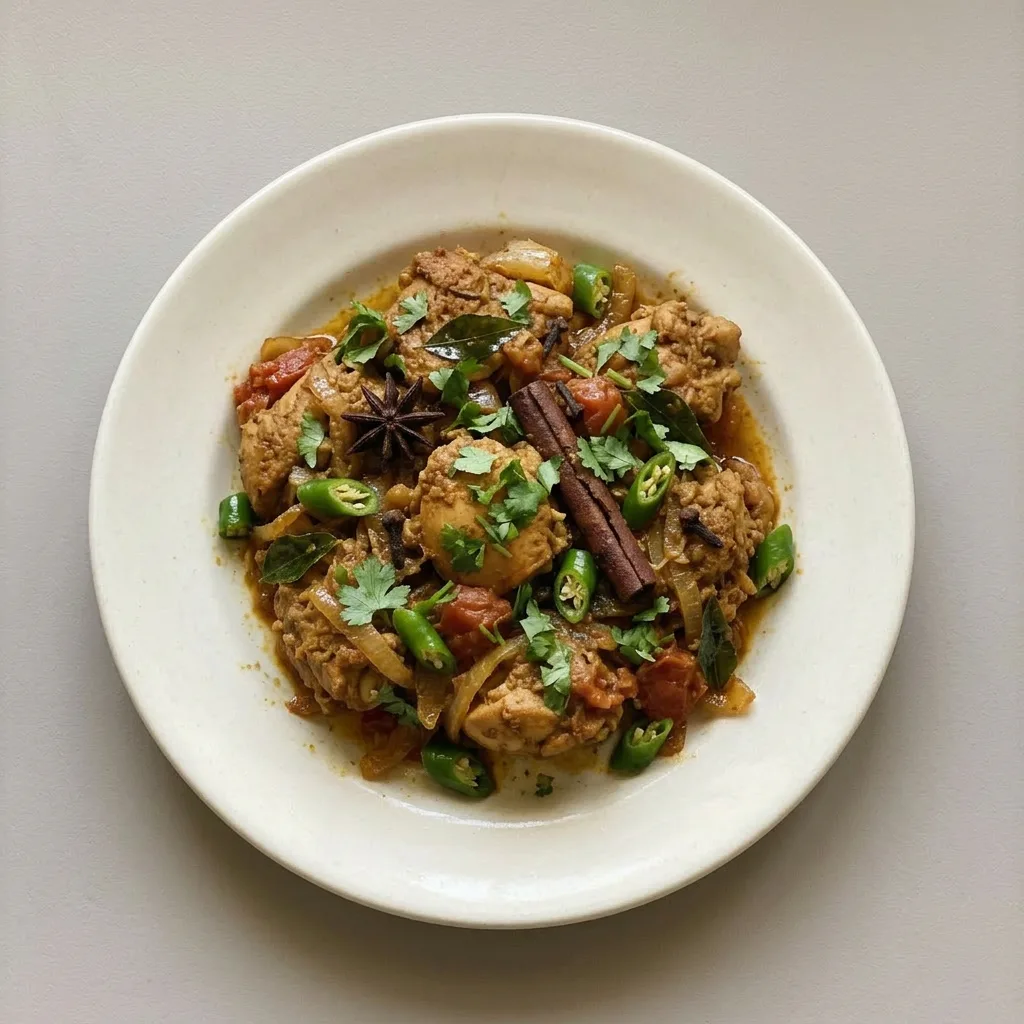
Storage and Serving
Chicken peratal thickens as it cools. Refrigerate leftovers in a sealed container for up to 3 days; the gravy will set into a dense coating. Reheat gently in a pan over low heat, stirring often and adding a splash of water if the gravy looks too tight.
Avoid the microwave, which can toughen the chicken and separate the sauce. For the best texture, serve within an hour of finishing: the green chilies stay bright and crunchy, and the cilantro stays fresh. If making ahead, stop after simmering, cool, and refrigerate.
Add the green chilies and fresh cilantro only after reheating, just before serving. Freezing is not recommended: the chicken turns dry and fibrous, and the gravy’s onion-tomato base loses its smoothness.
Tips
- Before using curry leaves, crush one leaf and smell it. If it has no distinct citrusy aroma, the leaves are stale and won’t contribute to the dish. Fresh leaves should release a strong, lemony scent when crushed.
What you can swap (and what you shouldn’t) in chicken peratal
Chicken: Bone-in goat or lamb, cut into 2-inch pieces. Goat and lamb have a stronger, gamier flavor that stands up to the double fennel.
They need the same marination and browning steps, but expect a richer, more bold gravy. The meat stays moist because the bones insulate it during the long simmer.
If you use boneless lamb, it’ll dry out after 20 minutes.
Curry leaves: Dried curry leaves, doubled and crushed slightly. Fresh curry leaves give a citrusy, almost lemony aroma that fades if you skip them. Dried leaves are less aromatic, crushing them releases some of their oils.
You’ll lose a bit of that fresh brightness, so the final aroma will be more earthy. Start with the same amount as fresh (a stalk), but crush them before blooming.
If you can’t find any, the dish still works, but it’s missing a layer.
Sugar: Jaggery or palm sugar, grated, same amount by volume. This dish uses sugar to balance tomato acidity and help the onions caramelize. Jaggery adds a deeper, molasses-like sweetness that shifts the profile slightly more toward South Indian gravies.
It dissolves fine if you grate it. Don’t skip sugar entirely, the gravy will taste sharp and one-dimensional.
Frequently Asked Questions
Can I make chicken peratal ahead of time? Does it reheat well?
Yes, you can make it ahead. After simmering, cool and refrigerate for up to 3 days; the gravy will set into a dense coating.
Reheat gently in a pan over low heat, adding a splash of water if the gravy looks too tight. Add the green chilies and fresh cilantro only after reheating, just before serving.
Avoid the microwave, it can toughen the chicken and separate the sauce.
Why is my chicken peratal too watery? How do I fix it?
Most likely you didn’t simmer long enough for the gravy to reduce and thicken. The gravy should coat the back of a spoon, not run off. If it’s still watery after 20 minutes, uncover and cook a few minutes more, stirring occasionally, the tomatoes and onions will continue to break down and release pectin.
Another cause: adding too much water beyond the 1/4 cup called for; stick to that amount.
How is chicken peratal different from chicken curry?
Chicken peratal has a thicker, more concentrated gravy that clings to the meat, while a typical chicken curry is soupier. The double use of fennel, whole seeds for blooming and ground powder later, gives peratal a distinct sweet-licorice backbone you don’t find in most curries. The separate browning of chicken and onions also builds deeper caramelized flavor than a one-pot curry.
Can I use boneless chicken for peratal? Will the cooking time change?
You can, but bone-in pieces are preferred because the bones keep the meat moist during the 20-minute simmer. Boneless chicken, especially breast, will dry out more easily. If you use boneless, reduce the simmer time to about 15 minutes and check for doneness; the gravy may also need less time to thicken since boneless pieces release less moisture.