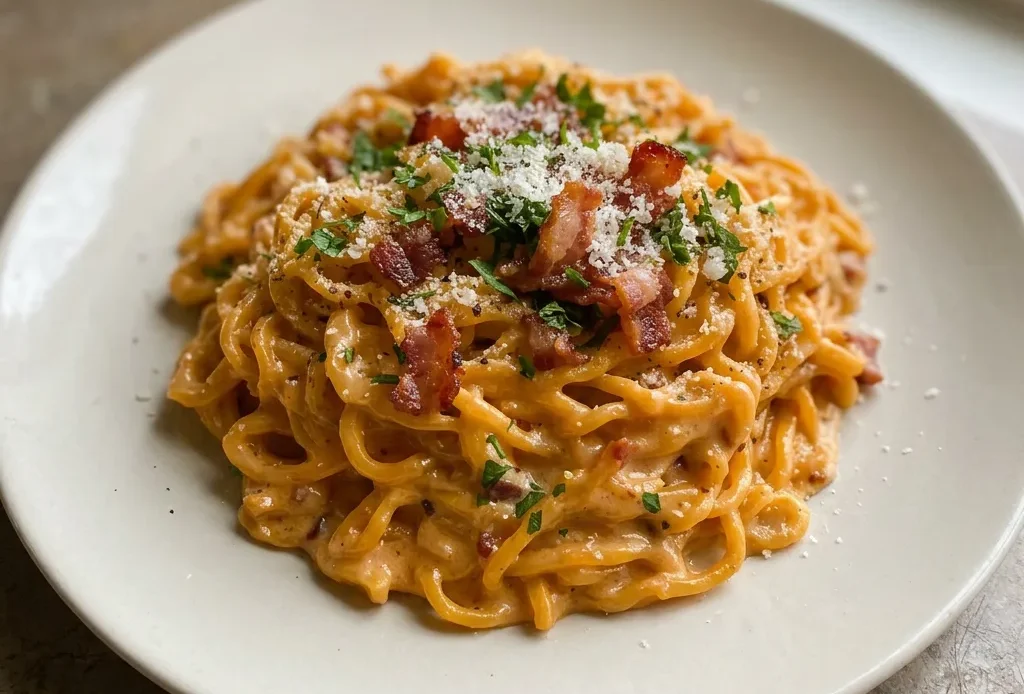
The most common mistake with this ramen carbonara is scrambling the eggs, it happens fast, and once you see curds, there’s no going back. The fix is simple: pull the skillet off the heat before adding the egg mixture, then toss like you mean it.
The gochujang adds a fermented heat that melts into the sauce without breaking it, so you get a spicy, umami version of the classic that still feels creamy, not gloppy. It’s a fusion that works because the paste emulsifies like extra cheese, not like a hot sauce that would curdle everything.
This ramen carbonara walks a tight line between silky and scrambled, and knowing where that line is makes all the difference.
The first time I tried this, I poured the eggs straight into the hot skillet without taking it off the burner. Instead of a silky sauce, I got lumpy scrambled eggs clinging to the noodles.
Why does gochujang work in carbonara?
Gochujang is fermented, so it brings a deep, savory heat that actually complements the rich egg and cheese base rather than fighting it. The amount you use is up to you, a little adds warmth, a full tablespoon brings noticeable spice. But because it’s a paste, it emulsifies into the sauce without breaking it, leaving the creaminess intact.
You get the kick without the acid or vinegar that hot sauces often carry, which would curdle the eggs. Think of it as a layer of flavor that sits underneath the Parmesan and bacon, not on top.
How do you keep the eggs from scrambling?
The trick is residual heat. Once the bacon is crispy and the noodles are in the skillet, you pull the pan off the burner before adding the egg mixture.
Now I always pull the skillet off the heat before adding the egg mixture and toss like crazy to let the residual heat do the work. The eggs cook gently from the warmth of the noodles and bacon, thickening into a creamy coating instead of setting into curds. Tossing quickly for about a minute ensures every strand gets coated without any part of the egg solidifying.
The result is a sauce that clings, not clumps.
Why ramen noodles instead of spaghetti?
Ramen noodles have a firm bite that holds up even after a quick toss in the skillet, they don’t go limp or soggy the way spaghetti can when coated with a heavy sauce. Their wavy shape is key: those ridges and curls trap the egg-and-cheese mixture better than straight strands, so every forkful is evenly sauced. The texture stays distinct against the crispy bacon, giving you a chew that contrasts with the crunch.
It’s a practical choice, not just a gimmick: the noodles carry the sauce without becoming dense or sticky.
What cuts the richness of the sauce?
The bacon does double duty: its saltiness cuts through the fat of the eggs and cheese, and its crispness adds a textural break from the creamy noodles. Fresh herbs like parsley or green onions bring a bright, clean note that balances the heaviness without thinning the sauce. You taste the fat first, then the salt and herb hit right after, so the dish never feels greasy or one-note.
The result is a carbonara that’s rich but not cloying, with each element pulling its weight.
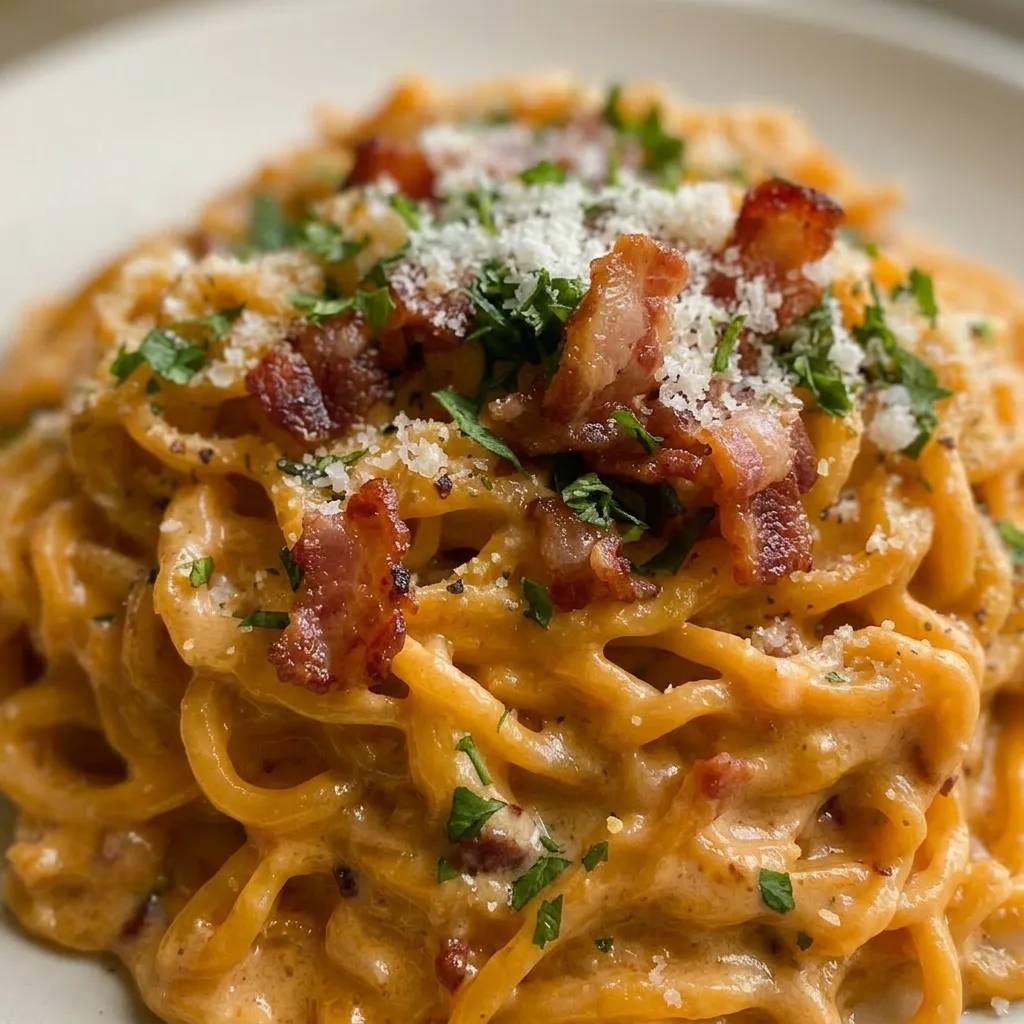
Prep: 10 min · Cook: 20 min · Total: 30 min · Servings: 4 · Calories: 500 kcal
Gochujang and Parmesan: savory heat meets salty sharpness
Ramen Noodles: Shin Ramyun or whole-grain noodles work as substitutes; just avoid instant ramen without the seasoning packet.
Eggs: Fresh eggs have more flavor and a tighter white that blends smoothly without thinning the sauce.
Parmesan Cheese: Grated cheese works, but freshly grated melts more evenly and won’t clump in the egg mixture.
Bacon: Sautéed mushrooms offer a vegetarian alternative, but look for thick-cut bacon if you want meatier bits.
Gochujang: Modify the amount based on desired heat; a tablespoon gives noticeable spice without overwhelming the sauce.
Fresh Herbs: Parsley or green onions bring a bright finish; avoid dried herbs they’ll taste dusty against the rich sauce.
Build the sauce while the bacon renders
Cook the bacon
Dice the bacon small so it crisps evenly. In a cold skillet, render over medium heat until the fat turns golden and the meat browns, about 6 minutes. You’re looking for crunchy shards, not chewy strips.
Whisk the egg mixture
Crack both eggs into a bowl, then add the grated Parmesan. Whisk vigorously until the cheese is fully incorporated and the mixture looks like a thick, smooth custard, no streaks of white or clumps of cheese.
Boil the ramen
Drop the noodles into boiling water and cook them 1 minute less than the package says. They should be just shy of al dente, with a slight white core in the thickest folds. Drain but don’t rinse: you want the starch.
Toss noodles with bacon
Pour the drained noodles into the skillet with the bacon. Toss over medium heat for about 2 minutes, until the noodles are thoroughly coated in bacon fat and beginning to sizzle. The surface should look glossy, not dry.
Add gochujang and emulsify
Drop the gochujang into the skillet and toss to melt it into the fat. It should dissolve completely, turning the noodles a uniform brick-red. No paste streaks left behind.
Off-heat, add egg mixture
Pull the skillet off the burner completely. Immediately pour the egg mixture over the noodles and toss vigorously with tongs.
Keep tossing for a full minute: the sauce will thicken as it clings to the noodles. If you see steam rising, you’re scrambling, stop and toss faster.
Ramen Carbonara
Ingredients
- 1 package Ramen Noodles (Shin Ramyun or whole-grain noodles work as substitutes)
- 2 large Eggs (using fresh eggs boosts flavor)
- 1 cup Parmesan Cheese (grated cheese can be used instead)
- 4 slices Bacon (sautéed mushrooms offer a vegetarian alternative)
- 1 tablespoon Gochujang (modify amount based on desired heat)
- 1 tablespoon Fresh Herbs (parsley or green onions)
Instructions
Boil Ramen Noodles:
Fill a large pot with water and bring to a rolling boil over high heat. Cook the ramen noodles for 3-4 minutes until al dente. Drain and reserve.Whisk Egg Mixture:
Crack the eggs into a bowl, add the grated Parmesan, and whisk for 1-2 minutes until the mixture is smooth. Set aside.Cook Crispy Bacon:
Place a skillet over medium heat and add the diced bacon. Cook for 5-7 minutes until crispy, then pour off the excess fat.Toss Noodles with Bacon:
Transfer the drained noodles to the skillet with the bacon. Gently toss for 2-3 minutes to combine.Add Egg Mixture Off Heat:
Take the skillet off the heat. Immediately pour the egg mixture over the noodles and toss quickly for about 1 minute to evenly coat without cooking the eggs.Season and Serve:
Add salt and pepper to taste. Sprinkle with fresh herbs and serve right away.
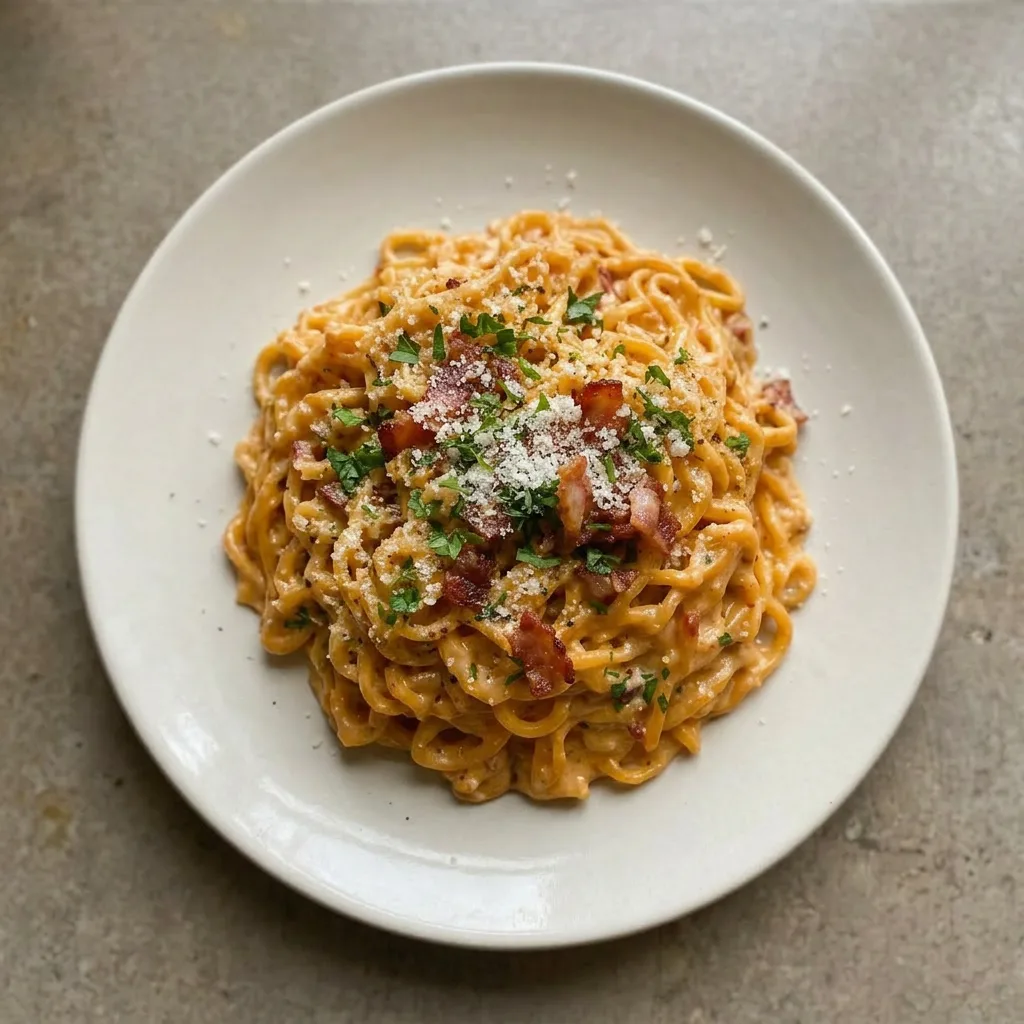
Swap bacon and noodles, keep the eggs and gochujang
Bacon: Sautéed mushrooms. Mushrooms add an umami earthiness instead of smoky salt. You lose the crunchy texture and rendered fat that coats the noodles, so the sauce feels lighter.
Start with the same amount by weight, sauté until browned and any released liquid evaporates.
Ramen Noodles: Whole-grain noodles. Whole-grain noodles have a nuttier flavor and firmer chew.
They won’t go limp, but their rougher surface grabs the sauce even better. Cook them 1 minute less than package directions, just like ramen, to keep them al dente.
Parmesan Cheese: Grated cheese. Pre-grated cheese often contains anti-caking agents that prevent it from melting smoothly into the egg mixture. You may get tiny flecks that don’t fully dissolve, making the sauce slightly grainy.
Use the same amount, but whisk longer and expect a less silky coat.
Eggs: None. Eggs are important here.
They create the creamy sauce without cream. No other ingredient can replicate the emulsion when combined with residual heat and Parmesan. Leave them as is.
Storage and Serving
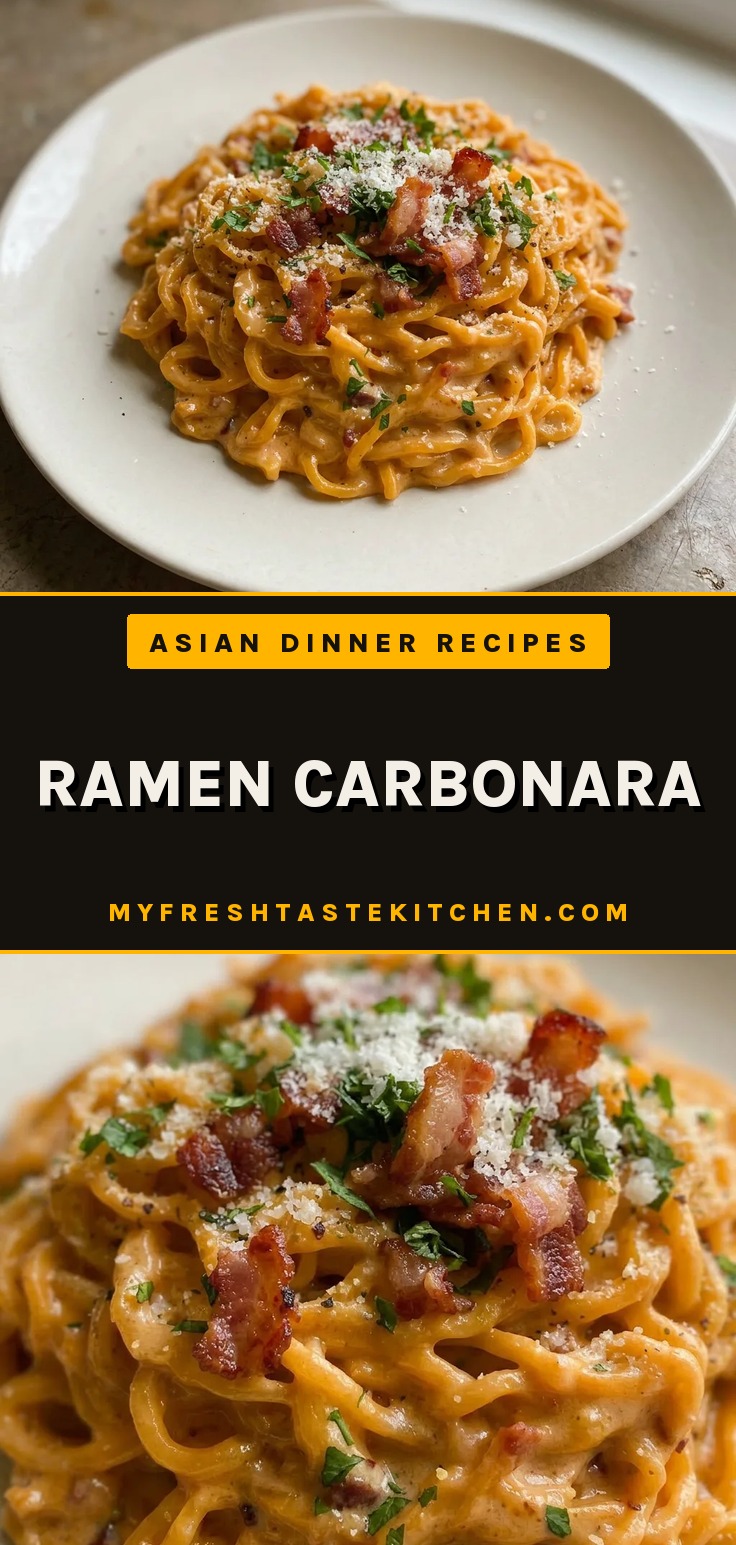
This ramen carbonara is at its best served immediately after you toss the egg mixture. The sauce is creamy and clings to every noodle while the bacon stays crisp.
Once refrigerated, the eggs set and the sauce thickens into a denser coating, and the bacon softens. Leftovers keep in an airtight container in the fridge for up to 2 days.
To reheat, add a splash of water or milk to a skillet and warm gently over low heat, tossing constantly. High heat will scramble the eggs and turn the sauce grainy. The noodles will lose their initial bite and become softer, but the flavor stays intact.
Do not freeze the assembled dish: the egg sauce will separate and turn watery when thawed. You can freeze the cooked bacon separately for up to a month, but the noodles and sauce won’t recover.
For the best texture, only make what you’ll eat in one sitting.
Tips
- Let the eggs sit at room temperature for 15 minutes before whisking. Cold eggs can seize the sauce when they hit the hot noodles, creating a grainy texture instead of a smooth emulsion.
Frequently Asked Questions
Can I make this ahead of time?
No, this dish is best served immediately after tossing the egg mixture. The sauce is creamy and clings to every noodle while the bacon stays crisp. Once refrigerated, the eggs set and the sauce thickens into a denser coating, and the bacon softens.
Leftovers keep in the fridge for up to 2 days, but the texture won’t be the same as fresh.
Why did my sauce turn scrambled?
Most likely you didn’t pull the skillet off the heat before adding the egg mixture. The residual heat from the noodles and bacon is enough to cook the eggs gently, if the pan is still on the burner, direct heat scrambles them. Toss vigorously for a full minute off-heat; if you see steam rising, you’re applying too much heat and need to toss faster or transfer to a cool bowl.
How do I reheat leftovers without ruining the texture?
Add a splash of water or milk to a skillet and warm gently over low heat, tossing constantly. High heat will scramble the eggs and turn the sauce grainy. The noodles will lose their initial bite and become softer, but the flavor stays intact.
Do not microwave, it heats unevenly and can curdle the egg coating.
What’s the difference between this and classic carbonara?
Classic carbonara uses spaghetti, guanciale or pancetta, pecorino, and black pepper. This version swaps in ramen noodles for a firmer, wavy texture that traps the sauce better, and substitutes gochujang for the pepper, adding a fermented savory heat instead of straight spice. Bacon replaces guanciale for a smokier, crispier result.
The technique remains the same: egg and cheese emulsified with residual heat.