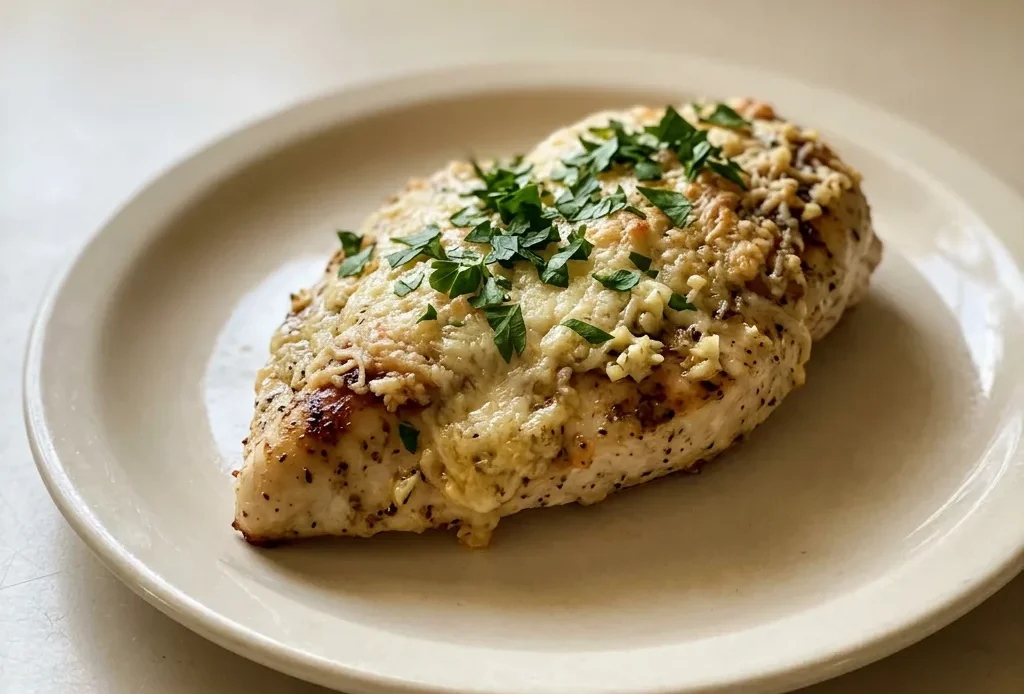
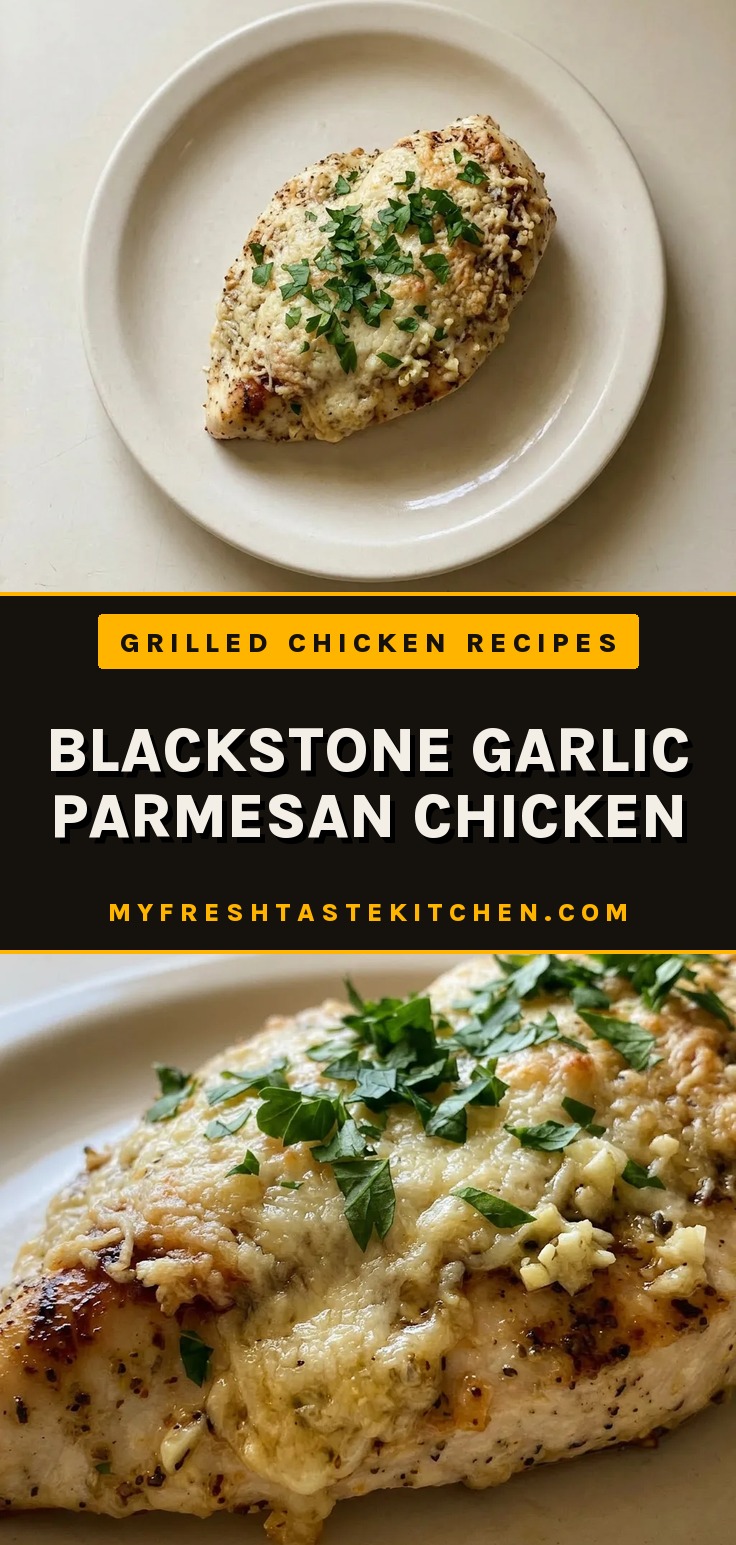
Griddle-cooked chicken has a reputation for drying out, but this blackstone garlic parmesan chicken proves otherwise. The trick is the oil-based garlic coating: it protects the garlic from burning while creating a surface that sears fast and deep, locking moisture inside.
The Parmesan goes on late so it melts into a lacy crust instead of turning into bitter flecks. That two-stage approach separates this from a simple pan-fry, you get a crisp, savory shell and tender meat every time, without hovering over the griddle.
I once sprinkled Parmesan on right after flipping, and by the time the chicken was cooked, the cheese had turned into a blackened, acrid crust.
Griddle sears better than a pan
A Blackstone griddle’s large, flat surface distributes heat evenly, so every inch of the chicken gets the same intense sear. That high, consistent heat browns the meat fast, forming a crisp crust without drying out the interior.
The open griddle also lets steam escape, in a pan, trapped moisture softens the surface and prevents browning. Here, the chicken stays juicy because the quick sear locks moisture in before it can escape. The result is a deep golden-brown exterior you just can’t get in a skillet.
Oil mixture protects the garlic
Coating the chicken with the garlic oil mixture before cooking does two things. First, the oil carries heat evenly across the meat, so the seasoning doesn’t just sit on top, it bonds to the surface and flavors every bite. Second, the oil dilutes the garlic and spreads it thin; alone, minced garlic burns fast on a hot griddle.
Mixed with oil and rubbed on, it stays aromatic and toasty, never bitter or blackened. You taste the garlic clearly because it never had a chance to scorch.
Parmesan goes on at the end
Parmesan is dry and low in moisture, so it burns quickly if added too soon. That’s why I wait until the last few minutes to add the cheese so it melts into a golden crust without burning. The griddle’s residual heat and the hot chicken surface gently melt the shreds into a lacy, nutty layer.
Add it earlier and you get bitter specks; add it at the end and the cheese changes into a savory shell that clings to the meat. The contrast between the crisp crust and tender chicken is spot-on.
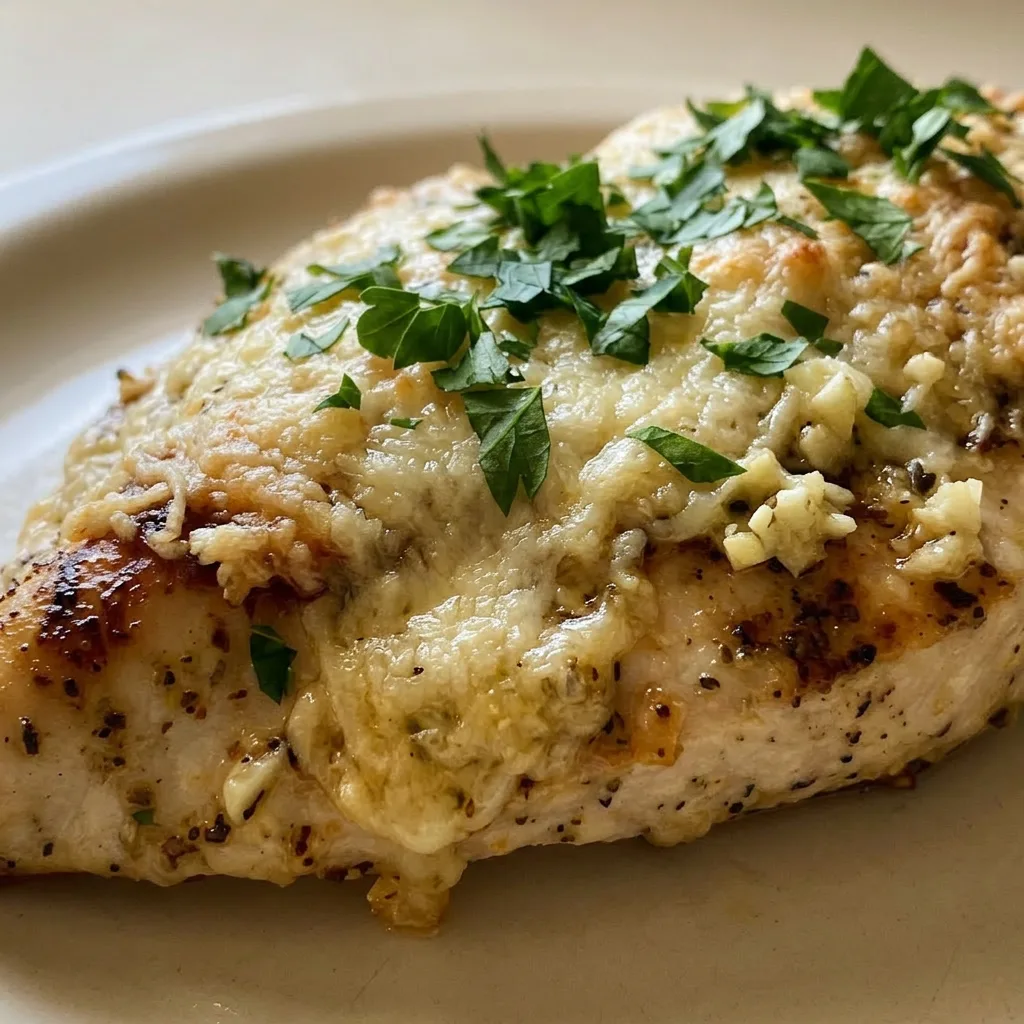
Prep: 10 min · Cook: 15 min · Total: 25 min · Servings: 4 · Calories: 320 kcal
What to Look For in These Ingredients
Chicken breasts: Buy uniform thickness so they cook evenly; otherwise pound to 1/2 inch.
Parmesan cheese: Get a block and grate it yourself; pre-shredded has anti-caking agents that won’t melt smoothly.
Garlic: Use fresh cloves, not jarred minced garlic, which is watery and burns faster.
Italian seasoning: Check your jar is less than a year old; stale herbs lose punch.
Garlic Parmesan Chicken on the Griddle
Prep the griddle
Set your Blackstone to medium heat. Let it preheat for a few minutes until a drop of water skitters across the surface, that’s your cue the griddle is ready to sear.
Season the chicken
Whisk olive oil, minced garlic, Italian seasoning, salt, and pepper in a bowl. Brush or rub this mixture all over the chicken. The oil should coat every surface evenly; if it pools, you’ve used too much.
Sear the chicken
Lay the chicken on the hot griddle. You should hear an immediate sizzle, if not, the griddle isn’t hot enough.
Cook 6 to 7 minutes per side. The first side is ready when it releases easily from the surface without sticking.
Add the Parmesan
In the final 2 to 3 minutes of cooking, sprinkle the grated Parmesan over the chicken. Watch for the cheese to melt into a lacy golden crust. If it starts browning too fast, the griddle is too hot, slide the chicken to a cooler spot.
Rest and garnish
Transfer the chicken to a plate and let it rest 3 to 5 minutes. The internal temperature should reach 165°F. Sprinkle fresh parsley over the top right before serving.
Blackstone Garlic Parmesan Chicken
Ingredients
- 4 boneless, skinless chicken breasts
- 4 tablespoons olive oil
- 4 cloves garlic, minced
- 1 cup grated Parmesan cheese
- 1 teaspoon Italian seasoning
- Salt and pepper to taste
- Fresh parsley, chopped for garnish
Instructions
Preheat griddle to medium:
Heat the Blackstone griddle to medium heat.Mix garlic oil seasoning:
Combine olive oil, minced garlic, Italian seasoning, salt, and pepper in a bowl.Coat chicken with mixture:
Apply the garlic mixture evenly to the chicken breasts.Cook chicken 6-7 minutes:
Cook the chicken on the griddle for 6-7 minutes per side until done.Top with Parmesan cheese:
In the final minutes of cooking, top the chicken with grated Parmesan cheese.Rest chicken briefly:
Take the chicken off the griddle and allow it to rest briefly.Garnish with fresh parsley:
Top with chopped fresh parsley before serving.
Storage and Serving
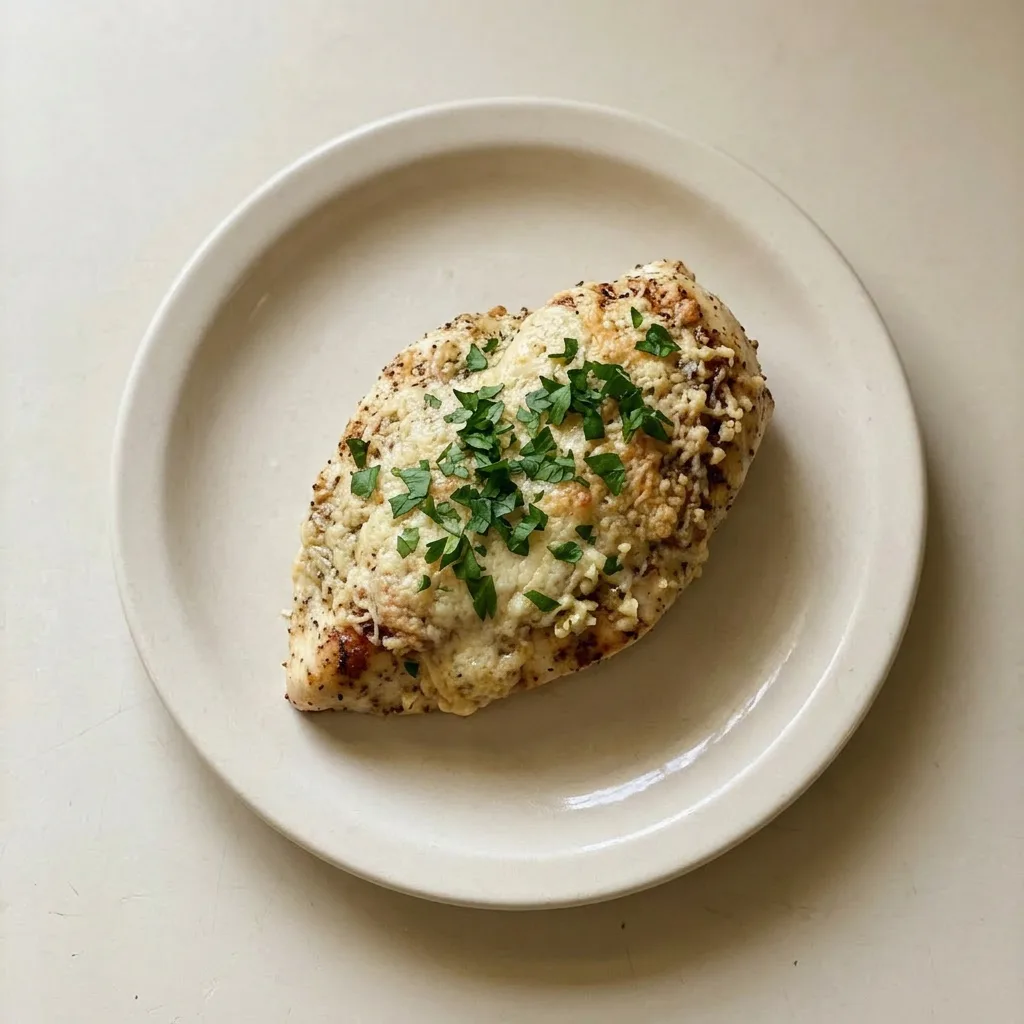
Serve the chicken within 30 minutes of adding the parsley; the fresh leaves wilt quickly. For leftovers, refrigerate in an airtight container up to 3 days.
The Parmesan crust softens as it sits, but you can restore some crunch by reheating on a griddle or skillet over medium heat for 2 to 3 minutes per side. Do not microwave: it turns the crust rubbery. Freezing is not recommended because the cheese coating loses texture and the chicken dries out.
If you must freeze, freeze the cooked plain chicken without Parmesan, then add fresh Parmesan and parsley after reheating.
Tips
- Pat the chicken breasts dry with paper towels before applying the oil mixture. Excess moisture steams the surface, preventing the deep browning you want from the griddle. A dry exterior ensures the oil mixture clings evenly and the Maillard reaction kicks in fast.
- Use a fish spatula or thin metal turner to flip the chicken. Its broad, flexible blade slides under the crust without tearing it, unlike a thick turner that can scrape off the Parmesan layer you just built.
Three Swaps That Change This Chicken, and One That Won’t
Chicken breasts: Boneless, skinless thighs. Juicier and more forgiving on the griddle, thighs stay moist even if you go a minute over. Cook to 175°F instead of 165°F for the best texture.
Parmesan cheese: Pecorino Romano. Sharper, saltier, and more pungent. Because it’s drier than Parmesan, it browns faster, add it even later, just 1 to 2 minutes before pulling the chicken off the griddle.
Parmesan cheese: Nutritional yeast (for dairy-free). Loses the melty, lacy crust, you get a flaky, cheesy-tasting coating instead. Sprinkle it on after cooking; heat destroys its flavor.
Start with the same amount the recipe calls for, then adjust to taste.
Garlic: 1/2 teaspoon garlic powder per clove. Milder and less aromatic, but it won’t burn even if you add it early. Mix the powder into the oil mixture, not straight onto the chicken, or it clumps.
The result is a more subtle garlic presence.
Frequently Asked Questions
Can I use chicken thighs instead of breasts?
Yes, thighs work well and stay juicier if you accidentally overcook them. Swap boneless, skinless thighs in the same quantity and cook to an internal temperature of 175°F for the best texture. The cook time may be similar, but check for doneness with a thermometer since thigh thickness varies.
How do I know when the chicken is fully cooked?
Use an instant-read thermometer: the thickest part of the breast should reach 165°F. Visually, the juices should run clear when you cut into the chicken, and the meat should feel firm to the touch but not hard.
Can I prep the garlic oil mixture ahead of time?
Yes, you can mix the oil, garlic, and seasonings up to a day ahead and store it in the fridge. Let it come to room temperature before using so the oil spreads easily. The garlic won’t burn because it’s diluted in the oil, even if it sits.
What’s the best way to reheat leftovers without drying out the chicken?
Reheat on a griddle or skillet over medium heat for 2 to 3 minutes per side to restore some crunch to the Parmesan crust. Avoid the microwave, which turns the crust rubbery. Leftovers keep in the fridge up to 3 days.
Is this recipe gluten-free?
Yes, all the ingredients are naturally gluten-free, including the Italian seasoning (check the label to confirm no additives). The Parmesan cheese, olive oil, and garlic are all gluten-free. Just be sure your chicken is not injected with broth or flavorings that might contain gluten.