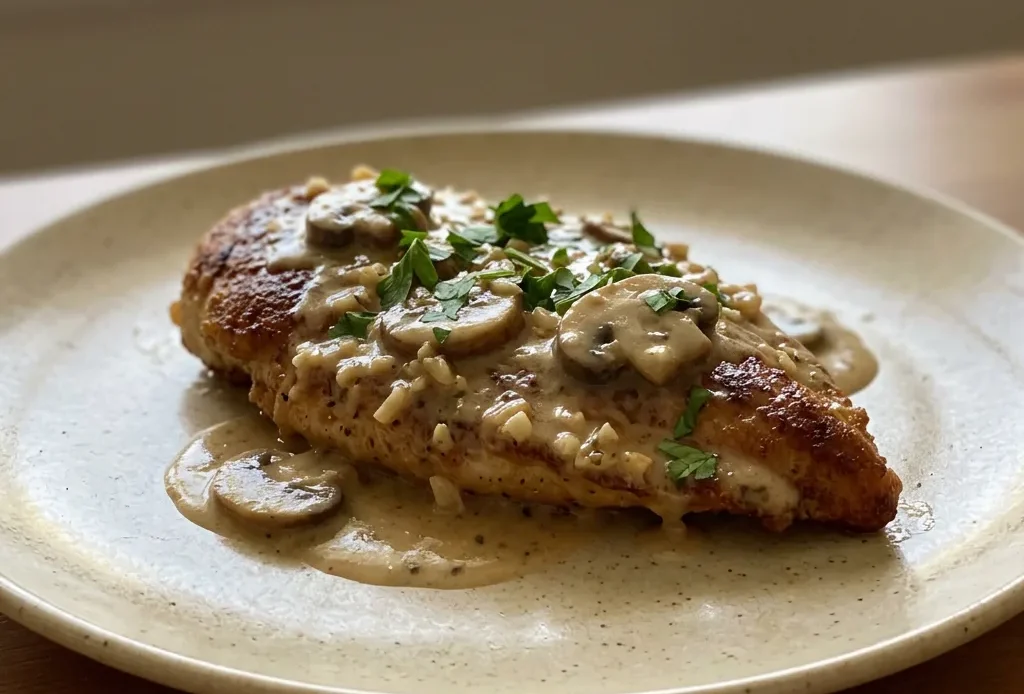
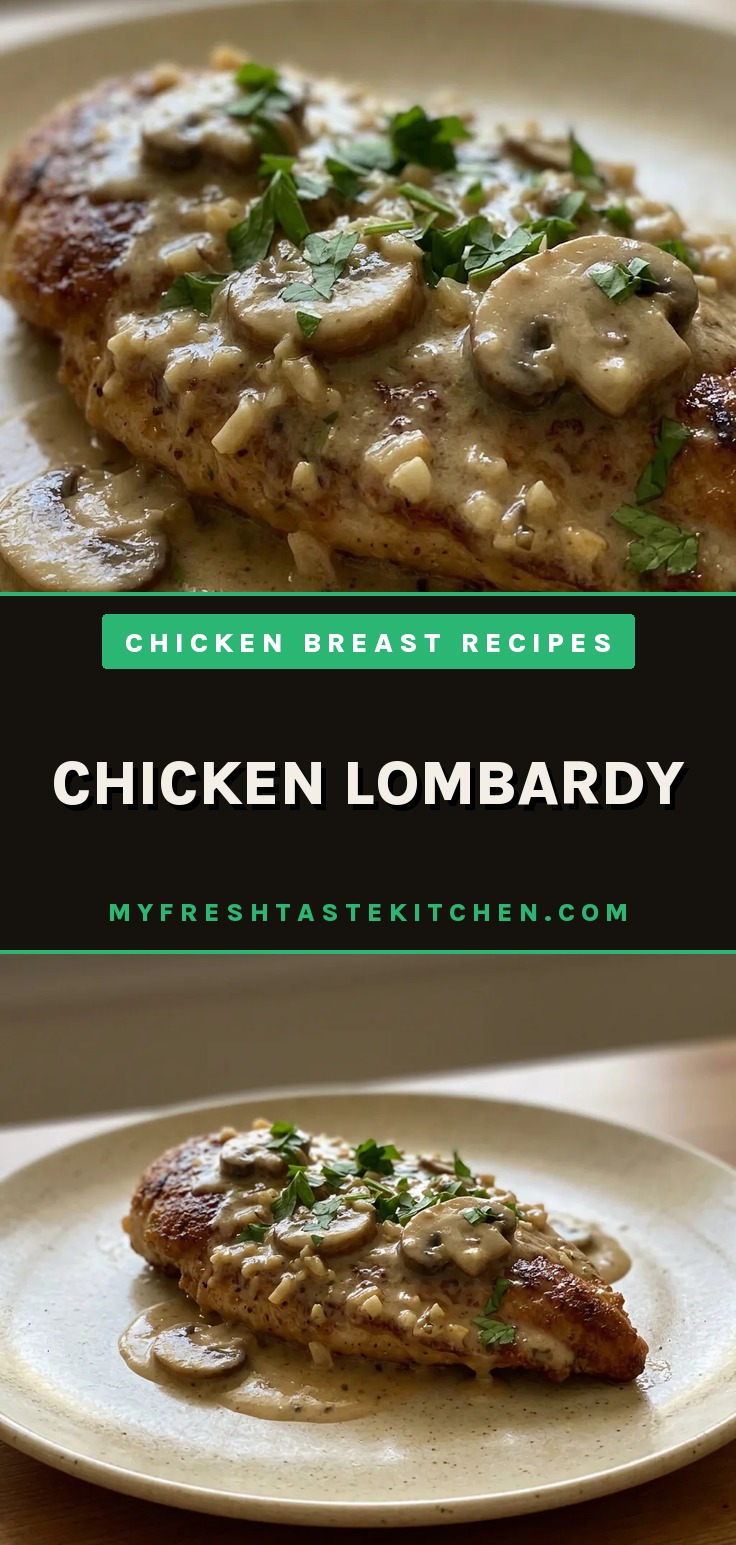
What makes Chicken Lombardy a standout Italian-American dish isn’t the chicken, it’s the sauce. Get that cream-Parmesan ratio right, and you’ve got something silky that clings without being heavy.
Miss it, and you’re left with a thin, sad puddle. This version leans into real heavy cream and freshly grated Parmigiano, which is the only way to keep the texture stable through a simmer.
The mushrooms aren’t just filler; they bring an earthy counterpoint that keeps the richness from cloying. Chicken Lombardy can feel like a restaurant trick, rich, fast, and deceptively simple, but it only works if you don’t skimp on the dairy.
Pounding for even doneness
Unevenly thick chicken breasts cook at different rates. The thin tip dries out while the thick end stays underdone.
Pounding flattens the breast to a uniform thickness, so the whole piece reaches doneness at the same time. Thinner meat also cooks faster, cutting the time the chicken spends on heat and reducing moisture loss.
The flour coating adheres more evenly to the smooth, pounded surface, creating a consistent golden crust when seared.
Searing and deglazing for depth
Pan-searing the chicken leaves browned bits stuck to the skillet, called fond. That fond carries concentrated, savory flavor from the meat and flour.
When you pour in chicken broth and scrape the pan, those bits dissolve into the liquid, building a rich base for the sauce. Cooking the mushrooms first lets them release their liquid and brown, deepening their earthy taste before the cream goes in. The result is a sauce that tastes like more than the sum of its parts.
Cream and Parmesan stability
Heavy cream contains enough fat to withstand simmering without separating. Lower-fat dairy would curdle or turn grainy.
Parmesan adds salt and savory umami, and its fine shreds dissolve into the sauce, thickening it slightly without needing a starch slurry. Stirring the cheese in off the heat prevents it from overheating and turning gritty. The sauce stays smooth and coats the chicken evenly.
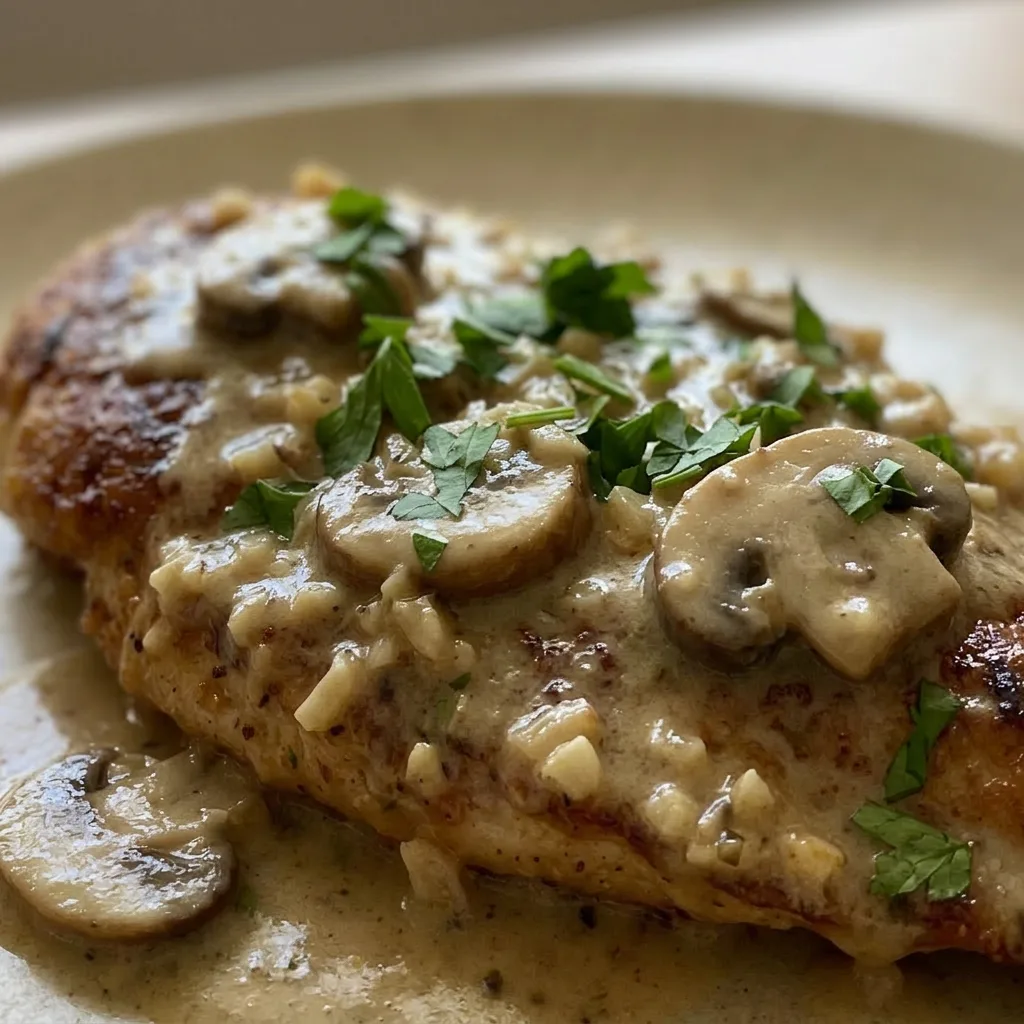
Prep: 15 min · Cook: 22 min · Total: 37 min · Servings: 4 · Calories: 450 kcal
Ingredient Notes for Chicken Lombardy
Chicken breasts: Buy boneless, skinless breasts that are similar in size so they pound to even thickness without shredding.
Mushrooms: White button or cremini mushrooms work; slice them 1/4 inch thick for even browning.
Heavy cream: Use heavy cream with at least 36% milk fat so it simmers without curdling.
Parmesan cheese: Buy a block of Parmigiano-Reggiano and grate it yourself; pre-grated won’t melt as smooth.
Building the Chicken Lombardy from sear to sauce
Pound and coat
Pound each breast to even thickness, about ½ inch. The flour coating sticks best to a smooth, dry surface. Shake off excess so the crust stays thin and crunchy, not pasty.
Sear the chicken
Heat oil over medium-high until it shimmers. Cook chicken 4 to 5 minutes per side until deep golden brown and firm to the touch. A strong crust means good fond underneath.
Cook mushrooms and garlic
In the same pan, cook mushrooms until they release liquid and the liquid evaporates, about 3 to 4 minutes. They should look browned and shrunken. Add garlic, stir until fragrant, about 1 minute.
Deglaze and build sauce
Pour in chicken broth and scrape the pan bottom until all browned bits dissolve. Let it simmer until slightly reduced, about 2 minutes. The liquid should look clear and taste savory.
Finish the cream sauce
Add heavy cream and simmer until it thickens enough to coat a spoon, about 3 to 4 minutes. Stir in Parmesan off the heat to keep it smooth. The sauce should be silky, not grainy.
Combine and heat through
Return chicken to the pan, spoon sauce over each piece. Simmer 2 to 3 minutes until the chicken is hot and the sauce clings. Garnish with parsley right before serving.
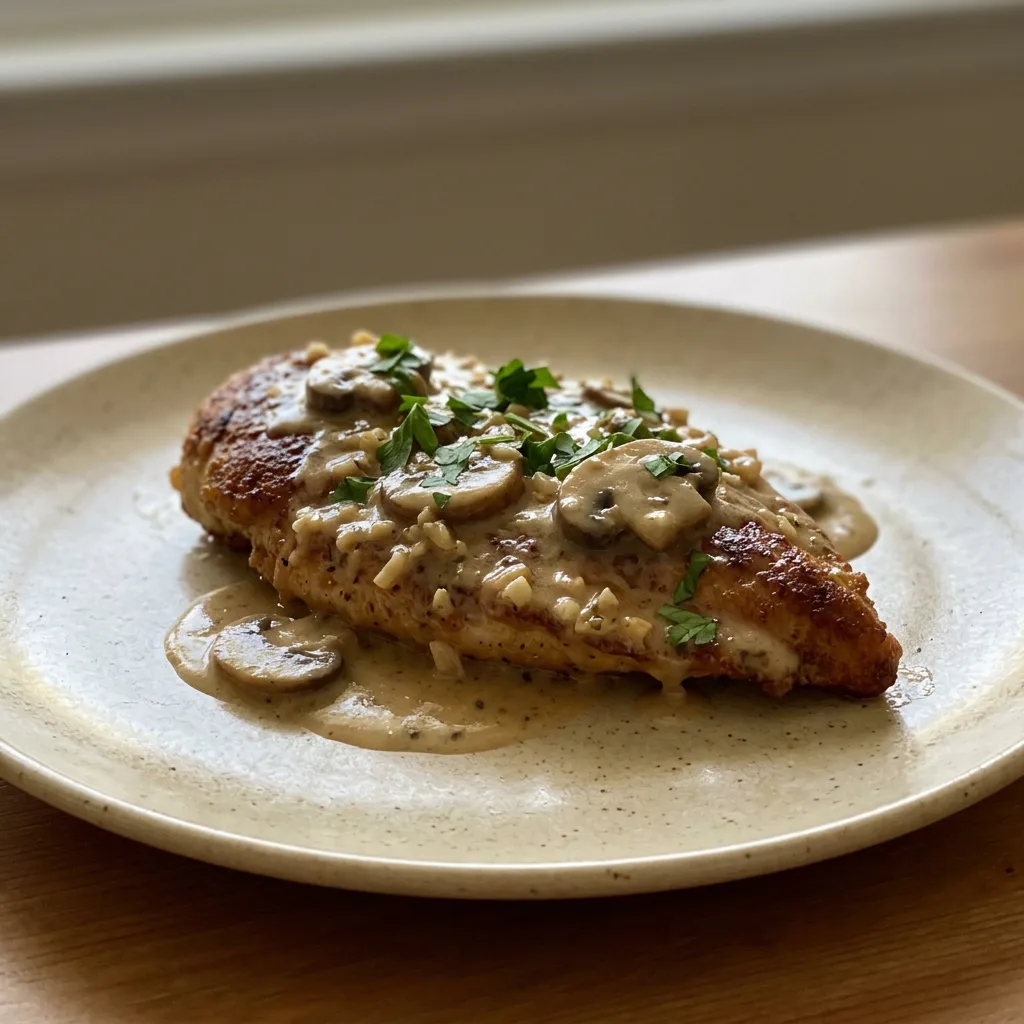
Chicken Lombardy
Ingredients
Method
Pound Chicken Breasts:
Using a meat mallet, pound the chicken breasts to an even thickness.Coat with Flour Mixture:
Mix the flour, salt, and black pepper in a shallow dish. Coat each chicken breast in the mixture, then shake off excess.Cook Chicken in Olive Oil:
In a large skillet over medium-high heat, warm the olive oil. Cook the chicken for 4-5 minutes per side until golden and fully cooked. Transfer chicken to a plate and set aside.Sauté Mushrooms and Garlic:
To the same skillet, add the sliced mushrooms and cook until softened, about 3-4 minutes. Stir in the minced garlic and cook for an additional minute.Deglaze with Chicken Broth:
Deglaze the skillet by pouring in the chicken broth and scraping up any browned bits. Bring to a simmer.Add Heavy Cream:
Add the heavy cream and let the sauce cook until it thickens slightly, approximately 3-4 minutes.Stir in Parmesan Cheese:
Stir in the grated Parmesan cheese until it melts and the sauce is smooth.Return Chicken to Skillet:
Return the chicken to the skillet, spooning sauce over each piece. Simmer for 2-3 minutes until heated through.Garnish with Parsley:
Take off the heat and garnish with chopped fresh parsley before serving.
Swapping chicken and cream without breaking the sauce
Chicken breasts: Bone-in, skin-on chicken thighs. Thighs stay juicier and take on more flavor, but you’ll need to increase the first sear to 6 to 7 minutes per side and cook the sauce step longer to bring the internal temperature to 175°F (the safe doneness for dark meat). The skin won’t stay crispy under the sauce, so you can remove it before serving.
Heavy cream: Half-and-half. The sauce will be thinner and less rich, and it may separate slightly if simmered hard. To stabilize it, stir in 1 teaspoon cornstarch dissolved in 1 tablespoon cold water before adding the half-and-half, and keep the heat low after.
The final texture will be lighter, more like a broth-based gravy than a thick cream sauce.
All-purpose flour: Gluten-free all-purpose flour blend (with xanthan gum). The flour coating will brown and stick, but the crust will be less crisp and more crumbly. Choose a blend that includes xanthan gum for binding; without it, the coating may fall off during searing.
The sauce will thicken the same way since the pan fond still forms.
Storage and Serving
Chicken Lombardy is best eaten right after the final garnish. The sauce is at its silkiest and the chicken crust still has a hint of crispness from the sear. Leftovers keep in an airtight container in the fridge for up to 3 days.
The cream sauce thickens as it sits, becoming more like a spread. To reheat, add a splash of chicken broth and warm gently on the stove or in the microwave, stirring occasionally until the sauce loosens and the chicken is hot throughout.
The texture of the chicken will be tender but not quite as firm as fresh. The parsley garnish will wilt, so add fresh parsley after reheating. Freezing is not recommended; the cream sauce may separate and the chicken’s texture will suffer.
For make-ahead, you can prepare the sauce separately up to 2 days in advance, but sear the chicken and combine just before serving.
Tips
- Pat the chicken dry with paper towels before coating. Excess moisture will make the flour clump and steam rather than brown, resulting in a pale, soft crust instead of a crisp golden sear.
Frequently Asked Questions
Can I make Chicken Lombardy ahead of time and reheat it?
Yes, but the chicken’s crust softens and the sauce thickens as it sits. The recipe’s storage note says leftovers keep 3 days in the fridge. To serve later, prepare the sauce up to 2 days ahead, but sear the chicken and combine just before serving for the best texture.
How do I keep the chicken from drying out when reheating?
Add a splash of chicken broth before warming to loosen the sauce and replace lost moisture. Reheat gently on the stove or in the microwave, stirring occasionally, until the chicken is hot throughout. The chicken will be tender but not as firm as fresh.
What’s the difference between Chicken Lombardy and Chicken Marsala?
Chicken Lombardy uses a cream and Parmesan sauce, while Chicken Marsala is built around Marsala wine and often includes mushrooms but no cream. The cream gives Lombardy a richer, thicker sauce that coats the chicken, whereas Marsala’s sauce is thinner and more wine-forward.
Can I use chicken thighs instead of breasts?
Yes, swap for bone-in, skin-on thighs. Sear them 6 to 7 minutes per side and cook the sauce longer to reach 175°F internal.
The skin won’t stay crispy under the sauce, so you can remove it before serving. Thighs stay juicier and take on more flavor.
Why did my sauce turn out thin and how can I fix it?
Most likely the sauce didn’t simmer long enough after adding the cream. Let it simmer 3 to 4 minutes, until it coats a spoon. If it’s still thin, stir in an extra tablespoon of grated Parmesan off the heat to thicken it without making it grainy.
