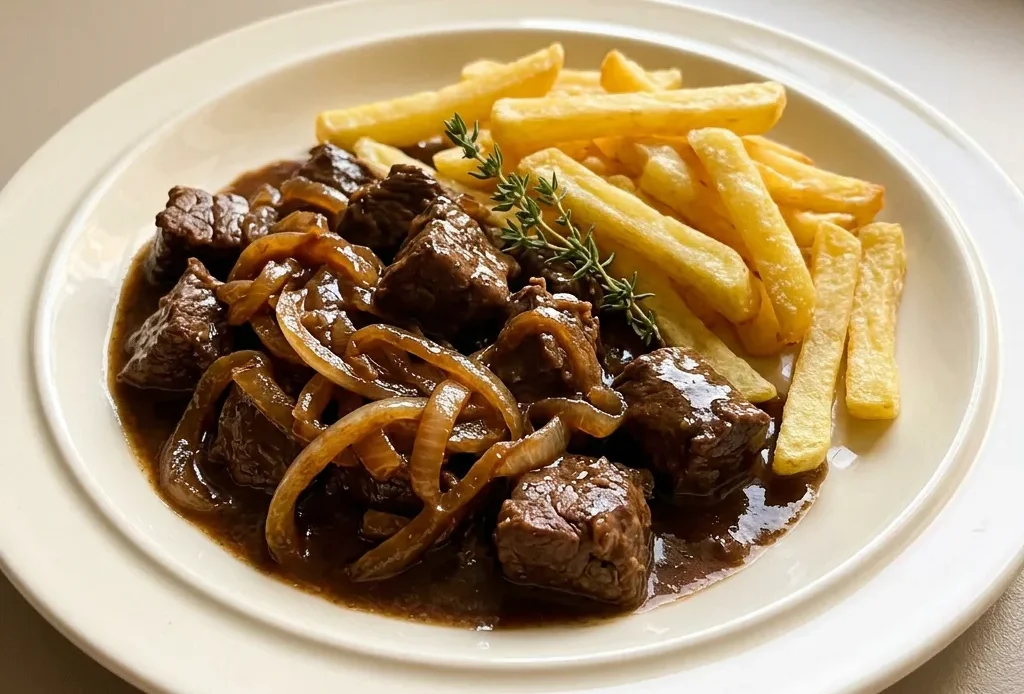
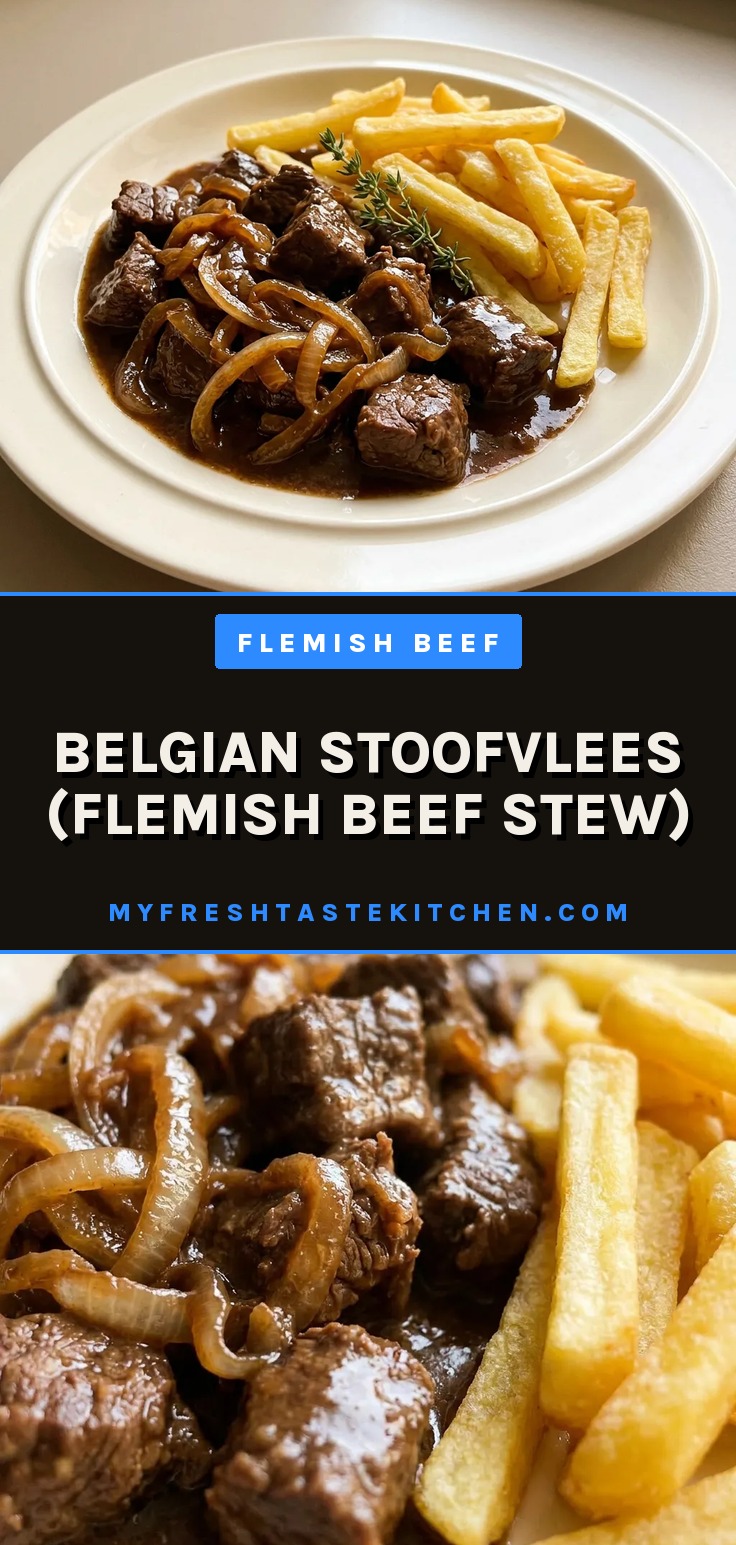
You’ve probably had beef stew before, but not like this. Belgian stoofvlees (flemish beef stew) simmers in dark ale until the meat is fork-tender and the sauce turns silky, no wine, no tomato paste, just malt and mustard doing the heavy lifting. The trick is that slice of bread slathered with Dijon that melts right in, thickening the sauce without a roux.
It’s a one-pot meal that hinges on the beer you pick; grab a malty Trappist, not something hoppy, or the bitterness will throw the whole balance off. The searing matters, too, crowd the pan and you lose the crust that gives the broth its backbone.
Get those two things right, and the rest is just patience.
Belgian brown ale’s role in the stew
The beer is the backbone here. Belgian brown ales like Trappist or Dubbel bring a malty sweetness and a faint bitterness that weave into a complex sauce.
The alcohol cooks off, leaving behind concentrated flavor that complements the beef without overwhelming it. You’ll taste a rounded richness that no other liquid quite delivers.
Mustard-slathered bread as thickener
That slice of bread smeared with Dijon does double duty. As it simmers, the bread dissolves into the sauce, thickening it naturally, no roux or extra flour needed. The mustard adds tang and helps the sauce emulsify, giving it a silky body.
It’s a traditional technique that turns a simple ingredient into something functional.
Searing beef in batches for deep flavor
Crowding the pan drops the temperature, and the meat steams instead of browning. Working in batches gives each cube room to develop a deep, caramelized crust through Maillard reaction. That crust is the foundation of the stew’s richness; without it, the whole pot falls flat.
Cocoa powder for savory depth
A tablespoon of unsweetened cocoa powder rounds out the bitterness from the beer and adds a hidden complexity. It doesn’t taste like chocolate, just deepens the savory notes.
It’s optional but traditional in some Belgian kitchens. Use a light hand; you want the stew to taste like itself, only more so.
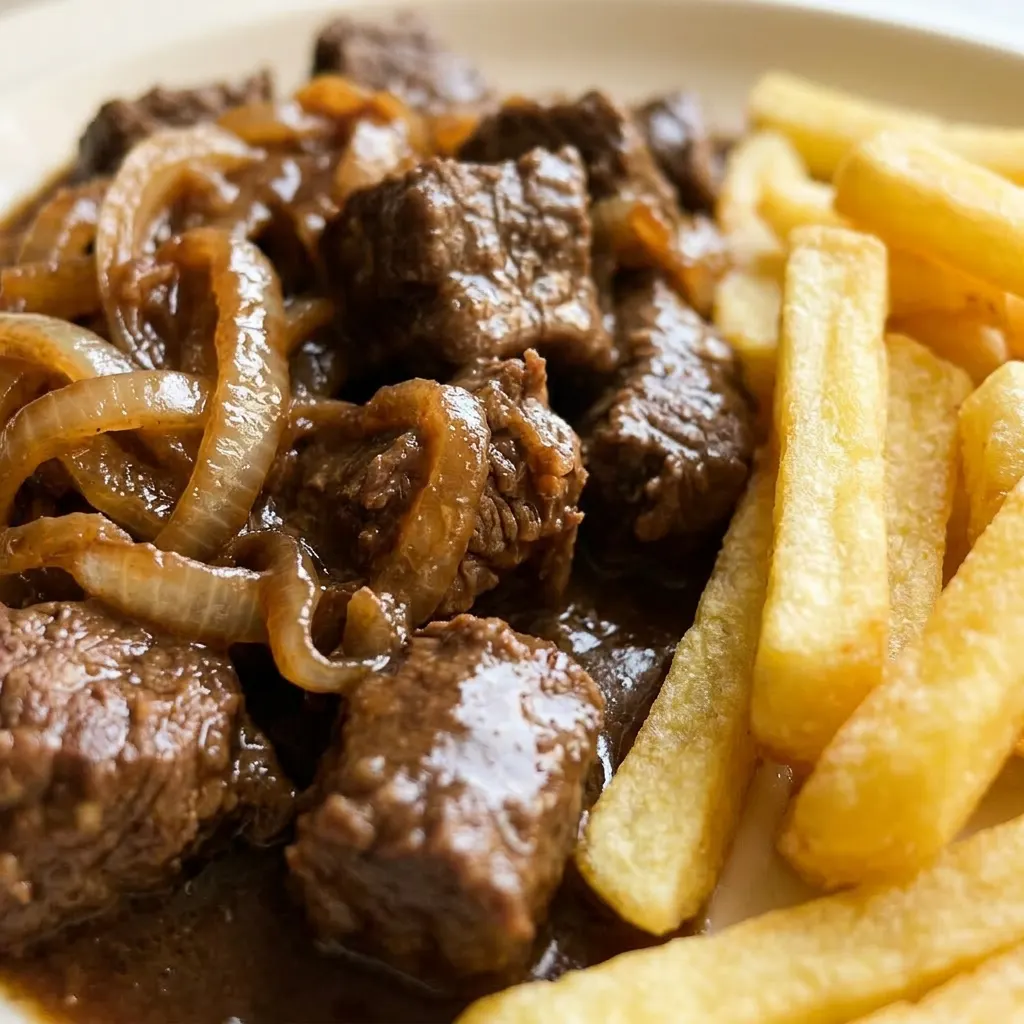
Prep: 30 min · Cook: 2 hr 30 min · Total: 3 hr · Servings: 4 · Calories: 590 kcal
What to look for in the ingredients
Beef chuck or stewing beef: Buy well-marbled chuck; the fat renders during simmering and keeps the meat moist and tender.
Belgian brown ale: Use a Trappist or Dubbel for malty sweetness and complexity; avoid hoppy or light beers.
Slice of thick country bread: Get a crusty, dense loaf; fluffy sandwich bread disintegrates too quickly and won’t thicken properly.
Unsweetened cocoa powder: Optional but add only a tablespoon; too much makes the stew taste bitter, not chocolatey.
Building the stew, start to finish
Sear the beef in batches
Heat butter and oil until shimmering. Add beef in a single layer, if the pan crowds, the meat steams and turns gray instead of browning. Sear each side until a deep mahogany crust forms, about 3 to 4 minutes per batch.
Cook the onions until golden
After removing the beef, lower the heat and add the remaining butter. The onions should sizzle gently, not fry hard. Stir occasionally; they’re ready when translucent and flecked with brown, about 10 minutes.
Add flour and beer
Sprinkle flour over the onions and stir for a minute to cook out the raw taste. Pour in the beer slowly while scraping the bottom, lumps smooth out as you stir. The mixture will thicken immediately.
Simmer with the bread
Return beef to the pot, then add stock, vinegar, mustard, and sugar. Lay the mustard-slathered bread on top, crust side up.
Cover and simmer on low, bubbles should barely break the surface. Too high a boil toughens the meat.
Check for doneness
5 hours, test a cube with a fork. It should slide apart with little resistance. If not, continue simmering uncovered, checking every 15 minutes.
The sauce will reduce slightly as it thickens.
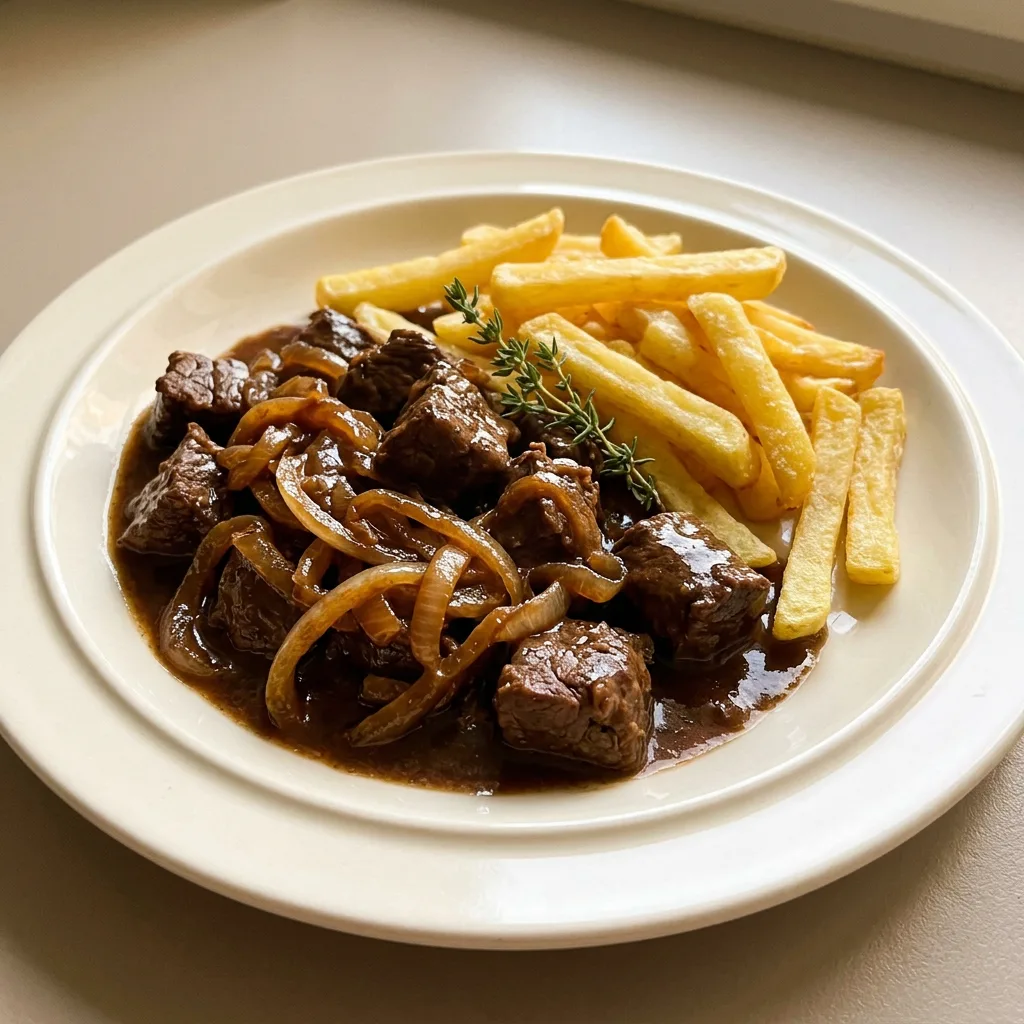
Belgian Stoofvlees (Flemish Beef Stew)
Ingredients
Method
Sear Beef Cubes:
In a large Dutch oven or heavy-bottomed pot over medium-high heat, warm 1 tbsp butter along with the vegetable oil. Season the beef cubes liberally with salt and pepper. Working in batches to prevent crowding, sear the beef until each piece has a deep, caramelized crust. Transfer the browned meat to a plate and set aside.Caramelize Onions:
Lower the heat to medium, add the remaining butter, and cook the sliced onions until they turn golden and tender, roughly 10 minutes, stirring from time to time to release the browned bits stuck to the bottom.Make Flour Roux:
Dust the onions with flour and keep stirring for 1-2 minutes to build a base that will later thicken the stew. Slowly pour in the beer while stirring constantly to avoid lumps.Add Liquids and Seasonings:
Put the browned beef back into the pot, then add the beef stock, apple cider vinegar, Dijon mustard, and brown sugar. Mix everything well and bring the liquid to a gentle simmer.Bundle and Add Herbs:
Bundle the bay leaves and thyme sprigs together with kitchen twine (or place them in a small spice bag) and drop them into the pot for simple removal later.Top with Mustard Bread:
Smear the slice of country bread with Dijon mustard and lay it on top of the stew. As it cooks, the bread will break down into the sauce, lending body and richness.Simmer Stew Gently:
Cover the pot, turn the heat to low, and allow the stew to simmer gently for at least 2.5 hours, stirring now and then. If the sauce becomes too thick, add a splash of water or stock to keep it flowing smoothly.Stir in Cocoa Powder:
If you want extra depth, stir in the cocoa powder during the final 30 minutes of cooking. This enriches the flavor without making it taste like chocolate.Check Beef Tenderness:
Test the beef for doneness; it should be fork-tender and nearly falling apart. Fish out the bay leaves and thyme stems. Taste and adjust the seasoning with more salt, pepper, or a dash of vinegar if needed.Serve with Frites:
Serve the stew hot alongside traditional Belgian fries (frites), crusty bread, or mashed potatoes. Garnish with fresh thyme if you like. Enjoy with a glass of the same Belgian beer that went into the stew.
Storage and Serving
Stoofvlees tastes even better the next day. The overnight rest lets the flavors deepen and the sauce relax into a silky texture.
Store leftovers in an airtight container in the fridge for up to 4 days. The sauce may thicken as it sits; add a splash of water or stock when reheating to bring back the right consistency. To freeze, portion into freezer-safe containers and freeze for up to 3 months.
Thaw overnight in the fridge before reheating gently on the stove. Reheat over low heat, stirring occasionally, until the meat is hot throughout. Avoid boiling, which can tighten the beef and break the sauce’s emulsion.
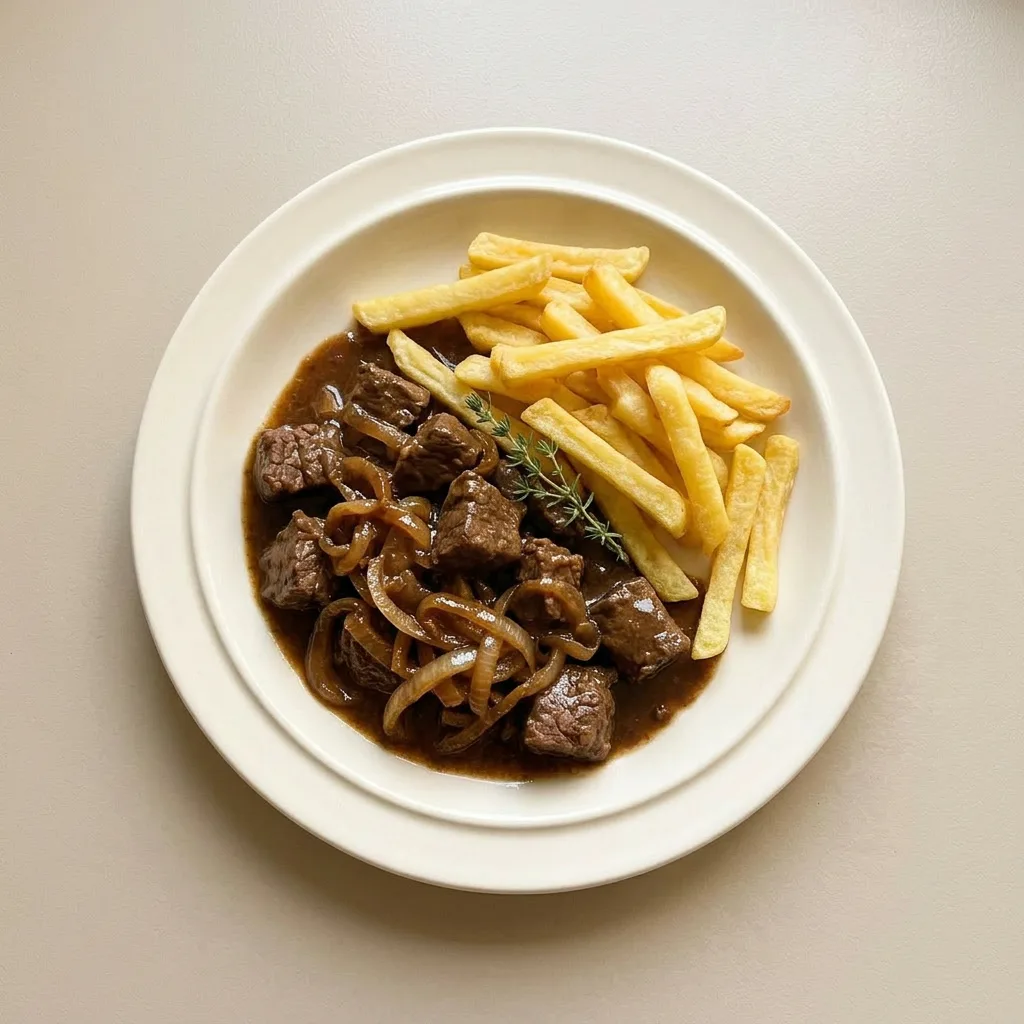
Serve with fresh frites or crusty bread. The stew is at its best within the first 3 days; after that, the texture of the beef starts to soften further, though the flavor remains good.
Which ingredients swap well, and which don’t
Belgian brown ale: Use a dark, malty non-alcoholic beer, or for a non-beer option, swap in beef broth plus 1 tablespoon balsamic vinegar and 1 teaspoon molasses per cup of liquid. The broth version loses the beer’s distinctive bitterness, so the stew tastes richer and rounder but less complex. The non-alcoholic beer comes closer, though it may lack the depth of a Trappist ale.
Slice of thick country bread: Swap with a slice of sourdough or rye, about 1/2 inch thick. Avoid fluffy sandwich bread, it disintegrates too fast and won’t thicken properly.
Sourdough holds up nearly as well and adds its own tang; rye brings a subtle earthiness. Either works, but the texture will be slightly less silky because country bread has a denser crumb that breaks down more evenly.
Butter (dairy): Use a plant-based butter with at least 80% fat for searing. For a dairy-free diet, replace both butter portions with the same amount of vegetable oil or refined coconut oil.
The stew will lack the buttery richness and the emulsifying help that dairy butter provides. The sauce may seem a little thinner or less glossy. It’s still good, just less luxe.
All-purpose flour (gluten): Replace the 2 tablespoons flour with 1 tablespoon cornstarch or arrowroot powder, whisked into a slurry with an equal amount of cold water and added after step 4. The sauce thickens but won’t have the same body or sheen. Cornstarch gives a glossy, almost jelly-like texture; arrowroot is more neutral.
The bread step still adds some body, so the difference is subtle.
Tips
- When searing beef, pat the cubes dry with paper towels before seasoning. Moisture on the surface creates steam that prevents browning, so drying them ensures a deep, flavorful crust.
Most people skip the mustard-slathered bread or add more stock, then wonder why their stew is more like soup.
Frequently Asked Questions
Can I make Stoofvlees ahead of time? Does it reheat well?
Yes, Stoofvlees improves overnight as the flavors settle. The article notes it tastes even better the next day. Reheat gently on low heat, adding a splash of water or stock if the sauce thickened, avoid boiling or the beef may tighten.
Why does my stew taste bitter? How can I fix it?
Bitterness usually comes from a beer that’s too hoppy or from scorching the onions or flour. If you used a Belgian brown ale, it should be malty, not bitter. To fix, stir in a pinch of brown sugar or a splash of vinegar, the sugar balances bitterness, and the acid brightens the sauce.
What’s the difference between Stoofvlees and French beef bourguignon?
Stoofvlees uses Belgian brown ale as its base, giving a malty sweetness and faint bitterness, while bourguignon uses red wine for a tannic, fruity character. Stoofvlees also thickens with a mustard-slathered bread slice, not a flour and butter roux, resulting in a silkier, less opaque sauce.
How do I know when the beef is done? It’s still tough after 2 hours.
The beef is done when it pulls apart easily with a fork, this usually takes the full 2.5 hours from the recipe. If it’s still tough, the heat may have been too high, causing the meat to contract. Lower the heat to a bare simmer and continue cooking, checking every 15 minutes.
