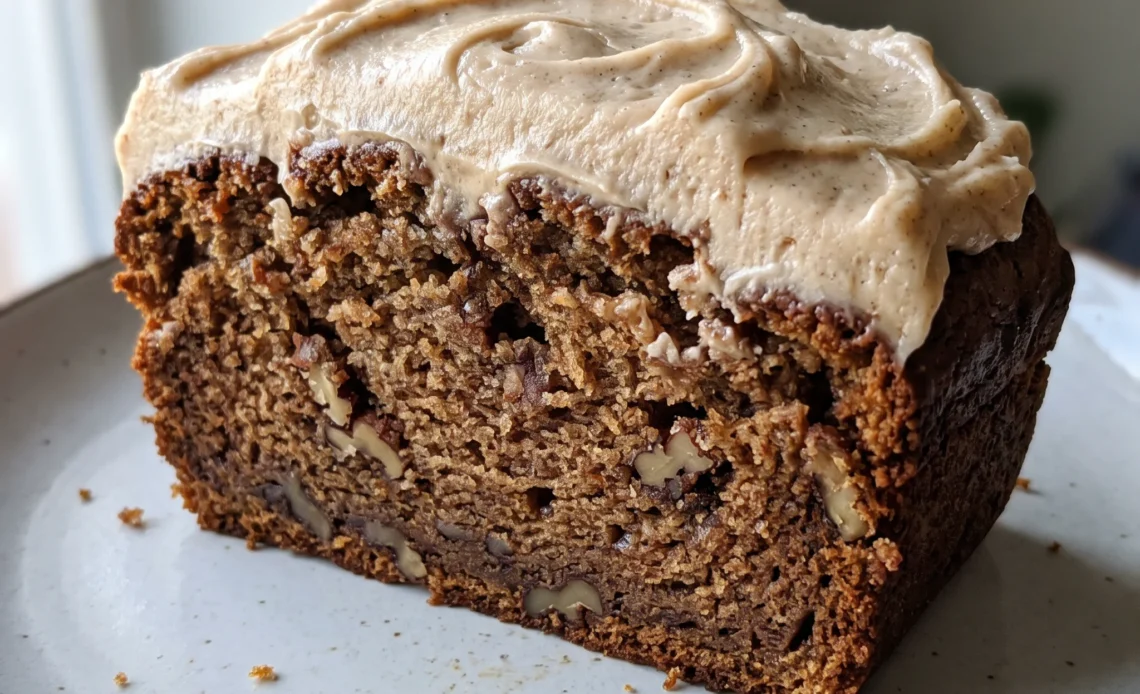
Browning butter is the step that separates a good loaf from a forgettable one, and it’s also where most people quit too early. The pan goes quiet, foam hides the color, and the difference between toasted and burnt is seconds.
Push that foam aside and watch the liquid, not the froth. One batch does double duty here: the loaf gets its share, the frosting gets the rest, and those browned specks need to end up in both or half the recipe tastes thin. If you can nail the butter, you can nail brown butter banana bread.
Everything after that is just folding and waiting.
Browning 8 oz of butter in one batch means the milk solids, the source of the nutty flavor, must be divided between 113 g for the bread and 42 g for the frosting. If the butter is still liquid, the brown specks settle quickly, so one portion gets most of the flavor and the other is bland. Chilling the butter solidifies it, suspending the specks evenly and allowing a clean split by weight, but the portion for the bread must then be re-melted to incorporate smoothly.
Brown the butter once for both the bread and the frosting
Eight ounces of butter go into the pan, and every bit of it gets used. The loaf takes half a cup, or 113 grams, while the frosting needs three tablespoons, about 42 grams. Those little brown specks are the milk solids, and they carry all the nutty flavor you’re after.
If they clump in one portion, that part of the recipe will taste flat. So when you pour the butter into a bowl, give it a stir to scatter the specks evenly.
Then measure out what you need for each. Brown the butter ahead and chill it solid if you want the easiest split.
A cold block cuts cleanly in half, no guessing. Melt the bread’s portion back to liquid before you start mixing. The frosting’s portion can stay cool until you’re ready to beat it.
How brown butter, yogurt, and oil keep this loaf tender
Brown butter brings a deep, toasty flavor you won’t get from plain melted butter. But browning drives off water, so the butter is more concentrated fat. That can make a quick bread dry if you don’t add moisture elsewhere.
Greek yogurt steps in with both water and a gentle tang. The acidity also helps the baking soda do its work, giving the loaf a little lift. Vegetable oil stays liquid at room temperature, which means the crumb stays soft even after the bread cools.
Between the yogurt and the oil, each slice holds onto moisture without feeling heavy. You’ll notice it most on the second day, when a standard banana bread would already be crumbling. This one still cuts clean and tastes fresh.
The frosting’s tang balances the bread’s sweetness
Cream cheese frosting on banana bread sounds like overkill until you taste how the tang cuts through. The bread is sweet from both granulated and brown sugar, and the bananas add their own deep sweetness.
A plain buttercream would just pile on more sugar. Cream cheese brings a slight sourness that wakes up your palate between bites.
The reserved brown butter in the frosting echoes the nutty note in the loaf, so the whole thing tastes intentional rather than like two separate recipes. A pinch of salt sharpens everything. Vanilla rounds it out.
You won’t need a thick layer. A thin spread across the top is enough to make each slice feel complete.
The frosting sets up in the fridge but stays soft enough to spread.
Pecans add crunch, but fold them in gently
Pecans are optional, and leaving them out won’t ruin the bread. But if you include them, they earn their place.
Each bite gets a little snap against the soft crumb, and their earthy flavor picks up the brown butter’s nuttiness. Roughly chop them so you get pieces, not dust. The real trick is switching from your whisk to a spoon or spatula before you add them.
A whisk will trap the nuts in its wires and tear up the batter as you try to shake them loose. A spatula folds them through in a few turns. Stop as soon as they’re evenly scattered.
Overmixing at this stage can toughen the loaf, and you’ll lose the tender texture you worked for. The pecans should be dispersed, not crushed.
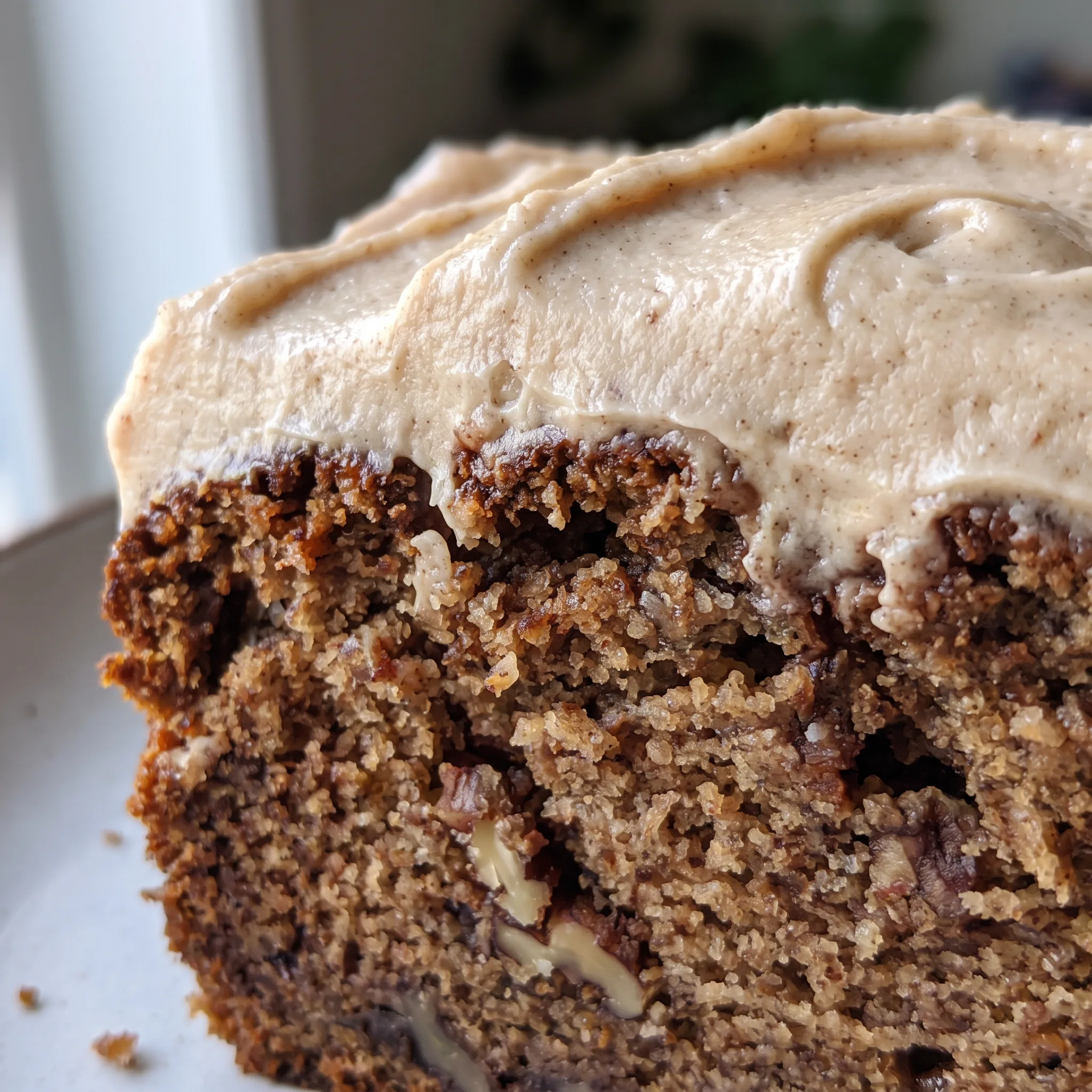
The ingredients that carry this loaf, and where they can go wrong
Unsalted butter: You need 8 oz total so the brown bits scatter evenly between the 1/2 cup for the bread and the 3 tbsp for the frosting.
Bananas: Very ripe means heavily speckled or black; at 11.3 oz they bring the moisture and sweetness that underripe fruit won’t.
Greek yogurt: Full-fat gives the moisture and gentle tang that keeps the crumb soft; low-fat or nonfat reads thinner in the baked loaf.
Pecans: Roughly chop the 3/4 cup so you get pieces with snap, not dust that disappears into the batter.
Cream cheese: Room temperature is the form that beats smooth with the brown butter; cold cream cheese stays lumpy no matter how long you mix.
What to watch for while the loaf goes from batter to cooled bread
Judging when the butter has browned far enough
The crackling fades, then the foam shows up, and the color turns fast. Push the foam aside with a spoon and look at the liquid underneath.
Deep golden brown, and it smells like toasted nuts, that’s your cue. A shade past that and the milk solids taste bitter, not nutty.
If you catch it early, keep going. If it’s already dark, start over.
Reading the batter before it goes in the pan
It should ribbon off the whisk and hold a soft shape for a second before sinking back. Loose and watery means the bananas were underripe or the yogurt went in heavy.
Thick and stiff means you worked the flour too long. Both bake into a loaf that’s either sunken in the middle or tight and dry.
Fix a stiff batter by stopping now, not by adding liquid.
Knowing when the skewer is telling the truth
At 55 minutes, push a skewer into the center. Clean means done. A few moist crumbs clinging to it are fine.
Wet batter means give it five more minutes and check again. The trap is the top: it browns well before the middle sets, so a dark crust doesn’t mean the loaf is ready. If the top is getting too dark, tent it with foil and keep going.
The window where the frosting is spreadable
Room-temperature brown butter and cream cheese beat into a smooth base. Powdered sugar goes in slow, then a minute on high.
It should hold a soft peak and slide off a spoon without running. Too warm and it pools on the loaf. Too cold and it tears the bread.
If it’s loose, chill it ten minutes and beat again.
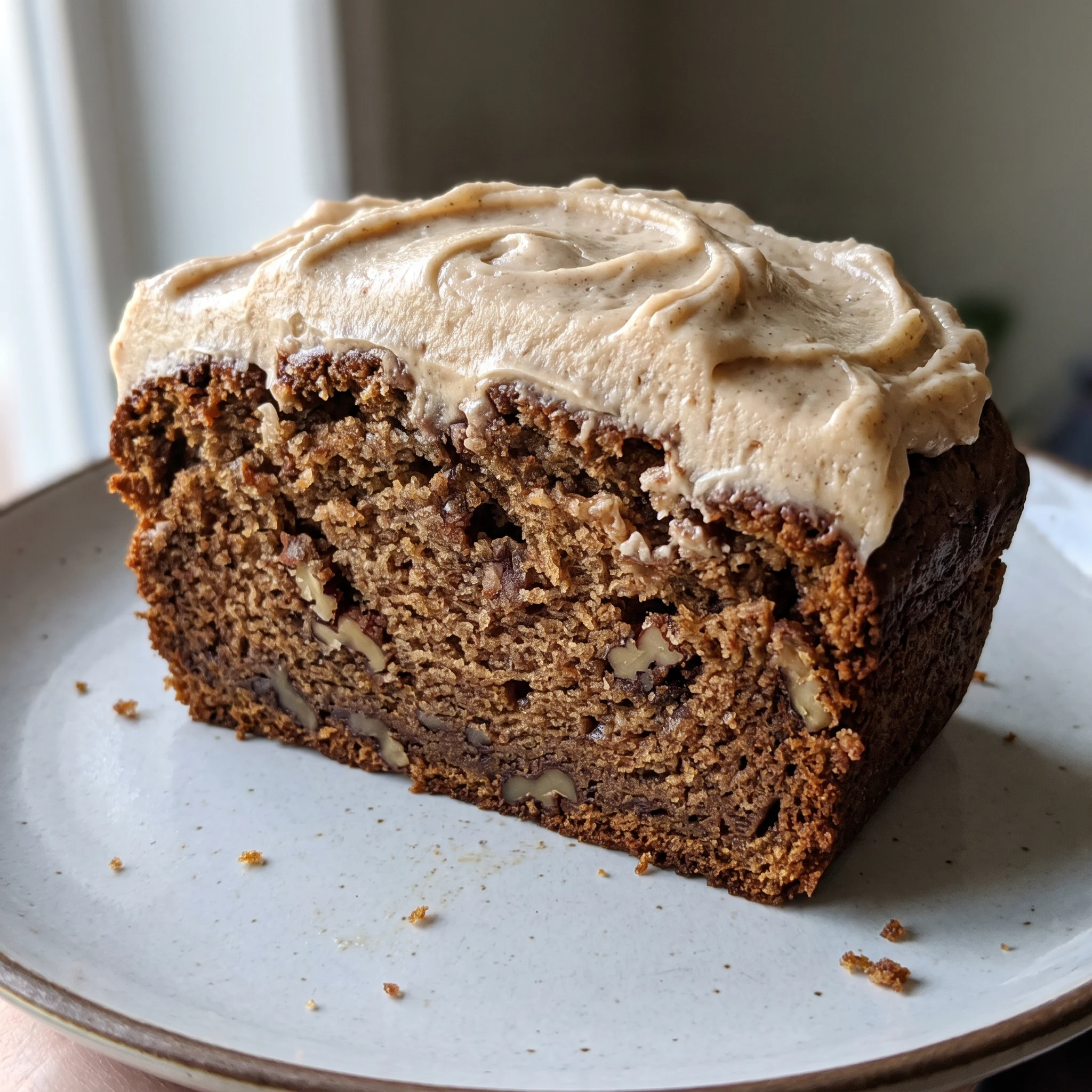
Brown Butter Banana Bread with Cream Cheese Frosting
Ingredients
Method
- Slice the butter into smaller pieces and put them in a light-colored pan set over medium heat. (Refer to recipe notes about browning the butter for both the banana bread and the frosting simultaneously to avoid doing it twice).
- While the butter melts, it will begin to bubble and produce a crackling sound. Continue, stirring from time to time.
- Once the crackling stops, the butter will brown rapidly, so watch it closely. Foam might appear on top; simply use your spoon to push it aside to check the butter’s color.
- When the butter reaches a deep golden brown color and emits an irresistible nutty aroma, the brown butter is done! Take it off the heat and immediately pour it into a heatproof bowl to stop any further browning.
- Transfer 113g (1/2 cup) of the liquid brown butter into your mixing bowl for the banana bread, and leave the remainder to cool. Try to distribute the little brown specks evenly between the two portions of butter—these are the milk solids that carry all the flavor!* If you are preparing your brown butter in advance, simply store it all in one bowl in the fridge and divide it in half later—it’s much easier to split evenly when it is solid. (Stir it really well first to evenly disperse those brown bits!) Then you can just re-melt the half intended for the banana bread in the microwave.
- For more details on browning butter, see my blog post – How to Make Brown Butter.
- Grease and line a 9×5 loaf pan and preheat your oven to 350°F (175°C) / 180°C (160°F (70°C)an-assisted)
- Place your liquid brown butter in a large bowl together with the sugar and light brown sugar. (If you made your brown butter earlier, be sure to melt it in the microwave to return it to a liquid state). Whisk everything together.
- Peel your bananas and mash them in a small bowl using a fork or potato masher. Add them to the butter/sugar mixture and whisk to combine.
- Add the eggs, vanilla, yogurt, and vegetable oil and whisk everything in until combined.
- Sift in the dry ingredients, including the flour, baking powder, baking soda, and salt.
- Roughly chop the pecans and mix them into the batter—you may want to switch to a spoon or spatula for this part, as the pecans can get stuck in the whisk.
- Pour the batter into your prepared loaf pan and bake for 55 minutes, or until a skewer inserted into the middle of the banana bread comes out clean.
- The reserved brown butter you prepared earlier should have solidified by now. If you had it in the fridge, be sure to bring it to room temperature before using. Give it a good mix to evenly disperse all the milk solids (little brown specks). Take 3 tablespoons and add them to the bowl of a stand mixer (or regular bowl with an electric whisk).
- Add the cream cheese (also at room temperature) and beat together with the brown butter, just until combined.
- Add the powdered sugar and mix in slowly to avoid a sugar explosion all over your worktop. Once it’s all incorporated, add the vanilla and a pinch of salt, then turn the mixer to high speed for about a minute.
- Spread over the top of your cooled banana bread and enjoy.
When a swap changes the crumb, not just the flavor
Greek yogurt: Sour cream. Use the same 1/3 cup (80 g). Sour cream brings more fat and a milder tang, so the loaf bakes up a touch richer and slightly less acidic.
The lift from the baking soda will be a hair slower, but you won’t notice in the final texture. If you only have regular yogurt, strain it for 30 minutes to thicken it; otherwise the batter turns loose and the center can sink.
Pecans: Walnuts or chocolate chips. Same 3/4 cup (90 g) for either.
Walnuts are softer and a bit more bitter, so they blend into the crumb instead of snapping against it. Chocolate chips add sweetness and go gooey, which pushes the loaf toward dessert.
Either way, fold them in with a spatula. A whisk will trap the pieces and overwork the batter.
Brown butter: Plain melted butter. Don’t. You lose the toasted flavor and the water that browning drives off, so the bread tastes flatter and dries out faster.
If you’re out of time, brown the butter and chill it solid, then melt what you need. The frosting also suffers: plain butter won’t have those browned specks to echo the loaf.
All-purpose flour: Gluten-free all-purpose blend. Use the same 1 1/4 cups (160 g), but choose a blend with xanthan gum and expect a denser, more crumbly slice. The batter will be thicker; add a tablespoon of water if it won’t spread.
Let the loaf cool completely before slicing, or it will fall apart.
Tips
- Check ripeness by smell before you peel: a banana ready for this loaf gives off a sweet, faintly boozy banana scent at the stem end, and the skin is speckled or black rather than yellow. Underripe fruit smells green and starchy, and at 3 medium bananas (11.3 oz / 320 g) it leaves the crumb bland and dry because there is less sugar to hold moisture.
- If your bananas are ripe but still firm, roast them whole on a sheet pan at 350°F for 15 to 20 minutes until the skins blacken and collapse, then cool and scoop the flesh. The heat converts starch to sugar and drives off water, so you get the concentrated sweetness and soft texture this 3-banana quantity needs without waiting days.
Storage and Serving: Keep the Frosted Loaf Cold, Eat It Warm
That cream cheese frosting sets the rule. On the counter it’s fine for the first few hours, long enough for the loaf to cool completely and for you to spread the frosting and serve a slice or two. After that, into the fridge.
Cream cheese is a fresh dairy product, and at room temperature it sours far faster than the bread itself ever stinks. The bread is the sturdy part here. Wrapped tight, it holds in the fridge for about five days, and the crumb actually improves on day two as the banana and brown butter settle.
The trade-off is temperature. Cold dulls both the frosting and the crumb, so pull the loaf out 30 to 45 minutes before you plan to slice it. Let the frosting come back to soft and the bread lose its chill.
The pecans lose their snap in the fridge and never quite return, so eat those slices first. Freeze unfrosted slices only, well wrapped, for up to two months. Frosting frozen and thawed weeps.
Frequently Asked Questions
Can I make the brown butter ahead of time and store it?
Yes, and chilling it solid is the easier route. The article’s storage rule applies here: keep it in the fridge, covered, and pull it out when you’re ready to bake. Cold brown butter splits cleanly because the brown specks are locked in place, so stirring it well first scatters them through both portions instead of leaving one half flat.
Melt the bread’s share back to liquid before it hits the sugar, and leave the frosting’s share cool until you beat it.
Why did my banana bread turn out dense or gummy?
Nine times out of ten it’s the bananas: underripe fruit is starchy and low on water, so the batter never loosens and the crumb bakes tight. 3 oz for three medium.
If yours were pale, the loaf will still taste fine but read dry and close. The second check is mixing: once the flour goes in, stop as soon as you can’t see streaks. A whisk kept going through the batter develops the flour and you get a rubbery slice instead of a tender one.
How ripe should the bananas be for this recipe?
Heavily speckled or fully black, and soft enough that the peel gives with almost no pressure. That’s where the moisture and the deep sweetness come from, and it’s why the loaf tastes like banana instead of just sweet bread.
3 oz. If yours are only yellow, mash them and let them sit a few minutes, but expect a paler flavor and a drier crumb. Firm, starchy fruit won’t break down properly and leaves lumps in the batter.
Do I have to frost the banana bread, or can I serve it plain?
Plain is completely fine, and plenty of people prefer it that way. The bread carries the brown butter and banana on its own, and a slice straight from the loaf needs nothing. The frosting is what makes it read as dessert: the cream cheese tang cuts the double sugar, and the reserved brown butter echoes the nutty note in the crumb.
Skip it if you want, but then eat the loaf within a day or two, since the frosting is also what keeps the top from drying out once sliced.
