
An hour in the fridge does more for this salad than any ingredient you can add. The broccoli cauliflower salad tastes like a different dish before that chill: raw and sharp, with a dressing that slides off the florets and pools in the bottom of the bowl.
The hour is what turns it creamy and even. The dressing thickens enough to cling, the onion’s bite settles, and the vegetables give up some of their raw snap without going limp. That’s the useful thing to know about a make-ahead salad like this.
It looks like a holiday bowl, red and green, and it comes from a short list of everyday things, but the wait is doing real work. Skip it and you’ll taste the difference.
Raw broccoli, cauliflower, onion, and tomatoes release water when coated with a salted dressing, and that water dilutes the emulsion until it turns thin and pools at the bottom. The one-hour chill is what forces the dressing to thicken and re-adhere to the vegetables, so skipping it leaves a watery, raw-tasting salad.
The Sugar Is a Balancer
That single tablespoon of sugar in the dressing does not read as sweet. It works against the tang of the mayonnaise and the sour cream, which would otherwise sit sharp on the tongue. The same goes for the vegetables: raw broccoli, cauliflower, and red onion each carry a bitter or pungent edge.
A little sugar rounds that off without masking it. Use more than a tablespoon and the salad starts tasting like dessert.
Use none and the dressing feels harsh, the way a vinaigrette does when it’s all vinegar and no balance. One tablespoon is enough to soften the edges while keeping the salad savory.
After you toss everything together, taste a piece of broccoli with some dressing. You should notice the creaminess first, then a faint sweetness that makes the vegetables taste milder, not candied. If it tastes flat, a pinch more sugar helps; if it tastes sweet, you’ve gone too far.
Why the Chill Matters
An hour in the fridge is not just a pause. The dressing needs that time to thicken and cling. Right after mixing, it’s loose and slides off the vegetables.
Chilled, it coats each piece evenly, and the vegetables themselves soften slightly, losing some of their raw crunch. The flavors also come together: the onion’s bite mellows, and the broccoli and cauliflower absorb the tangy cream.
Serve it immediately and you get a thin, watery dressing pooling at the bottom of the bowl, with vegetables that still taste sharp and unfinished. The salad will still be cold from the fridge, but the texture and taste are completely different. After chilling, give it a quick toss and check the consistency.
The dressing should coat the back of a spoon. If it’s still thin, it needed more time.
Even Pieces, Even Bites
Size matters here. Broccoli and cauliflower florets should be roughly the same size, about an inch across, so each forkful has a mix of both. Cherry tomatoes, halved, add a juicy burst that contrasts with the crunchy florets.
Thinly sliced red onion distributes its sharpness without overwhelming a single bite. When pieces are uneven, some get too much dressing and turn soggy while others stay dry and bland. You also end up with awkward mouthfuls, like a giant chunk of cauliflower that won’t fit on the fork.
Aim for bite-sized pieces that you can eat in one go. After you’ve cut everything, look at the bowl: it should look like a confetti of similar-sized pieces.
That’s what gives you a balanced salad where every spoonful tastes the same.
The Right Creamy Ratio
Mayonnaise and sour cream together make the dressing creamy without being heavy. Mayonnaise brings richness and body; it’s what makes the dressing cling to the vegetables. Sour cream adds tang and thins the mayonnaise just enough so it doesn’t feel greasy.
The two-to-one ratio, two parts mayonnaise to one part sour cream, hits the right balance. More sour cream and the dressing turns runny and sharp. More mayonnaise and it becomes thick and cloying.
Whisk them together with the sugar until smooth, then pour over the vegetables. The dressing should look like a thick ranch, not a thin vinaigrette.
After tossing, every piece should be lightly coated, not drowned. If you have extra dressing, don’t add it all; you want just enough to coat, not puddle. The salad should taste creamy and tangy, with the vegetables still front and center.
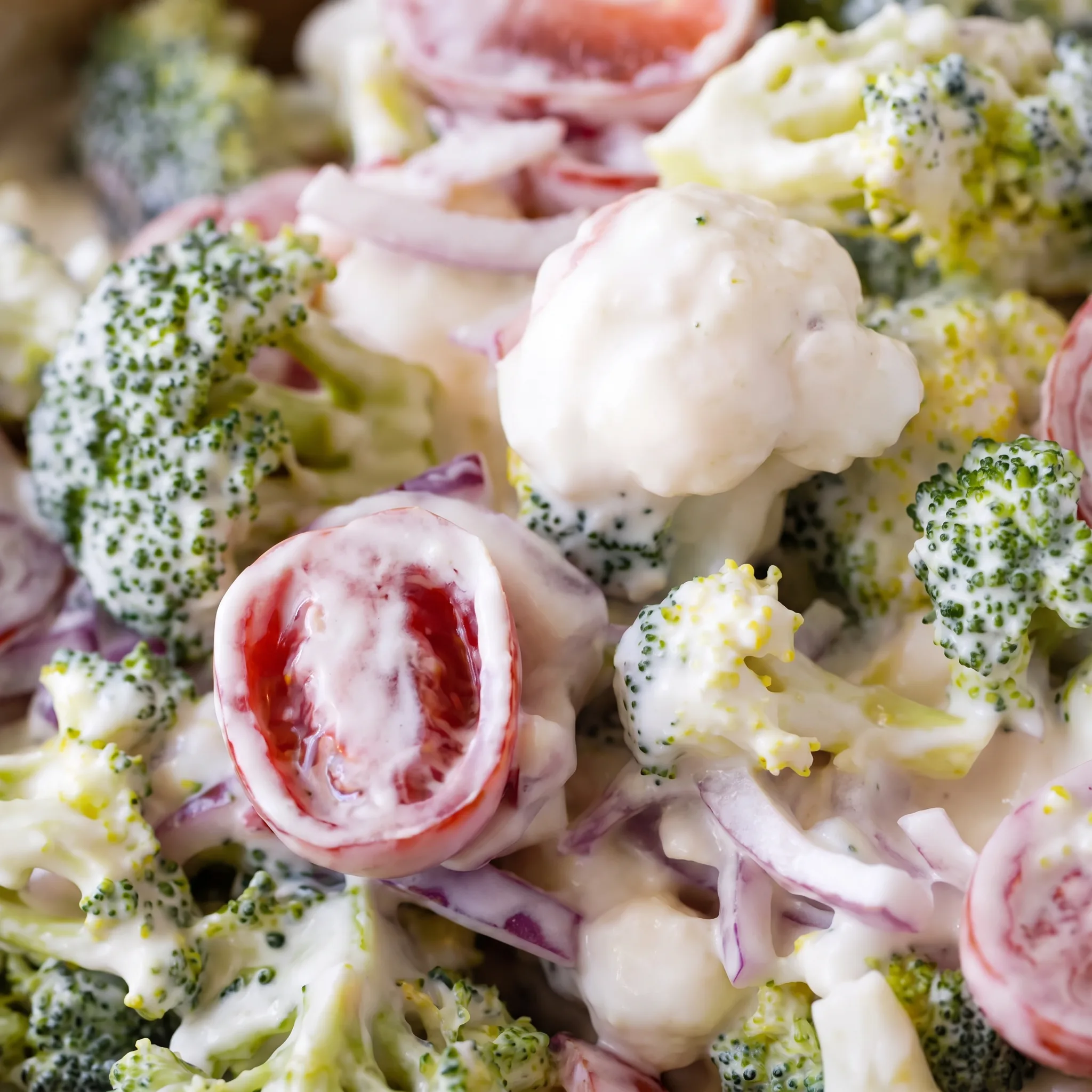
What to Look For Before You Toss
Broccoli: Florets should be tight and dark green, with no yellowing at the tips, since older heads taste stronger and turn limp.
Cauliflower: Pick a head that feels heavy for its size with no brown spots, because fresh cauliflower stays crisp and mild under the dressing.
Red onion: Slice it paper-thin so its raw bite fades into the dressing instead of overwhelming a single mouthful.
Cherry tomatoes: Choose firm, deeply colored tomatoes and halve them so they hold their shape and add a burst of juice, not a watery puddle.
Mayonnaise and sour cream: Full-fat versions give the dressing body that clings, while low-fat ones turn thin and sharp after chilling.
How to Read the Salad While You Make It
When the dressing is thick enough to coat, not just mix
Whisking mayonnaise, sour cream, and sugar together, the texture changes from slippery to something that holds a trail. Stop when a spoon dragged through leaves a clear line that fills in slowly. If it pours off the whisk in a thin stream, the vegetables will shed it and you’ll find a puddle later.
Too thick to toss? A teaspoon of water loosens it without thinning the flavor.
Tasting for balance before the vegetables go in
The dressing on its own should taste tangy with a faint sweet edge, not sharp and not sugary. Dip a piece of broccoli into it and eat both together.
If the raw onion’s bite or the broccoli’s bitterness pushes through, add a pinch more sugar. If the creaminess turns cloying, a squeeze of lemon or a splash of vinegar brings it back.
Fix it now; after chilling, the flavors settle and corrections take longer to show.
Judging how much dressing the bowl actually needs
Pour about three-quarters of the dressing over the vegetables and toss. Every piece should look glossy, not wet.
If florets sit dry in spots, add the rest a spoonful at a time. Extra dressing left in the bowl means the salad will weep during the hour in the fridge.
The goal is a light, even coat that clings, not a pool at the bottom.
The texture shift during the chill
After an hour, the vegetables should have lost their raw snap but still resist a bite. Press a broccoli floret to the touch: it should feel cool and firm, not limp or waterlogged.
If it gives easily, the salad sat too long or had too much dressing. Toss again and check that the coating still clings. A thin, watery dressing at this point means it needed more mayonnaise or less time.
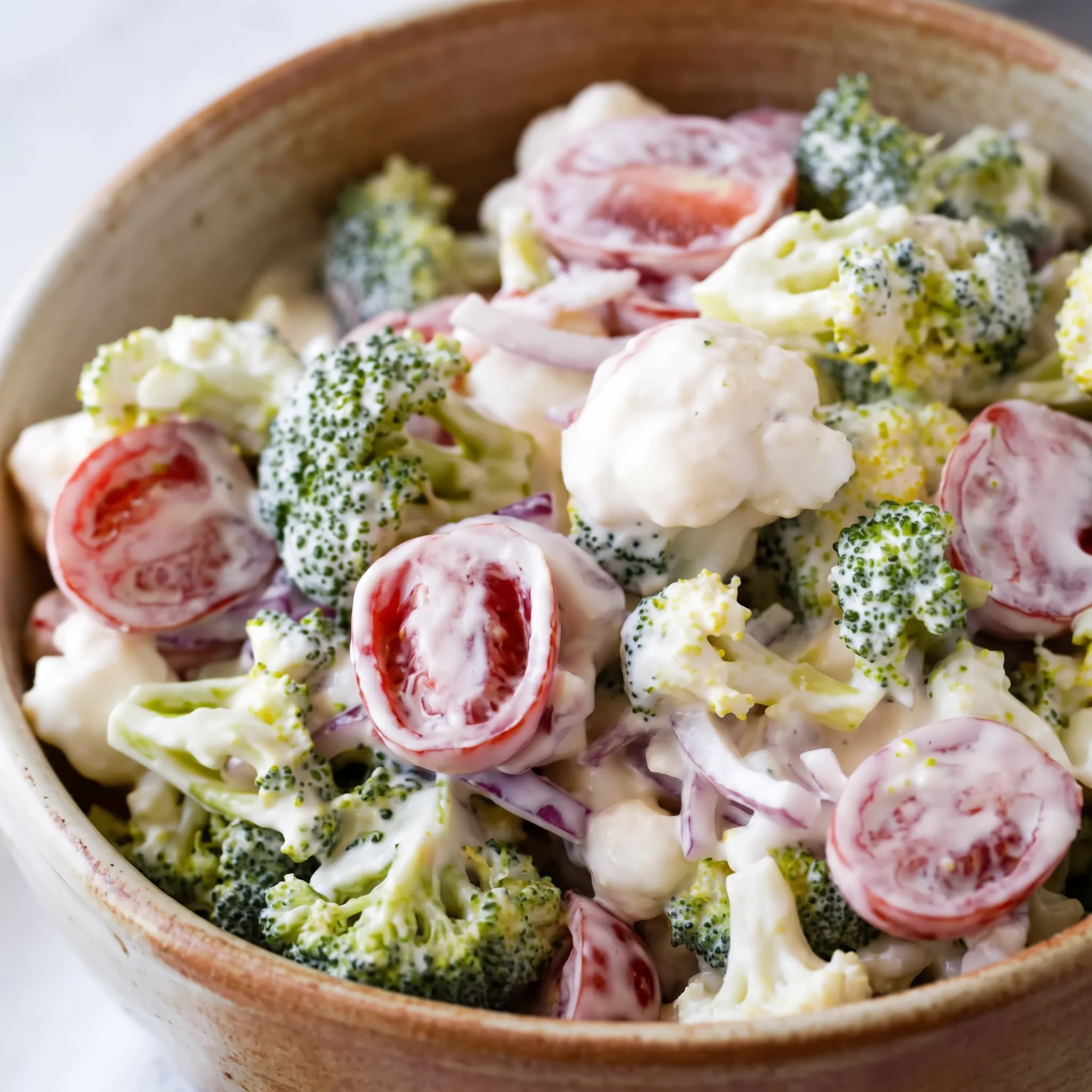
Creamy Broccoli Cauliflower Salad with Cherry Tomatoes
Ingredients
Method
- Place the broccoli, cauliflower, red onion, and cherry tomatoes into a salad bowl.
- In another bowl, whisk the mayonnaise, sour cream, and sugar together until smooth. Pour this dressing over the vegetables and toss until evenly coated.
- Chill for 1 hour prior to serving.
Storage, Serving Window, and Leftovers
This salad is at its best within the first hour or two after the chill. That’s when the dressing still clings in a thick coat, the florets keep some resistance, and the tomatoes haven’t started shedding water into the bowl. Serve it straight from the fridge, cold, because the dressing loosens fast at room temperature.
After that first serving, the texture divides. The broccoli and cauliflower keep their structure for another day or two in an airtight container, but the tomatoes release liquid and the dressing thins as it sits.
By day two, expect a wetter salad: still creamy in flavor, looser in body. Toss before each serving to redistribute the dressing, and if it looks watery, spoon off the excess instead of adding more.
Don’t freeze the assembled salad. The mayonnaise and sour cream separate when thawed, and the vegetables collapse. Eat leftovers within three days.
Tips
- Buy heads with no visible moisture on the cut stem end. Wet stems mean the head was misted or stored damp, and that water sits in the crevices of the florets you cut, so the dressing slides off instead of clinging, leaving a puddle at the bottom of the bowl within the hour.
What You Can Swap Without Wrecking the Creamy Base
Mayonnaise: Greek yogurt or a lighter mayo blend. Greek yogurt brings more tang and less fat, so the dressing will taste sharper and won’t cling as well.
Start with the same 1 cup the recipe uses, then taste after mixing. If it’s too thin or tart, whisk in a spoonful of mayonnaise to bring back body.
A light mayo blend works better than straight yogurt because it keeps some richness, but it still thins out after chilling. Expect a dressing that coats more like a vinaigrette than a thick ranch.
Sour cream: Plain whole-milk yogurt or crème fraîche. Whole-milk yogurt is thinner and tarter, so the dressing will runnier and more acidic.
Use the same ½ cup, but consider cutting the sugar back by a pinch since the yogurt adds its own tang. Crème fraîche is thicker and less sour, giving a richer dressing that clings better. Either way, the two-to-one ratio of mayo to sour cream still matters; if you swap both, the dressing may not set up as firmly.
Sugar: Honey or maple syrup. Honey is sweeter and thicker, so use slightly less than 1 tablespoon, maybe 2 teaspoons, and whisk it in well or it will clump. Maple syrup is thinner and less sweet, so start with the full tablespoon.
Both add a distinct flavor: honey brings a floral note, maple a faint caramel edge. If you’d rather cut sweetness entirely, leave it out and taste the dressing on a piece of broccoli.
Without any sugar, the raw onion and broccoli taste harsh against the tangy cream. A pinch of sugar or a small drizzle of honey is usually enough to round that off.
Red onion: Shallot or sweet onion. Shallots are milder and less pungent, so you can slice them thin and use the same amount without overwhelming the salad.
Sweet onion, like Vidalia, is also milder but juicier, so it may release more water as the salad chills. If you use sweet onion, slice it extra thin and consider soaking the slices in cold water for a few minutes, then patting them dry, to tame the bite. The dressing’s balance stays the same, but the overall sharpness drops.

Frequently Asked Questions
Can I make this broccoli cauliflower salad ahead of time?
You can, though how far ahead depends on what you want to protect. The vegetables hold up fine dressed and chilled overnight, but the halved cherry tomatoes start releasing their juice, so the dressing thins and you’ll see liquid gathering at the bottom of the bowl by the next day.
If you’re building it a day out, leave the tomatoes out until the last hour and keep them in a separate container. Toss everything together right before you plan to eat, and the salad stays closer to how it tastes fresh.
Why did my creamy broccoli cauliflower salad become watery?
The dressing was likely too thin to start, and the vegetables shed their own liquid once it sat. Mayonnaise and sour cream hold a coat only when the mixture is thick enough to leave a slow-filling trail behind a spoon, and a loose dressing slides off the florets and pools. Tomatoes are the other culprit: halved cherry tomatoes keep leaking juice into the bowl, especially after a day in the fridge.
Next time, spoon off the excess liquid before serving instead of stirring it back in, and check the dressing texture before it goes over the vegetables.
How is this Christmas salad different from the classic broccoli cauliflower salad?
Color and contrast do most of the work. The red onion and cherry tomatoes against the green broccoli and white cauliflower give the bowl the red-and-green look that earns the name, and the tomatoes add a juicy burst the classic versions usually get from dried fruit or bacon. Creaminess stays the same: mayonnaise, sour cream, and a tablespoon of sugar, so the dressing tastes tangy rather than sweet.
It’s the same creamy base with a fresher, brighter set of vegetables carrying it.
