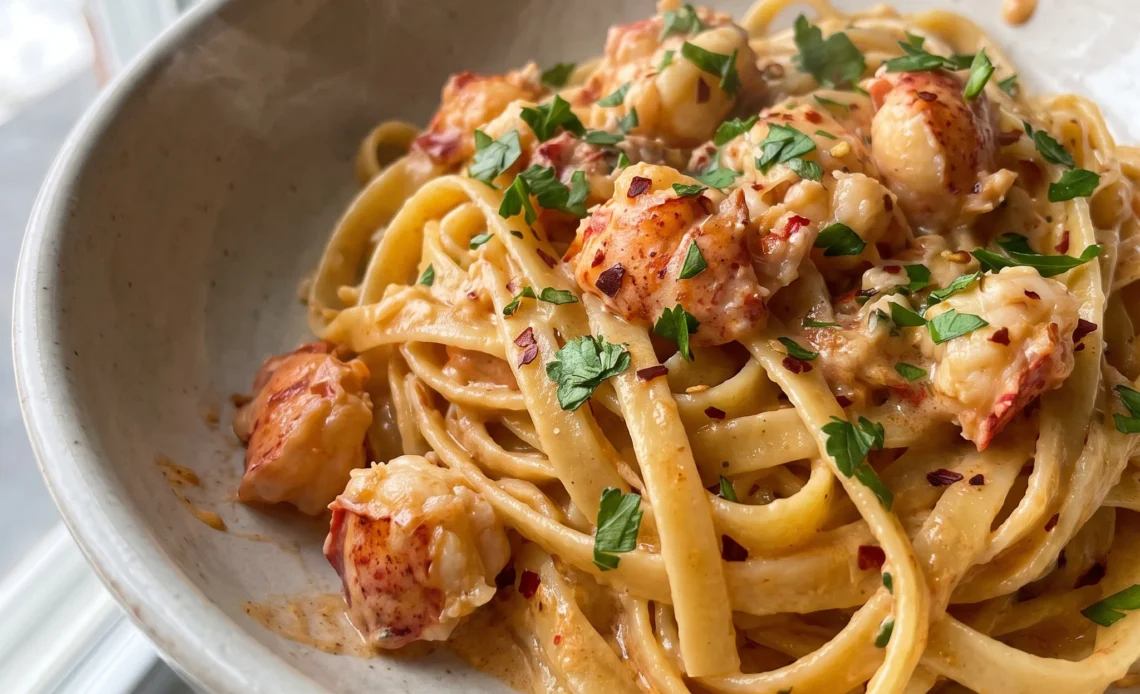
Rushing the lobster is where most versions of spicy lobster pasta go wrong, and the meat is already cooked when it reaches the pan, so a minute too long is the difference between tender and tight. What makes this work is the order of operations: garlic and red pepper flakes bloom first, the lobster only warms through, and the cream and Parmesan come together over low heat in the same skillet so nothing gets left behind. The margin is narrower than the ingredient list suggests.
Cream that boils, cheese added in one dump, pasta drained without a cup of its cloudy water saved. Any of those and you get a greasy plate instead of a glossy one.
Starchy water keeps the sauce clingy
That half cup of cloudy water you set aside before draining the fettuccine is what holds this plate together. Heavy cream and olive oil are fats, and fats don’t mix with the watery liquid the lobster releases; left alone, they slide off the pasta and pool at the bottom of the skillet. The starch suspended in the cooking water gives the fat something to grab onto, so the sauce coats the fettuccine and lobster instead of sitting underneath them.
You can see the change the second the pasta hits the pan: the sauce tightens around each strand and turns glossy. Without it, a thick sauce stays thick and greasy, and no amount of stirring fixes that. The cream also carries Parmesan, which is salty and heavy; the starchy water thins it just enough to keep the texture fluid.
By the time you’re tossing, that reserved liquid is the difference between a sauce that clings and one that separates on the plate.
Warm lobster without toughening it
Cooked lobster meat is already done, so the sauté step is about heating it through and letting it pick up flavor, not cooking it further. Keep the heat at medium and give it only a minute or two in the pan; past that, the meat tightens and turns rubbery, and no sauce will bring it back. Garlic and red pepper flakes need a head start in the oil so they can release their flavor before the lobster goes in.
If you add the lobster first, the garlic sits on top and steams instead of blooming, and you lose that savory edge. The flakes also need a moment in the oil to wake up; otherwise they taste flat and raw. You’ll know the pan is ready when the garlic smells sweet and the oil shimmers.
The lobster should be just opaque and warm through, still tender when you bite into a piece. That’s what you want before the cream goes in.
Low heat makes Parmesan melt smoothly
Parmesan is finicky. It melts into a silky sauce only when the cream is warm but not bubbling, and when you add it a handful at a time.
Turn the heat up and the cheese turns grainy, seizing into little knots that never smooth out. The cream itself can break if it boils, leaving a greasy film on your tongue. So keep the flame low and stir constantly as the cheese disappears.
You’re looking for a uniform, silky texture with no visible shreds or lumps. That’s when the sauce is ready to receive the pasta. The reason this step comes after the lobster is warmed is simple: the lobster needs the hot pan and the garlic oil first, and the cream would scorch if it sat over direct heat while you fiddled with the seafood.
By building the sauce in the same skillet, you keep all the flavor from the lobster and aromatics in the final dish. The sauce should coat the back of a spoon without dripping off in sheets.
Toss pasta into the skillet
Pouring sauce over a pile of pasta in a bowl leaves you with clumps and dry patches. Instead, add the drained fettuccine straight into the skillet with the lobster and cream sauce.
The pan is still warm, and the pasta’s residual heat helps the sauce spread. Toss with tongs or a spoon, lifting and folding until every strand is slicked with sauce and the lobster is distributed evenly.
If the sauce tightens too much, splash in some of the reserved pasta water, a little at a time, until it flows again. That water also seasons the dish from the inside, since it’s already salty from the cooking. Wait to add salt and pepper until after everything is combined, because the Parmesan and the pasta water have already brought salt to the party.
Taste a strand. It should be creamy, a touch spicy, and the lobster should still feel tender.
Serve right away, while the sauce is still loose enough to coat.
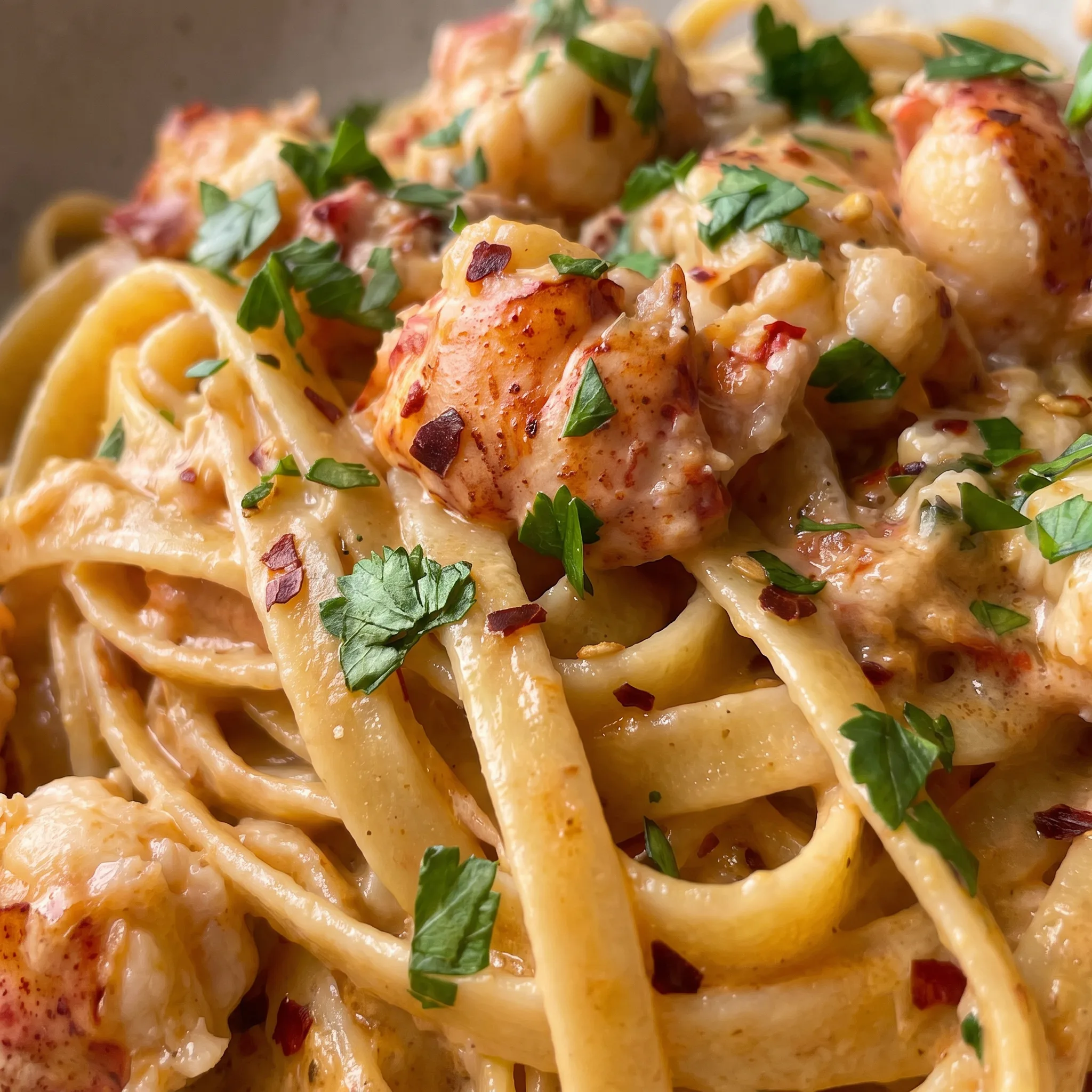
What to look for before the pan gets hot
Fettuccine: The 8 oz of dried fettuccine needs a pot big enough to boil freely, or the strands glue together before they ever meet the sauce.
Lobster meat: Buy 1 lb of cooked meat, and check it’s not sitting in liquid, since wet lobster steams the pan instead of picking up the garlic oil.
Heavy cream: Real heavy cream at 1 cup, not half-and-half or milk, because anything leaner breaks when it hits the warm skillet.
Parmesan: Grate the 1/2 cup yourself from a block, since the pre-shredded kind is dusted with starch that turns the sauce grainy.
Red pepper flakes: The 1 tsp should smell sharp and fruity when you open the jar, because old flakes taste like dust and add heat without flavor.
Garlic: Three fresh cloves you mince yourself, since the jarred stuff is wet and acidic and browns before it ever turns sweet.
Reading the pan at three points decides whether this pasta turns out creamy or greasy
When the garlic is ready and when it has gone too far
Mince hits oil that shimmers but doesn’t smoke. You’re listening for a soft sizzle, not a roar, and watching for the edges to go pale gold.
That takes about a minute. The second it browns, it’s bitter, and the cream won’t hide that. If you smell toasted garlic instead of sweet garlic, dump the oil and start over.
There’s no rescuing burnt allium.
Judging the lobster by feel, not by the clock
Cooked lobster is already done. It needs warmth, not heat.
Press a piece with the back of your spoon: it should give, then spring back. If it feels firm or squeaky against your teeth when you sneak a bite, you’ve gone past warm and into rubber. Pull the pan off the heat immediately.
The cream will still heat it through later, so err on the side of under.
The moment the Parmesan goes from silky to seized
Low heat, and add the cheese in small handfuls, stirring until each disappears before the next. The sauce should look like heavy cream that’s been tinted pale yellow, glossy and loose.
If you see tiny grains or the surface looks broken and oily, the pan is too hot. Pull it off the burner and whisk in a splash of the pasta water to bring it back.
Once it’s fully seized, it stays grainy.
Tasting for salt after the pasta water goes in, not before
The pasta water is already salty, and Parmesan is salty. Seasoning before those go in means you’ll overshoot. After tossing, taste a strand.
It should taste seasoned, not salty. If it’s flat, add a pinch.
If it’s too salty, a splash more cream will dilute it. Pepper you can add at the end without much risk, but salt you can’t take back.
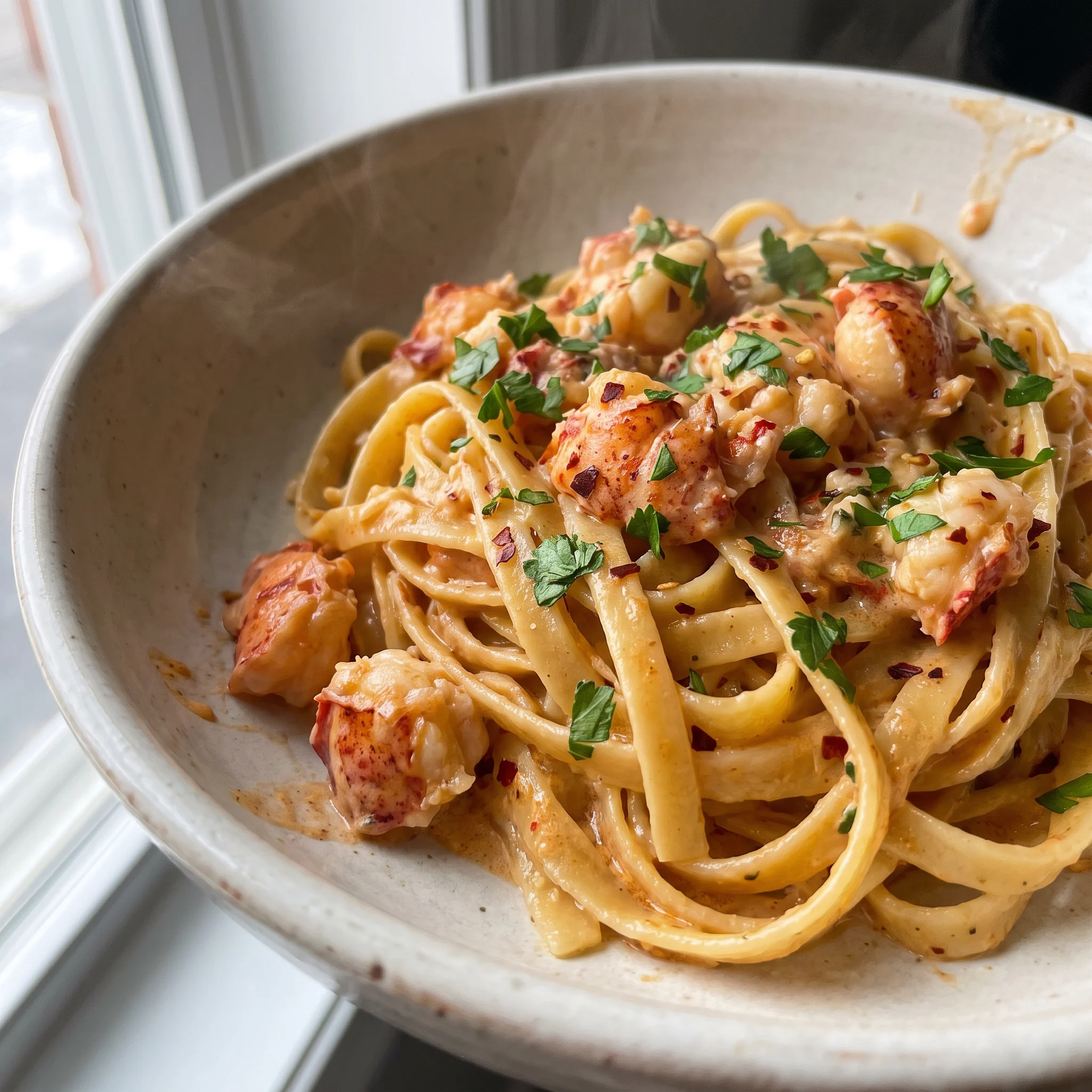
Creamy Spicy Lobster Pasta with Fettuccine
Ingredients
Method
- Fill a large pot with salted water and bring it to a rolling boil. Drop in the fettuccine and cook following the package directions until al dente. Before draining, set aside approximately 1/2 cup of the pasta cooking liquid. Then drain the pasta.
- Place a large skillet over medium heat and warm the olive oil. Toss in the garlic and stir for roughly a minute until aromatic. Next, incorporate the chopped lobster meat and red pepper flakes, sautéing until the lobster is thoroughly warmed.
- Turn the heat down to low. Introduce the heavy cream, stirring thoroughly to blend. Slowly incorporate the Parmesan cheese while stirring continuously until the sauce becomes velvety and uniform.
- Add the cooked pasta to the skillet containing the lobster and sauce, tossing to coat evenly. If the sauce seems too thick, gradually introduce the reserved pasta water. Adjust seasoning with salt and pepper to taste.
- Plate right away, finishing with fresh parsley and extra Parmesan if you like.
Four ingredients carry the dish, and only some of them forgive a swap
Lobster meat: Cooked shrimp or lump crabmeat, same 1 lb. Shrimp are firmer and sweeter, so the sauce reads less briny and more like a scampi. Crabmeat is closer in texture but falls apart as you toss; fold it in after the pasta is coated.
Both are already cooked, so warm them just until they give under a spoon, same as the lobster.
Heavy cream: Full-fat coconut milk, same 1 cup. The sauce will taste faintly of coconut, which fights the red pepper flakes.
It also thins faster, so add Parmesan off the heat and serve immediately. Half-and-half or whole milk won’t work; they lack the fat to coat the pasta and will break into a watery pool.
Parmesan: Pecorino Romano or a hard aged sheep’s milk cheese, same 1/2 cup grated. Pecorino is saltier and sharper, so pull back on the added salt and taste before seasoning.
The sauce will still turn silky if you keep the heat low. A soft cheese like mozzarella or cheddar will clump and string; save those for another dish.
Fettuccine: Gluten-free fettuccine or linguine, same 8 oz. Gluten-free pasta releases more starch into the water, so the sauce thickens faster. Reserve the full 1/2 cup of cooking liquid and add it a splash at a time.
The strands are more fragile, so toss gently and plan to serve right away; they stiffen as they cool.
Tips
- Buy cooked lobster meat the same day you cook, and ask the counter for a smell before it’s wrapped. Sweet and clean means it’s fresh; a briny or ammonia edge means the meat has been sitting, and the garlic, cream, and Parmesan will only mask it for a bite or two. No later step in this recipe reverses that.
- If you’re buying a whole cooked lobster and picking the meat yourself, keep the tomalley and any green matter out of the 1 lb you chop. It turns the cream sauce gray-green and adds a bitter, liver-like taste that the red pepper flakes can’t cover. Rinse the picked meat briefly and pat it dry so it doesn’t steam in the skillet.
Eat it in the first ten minutes, and know what leftovers do
Cream sauces are unstable by nature, and lobster is lean and firm. Together they set a hard deadline: this pasta is best within ten minutes of tossing. Past that, the cream keeps absorbing into the fettuccine, the sauce thickens to a paste, and the lobster tightens as it sits in the hot pan.
Plate it, put the parsley on right then, and eat. Parsley goes on at the plate, never in the skillet; it wilts and darkens within minutes over residual heat.
Leftovers keep in the fridge for two days, no longer, because the cream and Parmesan are fresh dairy. They reheat poorly. The sauce tightens and the lobster firms up.
If you must reheat, do it gently in a covered pan over low heat with a splash of water or cream, stirring until it loosens. It won’t return to the original texture. The lobster will stay firm.
Freezing does not work here: the cream breaks and the lobster turns watery when thawed. If you’re cooking for fewer than four, cut the recipe down rather than plan on leftovers.
A cream and Parmesan sauce can be built two ways: over medium heat with fast stirring, or over low heat with gradual cheese incorporation. Medium heat melts the cheese quickly but risks reaching a temperature where the cream’s fat globules coalesce and the Parmesan proteins tighten into grainy clumps, whereas low heat keeps the sauce below that threshold so the cheese melts smoothly into a silky emulsion. This recipe uses low heat and slow addition because the goal is a uniform sauce that coats without breaking.
Frequently Asked Questions
Can I make creamy spicy lobster pasta ahead of time?
No. The sauce is built in the skillet and the pasta is tossed in it right before serving. Once the cream and Parmesan hit the fettuccine, the sauce starts absorbing into the strands, and within ten minutes it tightens to a paste.
The lobster also firms up as it sits in the hot pan. If you need to get ahead, you can boil the pasta and chop the lobster earlier in the day, but keep them separate and cold until you’re ready to finish the dish.
Why did my cream sauce curdle or separate?
The most likely cause is too much heat when the Parmesan went in. The cream has to be warm but not bubbling, and the cheese needs to go in a little at a time, stirring until each addition disappears. If the pan is too hot, the cheese seizes into tiny grains and the cream can break into a greasy film.
Pull the pan off the burner and whisk in a splash of the reserved pasta water to bring it back, but once it’s fully seized it stays grainy.
How is this different from lobster fra diavolo?
Fra diavolo is a tomato-based sauce, usually with a good hit of dried chili, and the lobster simmers in it. Here there’s no tomato at all.
The sauce is heavy cream and Parmesan, built in the same skillet after the lobster is warmed, and the only heat comes from the red pepper flakes. The result is rich and creamy rather than bright and acidic, and the lobster stays in distinct pieces instead of blending into a red sauce.
