
What looks like a simple winter salad on paper has one real failure point, and it happens the second the dressing hits the greens. A maple vinaigrette built on mayo holds together in a way a plain oil-and-vinegar mix never does, and that changes how you handle the bowl. It clings instead of pooling, which is exactly why an overdressed batch goes limp before the pomegranate and pepitas ever land.
Get the coating right and the rest is assembly: a few textures, a little sweet-tart pull, and enough structure that it sits next to a heavy braise without wilting under the weight of the plate. The trickiest part isn’t the dressing itself.
It’s knowing how much of it the leaves can actually take.
Why Does Mayo Belong in a Vinaigrette?
Mayo in a dressing sounds odd until you shake it. The oil and vinegar in this vinaigrette want to part ways the moment you stop stirring, but the mayo holds them together. That’s not chemistry for its own sake; it’s what you see in the jar.
Shake it and the dressing turns uniform and slightly thick. Pour it over greens and every leaf gets the same maple tang. Without that binding, you’d get a slick of oil on some leaves and a sharp hit of vinegar on others.
The dressing is shaken, not whisked, because the mayo does the work for you. A few good shakes and it’s ready. If you’ve ever had a vinaigrette that pools at the bottom of the bowl, you know what’s missing.
Here, the dressing clings. That even coating is what makes each bite taste deliberate, not accidental.
Why Dress the Greens and Toppings Separately?
Tossing all the dressing in at once is easy, but it makes a soggy salad. Instead, you add about half to the greens first.
That’s enough to season them without drowning. The leaves get a light, even coat.
Then the pomegranate, cranberries, and fruit go in. They get the remaining dressing drizzled over the top.
This way, the crunchy pepitas and creamy feta stay distinct. The pomegranate arils don’t bleed into the greens, and the cranberries don’t turn everything pink. You end up with a salad where each component still tastes like itself.
The greens are seasoned, the fruit is glossy, and the nuts stay crisp. It’s a small extra step that keeps the textures intact.
If you’re not eating it all, dress only what you’ll serve. Leftovers keep better when the dressing is separate.
How Does the Dressing Work with Different Fruits?
Oranges, pears, or apples all change the salad, but the dressing is built to handle any of them. Oranges bring juicy acidity and a soft bite that soaks up the maple.
Pears and apples add crunch and a milder sweetness. The vinaigrette’s own balance of sweet and tart is what makes it flexible.
It won’t overpower a delicate pear or clash with a tart apple. Using whatever fruit you have on hand isn’t a compromise; it’s the point. The dressing stays the same, so you can swap the fruit based on what’s in the bowl.
That consistency means you can make this salad in December with oranges or in October with apples, and it still tastes like it belongs on the table. The fruit is the variable; the dressing is the constant that ties it together.
What Makes This Salad Feel Complete?
A bowl of leaves alone feels like a side dish that’s missing something. Here, the mix of textures does the work.
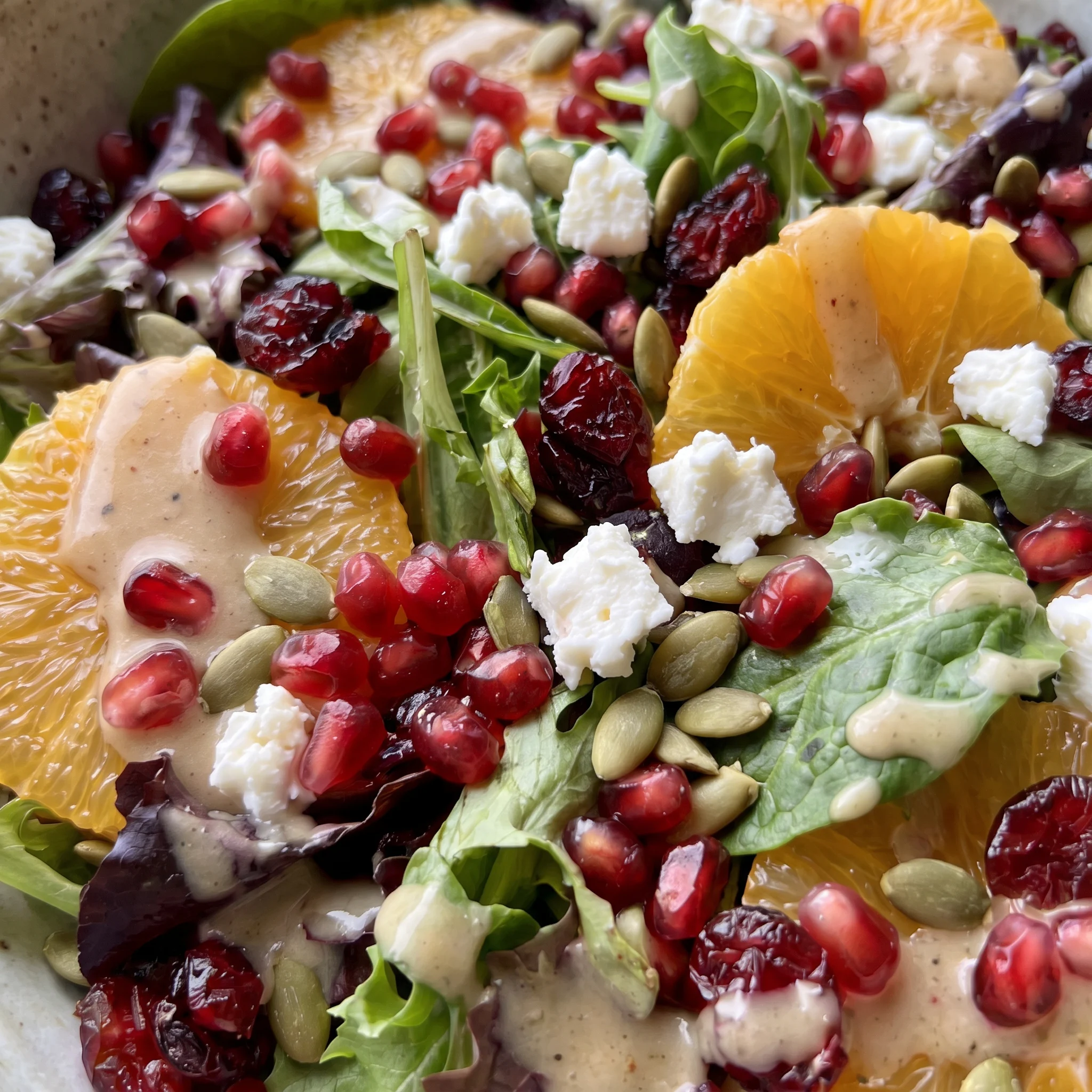
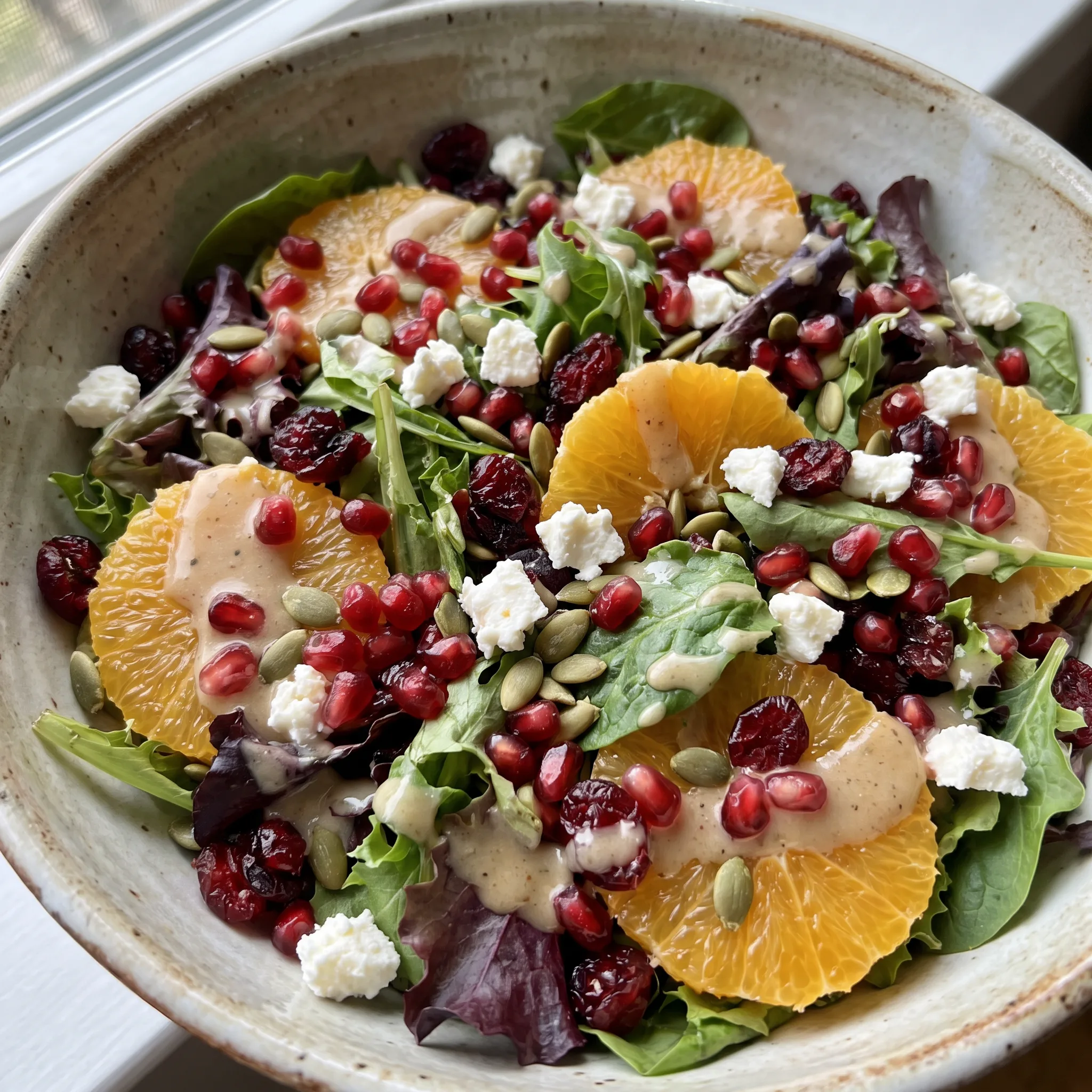
Creamy feta and the mayo-based dressing coat your tongue, while pepitas crackle and pomegranate arils pop. Dried cranberries add a chewy sweetness that keeps things interesting. Fresh fruit brings juiciness that cuts through the richness.
None of these elements dominate; they each show up in every bite. That balance is why this salad can sit next to a heavy winter braise without feeling like an afterthought.
It’s not a light, summery salad that disappears. It has enough going on to hold its own on a holiday table. When you take a forkful, you get crunch, cream, sweet, and tart all at once.
That’s what makes it satisfying, even when the weather outside is cold.
What to Look For Before You Toss
Pomegranate: A ripe one feels heavy for its size with skin pulled tight, so it gives only slightly under your thumb.
Mixed greens: Buy 8 cups of leaves that are dry and crisp, since wet or limp greens won’t coat evenly.
Feta: Choose a block in brine over pre-crumbled, because the dry kind tastes chalky and won’t cream into the dressing.
Maple syrup: Use real maple syrup, not pancake syrup, so the 2 tablespoons taste like sap rather than vanilla and corn syrup.
Pepitas: Raw green pumpkin seeds toast up nuttier than the roasted salted kind, which can taste stale and too salty here.
How to Tell When This Salad Is Right at Each Turn
Judging the dressing’s cling before it hits the greens
Shake the jar and pour a spoonful back into it. The dressing should run off the spoon in a slow, even sheet, not in a thin stream like plain oil and vinegar. If it’s watery, shake harder, the mayo hasn’t caught the oil yet.
If you overshoot and it’s thick like ranch, add a teaspoon of vinegar and shake again. This is the texture that coats leaves evenly instead of pooling at the bottom.
Knowing how much dressing the greens have taken
After tossing with half the dressing, lift a leaf and look at it. It should shine but not drip. If dressing pools in the bottom of the bowl, you’ve added too much for the amount of greens.
Add another handful of greens to soak it up, or leave the excess behind. Overdressed greens go limp before the toppings even land, and there’s no fixing that.
Tasting the dressing for sweet-tart balance
The maple and vinegar should hit one after the other, neither running away with it. Dip a piece of the fruit you’re using into the jar and taste.
If the maple tastes flat or syrupy, a few more drops of vinegar sharpen it. If it makes you pucker, a little more maple rounds it out. Salt and pepper at this stage taste brighter than after the greens go in, so adjust now, not later.
Reading the pomegranate for arils worth eating
A ripe pomegranate feels heavy for its size and the skin has tightened against the arils inside, so it gives only slightly under your thumb. If the skin is soft and spongy, the arils inside are likely pale and dull. Cut one open to check before you commit the whole fruit.
Dull, dry arils won’t pop against the dressing; they’ll just sit there. Juice them for something else and use dried cranberries in their place.
Slicing the fruit so it doesn’t water down the bowl
Oranges, pears, and apples all need different treatment. Orange segments should be cut free of their membranes so they don’t leak juice into the greens. Pears and apples want thin slices, about an eighth of an inch, so they bend with a fork instead of crunching like a raw wedge.
If you cut them thick, they’ll taste like a separate snack instead of part of the salad.
Winter Salad with Maple Vinaigrette
Ingredients
Method
- If making maple-cinnamon pecans, prepare them first (see note 1).
- Combine all dressing ingredients in a jar with a lid. Add salt and pepper to taste (start with 1/4 teaspoon each). Shake well and refrigerate. Shake again before using.
- This salad doesn’t keep well with dressing as it quickly wilts the toppings and greens. If you aren’t eating the entire salad in one sitting, dress only the portion you’ll eat, and store the rest separately.
- In a large bowl, add the mixed greens. Toss with about half the dressing until nicely coated. Add the pomegranate, cranberries, and thinly sliced or chopped fruit (oranges, pears, or apples). Drizzle with the remaining dressing, or to taste. Sprinkle with candied nuts or pepitas and the crumbled cheese. Serve promptly.
Where This Winter Salad Will and Won’t Budge
Pomegranate: 1 cup of arils from a tub, or dried cranberries if you’re out of both. Arils you didn’t have to seed keep the pop and the ruby color, though they can taste a little flatter than fruit you just broke open. Dried cranberries step in when pomegranate season is over.
They bring chew instead of crunch, so the salad gets softer, and you’ll want to dial back the half cup already in the recipe to keep the sweetness from taking over.
Feta or goat cheese: Goat cheese for feta, or skip both for a dairy-free salad. Feta crumbles and stays in distinct salty bits.
Goat cheese is softer and tangier; it smears into the dressing and makes the whole bowl creamier and a little more sour. Leave cheese out entirely and you lose the creamy counterweight to the tart pomegranate and sharp vinaigrette, so the salad reads lighter and more acidic.
If you’re avoiding dairy, add sliced avocado for richness, but dress the greens first so the avocado doesn’t get beaten up.
Oranges, pears, or apples: Whatever ripe fruit you have: orange segments, thin pear or apple slices, or a mix. Oranges give juicy acidity that soaks into the greens; pears and apples give crunch and milder sweetness. The dressing is built to handle either, so this is the safest place to improvise.
Just cut oranges free of their membranes so they don’t leak and water down the bowl, and slice pears and apples about an eighth of an inch thick so they bend with a fork instead of crunching like a raw wedge.
Maple syrup: Honey or agave, same 2 tablespoons to start. Honey tastes floral and a touch sharper than maple; agave is neutral and sweeter.
Both will still bind with the mayo and vinegar, but the dressing’s flavor shifts. Start with the same 2 tablespoons, shake, and taste.
If it’s too sweet, add a few more drops of vinegar. Skip pancake syrup entirely; it’s corn syrup and vanilla, and it makes the dressing taste flat and artificial.
Tips
- Shake the dressing in a jar with a lid right before you pour it, not just when you first mix it. The mayo settles as the jar sits, so the oil and vinegar separate and the dressing starts out thin; a hard ten-second shake pulls it back into a uniform, slightly thick coat that clings to the leaves instead of sliding off. If you mix it with a whisk in a bowl, the emulsion breaks again the moment you set it down, so pour straight from the jar you shook.
How to Store and Serve This Winter Salad
This salad has a serving window of about 20 minutes once dressed. The greens start collapsing as soon as the vinaigrette hits them, so toss whatever you’ll eat right before it goes on the table, and eat it while the pepitas still crackle. Hold the nuts and feta back until the last second; they soften fast against the wet leaves.
Store the greens dry, in a lidded container with a paper towel under the lid, and keep the dressing in its jar. Both hold in the fridge for three days. The pomegranate arils, cranberries, and cut fruit go in a separate container and keep the same three days, though apples and pears brown, so slice them fresh if you can.
Shake the dressing before every use; the mayo settles.
The dressing is the only part worth freezing, up to one month. Thaw it in the fridge and shake hard. The assembled salad, greens, fruit, cheese and all, doesn’t freeze.
Build each portion from the cold components, dress it, and eat it within the hour.
The most common mistake is pouring all the dressing over the entire bowl and tossing everything together. The vinegar and salt start pulling moisture from the greens immediately, and the crunchy toppings, pepitas, pomegranate arils, and dried cranberries, absorb that moisture and lose their snap. Within minutes, the salad goes from crisp and bright to wilted and heavy.
Frequently Asked Questions
Can I make this winter salad ahead of time?
Build it in parts, not assembled. Keep the greens dry in a lidded container with a paper towel under the lid, the dressing in its jar, and the pomegranate, cranberries, and cut fruit in a third container, all three days in the fridge. Apples and pears brown once sliced, so if you can cut those the day you serve, do.
Hold the pepitas and feta until the last second; they soften fast against wet leaves. Then toss only what you’ll eat, since the greens start collapsing once the vinaigrette hits them.
Why did my maple vinaigrette separate?
The mayo didn’t catch the oil, most likely because the jar didn’t get shaken hard enough or long enough. Mayo is what holds this dressing together, and a few lazy turns won’t do it; you need a brisk shake until the whole thing turns uniform and slightly thick.
A second cause is temperature: cold oil straight from the fridge resists blending, so let the jar sit out a few minutes or shake longer. The dressing will separate again as it sits, which is normal, so shake before every pour.
How is this different from a classic winter salad?
A classic winter salad usually leans on roasted squash, warm grains, or a heavy mustard vinaigrette. This one stays cold and crisp, with pomegranate arils and pepitas doing the seasonal work instead of root vegetables.
The dressing is maple and mayo, shaken in a jar, which clings to the greens rather than pooling. It’s also built to swap fruit freely, oranges, pears, or apples, so the salad changes with what’s ripe. The result reads lighter than a grain-based winter plate but still has enough crunch, cream, and tart to sit next to a braise.
