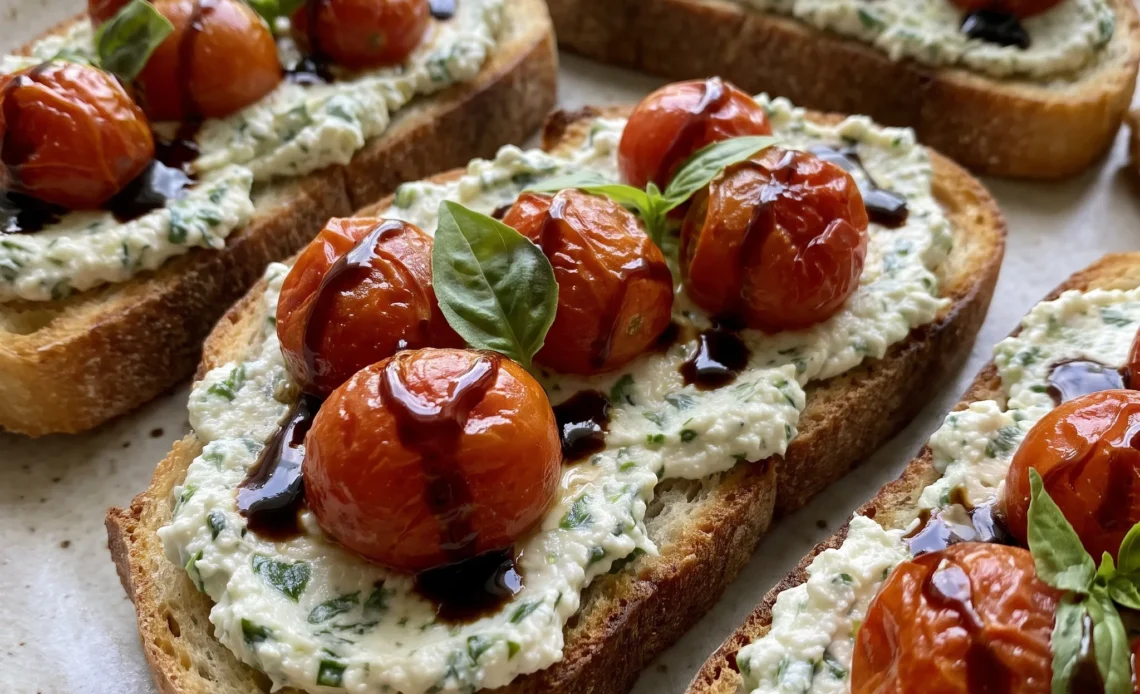
This isn’t classic tomato bruschetta, and it shouldn’t be treated like it. The tomatoes go into a hot oven, where their skins split and their juices thicken into something sweet and jammy instead of watery and sharp. Underneath sits a blended ricotta, loose enough to spread in one swipe but firm enough to hold a tomato in place.
Both halves of that contrast are yours to wreck: roast the tomatoes past the point where they hold a spoon, or leave the ricotta grainy, and every piece tastes muddy. The awkward part of ricotta bruschetta is that the cream sits against the bread, so the base has to stay crisp enough to carry it. A few things about the components are worth knowing before you start, and none of them are about the recipe itself.
Ricotta contains free whey, and roasted tomatoes release juice when their cell walls rupture. When either sits on bread for more than a few minutes, capillary action pulls that liquid into the crumb, collapsing the crisp crust. Without a moisture barrier, the toast loses its structural integrity and becomes a soggy base.
Keep the Toasts Crisp
Roasting the tomatoes and toasting the bread in separate pans at the same 400ºF oven temperature is what keeps each component at its best. The tomatoes release their juices and concentrate their sugars in the baking dish, so they don’t soak the bread later.
The bread slices, brushed with garlic oil, toast to a firm, golden crisp. That crispness is your barrier; when you spread ricotta on a cooled slice, it stays put instead of turning the toast limp.
Both components bake in the same oven, so you’re not juggling temperatures or waiting for one to finish before the other starts. The result is a bruschetta that holds its shape from the first bite to the last, with tomatoes that taste sweet and intense rather than watery. You’ll notice the difference when you pick up a piece and it doesn’t droop.
Whirl the Ricotta Smooth
A smooth ricotta spread does two things: it covers the toast in an even layer, and it gives the tomatoes a soft bed that keeps them from rolling off. When you blend the ricotta with basil, garlic, and olive oil, the mixture turns light and uniform, almost like a thick cream.
That consistency means every bite gets the same amount of ricotta, tomato, and bread, no pockets of plain cheese or dry toast. Chilling the mixture for a bit firms it up just enough so it spreads without running off the edges of the bread.
You can spoon it on and swipe it across in one motion. The basil and garlic are distributed evenly, so you don’t get a harsh bite of raw garlic in one spot and none in another. It’s ready to use straight from the fridge.
Three Ways Garlic Works Here
Garlic shows up in three places, and each one does a different job. In the oven, the minced garlic tossed with the tomatoes softens and sweetens, losing its raw edge and blending into the syrupy tomato juices.
The garlic in the ricotta stays raw, so it hits with a sharp, clean bite that cuts through the dairy. Then there’s the garlic oil brushed on the bread before toasting; the heat tames it slightly but leaves a savory aroma that rises when you take the tray out. Together, they build a rounded garlic flavor that doesn’t punch you in the face.
You get the mellow back note from the tomatoes, the fresh kick from the ricotta, and the toasted garlic scent from the bread. None of them shout over the others.
Drizzle the Glaze at the End
Balsamic glaze goes on after everything else is piled on the toast, not stirred into the ricotta or mixed with the tomatoes. That dark, syrupy drizzle adds a sweet-tart zing that wakes up the creamy ricotta and the roasted tomatoes. If you fold it into the cheese, the whole mixture turns muddy and the acidity takes over, drowning out the basil.
Drizzled on top, it stays where it lands, giving you a glossy streak that catches the light. It also keeps the bread from getting soggy, since the glaze doesn’t soak in the way a thin vinegar would.
Each piece looks as good as it tastes: white ricotta, red tomatoes, green basil, and that ribbon of dark glaze. It’s the last thing you do before serving, and it makes the first bite pop.
Built for Twelve Even Pieces
Everything in this recipe is measured to give you 12 balanced toasts without leftovers or a last-minute scramble. You’ll have just enough ricotta to spread 1 to 2 tablespoons on each slice and 2 to 3 tomatoes to pile on top. That ratio keeps the toast from getting overloaded, so you can pick it up without the toppings sliding off.
The bread loaf yields exactly 12 half-inch slices, and the tomatoes and ricotta are portioned to match. It’s a light but satisfying bite, the kind that works at a party where people are grazing.
You won’t end up with a bowl of extra ricotta or a handful of tomatoes looking for a home. Each piece gets the same generous topping, so no one feels shortchanged.
The numbers are there to make serving easy.
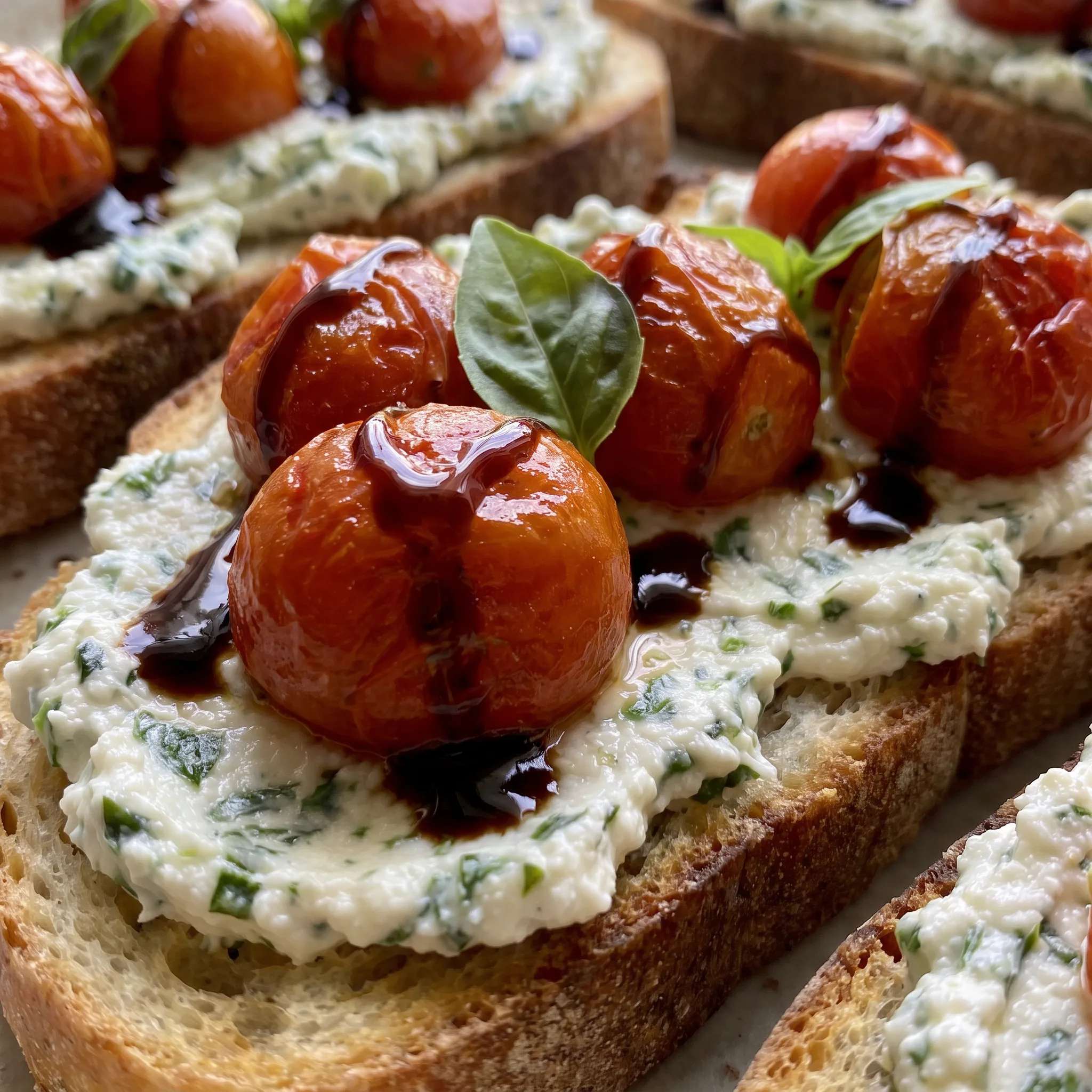
What to Look For Before You Start
Sweet cherry tomatoes: Pick ones that feel heavy for their size and smell faintly of the vine, since watery or pale tomatoes roast into flat, thin juice instead of sweet concentrate.
Ricotta: Buy whole-milk ricotta packed in a tub with visible curds and no watery pool on top, because skim or grainy ricotta blends up thin and tastes flat.
Fresh basil: Leaves should be bright green with no dark spots or limp edges, and the 1/2 cup going into the blender needs to be dry after washing so the ricotta doesn’t turn loose.
Crusty bread loaf: A loaf with a firm, dry crust and a tight crumb slices into 12 half-inch pieces that hold their shape, while soft sandwich bread squashes under the ricotta.
Balsamic glaze: The bottled glaze should pour thick and syrupy, not thin like vinegar, or it soaks into the toast instead of sitting on top as a ribbon.
Deciding When the Tomatoes, Ricotta, and Toasts Are Ready
Judging the Tomatoes by Their Skins and Juices
At 20 minutes, the tomatoes should have split and released some juice into the dish, but they shouldn’t be collapsed into a sauce. If most skins are still tight, give them a few more minutes.
If they’ve burst and the juices look thin, they’re fine; they’ll thicken as they cool. Over-roasted tomatoes turn mealy and lose their bright sweetness.
The goal is soft, glossy tomatoes that hold their shape when you lift one with a spoon.
When the Ricotta Is Smooth Enough
After blending, the ricotta should be completely lump-free and thick, like a spreadable cream cheese. If you still see curds, scrape down the sides and blend again. A gritty texture means the blades missed pockets of cheese, and those will show up as uneven patches on the toast.
Taste a bit: it should be garlicky and bright from the basil, not bland. If it’s too thick to spread easily, a teaspoon of olive oil will loosen it without thinning the flavor.
Reading the Toast for Doneness
At 10 to 12 minutes, the slices should be golden brown and dry to the touch, with no soft spots in the center. Pick one up; it should feel light and rigid, not bendy. If the middle gives when you press it, put the tray back for another minute or two.
Pale toast will turn chewy under the ricotta. Dark edges are fine, but black spots taste bitter and will dominate the topping.
Let the slices cool completely before spreading; warm bread will soak up the ricotta and soften.
The Right Amount of Ricotta and Tomatoes per Toast
One to two tablespoons of ricotta is enough to cover a slice without burying it. Spread it to the edges, but leave a small border so the tomatoes have a lip to sit inside. Two or three tomato halves per toast keeps the ratio balanced; more and the bread can’t support the weight.
If the tomatoes are large, halve them. You want each bite to have bread, ricotta, and tomato, not a mouthful of topping that slides off.
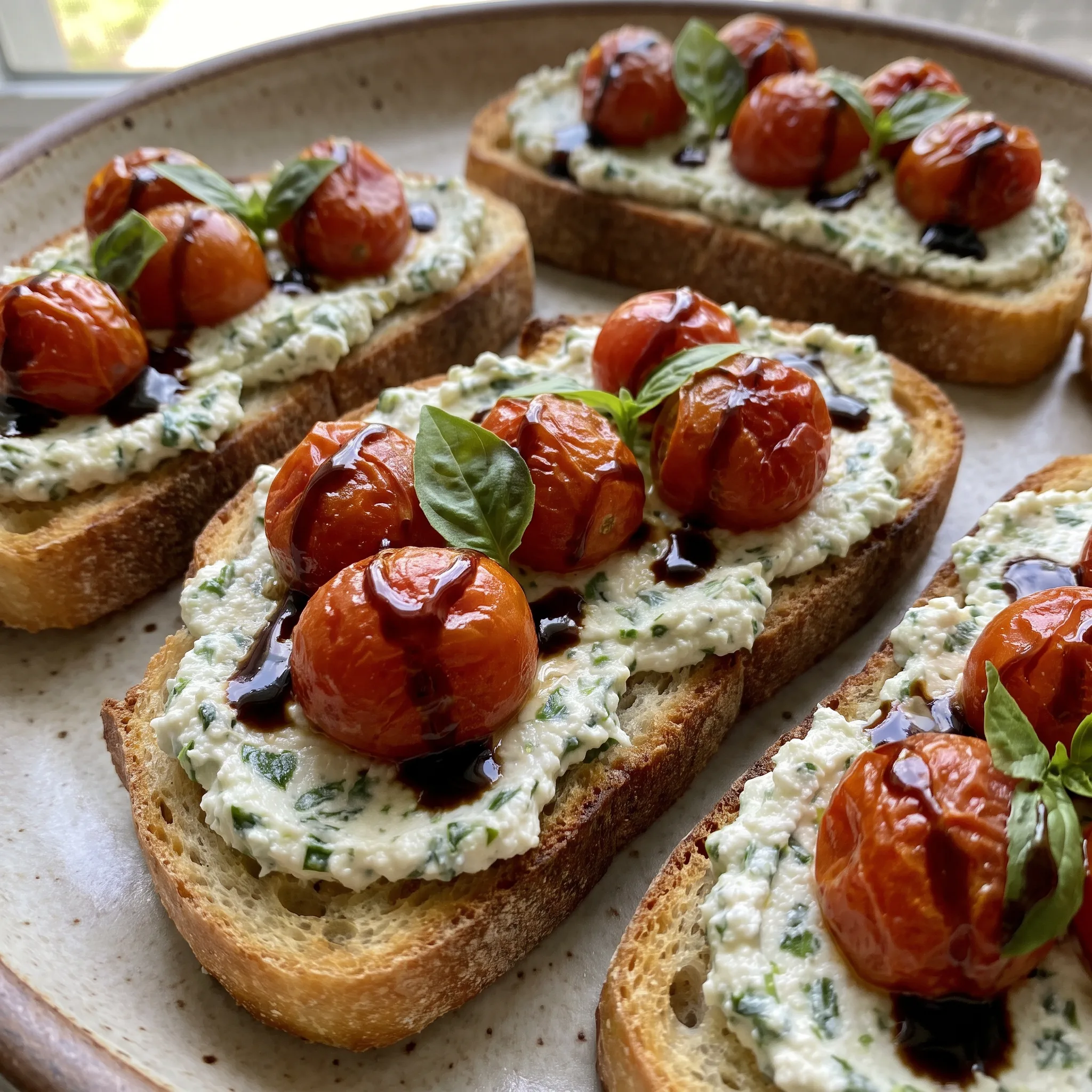
Ricotta Bruschetta with Roasted Cherry Tomatoes
Ingredients
Method
- Set oven temperature to 400ºF (200ºC).
- In a small baking dish, stir together tomatoes, 1 tbsp olive oil, 2 minced garlic cloves, and 1/4 tsp each salt and pepper. Bake for 20 minutes or until tomatoes have slightly burst. Refrigerate until ready to use.
- In a blender or food processor, combine ricotta, 1 minced garlic clove, 1 tbsp olive oil, 1/2 cup fresh basil, and 1/4 tsp each salt and pepper. Blend until smooth, then refrigerate until ready to use.
- Slice bread into 12 half-inch slices. In a small bowl, whisk together 1 tbsp olive oil and 1 minced garlic clove. Brush both sides of each bread slice with the garlic olive oil and sprinkle with salt and pepper. Bake at 400ºF (200ºC) for 10-12 minutes or until well toasted.
- When ready to serve, spread each cooled bread slice with 1-2 tbsp of the ricotta mixture, top with tomatoes (2-3 per toast), sprinkle with fresh basil, and drizzle balsamic glaze on top.
Make Ahead, Then Keep the Parts Apart
The roasted tomatoes and the ricotta mixture each keep covered in the fridge for up to 3 days. The ricotta is raw dairy with fresh basil blended in, so it’s the short keeper: the garlic sharpens and the basil darkens past that.
The tomatoes hold longer because roasting drove off water and concentrated them, but their juices thin out and the skins slacken as they sit. Cold ricotta spreads stiff and slightly grainy, so let it sit out 15 minutes and stir it back smooth. The toasts are the real limit, and they never go in the fridge; cold turns them leathery.
Keep them in a paper bag or loosely covered at room temperature and recrisp at 400ºF for 3 to 4 minutes if they’ve gone soft. Assemble no more than 20 minutes before serving; ricotta and tomato juice start soaking in immediately, and past that the bread sags. Drizzle the balsamic glaze on the assembled toasts right before they go out, since it beads and runs if it sits.
Eat within 30 minutes for crisp bread. Leftover assembled toasts don’t hold; store the parts separately and rebuild.
What You Can Swap Without Losing the Bruschetta
Ricotta: Part-skim ricotta or whipped cottage cheese can stand in for whole-milk ricotta. If using part-skim, expect a slightly thinner mixture; you may need to blend a few seconds longer to get it smooth.
Whipped cottage cheese will be tangier and less creamy, so taste before spreading and adjust salt if needed. Start with the same 8 ounces the recipe calls for. The spread will be less rich and may not hold the tomatoes as securely.
The flavor will be sharper, which can clash with the sweet tomatoes if you’re heavy-handed with the garlic. For a dairy-free option, firm tofu blended with a tablespoon of olive oil and a squeeze of lemon can mimic the texture, but it won’t taste like ricotta.
Crusty bread loaf: A baguette gives you more crust per slice and a slightly chewier bite; ciabatta is softer inside, so it may absorb more ricotta and soften faster. Gluten-free bread works if you toast it a bit longer to dry it out; otherwise it can turn gummy under the toppings. Slice any of these into 12 half-inch pieces as directed.
Baguette slices will be crisper and hold up well, but watch that they don’t become too hard. Ciabatta’s open crumb can let the ricotta seep in, making the toast less crisp. Gluten-free bread often needs an extra minute or two in the oven to reach the same sturdy texture.
Balsamic glaze: You can reduce balsamic vinegar at home: simmer 1 cup of vinegar until it coats the back of a spoon, then cool. It will be thinner than store-bought glaze but more intense.
If you’re out of glaze, a drizzle of aged balsamic works, but it’s runnier and will soak in faster. Start with the same amount the recipe suggests, about a teaspoon per toast, and adjust after tasting.
Homemade reduction may lack the syrupy body, so it won’t sit on top as neatly and can make the bread soggy if applied too heavily. Store-bought glaze is thicker and sweeter, giving a more controlled drizzle.
Either way, add it at the end to keep the contrast.
Tips
- Cherry tomatoes vary in sugar more than any other ingredient here, so taste one before you buy a pound. A bland tomato roasted for 20 minutes at 400ºF concentrates its existing sugars and acids, which means a flat one just gets flatter and more watery, and no amount of basil or balsamic glaze in the ricotta or on top will cover that. If the sample is dull, look for a different variety, such as Campari or grape tomatoes, which tend to carry more sweetness per ounce.
Frequently Asked Questions
Can I make the roasted tomatoes and ricotta mixture ahead of time?
Yes, and keeping them in separate containers is what makes it work. The ricotta is the one to watch since it’s raw dairy with fresh basil blended in; past three days the garlic sharpens and the basil darkens.
Roasted tomatoes hold longer because the oven drove off water, but their juices thin and the skins slacken as they sit. Cold ricotta spreads stiff and slightly grainy, so give it 15 minutes on the counter and stir it smooth before you use it.
How do I keep the bruschetta from getting soggy?
The toasts are the part that decides this, and they never go in the fridge. Cold turns them leathery rather than crisp, so keep them in a paper bag or loosely covered at room temperature, then recrisp at 400ºF for 3 to 4 minutes if they’ve softened. Spread the ricotta only on cooled slices, since warm bread soaks it up and softens from underneath.
From there it’s a timing question: assemble no more than 20 minutes out, because ricotta and tomato juice start soaking in the moment they touch the bread.
What’s the difference between this ricotta bruschetta and classic tomato bruschetta?
Classic tomato bruschetta is diced raw tomatoes, garlic, basil, and olive oil spooned onto rubbed toast, and it eats juicy and sharp. Here the tomatoes go through a 400ºF oven first, so they come out soft and sweet with concentrated juices instead of watery ones, and a blended ricotta layer sits between them and the bread. That ricotta does real work: it’s a soft bed that keeps the tomatoes from rolling off and a creamy counterpoint to the acidity.
The balsamic glaze drizzled at the end adds a sweet-tart streak you don’t get from the classic version.
How far in advance can I assemble the bruschetta before serving?
Twenty minutes is the outer limit, and less is better. Ricotta and tomato juice start soaking into the toast the moment they make contact, and past that window the bread sags and you lose the crisp base. If you’re working a party, set out the cooled toasts, the ricotta, and the tomatoes and build them as guests arrive.
Hold the balsamic glaze until the assembled toasts are about to go out, since it beads and runs if it sits.
Why are my roasted tomatoes full too much or not enough?
Size is the usual culprit. Cherry tomatoes vary a lot, and a dish of small ones will split and release juice well before larger ones have softened at all, so sort through and pick a set that feels uniform, heavy for their size, and faintly of the vine. Crowding matters too: if they’re piled deep in a small baking dish, the ones underneath steam instead of roasting and stay tight-skinned.
The other check is your oven, since a rack set too high or a oven running cool will leave the skins intact while the tops dry out. You’re after soft, glossy tomatoes that have split and let some juice into the dish but still hold their shape when you lift one with a spoon.
