
A cast-iron skillet of this lands on the table and the pretzels stop being the main event. The kielbasa goes first, then the chips, then someone just drags a pretzel bite through the middle. What separates a bacon beer cheese dip that flows from one that seizes into a greasy slick is the base underneath the cheese, and that base is where most people get impatient.
A roux that hasn’t cooked long enough tastes like raw flour and won’t hold the beer and milk; one pushed too far drags toasted notes over the lager. There’s a smell that tells you which side you’re on.
Get that right and the rest is mostly assembly. Get it wrong and you’re spooning grease onto a plate by the time the second round of guests arrives.
Once the shredded cheese hits the hot beer-milk base, the sauce is a delicate emulsion of melted fat, water, and protein. If the heat is too high or the sauce simmers after the cheese goes in, the proteins coagulate and the fat leaks out, turning the dip greasy and grainy. The window to correct is before any oil sheen appears on the surface, after that, the texture cannot be fully restored.
Why bother with a roux in a cheese dip?
Skip the roux and you’re left with a puddle: melted cheese that cools into a greasy slick with a rubbery skin. The flour and butter paste gives the beer and milk something to cling to, so the cheese has a stable base to melt into.
5 cups of liquid and 3 cups of cheese. More flour than that and the dip turns pasty on the tongue; less and it stays thin, sliding off a pretzel before it reaches your mouth. Cooking the roux for 3 minutes drives off the raw flour taste.
Stop before it browns. A dark roux would throw toast and nutty notes over the lager and cheddar, and those flavors are already doing enough work. At 3 minutes the paste smells like warm butter and toasted grain, nothing raw.
The beer choice matters more than you think
Lager brings a mild, faintly sweet malt note that steps back and lets cheddar lead. An IPA or a stout would shove hops or roasted bitterness into the front of every bite, and the cheese would taste muddled. Simmer the beer for 2 minutes before the milk goes in.
That short boil drives off the sharp alcohol edge and softens the hop bite, leaving a rounder liquid that tastes more like malt and less like a brewery. The carbonation also helps cut the fat from cream cheese and cheddar, keeping the dip from feeling heavy. What you’re after is a base that smells like warm bread crust, not a bar floor.
When it’s ready, the beer has reduced slightly and the raw sting is gone from the steam. That’s your cue to pour in the milk.
Two cheddars and cream cheese walk into a pan
White cheddar, 2 cups of it, melts smoothly and gives a creamy, mild backbone. Sharp yellow cheddar, just 1 cup, brings the tang and bite that keep the dip from tasting flat. Together they hit both ends: soft and rich underneath, bright and savory on top.
Cream cheese adds body and a slight tang, and it keeps the texture from turning stringy when you reheat leftovers or hold the dip in a warming pot. 5 cups of liquid. More cheese and you’re spreading, not dipping; less and it runs off the chip.
After everything melts, the dip should coat a pretzel bite and hold a slight peak when you pull it out. If it’s loose, give it another minute on low. If it’s tight, a splash of milk loosens it.
Don’t dump the seasonings in too early
Dijon and Worcestershire go in after the heat is off. Both carry acidity and a savory punch that lifts the heavy cheese base, and heat dulls them.
Onion and garlic powders dissolve into the warm dip, adding a background savoriness without any gritty texture. Chives go in last for a mild allium note and a green fleck against the orange. Cook them and they’d fade to a dull olive and lose their brightness.
The bacon stays out of the dip entirely. Scatter it on top so it stays crisp and gives a smoky crunch against the soft cheese. Mixed in, it would soften and disappear.
Once everything is stirred, taste a spoonful. It should be tangy, salty, and rich all at once, with a little sharpness from the mustard cutting through. Serve right away, or keep it hot in a fondue pot.
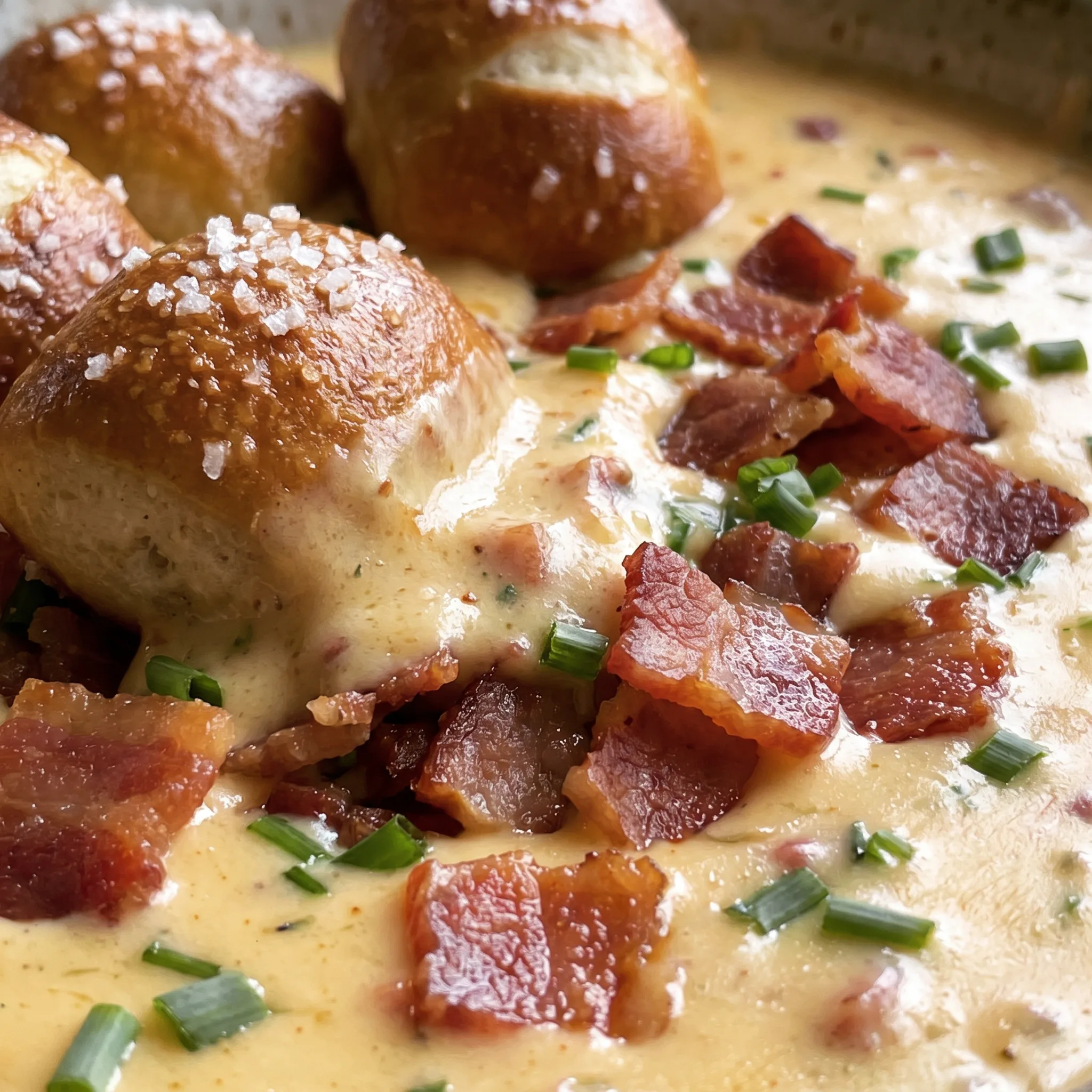
The ingredients that make or break this dip
Lager beer: A plain lager, not an IPA or stout, so the malt stays mild and doesn’t shove hops or roast into every bite.
White cheddar: Shred it yourself if you can; bagged pre-shredded cheese often has starch that keeps it from melting smoothly.
Sharp yellow cheddar: Just 1 cup brings the tang and bite that keep the dip from tasting flat against the milder white cheddar.
Cream cheese: Full-fat block cream cheese, not spread from a tub, gives body and keeps the texture from turning stringy when reheated.
Bacon: Cut it into small cubes before it hits the pan so it crisps evenly and stays crunchy when scattered on top.
Reading the pan at four points that decide whether this dip holds or breaks
The roux tells you it’s done by smell
After the butter melts, you’re stirring a loose, pale paste. Within 3 minutes it thickens, stops smelling like raw flour, and starts smelling like toasted bread.
That’s the signal to add the beer. Stop before it darkens; a brown roux would push toasted notes over the lager and cheddar.
If you catch it browning, pull the pan off the heat and add the beer off-burner to halt it.
The beer has to stop smelling sharp before the milk goes in
Right after the beer hits the hot roux, it foams and smells boozy. Simmer for 2 minutes, stirring, until the steam loses that alcohol sting and smells like warm malt. If you pour in the milk early, the finished dip keeps a raw edge that fights the cheese.
If the pan’s too hot and the liquid’s reducing fast, lower the heat; you want it to stay at a lazy simmer, not boil down.
When the cheese is melted enough to stop stirring
You’ve added the cream cheese and both cheddars over low heat. At first it looks like cheese sitting in liquid.
After about 2 minutes of steady stirring, it comes together into a smooth, glossy sauce with no visible shreds. If it looks greasy or separated, the heat is too high; pull it off, stir hard, and if needed add a splash of milk.
Over-stirring won’t hurt once it’s smooth, but under-stirring leaves lumps.
Tasting for the balance before it leaves the pan
After the Dijon, Worcestershire, and chives go in, taste a spoonful. It should be tangy from the mustard, salty from the Worcestershire, and rich from the cheese, with a little sharpness cutting through. If it tastes flat, a few more drops of Worcestershire or a pinch of salt will wake it up.
If it’s too tangy, a small splash of milk rounds it out. This is your last chance to adjust before it thickens as it cools.
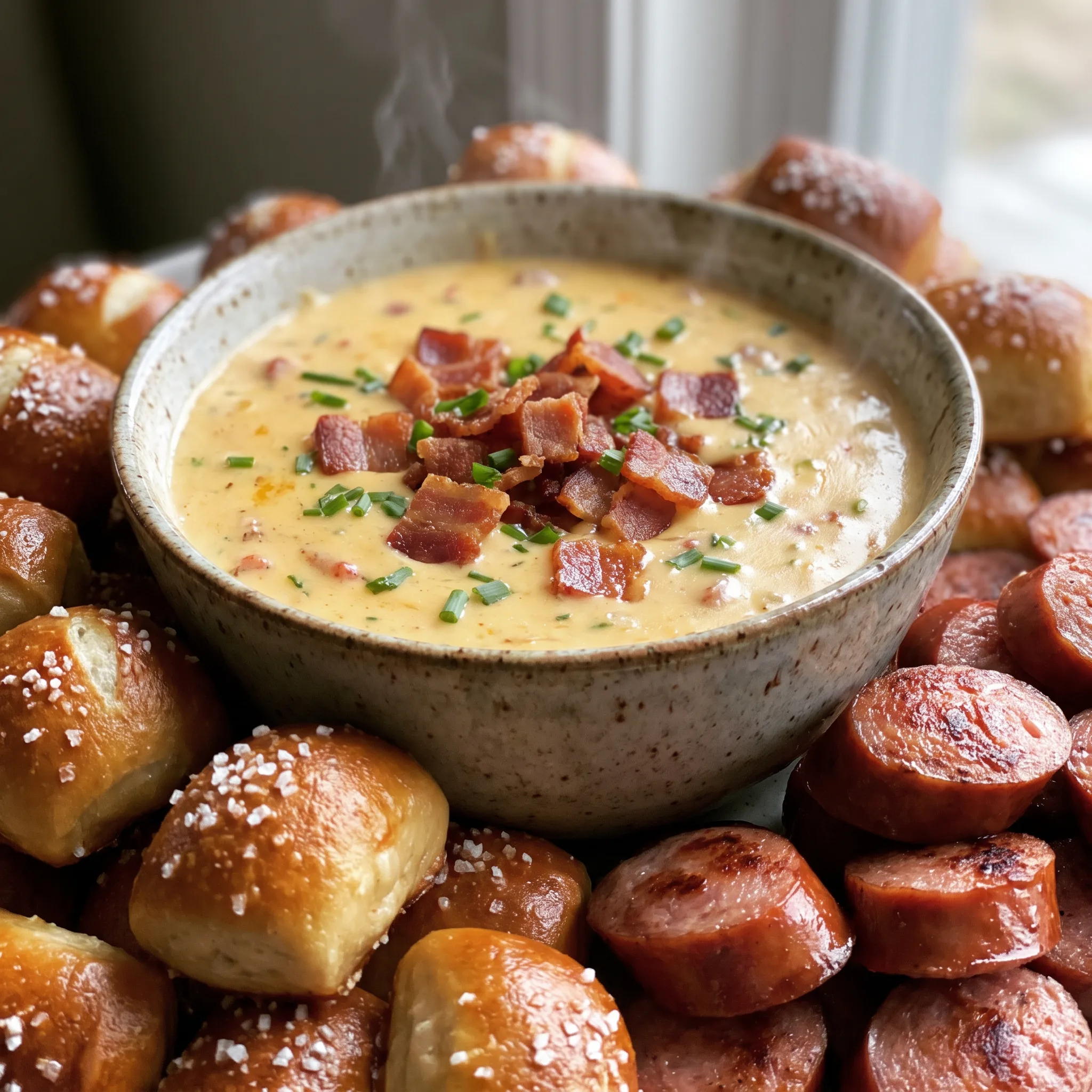
Bacon Beer Cheese Dip with White Cheddar
Ingredients
Method
- Place the cubed bacon in a medium cast-iron pan over medium heat and stir until it turns crispy. Take out and set aside the bacon; throw away the bacon fat.
- Using the same pan over medium heat, add the flour and unsalted butter. Whisk together. After the butter has fully melted, keep stirring often for 3 minutes to develop the roux. See chef’s note below about the roux.
- Pour in the beer, stir, and allow to simmer for 2 minutes, stirring frequently. Adjust the heat as necessary to keep a simmer. After 2 minutes, pour in the milk and let it simmer for another 2 minutes.
- Add the cream cheese and shredded cheeses, turn the heat down to low, and stir. The cheese will melt and blend after 2 minutes.
- Stir in the remaining ingredients: Dijon, Worcestershire, and chives, and mix again.
- Scatter the reserved bacon on top and serve right away, or move to a fondue or warming pot to keep hot and melted. Dip with fresh pretzels, corn chips, and grilled sausage.
Storage, Reheating, and the Two-Hour Serving Window
This dip is at its best in the first 20 minutes after it leaves the pan. The cheese is fluid, the bacon is crisp, and a pretzel bite pulls through cleanly.
After that, it thickens as it cools. That’s the roux and the cream cheese setting up, not a flaw.
Keep it in a fondue pot or warming pot and it holds that loose texture for about two hours at a party. Past that, it tightens enough that a chip starts to snap instead of dip.
Reheat leftovers gently on the stovetop or in a low microwave, adding a splash of beer or milk and stirring until it flows again. High heat will break the emulsion and leave you with grease pooling at the edges. In the fridge, it keeps three days in a sealed container; the chives will darken and the bacon will soften, so add fresh ones when you reheat.
It doesn’t freeze well. The dairy separates and the sauce never comes back smooth. If you want to get ahead, fry the bacon and shred the cheese a day in advance, then build the dip the day you serve it.
What you can swap in this beer cheese dip, and the two things you shouldn’t
Lager beer: Chicken or vegetable broth, or a non-alcoholic beer. You lose the malt backbone and the gentle carbonation that cuts through the cream cheese and cheddar. Broth brings salt instead, so the finished dip tastes flatter.
Use the same 1 cup (8 fl oz) the recipe calls for. If you go with broth, start with a low-sodium version and taste before adding any extra salt.
Non-alcoholic beer gets you closer, though it can taste sweeter after it reduces.
All-purpose flour: A 1:1 gluten-free flour blend. The roux will thicken the same way and the dip will set up just as well. Use the same 2 tablespoons (15 g) the recipe calls for.
Some blends taste slightly beany or gritty when raw, so cook the roux the full 3 minutes until it smells like toasted grain. Don’t swap in almond flour or coconut flour; neither has the starch to bind the liquid, and you’ll end up with a broken, greasy sauce.
Whole milk: Low-fat or plant milks (skim, almond, oat, soy). Whole milk carries enough fat to keep the dip stable and creamy.
Skim or most plant milks thin it out, so it slides off a pretzel instead of coating it. If you must swap, use the same ½ cup (4 fl oz) but expect a looser texture. To tighten it back up, let it bubble a minute longer on low, or add an extra tablespoon of cream cheese.
Oat milk tends to hold up better than almond.
Dijon mustard: Yellow mustard or a pinch of dry mustard powder. Dijon brings a sharp, vinegary bite that cuts through the cheese. Yellow mustard is milder and sweeter, so the dip loses some of that tang.
Use the same 1 tablespoon, taste, and add a few more drops if it feels flat. Dry mustard powder works too, but start with ½ teaspoon and stir it in with the other powders; it needs a minute to bloom in the warm dip.
Tips
- Buy cheddar in blocks and shred it on the large holes of a box grater. Pre-shredded cheese is dusted with potato starch or cellulose to keep the strands from clumping in the bag, and that powder goes straight into your pan. In a dip built on a roux, those starches soak up liquid and can leave the sauce thicker than intended or faintly grainy against the tongue. A block of white cheddar grated at home melts into the beer base with nothing else riding along. Figure about 4 ounces of block to yield the 1 cup the recipe wants, so buy 12 ounces total for both cheddars and grate them separately.

Frequently Asked Questions
Can I make this bacon beer cheese dip ahead of time?
Fry the bacon and shred the cheese a day in advance, then build the dip the day you serve it. A fully assembled dip loses its best texture when held for long; the bacon softens and the chives darken. The roux and cream cheese do hold up for three days in the fridge, so leftovers reheat fine with a splash of milk.
But for a party, the fresh-built version keeps that loose, glossy flow that makes a pretzel pull through clean. If you want to get ahead, do the prep, not the full assembly.
Why did my beer cheese dip turn out grainy or separated?
Heat is the usual culprit: if the pan is too hot when the cheese goes in, the dairy breaks and you get grease pooling at the edges. Pull it off the heat immediately, stir hard, and if it still looks oily, a splash of milk can bring it back.
A second check is your cheese: bagged pre-shredded cheddar often carries starch that keeps it from melting smoothly, so shred your own if you can. Also make sure the roux cooked the full 3 minutes; a raw flour taste won’t cause separation, but an undercooked roux won’t hold the liquid as well. The dip should come together into a smooth, glossy sauce with no visible shreds after about 2 minutes of steady stirring on low.
How do I keep the dip warm and dippable for a party?
Move it to a fondue or warming pot right after you scatter the bacon on top; that keeps it hot and melted for about two hours. A slow cooker on the warm setting works too, but stir it every so often so the edges don’t tighten. If it thickens past the point where a chip dips, add a splash of beer or milk and stir until it flows again.
Past the two-hour mark, the roux and cream cheese set up enough that a chip starts to snap instead of dip, so plan to refresh it or make a second batch. The first 20 minutes out of the pan are the best; after that, it’s still good but thicker.
What is the difference between this dip and a classic beer cheese soup?
Beer cheese soup is built on a thinner liquid base, usually with stock or broth, and it’s meant to be eaten with a spoon. 5 cups of liquid makes it thick enough to coat a pretzel and hold a slight peak.
The seasoning also leans brighter: Dijon and Worcestershire go in after the heat is off, and the bacon stays crisp on top instead of simmering into the pot. It’s the same flavors, just tightened up so it clings instead of pools.
