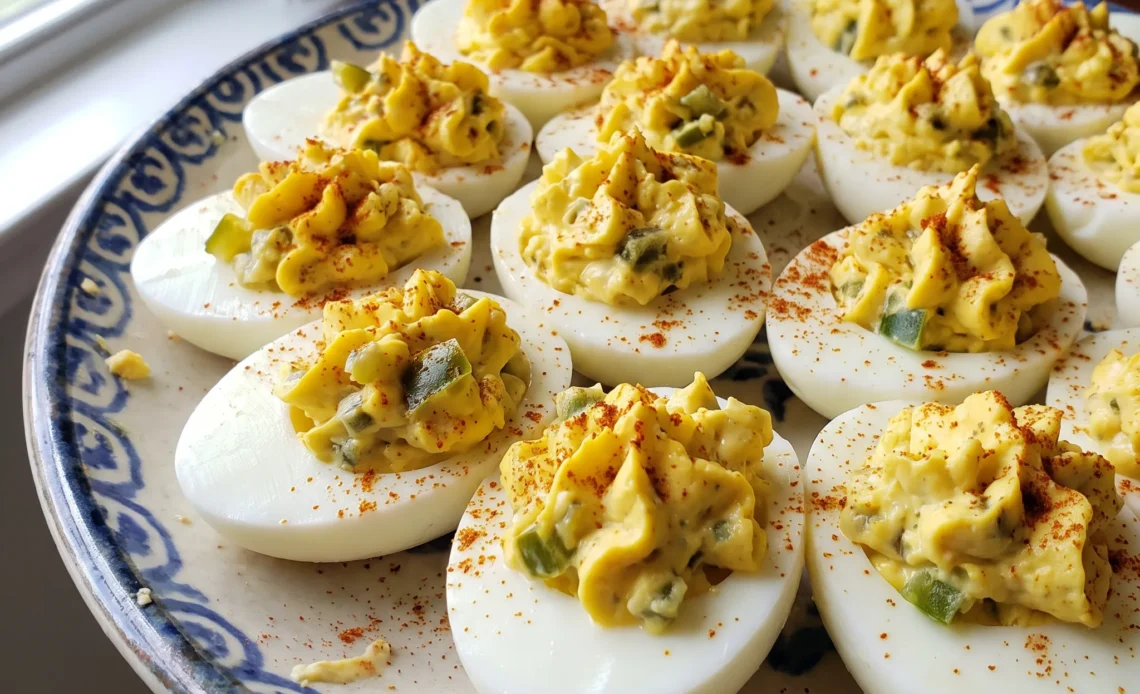
A dusting of smoked paprika across pale yellow filling is the first thing you notice, right before the scent of smoke hits. Getting deviled eggs to taste like anything other than plain egg salad comes down to balance, and that balance is where most versions fail. Sweet relish alone reads flat.
Jalapeños alone turn harsh. Together they trade off, tang first, then a slow warmth in the back of the throat, and that push and pull is the whole reason these southern deviled eggs work.
The other sticking point is texture. A grainy, slack filling usually means the yolks weren’t broken down fully before the wet ingredients went in, and no amount of extra mayonnaise rescues that. Warm yolks and a patient mash do.
The rest is seasoning you can taste your way through before anything reaches a plate.
Egg whites and yolks set at different temperatures, and the pressure cooker reaches those temperatures fast; low pressure is the gentler setting that keeps the whites from squeezing out water and turning tough. At low pressure for 8 minutes, the yolks set fully but stay creamy, so they mash into a smooth filling instead of a dry, grainy paste. The quick release stops the cooking immediately, preventing the carryover heat that would otherwise push the eggs into overcooked territory and form the green iron sulfide ring around the yolk.
Why Low Pressure Keeps Eggs Tender
Low pressure in an electric pressure cooker is gentler than high pressure. The eggs cook evenly without the whites turning tough, and the yolks set fully while staying creamy. At 8 minutes, the yolks are firm enough to hold their shape but still mash into a smooth filling.
Overcooking is the usual culprit behind that green ring around the yolk and a sulfurous smell; low pressure for 8 minutes sidesteps both. A quick release stops the cooking the moment the timer ends, so the residual heat doesn’t push the eggs past that point. You end up with whites that are tender, not rubbery, and yolks that are bright and rich.
That texture carries straight into the filling, where it matters most.
Sweet Relish and Jalapeños Strike a Balance
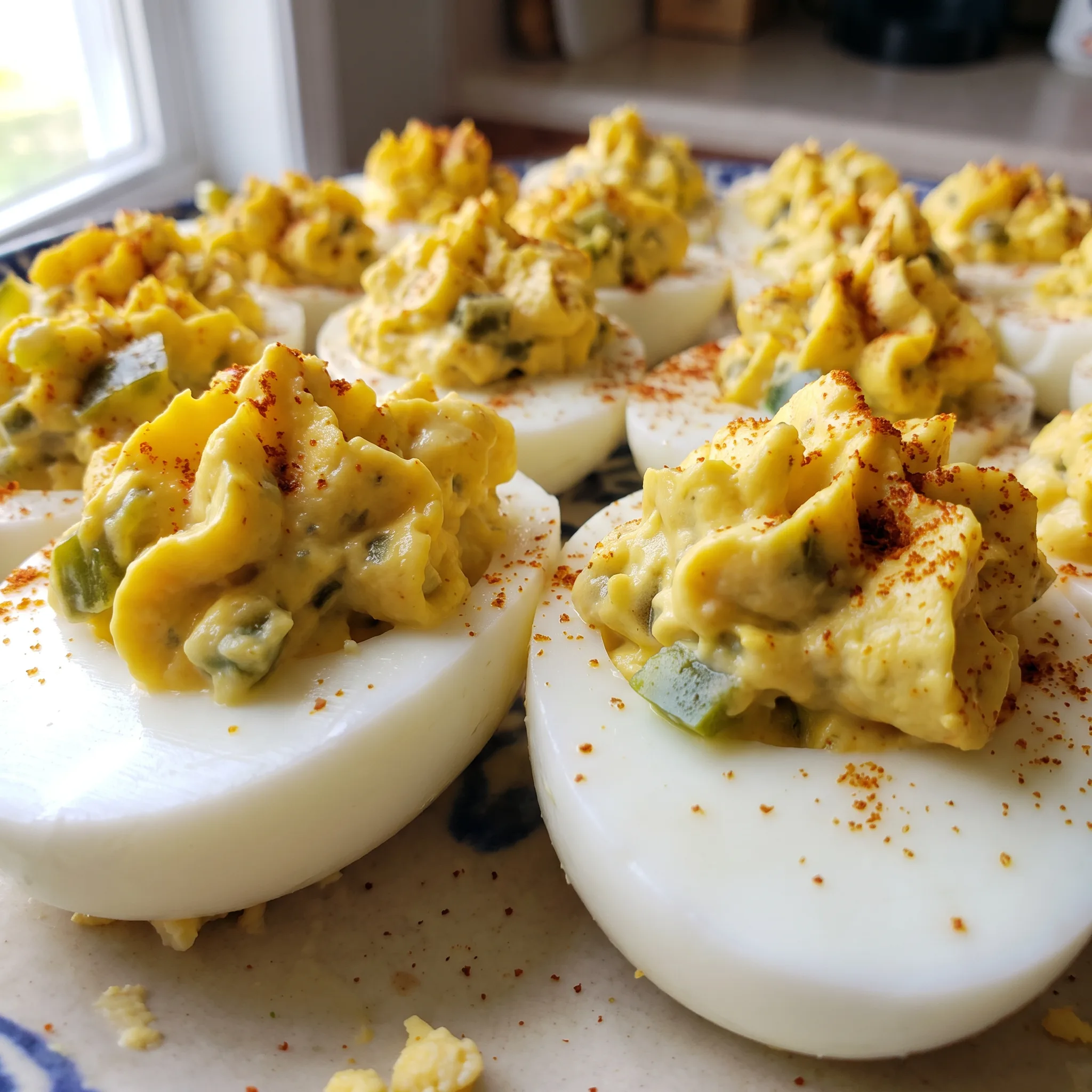
Sweet relish brings a tangy sweetness that contrasts with the heat of diced jalapeños. The jalapeños themselves offer fresh, vegetal heat rather than the dried or pickled kind, so the burn is cleaner and brighter.
With 3 tablespoons of relish to 2 tablespoons of jalapeños, neither flavor dominates. You taste the sweet tang first, then the gentle warmth builds in the back of your throat.
That interplay is what sets this Southern variation apart from classic deviled eggs. It’s a deliberate push and pull, not a one-note kick.
When you bite into one, the sweetness and the heat should arrive in waves, leaving you ready for the next.
Smoked Paprika Adds Depth, Not Just Color
Smoked paprika isn’t just a pretty dusting. It contributes a subtle smokiness that echoes Southern barbecue tradition, and its deep red color signals the flavor profile before you even take a bite.
That smokiness bridges the sweet relish and the spicy jalapeños, tying the filling together. Sprinkling it at the end preserves the aroma and keeps the paprika from bleeding into the filling, which would muddy the color and dull the taste.
A light dusting across the top is enough; you want the scent to hit you as you pick one up, not to overpower the eggs. It’s a small touch that makes the whole thing feel intentional.
Mashing Warm Yolks for a Smooth Filling
Warm yolks mash more easily and absorb the mayonnaise and mustard better than cold ones. When you use a fork to mash them until they crumble, you ensure no large chunks remain.
Adding the wet ingredients after mashing prevents overworking the mixture, which could make it gluey. The goal is a smooth, creamy filling that pipes or spoons neatly into the whites.
If you’ve ever had deviled eggs with a grainy filling, it’s usually because the yolks were cold or the mixing was rushed. Take a minute to get the yolks fully broken down before anything else goes in.
The result should be silky, with a consistency that holds its shape but yields easily when bitten.
What Matters in These Deviled Eggs
Mayonnaise: Full-fat mayo gives the filling body that holds its shape; low-fat or salad dressing turns it loose and thin.
Sweet Relish: Jarred sweet relish varies in sweetness and crunch, so taste yours before it goes into the 3 tablespoons.
Diced Jalapeños: Fresh diced jalapeños carry a cleaner, brighter heat than pickled ones, and the 2 tablespoons depend on how hot yours run.
Yellow Mustard: Plain yellow mustard, not Dijon or honey mustard, keeps the 1 tablespoon sharp and lets the relish and jalapeños lead.
Smoked Paprika: Smoked, not sweet or hot paprika, is where the barbecue depth in the sprinkle comes from.
Judging Deviled Eggs by Feel, Not by the Clock
When the eggs are ready to peel without tearing
Cold water stops the cooking and shrinks the whites just enough to separate from the shell. Five minutes is the minimum; longer is fine, but if you peel too soon the membrane clings and you gouge the white.
Tap the egg on the counter, roll it gently, and start peeling from the fat end where the air pocket sits. If the shell fights you, submerge it in the water bowl and peel there; the water floats the membrane away.
Reading the yolk texture before you mash
A properly cooked yolk is matte, bright yellow, and holds its shape when you scoop it out. If it’s chalky or crumbly, it overcooked; if it’s wet or glossy, it’s under. Either way you can still make the filling, but adjust: overcooked yolks need an extra spoonful of mayonnaise to loosen, undercooked ones will make the mixture slack.
Mash while the yolks are still warm; they absorb the mayonnaise and mustard more evenly and break down faster.
Balancing heat and sweet before you fill the whites
Taste the filling after it’s mixed. The relish and jalapeños vary in intensity from jar to jar, so the 3 to 2 ratio is a starting point.
You want the sweet tang to hit first, then a gentle warmth that builds without burning. If the heat overwhelms, add a teaspoon more relish. If it’s too sweet, a pinch more salt and a few extra jalapeño pieces will pull it back.
Spooning the filling without overfilling
The yolk mixture should mound slightly in the white, not spill over the edges. Overfilled eggs are hard to eat and the filling smears.
If you pipe, use a star tip for ridges that hold the paprika. If you spoon, use two small spoons and press gently so the filling settles into the hollow.
Any leftover filling can be eaten on toast, but don’t stretch it by piling it high; the whites will crack.
When the paprika goes on and what it tells you
Sprinkle the smoked paprika just before the eggs go out. If you dust them too early, the powder absorbs moisture from the filling and turns dark and pasty.
A light, even coating gives you the aroma first, then the color. You should see the red flecks against the pale yellow filling, not a thick blanket.
That’s your cue that the eggs are ready to serve.
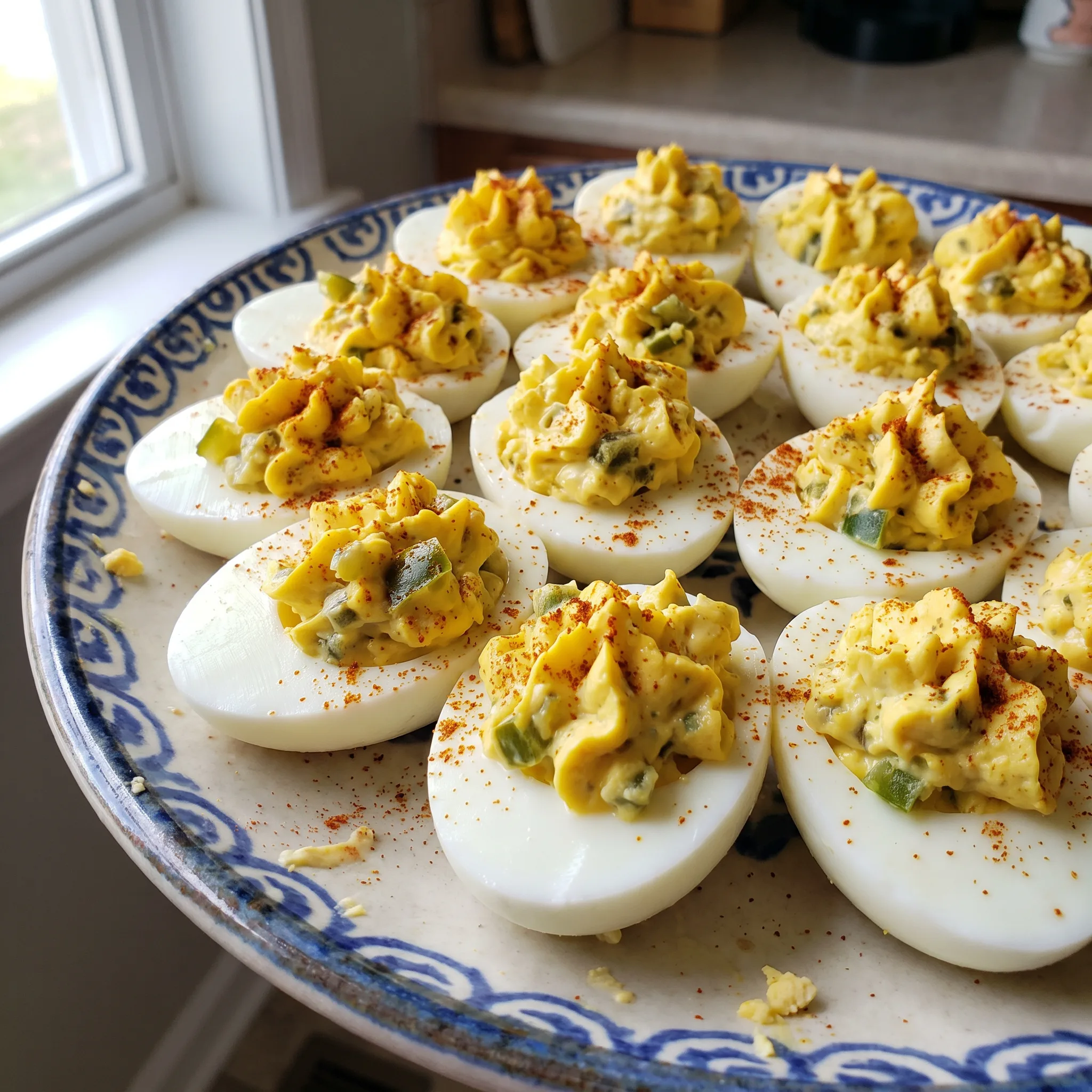
Southern Deviled Eggs with Jalapeños
Ingredients
Method
- For hard-boiled eggs in an electric pressure cooker: place the eggs in a steamer basket, add 1 cup water to the pressure cooker, and position the basket inside. Secure the lid and cook at low pressure for 8 minutes. Perform a quick release, remove the lid, and transfer the eggs using tongs to a bowl of cold water; let chill 5 minutes. Peel the eggs and slice them in half lengthwise.
- Remove the cooked yolks from the whites into a bowl. Use a fork to mash the yolks until they crumble, then incorporate the mayonnaise, diced jalapeños, relish, mustard, salt, and pepper, stirring until the mixture is smooth and creamy.
- Return the yolk mixture to the egg white halves by spooning or piping. Sprinkle with smoked paprika and serve.
How Deviled Eggs Hold Up in the Fridge
Filled deviled eggs are at their best within a few hours of assembly. The whites stay tender and the filling creamy; after that, the whites slowly release moisture and the filling can turn slightly wet.
Refrigerate leftovers in a single layer in a covered container for up to two days. By day two, the whites may feel a bit firmer and the filling less fluffy, but the flavor still works.
Don’t freeze the assembled eggs: the whites become rubbery and the filling separates. If you want to get ahead, boil, peel, and halve the eggs up to a day in advance and store the whites and mashed yolks separately, then mix and fill just before serving. Add the smoked paprika only at the moment the eggs go out.
Dusted earlier, it absorbs moisture and darkens. For the best texture, eat within four hours of filling.
Tips
- Before mashing, cut one egg in half and check the center of the yolk: it should be solid all the way through with no darker, wet core. A slightly underdone center carries extra moisture that thins the 1/4 cup mayonnaise and 3 tablespoons relish, and the filling will slump in the whites instead of mounding.
- If the yolks come out with any wet center, spread them in a single layer on a plate and let them sit for 2 to 3 minutes before mashing. The residual heat finishes the set and drives off surface moisture, so the filling holds its shape without you adding more mayonnaise to compensate.
What You Can Swap Without Ruining the Filling
Mayonnaise: Full-fat Greek yogurt, sour cream, or a mix of either with mayo. Yogurt brings a sharper tang and less richness, and the filling will be looser, so it may not pipe into high ridges. Sour cream tastes milder and creamier but also thins the texture.
If you use all yogurt, expect a softer set; start with the same 1/4 cup the recipe calls for, then add more mayo by the tablespoon if it needs body.
Sweet Relish: Chopped bread-and-butter pickles, or dill relish with a pinch of sugar. Bread-and-butter pickles give bigger, crunchier pieces and a similar sweet-tangy profile, but you’ll want to chop them fine so they don’t clog a piping tip. Dill relish lacks the sweetness, so add a small pinch of sugar to mimic the original balance.
Start with the same 3 tablespoons and taste; if the filling seems dry, add a teaspoon of pickle juice.
Diced Jalapeños: Diced serranos for more heat, or diced green chiles or poblano for less. Serranos crank up the burn without changing the fresh vegetal character; use the same 2 tablespoons but taste as you go. Green chiles or poblano drop the heat to nearly nothing and add a milder, slightly smoky note, so you may want an extra pinch of salt to keep the filling lively.
If you use pickled jalapeños instead of fresh, drain them well and expect a tangier, softer heat that can water down the filling if you don’t pat them dry.
Yellow Mustard: Dijon or whole-grain mustard. Dijon brings a sharper, more complex heat that can eclipse the jalapeños, so start with half the amount (1 1/2 teaspoons) and add more if you want that bite.
Whole-grain mustard adds visible seeds and a coarser texture, which some people like for the look but it won’t blend as smoothly. Either way, the filling will taste less like the classic Southern version and more like a dressed-up deviled egg.
Smoked Paprika: Sweet or hot paprika, or a pinch of cayenne. Sweet paprika gives color but no smoke, so you lose that barbecue depth entirely.
Hot paprika or cayenne adds heat without the smokiness, which can throw off the balance with the jalapeños. If you must swap, use the same light dusting and know the flavor will be flatter. There’s no good substitute for smoked paprika if you want that specific aroma.

Frequently Asked Questions
Can I make these deviled eggs ahead of time?
You can get most of the work done a day ahead, but the assembly is best held until close to serving. Boil, peel, and halve the eggs, then store the whites and mashed yolks in separate containers in the fridge.
Mix the filling and fill the whites just before they go out, and dust the smoked paprika at the last moment so it doesn’t absorb moisture and darken. Filled eggs hit their peak within a few hours, so plan the fill for the same day you’re serving.
Why are my deviled eggs watery?
The filling is usually too loose because the relish or jalapeños brought extra liquid with them, or the mayonnaise was a low-fat or salad-dressing type that doesn’t hold body. Drain the relish and pat the diced jalapeños dry before they go in, and use full-fat mayo so the filling sets up.
A second check is the yolks: if they came out wet or glossy, the mixture will be slack no matter what you add. Taste the filling before it goes into the whites, and if it looks thin, add more mayo by the spoonful rather than piling it in wet.
How are these different from classic Southern deviled eggs?
Classic Southern deviled eggs lean on mayo, mustard, and often sweet pickle relish, with a dusting of paprika that’s mostly for color. This version keeps the relish and mustard but adds diced jalapeños for fresh heat and uses smoked paprika instead of sweet, so the topping brings barbecue depth rather than just a red sprinkle. The balance is deliberate: sweet tang first, then warmth that builds.
The result reads as a Southern deviled egg with a clear spicy, smoky edge, not a different dish altogether.
