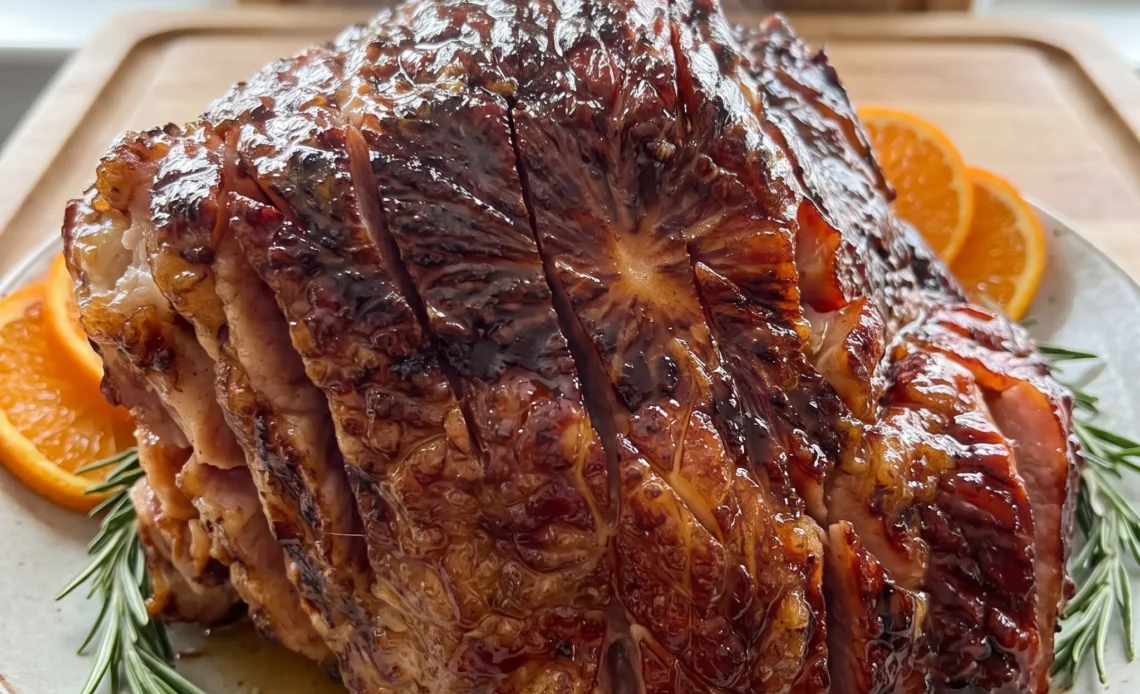
Most hams end up dry because they’re baked at high heat until the center warms through, leaving the outside overcooked. The slow cooker sidesteps that entirely: the low, steady heat and trapped steam let the meat come up to temperature evenly, so every slice stays moist. That same closed environment turns the glaze into a sticky, caramelized coat without you hovering over the oven.
Scoring the surface opens the meat so the sweet, tangy mixture can sink in, and the two-stage glazing builds a crust that tastes deep, not just sweet. The real win here is the hands-off timing, you’re not watching a hot oven or basting every twenty minutes. A glazed ham that actually impresses, with most of the work done while you do other things.
The slow cooker’s low, steady heat keeps the ham moist, but the glaze’s sugar content can cause burning if exposed to direct heat or if the ham is overcooked. The recipe’s two-stage glaze application ensures the second coat isn’t subjected to prolonged heat, preventing a burnt, bitter crust while still achieving a sticky finish.
The Slow Cooker’s Even Heat
Slow cookers run low and steady, which keeps a big ham moist without the drying blast of an oven. The enclosed pot traps steam, so the meat braises gently in its own juices.
That same closed environment lets the glaze cling and slowly caramelize, building a sticky coat as the sugars warm. You also free up the oven for sides, and the cooker does the work unattended.
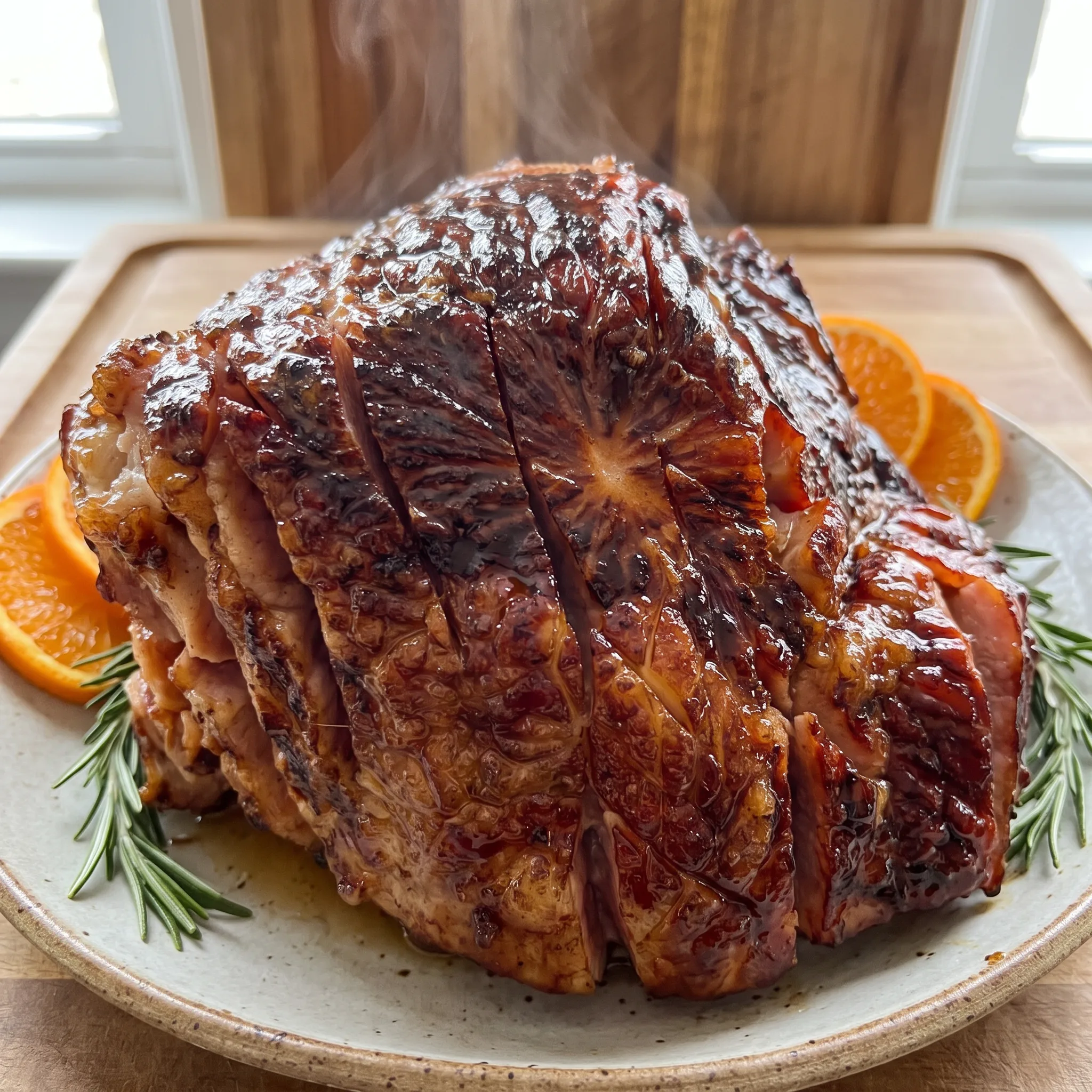
Watch the glaze darken at the edges as it thickens; that’s the sign it’s setting. The result is a ham that slices moist and tastes infused, not roasted dry.
Scoring the Surface
Scoring the ham with a sharp knife creates a diamond pattern across the surface. Those cuts open up the meat, giving the glaze more area to grab onto.
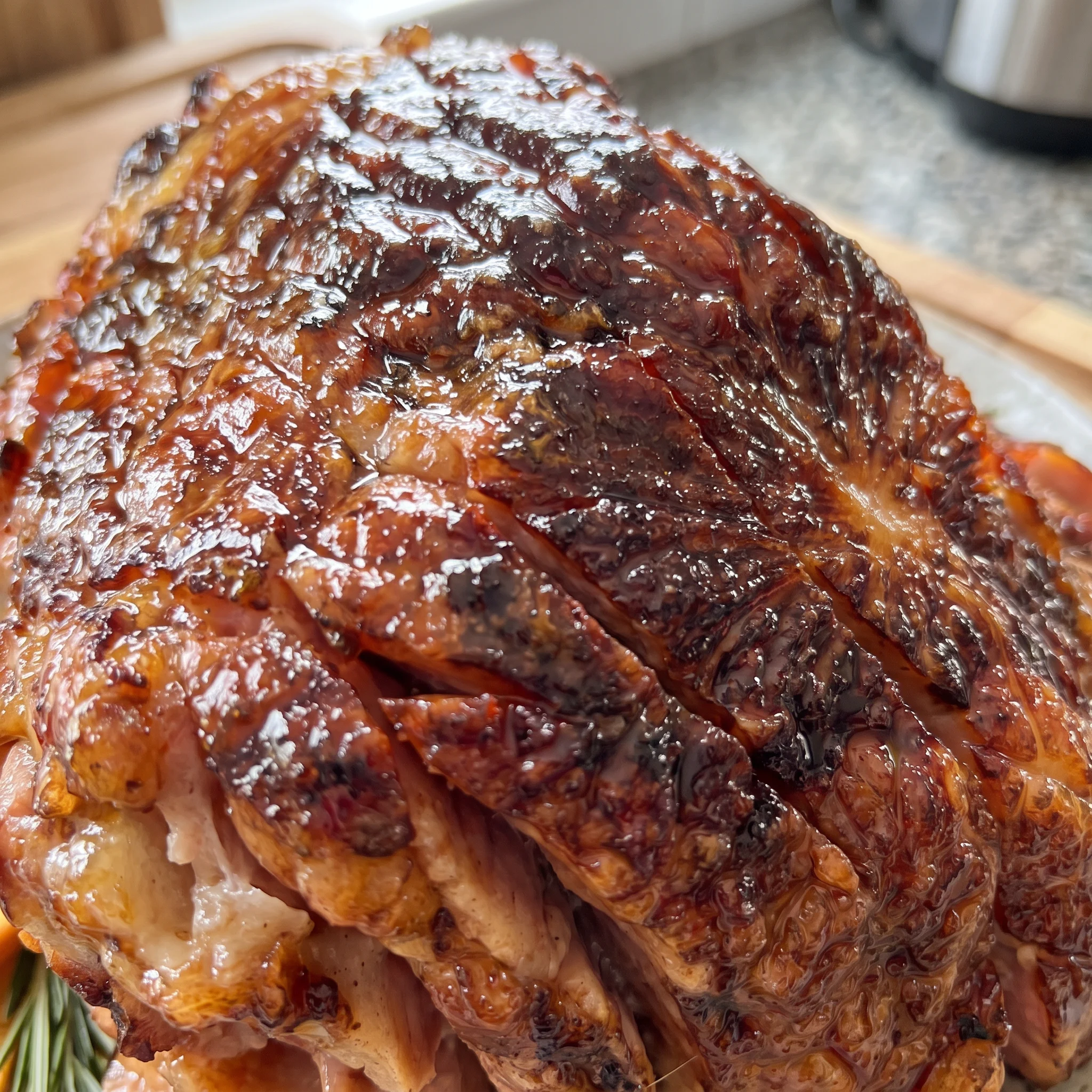
Deeper cuts let the sweet mixture seep into the flesh, so the flavor goes beyond the outer layer. They also help fat render out during the long cook, which keeps the meat from feeling greasy and adds richness to the juices. You’ll see the glaze pool in the scored lines as it heats, then set into a tacky, concentrated coat.
That pattern is what gives each slice a caramelized edge.
A Sweet, Tangy Glaze
Brown sugar brings the sweetness, butter adds richness, and mustard cuts through with tang. Cinnamon and allspice give it a warm, spiced undertone that plays off the ham’s salt.
Spread half over the meat before cooking so the sugar can sink in as it heats. The second half goes on near the end, layering more flavor on top without burning. That two-stage build is why the finished crust tastes deep and sticky rather than one-dimensional.
The glaze turns from a coarse paste into a glossy, caramelized shell as it melts.
Rest Before Slicing
A hot ham weeps juice the moment you cut it. Resting lets the liquid redistribute through the meat, so it stays in the slices instead of running onto the board. Those 10 minutes make carving easier, too; the fibers relax and cut cleanly rather than shredding.
You’ll see less pooling on the plate and a more even color in each piece. Skip the rest and you get a drier, messier result. Let it sit, and the ham will hold its moisture and slice into neat, tidy portions.
What to Look For in the Ham and Glaze
7-8 pound ham: Buy a fully cooked ham; the slow cooker just reheats it. Bone-in takes longer, so check the internal temp.
1/4 cup orange juice: Use plain, not from concentrate with added sugar. It keeps the ham moist without making the glaze too sweet.
4 tablespoons butter, softened: Softened butter blends smoothly into the glaze. Cold butter leaves lumps that melt unevenly during cooking.
1/8 teaspoon ground cinnamon and allspice: Fresh spices make a difference; old ones taste flat. Measure 1/8 teaspoon each, not a heavy pinch.
Reading the Ham’s Progress Without Peeking
Judging When the Glaze Has Set Enough
The first glaze coat turns from a coarse paste into a glossy, sticky shell as the sugars melt and concentrate. You’ll see it darken at the edges and pool in the scored lines.
If it still looks wet and pale after a few hours, the lid has been off too long or the cooker runs cool. Let it go, the second coat goes on later, and that one will firm up fast.
Knowing When the Ham Is Actually Done
The ham is ready when the thickest part hits 140°F, not when the clock says so. A bone-in ham takes closer to 5 hours; boneless runs shorter. Check with an instant-read thermometer inserted deep into the meat, away from bone and fat.
Pulling it early leaves the center cool and raw-looking. Overcooking dries it out, so trust the reading, not the time.
Spotting When the Second Glaze Needs to Go On
Brush on the remaining glaze with 10 to 15 minutes left. You’re looking for the first coat to have set into a tacky surface, not a wet one.
If it’s still shiny and loose, wait a bit more, the sugar hasn’t concentrated enough. If it’s already dark and crusty, you’re late; the extra coat won’t stick well.
The window is narrow, so check early.
Deciding Whether to Broil the Finished Ham
The broiler step is optional, and the call comes after resting. A ham that’s already glossy and caramelized from the slow cooker may not need it, broiling can burn the sugar and turn the surface bitter.
If you want a crisper, more candied crust, a few minutes under high heat does that, but watch it constantly. You’ll smell it before you see it darken too far.
Slow Cooker Glazed Ham
Ingredients
Method
- Use a sharp paring knife to score the ham, then place it with the cut side facing down into the slow cooker. Pour the orange juice into the bottom of the slow cooker.
- In a small bowl, mix together the brown sugar, softened butter, Dijon mustard, cinnamon, and allspice until well combined.
- Spread half of the brown sugar mixture evenly over the entire ham, setting aside the remaining glaze for later use.
- Put the lid on the slow cooker and set it to LOW, cooking until the internal temperature at the thickest part reads 140°F (60°C), which typically takes 4-5 hours. The exact time depends on whether the ham has a bone; a boneless ham will cook faster.
- When there are 10-15 minutes left in the cooking time, brush the remaining glaze over the ham, then re-cover and continue cooking until done.
- Take the ham out of the slow cooker and allow it to rest for 10 minutes. If you want a stickier glaze and a crispy exterior, you can optionally place it under the broiler for a few minutes.
- Cut into slices and serve.
Swap the Meat, Keep the Glaze’s Sugar and Fat
7-8 pound ham: Smoked pork shoulder (pre-cooked) or a pre-cooked ham of similar size. A smoked pork shoulder brings a deeper, richer smoke flavor, but it’s not as salty as a typical ham.
You’ll want to season it a bit more or add a pinch of salt to the glaze. It also has more fat, so it will be very moist, but expect the slices to be less uniform.
A pre-cooked ham works exactly the same, just make sure it’s the same weight and follow the same internal temperature target.
1/4 cup orange juice: Apple juice or pineapple juice. Apple juice gives a milder, more mellow sweetness that lets the spices come forward. Pineapple juice adds a tangy brightness that plays well with the mustard.
Use the same amount. Don’t use juice with added sugar, or the glaze may get cloying and caramelize too fast.
1/3 cup brown sugar: Leave it as is, or use a dark brown sugar for more molasses flavor. Brown sugar isn’t just for sweetness, it’s what makes the glaze sticky and helps it cling to the ham as it reduces. Swapping in a granulated or liquid sweetener will change the texture, making it runny and less likely to form that caramelized crust.
If you want a deeper flavor, dark brown sugar works because it has more molasses, but don’t swap the type or amount without expecting a different result.
4 tablespoons butter, softened: Vegan butter or margarine (for dairy-free). Butter is key for the glaze’s richness and smoothness. A vegan butter with a similar fat content will work, but avoid low-fat spreads, they tend to have more water, which can make the glaze separate or turn greasy.
Use the same amount, softened. If you skip the butter entirely, the glaze will be less glossy and may not set as well.
Tips
- If the ham has a bone, insert the thermometer at the thickest part of the meat, angling it so it doesn’t touch the bone; the bone conducts heat and can give a false reading that’s higher than the actual meat temperature.
- A boneless ham will cook faster than a bone-in one of the same weight, so start checking the temperature about 30 minutes before the lower end of the suggested range to avoid overcooking.
Storing and Serving Leftover Ham
Leftover ham keeps in the fridge for up to 5 days, but the texture shifts the longer it sits. The glaze thickens as it cools, turning tacky and concentrated.
To bring it back, spoon a splash of orange juice over the slices before reheating; that loosens the glaze and adds moisture back. Warm gently in a low oven or microwave, just until heated through, to avoid drying it out.
For longer storage, freeze slices in a single layer on a baking sheet, then transfer to a freezer bag with parchment between layers. Frozen ham holds for about 2 months, though the texture will soften slightly.
Thaw overnight in the fridge before reheating. The ham itself freezes fine, but the glaze can separate and turn watery; that’s fine, just stir it back in. For the best texture, eat the ham within 2 days of cooking.
The broiler step, if you use it, goes on right after the rest, and you should serve it immediately, the crisp exterior softens as it sits.
Frequently Asked Questions
Can I use a spiral-cut ham in the slow cooker?
A spiral-cut ham works fine, but it’s already sliced, so it cooks a bit faster than a solid piece. Those cut surfaces let the glaze seep in more quickly, making the meat extra flavorful. Just watch the internal temperature, check it earlier than you would for a bone-in ham.
The slices can also dry out more easily, so keep the lid on and don’t peek.
How do I know when the ham is fully cooked?
The only reliable sign is an instant-read thermometer reading 140°F at the thickest part, away from bone. Since the ham is already fully cooked, you’re just reheating it, and that temperature ensures it’s hot all the way through without drying out.
A bone-in ham takes closer to 5 hours, while a boneless one finishes sooner. Don’t rely on the clock alone, check the temp.
Can I make this ham ahead of time and reheat it?
You can, but the texture shifts the longer it sits. The glaze thickens as it cools, turning tacky and concentrated.
To bring it back, spoon a splash of orange juice over the slices before reheating, then warm gently in a low oven or microwave until just heated through. For longer storage, freeze slices in a single layer, and thaw overnight in the fridge before reheating.
What can I do with the leftover glaze?
The leftover glaze is a great finishing sauce. Spoon it over the sliced ham right before serving, or warm it with a little of the cooking juices to make a quick sauce. You can also brush it on roasted vegetables or use it as a glaze for chicken.
Just remember it’s concentrated, so a little goes a long way.
How is this different from a baked ham?
A baked ham gets a dry, crisp exterior from the oven’s high heat, but it can also dry out the meat. Slow cooking keeps the ham moist by braising it in its own juices, so the slices stay tender and juicy.
The glaze develops a sticky, caramelized coat, but it’s softer than a baked-on crust. It’s a hands-off method that frees up the oven and gives you a more succulent result.
