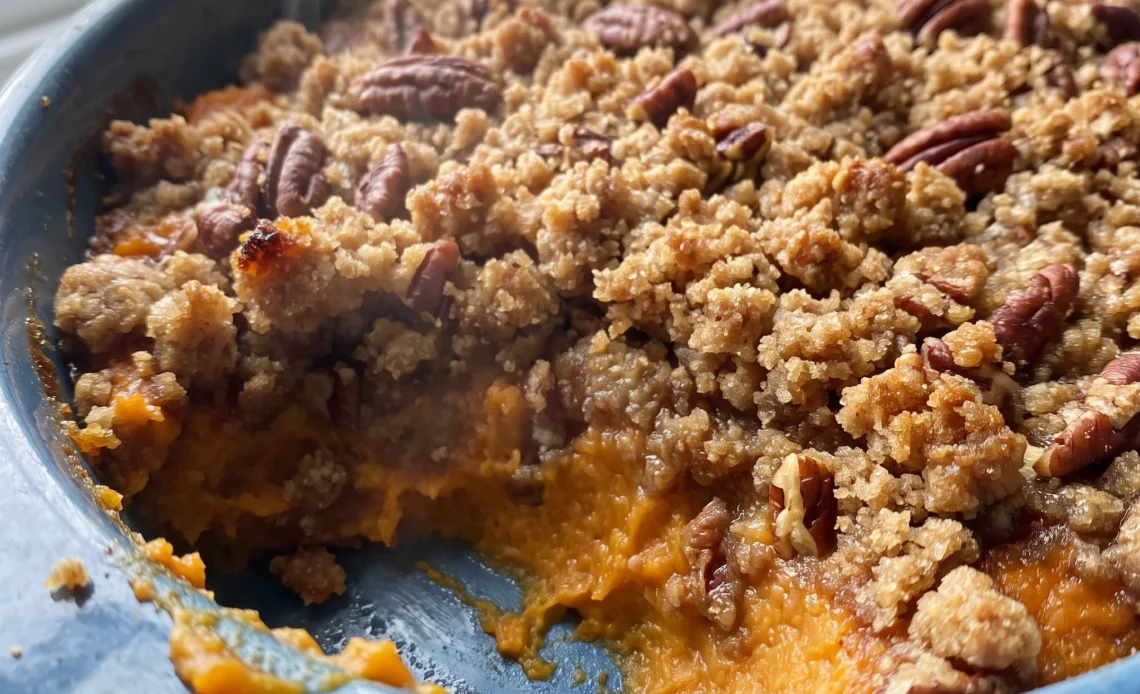
A forkful of this sweet potato casserole gives you two textures at once: a fluffy, lightly whipped base that nearly melts, and a buttery pecan streusel that cracks with a quiet crunch. Getting that contrast right is the whole challenge, and the margin for error is narrow.
Boil the potatoes too long and the filling turns watery; skimp on beating and it sits heavy. But when the base is airy and the topping stays crumbly, the dish earns its place on the holiday table without shouting.
It’s a make-ahead showstopper that upgrades the usual side, and the pecan topping, not marshmallows, is what sets it apart. That’s the sweet potato casserole worth saving.
Boiled for a Light Hand
Boiling sweet potatoes until they give under a fork does more than soften. It lets you mash them smooth without the dense, gluey paste that roasting or canned versions often bring. You can feel the difference when you beat in the eggs and butter: the mixture turns airy, almost like whipped potatoes, because the mixer traps air in the warm, dry mash.
That trapped air is what lifts the filling in the oven, giving it a soufflé-like rise instead of a heavy slab. Draining well matters just as much.
Water left behind thins the batter, so the finished casserole weeps and stays soft instead of setting. The fork-tender test is your cue to stop the boil, but the real watch is after: shake the colander, let steam escape, and don’t rush the mash.
The result is a filling that’s light enough to carry the topping, yet substantial enough to hold its shape on a spoon.
The Crumbly Counterpoint
Melted butter, brown sugar, and flour come together into a streusel that clumps just enough to scatter. Unlike a dough, it stays crumbly, so it doesn’t meld into the filling as it bakes.
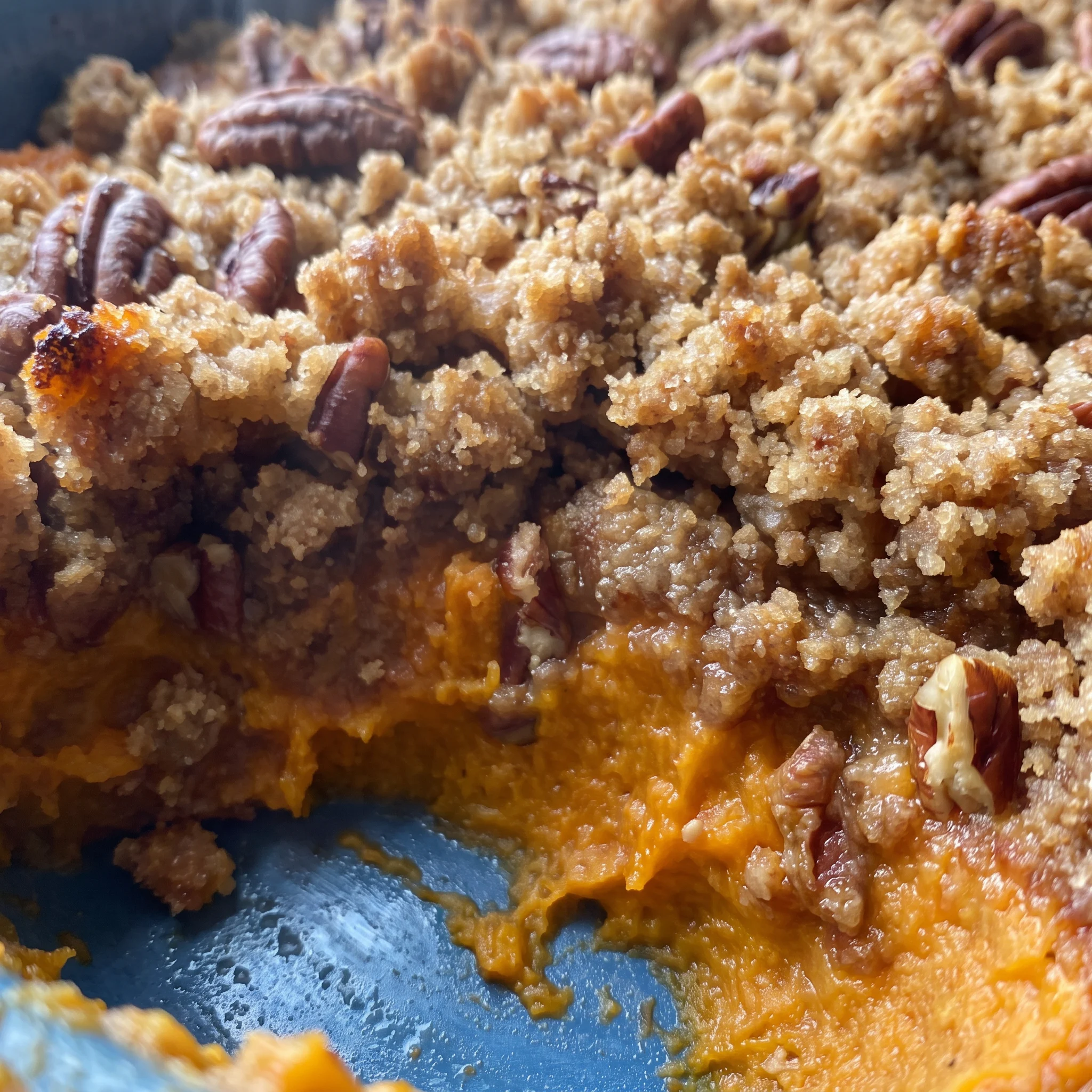
You want those distinct pecan halves folded in whole, they keep their crunch and give you a bite that cracks rather than crumbles. The topping is made separately and scattered, not pressed, so it rests on the surface like a loose gravel layer. That separation is the whole point: a soft, creamy base with a brittle, nutty crust on top.
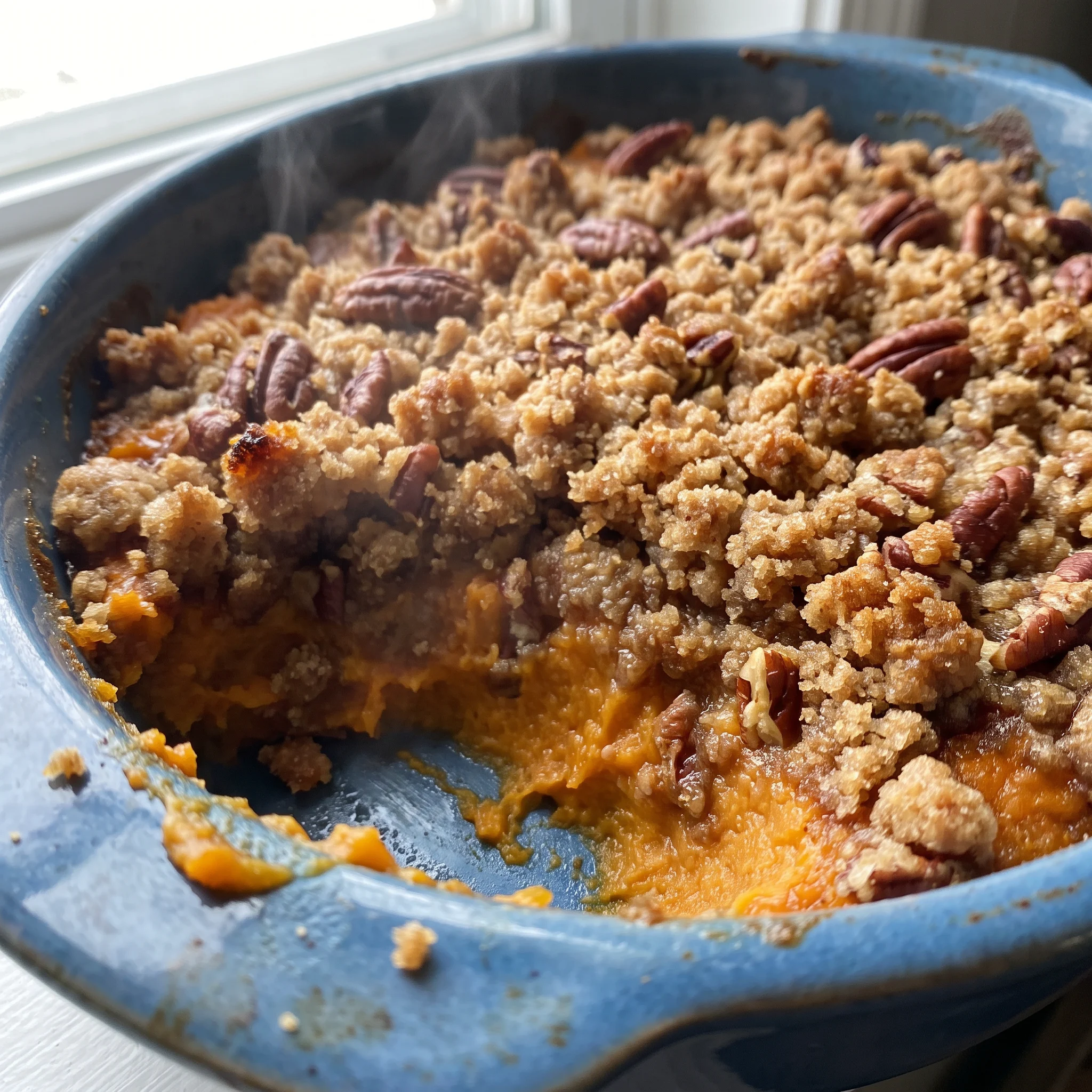
When you cut into the baked dish, the contrast shows, smooth underneath, craggy above. Every spoonful should pick up both, which is why even distribution matters more than precision. The topping will darken and firm as it bakes, but it never turns into a hard shell; it stays tender-crunchy, the kind of texture that makes you go back for another scoop.
A Make-Ahead That Keeps Its Cool
This casserole is built for the day before. You can assemble it, cover it, and slide it into the fridge for up to 24 hours, which is a relief when the holiday table is already crowded. But note the trade-off: a cold start changes the bake.
Straight from the oven, it needs about 45 minutes; from the fridge, expect 50 or so, because the center has to come up to temperature. The visual cues stay your best guide, look for a golden top, set edges, and a center that jiggles only slightly when shaken. Start checking at 30 minutes if you’re using a metal pan, which conducts heat faster than glass or ceramic.
Those materials slow things down, so your oven’s quirks and the humidity in your kitchen can add minutes. The dish will tell you when it’s ready; you just have to peek.
Beyond the Marshmallow
Skip the marshmallow blanket and you get a different sweet potato casserole entirely. Here, the topping is a buttery pecan streusel, so the dish leans nutty and toasty instead of sticky-sweet. The filling itself is whipped with eggs and butter, which gives it a fluffiness you won’t find in the dense, candied versions.
It’s closer to a soufflé than a mash. And the spices are optional, nutmeg and cinnamon can be left out, letting the sweet potato’s own flavor stand forward, or added for a warmer profile. That flexibility means the casserole can sit beside a salty ham or a roasted bird without shouting dessert.
It’s a side dish that knows its place: rich, but not cloying, with a texture that feels celebratory without the sugar rush.
Picking the Right Sweet Potatoes and Topping Nuts
Sweet potatoes: Grab 4 pounds of orange-fleshed ones, often labeled yams, for the smoothest mash.
Pecan halves: Use whole halves, not pieces, since they hold up better and add crunch.
Milk: Any milk works; richer ones like whole or oat make the filling creamier.
Butter: Use unsalted so you control the salt, and soften the filling butter for easy mixing.
Brown sugar: Pack it firmly when measuring so the sweetness and moisture are consistent.
Spices: The nutmeg and cinnamon are optional, so leave them out if you prefer pure sweet potato.
Judging the Casserole as It Comes Together
The Fork-Tender Test and Draining
Boil the sweet potatoes until a fork slides in with little resistance, but they still hold their shape. Overcooking turns them waterlogged, which thins the filling.
Drain well and let steam escape; excess water makes the casserole weep and refuses to set. Shake the colander, give it a few minutes, then mash. If the mash looks soupy, you’ve waited too long, press out moisture with a clean towel before mixing.
Whipping Until Airy, Not Just Smooth
Beat the filling on medium-high until it lightens in color and gains volume, like whipped potatoes. The mixture should look fluffy and hold soft peaks when you lift the beater.
Underbeating leaves it dense and gluey. Overbeating can make it gummy if the potatoes are still warm, so stop once it’s airy.
If it seems thin, the potatoes were too wet, add a spoonful of flour to help it set.
The Topping’s Crumbly Texture
After stirring in the flour, the topping should form clumps that hold together when pressed but break apart easily. If it’s dry and powdery, add a teaspoon of melted butter. If it’s a wet paste, sprinkle in more flour.
The pecans should be coated but not buried. Scatter it evenly; a thick layer in one spot can keep the filling underneath from setting. The topping will darken as it bakes, so don’t panic if it looks pale at first.
Knowing When It’s Done
Start checking at 30 minutes, though the card says 45 to 50. The edges should look set and slightly puffed, the top golden. Give the dish a gentle shake, the center should jiggle only a little, like custard, not slosh.
A knife inserted near the center should come out clean. If the top browns too fast, tent with foil. If the center still moves a lot, give it 5 more minutes and check again.
Glass or ceramic pans need longer than metal ones, so trust your eyes, not the clock.
Sweet Potato Casserole with Pecan Topping
Ingredients
Method
- Put the sweet potato chunks into a large stockpot, pour in enough water to cover, and set over high heat until boiling. Cook until easily pierced with a fork, then drain thoroughly and move to a large bowl.
- Heat the oven to 350°F (175°C). Coat a 2.5 to 3-quart baking dish or a 9×13-inch pan with nonstick spray and reserve.
- In the bowl holding the sweet potatoes, mix in the eggs, softened butter, milk, brown sugar, granulated sugar, vanilla, salt, and the optional nutmeg and cinnamon. Using a handheld electric mixer on medium-high, beat until well blended and airy.
- Spoon the mixture into the prepared dish and gently level the surface with a spatula; set aside.
- In a large microwave-safe bowl, heat the 5 tablespoons of butter on high for about 1 minute until melted.
- Stir the brown sugar, flour, and salt into the melted butter, mixing with a fork or your fingers until crumbly and moist.
- Fold in the pecans until evenly distributed.
- Scatter the topping evenly over the filling.
- Bake for about 45 minutes (or if making ahead, cover and refrigerate up to 24 hours before baking), until the top is a light golden brown, the edges are set, and the center is mostly firm. Note: when baking straight from the fridge, expect a longer time—the original took 50 minutes. Because baking time can vary with the pan material (glass or ceramic takes longer than metal), your oven, humidity, and ingredient differences, check for doneness starting at 30 minutes.
- Serve right away. Store leftovers in an airtight container in the refrigerator for up to 1 week.
Storage and Serving
For the best texture, serve this casserole within 20 minutes of pulling it from the oven. The topping is crispest then, and the filling is at its fluffiest.
Leftovers keep in an airtight container in the fridge for up to a week, but the topping will soften over time as it absorbs moisture from the filling. The filling stays moist, though the texture becomes denser. To bring back some crunch, reheat portions in a 350°F oven for 10 to 15 minutes, or until warmed through.
You can also enjoy it at room temperature; it’s still good, just softer. If you’re making ahead, assemble the casserole and refrigerate it unbaked for up to 24 hours.
When you’re ready to bake, add about 5 minutes to the cooking time (expect 50 minutes total). Avoid freezing the assembled dish, as the topping can become soggy and the filling’s texture may suffer.
If you have extra topping, freeze it separately and sprinkle over the baked casserole before reheating.
Tips
- After boiling, drain the sweet potatoes and return them to the hot pot for a minute or two, shaking occasionally, to evaporate surface moisture before mashing; this extra drying step ensures the filling sets properly without weeping.
Swap Smart, Keep the Lift
Milk: Any milk you have on hand, including dairy or plant-based kinds. Oat milk and whole milk make it creamier; almond and cashew keep it lighter.
The milk adds moisture and a little richness, but it’s not the backbone of the texture. The eggs and butter do that heavy lifting. So switching from cashew to oat or from whole to skim changes the creaminess slightly, but the casserole still whips up airy and bakes with the same soufflé-like rise.
Just avoid anything overly watery, like rice milk, which can thin the filling.
Nutmeg and cinnamon: Leave them out, or swap in pumpkin pie spice or a pinch of allspice or ginger. Start with a quarter teaspoon of any new spice and taste the filling before baking. These are accent notes, not structural.
The sweet potato flavor is sturdy enough to stand alone, so omitting them gives you a cleaner, more savory side. Adding a different warm spice shifts the aroma, but it won’t change how the filling sets. Just don’t go overboard; too much spice can turn bitter and mask the potato’s natural sweetness.
Eggs: Don’t swap the eggs. They’re what make the filling light and fluffy. Beating them in traps air, and that air expands in the oven, giving the casserole its lift.
Without them, the filling turns dense and heavy, more like a gluey mash. If you need an egg-free version, look for a recipe designed without eggs. Here, a flax egg or commercial replacer won’t provide the same structure or rise.
The texture will be noticeably denser and may not set the same way. Better to keep the eggs or choose a different dish.
Butter in the filling: You can use vegan butter or a high-fat margarine in the same amount, but avoid low-fat spreads. The butter adds richness and helps the filling whip up airy.
A low-fat spread has more water, which can make the filling weep or turn gummy. Vegan butter melts and creams similarly, so the texture holds up. Margarine with at least 80% fat works too.
Just check the label. The taste will shift slightly, but the light, fluffy texture stays intact.
Boiling sweet potatoes hydrates their starches, and if not drained thoroughly, the residual water thins the filling, making it runny and preventing the eggs from coagulating into a firm set. Conversely, overbeating after adding the eggs can over-develop the starch and deflate the air beaten in, yielding a dense, gummy texture instead of the intended light, airy soufflé-like consistency.
Frequently Asked Questions
Can I assemble this sweet potato casserole the night before and bake it the next day?
Yes, assemble it fully, cover, and refrigerate up to 24 hours before baking. Expect the bake to run about 50 minutes from a cold start, and check doneness starting at 30 minutes, especially if using a glass or ceramic dish. The topping will stay crumbly in the fridge, so no need to adjust it.
How do I know when the casserole is done baking?
Look for a golden top, set edges that have pulled away slightly from the dish, and a center that jiggles only a little when you shake it, like a custard. A knife inserted near the center should come out clean. Start checking at 30 minutes, though the recipe says 45 to 50; metal pans cook faster than glass or ceramic.
Why is my sweet potato casserole runny in the middle?
The most likely culprit is underbaking, the center wasn’t given enough time to set. Give it 5 more minutes and check again.
If it’s still loose, the sweet potatoes may have held too much water; make sure to drain them thoroughly and let steam escape before mashing. A wet mash thins the filling, so press out excess moisture with a clean towel if needed.
Can I use canned sweet potatoes instead of boiling fresh ones?
Canned sweet potatoes are already cooked and often packed in syrup, so they’re softer and wetter than fresh boiled ones. That extra moisture can make the filling weep and turn gummy, and the syrup adds sweetness you might not want. If you do use them, drain very well and pat dry, but expect a denser result, the fluffy rise from whipping warm, dry mash won’t be the same.
What’s the difference between this pecan topping and a traditional marshmallow topping?
This pecan streusel brings a buttery, nutty crunch that contrasts with the creamy filling, whereas marshmallows melt into a sticky, sweet blanket. The streusel stays tender-crunchy, not a hard shell, and it doesn’t add the cloying sugar rush. It also lets the whipped, soufflé-like filling shine through, making the dish richer but more savory-leaning.
