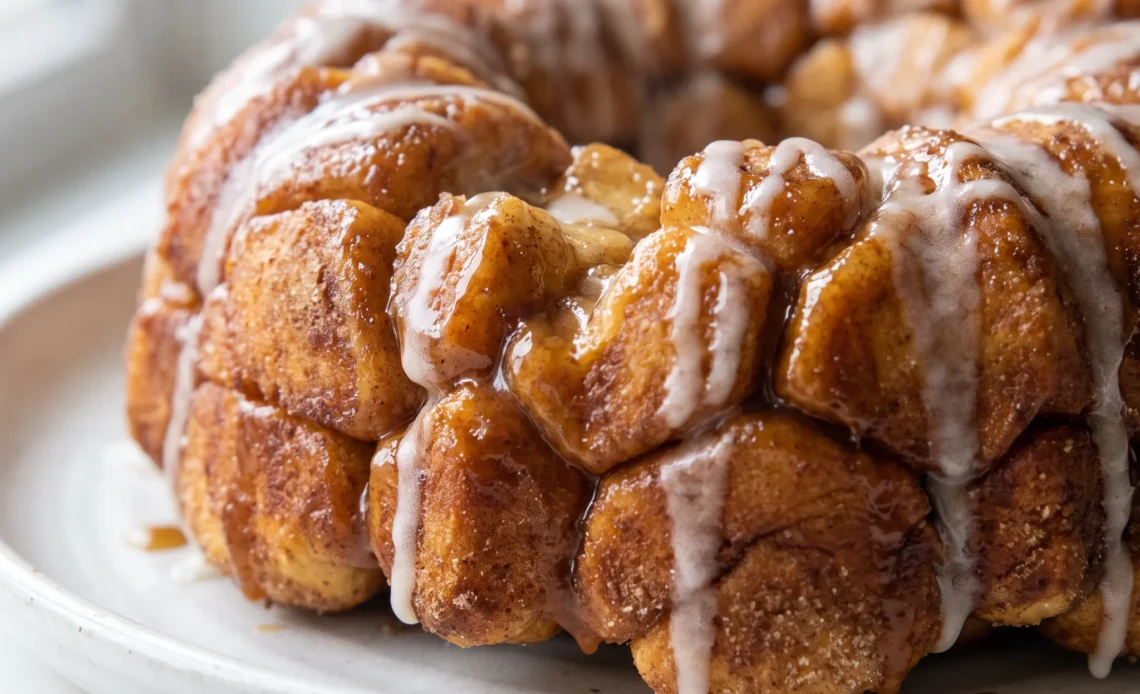
Quartering the rolls does more than shrink them; it multiplies the crisp edges that make each pull-apart piece worth grabbing. That extra surface also soaks up more of the butter glaze, so the sugar caramelizes into a sticky coating that holds the whole loaf together. The bake is straightforward, but the window between underdone center and overdone edges is real, and the dough’s doneness is the one thing you’ll want to watch.
Cinnamon roll monkey bread hits that nostalgic breakfast-dessert note, with a cinnamon sugar aroma that pulls people to the pan before it’s even flipped. The result is a warm, messy pull-apart loaf that’s less about precision and more about the payoff of tearing into it.
Why cut each cinnamon roll into quarters?
Slicing each roll into four pieces gives you bite-sized morsels that bake up with more edge than a whole roll. Those edges turn brown and slightly crisp while the insides stay soft, so every piece has two textures. Coating the pieces in cinnamon sugar before they hit the pan means the spice gets into every crevice, not just the top.
As they bake, the pieces puff and cling to each other, leaving natural break points. You pull apart a warm chunk without any knife work. The quartered size also means more surface area for the butter mixture to reach, which is where the caramelization happens.
You end up with a cluster that’s easy to tear, and each piece carries its own hit of cinnamon.
What does the butter-brown sugar drizzle do?
That butter, brown sugar, and vanilla mix isn’t just for moisture. It seeps down between the dough pieces before baking, and as the heat hits it, the sugar starts to bubble and brown.
What you get is a sticky glaze that clings to the outside of the bread, turning the edges into something like a soft caramel. The vanilla doesn’t shout; it rounds out the cinnamon and sugar, making the flavor taste deeper, more like a bakery cinnamon roll.
You’ll see the glaze darken around the edges of the pan as it bakes. That’s the sugar doing its job.
When you tip the bread out, the bottom, now the top, has that glossy, tacky coating that makes each piece a little messy and a lot worth it.
Why a Bundt pan?
A Bundt pan isn’t just for looks. Its ring shape lets the dough pieces sit in a single layer, so they bake evenly from all sides.
The center tube pulls heat into the middle of the pan, which means the dough in the center cooks through without the outside getting too dark. If you used a regular cake pan, the middle would be dense and underdone while the edges burned.
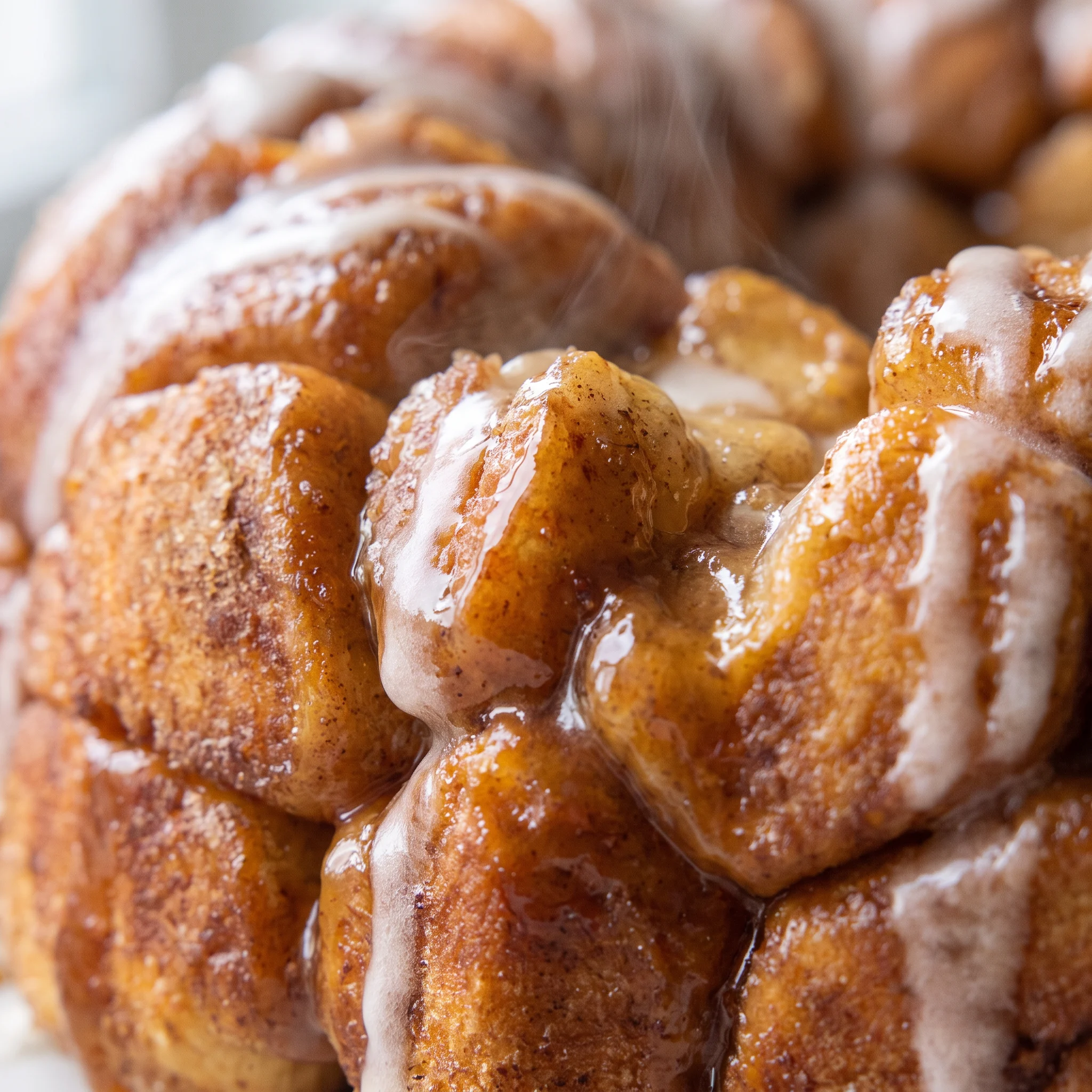
The pan’s curves also create nooks where the butter-sugar mixture pools, giving you spots of extra gooeyness. And because the pan is greased and floured, the bread releases cleanly, keeping its shape. You see the ring of pull-apart pieces, each one caramelized on the outside, soft inside.
That’s the structure you want, and the Bundt pan delivers it.
The icing’s final role
The icing from the cans isn’t an afterthought. It’s the finish that makes this taste like a cinnamon roll rather than just sweet bread.
Piped over the warm loaf, it softens and runs into the crevices, coating each piece with a thin, glossy layer. It adds a smooth sweetness that balances the spiced, buttery crumb.
Without it, the bread would be good but missing that classic cinnamon roll finish. The icing melts just enough from the residual heat to cling, so you get a little sweetness in every bite.
It’s the last touch that ties the whole thing together, turning a pile of dough into something that looks and tastes like a special breakfast.
Picking the Right Cinnamon Rolls and Butter
cinnamon rolls: Use the Pillsbury Grands cans; the larger size gives you the right dough-to-glaze ratio.
unsalted butter: Melt it fully; the brown sugar and vanilla need a smooth, warm base to blend into.
brown sugar: Pack it lightly when measuring; too much air leaves the glaze less sweet and sticky.
ground cinnamon: Fresh cinnamon makes the coating pop; stale spice turns flat and dusty.
How to know when your monkey bread is actually done
Reading the bake: not sticky, but not dry
The center is the last part to cook. After 25 minutes, peek: the top should be deep golden, and the dough should feel springy, not wet. If a toothpick comes out with raw dough, give it 5 more minutes and check again.
Overbaking dries the edges, so pull it the moment the center is set.
The release: trusting the pan’s tilt
Cooling 10 to 15 minutes lets the sugar set enough to hold its shape, but if you wait too long, the caramel hardens and sticks. When the pan is warm but not hot, invert it with confidence.
If pieces resist, let it sit another minute, the steam will loosen them. A clean release means the glaze is where you want it.
Judging the glaze: when the sugar has done its job
As it bakes, the butter-sugar mixture bubbles and darkens around the edges of the pan. That browning is caramelization, it’s what gives the outside that tacky, rich coating. If the top looks pale, the heat wasn’t high enough or the bake was too short.
The finished bread should have a glossy, amber sheen on its crust.
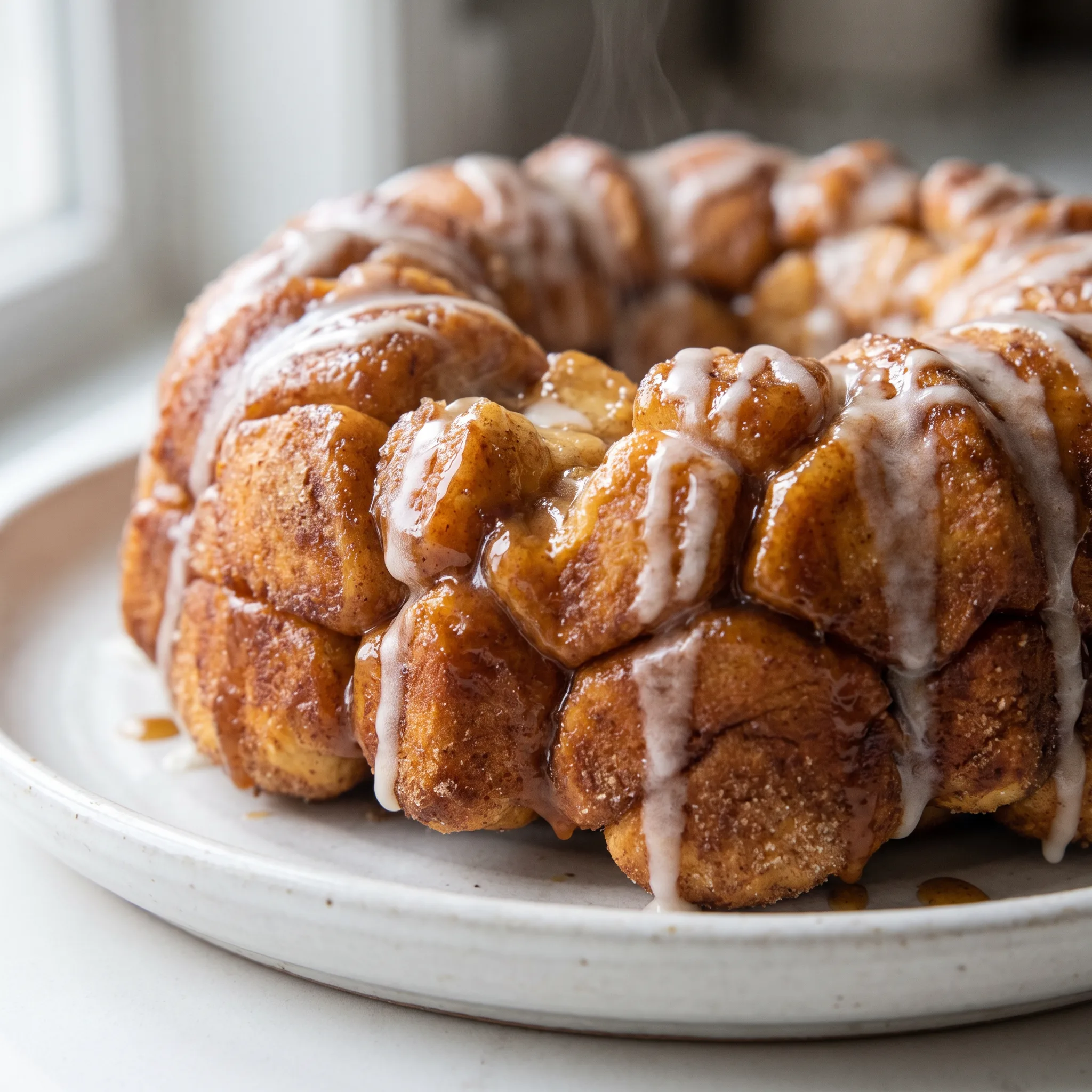
Cinnamon Roll Monkey Bread with Brown Sugar Glaze
Ingredients
Method
- Heat the oven to 400°F (205°C). Use cooking spray to thoroughly coat a large 12-cup Bundt pan, then dust it lightly with flour.
- Take the cinnamon roll dough out of the cans and slice each roll into four pieces.
- In a medium bowl, combine the granulated sugar and ground cinnamon. Add the dough pieces and toss them until every piece is evenly coated with the mixture.
- Arrange the coated dough pieces in the prepared Bundt pan.
- In a small bowl, mix the brown sugar and vanilla extract into the melted butter. Drizzle this butter mixture evenly over the dough in the pan.
- Bake for 25–35 minutes, until the center is no longer sticky. Take the pan out of the oven and allow it to cool for 10–15 minutes. While the bread is still warm but not burning hot, turn it upside down onto a serving plate to release the monkey bread.
- Put the icing from the cinnamon roll cans into a plastic bag. With scissors, snip off a small corner, then pipe the icing over the entire surface of the warm monkey bread.
Swapping the Cinnamon Rolls and Butter Without Breaking the Pull-Apart
cinnamon rolls: Gluten-free cinnamon roll dough (start with the same 35 ounces, but add a few extra minutes to the bake). Gluten-free dough behaves differently. It won’t rise as much, so your pieces will be denser and cling together less.
You’ll lose some of that airy pull-apart texture, but the cinnamon-sugar coating and gooey glaze still come through. Check for doneness by feel, the center should spring back, not feel wet.
If it’s still sticky after 35 minutes, give it up to 5 more.
cinnamon rolls: Homemade cinnamon roll dough (rolled and sliced into quarters, same total amount). Homemade dough gives you a more substantial chew and a fresher yeast flavor.
But it’s less forgiving: if your dough is too dry, the pieces won’t adhere; too wet and they’ll slump into a dense mass. Start with the same amount the recipe uses, and adjust the bake time if needed, homemade dough often takes a few minutes longer to cook through. The trade-off is a less uniform crumb, but that’s part of the charm.
unsalted butter: Plant-based butter or margarine (same 1/2 cup, melted). Plant-based spreads vary in water content.
A higher-water one will make the glaze thinner and less caramelized, so you’ll get a lighter coating instead of that deep, tacky finish. Choose a stick-style plant butter with at least 80% fat, and melt it gently.
The brown sugar and vanilla blend fine, but you might need to bake a couple minutes longer to drive off excess moisture.
Storing and Reheating Leftover Monkey Bread
Eat this within a few hours of icing for the best texture. The icing softens and soaks in as it sits, so it’s gooiest right after it’s poured.
Leftovers keep for 2 days in an airtight container at room temperature. Beyond that, the bread dries out and the sugar crust turns sticky-tough. To bring it back, warm a portion in the microwave for 15 to 20 seconds.
That softens the interior and melts the icing back into a glaze. If you’re reheating the whole loaf, wrap it in foil and heat in a 300°F oven for about 10 minutes. The pieces will pull apart again.
Avoid the fridge; it accelerates staling. You can freeze the un-iced bread for up to a month, but freeze it without the icing. Thaw overnight, then reheat and add fresh icing.
The icing from the cans doesn’t freeze well, so save it for after reheating.
Tips
- Use a wooden skewer to test the center: insert it into the thickest part of the loaf. If it comes out clean, the bread is done, even if the surface looks slightly sticky. This catches doneness before the edges overbake.
- If the skewer comes out with doughy crumbs, tent the pan loosely with foil and bake for 3 to 5 more minutes. The foil prevents the top from over-browning while the center finishes cooking.
During baking, the exterior pieces brown and crisp while the center can remain pale and doughy if the heat hasn’t penetrated. You can tell it’s not ready if the center feels soft and looks wet when you peek; it’s too late to fix once you’ve taken it out and it has cooled, as the structure sets.
Frequently Asked Questions
Can I make cinnamon roll monkey bread ahead of time and reheat it?
You can make the bread ahead, but skip the icing until after reheating. Bake and cool it fully, then store it in an airtight container at room temperature for up to 2 days. When you’re ready to serve, reheat in a 300°F oven wrapped in foil for about 10 minutes, then pipe on the icing fresh.
The icing from the cans doesn’t hold up to reheating, so adding it afterward keeps the glaze glossy. For longer storage, freeze the un-iced loaf for up to a month and thaw overnight before reheating.
Why is my monkey bread doughy in the center?
The center is the last part to cook, so it’s often the culprit if it’s underdone. Your oven might be running cooler than the dial says, or the pan was too crowded. Check with a toothpick at the 25-minute mark; if it comes out with raw dough, give it 5 more minutes.
The finished center should spring back when pressed and show no sticky wet spots. If it’s still doughy after 35 minutes, your oven’s temperature is off and you’ll need to adjust next time.
How do I get the monkey bread out of the pan without it falling apart?
Cooling is key: let the pan sit for 10 to 15 minutes so the sugar sets enough to hold the shape, but don’t wait too long or the caramel hardens and sticks. When the pan is warm but not hot, invert it confidently onto a plate.
If pieces resist, give it another minute, the steam will loosen them. A clean release means the glaze is set just right, and you’ll see the glossy top with all the pieces clinging together.
What’s the difference between monkey bread and cinnamon rolls?
Monkey bread is basically deconstructed cinnamon rolls: the dough is cut into bite-sized pieces, coated in cinnamon sugar, and baked in a Bundt pan with a butter-brown sugar glaze. That gives you pull-apart clusters with caramelized edges, whereas a cinnamon roll is a single spiral that you eat with a fork.
The flavor is similar, but monkey bread trades the neat roll for a sticky, shared loaf. Here, you get the same icing finish, but it’s drizzled over the top of the whole thing.
