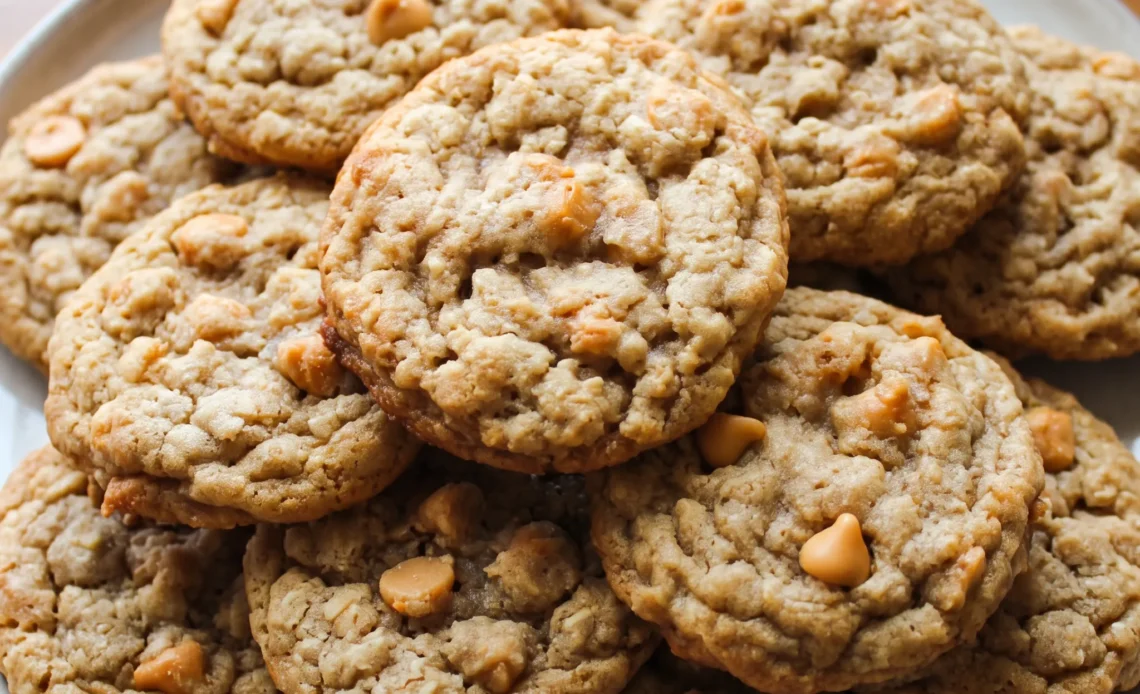
Oatmeal scotchies hinge on a timing call that feels wrong until you trust it. The edges need to look done while the centers still shine raw, and that contrast is the whole reason these cookies turn out chewy instead of crisp.
Butterscotch chips melt into pockets that blur with brown sugar’s caramel depth, and oats keep each bite substantial enough to matter. They’re the kind of cookie that vanishes fast at a gathering, so baking a full batch never feels excessive. The dough demands a cold rest before it hits the oven, but the payoff is a texture that holds its shape and softness.
If you’ve only known the raisin version, these are bolder, sweeter, and harder to stop at one.
The Cold Truth
Chilling does more than keep the dough manageable. It solidifies the butter, so the cookies hold their shape instead of melting into flat disks in the oven. You see it in the final spread: chilled dough gives you a thick cookie with a soft center, while unchilled dough sprawls and turns out thin and crisp.
The rest period also lets the oats and flour absorb moisture from the wet ingredients. That hydration softens the oats and relaxes the gluten, which translates to a chew that’s tender rather than tough. Half an hour is the floor, but the dough only improves with a longer rest.
When the edges finally brown and the centers still look pale, that contrast is exactly what you’re after.
Sweet and Chewy
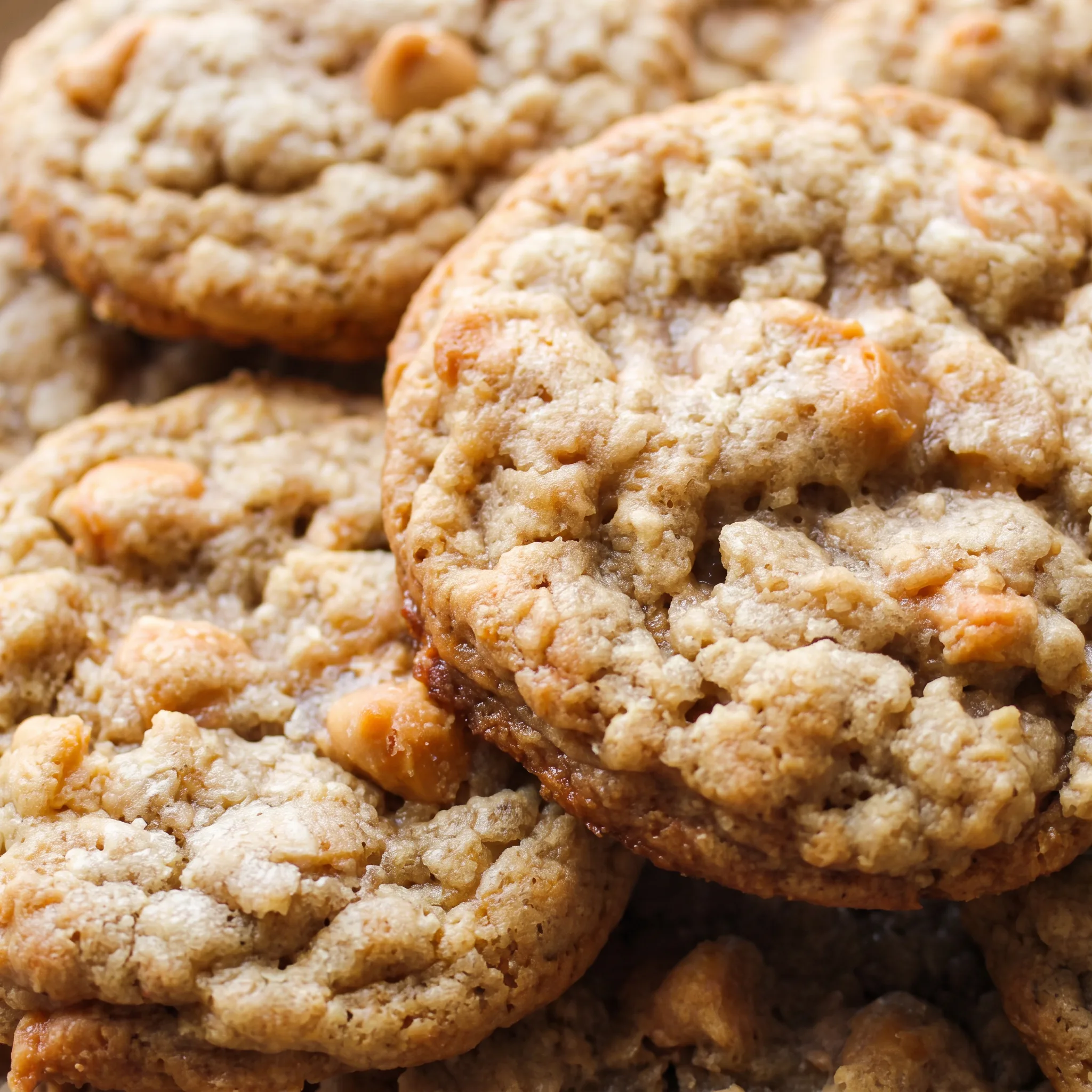
Butterscotch chips bring a buttery, caramel-like sweetness that plays off the brown sugar and cinnamon without ever clashing. They melt into pockets of gooey richness, while the old-fashioned oats provide a hearty, fibrous chew that keeps each bite substantial. The oats also soak up some of the butter, which helps the cookie stay tender.
Together, they create a texture that’s soft in the middle, slightly crisp at the rim, and studded with chewy bits. This is a cookie that knows it’s not oatmeal raisin, it’s something bolder, more rich, and entirely its own.
The oats give it backbone; the chips give it soul.
Underdone on Purpose
Pulling the cookies when the edges are golden but the centers still look raw is a calculated move. The center will continue to cook from residual heat as the cookies rest on the hot sheet.
That carryover sets the structure without turning the middle dry. You end up with a soft, chewy center that contrasts with the crisp edges, the textural sweet spot.
If you wait for the whole cookie to brown evenly, you’ve already overcooked it. The visual cue is your signal: edges firm, centers soft and slightly shiny. Five minutes on the sheet and they’re ready to move, but that brief rest is what locks in the chew.
Sugar’s Split Personality
Brown sugar brings molasses, and molasses brings moisture. That’s why cookies made with mostly brown sugar stay soft and chewy. Granulated sugar, on the other hand, encourages spreading and crispness because it doesn’t absorb as much liquid.
Here, the two work together: brown sugar for depth and tenderness, granulated sugar for a lighter crumb and a hint of crunch at the edges. The balance produces a cookie that’s neither cakey nor flat, just chewy with a delicate snap on the outside.
You taste the brown sugar’s caramel notes, and the granulated sugar keeps things from feeling heavy. It’s a balance that plays out in every bite, with nothing overpowering the oats or butterscotch.
The Ingredients That Matter
Old fashioned oats: Use the rolled kind, not quick oats. They hold their shape and give the needed chew.
Butterscotch chips: Get a good brand so they melt into soft pockets instead of staying waxy and hard.
Light brown sugar: Make sure it’s fresh and clump-free. Pack it firmly when measuring for the right moisture.
Butter: Soften to room temperature, not melted. It creams properly with the sugars for a tender cookie.
Ground cinnamon: It’s a background note, so use a fresh jar or it’ll taste flat and dusty.
The dough’s temperature directly controls spread: when chilled, the butter remains solid longer during baking, giving the cookies time to set before excessive spreading. The 30-minute chill also lets the oats and flour absorb moisture, which thickens the dough and contributes to a chewy texture. If the dough is not chilled, the cookies will spread excessively and lose their characteristic thickness.
Reading the Dough Before It Goes In
The dough’s consistency after mixing
The dough should hold together when pressed but still look slightly shaggy from the oats. If it’s too wet and sticky, the cookies will spread too much. Too dry and crumbly means the flour was overmixed or the butter wasn’t soft enough.
A few extra minutes of chilling can tighten a loose dough, but a dry one won’t come back.
When the edges turn golden but the center stays pale
At 9 to 11 minutes, the visual cue is the contrast between the browned rim and the still-soft, shiny center. The center will set as it rests on the hot sheet.
Pull them while the center looks underdone, that’s the chewy texture. Wait for even browning and the cookies will be crisp all through, losing the soft bite.
The five-minute rest on the baking sheet
The cookies are fragile right out of the oven. That rest lets the structure firm up enough to move without breaking.
If you skip it, the cookies will crack or crumble on the wire rack. The center also finishes cooking during this time, so the final texture depends on not rushing this step.
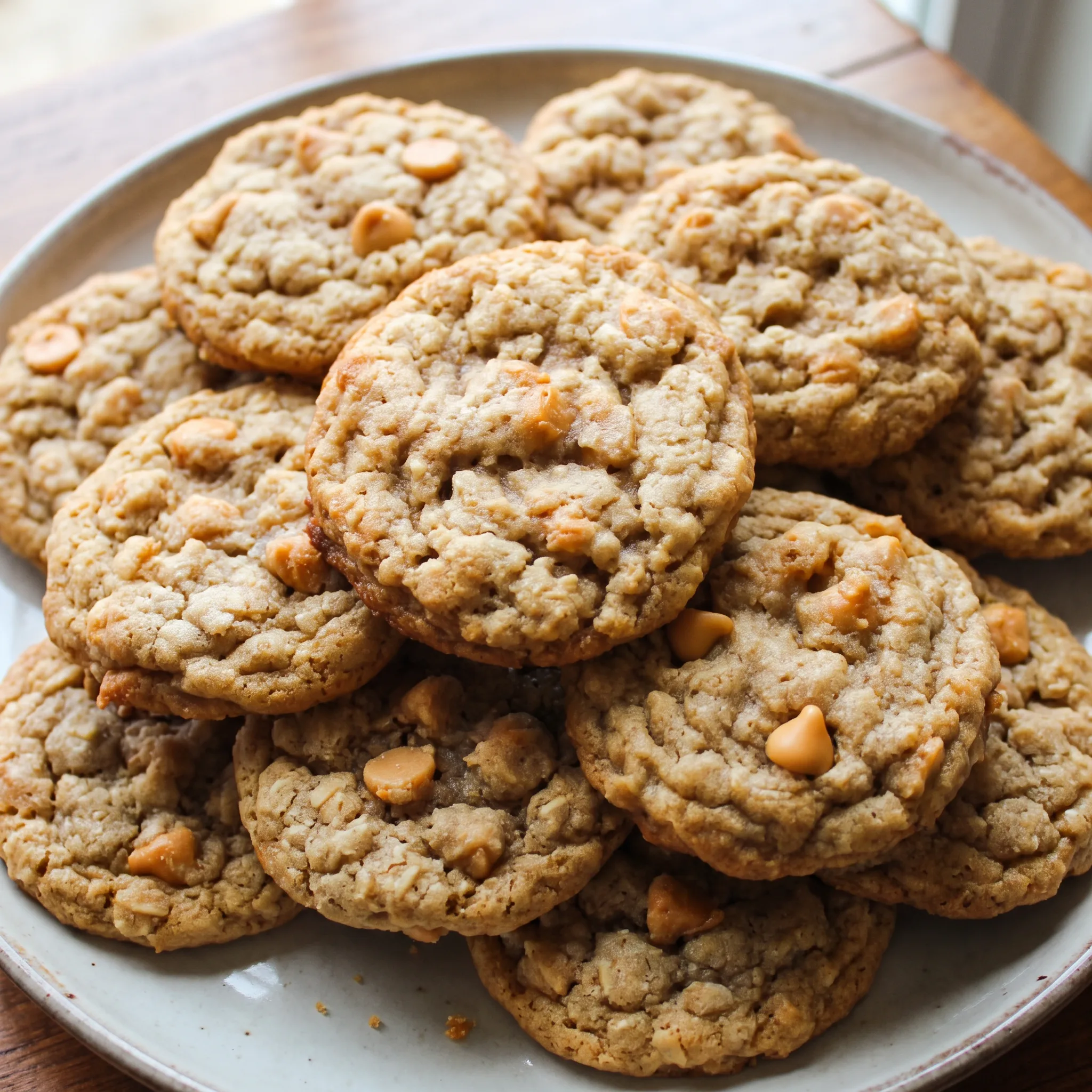
Oatmeal Scotchies with Butterscotch Chips
Ingredients
Method
- In a large bowl, beat the softened butter with both sugars until the mixture is light and airy.
- Incorporate the eggs one at a time, ensuring each is fully blended before adding the next. Mix in the vanilla extract.
- In another bowl, combine the oats, flour, baking powder, baking soda, salt, and cinnamon with a whisk. Slowly add this dry blend to the butter mixture, stirring until just combined.
- Gently fold in the butterscotch chips. Wrap the dough and chill it for no less than 30 minutes.
- Heat the oven to 350°F (175°C). Prepare baking sheets by lining them with silicone baking mats or parchment paper.
- Using a medium cookie scoop, drop about 1 1/2 tablespoons of dough onto the sheets, spacing them 2 inches apart.
- Bake for 9 to 11 minutes, until the edges turn golden. The centers might appear underdone, which ensures a chewy texture. Allow cookies to rest on the sheet for 5 minutes, then move them to a wire rack to cool fully.
Swapping Without Losing the Chew
Old fashioned oats: Quick oats. Quick oats will work in a pinch, but they break down faster and absorb more liquid. The cookies turn out softer and less chewy, with a more uniform texture.
If you want that hearty bite, stick with old fashioned. If you do swap, expect a cookie that spreads a bit more and loses some of the oat’s presence.
All-purpose flour: White whole wheat flour for up to half. You can replace up to half the all-purpose flour with white whole wheat without sacrificing the texture.
The cookies will be slightly more bold in flavor and a touch denser, but the chew stays intact. Swap more than that and they’ll turn dry and crumbly, since whole wheat soaks up more moisture. Start with half the flour swapped, see how the dough feels, and adjust from there.
Butterscotch chips: Semi-sweet chocolate chips or white chocolate chips. Chocolate chips change the whole character. Semi-sweet brings a bitter edge that cuts the sweetness, making the cookie less cloying but also less caramel-forward.
White chocolate keeps the sweetness but loses the butterscotch’s depth. Neither melts into the same soft pockets, so you’ll get a different texture. Use the same amount as the recipe calls for, and expect a different cookie that’s still good on its own terms.
Butter: Vegan butter or coconut oil. For dairy-free, a stick-style vegan butter works best.
It creams similarly and the cookies hold their shape, though the flavor shifts slightly. Coconut oil, on the other hand, turns the dough too soft at room temperature, so the cookies spread thin and crisp. If you go with coconut oil, chill the dough longer and expect a different texture.
The recipe’s 30-minute chill may not be enough to firm it up properly.
Keeping Them Chewy
Baked cookies stay chewy for up to a week if you store them airtight at room temperature. The brown sugar and oats pull moisture from the air, so any exposure dries them out or turns them hard. A sealed container or zip-top bag with the air pressed out works best.
If they do firm up, a slice of sandwich bread in the container for a day brings back some softness, though it won’t fully restore the just-baked center. For longer, freeze the dough, not the baked cookies. Scoop the chilled dough onto a sheet, freeze until solid, then bag them.
Frozen dough keeps its texture for about three months; bake straight from frozen, adding a minute or two. Baked cookies freeze okay but lose that crisp edge when thawed. Serve at room temperature, cold dulls the butterscotch and cinnamon.
Within two days, they’re at peak chew; after that, they’re still good but slightly firmer. Enjoy them soon after baking for the best contrast of crisp rim and soft middle.
Tips
- Use a medium cookie scoop to portion the dough. This gives you uniform balls that bake at the same rate, so you won’t have some cookies overdone while others are still raw in the center. The scoop also keeps the dough compact, which helps the cookies hold their shape during baking.
- After scooping, gently flatten each dough ball to about 1/2 inch thick with your palm. The recipe’s dough is thick and chunky from the oats, so without flattening, the centers may stay too domed and underbaked while the edges set. A slight press ensures the cookies bake evenly from edge to center, giving you that consistent chewy texture throughout.
Frequently Asked Questions
Can I make the dough ahead and bake later?
Yes, and it’s a good move. The dough keeps in the fridge for up to three days if wrapped tightly, and the chill only improves the texture. For longer, scoop it and freeze solid, then bake straight from frozen, adding a minute or two to the 9 to 11 minute window.
Why did my cookies spread too much?
Most likely the dough wasn’t chilled long enough, so the butter melted before the structure set. Give it the full 30 minutes, or longer if the kitchen is warm. Also check that your baking powder and soda are fresh; old leaveners lose their lift, letting the dough slump.
How do I know when they are done if the centers look soft?
Pull them when the edges are golden but the centers are still pale and slightly shiny. That underdone look is your cue, because the carryover heat will finish setting them during the 5-minute rest on the sheet. If you wait for even browning, you’ll lose the chew.
Can I freeze the baked cookies?
You can, but they’re better from the dough. Baked cookies freeze okay, though the crisp edge softens on thaw. Store them airtight and serve at room temperature; cold dulls the butterscotch and cinnamon.
For the best chew, bake fresh from frozen dough.
What is the difference between Oatmeal Scotchies and oatmeal raisin cookies?
Oatmeal Scotchies swap the raisins for butterscotch chips. That change brings a buttery, caramel sweetness instead of the tart, fruity bite of raisins. The chips melt into soft pockets, while raisins stay chewy and add a different texture.
This recipe leans into that bold sweetness with brown sugar and a touch of cinnamon.
