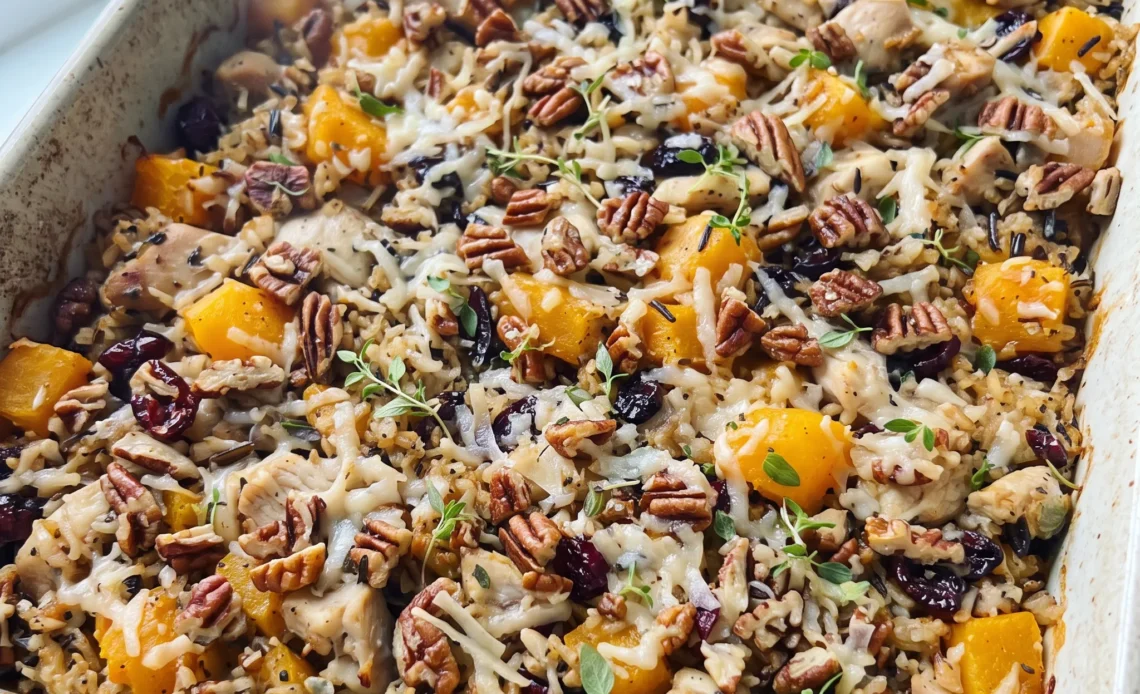
This isn’t a weeknight throw-together. It’s a weekend project that pays you back in leftovers you’ll actually look forward to.
The butternut squash chicken wild rice casserole walks a fine line between hearty and heavy; get the squash’s head start wrong and you’re eating mush, but nail it and each cube keeps its shape against the chewy rice and tender chicken. Cranberries cut the richness, nuts add the crunch, and the whole thing comes together in stages that let you multitask without watching a clock. It’s forgiving in the prep, precise in the finish.
The reward is a one-dish meal that feels like more than the sum of its parts, and it reheats better than most things you’ll make all week.
The initial high-heat roast at 425°F quickly brings the chicken to the safe internal temperature of 165°F, searing the exterior and trapping juices. Resting the chicken allows the juices to redistribute, so when it’s chopped and added to the casserole for a shorter final bake, it remains tender rather than becoming dry and stringy.
High-Heat Roast First
Chicken thighs roast at 425°F until they hit 165°F inside, then rest. That initial blast of heat browns the outside and keeps the meat moist.
You can see the difference: the skin side gets a caramelized crust, the interior stays juicy. Once rested, the chicken gets chopped.
That pause lets the juices settle back in, so the pieces stay tender when they go into the final casserole. The extra bake won’t dry them out because they’re already cooked through. You’re just warming them up with everything else.
Roasting separately also renders some fat and concentrates flavor, which you’d lose if the chicken simmered in the casserole from the start. The result is a casserole with distinct, juicy chunks of meat, not shreds that disappeared into the sauce.
Squash’s Two-Stage Cook
Butternut squash gets a head start in a covered skillet. First, it’s tossed with onion in olive oil for a couple of minutes, then the lid goes on. Steam builds and cooks the cubes evenly, so they soften but keep their shape.
After 6 to 8 minutes, they’re just tender, with a little resistance when you pierce one with a fork. That partial cooking means they finish in the oven without going soggy.
The covered method also prevents the edges from drying out or browning too much. When you fold the squash into the rice and chicken, it holds up, giving you a distinct bite in every spoonful.
The texture stays consistent throughout the dish, no sad, collapsed pieces at the bottom of the pan.
Sweet and Crunchy Contrast
Dried cranberries bring a tart pop that cuts through the rich chicken and earthy squash. They rehydrate slightly as the casserole bakes, becoming plump and juicy.
The nuts, whether pecans or walnuts, go on top only for the last minutes of baking. That way they toast, turning golden and crisp, and you get that satisfying crunch against the softer ingredients.
The combination turns a simple one-dish meal into something with layers of flavor and texture. Each bite has a little sweetness, a little nuttiness, and the savory base underneath. That contrast keeps the casserole interesting from first forkful to last.
Make-Ahead Without the Letdown
This casserole suits a busy schedule because you can prep parts in advance. Cook the rice, roast the chicken, and sauté the squash separately, then refrigerate them.
When you’re ready, just combine and bake. The chicken’s rest time, essential for juiciness, becomes part of your prep instead of a bottleneck. You can even assemble the whole dish and pop it in the fridge, then bake it off later.
The components hold their textures overnight, so the result tastes just as good as made fresh. That flexibility means a from-scratch dinner on a weeknight isn’t out of reach. A little planning pays off with a hot, hearty meal, no last-minute scramble.
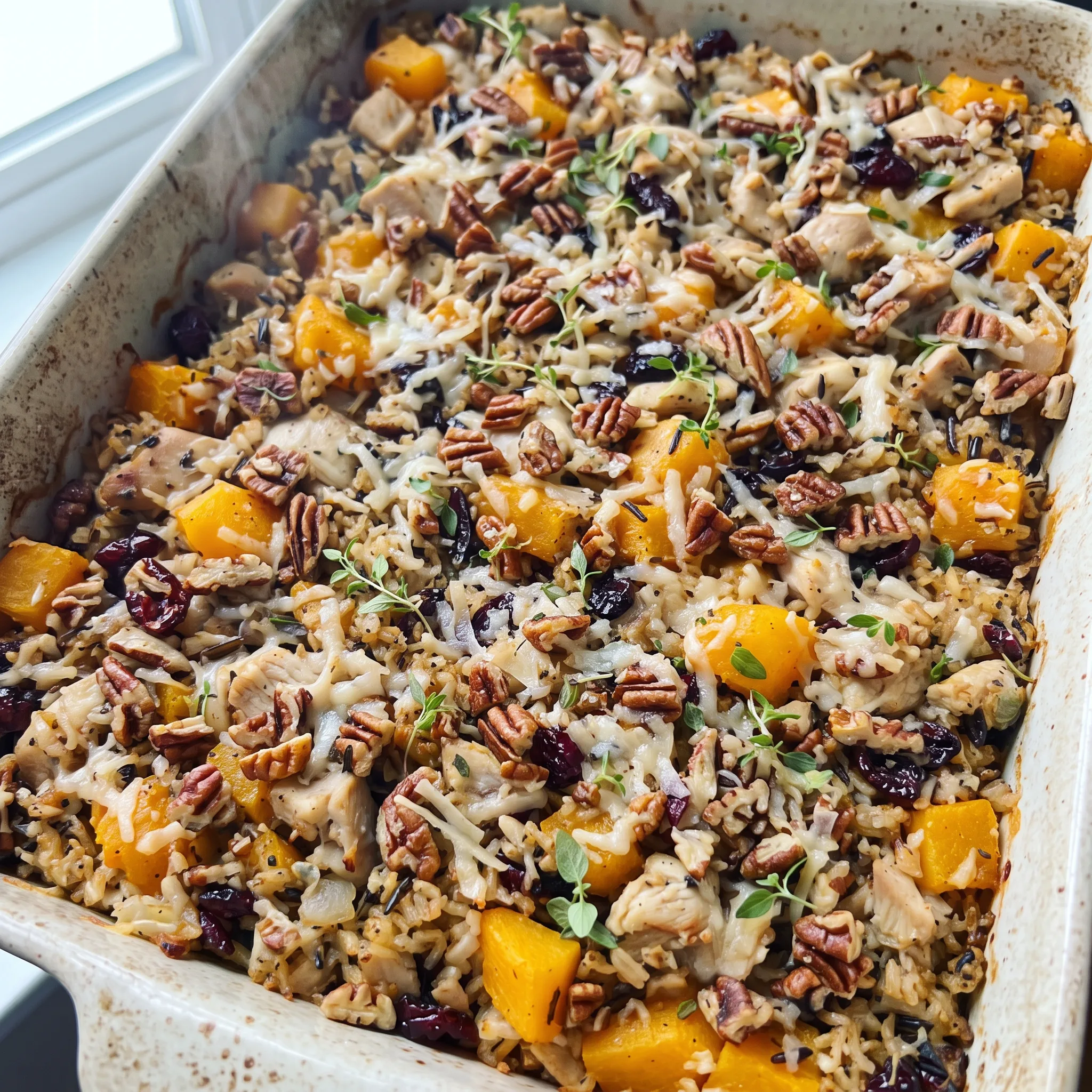
Notes on the Ingredients That Matter
Wild- and brown-rice blend: Buy a blend with both for texture; cook it ahead so it’s ready to fold in.
Boneless, skinless chicken thighs: Trim excess fat so the casserole isn’t greasy, and roast until just done.
Butternut squash: A small one, about 1½ pounds, gives you 4 cups cubed; peel and seed first.
Dried cranberries: They plump up in the oven, adding tart pops against the rich, savory bits.
Reading the Casserole as It Comes Together
When the Squash Is Done Enough
After 6 to 8 minutes covered, a fork should pierce a cube with some resistance left. It’s not fully cooked, that finish happens in the oven. If it’s already soft, it’ll collapse during the final bake.
If it’s still crunchy, give it a couple more minutes covered. The texture tells you when to stop.
The Right Moment to Pull the Chicken
Roast until an instant-read thermometer reads 165°F at the thickest part. Pulling it early risks undercooked meat; leaving it longer dries it out. The rest on the plate lets carryover cooking finish the job while juices redistribute.
Chunks stay moist in the casserole because they start out right.
Judging the Final Bake
After 15 minutes, the casserole should be hot and bubbling at the edges. Then you add the nuts and cheese.
The last 8 to 10 minutes are about toasting the nuts and melting the cheese, watch for the nuts to turn golden and smell nutty. That’s your cue to pull it out before they scorch.
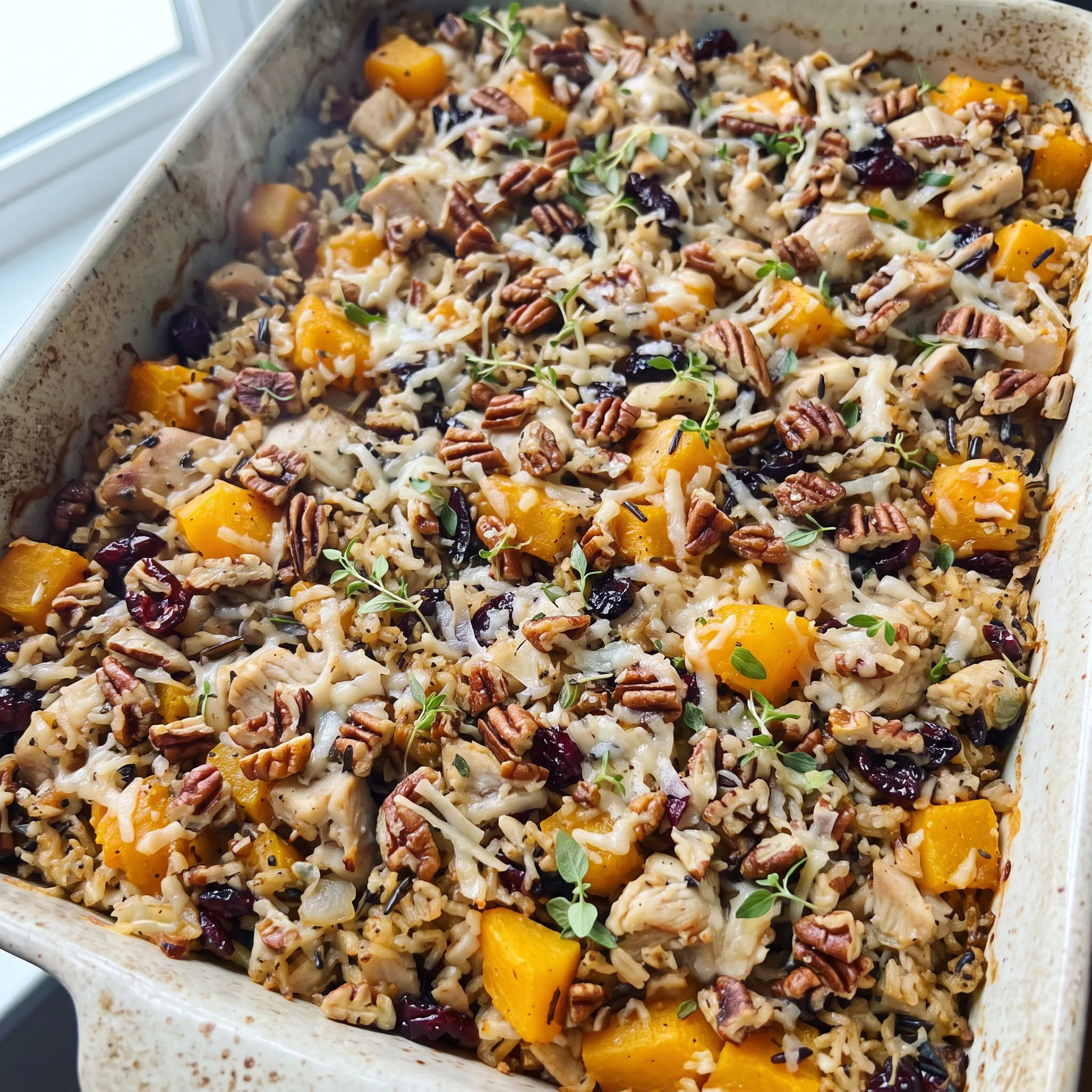
Butternut Squash Chicken Wild Rice Casserole
Ingredients
Method
- Prepare the rice as directed on its package. Strain any leftover liquid and put it aside (you’ll end up with roughly 3 cooked cups).
- Position an oven rack in the middle and heat the oven to 425°F (220°C). For simpler clean-up, line a 9×13-inch baking dish with a big sheet of aluminum foil or parchment. Set the chicken thighs in a single layer, folding the loose flap under each piece. Coat with 2 tablespoons of the oil and season with ¼ teaspoon salt and ¼ teaspoon pepper. Roast on the center rack until an instant-read thermometer registers 165°F (75°C) at the thickest part, about 20 minutes. Move the chicken right away to a plate and cover loosely. Allow to rest for 10 minutes. Lower the oven to 350°F (175°C). Dispose of the foil or paper but keep the dish close by.
- While the chicken is roasting, peel the butternut squash and slice off both ends. Separate the neck from the bulbous base. Stand the base on a flat end and halve it vertically. Remove the seeds and throw them away. Dice both the neck and base into ½-inch cubes (you should get about 4 cups).
- Warm the remaining 2 tablespoons of oil in a large, deep skillet that has a tight lid, over medium heat. Put in the squash, onion, plus the rest of the salt and pepper. Sauté for about 2 minutes until the onion starts to turn translucent. Cover and cook, stirring from time to time, until the squash is soft but still has a bit of bite, which takes 6 to 8 minutes.
- After the chicken has rested, chop it into bite-size chunks. Add it to the skillet along with the thyme, cranberries, ¼ cup of Parmesan, and the cooked rice. Mix everything well.
- Spray the same 9×13-inch baking dish with nonstick cooking spray (no need to wash it first). Use a large spoon to transfer the squash-rice mixture into the dish, smoothing it out evenly.
- Bake for 15 minutes. Take the casserole out, then scatter the nuts and the remaining ¼ cup of Parmesan on top. Continue baking for another 8 to 10 minutes until the cheese melts and the nuts become toasted and crunchy. Finish with a sprinkle of extra fresh thyme and serve hot.
Storing and Reheating Leftovers
Leftovers keep in an airtight container in the fridge for up to 3 days. The rice and chicken hold their texture well, but the nuts will soften as they absorb moisture.
To bring back some crunch, sprinkle a few fresh toasted nuts over each portion before reheating. Reheat gently in the microwave or a 350°F oven until hot throughout; don’t overcook or the chicken may dry out.
For longer storage, freeze just the casserole base (without the nut topping) in a freezer-safe container for up to 2 months. Thaw overnight in the fridge, then reheat and add fresh nuts and Parmesan before serving.
Serve the dish hot, ideally within 30 minutes of pulling it from the oven. The nuts stay crisp for about that long; after that, they start to soften.
If you’re serving later, hold off on the final sprinkle of nuts and thyme until just before you bring it to the table.
Swapping Smart, Not Blind
Wild- and brown-rice blend: Any long-grain brown rice or wild rice mix works here. Cook it per its package directions and measure out about 3 cups cooked.
The blend gives you two textures: the wild rice stays chewy, the brown rice softens. If you swap in all brown rice, you lose some of that bite, but it still absorbs the savory juices.
All wild rice can get too firm and nutty, overpowering the squash. Just don’t use a quick-cook white rice; it’ll turn to paste when folded in.
Dried cranberries: Dried cherries or chopped dried apricots stand in well. Use the same ¾ cup. Dried cherries are more tart and a bit smaller, so they distribute evenly.
Apricots bring a softer sweetness and a chewier texture. Both rehydrate in the oven, plumping up like the cranberries. Avoid raisins, they’re too sweet and cloy here, and they’ll turn mushy.
Pecans or walnuts: Use whichever you prefer, pecans are buttery, walnuts are more assertive. No real difference in handling. The nuts go on top for the last minutes of baking, so they toast and turn crunchy.
If you swap them, you’re changing the flavor but not the texture. Skip the nuts entirely if you’re feeding someone with a tree nut allergy; the casserole still works, just loses that crunch.
Pine nuts would work too, but they’re pricier and burn faster, so watch them closely.
Parmesan cheese: For a dairy-free version, use a plant-based Parmesan-style shred or nutritional yeast. Start with ¼ cup of nutritional yeast and add to taste.
Parmesan melts and browns on top, adding a salty, nutty crust. A vegan shred melts similarly, though it may not brown as deeply. Nutritional yeast gives a cheesy flavor but doesn’t melt, you’ll get a speckled topping that still adds savoriness.
If you skip it entirely, the casserole loses that salty contrast, so you might want to bump up the salt elsewhere. For gluten-free, the recipe is already safe as long as your rice blend is certified gluten-free.
Tips
- When cubing the butternut squash, aim for ½-inch pieces and check a few for uniform thickness. If some cubes are noticeably larger, they’ll take longer to cook and may stay crunchy in the final casserole. A quick visual scan before adding to the skillet ensures even cooking.
- After the squash has cooked covered for 6 to 8 minutes, test a cube from the center of the skillet, not the edge. The center retains heat differently and is the last to soften. If the center cube is tender but still offers slight resistance, the squash is ready; if it’s still hard, give it another minute or two covered.
Frequently Asked Questions
Can I make this casserole ahead of time and bake it later?
Yes, you can assemble it ahead and refrigerate until you’re ready to bake. The components hold their textures overnight, so the result tastes just as good as made fresh. Just note that the nuts and extra Parmesan go on during the last minutes of baking, so if you’re prepping fully, add them partway through the bake.
This way you get a hot, hearty meal without a last-minute scramble.
How do I know when the chicken is fully cooked?
Roast until an instant-read thermometer registers 165°F at the thickest part of the thigh. That’s your cue to pull it out, leaving it longer risks drying it out. The chicken will rest for 10 minutes, letting carryover cooking finish the job.
Why does the chicken need to rest before chopping?
That pause lets the juices settle back into the meat, so the chopped pieces stay tender and moist in the casserole. If you chop it right away, you’ll lose those juices on the cutting board, and the chunks can turn out drier. The rest also gives you a window to cook the squash, so it fits into the flow without slowing you down.
What’s the best way to get the squash evenly cooked without overcooking?
Cut the squash into uniform ½-inch cubes so they cook at the same rate, then give them a head start in a covered skillet. The steam softens them evenly, and you’ll know they’re ready when a fork pierces a cube with some resistance left, they finish in the oven. That way they hold their shape and don’t going soggy at the bottom of the dish.
