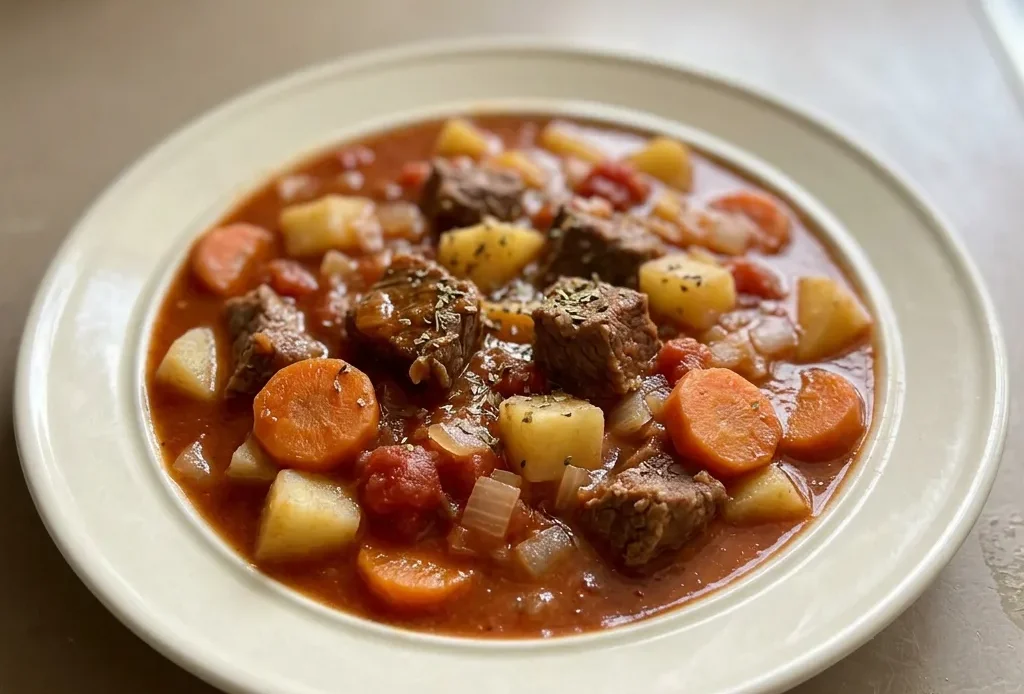
The beef collapses at the touch of a fork, and the broth turns dark and glossy, carrying a concentrated tomato tang that tastes like it simmered all day. That depth didn’t come by accident.
The real work in this slow-cooker tomato beef stew happens in the first ten minutes, searing the meat in batches until a deep brown crust forms. Skip that step and the whole pot tastes flat, no amount of long cooking can add what browning gives.
The payoff is a bowl that tastes like something you fussed over, even though the crockpot did almost everything.
First batch was basically beef soup, the tomatoes and broth just made a thin, watery sauce that wouldn’t coat the meat.
Searing builds beef stew flavor
Searing the beef before it goes into the crockpot is the step that makes the stew taste like you simmered it all day on the stove. The browning, the Maillard reaction, creates a savory crust on the meat that no amount of seasoning can replicate.
Do it in batches. If you crowd the pan, the meat steams instead of browns, and you lose that deep, roasted note. The browned bits left in the skillet?
They’ll wash into the stew as it cooks, carrying that flavor with them. You don’t need to deglaze here; the slow cooker’s moisture pulls it all in. The payoff is a broth that tastes rich and complex, not just salty and beefy.
Two tomato forms, one rich base
Tomato paste and canned diced tomatoes work as a team. The paste is concentrated and thick; it adds body and a deep, savory sweetness that comes from cooking down. The diced tomatoes bring brightness and a bit of texture, soft chunks that hold their shape through hours of simmering.
Together, they give the broth a balanced tang that cuts through the beef’s richness. Now I always add the full 3 tablespoons of tomato paste and let it cook down a bit before adding broth. That little step deepens the flavor even more.
Without both, you’d get either a watery broth or one that’s too sweet.
Layering vegetables on top prevents mush
In a slow cooker, the bottom stays hottest because that’s where the heating element is. If you stirred everything together, the potatoes and carrots would be submerged in liquid at the bottom and going soggy long before the beef was tender.
Instead, pile the vegetables on top of the meat. They sit above the liquid line, cooking mostly in steam, softening at a slower rate. After 8 hours, they’re tender but still hold their shape, fork-tender, not falling apart.
The beef, tucked at the bottom in the broth, braises properly and becomes fork-tender itself. It’s a simple arrangement that respects each ingredient’s cooking pace.
Low heat changes tough beef into tender bites
Beef stew meat comes from well-exercised muscles, full of collagen. That’s what makes it chewy when cooked fast. But held at a gentle simmer for hours, on low in the crockpot, that collagen slowly breaks down into gelatin, which coats the meat and gives the broth body.
The meat stays moist because it’s surrounded by liquid the whole time, never drying out. The long cook also lets the flavors from the tomatoes, broth, and spices settle into every bite.
There’s no shortcut here; you can’t rush collagen. What you get is beef that shreds with a fork and a gravy that clings to it.
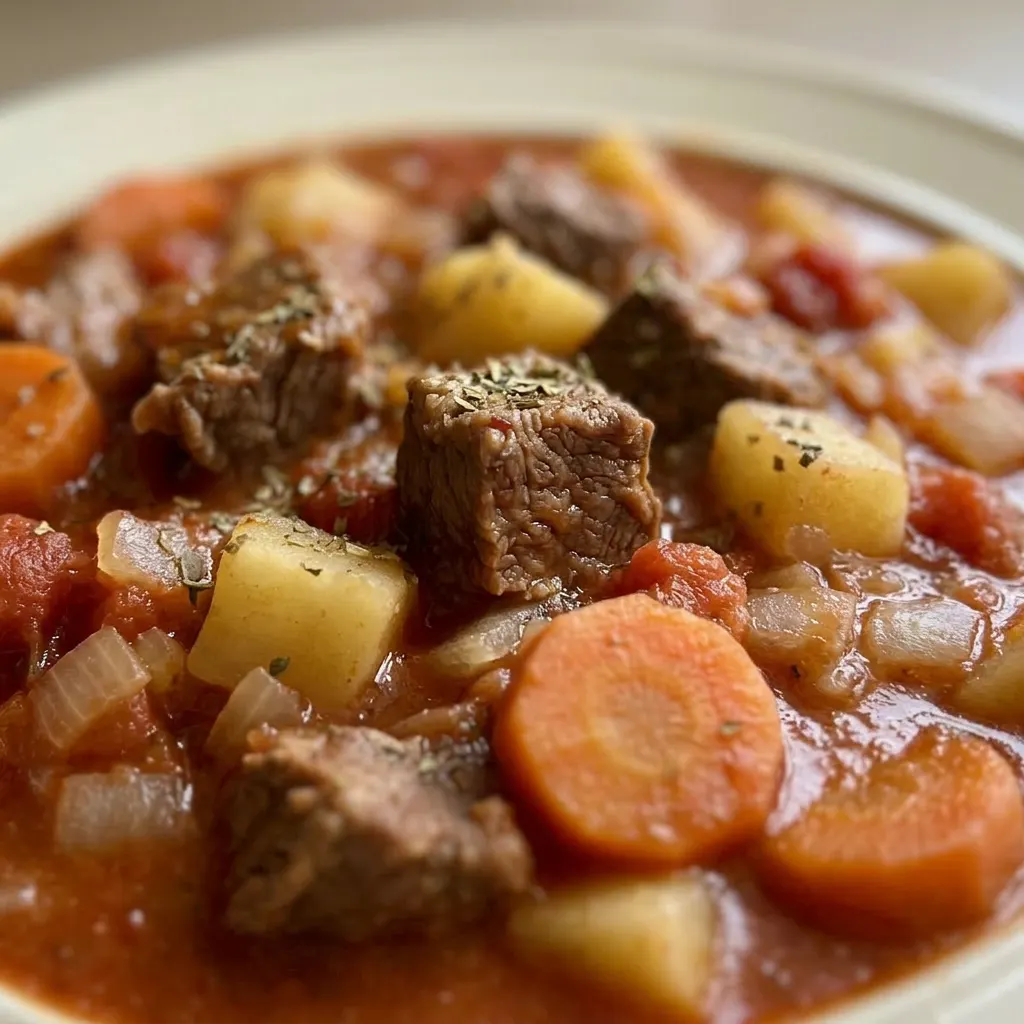
Prep: 20 min · Cook: 8 hr · Total: 8 hr 20 min · Servings: 6
Ingredient notes for this stew
Beef stew meat: Chunks from the chuck or round, well marbled with fat that renders during the long cook.
Tomato paste: Buy the tube for easy spooning; leftover paste keeps in the fridge for weeks.
Diced tomatoes: Fire roasted or plain, just canned and undrained. The juice adds body to the broth.
Potatoes: Russets break down a bit and thicken the stew; Yukon Golds hold their shape better.
Beef broth: Low sodium gives you control over the final salt level after hours of simmering.
Brown the beef in batches for deep flavor
Sear the beef
Season the beef with salt and pepper. Heat oil in a skillet over medium-high until it shimmers. Add beef in a single layer without crowding, if the pan is packed, the meat steams and turns gray instead of brown.
Move to the slow cooker
Transfer browned beef to the crockpot. Don’t scrape the skillet clean; those browned bits will wash into the stew during cooking, enriching the broth. Repeat with remaining batches until all beef is seared.
Layer vegetables on top
Place the diced potatoes, sliced carrots, and diced onion on top of the beef. They’ll sit above the liquid line, cooking in steam rather than submerged liquid, so they stay firm, not mushy, after 8 hours.
Mix and add the tomato base
In a bowl, stir together diced tomatoes, tomato paste, oregano, paprika, and minced garlic. Pour over the vegetables. The paste adds body and sweetness; the diced tomatoes give brightness and texture.
Add broth and cook low
Pour in beef broth until ingredients are just covered, about 4 cups. Cover and cook on low for 7 to 8 hours. The gentle heat breaks down collagen, turning tough meat into fork-tender bites and thickening the broth.
Finish and adjust seasoning
Stir the stew gently. Taste and add salt or pepper if needed.
The long cook concentrates flavors, so you may need less salt than expected. Serve hot with rice or bread.
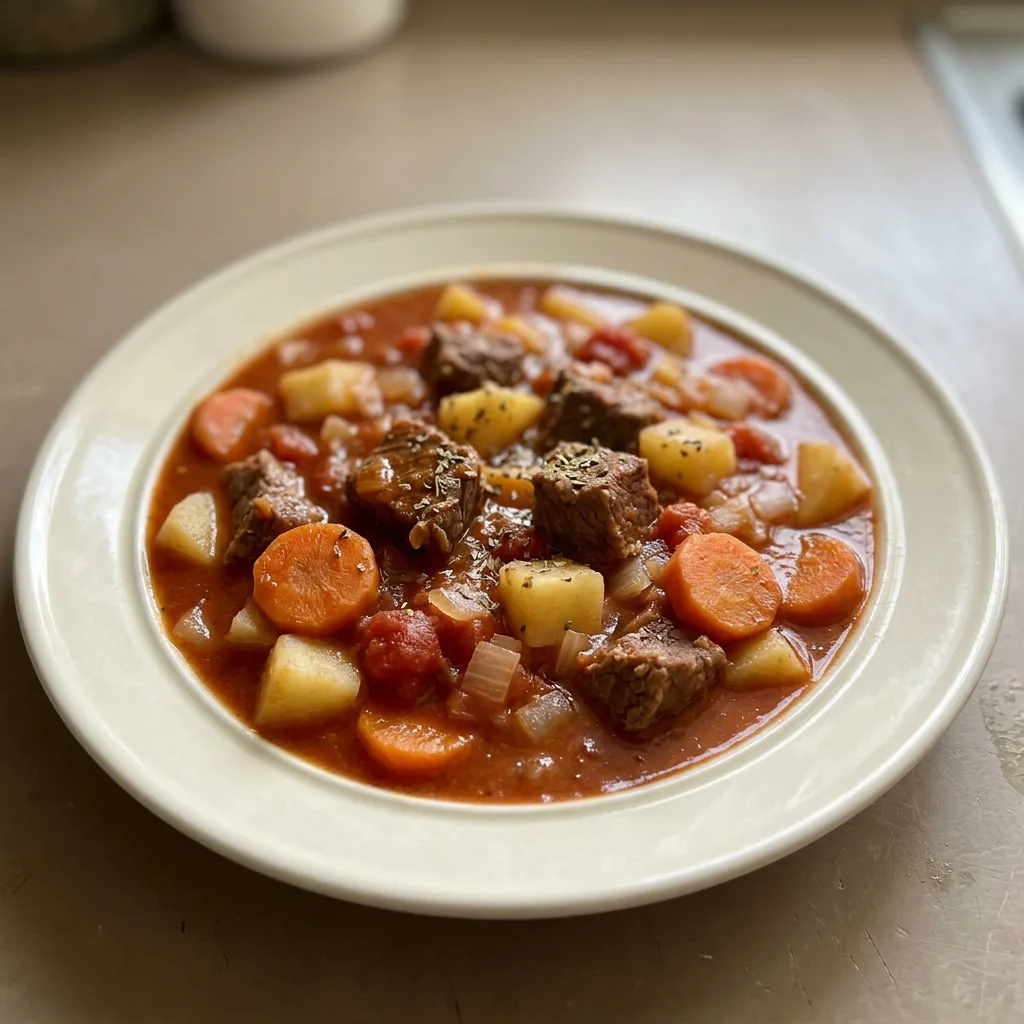
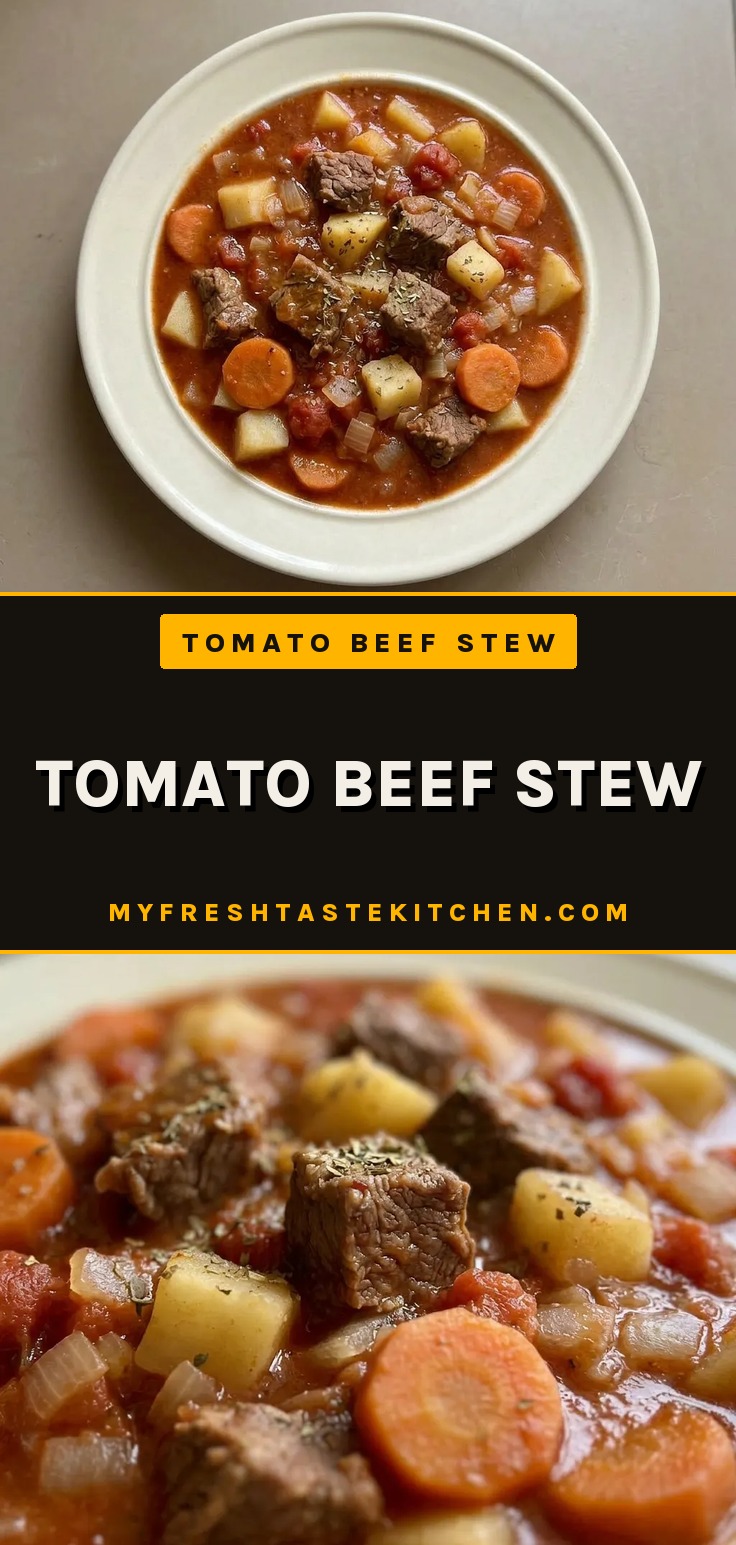
Savory Tomato Beef Stew – Rich & Flavorful Crockpot Recipe
Ingredients
Method
Sear the beef:
Season the beef with salt and pepper. In a skillet over medium-high heat, warm the olive oil and sear the beef in batches until browned. Move the meat to the crockpot.Layer vegetables:
Place the diced potatoes, sliced carrots, and diced onion on top of the beef in the slow cooker.Mix tomato sauce:
In a separate bowl, mix together the diced tomatoes, tomato paste, oregano, paprika, and minced garlic. Pour this mixture over the beef and vegetables.Add beef broth:
Add the beef broth to the crockpot, making sure all ingredients are fully covered.Slow cook:
Put the lid on and cook on low heat for 7 to 8 hours.Season and serve:
Give it a stir, taste and adjust salt and pepper as needed. Serve hot alongside rice or bread.
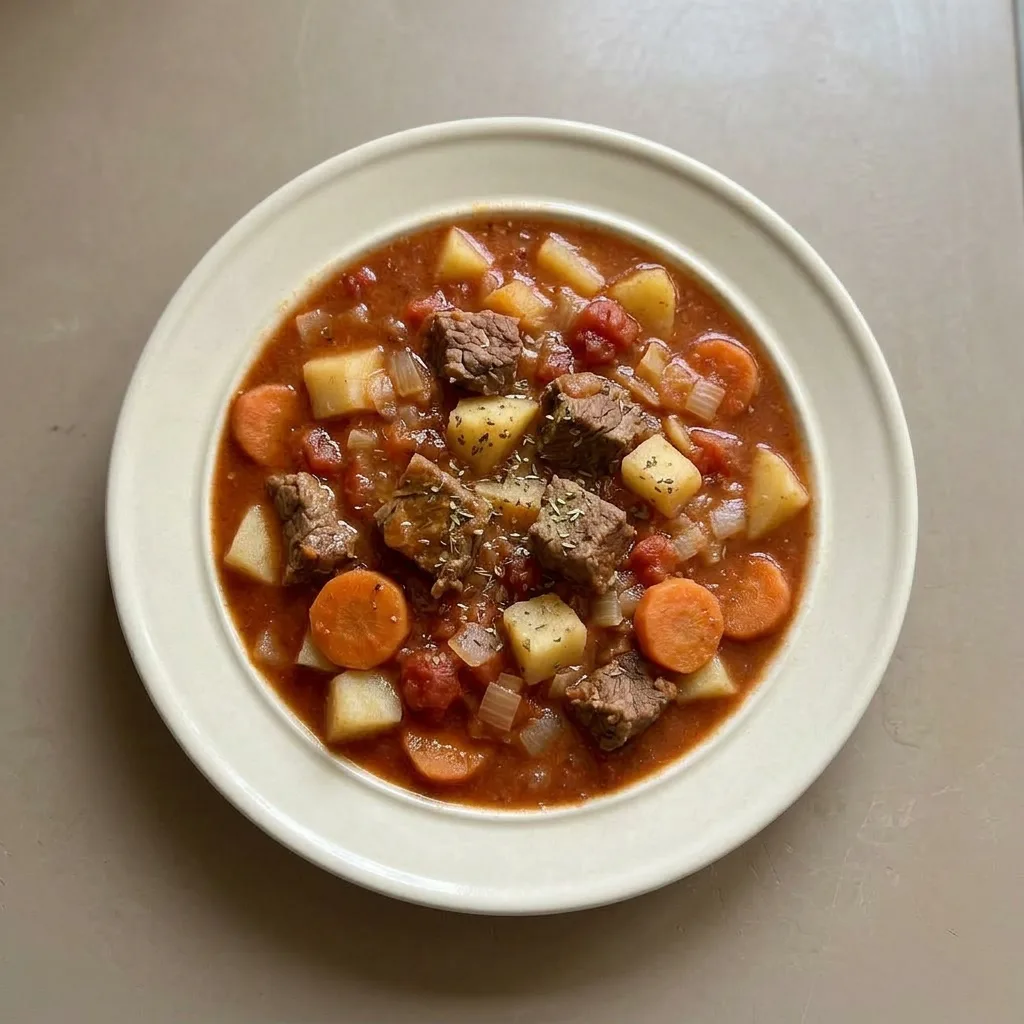
Which beef stew cuts work, and which don’t
Beef stew meat: Chuck roast or brisket, cut into 1½-inch cubes. Both have the same collagen content as stew meat, so they’ll turn fork-tender in 8 hours.
Chuck is more marbled, so the stew will be a touch richer. Brisket has a slightly beefier flavor but can dry out if cooked on high, stick to low.
Potatoes: Yukon Golds hold their shape; russets break down and thicken the broth. Yukon Golds will stay intact after 8 hours, giving you distinct potato chunks. Russets will soften more and release starch, making the broth thicker.
Either works; choose based on whether you want chunky or creamy texture.
Beef broth: Chicken broth or vegetable broth, low sodium. The broth’s main job is to provide liquid for braising.
Chicken broth is milder, so the stew will taste less beefy. Vegetable broth works but will shift the flavor noticeably.
Either way, use low sodium, the long cook concentrates salt.
Tomato paste: Don’t skip or substitute. Tomato paste adds body and a concentrated savory-sweet note that diced tomatoes alone can’t match. Omitting it leaves the broth thin and one-dimensional.
There’s no good swap for its texture and depth in a stew that cooks for hours.
Storage and Serving
Let the stew cool completely before refrigerating. Store in an airtight container for up to 4 days.
The stew thickens as it sits because the starches from the potatoes continue to absorb liquid. When reheating, add a splash of beef broth or water to restore its original consistency.
To freeze, portion the stew (without potatoes if you want to avoid a mealy texture after thawing; the potatoes can be added fresh when reheating). Freeze for up to 3 months.
Thaw overnight in the fridge. Reheat gently on the stovetop or microwave. For best texture, serve the stew within an hour of finishing it.
If you’ve added any fresh herbs or a dollop of sour cream as a garnish, add those just before serving, not during storage.
Tips
- Toast the paprika in the skillet after searing the beef, stirring for 30 seconds until fragrant, then add the tomato paste and diced tomatoes. This deepens the spice’s smoky sweetness and removes any raw edge.
- Use Yukon Gold potatoes if you want distinct chunks; for a thicker broth, use russets that break down and release starch. The choice directly affects the stew’s final texture.
Frequently Asked Questions
Can I cook this stew on high instead of low, and how does that affect the meat?
You can cook on high for about 4 to 5 hours, but the meat won’t be as tender. The 8-hour low cook slowly breaks down collagen into gelatin, giving you fork-tender beef. On high, the heat is too aggressive, so the meat may turn out dry or chewy, and the broth won’t develop the same silky body.
Why is my stew watery after 8 hours, and how can I thicken it?
Most likely the lid was lifted during cooking, letting steam escape that would have condensed back into the stew. If you kept the lid on, the potatoes (especially russets) should have released enough starch to thicken the broth. To fix it, remove the lid for the last 30 minutes on low to let some liquid evaporate, or mash a few potato chunks against the side of the pot and stir them in.
Can I make this stew ahead of time and reheat it?
Yes, make it up to 4 days ahead. Cool it completely before refrigerating in an airtight container.
The stew thickens as it sits because potato starches continue to absorb liquid, so when reheating, add a splash of broth or water to restore the consistency. Reheat gently on the stovetop or in the microwave.
