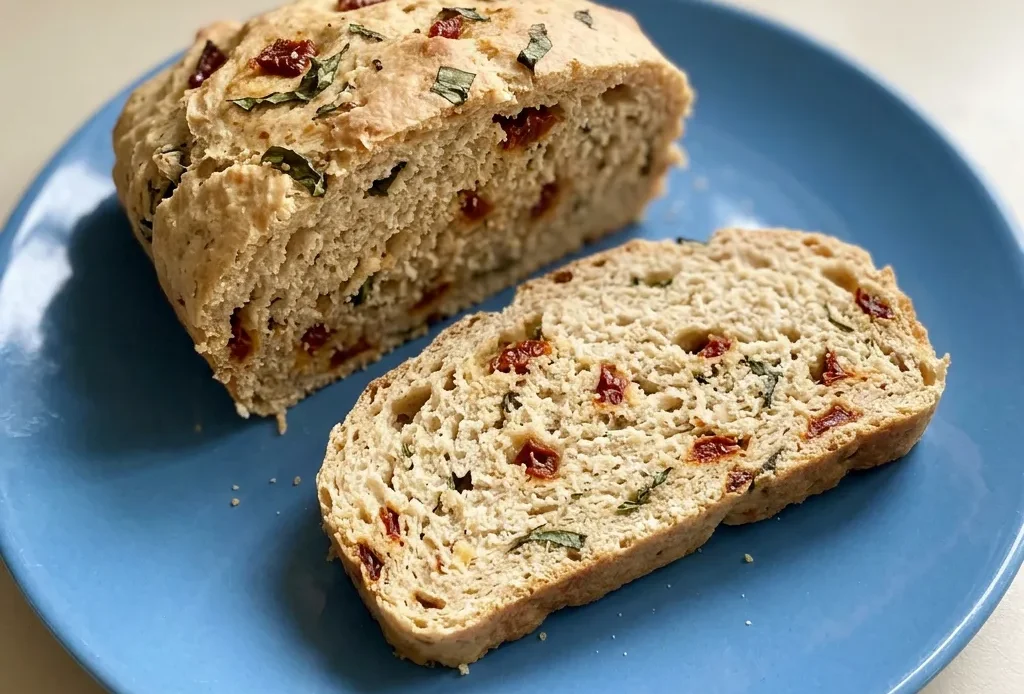
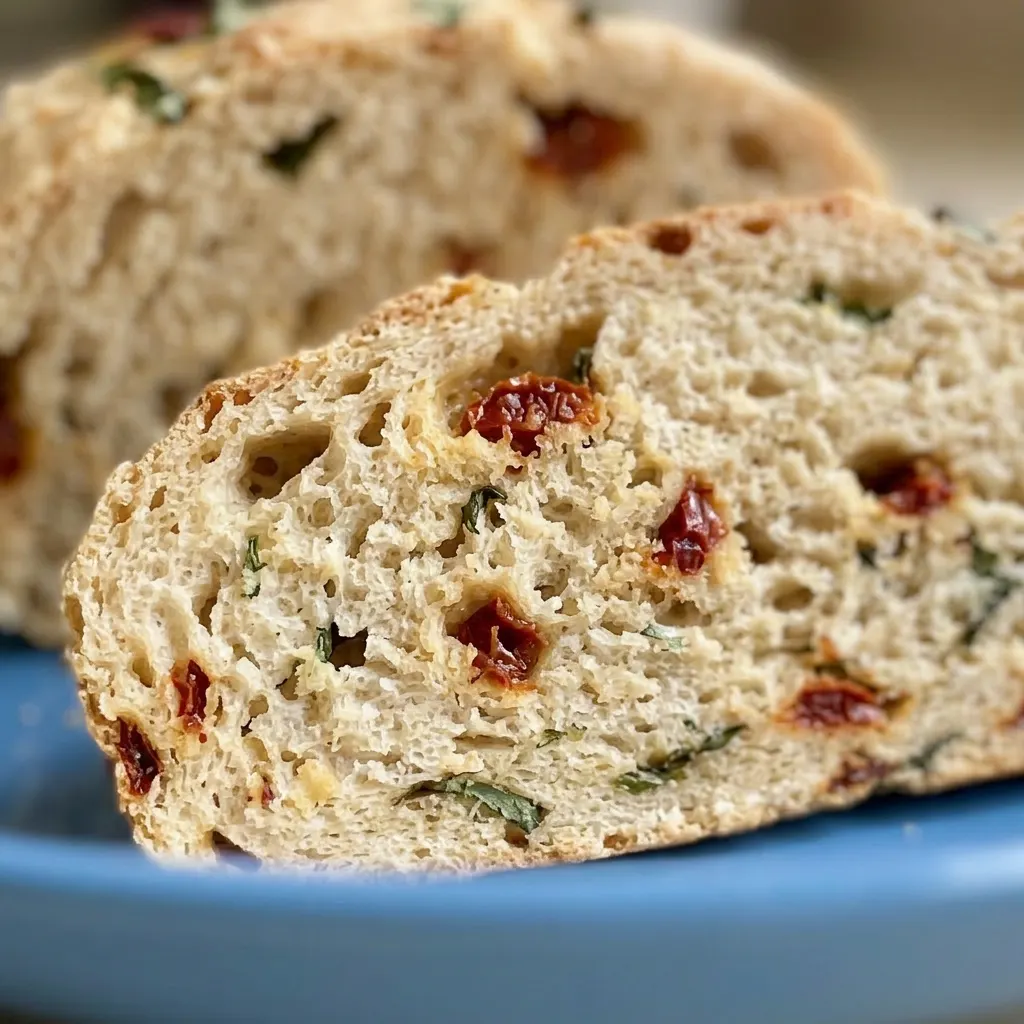
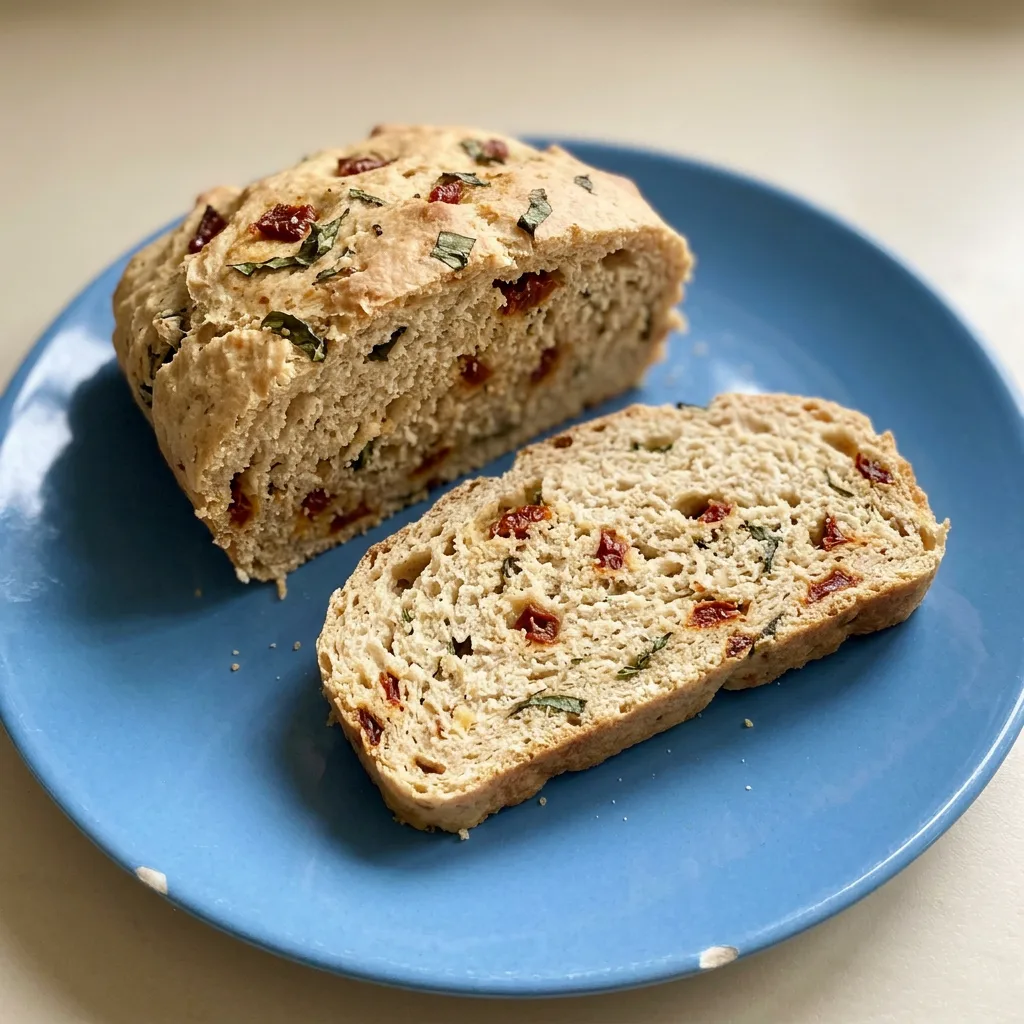
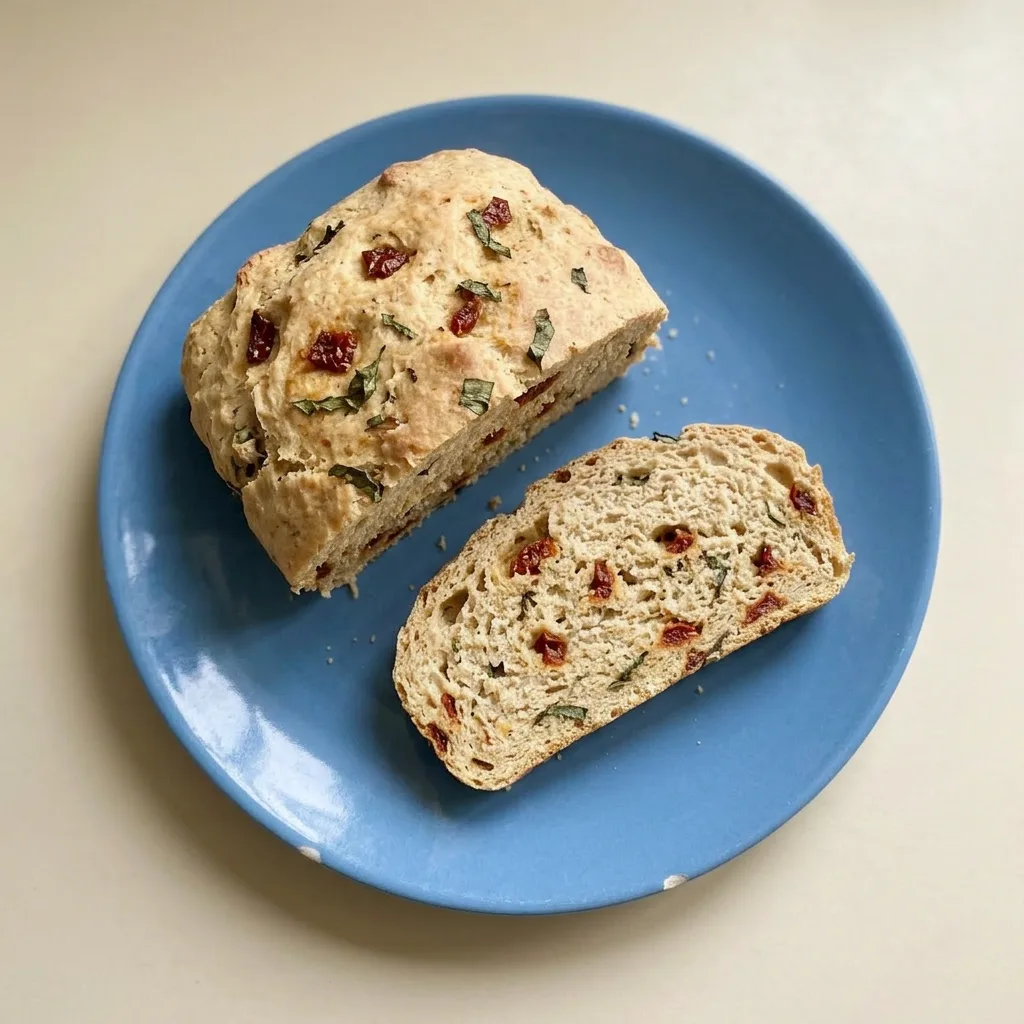
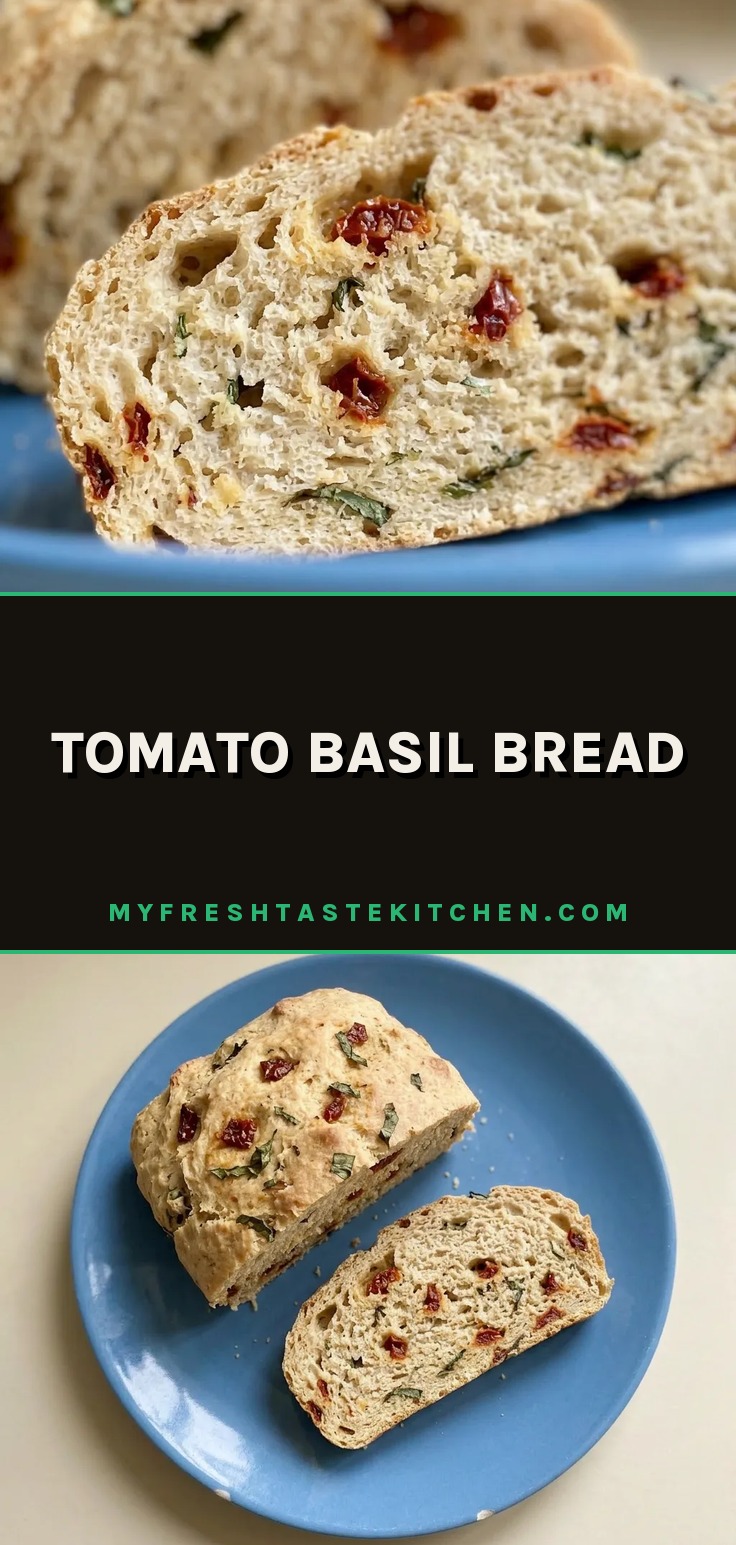
A crusty loaf comes out of the oven with the scent of sun-dried tomatoes and basil filling the kitchen, the cracked golden surface revealing flecks of green and red. This tomato basil bread delivers concentrated flavor without the textural problems fresh tomatoes cause, the dried tomatoes stay chewy and sweet, while the fresh basil keeps its punch through the bake. It’s a forgiving dough that doesn’t require a stand mixer or a proofing basket, but the two rises and the steam matter if you want the open crumb and crisp crust that make it worth the wait.
Intensity from Sun-Dried Tomatoes and Fresh Basil
Sun-dried tomatoes pack concentrated umami and sweetness because the dehydration process removes water and amplifies natural sugars. Fresh basil contributes bright, aromatic notes that lift the savory richness.
Together, they avoid the sogginess fresh tomatoes introduce and the flatness dried herbs often have. This combination delivers a layered flavor that deepens as the bread bakes, with each bite carrying a burst of tomato and herb.
The result is a distinctly savory bread that tastes more complex than one made with dried oregano or canned tomatoes.
Parmesan and Olive Oil Enrich the Crumb
Parmesan cheese adds savory depth and a slight crispness to the crust where it caramelizes. Olive oil tenderizes the gluten structure, softening the crumb without making it greasy.
The fat from both ingredients also helps retain moisture during baking, so the bread stays fresh longer. This enriched dough produces a tender interior that contrasts with the crust, making each slice satisfying without being heavy. For flavored bread recipes, this is a reliable way to keep the texture soft while boosting flavor.
Why Two Rises Build Structure and Flavor
The first rise lets gluten develop and flavors mature through fermentation. Yeast produces gases and byproducts that create a complex taste and a strong network.
The second rise, after shaping, ensures the dough is relaxed and ready to spring in the oven. Without it, the loaf would be dense. 5 to 2 hours is critical for the yeast to fully colonize the dough, giving you a light, airy crumb with good chew.
This bread relies on that patience for its final texture.
Scoring and Steam for a Better Crust
Scoring controls where the bread expands, preventing random cracking and giving a professional look. Steam during the first part of baking keeps the crust moist, allowing maximum oven spring before the crust sets.
This combination produces a crisp, golden crust and a well-risen loaf. The slash marks also create a pattern that opens up as the bread bakes, adding visual appeal.
For a crusty bread recipe, these two steps are what separate a flat, pale loaf from one with a satisfying crackle and height.
Prep: 20 min · Cook: 35 min · Total: 2 hr 40 min · Servings: 12 · Calories: 210 kcal
Choosing Your Tomatoes and Basil
sun-dried tomatoes in oil: Buy oil-packed ones for moisture and flavor; drain and chop them, reserving the oil for another use.
fresh basil: Use fresh, not dried; chop right before mixing to keep the color and volatile oils intact.
Parmesan cheese: Grate it yourself from a block; pre-shredded contains anti-caking agents that affect texture.
olive oil: A good quality extra virgin adds fruity notes, but any olive oil works fine here.
Working Through the Tomato Basil Bread Method
Activate the Yeast
Stir sugar into warm water, then sprinkle yeast on top. After 5 to 10 minutes, the mixture should look frothy and smell yeasty. If it stays flat, your yeast is dead, start over.
Mix the Dough
Whisk dry ingredients, then add olive oil to the yeast mixture and combine with the dry. Fold in tomatoes and basil until no dry flour remains. The dough will be shaggy, not smooth.
First Knead and Rise
Knead on a floured surface for 8 to 10 minutes. The dough should become smooth and elastic, bouncing back when you poke it. Place in an oiled bowl, cover, and let rise 1-1.5 hours until doubled in size.
Shape and Second Rise
Punch down the dough and shape into a round or oval loaf. Place on parchment, cover loosely, and let rise 30 to 45 minutes. It should puff noticeably but not double again.
Preheat and Prepare for Steam
During the second rise, preheat oven to 400°F. Place a shallow pan of water on the bottom rack. The steam will help create a crisp crust.
Score and Bake
Score the loaf with a sharp knife, slashes should be about 1/2 inch deep. Bake 30 to 35 minutes. The crust should be deep golden brown, and internal temperature should read 190 to 200°F.
Cool Completely
Transfer the loaf to a wire rack and let it cool completely before slicing. Cutting too early will make the crumb gummy and collapse the structure.
Tomato Basil Bread (Easy Artisan)
Ingredients
Method
Activate Yeast Mixture:
In a large bowl, mix warm water, sugar, and yeast. Stir gently; let stand 5-10 minutes until frothy.Combine Wet and Dry:
Add olive oil to the yeast mixture. In another bowl, whisk flour, salt, garlic powder, and Parmesan. Combine wet with dry, then fold in sun-dried tomatoes and basil. Mix until a shaggy dough forms.Knead and First Rise:
Turn dough onto a floured surface; knead 8-10 minutes until smooth and elastic. Place in an oiled bowl, cover, and let rise in a warm spot for 1-1.5 hours until doubled.Shape and Second Rise:
Punch down dough; shape into a round boule or oval loaf. Set on a parchment-lined baking sheet, cover loosely, and let rise another 30-45 minutes.Preheat Oven with Steam:
During the second rise, preheat oven to 400°F (205°C). Place a shallow pan of water on the bottom rack for steam.Score and Bake Loaf:
Score the loaf top with a sharp knife. Bake 30-35 minutes until deep golden brown and internal temp reaches 190-200°F (88-93°C).Cool Completely:
Cool completely on a wire rack before slicing to set the texture.
Swapping Tomatoes and Basil Without Losing the Point
sun-dried tomatoes in oil: Oil-packed roasted red peppers, drained and chopped (same volume). Roasted red peppers are milder and sweeter, with less umami punch.
The bread will be lighter in color and flavor, but still moist. Rehydrated dried sun-dried tomatoes work too, use 1/3 cup rehydrated (soak in hot water 20 min, drain) since they’re more concentrated.
fresh basil: Dried basil, 1 tablespoon (crumbled). Dried basil is less aromatic and can taste dusty if overused.
Reduce to 1 tablespoon to avoid bitterness. The bread will lack the bright green flecks and fresh punch, so consider adding 1 teaspoon dried oregano for complexity.
Parmesan cheese: Nutritional yeast (2 tablespoons) or omit. Parmesan adds savory depth and helps the crust brown. Nutritional yeast mimics some of that cheesy savor but won’t crisp the same way.
Omit entirely and the bread will be less rich and crust paler, increase salt by 1/4 teaspoon.
bread flour: All-purpose flour (same volume, but expect less chew). Bread flour’s higher protein gives this loaf its spring and chew.
With all-purpose, the crumb will be softer and the rise slightly less pronounced. Still works, but you lose some structure.
For gluten-free, use a 1:1 GF blend with xanthan gum; the dough will be wetter and the bread denser, reduce water by 2 tablespoons.
Tips
- Use an instant-read thermometer to verify the water is exactly 110°F (43°C). Too hot kills yeast; too cool slows activation. The frothy layer should form within 5 to 7 minutes if the yeast is alive.
- If the yeast mixture does not froth after 10 minutes, discard and start with fresh yeast. Old or expired yeast will not leaven the dense dough, resulting in a brick-like loaf.
Storage and Serving
Let the bread cool completely before storing. Wrap tightly in a paper bag or cloth and keep at room temperature for up to 2 days.
The crust stays crisp, and the crumb stays moist. After that, the crust softens.
To refresh, reheat slices in a 350°F oven for 5 minutes. For longer storage, freeze the whole loaf or slices in a zip-top bag for up to 3 months. Thaw at room temperature, then reheat to restore crust.
Do not refrigerate: it accelerates staling. Serve within 2 days for the best texture.
Frequently Asked Questions
Can I make this bread ahead of time and freeze it?
Yes. Cool the bread completely, then wrap it tightly in a zip-top bag and freeze for up to 3 months. Thaw at room temperature, then reheat in a 350°F oven for 5 minutes to restore the crust.
Don’t refrigerate it, that speeds up staling.
Why did my bread turn out dense instead of light and airy?
Most likely the dough didn’t rise enough. Check that your yeast was frothy after 5 to 10 minutes in warm water with sugar; if it wasn’t, the yeast was dead. Also, knead for the full 8 to 10 minutes until the dough is smooth and elastic, under-kneading means weak gluten that can’t trap gas.
How do I know when the bread is fully baked without a thermometer?
Tap the bottom of the loaf, it should sound hollow. The crust should be deep golden brown all over, and the loaf will feel firm but light when you pick it up. If it’s still pale or feels heavy, give it a few more minutes.
Can I use active dry yeast instead of instant yeast?
Yes. Use the same amount (2.25 teaspoons) but dissolve it in the warm water with sugar and let it sit until frothy, about 10 minutes, active dry needs a head start. Expect the first rise to take closer to 1.5 hours rather than 1 hour.
What’s the difference between this bread and a classic focaccia?
This is a shaped, crusty loaf with a tender crumb, while focaccia is a flatbread baked in a pan with a dimpled, oily surface. Focaccia has a softer, more open crumb from a wetter dough and a longer bulk rise, and it’s typically served as a side or for dipping.
