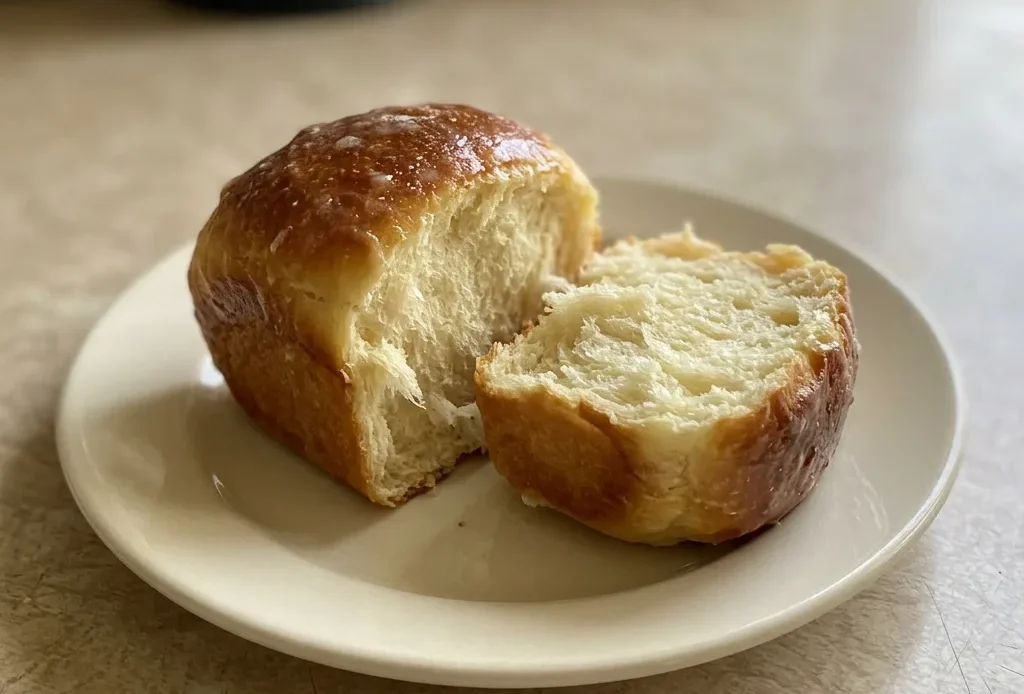
Getting bread that’s soft and stays soft for days usually means dealing with tangzhong or some other scalded-flour trick. This easy sweet condensed milk bread skips that whole step by doing something simpler. The condensed milk is doing the heavy lifting, holding onto moisture so the crumb doesn’t dry fast.
And it adds sweetness without making the dough feel heavy. The trick is just getting the feel of the dough right since it starts sticky.
Sweetened condensed milk’s role
Sweetened condensed milk does two things at once. It adds concentrated sugar, which tenderizes the gluten network, and it brings extra moisture without thinning the dough like plain milk would.
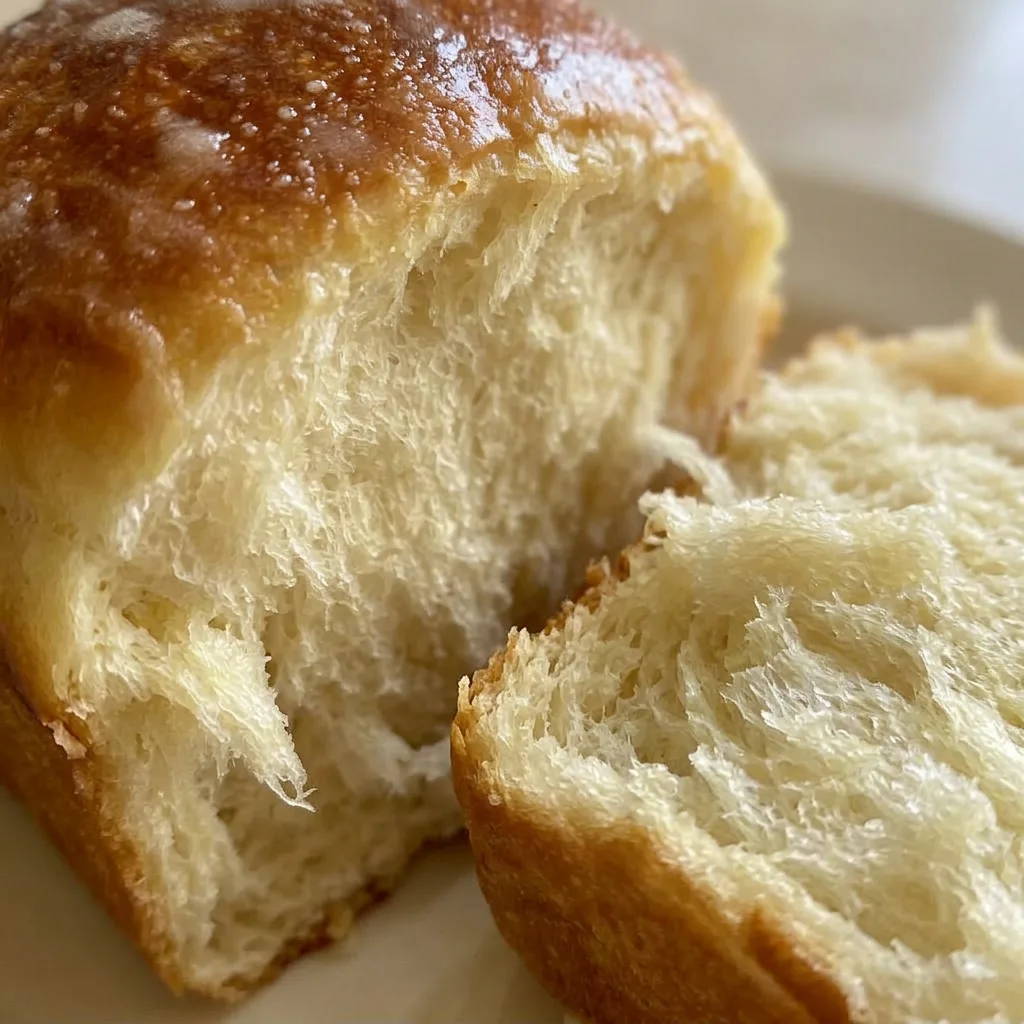
That moisture stays locked in the crumb, so the bread feels soft even the next day. You’ll also notice deep browning on the crust, the milk solids caramelize faster than flour alone, giving a rich color and faint toasty note. This bread doesn’t dry out as quickly as a lean dough because the condensed milk acts like a built-in humectant.
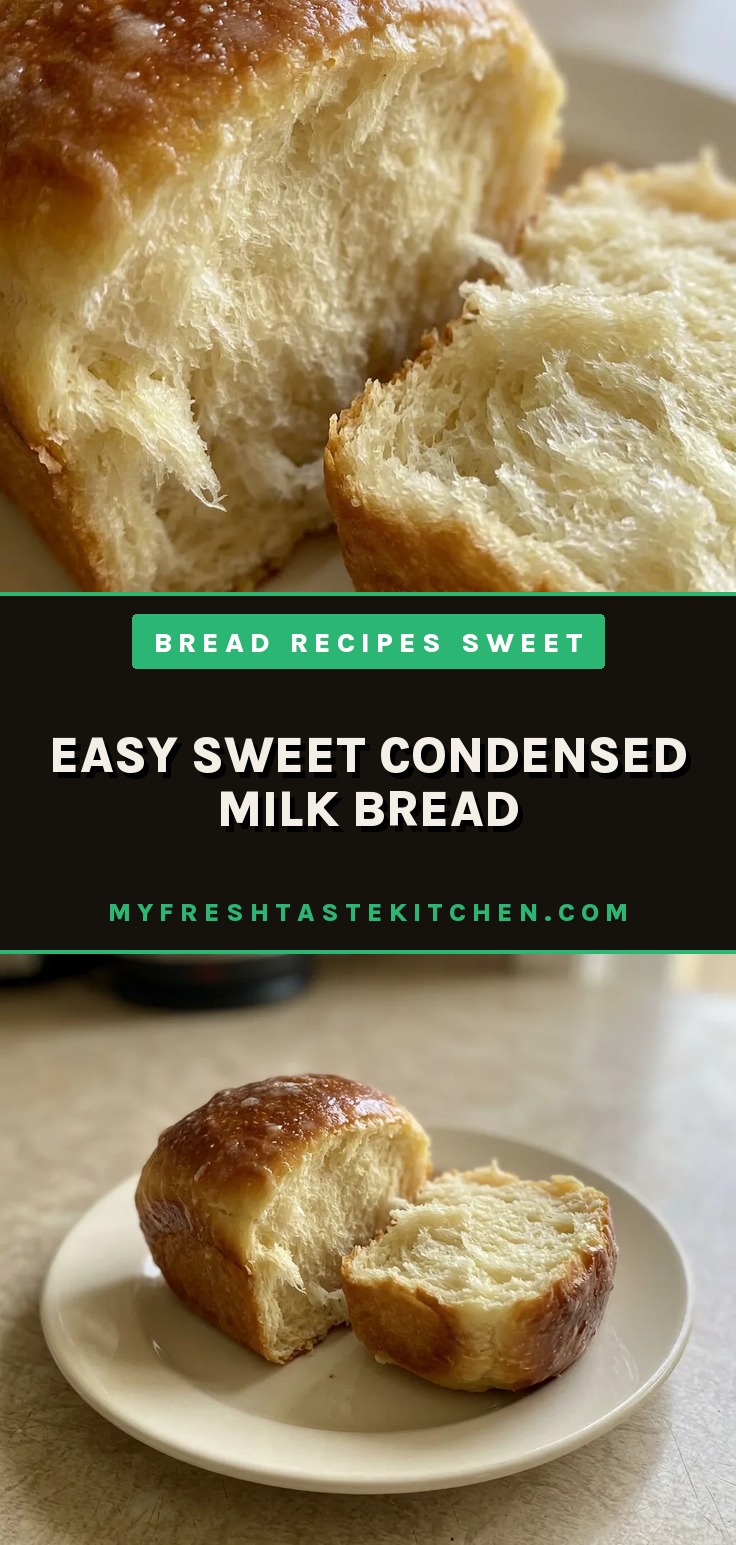
The result is a loaf that feels soft and slightly sweet, not just from sugar but from the dairy flavor throughout.
Why two rises matter
Enriched doughs, those with butter, sugar, and egg, are heavier than plain bread dough. The fat and sugar slow yeast activity, so the first rise is not just about volume but about developing a full, yeasty flavor.
During that initial fermentation, yeast produces gases that create the air pockets that define an open crumb. After you shape the loaf, the second rise is shorter but crucial: it lets the dough relax and re-inflate, ensuring the final bread rises high in the oven rather than spreading flat. Without that second proof, the crumb would be dense and the loaf squat.
You’ll see the difference when the bread domes evenly and springs back when pressed.
Kneading a sticky dough
Condensed milk makes the dough tacky, that’s normal. If you skimp on kneading, the gluten won’t develop enough to trap the gas from the yeast, and the bread will turn out heavy.
You need to work the dough until it becomes smooth and elastic, not just until it comes together. A properly kneaded enriched dough passes the windowpane test: stretch a small piece thin enough to see light through without tearing. That elasticity is what gives the crumb a uniform, tender structure rather than a dense, tight one.
The stickiness goes away as the gluten forms; resist adding too much extra flour, or the bread will be dry. Trust the process, and you’ll feel the dough change under your hands.
Prep: 25 min · Cook: 15 min · Total: 40 min · Servings: 12 · Calories: 210 kcal
What to look for in the ingredients
Instant yeast: Use instant (not active dry) so you can mix it directly with the flour without proofing first.
Sweetened condensed milk: Buy full fat, not low fat or evaporated; the sugar and fat content is crucial for texture.
Unsalted butter: Melt it before mixing so it incorporates evenly; cold butter won’t blend into the wet ingredients.
All-purpose flour: Weigh for accuracy; if measuring by cup, spoon and level to avoid packing.
How to nail this sweet condensed milk bread
Activate the yeast
Stir the instant yeast into the warm milk and warm water. It should foam within 5 minutes; if not, the liquid was too hot or the yeast is dead, start over.
Mix the wet ingredients
Whisk in the condensed milk, sugar, melted butter, and egg until smooth. The mixture will look thin, that’s fine; the flour will thicken it.
Add flour and salt
Gradually stir in the flour and salt until a shaggy, sticky dough forms. Don’t panic, enriched doughs are tacky at this stage. Scrape the bowl clean.
Knead until smooth
Turn the dough out onto a floured surface and knead for 8 to 10 minutes. It goes from sticky to silky as gluten develops. Stop when it springs back when poked and passes the windowpane test.
First rise
Place in a greased bowl, cover, and let rise until doubled, 1 to 2 hours. The dough should feel puffy and hold a gentle finger indentation. If it collapses, it overproofed.
Shape the dough
Deflate the dough and shape into a loaf or rolls on a parchment-lined baking sheet. For rolls, divide into 12 equal pieces and roll smooth. Pinch seams underneath to keep the shape.
Second rise
Cover and let rise for 30 to 45 minutes. The dough should look puffed and almost doubled. Press lightly, if the dent springs back slowly, it’s ready; if it doesn’t spring back, it’s overproofed.
Bake until golden
Brush with beaten egg wash and bake at 350°F for about 15 minutes. The top should be deep golden brown and the internal temperature reach 190°F. Let cool on a rack before slicing.
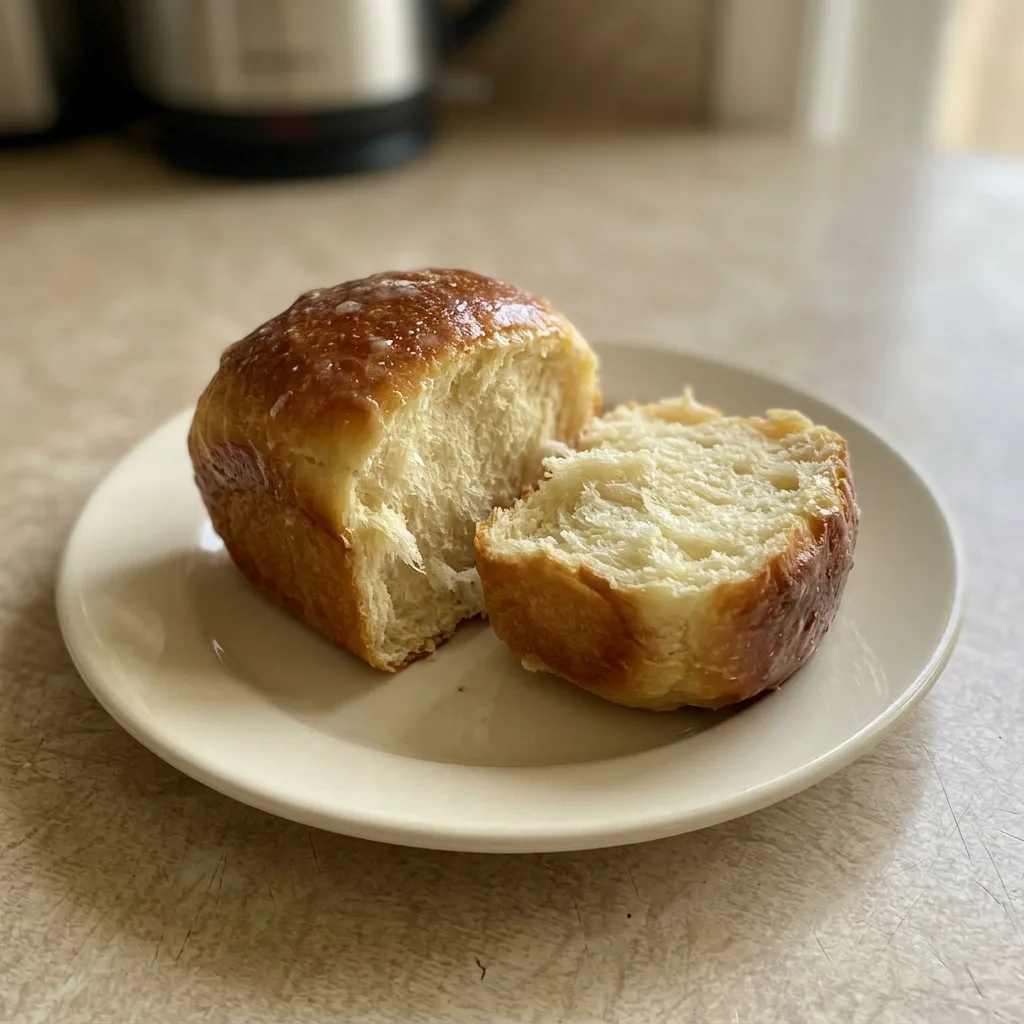
Easy Sweet Condensed Milk Bread
Ingredients
Method
Activate yeast mixture:
In a bowl, stir together warm milk, warm water, and instant yeast; allow to foam for about 5 minutes.Combine wet ingredients:
Mix in sweetened condensed milk, sugar, butter, and egg until well combined.Add flour and salt:
Slowly add flour and salt, mixing until a sticky dough forms.Knead dough until smooth:
Turn onto a floured surface and knead for 8–10 minutes until smooth and elastic.First rise until doubled:
Transfer to a greased bowl, cover, and let rise until doubled in size, 1–2 hours.Shape into loaf:
Deflate the dough, then shape into a loaf or rolls on a parchment-lined baking sheet.Second rise and preheat:
Cover and let rise again for 30–45 minutes; meanwhile preheat oven to 350°F (175°C).Brush and bake:
Brush with beaten egg wash and bake for about 15 minutes until golden brown.
Storage and serving
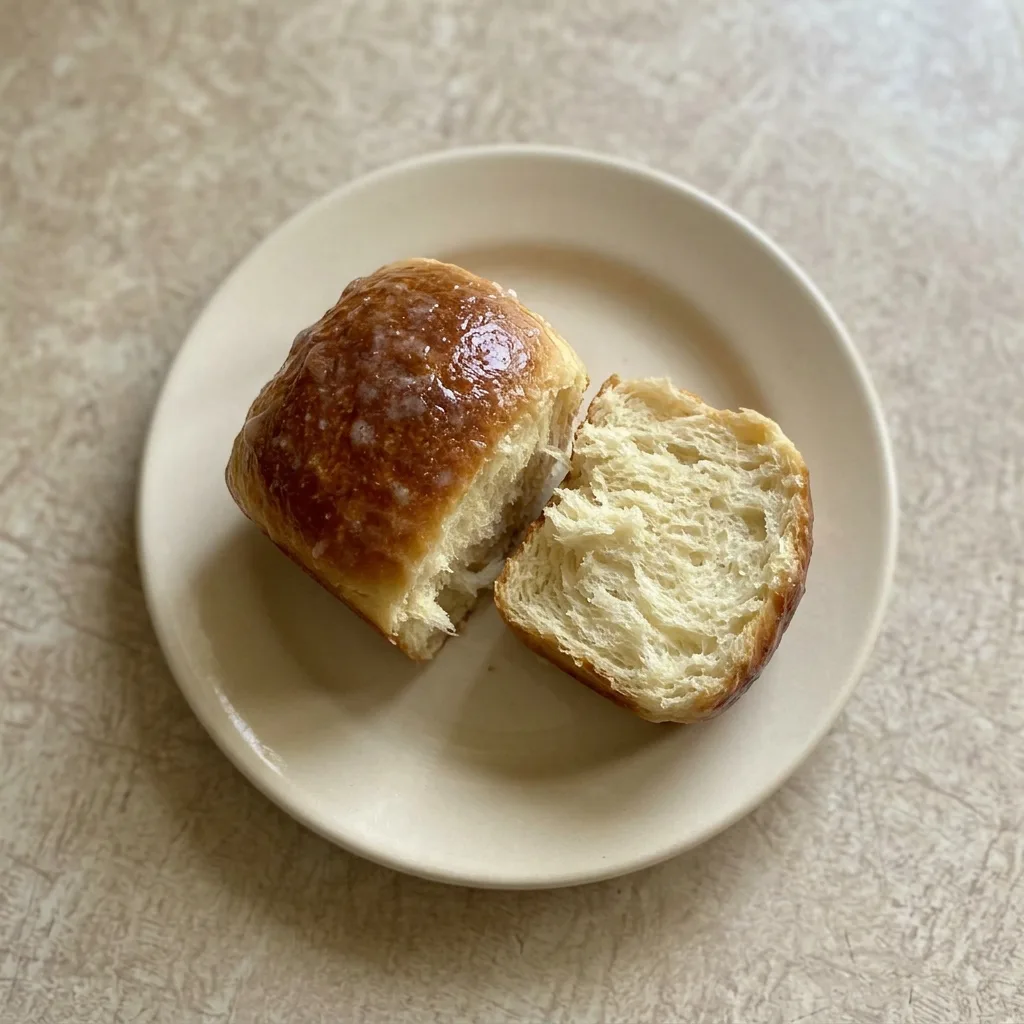
The bread is best within 24 hours of baking, when the crust is crisp and crumb is soft. After that, wrap the cooled loaf tightly in plastic wrap or store in an airtight container at room temperature for up to 4 days.
The condensed milk keeps the crumb tender, but the crust will soften over time. To restore some crust crispness, reheat slices in a 350°F oven for 3 to 5 minutes.
You can freeze the baked loaf: wrap in plastic, then foil, for up to 2 months. Thaw at room temperature and reheat as above.
Don’t refrigerate the bread; it accelerates staling. For make ahead, you can prepare the dough through the first rise, punch down, and refrigerate overnight. The next day, shape, do the second rise, and bake.
The egg wash should be applied right before baking, not before refrigeration.
Tips
- After kneading, the dough should feel tacky (sticking slightly to your palm but releasing cleanly) and pass the windowpane test. If it’s still sticky, knead another minute; if it’s dry and tight, you added too much flour.
Swapping sweetened condensed milk in this bread
Sweetened condensed milk: Coconut cream + sugar. Use full-fat coconut cream (the thick part from a chilled can) blended with an equal weight of sugar. The bread will be slightly less tender and more coconut-flavored, but still soft.
Start with the same volume as the condensed milk (1/4 cup), then adjust sweetness to taste after baking your first loaf.
All-purpose flour: Bread flour. Bread flour gives a noticeably chewier, more structured crumb because it has more protein.
The dough will feel less sticky during kneading. Use the same weight (440g).
Expect a taller, slightly denser loaf with more spring.
Unsalted butter: Vegan butter or coconut oil. Use a stick-style vegan butter (not margarine) for the closest texture. Coconut oil (solid, not melted) will make the crumb firmer and add a mild coconut taste.
Measure by weight (57g) for accuracy. The dough may feel slightly greasier with coconut oil.
Frequently Asked Questions
Can I make this bread ahead of time and freeze it?
Yes, freeze the baked loaf wrapped in plastic then foil for up to 2 months. Thaw at room temperature and reheat slices in a 350°F oven for 3 to 5 minutes to restore some crust crispness. If you want to prep ahead without baking, you can refrigerate the dough overnight after the first rise, then shape, do the second rise, and bake the next day.
Why did my bread turn out dense instead of soft?
Most likely the dough wasn’t kneaded long enough to develop the gluten network that traps gas from the yeast; it needs to pass the windowpane test where a thin piece stretches without tearing. Overproofing during either rise can also cause collapse, the dough should spring back slowly when pressed, not stay dented. Another possibility: too much extra flour added during kneading, which dries out the crumb.
Stick to the 8 to 10 minute knead and resist adding more than a dusting of flour.
Is this bread similar to Hawaiian sweet rolls?
It shares the sweetness and softness from enriched dough, but the flavor profile is different. Hawaiian rolls get their distinct taste from pineapple juice and often a touch of ginger; this bread uses sweetened condensed milk for a dairy-forward, mild sweetness. The texture is similarly soft, but this recipe produces a slightly more tender crumb due to the condensed milk’s humectant properties.
If you’re craving that tropical note, you could swap some liquid for pineapple juice, but the recipe as written is a straightforward sweet milk bread.
